
2027 DrPH vs Executive MPH for an Experienced Practitioner

Co-Founder and Chief Data Scientist
If you already lead public health work, another degree should expand what you can do - not repeat what you know. A Doctor of Public Health (DrPH) and an Executive Master of Public Health (Executive MPH) can both accommodate established professionals, but they differ substantially in academic depth, applied work, and commitment.
This comparison is for practitioners weighing a larger leadership role against the time and cost of further study. It will help you identify the credential that addresses your actual skills gap, test whether a program fits your job, and recognize when neither degree is necessary.
Key Things You Should Know
- Choose an Executive MPH if you need a broad public health foundation or a master's credential while continuing to work; choose a DrPH if you are ready for sustained, doctoral-level practice leadership and an approved applied project.
- Neither credential guarantees a promotion. Compare the responsibilities of your target role with your existing experience, and confirm whether your employer values a master's degree, a practice doctorate, or demonstrated results more.
- Compare the total commitment - tuition, fees, required visits, weekly scheduled work, and project access - not the advertised online format or degree title alone.
What is the difference between a DrPH and an Executive MPH?
An Executive MPH is an MPH organized for employed, often experienced professionals. "Executive" describes a program's audience or delivery model; the awarded credential is generally an MPH. A DrPH is a practice-focused doctoral degree intended to develop advanced public health leadership, inquiry, and organizational change skills. Neither is automatically a faster or more prestigious version of the other.
The distinctions below matter most when you already have substantial responsibility and need to know what additional training you would actually gain. Requirements vary by school.
| Decision point | Executive MPH | DrPH |
| Primary purpose | Build or formalize graduate-level population-health and management competencies | Develop advanced practice leadership and apply evidence to a consequential public health problem |
| Credential | Master's degree | Practice doctorate |
| Typical culminating work | Program-defined applied experience or integrative project | Program-defined doctoral applied project or dissertation |
| Best fit for prior preparation | Experienced professional who needs an MPH foundation or credential | Practitioner prepared to examine and lead complex practice change |
A DrPH is also distinct from a public health PhD, which generally emphasizes producing original research. If you are exploring doctoral study alongside employment, online graduate advancement through public health doctorates offers a starting point; verify the awarded degree and its practice or research orientation directly with each school.
Which degree is better for an experienced public health practitioner?
The better degree is the one that closes a documented gap between your present responsibilities and your next role. Years of service alone do not establish that a doctorate is necessary. A practitioner who manages a health department program but lacks formal training in epidemiology, evaluation, and population-health policy may gain more immediately from an Executive MPH. Someone who already uses those competencies and has authority to lead cross-agency change may be better positioned for a DrPH.
Test the choice against a specific work problem. If you need to interpret surveillance findings, manage a budget, and communicate with community partners more confidently, inspect the Executive MPH curriculum. If you need to design, implement, and rigorously assess a sustained change across programs - and can secure organizational support for that work - inspect DrPH project and supervision requirements. For a public-sector employee, also check whether the desired position has a fixed classification or degree requirement; a doctorate may not change the pay grade.
Neither degree is necessarily the right next step. Mentorship, a supervised improvement project, or targeted methods training may address a narrow gap at lower cost. If your goal is original epidemiologic research rather than practice leadership, investigate a research doctorate and its funding separately; epidemiology doctorate aid and affordability comparisons are relevant to that different decision, not evidence that a DrPH will be funded.
What careers can you pursue with a DrPH or Executive MPH?
Experienced graduates may compete for public health program director, health department leadership, population-health strategy, policy, evaluation, or nonprofit executive roles. The appropriate credential depends on the work: an Executive MPH can strengthen broad public health preparation, while a DrPH can support roles requiring advanced practice inquiry and leadership. Employers still assess budget authority, staff supervision, technical skills, partnerships, and results - not the letters after a name alone.
In particular, a DrPH does not automatically qualify someone for a research-intensive faculty appointment, clinical practice, or a government executive post. Likewise, an Executive MPH does not replace experience managing people or public funds. For adjacent roles and their differing compensation patterns, comparing earnings across MPH career paths is more useful than assuming all MPH holders enter one labor market.
An Executive MPH generally covers foundational public health methods and their application to leadership: epidemiology, biostatistics, policy, social and structural determinants of health, program planning, and evaluation. A program designed for executives may use workplace cases and cohort-based projects, but its exact coursework and applied requirements must be checked.
A DrPH typically advances beyond foundational work into leadership, systems change, advanced evaluation or inquiry, communication, and an extended practice-focused doctoral project. The meaningful distinction is not whether both programs teach "leadership." It is whether you will practice a needed skill at sufficient depth, with feedback, on a problem you are authorized to address. For example, a director seeking to commission an evaluation may need different training from a director who must personally conduct advanced analyses.
If that second gap is chiefly quantitative, compare the required methods courses against biostatistics graduate education for employed adults or shorter, supervised methods training before committing to a broad second degree.
Both pathways generally require prior higher education, but schools set their own accepted degrees, experience definitions, academic standards, and application materials. Executive MPH programs often seek applicants able to bring substantial professional experience into a working cohort. DrPH programs also assess readiness for advanced public health practice and leadership; some require a master's degree or define qualifying experience in particular ways, while others evaluate alternative preparation. Do not assume an MPH, a director title, or a fixed number of years is universally required.
For a DrPH application, describe decisions you owned, staff or budgets you managed, partnerships you sustained, and changes you helped implement. Distinguish your contribution from your organization's achievements. Ask admissions staff whether your experience qualifies under their rules and whether a prospective applied project needs employer permission, a site agreement, or a particular supervisor.
If an earlier academic record is a concern, confirm the program's actual policy rather than presuming professional success erases it. Guidance on academic recovery before applying to an MPH can help frame preparation for a master's application; a DrPH admissions committee may weigh different evidence.
An Executive MPH is usually the shorter undertaking because it is a master's program. A DrPH generally requires a longer sequence of doctoral coursework, milestones, and applied project development. Neither label establishes a reliable personal completion date: credit load, transfer or waiver rules, course rotation, project approvals, and permitted part-time enrollment all matter.
Ask each school for the course-by-course schedule available to someone maintaining your work hours. Then identify live classes, group meetings, campus visits, and the period when project work becomes most demanding. An online course may still require attendance at a fixed time, and an employer-supported project may compete with your regular job rather than replace it. If you are comparing master's options, public health master's cost and completion planning can help connect pacing with expense; request the program's own completion rules before relying on an advertised timeline.
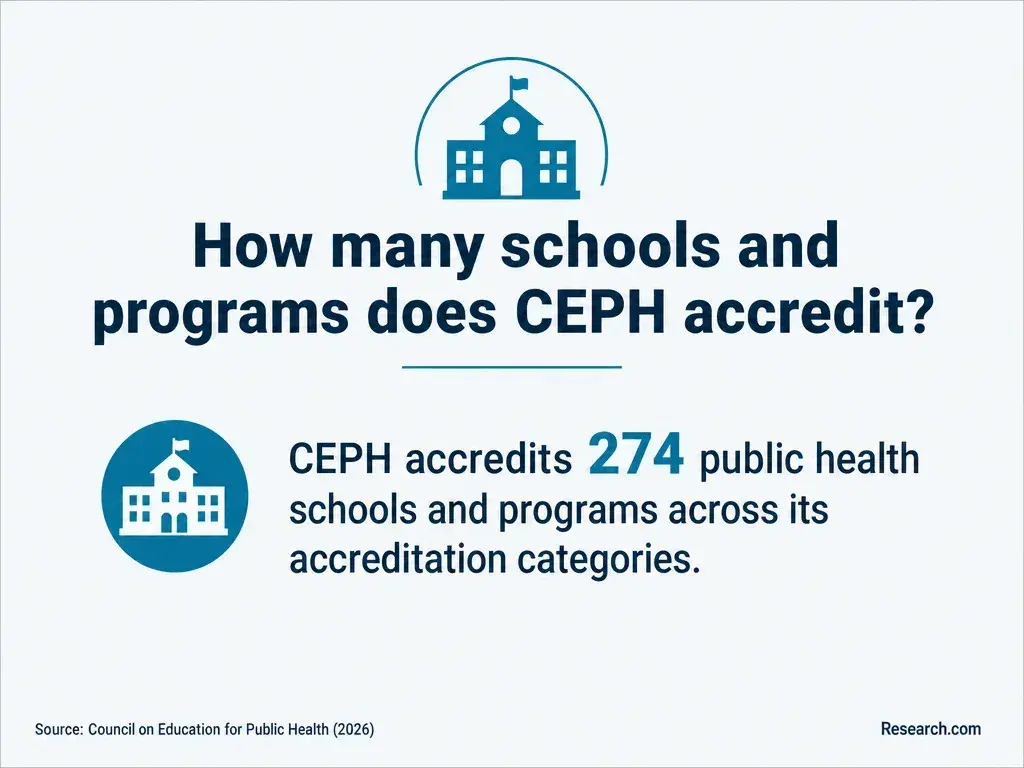
Online delivery does not, by itself, make either degree less credible. Assess the institution's recognized accreditation, the public health program's accreditation status and scope, the quality of faculty supervision, and whether the format supports the work you need to do. The Council on Education for Public Health (CEPH) accredits schools and programs of public health; do not infer that every degree offered by an institution has identical CEPH coverage.
For an online DrPH, ask how students obtain project supervision, resolve site-access problems, meet doctoral milestones, and participate in required residencies. For an Executive MPH, ask whether the cohort schedule and applied learning suit your employment. Online MPH program accreditation comparisons can inform a master's shortlist, but confirm the exact Executive MPH and its current accreditation scope with the institution and accreditor.
There is no defensible single price for either credential. Schools may charge by credit, term, or program, and the lower advertised tuition may not yield the lower total cost. A DrPH can also incur project, continuation, or travel expenses after coursework; an Executive MPH may require intensive campus sessions or a pace that changes your work schedule. Do not assume doctoral funding or employer reimbursement is available.
Request a written estimate for your intended enrollment pattern. The comparison should include tuition, mandatory fees, required travel, materials, likely project expenses, and the cost of extending enrollment. Subtract only aid or employer support for which you are actually eligible, noting reimbursement caps and service obligations. Online MPH cost planning options may provide master's-level benchmarks, but they are not substitutes for an Executive MPH quote or a DrPH-specific budget.
Neither degree has a single graduate salary. US Bureau of Labor Statistics wages are reported for occupations, not for DrPH or Executive MPH alumni, and a broad occupational median cannot predict an experienced practitioner's offer. Compare compensation for the specific job you want, in your location and sector, against your current pay. Public-sector salary schedules, for example, may leave little room for an immediate degree-related increase even when the education improves your candidacy for a later position.
For a realistic return-on-investment estimate, check posted pay ranges or your employer's classification rules, the probability of moving into that role, and your net education cost. A public health master's scholarship and net-price guide can inform the cost side of an Executive MPH comparison, but potential aid should not be counted until the school confirms eligibility and the award terms.
How do you choose an accredited DrPH or Executive MPH program?
Start with the position or practice problem you hope the degree will help you address. Then verify the exact awarded degree, the institution's accreditation, and whether CEPH accreditation covers the relevant school or program and degree. Accreditation is an essential check, not proof that scheduling, project supervision, or employer connections fit your needs.
For each finalist, request the current curriculum and student handbook, a complete cost estimate, the live-session and travel schedule, and the rules for applied work. Speak with program staff about who approves a project at your workplace, what happens if you change jobs, and how a part-time student obtains feedback.
Compare those answers with your employer's education benefits and the qualifications in actual job postings. If the evidence points instead toward original research, assess PhD fit and funding on their own terms; cost-conscious public health PhD planning is a separate comparison, not a substitute for checking DrPH program quality.
Other Things You Should Know About Public Health
Possibly, but never assume they will. The receiving DrPH program decides whether prior graduate courses qualify for transfer, waivers, or neither; an Executive MPH may still be valuable even if it does not shorten the doctorate.
Potentially. The program must approve the scope and supervision, and your employer must authorize the work and any data use. Your normal duties alone may not satisfy doctoral project requirements.
No. The Certified in Public Health (CPH) credential has separate eligibility and examination rules. Check the certifying organization's current requirements for your degree and experience pathway.
Yes, if your studies will require schedule flexibility, reimbursement, project access, or workplace data. Obtain written confirmation of what your employer can provide; informal encouragement is not project approval or a funding commitment.
- Accreditation in the U.S. | ed.gov http://www.ed.gov/laws-and-policy/higher-education-laws-and-policy/college-accreditation/accreditation-in-the-us
- Cost of Attendance (Budget) | 2025-2026 Federal Student Aid Handbook https://fsapartners.ed.gov/knowledge-center/fsa-handbook/2025-2026/vol3/ch2-cost-attendance-budget
- An Overview of Accreditation of Higher Education in the United States | Congress.gov | Library of Congress https://www.congress.gov/crs-product/R43826
- Understanding College Costs | studentaid.gov https://studentaid.gov/resources/prepare-for-college/students/choosing-schools/consider-costs
- Doctor of Public Health Education and Training - PMC - NIH https://pmc.ncbi.nlm.nih.gov/articles/PMC5298511/
- Online vs On-Campus College: Choose the Right Format | Bay Path University https://www.baypath.edu/news/bay-path-university-blogs/post/online-vs-on-campus-college-choose-the-right-format/
- Apply (DrPH) | College of Public Health | University of Kentucky https://cph.uky.edu/programs/doctor-public-health/apply
- Undergraduate Cost of Attendance | Penn Student Registration & Financial Services https://srfs.upenn.edu/costs-budgeting/undergraduate-cost-attendance
- What is a DrPH and what can you do with it? | Capella University https://www.capella.edu/blog/health-sciences/what-is-a-drph-and-what-can-you-do-with-it/
- Choosing a PhD or a DrPH: Key Differences | NYU School of Global Public Health https://publichealth.nyu.edu/events-news/news/2024/10/10/choosing-phd-or-drph-key-differences


