2027 Improving a Public Health Grant Reporting Process: A DrPH Applied Project Planning Guide

Co-Founder and Chief Data Scientist
A late grant report can delay decisions about a public health program; an inaccurate one can misrepresent its reach or spending. For an experienced practitioner considering a DrPH applied project, the challenge is to improve the reporting system without creating another burdensome reporting task.
This guide shows how to assess the workflow, design and evaluate a feasible change, and secure the authority and approvals the work requires. It also helps you decide whether doctoral study is necessary—or whether a smaller, supervised improvement effort would meet your organization's needs.
Key Things You Should Know
- Start with the funder's reporting requirements and a baseline: track submission timeliness, correction requests, missing fields, and staff time before choosing a solution.
- Make the DrPH project an organizational improvement effort with an authorized partner, defined measures, privacy safeguards, and an output the team can maintain.
- A DrPH is most useful when the work requires advanced practice leadership and evaluation; a reporting template or staff training alone may not justify a doctoral degree.
What Is a DrPH Applied Project for Improving Grant Reporting Processes?
It is a practice-focused doctoral project that investigates a reporting problem, leads an agreed-upon organizational change, and evaluates whether the change improves the process. The setting might be a health department or community nonprofit combining service counts, narrative updates, and financial information for a grant. The project should serve a public health decision—not merely produce cleaner paperwork—because reports can influence program oversight, resource allocation, and accountability to communities.
A manageable purpose would be to reduce preventable corrections and make required reports ready for review before the funder's deadline. Possible outputs include a data dictionary, an ownership map, a validation checklist, and a documented review procedure. The academic contribution is the justified design, leadership, implementation, and evaluation of those changes; it is not a claim that the underlying program's health outcomes improved.
If the organization primarily needs someone to enter data or maintain a template, hiring or training staff may be more direct than sponsoring a doctoral project. For workforce planning at that level, lower-tuition undergraduate public health pathways are a different investment from advanced leadership development.
How Can a Public Health Grant Reporting Process Be Assessed?
Map one reporting cycle from the funder's instructions through data collection, reconciliation, approval, submission, and response to corrections. Identify who supplies each figure, where its definition lives, when it becomes available, and who has authority to sign off. Include program staff, finance staff, the reporting lead, and community partners whose work or data appear in the report. Their accounts may reveal different problems: a late figure can reflect an unclear definition rather than poor staff performance.
Compare existing records with the grant agreement before collecting new information. The following evidence types answer different diagnostic questions; none, by itself, establishes why errors occur:
| Existing evidence | What it can reveal | Important limitation |
| Submission dates and funder correspondence | Deadline patterns and requested corrections | A correction request may concern interpretation, not data quality |
| Source files and report versions | Conflicting definitions, missing fields, and manual transfers | Access may be restricted; older versions may be incomplete |
| Approval records and staff accounts | Handoffs, bottlenecks, and undocumented workarounds | Recollections may differ from recorded events |
Define a small baseline using consistent denominators: for example, reports submitted by the deadline out of reports due, and reports requiring correction out of reports submitted. Record the observation period and distinguish internal revisions from funder-requested corrections. If a proposed dashboard needs more sophisticated analysis, online biostatistics education for working learners may help develop that skill; a complex model is not necessary to diagnose a broken handoff.
What Steps Improve Accuracy and Timeliness in Grant Reporting?
Choose changes that match the diagnosed failure and the organization's capacity. A new software platform will not fix incompatible definitions across teams, and an earlier internal deadline will not help if source data are unavailable by then. A feasible first cycle follows this sequence:
- Confirm required fields, definitions, reporting periods, and approval rules against the grant agreement and funder instructions.
- Assign one owner and one reviewer to each data element; document where the source record is stored and how corrections are logged.
- Set internal handoff and review dates that account for when program and financial data become available.
- Pilot a shared template or validation checklist on an authorized reporting cycle, then record missing fields, revisions, completion times, and staff feedback.
- Revise the procedure and document who will maintain it after the project ends.
Keep financial reconciliation with authorized finance personnel, and preserve an audit trail rather than overwriting earlier values. The project can assess whether reporting became more reliable; it should not treat a short-term change in errors as proof of causation without considering staffing, grant changes, and differences between reporting cycles.
If the underlying need is broader program design rather than reporting operations, public health graduate concentration selection may be a more relevant training decision.
A strong project demonstrates leadership by negotiating responsibilities across program, finance, and executive teams - not simply by producing a spreadsheet. It can also demonstrate systems thinking through workflow analysis; evaluation through defensible process measures; communication through usable reports; and ethical practice through appropriate data access and respectful representation of community work.
Show the competency in evidence: a documented stakeholder decision, a justified measure, an approved workflow change, and a candid account of what the evaluation cannot establish. Public health training at other levels can support data collection and communication, but those contributions are distinct from leading a cross-functional change. Public health BS programs and career preparation provide context for developing staff capabilities; they are not substitutes for documenting doctoral-level leadership in this project.
The plan should be specific enough for an academic advisor and an organizational sponsor to judge feasibility before data collection begins. It should distinguish access to a workplace from permission to change its procedures, use its records, or share findings. Include these linked decisions:
- Purpose and boundary: Name the grant-reporting workflow, affected teams, funder requirements, and reporting cycles in scope; exclude unrelated program-outcome claims.
- Governance: Identify the sponsor, process owner, finance reviewer, faculty advisor, and community partners; state who can approve changes and external communication.
- Baseline and evaluation: Define measures, denominators, data sources, observation periods, and a realistic comparison, such as pre- and post-change reporting cycles.
- Implementation and resources: Specify the pilot, staff time, training, access permissions, dependencies, and fallback if a grant or staff assignment changes.
- Protection and outputs: Set rules for restricted data, retention, and review; identify the procedure, tools, and evaluation summary the organization will receive.
Ask the university and partner which privacy, data-use, contractual, and institutional review processes apply before accessing records. Identifiable participant information is rarely needed to assess reporting handoffs. If the goal is only to gain general reporting and evaluation skills, compare the project's time and cost with a focused course or online MPH affordability rankings; an MPH or targeted training may be sufficient without a DrPH.
Programs may provide faculty advising, practice-oriented methods training, project milestones, and review of written or presented work. Their actual requirements differ. Before enrolling, ask who helps define scope, when a partner agreement is needed, whether a current employer can host the project, and what happens if site access or employment changes. A willing supervisor does not necessarily have authority to release data or approve publication.
For a practitioner balancing work with study, check the calendar rather than relying on an "online" label: live classes, group work, residencies, and partner meetings can constrain a reporting-cycle project. Compare doctoral public health study formats against the months when grant reports demand the most staff time. A suitable program should support the project's governance and evaluation needs, not just offer convenient coursework.
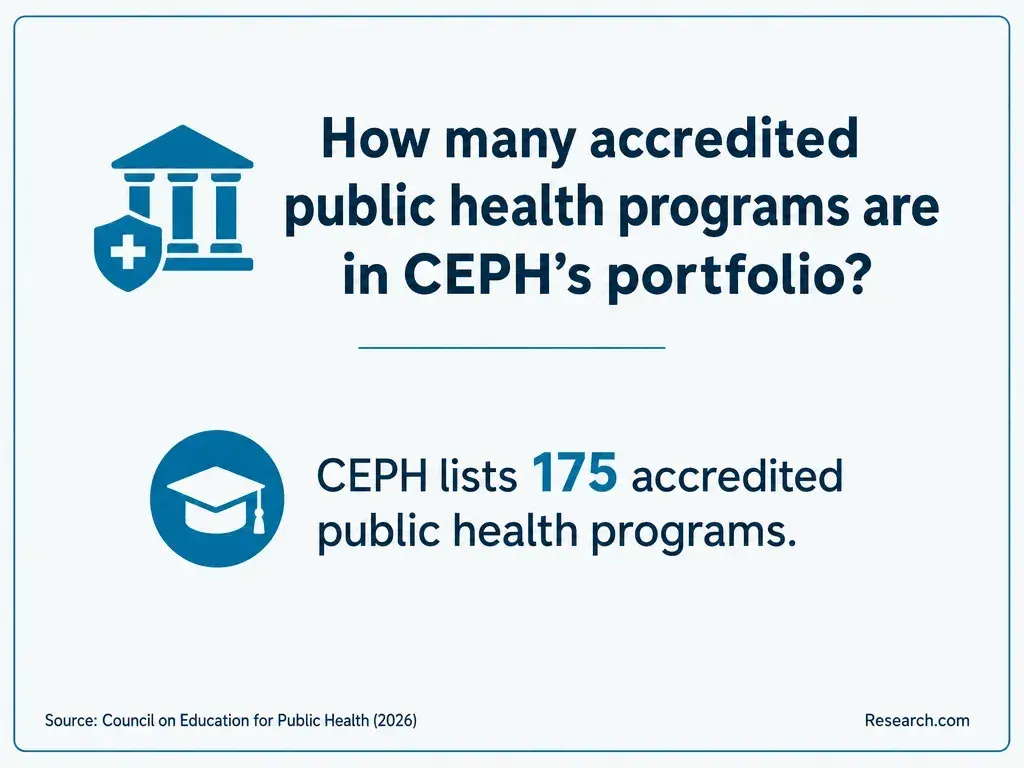
Accreditation is relevant, but it does not approve an individual project or replace site permission. The Council on Education for Public Health (CEPH) sets standards for accredited public health schools and programs, including expectations for DrPH-level learning and practice. The institution defines how its curriculum, applied work, and assessment satisfy the standards. Confirm that the particular DrPH falls within the accredited school's or program's scope; institution-level accreditation alone does not establish that point.
Ask the program for its current DrPH handbook and project requirements, including competency assessment, supervision, final deliverables, and any separate institutional review process. For comparison, reviewing accredited online MPH pathways can clarify the distinction between accreditation scope and degree level, but MPH applied practice requirements should not be assumed to govern a DrPH project.
DrPH programs generally evaluate graduate preparation, relevant professional practice, leadership potential, and the fit between an applicant's goals and the program. Exact degree, experience, test, and application requirements vary; neither an MPH nor a managerial title should be treated as universally required. For this project idea, describe decisions you have led, reporting or evaluation responsibilities you have held, and the organizational problem you are positioned to address.
Admission readiness is separate from project access. Before applying, ask whether your employer or potential partner will consider sponsoring an improvement effort, what approvals would be necessary, and whether the school permits projects at a student's workplace. An applicant who mainly needs foundational public health preparation might first explore online MPH programs with flexible entry criteria; easier entry is not evidence that a program meets a particular project or career goal.
There is no reliable single price or completion time for a DrPH: tuition structures, enrollment pace, project milestones, and continuation policies differ by school. Request a written estimate for your expected study pattern, including required visits and the possibility that the project extends beyond coursework. The main budget categories differ in how they affect a working practitioner:
| Cost or time component | Why it matters for this project |
| Tuition and required fees | Per-credit, per-term, and continuation charges can produce different totals |
| Travel and scheduled attendance | Residencies or live sessions may require travel or time away from work |
| Project time | Partner approvals and reporting cycles may not align with academic terms |
| Employer support | Reimbursement may have eligibility, grade, service, or annual-limit conditions |
Compare the program's required credits and published charges with your likely pace; do not assume aid or employer reimbursement will cover every term. A public health graduate scholarship eligibility guide can frame questions about aid, but master's awards should not be presumed available to DrPH students. The financial test is whether the degree's leadership preparation advances a goal that a narrower reporting-improvement effort cannot meet.
What Careers and Salaries Can Follow a DrPH in Public Health?
A DrPH may support progression into health department leadership, nonprofit program direction, grant and performance management, or evaluation leadership when paired with relevant experience. This project offers concrete evidence of cross-team coordination, accountable use of funds and program data, and change management. It does not guarantee a promotion, qualify someone for a regulated clinical role, or make every reporting position require a doctorate.
Salary depends on the actual job, employer, location, and responsibility—not the degree alone. Broad occupational wage figures are poor estimates for a specific grant-reporting role, so compare current postings and public-sector pay schedules for positions you would realistically pursue. If your intended career centers on producing original research rather than leading practice improvement, investigate lower-cost public health PhD degree pathways separately; cost matters, but a PhD and DrPH prepare students for different kinds of work.
Other Things You Should Know About Public Health
Possibly. The key is whether its reporting workflow offers a meaningful organizational problem, an authorized change, and enough observation to evaluate the process. The program and partner must approve the scope.
Only if the organization has authority to do so and the definitions are compatible. Starting with one grant may be more defensible than combining measures with different reporting periods or eligibility rules.
Only with the partner's permission. Remove restricted information and consider presenting a blank template, generalized workflow, or approved summary instead of an operational report.
Record the change, revise the tool with the process owner, and explain its effect on comparisons across reporting cycles. A changed requirement is an implementation constraint, not automatically evidence that the improvement failed.
- Reporting Requirements | Grants & Funding https://grants.nih.gov/grants-process/post-award-monitoring-and-reporting/reporting-requirements
- CDC Program Evaluation Framework, 2024 | MMWR https://www.cdc.gov/mmwr/volumes/73/rr/rr7306a1.htm
- Evidence-Based Quality Improvement: a Scoping Review of the Literature - PMC https://pmc.ncbi.nlm.nih.gov/articles/PMC9708973/
- Report on Your Grant - Bureau of Health Workforce - HRSA https://bhw.hrsa.gov/funding/report-on-your-grant
- Ways to Approach the Quality Improvement Process | Agency for Healthcare Research and Quality https://www.ahrq.gov/cahps/quality-improvement/improvement-guide/4-approach-qi-process/index.html
- Evidence-Based Practice, Quality Improvement, and Research | mssm.edu https://researchroadmap.mssm.edu/other-research/cnri/ebp-qi-research/
- Do You Need IRB Review... and Why? - Harvard CUHS https://cuhs.harvard.edu/do-you-need-irb-review-and-why
- Managing data confidentiality | udel.edu https://www1.udel.edu/security/data/confidentiality.html
- When Do They Require IRB Review? | bu.edu https://wwwapp.bumc.bu.edu/ocr/ClinicalResearchNewsletter/article.aspx