2027 From Violence Prevention Programs to Public Health: Choosing a Graduate Pathway

Co-Founder and Chief Data Scientist
If you already work in a violence prevention program, graduate school may help you move from delivering services to designing, evaluating, or leading population-level prevention efforts. But the right pathway depends on the work you want to do: community program leadership, policy, research, or direct support for people affected by violence. This guide compares relevant degrees and practical alternatives, then shows you how to assess fieldwork, accreditation, cost, and career fit before you apply.
Key Things You Should Know
- For community prevention and program leadership, an MPH is often the most direct graduate route; an MS better fits specialized research, while an MSW may better fit direct client services.
- Judge programs by their violence-prevention coursework, community partnerships, evaluation training, and access to an approved applied project - not by the degree title alone.
- Compare the full cost and time commitment with the specific job you want; a certificate or supervised project may fill a narrow skills gap without another degree.
What Are Violence Prevention and Public Health Graduate Programs?
Violence prevention is a public health field that studies patterns of harm and addresses conditions that make violence more or less likely. Work can include preventing interpersonal violence, strengthening protective environments, evaluating community initiatives, and improving policies. It requires collaboration with people affected by violence; population-level work does not replace survivor services, clinical care, or criminal justice functions.
A public health graduate program teaches students to assess needs across populations and act through programs, policy, and evidence. A "violence prevention program" might instead mean a university research center, a concentration, a certificate, or a community intervention - not a separately awarded degree. Check what appears on the diploma and transcript, who teaches the relevant courses, and whether students can work with suitable community partners.
If you already have a bachelor's degree and need only introductory population-health knowledge, a second bachelor's may be unnecessary. Comparing online public health bachelor's program features can help clarify what foundational study covers before you commit to graduate-level training.
Which Graduate Degree Best Prepares You for Violence Prevention Work?
Choose by the responsibility you want next, not by which degree sounds closest to the topic. A practitioner coordinating a nonprofit initiative needs different preparation from someone developing statistical models or providing licensed therapy.
The comparison below separates the main graduate routes by their usual emphasis. Individual curricula and job requirements vary.
| Pathway | Best fit in violence prevention | Important limitation |
| MPH | Population-level program design, implementation, evaluation, and policy | A general MPH may offer little violence-specific fieldwork |
| Research-oriented MS | Focused epidemiology, quantitative analysis, or prevention research | May provide less training in community program operations |
| MSW or related clinical degree | Direct services and, with appropriate licensure, clinical practice | Clinical training does not automatically provide population-level evaluation skills |
| DrPH or PhD | Advanced practice leadership or original research, respectively | Usually a poor first step if the immediate gap is basic field experience |
If your next task is to improve grant reporting or assess a prevention initiative, an MPH with strong evaluation training - or a shorter methods course - may be more useful than a research doctorate. If you need intensive quantitative preparation while employed, compare working-professional pathways into biostatistics study against the actual analyses your role requires.
How Does CEPH Accreditation Affect Public Health Graduate Programs?
The Council on Education for Public Health (CEPH) accredits eligible public health schools and programs. Institutional accreditation is a separate matter. Before enrolling, check CEPH's current listing for the exact school or program and confirm whether your proposed degree falls within its accredited scope; do not assume every degree at an accredited university is covered.
CEPH status can matter for a student seeking recognized public health practice preparation or a job with an accreditation-related eligibility rule. It cannot tell you whether a particular faculty member studies violence, whether a practicum partner has capacity, or whether graduates enter your preferred role. Ask the program for its current curriculum and field-placement rules as well as its accreditation information.
This distinction is especially important when comparing doctoral routes. Lower-tuition online PhD programs in public health may warrant a cost comparison, but first establish the exact degree's accreditation context, research supervision, and fit with your question.
For violence prevention, look beyond a course with "violence" in its title. Useful preparation combines epidemiology to describe patterns, qualitative inquiry to understand community perspectives, and evaluation methods to test whether a program is reaching people and achieving its stated aims. Policy, health equity, ethical data handling, and partnership skills help turn findings into responsible action.
Review sample assignments and applied-learning requirements. A strong fit might let you build a logic model, select appropriate indicators, assess implementation barriers, and explain limitations to a community partner. An MPH applied practice experience is not interchangeable with an MS thesis or a PhD dissertation; ask which deliverable you would actually complete and who would supervise it.
If a methods prerequisite is missing, distinguish a required course from recommended preparation. Some schools may offer a route for reviewing conditional public health graduate entry, but confirm what must be completed, by when, and whether it adds time or cost.
Neither format is inherently better for violence prevention. An online program can preserve your employment and connection to a local organization; a campus program may make it easier to join a research team or build nearby partnerships. In either format, the decisive issue is whether you can complete meaningful, approved work with appropriate supervision.
Ask for the actual schedule: live class times, group meetings, campus visits, placement hours, and whether your current workplace can be considered as a field site. Workplace access does not guarantee academic approval or permission to use organizational data. Online delivery also does not guarantee flexible deadlines.
When reviewing online MPH admissions flexibility comparisons, keep admission convenience separate from the format's practical demands. The easier program to enter is not necessarily the easier one to complete alongside community work.
Master's programs generally ask for evidence of completed undergraduate study and readiness for graduate work, but prerequisites, tests, essays, references, and experience expectations differ. A prevention practitioner can use applications to show responsibility for outreach, partnerships, implementation, or reporting - without claiming that participation alone equals research or leadership experience.
Read each program's current requirements before taking an extra course. Check whether statistics is mandatory, whether prior methods work can satisfy it, and whether your intended research-oriented degree expects stronger quantitative preparation. If your academic record is uneven, comparing public health graduate programs with GPA flexibility can help you identify questions to put to admissions staff; an exception or holistic review is never assured.
Request clarification in writing about any prerequisite, waiver, or conditional offer. Then use your statement to connect a specific prevention problem you have encountered with the skills and applied opportunities the program actually provides.
Completion time depends on credit requirements, enrollment pace, course sequencing, and fieldwork or thesis obligations. A full-time master's student may finish sooner than a part-time practitioner, but an accelerated calendar can leave less room for sustained community work. Doctoral study involves additional research or applied-project milestones and should not be evaluated as simply a longer master's degree.
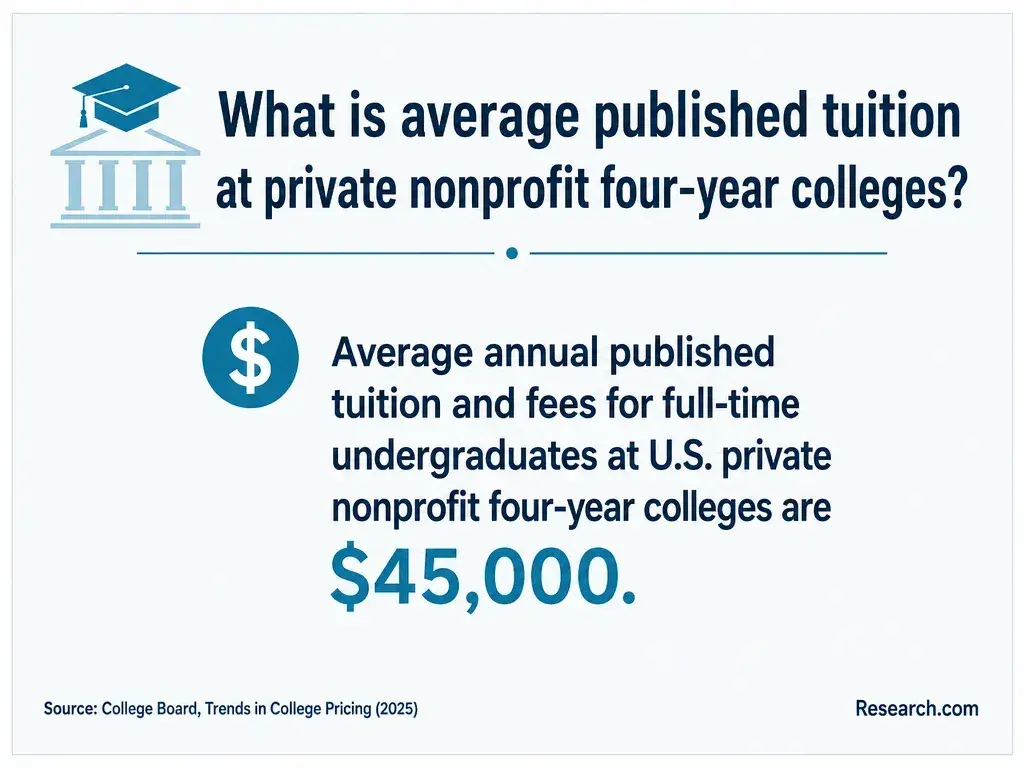
Compare the entire budget, not the advertised tuition rate. Include mandatory fees, travel or campus visits, materials, possible unpaid field hours, and income you would give up by reducing work. Ask whether your employer offers education assistance and what service or grade conditions apply. A comparison of public health tuition and study length is a starting point; obtain a term-by-term estimate from each school before making a financial commitment.
An MPH can support movement toward prevention program coordination, health education, policy work, or program evaluation when paired with relevant experience. Research-oriented graduates may seek analyst or epidemiology positions if they meet employers' methods requirements. A DrPH is aimed at advanced practice leadership, while a PhD is primarily a research-training route; neither substitutes for the experience an employer expects in a senior role.
Translate job postings into evidence you can build. If they ask for evaluation, aim to produce a supervised analysis or implementation report. If they ask for community engagement, document how you shared decisions with partners and incorporated feedback. Someone who wants to remain in direct survivor support may find an MSW, supervised service experience, or role-specific training more relevant than another public health degree.
For a research career, assess supervision and funding alongside subject fit. Epidemiology doctorate net tuition planning is relevant only after you determine that doctoral research, rather than program delivery, is the work you intend to pursue.
There is no single "violence prevention graduate" wage. Compensation depends on the occupation, employer, location, funding source, and level of responsibility. For an evidence-based comparison, match your target job's tasks to a defined occupation in the U.S. Bureau of Labor Statistics Occupational Outlook Handbook - for example, health education specialist or epidemiologist - then check its wage reference year, projected employment period, and typical entry requirements.
Those occupation-wide figures are not earnings forecasts for graduates of a particular program. A nonprofit coordinator, government analyst, and academic researcher may have very different pay structures even when all work on violence prevention. Use a public health master's graduate pay guide for context, then compare local postings you could realistically qualify for against the cost of the degree.
Which Public Health Certifications and Licenses Do Graduates Need?
Most population-level violence prevention jobs do not require a universal public health license. Employers may prefer a relevant degree, experience, or a credential such as Certified in Public Health (CPH) or Certified Health Education Specialist (CHES). Eligibility and exam rules belong to the certifying organizations; check their current criteria before selecting courses to qualify.
Direct clinical services are different. A public health degree does not confer social work, counseling, nursing, or other clinical licensure. If the job you want includes regulated diagnosis or treatment, check the state licensing board's education and supervised-practice requirements before applying to an MPH.
Do not buy an extra credential merely because it appears in a few advertisements. First determine whether local employers require it, prefer it, or accept equivalent experience. Weigh that expense alongside public health graduate program costs versus salaries and the responsibilities the credential would actually help you obtain.
Other Things You Should Know About Public Health
Describe the specific conditions, settings, and outcomes your evidence addresses. Include community perspectives where you have permission to do so, acknowledge protective strengths, and avoid treating a neighborhood or demographic group as the cause of violence.
Not without checking organizational permission, privacy rules, any data-use agreement, and your school's oversight requirements. A deidentified or aggregate dataset may still be subject to restrictions; ask before accessing, analyzing, or sharing it.
Pause and clarify the partner's concerns, decision-making authority, and priorities. Revisit the evidence and project scope together rather than treating community input as an obstacle to an already fixed plan.
Use work you are authorized to share, such as a redacted evaluation framework, a public-data analysis, or a clearly labeled sample tool. Remove confidential details and do not imply that a proposed intervention was implemented or shown to work.
- About The Public Health Approach to Violence Prevention | cdc.gov https://www.cdc.gov/violence-prevention/about/about-the-public-health-approach-to-violence-prevention.html
- The Public Health Approach to Preventing Community Violence | nih.gov https://pmc.ncbi.nlm.nih.gov/articles/PMC12638233/
- Combined MPH/MSW - Program in Public Health https://publichealth.stonybrookmedicine.edu/academics/degreeoptions/grad/msw
- How MSW Field Placements Can Help Prepare You to Pursue a Path to Becoming a Licensed Social Worker | Walden University https://www.waldenu.edu/online-masters-programs/master-of-social-work/resource/how-msw-field-placements-prepare-you-to-become-a-licensed-social-worker
- Degree Program Studies Vulnerability, Violence Reduction | umaryland.edu https://www.umaryland.edu/news/archived-news/february-2021/degree-program-studies-vulnerability-violence-reduction-.php
- What Is CACREP Accreditation? - OU Online https://online.ou.edu/hub/cacrep-accreditation/
- Domestic Violence Intervention and Victim Advocacy Graduate Certificate | ASU https://degrees.asu.edu/masters-phd/major/ASU00/PPDVEPGRCT/domestic-violence-intervention-and-victim-advocacy-graduate-certificate