2027 Public Health BS Degree Planning for Health Education Specialist Work

Co-Founder and Chief Data Scientist
A public health BS can prepare you for health education specialist work, but the degree title alone will not show whether you can plan programs, communicate with communities, and evaluate results. If you are choosing a major or planning your remaining courses, the important decision is whether a program builds those skills and gives you a way to demonstrate them. This guide explains what to look for in coursework, field experience, credentials, costs, and job requirements so you can choose a practical route into the role.
Key Things You Should Know
- A bachelor's degree is the typical entry-level education for health education specialists, according to the U.S. Bureau of Labor Statistics; employers may also seek relevant experience or certification.
- Choose a public health BS with substantial health communication, program planning, evaluation, and supervised community work - not just a health-focused degree title.
- A traditional bachelor's pathway commonly takes about four years of full-time study, but transfer credits, course sequencing, and fieldwork can change both completion time and cost.
What Is a Public Health BS Degree for Health Education Specialists?
A Bachelor of Science in Public Health is an undergraduate degree focused on health across populations rather than diagnosis or treatment of individual patients. A health education specialist uses evidence and community input to assess learning needs, develop educational programs, deliver information, and evaluate whether an initiative is working.
Not every public health BS emphasizes those tasks equally. Some lean toward epidemiology, environmental health, or general public health practice; a health education or community health major may offer more direct preparation. Compare required assignments and field opportunities, not just major names. When comparing online public health bachelor's pathways, check the curriculum of each specific degree rather than assuming similar titles mean similar training.
What Education Is Required to Become a Health Education Specialist?
The U.S. Bureau of Labor Statistics identifies a bachelor's degree as the typical entry-level education for health education specialists. A public health BS is one route, but employers may accept related degrees when applicants can demonstrate appropriate education and experience. Read job postings for the settings you want to enter: a community nonprofit, hospital, and government agency may emphasize different skills.
A master's degree is not a universal requirement for entry-level health education work. It may become useful for a specialized or more senior role after you know what preparation that role requires. Public health master's specialization comparisons can help with that later decision, but they should not displace relevant undergraduate field experience now.
How Does a Public Health BS Prepare Students for Health Education Careers?
The strongest preparation connects a community's stated priorities to a feasible educational response. In class, you might learn to assess needs, appraise evidence, design accessible materials, set measurable objectives, and interpret basic evaluation findings. In supervised work, you should practice listening to partners, revising materials after feedback, and documenting what you actually did.
Ask prospective programs whether students complete a partner-approved internship or project and what deliverable they produce. A communication plan, workshop materials, or evaluation brief can give an employer more evidence of readiness than a course list alone, provided you have permission to share it and remove confidential information. If you are considering short-session courses for online public health majors, confirm that their pace still leaves room for feedback and sustained applied work.
Requirements vary, but a useful health-education sequence starts with population health and social and behavioral science, then builds toward health communication, program planning, and evaluation. Epidemiology and introductory statistics help you interpret a community health problem and judge whether evidence supports a proposed response. Ethics and community-engaged practice matter because an educational message should be developed with, not merely delivered to, the people it concerns.
Inspect course descriptions for assignments that require you to write for a defined audience, develop objectives, choose evaluation measures, and explain limitations. Check prerequisites and when required courses are offered; a delayed statistics or methods course can postpone an applied project. If graduate study is a possible future step, comparing selectivity across online MPH options is a separate decision. It should not replace choosing undergraduate courses that build the skills needed for this job.
Either format can work if it provides accessible instruction, feedback, and a feasible way to complete supervised community work. Online study may reduce travel to class, but it can still include live sessions, group meetings, or field hours during business hours. Campus study may make local partnerships easier to find, though placement availability is never automatic.
Before enrolling, ask where recent students completed fieldwork, who arranged the placements, whether remote projects are permitted, and which activities require attendance at a fixed time. Choose the format whose actual schedule and placement arrangements fit your circumstances. If you later pursue graduate study, choosing a budget-friendly online MPH calls for a new comparison; it is not a reason to pay more for a BS that lacks suitable undergraduate practice opportunities.
Requirements depend on the institution and on whether you apply as a first-year or transfer student. A school may admit you to the university before you can enter the public health major, and the major may have its own prerequisite or GPA rules. Ask for the requirements that apply to your intended entry term.
If you have prior college coursework, request a written degree audit showing which credits count toward general education, major prerequisites, electives, and graduation residency requirements. Accepted credits do not necessarily satisfy the courses that unlock health communication or fieldwork. An undergraduate admission or transfer decision is also distinct from the later question of public health master's options after a weak GPA.
A traditional full-time bachelor's pathway commonly takes about four years. Your remaining time depends on accepted credits and whether they satisfy specific requirements, how often required courses run, your enrollment pace, and the timing of fieldwork. Transfer students should use an approved degree audit and a term-by-term plan rather than an advertised completion estimate.
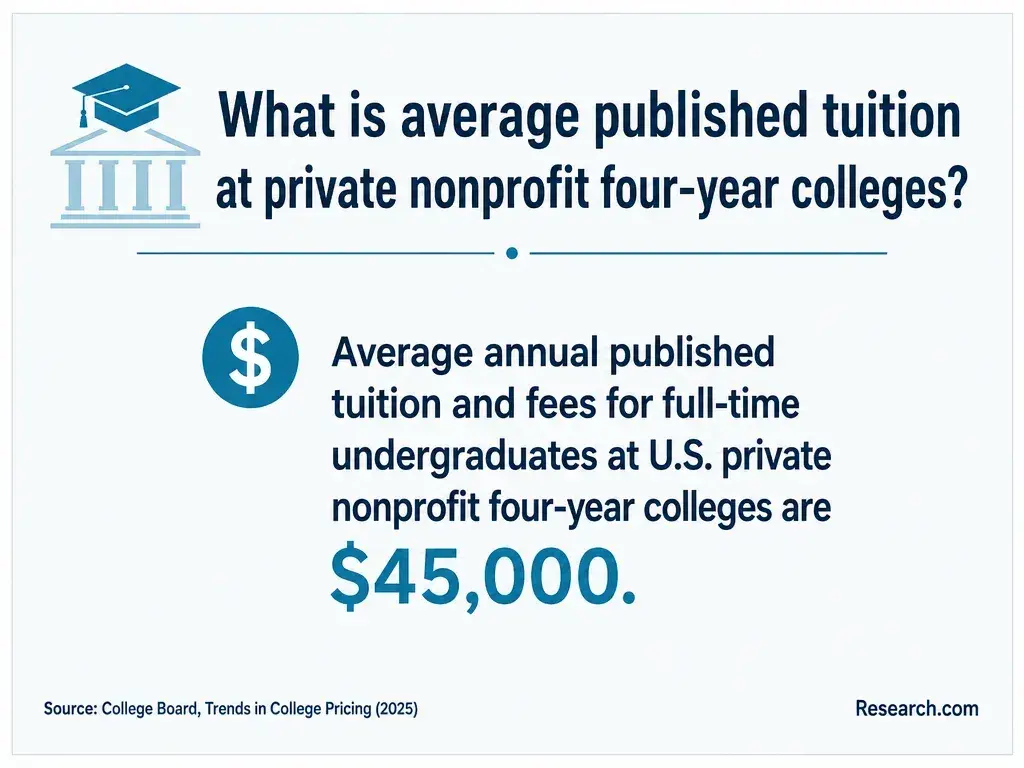
To compare costs, request each school's current tuition and mandatory fees for your expected enrollment pattern. Add books, technology, travel, and any unpaid fieldwork costs; then consider aid eligibility and the earnings you may forgo while studying. Do not use the price of a future graduate degree to justify an unaffordable undergraduate choice. If an MPH later becomes necessary for a defined goal, budget-conscious MPH study and career outcomes warrant their own cost comparison.
Check that the institution holds recognized institutional accreditation. Public health-specific accreditation from the Council on Education for Public Health (CEPH) is a separate question: verify the exact school, unit, or program covered and whether the BS you are considering falls within that scope. Do not assume that institutional accreditation means the particular degree is CEPH-accredited.
A BS does not automatically award the Certified Health Education Specialist (CHES) credential. If CHES matters for your target jobs, check the current eligibility and exam rules with the National Commission for Health Education Credentialing, then ask the program how its coursework maps to those rules. Certification is separate from a degree and does not authorize clinical practice. Accreditation and credential questions arise again in planning doctoral study in public health, but a doctorate is not the standard entry route to health education specialist work.
Health education specialist is the closest occupational match, but graduates may first take roles such as health education assistant, outreach coordinator, or program assistant. The distinction is in the work: an assistant may help deliver and document a program, while a specialist may have more responsibility for assessment, design, and evaluation. Job titles and required experience vary by employer.
The U.S. Bureau of Labor Statistics reported a $62,860 median annual wage for health education specialists in May 2023. That is an occupation-wide midpoint, not an expected starting salary or a public health BS graduate outcome. Compare current postings in your location, including pay, required experience, and actual duties. Advanced quantitative or research careers follow different preparation paths; epidemiology doctorate scholarships and grants address a substantially different education decision, not an entry-level health education requirement.
How Strong Is Demand for Health Education Specialists?
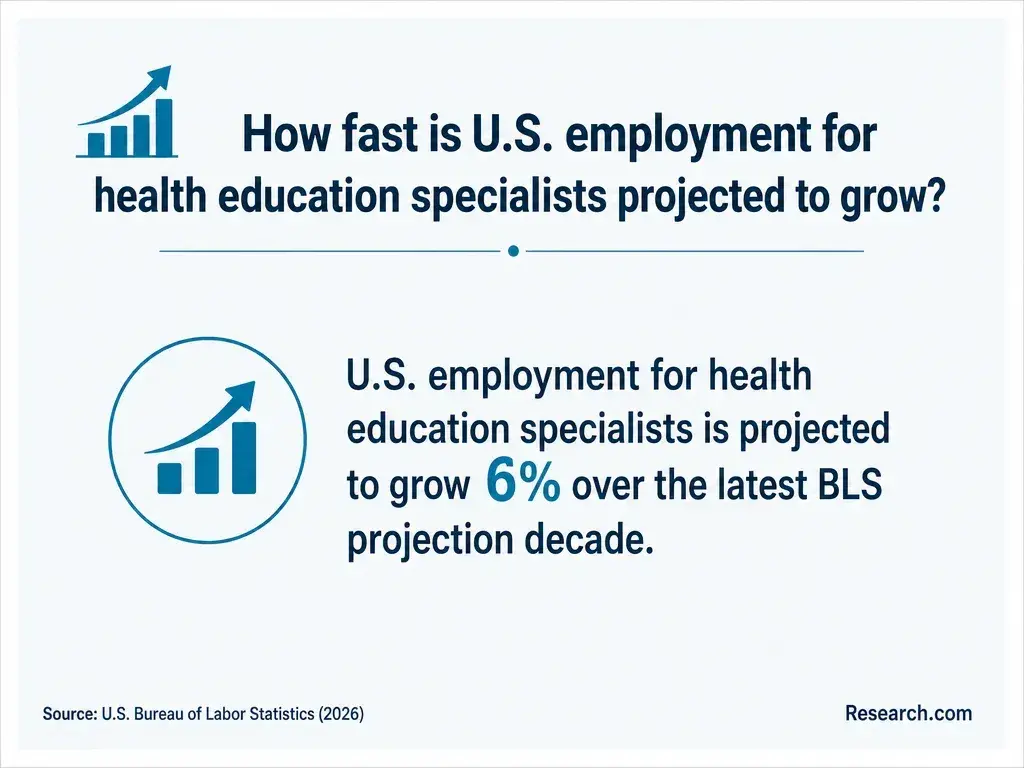
Health education specialists work in settings that need to communicate health information and support prevention, including community organizations, healthcare organizations, and public agencies. National occupational projections can indicate broad demand, but they cannot tell you whether local employers will hire a new graduate without experience or which program topics they currently fund.
For a useful local demand check, review recent postings in your intended area. Separate jobs that accept a bachelor's degree from those requiring substantial program-management experience, a clinical license, or a graduate degree. Note recurring requests for communication, community partnership, evaluation, and language skills, then choose an applied project that lets you demonstrate relevant work. Reviewing selectivity in public health doctoral study concerns a different career stage; it is not a measure of demand for bachelor's-entry health education specialists.
Other Things You Should Know About Public Health
Not generally for community or organizational health education. Teaching health in a public K-12 school is a different position with state-specific educator requirements.
No. Health education work may involve explaining information and connecting people with services, but a public health BS does not confer clinical authority to diagnose or treat patients.
Possibly, if your program approves the site, supervision, learning objectives, and work in advance. Being employed there does not automatically make ordinary job duties eligible for academic credit.
Describe the languages and tasks you can perform, such as facilitating discussions or adapting materials, without overstating proficiency. Employers may assess those skills for positions serving particular communities.
- A narrative review of the CEPH-accredited bachelor's public health programs' curricula in the United States | nih.gov https://pmc.ncbi.nlm.nih.gov/articles/PMC11371682/
- About The Public Health Associate Program for Recent Graduates | cdc.gov https://www.cdc.gov/phap/php/about/index.html
- 2b. Service-Learning Project | New York State Education Department https://www.nysed.gov/standards-instruction/2b-service-learning-project
- Examples of MU CEL Courses | missouri.edu https://cel.missouri.edu/courses/
- Health Education Specialist: Requirements, Salary & Career Guide | Southwest Minnesota State University https://online.smsu.edu/resources/article/health-education-specialist-career-requirements-salary-growth/
- What Can You Do With a Public Health Degree? | North Carolina Central University https://online.nccu.edu/blog/what-can-you-do-with-a-public-health-degree/
- What Can You Do With a Public Health Degree? | University of North Dakota https://und.edu/blog/what-can-you-do-with-a-public-health-degree.html
- What Can I Do With a Bachelor's Degree in Public Health? | GMercyU https://www.gmercyu.edu/academics/learn/what-can-you-do-with-bachelors-degree-public-health
- 12 Public Health Career Paths - Campus Insider https://insider.augusta.edu/12-public-health-career-paths/
- How To Become a Health Education Specialist | nchec.org https://www.nchec.org/news/posts/how-to-become-a-health-education-specialist