2027 Graduate Public Health Preparation for Population Health Reporting Manager Roles

Co-Founder and Chief Data Scientist
Population health reporting managers turn health data into measures that organizations can use, and defend. If you already work in healthcare, analytics, or public health, the preparation challenge is deciding which skills require graduate study and which are better gained on the job.
This guide connects the role's reporting responsibilities to degree options, coursework, supervised projects, and hiring evidence. It also explains how to compare programs without assuming that an MPH, or any degree, automatically qualifies you to manage a reporting team.
Key Things You Should Know
- An MPH with strong epidemiology, biostatistics, and health-data coursework can prepare you for the work, an analytics-focused MS may fit better if advanced modeling is the main gap.
- Manager roles usually require evidence of both reliable reporting and leadership. A graduate degree alone does not replace experience owning measures, resolving data-quality problems, and explaining results to decision-makers.
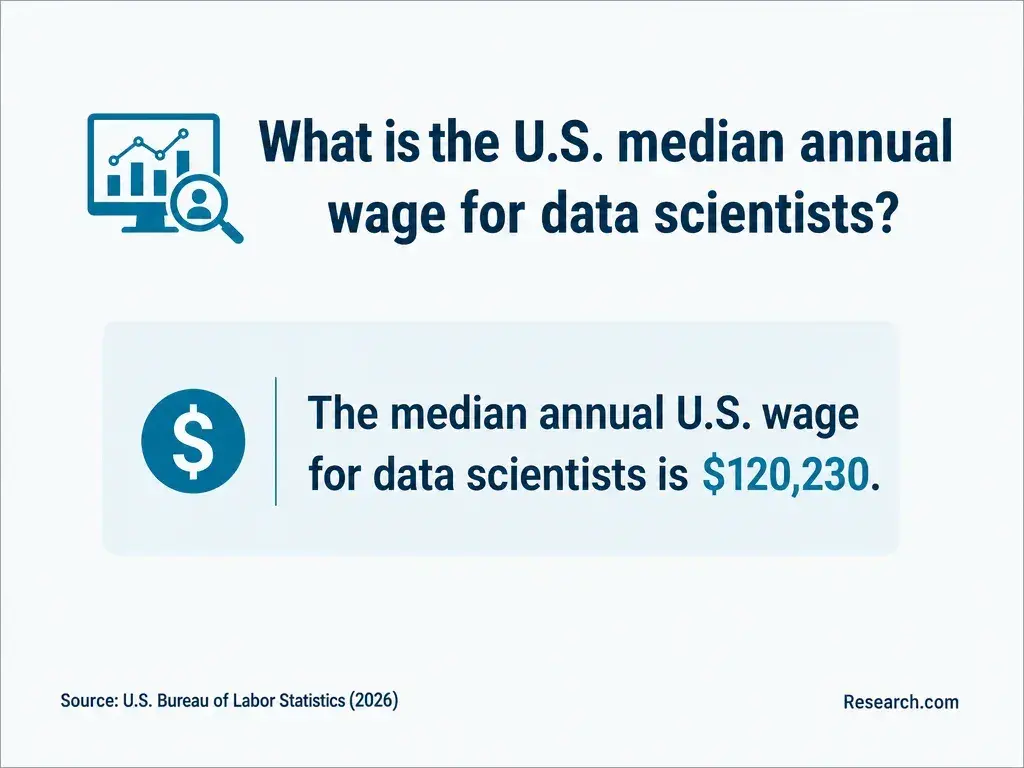
- The US Bureau of Labor Statistics does not publish a wage series for the exact title "population health reporting manager." Compare compensation using actual job postings and their responsibilities, not a generic MPH salary figure.
What does a population health reporting manager do?
A population health reporting manager oversees information used to understand health outcomes and service patterns across a defined group, such as a health system's patients or a health department's jurisdiction. The job is not simply building dashboards. It includes agreeing on what a measure means, checking whether the underlying data support it, setting reporting schedules, and helping clinical, operational, or community partners interpret results.
For example, a manager may need to explain why a preventive-care rate changed after an eligibility rule or data feed changed. That requires attention to the population counted, the numerator and denominator, missing records, and whether a trend reflects care or measurement. Managers may also supervise analysts, document methods, coordinate with data-governance teams, and communicate limitations before a report informs a decision.
If you have not yet owned a reporting process, an analyst or reporting coordinator role is a more credible next step than a management title. Shorter public health study formats and career prospects may be worth comparing when you need foundational knowledge rather than a full graduate degree; they do not substitute for demonstrated management experience.
Which public health degree prepares you for population health reporting management?
Choose a degree by the work you need to perform, not by the manager title alone. The comparison below separates population-health interpretation, technical depth, and organizational leadership.
| Pathway | Best fit for this goal | Potential gap to check |
| MPH with relevant electives or concentration | Reporting that connects epidemiology, health equity, evaluation, and decisions across populations | Whether courses provide enough database, programming, and applied reporting practice |
| MS in biostatistics, health informatics, or a related field | Roles centered on complex analysis, data systems, or measurement methods | Whether the program develops public health context and stakeholder communication |
| MHA or related management degree | Experienced analysts whose principal gap is healthcare operations and team leadership | Whether technical reporting and population-health methods are covered |
An MPH is often the strongest general-purpose choice for someone who must interpret population measures and translate them into action. An MS can be more efficient for someone already grounded in public health but seeking deeper quantitative training. Compare actual courses and projects, not just degree labels; comparing graduate public health degree types provides a broader starting point. A graduate certificate or employer-supported methods training may be enough if you already meet the experience requirements in your target postings.
What education and experience are required for population health reporting manager roles?
There is no universal credential for this job title. Employers may accept different combinations of a bachelor's or master's degree, healthcare or public health experience, technical reporting skills, and supervisory responsibility. A posting's essential duties are more useful than its title: one "manager" may lead analysts, while another is the sole person responsible for producing reports.
Start with your existing work. A clinical professional may understand care workflows but need stronger statistical and database skills. An analyst may know SQL and visualization but need epidemiology, measure design, and experience presenting uncertainty to nontechnical partners. A public health practitioner may need experience with health-system data and production reporting. For each gap, identify proof you can produce, a supervised project, documented responsibility for a recurring report, a reviewed methods specification, or experience coaching colleagues.
A doctorate is not a standard prerequisite for managing routine population health reporting. It may suit a different goal, such as senior practice leadership or research. If that is your longer-term direction, comparing public health doctorate entry requirements is a separate decision from qualifying for a reporting manager opening.
The Council on Education for Public Health (CEPH) accredits eligible public health schools and programs against public health education standards. It is distinct from an institution's broader accreditation. Check CEPH's directory and the school's current listing to determine the accredited unit, whether your proposed degree falls within its scope, and the status that applies to your enrollment plans.
CEPH status is useful evidence of public health educational oversight, but it does not establish that a particular degree teaches SQL, offers a reporting practicum, or has strong hiring connections. Examine syllabi, project expectations, faculty expertise, and available placements separately. This distinction matters when comparing an MPH with another field's degree, or an undergraduate route; online public health bachelor's curriculum and formats can help frame questions about earlier preparation, but each program's accreditation scope still needs its own check.
A useful curriculum follows the reporting workflow from question to defensible decision. Epidemiology and biostatistics help you choose measures and interpret variation; evaluation helps connect measures to program decisions. Database and informatics courses address data extraction, linkage, quality checks, and documentation. Communication and leadership courses matter because managers must explain limitations and negotiate definitions across teams.
Look for a feasible sequence rather than an impressive course list: introductory statistics and epidemiology before advanced analysis; data management before a dashboard project; then a supervised assignment that requires a written measure specification, reproducible checks, and a presentation for a nontechnical audience. Ask whether the courses you need are available during your expected enrollment terms. For deeper quantitative work, biostatistics graduate programs for busy professionals offer a comparison point, though a methods-heavy degree may leave less room for reporting operations and leadership.
For a portfolio, use public or properly authorized data and state what the measures cannot show. Access to identifiable patient data, employer systems, or an external partner's records requires the relevant permissions; course enrollment alone does not grant access.
Choose the format that lets you complete the specific courses and applied work you need while maintaining your current responsibilities. Online study can reduce commuting, but it may still involve live classes, group meetings, fixed deadlines, and an in-person or approved remote placement. Campus study may offer easier access to local partners and collaborative projects, but travel and scheduling can make it less feasible.
Ask each program when technical courses run, whether live sessions are required, who helps secure applied projects, and whether a project at your workplace can qualify after approval. Compare the answers with your work schedule before treating "online" as synonymous with flexible. Admissions convenience is a different factor: online MPH study without reference letters may matter to an applicant, but it says nothing by itself about scheduling or reporting-skill development.
Requirements vary by degree and institution. MPH applicants generally need to establish eligibility for graduate study; technically intensive MS programs may specify additional preparation in statistics, mathematics, computing, or research methods. Programs set their own policies for grades, tests, recommendations, statements, and professional experience. Separate a published prerequisite from a course that would merely make you more competitive.
Build an application around the reporting work you want to do. Document prior quantitative courses, describe a problem you helped investigate, and explain your contribution without overstating your authority or results. If a prerequisite is missing, ask admissions whether an approved course can be completed before enrollment or under another stated policy. Applicants concerned about academic history can review building an MPH application with weaker grades, then confirm the target program's actual rules rather than assuming a general exception applies.
Completion time depends on required credits, course sequencing, enrollment pace, and whether an applied experience can be scheduled when you need it. Total cost includes more than advertised tuition: account for mandatory fees, software or equipment, travel, and any reduction in paid work. Request a written estimate for your intended pace and ask what happens financially if a required course or project is delayed.
Compare that estimate with the smallest educational intervention that closes your hiring gap. An employer-funded analytics course may be preferable to an MPH if your missing skill is narrowly technical; an MPH may offer better value if you need both population-health foundations and applied experience. Choosing a budget-friendly online MPH can help build a shortlist, but verify each school's current charges and the courses available to you.
A plausible progression is reporting coordinator or analyst, senior analyst or reporting lead, then manager after taking responsibility for report quality, stakeholders, and staff or workflows. Some professionals move later into population health strategy, quality improvement, informatics, or evaluation leadership. Titles and progression differ substantially between health systems, insurers, government agencies, and other employers.
Because the US Bureau of Labor Statistics does not isolate "population health reporting manager" as an occupation, there is no reliable national median wage for that exact title. Broader occupational figures may describe very different jobs. To assess pay, compare postings in your location with similar team size, technical duties, and decision authority; ask employers about pay ranges when available. MPH compensation and career advancement offers wider context, not a salary prediction for this role or a particular graduate.
What certifications and standards support population health reporting careers?
Certifications can supplement - but do not replace - evidence that you can produce accurate, interpretable reports. Depending on the employer and responsibilities, relevant preparation may involve public health certification, health informatics or analytics training, or vendor-specific tools. Check each credential's current eligibility, assessment, renewal rules, and relevance to target postings before paying for it. An MPH does not automatically award a professional certification or clinical license.
Standards and governance skills may be more immediately useful than another credential. Learn how your target organization defines measures, controls data access, documents data provenance, and reviews reports for privacy and accuracy.
In interviews, a concrete example of catching a changed denominator or documenting a data limitation can show more role readiness than a certificate whose content never appears in the job description. A PhD is generally a different investment for a research goal, not a faster route to reporting management; use public health PhD program cost comparisons only if that research pathway is genuinely under consideration.
Other Things You Should Know About Public Health
Bring a brief, shareable example showing the question, measure definition, quality checks, and how you communicated a limitation. Remove confidential information and confirm that you have permission to share any employer or partner work.
Ask who approves measure definitions, how data errors are escalated, what reports recur, and whether analysts have access to the people who use their findings. The answers reveal the authority and support behind the manager title.
No. A dashboard is one way to present results. Reporting also requires sound measures, dependable source data, documented methods, appropriate interpretation, and a process for correcting errors.
Possibly, if your program accepts the project and your employer permits a shareable version. Agree on supervision, data use, and redaction before starting; do not assume that permission to analyze data includes permission to publish it.
- Comprehensive Review of Methods to Assess Uncertainty in Health Economic Evaluations - PMC https://pmc.ncbi.nlm.nih.gov/articles/PMC10163110/
- Public Health Surveillance in Electronic Health Records | cdc.gov https://www.cdc.gov/pcd/issues/2024/23_0417.htm
- Summary of the HIPAA Security Rule | hhs.gov https://www.hhs.gov/hipaa/for-professionals/security/laws-regulations/index.html
- Public Health Program Manager - Commonwealth Careers https://careers.employment.pa.gov/Home/GetJobNameInfo
- Population & Public Health - Health IT Playbook https://playbook.healthit.gov/playbook/population-public-health/
- Effective Leadership in Public Health: Essential Skills | Tulane University https://online.tulane.edu/public-health/blog/leadership-in-public-health
- Public Health Analyst: Roles, Skills, and Growth Opportunities | SPH | Boston University https://www.bu.edu/sph/blog/public-health-analyst/
- Health Administration Degrees: Informatics vs. MHA vs. MPH | University of San Diego Online Degrees https://onlinedegrees.sandiego.edu/mha-vs-mph-vs-ms-health-informatics/
- Public Service & Administration Capstone Projects | The Bush School of Government & Public Service https://bush.tamu.edu/research/capstone-projects/psa/
- State & Local Public Health: An Overview of Regulatory Authority | Public Health Law Center https://www.publichealthlawcenter.org/resources/state-local-public-health-overview-regulatory-authority