
2027 From Nonprofit Fundraising to Public Health: Choosing a Graduate Pathway

Co-Founder and Chief Data Scientist
Fundraising for a health nonprofit can put you close to community needs without giving you authority over programs, evaluation, or health policy. If you want to move into that work, the right next step depends on the job you want—not simply on whether a public health degree sounds relevant.
This guide helps fundraising professionals compare graduate pathways with shorter training and on-the-job experience. You will learn which skills already transfer, where the gaps are, and what to verify before committing time or money to a program.
Key Things You Should Know
- An MPH is often the strongest degree fit for a fundraiser moving into community health programs or evaluation; a fundraising leadership goal may not require another degree.
- A full-time MPH commonly takes about two years, but part-time study, fieldwork, and the total cost can change the decision substantially.
- Fundraising experience demonstrates partnerships, budgets, and communication—not, by itself, epidemiology, program evaluation, or eligibility for a regulated health role.
What is a public health degree, and which careers can it lead to?
Public health studies how to prevent harm and improve health across populations. Unlike clinical training, it focuses on patterns, systems, policies, and community conditions. A fundraising professional may already know how to build partnerships and explain a mission; public health education adds ways to define a health problem, assess evidence, design a response, and evaluate whether it is working.
Relevant destinations include community health program coordinator, grants or program manager, health education specialist, and evaluation associate. The first two may build directly on nonprofit experience. Evaluation roles generally demand stronger data and methods skills; epidemiologist roles typically require more specialized preparation. Comparing public health master's career directions can help separate these functions before you compare schools.
A degree broadens preparation but does not substitute for the target employer's required experience. If your intended work remains donor strategy or development leadership, experience with health-focused organizations may be more useful than a public health degree.
Which public health degree pathway best fits a nonprofit fundraising professional?
Start with the responsibility you want to own. The distinction is whether you need to understand health programs better, help run them, conduct specialized research, or lead an organization at a more advanced level. This comparison shows where a degree adds something your fundraising background may not already provide:
| Target | Likely pathway | What to test first |
| Lead health-focused fundraising | Targeted training in public health, grants, or evaluation; a degree may be unnecessary | Whether employers value a credential more than a record of fundraising results |
| Move into program design or management | Practice-oriented MPH, often with community health, policy, or management coursework | Access to supervised program work and evaluation projects |
| Become an evaluation or research specialist | Methods-focused MPH or research-oriented MS | Statistics prerequisites, analytic depth, and opportunities to produce work samples |
| Lead advanced public health practice or original research | DrPH for practice leadership; PhD for research | Whether the role actually requires doctoral training and whether you are ready for its work |
For an adjacent move into program management, an MPH can be useful if it supplies applied experience you cannot obtain at work. For a substantial move into research, compare actual methods courses and supervised research rather than degree labels. A doctorate is rarely the quickest route out of fundraising; public health doctorate program selection becomes relevant if your longer-term goal clearly calls for advanced practice leadership or research.
Before applying, ask for opportunities to help a program team with a needs assessment, reporting framework, or evaluation plan. That experience can clarify whether you want to change functions at all.
What are the main types of public health degrees and concentrations?
A bachelor's degree can support entry-level community or program work, but someone who already holds a bachelor's degree should not assume a second one is the most efficient route. Distance learning options for public health undergraduates are more relevant if you have not yet completed an undergraduate degree.
At the graduate level, the MPH is a professional, population-health degree; an MS is often more specialized or research-intensive. A DrPH generally emphasizes advanced public health practice and leadership, while a PhD emphasizes original research. A graduate certificate or a few courses may be enough when the goal is to interpret health evidence or collaborate more effectively with program staff.
For a fundraiser changing roles, useful MPH concentrations may include community health, health policy, health promotion, or public health management. Epidemiology or biostatistics may fit an analytical goal, but the concentration name alone does not establish method depth. Check the required courses, prerequisites, and applied work; electives are not automatically a formal concentration.
First, verify the institution's recognized accreditation and then check whether the specific public health school, unit, or program and degree fall within Council on Education for Public Health (CEPH) accreditation. These are different checks. If a credential or employer calls for a CEPH-accredited degree, an institution's general accreditation alone does not settle the question.
Next, compare evidence that matters to your transition: courses in program planning and evaluation, access to a suitable practice site, career support for people changing functions, and examples of graduates' roles. Ask whether your current nonprofit could host an approved applied experience; employment there does not automatically make your regular duties eligible.
Admission accessibility is one factor, not a measure of career fit. When considering public health graduate programs with accessible entry, confirm the current entry requirements and evaluate the same curriculum, fieldwork, accreditation scope, and total cost you would assess elsewhere.
MPH students generally encounter population health, epidemiology, biostatistics, policy, social and structural influences on health, ethics, and practice-based work. For someone from fundraising, the highest-value learning may be the ability to turn a compelling case for support into a defensible program plan: identify whose needs are being addressed, select appropriate measures, interpret limitations, and report findings without overstating impact.
Look beyond course titles. An evaluation course should give you a chance to define indicators and assess data quality; a community-engagement project should show how partners influence the work. Ask what students actually produce, who supervises them, and what permissions are needed to use organizational data. Donor records, client information, and health data cannot simply be repurposed for coursework.
Research-intensive study goes further into study design and analysis. A PhD is not necessary merely to read evaluation reports or improve grant proposals; public health PhD costs and program choices deserve consideration only if sustained research training matches the work you intend to do.
MPH programs commonly expect a bachelor's degree and application materials that explain academic preparation and professional goals. Requirements for GPA, statistics, tests, recommendations, and work experience vary by school and concentration. A fundraising background is not disqualifying, but a quantitative MS may expect substantially more prior mathematics or research preparation than a generalist MPH.
Build an application around specific responsibilities: partnerships managed, budgets handled, grant reporting completed, and any collaboration with program or evaluation staff. Then review each program's published prerequisites and deadlines. If a course is missing, ask whether it must be finished before applying, before enrollment, or during the program; do not assume a waiver. Guidance on MPH admission when some requirements are incomplete can help frame those questions, but the program makes the decision.
A full-time MPH often takes about two years; part-time enrollment can extend that timeline. Certificates are generally shorter, while research degrees and doctorates involve different milestones. Compare each school's published credit requirements and course schedule rather than treating a typical duration as a promise.
The useful financial figure is total cost to completion, not advertised tuition alone. The following components can change what a working fundraiser actually pays or gives up:
| Cost component | Why it matters |
| Tuition and required fees | Rates may vary by residency, enrollment level, or term |
| Fieldwork, travel, and supplies | An unpaid placement or campus visit can add expense |
| Reduced work hours | Lost earnings may exceed the difference between two tuition quotes |
| Extra terms | Course sequencing and slower pacing may add fees |
Request a written estimate for your planned pace, then subtract only aid or employer support you have confirmed. Public health master's cost and completion planning can inform a comparison, but a low advertised rate is not necessarily the least expensive path for your circumstances.
Online delivery can be a sound choice when the degree's accreditation scope, teaching, applied work, and career support meet your needs. It does not remove the need to build relationships with program teams or demonstrate hands-on skills. A fundraiser who can arrange an approved project with a local health organization may find an online MPH practical; someone seeking a major research transition may place more weight on access to faculty, research teams, and data.
Ask which classes meet live, when group work occurs, whether campus visits are required, and how placements are secured. These questions matter more than an "online" label. At the doctoral level, epidemiology doctorate net tuition planning is relevant only alongside supervision, research access, and any in-person obligations; price and format cannot establish research fit.
The most realistic first move depends on how far you are changing functions. A fundraiser might move into health-program operations or grants management by adding program experience. A health education specialist role calls for evidence of educational planning and community work. Epidemiology and advanced analysis generally require stronger method preparation and relevant experience; a degree title alone does not establish readiness.
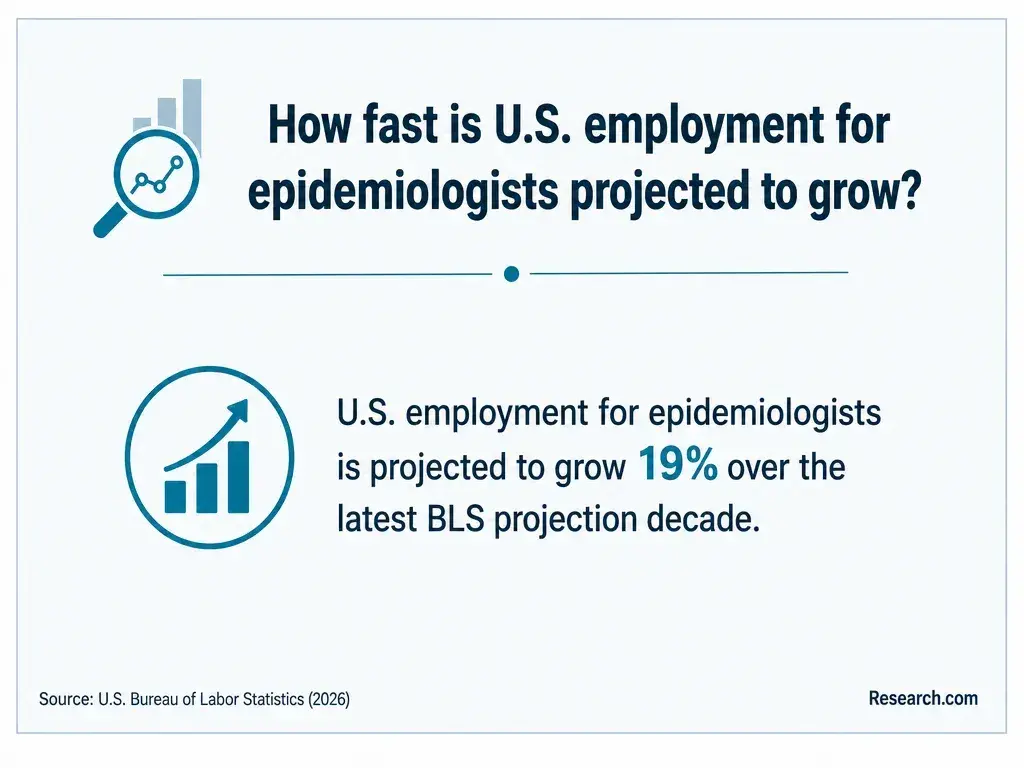
Use occupation-specific US Bureau of Labor Statistics figures to evaluate a target role, not to estimate an MPH graduate's pay. For example, the Bureau reported a $83,980 median annual wage for epidemiologists in May 2024. That occupation-wide median includes experienced workers and is not a likely starting salary for a fundraiser who has just completed a degree. An MPH graduate compensation guide is most useful when read alongside local postings for the precise jobs you want.
Before counting on a salary increase, collect postings from your intended location and compare their duties, experience requirements, and pay with your current role. Nonprofit budgets, government pay structures, and the need to enter a new function at a less senior level can all affect the return on a degree.
Which public health certifications and licenses do graduates need?
Most nonprofit programs, grants, and evaluation roles do not have a universal public health license. Some employers prefer the Certified in Public Health (CPH) credential or health education credentials such as CHES or MCHES, but each has its own eligibility and examination rules. Check the certifying organization's current requirements and the postings for your target role before paying for a credential.
A public health degree does not confer nursing, social work, or another clinical license. Nor does an advanced degree automatically substitute for a job-specific certification: comparing accessible public health doctoral programs addresses an education choice, not eligibility for regulated practice. Let the work you want to perform—and the authority that sets its requirements—determine whether certification, licensure, or neither belongs in your plan.
Other Things You Should Know About Public Health
Translate it into relevant tasks: managing partnerships, explaining evidence to nontechnical audiences, budgeting, or reporting on funded activities. State what you did without claiming that fundraising metrics measure health outcomes.
Often, yes. Ask to contribute to a defined program task with appropriate supervision and a clear deliverable. Agree on the time commitment and access permissions before taking it on.
That can itself be a useful learning opportunity. Help staff define a small set of appropriate measures and a feasible collection process, rather than presenting incomplete records as proof of impact.
No. Donor relationships may help you understand an issue and build partnerships, but choose a specialty for its day-to-day work, required skills, and obligations to the communities served.
- Requirements | jhu.edu https://publichealth.jhu.edu/academics/mph/requirements
- Master of Public Health Program Requirements | umich.edu https://sph.umich.edu/online/mph-requirements.html
- MPH Program Skills: What You Learn and Where They Lead | NMSU Global Campus https://global.nmsu.edu/blog/healthcare/mph-program-skills-what-you-learn-and-where-they-lead/
- How to Choose the Best Specialization for Your MPH Degree | tufts.edu https://medicine.tufts.edu/news-events/news/how-choose-best-specialization-your-mph-degree
- What to expect during your public health internship | Oregon State University https://health.oregonstate.edu/news-and-stories/2022-09/what-expect-during-your-public-health-internship
- MSPH vs. MPH: Which Public Health Degree Is Right for You? | Kent State Online https://onlinedegrees.kent.edu/college-of-public-health/community/msph-vs-mph
- Careers Guide: Explore Public Health Jobs | UIC Online MPH https://onlinemph.uic.edu/news-stories/public-health-careers/
- Public Health Job Market 2026: Trends, Shifts, and Career Opportunities | Emory University https://sph.emory.edu/magazine/2026/spring/public-health-job-market-2026-trends-shifts-and-career-opportunities
- Admissions - Master of Public Health - The University of Chicago https://publichealth.bsd.uchicago.edu/about/admissions/


