2027 BCBA Practicum Challenges & How to Solve Them

Co-Founder and Chief Data Scientist
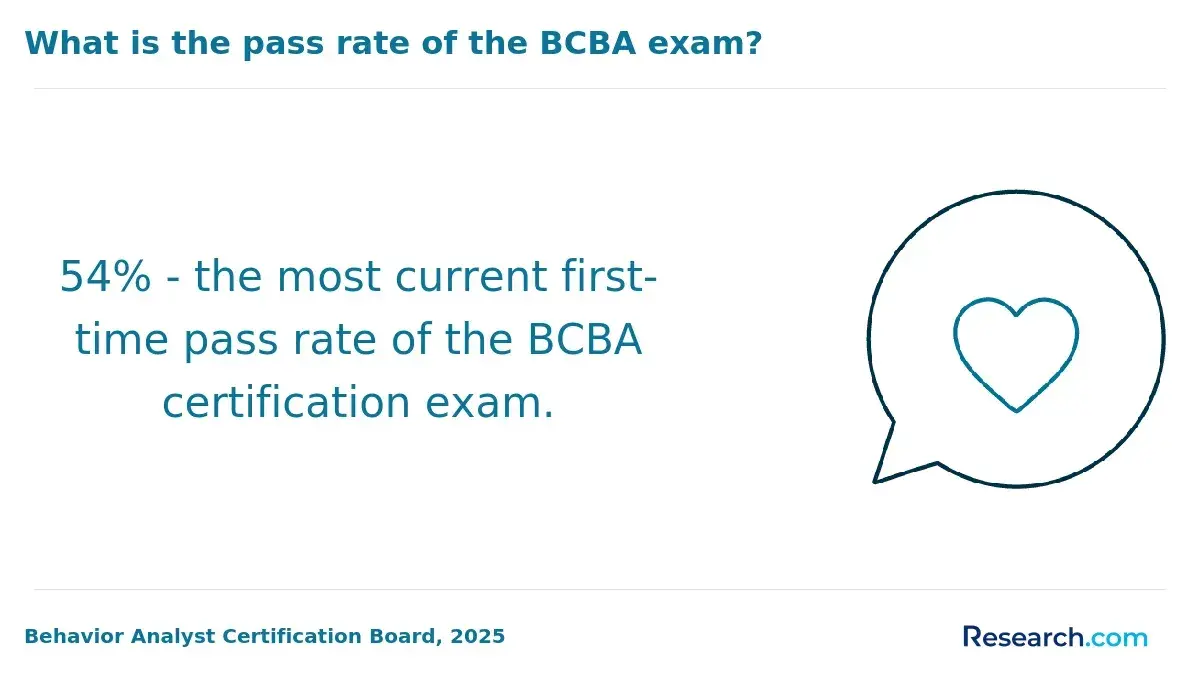
BCBA practicum is where coursework becomes supervised professional practice—and it is often the stage where students realize that earning hours is only one part of readiness. Between 2013 to 2020, only about 64 % of first-time candidates from Behavior Analyst Certification Board (BACB)-recognized Verified Course Sequences passed the Board Certified Behavior Analyst (BCBA) exam, which means more than one-third did not pass on the first attempt. That pass-rate context matters because practicum demands skill in assessment, data collection, documentation, supervision, ethics, and real-time decision-making with clients.
This guide explains the most common obstacles BCBA practicum students face and how to handle them before they delay progress. You will find practical strategies for supervision, time management, difficult cases, organization, stress, BACB documentation, feedback, and the transition from practicum to certification.
Key things you should know about BCBA practicum challenges
- BCBA practicum often involves managing multiple clients and data collection simultaneously, building critical organizational and analytical skills for professional practice.
- Effective communication with supervisors during practicum ensures guidance and feedback, strengthening clinical decision-making and ethical competency in real-world settings.
- Navigating challenging behavioral cases provides hands-on problem-solving experience, preparing students for diverse environments like schools, clinics, and hospitals.
What are the most common challenges BCBA practicum students face during supervision?
Supervision is one of the most important parts of a BCBA practicum because it connects behavior-analytic theory with actual client work. Students in a BCBA school online or campus-based program often expect supervision to be straightforward: complete hours, meet with a supervisor, and receive feedback. In practice, the process can be more complex because students must manage clinical responsibilities, documentation, ethical questions, and performance expectations at the same time.
The most common supervision challenges usually come from unclear systems, inconsistent communication, or limited opportunities to practice higher-level skills. Identifying these problems early gives you time to correct them before they affect your fieldwork progress.
- Unclear supervision expectations: Problems begin when the student and supervisor do not agree on meeting frequency, documentation standards, response times, observation requirements, or what counts as acceptable fieldwork activity.
- Inconsistent feedback: Feedback that arrives too late, is too vague, or is not tied to observable behavior makes it difficult to improve. Practicum students need timely, specific guidance they can apply in the next session.
- Competing responsibilities: Many students are balancing coursework, paid work, client sessions, data entry, meetings, and family obligations. Without a plan, fieldwork can become reactive rather than structured.
- Limited supervisor availability: Some supervisors manage several trainees or heavy caseloads. This can reduce individual coaching time unless meetings are scheduled, documented, and used efficiently.
- Ethical and professional boundary concerns: Practicum sites can raise questions about confidentiality, dual relationships, scope of competence, client dignity, and professional communication. These issues should be brought to supervision early, not handled alone.
- Difficulty moving from observation to independence: Students may understand concepts in class but struggle to implement assessments, behavior plans, caregiver training, or data-based decisions without structured practice.
A strong supervision experience usually starts with a written plan. Students should confirm how often supervision occurs, what materials to bring, how feedback will be delivered, how fieldwork hours will be reviewed, and how urgent concerns should be escalated.
How can BCBA practicum students manage time effectively while completing fieldwork hours?
BCBA practicum time management is not just about filling a calendar with hours. It is about protecting time for qualifying fieldwork, supervision, documentation, and skill development without creating burnout. Students who wait until the end of the month to review hours often discover gaps too late, so time tracking should be part of the weekly routine.
The most effective approach is to build a repeatable system that separates client-facing work, indirect activities, documentation, supervision preparation, and personal recovery time.
- Create a weekly hour-block schedule: Reserve fixed blocks for client sessions, indirect work, supervision meetings, data review, and documentation. Treat these blocks as professional commitments, not optional study time.
- Prioritize qualifying activities first: Schedule activities that clearly support fieldwork requirements before administrative tasks that may not count or may not advance competence.
- Track hours daily: Waiting several days increases the risk of inaccurate logs. Record dates, duration, activity type, supervisor involvement, and supporting notes while the details are still fresh.
- Batch similar tasks: Group data entry, graph updates, literature review, material preparation, and note writing into focused blocks to reduce task switching.
- Use calendar alerts and task reminders: Automated reminders help prevent missed supervision meetings, late signatures, incomplete session notes, and forgotten follow-up items.
- Plan for low-hour weeks: Cancellations, illness, school breaks, and client availability can reduce hours. Build a buffer instead of assuming every week will go perfectly.
- Tell your supervisor when workload changes: If coursework, employment, or personal demands increase, discuss adjustments early so your fieldwork plan remains realistic.
A useful weekly routine is to review three questions every Friday: How many hours did I complete? What documentation still needs supervisor review? What activities should be prioritized next week to build competence rather than simply accumulate time?
What strategies help BCBA practicum students improve communication with supervisors?
Good supervision depends on clear communication. Your supervisor cannot provide useful guidance if they do not know what you are doing, where you are struggling, or what decisions you are making with clients. Practicum students should treat supervisor communication as a professional skill, not just a requirement for completing hours.
Effective communication is proactive, organized, and specific. It should help the supervisor understand your caseload, review your data, identify risks, and give feedback you can use immediately.
- Schedule regular check-ins: Weekly or bi-weekly meetings keep fieldwork progress visible and prevent small issues from becoming larger problems.
- Bring an agenda: List client updates, data questions, ethical concerns, skill goals, and decisions that need approval. An agenda helps supervision stay focused.
- Clarify communication preferences: Ask whether your supervisor prefers email, video calls, in-person meetings, shared documents, or secure messaging for different types of questions.
- Send materials before meetings: Share hour logs, graphs, session notes, behavior definitions, or treatment plan questions in advance so your supervisor can review them thoughtfully.
- Ask for actionable feedback: Instead of asking, “How did I do?” ask, “What should I change in my prompting procedure?” or “Which part of my caregiver training needs improvement?”
- Confirm decisions in writing: After supervision, briefly summarize agreed-upon next steps, especially when they involve intervention changes, documentation corrections, or client safety concerns.
- Raise concerns early: If you are unsure whether an activity counts, whether a plan is ethical, or whether a case is outside your current skill level, ask before acting independently.
Students should also be open about what they do not understand. Supervisors expect trainees to have developing skills. What matters is whether you seek clarification, apply feedback, and document your professional growth.
Difficult behavioral cases are a normal part of BCBA practicum, but they should not be handled through guesswork. Challenging behavior may involve safety risks, inconsistent data, complex environments, caregiver stress, competing treatment priorities, or variables the student has not yet learned to manage independently. The correct response is structured assessment, close supervision, and careful documentation.
When a case feels overwhelming, the goal is not to “fix” everything quickly. The goal is to define the problem clearly, collect useful data, consult with your supervisor, and implement evidence-based procedures within your competence.
- Request supervisor consultation early: If a case feels unsafe, confusing, or beyond your current skill level, schedule a focused review instead of waiting for the next routine meeting.
- Define behaviors in observable terms: Replace broad labels such as “aggressive” or “noncompliant” with measurable descriptions that different observers can identify consistently.
- Break complex concerns into smaller targets: Prioritize the behaviors that are most important for safety, learning, daily functioning, or treatment progress.
- Use data-based decision-making: Track frequency, duration, latency, intensity, or other relevant measures so intervention decisions are based on patterns rather than impressions.
- Document antecedents and consequences: Careful ABC documentation can reveal setting events, triggers, maintaining consequences, and environmental variables that affect behavior.
- Monitor treatment integrity: A plan may appear ineffective if it is not being implemented as designed. Review whether prompts, reinforcement, data collection, and response procedures are consistent.
- Protect client dignity and safety: Difficult cases can lead to frustration. Maintain professional language, avoid blame, and follow site procedures for risk, crisis, and mandated reporting concerns.
- Debrief after intense sessions: Use supervision to review what happened, what data showed, what should change, and how you can manage your own stress response.
Students should remember that complex cases are often where the most learning occurs. However, learning must happen under appropriate supervision and within ethical limits.
Organization during BCBA practicum is a professional safeguard. It protects your hours, supports accurate client care, helps supervisors review your work, and reduces the risk of missing required documentation. Students entering BCBA programs should expect to manage multiple streams of information at once: client data, supervision notes, hour logs, feedback, competencies, treatment materials, and deadlines.
The best organization system is simple enough to maintain every week. If your system requires too many steps, you are less likely to use it when fieldwork gets busy.
- Maintain a practicum binder or secure digital folder: Keep supervision contracts, hour logs, feedback notes, competency checklists, signed forms, meeting agendas, and important program documents in one organized location.
- Separate client materials from certification paperwork: Client documentation, supervision documentation, and personal study materials should be organized separately to reduce errors and protect confidentiality.
- Use session checklists: Before each session, confirm that you have data sheets, behavior definitions, materials, reinforcement items, safety information, and any required forms.
- Track direct and indirect service hours: Review hour categories regularly so you understand how your experience is developing and can identify imbalances early.
- Set recurring documentation deadlines: Schedule time for data entry, graph updates, session notes, supervisor signatures, and hour-log review.
- Back up important forms digitally: Keep secure copies of signed and submitted forms in case paper copies are lost or access to a platform changes.
- Use consistent file names: Clear naming conventions make it easier to find documents during supervision, audits, or program reviews.
- Review your system monthly: Check whether any logs are incomplete, signatures are missing, or client documentation needs correction.
A practical rule is to document as if another qualified professional needed to understand your work without asking you to reconstruct it from memory. Clear organization supports continuity, accountability, and ethical practice.
BCBA practicum can be stressful because students are learning in real service settings where decisions affect clients, families, teachers, staff, and treatment outcomes. Anxiety may come from being observed, making mistakes, completing hours on time, managing difficult behavior, or preparing for certification. Students in a fastest BCBA program may feel this pressure more intensely because compressed timelines leave less room for adjustment.
Stress does not mean you are unfit for the field. It often means you need stronger systems, clearer feedback, and support. The key is to address stress before it interferes with ethical judgment, client care, or learning.
- Normalize the learning curve: Many practicum students feel pressure about performance, hours, supervisor expectations, and client outcomes. Skill development takes repeated practice.
- Use supervision as a stress-management tool: Bring difficult sessions, uncertainty, and emotional reactions to supervision in a professional way. Reflection helps turn stress into learning.
- Create a weekly debrief routine: Brief journaling or peer discussion can help you identify what went well, what needs improvement, and what questions to bring to your supervisor.
- Join peer-support groups or forums: Other practicum students can provide perspective, study strategies, and encouragement, especially when they are managing similar requirements.
- Protect non-practicum recovery time: Sleep, exercise, meals, hobbies, and time away from work are not luxuries. They support attention, patience, and professional decision-making.
- Use checklists to reduce cognitive load: Anxiety often increases when tasks are vague. Checklists for sessions, documentation, and supervision preparation make work feel more manageable.
- Bring concerns to your supervisor early: If a schedule, case, or site expectation is creating significant stress, discuss it before it affects performance or documentation accuracy.
- Know when to seek additional help: If stress becomes persistent, overwhelming, or disruptive to daily functioning, consider support through campus services, an employee assistance program, or a licensed mental health professional.
Practicum is demanding by design, but it should still be sustainable. A student who learns to manage stress responsibly is also building a core professional skill for long-term BCBA practice.
BACB requirements can feel complicated because students must align coursework, supervised fieldwork, documentation, ethics, and exam preparation. The safest approach is to rely on official requirements first, then use program resources and technology to stay organized. Do not depend only on informal advice from classmates or social media when certification eligibility is involved.
The most useful resources are those that help you verify requirements, document fieldwork correctly, and improve the quality of your supervised practice.
- BACB handbook and official guidelines: The BACB handbook should be your primary source for eligibility, supervision, documentation, ethics, and exam-related requirements.
- Program fieldwork manuals: Your university or training program may have additional procedures, forms, deadlines, or competency expectations that you must follow alongside BACB rules.
- Supervision contracts and hour-log forms: Standardized documents help clarify responsibilities, track direct and indirect activities, and record supervisor involvement accurately.
- Secure data-collection tools: Digital systems can support behavior-data tracking, session notes, graphing, and progress monitoring, but they must be used in a way that protects client confidentiality.
- Calendar and task-management tools: Reminders for supervision meetings, documentation deadlines, signatures, and monthly reviews reduce the chance of avoidable errors.
- Professional development webinars and ethics modules: These can strengthen applied skills and reinforce professional standards, especially when connected to feedback from your supervisor.
- Peer networks and mentorship platforms: Connections with experienced BCBAs and other practicum students can provide practical insight, but advice should always be checked against official requirements and supervisor guidance.
- Exam-preparation materials: Practice questions, study plans, task-list reviews, and concept fluency tools can support exam readiness when used consistently rather than only at the end of fieldwork.
A good rule is to keep one official source of truth for requirements, one system for tracking hours, and one routine for reviewing documentation with your supervisor. Too many disconnected tools can create more confusion than clarity.
Accurate documentation is central to both client care and certification progress. In practicum, data are not just paperwork; they guide assessment, intervention decisions, supervision discussions, and evidence of professional competence. Poor documentation can lead to weak clinical decisions, missed feedback opportunities, and problems verifying fieldwork.
The best documentation systems are consistent, timely, measurable, and easy for a supervisor to review. Students should aim for accuracy first, then efficiency.
- Use standardized data-collection sheets: Consistent forms reduce variation across sessions and make it easier to compare trends over time.
- Define behaviors before collecting data: A clear operational definition helps ensure that different observers record the same behavior in the same way.
- Select the right measurement system: Depending on the case, frequency, duration, latency, magnitude, interval recording, or ABC data may be appropriate. The measure should match the behavior and intervention goal.
- Enter data promptly after sessions: Delays increase the risk of memory errors, missing details, and inaccurate coding.
- Record qualifying fieldwork activities clearly: Log both direct service and indirect supervision hours in a way that matches BACB expectations and supervisor review procedures.
- Separate objective data from interpretation: Write what occurred, what was measured, and what the data show before adding hypotheses or clinical impressions.
- Review graphs and trends regularly: Data should inform decisions. If a graph is not being reviewed, it is less likely to improve treatment planning.
- Check documentation for completeness: Confirm dates, times, client identifiers, activity descriptions, signatures, and supervisor notes according to your program and site requirements.
- Schedule data reviews with your supervisor: Collaborative review helps identify measurement errors, refine interventions, and build professional judgment.
Efficiency improves when forms are prepared before sessions, data are entered immediately, and documentation review becomes part of the weekly supervision routine.
Constructive feedback is one of the highest-value parts of BCBA practicum. It helps students improve technical skills, professional communication, ethical decision-making, and case conceptualization. The average salary range for BCBAs is $70,000 to $89,500, with top earners exceeding $120,000, so developing strong feedback-response habits now can support long-term career growth and professional credibility.
Receiving feedback well does not mean agreeing with everything without thought. It means listening carefully, asking clarifying questions, applying the guidance, and showing evidence of improvement.
- Ask for specific feedback: Replace broad questions such as “How did I do?” with targeted questions such as “How can I improve my error-correction procedure?” or “Was my behavior definition objective enough?”
- Prepare your own self-assessment: Before supervision, identify what you think went well, what felt difficult, and what data or examples you want reviewed.
- Document feedback immediately: After each supervision meeting, record the main points, required changes, deadlines, and how you will measure improvement.
- Create an action plan: Turn feedback into specific next steps, such as revising a data sheet, practicing caregiver training, improving graph interpretation, or changing session preparation routines.
- Follow through visibly: Supervisors need to see that you applied prior feedback. Bring examples, updated documents, or data showing what changed.
- Maintain a feedback log: Track feedback themes over time. Repeated comments may reveal skill areas that need more deliberate practice.
- Separate feedback from personal criticism: Supervision is designed to improve performance. A growth-oriented response helps you use feedback without becoming defensive.
- Ask for behavioral examples: If feedback feels vague, ask your supervisor to identify what they observed and what they want you to do differently next time.
- Review progress in later meetings: Ask your supervisor whether the change you made addressed the concern and what the next improvement target should be.
Students who use feedback systematically often develop faster because they convert supervision into measurable professional growth rather than treating it as a compliance requirement.
How can BCBA practicum students prepare for challenges in transitioning from practicum to certification?
The transition from practicum student to certified behavior analyst is a major professional shift. During practicum, you work under supervision; after certification, you may be responsible for full case management, intervention design, staff training, caregiver consultation, ethical decisions, and supervision of others. Demand for BCBAs is surging across schools, clinics, and private practice settings, with median annual salaries reported at $76,000. Students exploring ABA programs should plan for the transition early rather than waiting until fieldwork is complete.
Preparation should focus on competence, documentation, exam readiness, professional identity, and job-market fit.
- Build a diverse case portfolio: Seek supervised experience across different behaviors, age groups, settings, assessment methods, and intervention types when possible.
- Identify skill gaps before fieldwork ends: Ask your supervisor where you need more practice, such as functional assessment, data analysis, caregiver training, treatment planning, or ethical decision-making.
- Learn post-certification responsibilities: BCBAs may supervise staff, train caregivers, write treatment plans, monitor outcomes, and make independent professional judgments. Start observing these responsibilities during practicum.
- Prepare for the exam with a structured plan: Use your practicum experiences to connect concepts to real cases, then supplement with systematic review and practice questions.
- Strengthen professional documentation habits: Employers and supervisors value clinicians who can produce clear, accurate, timely documentation.
- Seek mentorship before certification: A mentor can help you understand job settings, caseload expectations, compensation models, supervision quality, and early-career risks.
- Plan continuing education and specialization: Certification is not the end of training. Continuing education units (CEUs), ethics training, and specialized experience help you stay current and effective.
- Evaluate job offers carefully: Consider supervision structure, caseload size, billable-hour expectations, client population, training support, ethical culture, and opportunities for growth.
- Practice professional communication: The move into certification often requires more collaboration with families, schools, medical providers, technicians, and administrators.
A successful transition is built before the certification date. Use the final phase of practicum to close skill gaps, confirm documentation, strengthen exam readiness, and clarify the type of BCBA role that fits your professional goals.
Other things you should know about BCBA practicum challenges
In 2027, BCBA practicums require a minimum of 5% of weekly hours to be supervised by a qualified BCBA. Supervisors must hold a valid certification and cannot have familial or employment ties that might affect impartiality. Specific tracking forms and systems are mandatory for record-keeping.
For the 2027 BCBA fieldwork pathway, applicants must complete 2,000 supervised fieldwork hours or 1,500 concentrated hours. At least 60% of hours must be unrestricted, and no more than 40% may be restricted, according to the BACB.
In 2027, BCBA practicum documentation requirements include maintaining detailed records of supervision hours, client interactions, and competencies achieved. These documents must align with BACB standards and be readily available for audits, ensuring compliance with the Board's verification processes.
- Advanceable ABA (2025). Inside the Life of a BCBA: Daily Work & Challenges. https://advanceableaba.com/blog/inside-the-life-of-a-bcba-daily-work-challenges/
- AppliedBehaviorAnalysisEdu.org (n.d.). ABA practicum and fieldwork. https://www.appliedbehavioranalysisedu.org/aba-practicum-and-fieldwork/
- AppliedBehaviorAnalysisEdu.org (n.d.). Behavior analyst salaries by state. https://www.appliedbehavioranalysisedu.org/salaries/
- Behavior Analyst Certification Board (2025). BCBA® handbook (08/2025 update). https://www.bacb.com/wp-content/uploads/2025/08/BCBAHandbook_250818-2-a.pdf
- Behavior Analyst Certification Board (2025). US employment demand for behavior analysts: 2010–2024. https://www.bacb.com/wp-content/uploads/2025/02/Lightcast2025_250204-a.pdf
- Dubuque, E. M., & Kazemi, E. (2021). An investigation of BCBA exam pass rates as a quality indicator of applied behavior analysis training programs. Behavior Analysis in Practice, 15(3), 909‑923. doi: 10.1007/s40617-021-00660-x
- Step Ahead ABA (2025). The rate of job growth for BCBAs. https://www.stepaheadaba.com/blog/the-rate-of-job-growth-for-bcbas