2027 A Community Air Quality Data Communication Brief: A Graduate Public Health Portfolio Project

Co-Founder and Chief Data Scientist
An air quality chart is not yet a useful public health message. Residents, community organizations, and local officials need to know what a measurement means, what it cannot establish, and where to find appropriate guidance. For graduate students building a portfolio, a community air quality data communication brief can demonstrate that translation from evidence to decision.
This guide explains how to scope the brief, select and interpret data, work responsibly with a community partner, and present a finished artifact without overstating findings or exposing information you lack permission to share.
Key Things You Should Know
- Build the brief around one audience and one decision, such as whether a community organization should share existing smoke-exposure guidance during a wildfire event.
- Report the pollutant, location, measurement period, source, and limitations together; an Air Quality Index value above 100 indicates conditions unhealthy for sensitive groups, not a measured health outcome for local residents.
- A credible portfolio artifact includes a reproducible data trail, a plain-language message, and documented review or clearly labeled proposed review; it does not claim community approval or fieldwork credit without it.
What Is a Community Air Quality Data Communication Brief?
A community air quality data communication brief is a short, audience-specific document that turns environmental measurements into a carefully qualified public health message. Its reader might be a neighborhood organization, school administrator, health department communications team, or residents seeking context for published air quality information. The brief should answer a defined question - not attempt to diagnose illness, prove that a source caused pollution, or replace official alerts.
A workable graduate portfolio version can cover one pollutant, one geographic area, and a stated period. For example, a student might propose a brief explaining how publicly available fine-particle data and Air Quality Index (AQI) categories relate to a community organization's existing wildfire-smoke communications. This is a proposed project scope, not a claim about conditions in any particular community.
The format is useful before graduate study, too. Students exploring online public health bachelor's degrees and programs can make a simpler, clearly labeled classroom version; the graduate-level distinction is stronger justification of data choices, uncertainty, stakeholder needs, and review procedures.
How Does This Portfolio Project Apply Public Health Data Skills?
The central analytical task is matching the data to the decision. EPA AirNow observations and AQI information can help explain reported conditions, while EPA regulatory-monitoring data may be more appropriate for certain historical analyses. Low-cost sensor readings can add local context but may differ from regulatory measurements. The student must identify which source is used, what it measures, and why it is fit for the brief's purpose.
Interpretation matters as much as calculation. AQI communicates pollutant-specific air quality and associated health guidance; it is not a count of exposures, illnesses, or people affected. A monitor outside a neighborhood may not represent conditions on every block, and an hourly reading should not be described as a seasonal pattern. Comparing areas also requires attention to monitor placement, missing observations, time windows, and changing weather - not an unsupported claim that one community faces a greater health burden.
The finished analysis should retain the original source citation, download date, variable definitions, exclusions, and steps used to make each figure. If the student's immediate goal is to learn data cleaning and visualization rather than earn another credential, lower-cost routes through online public health study are worth comparing with a targeted course and supervised project. The brief itself can demonstrate a skill, but it does not establish advanced exposure-assessment expertise.
Which Graduate Public Health Degrees Prepare Students for Air Quality Work?
Choose preparation according to the work you want to perform, not simply the subject of the brief. An MPH with relevant environmental health, epidemiology, or health communication coursework can support population-level interpretation and practice. A research-oriented MS in environmental health or a related field may be a better fit for intensive exposure measurement and analysis. Course names and available projects vary by institution; an elective does not necessarily constitute a formal concentration.
The distinction is especially important when comparing public health master's specialization comparisons. A student aiming to write community guidance needs communication and partnership experience alongside data literacy; a student aiming to design monitoring studies needs deeper measurement and quantitative training. Neither degree alone confers authority to issue an official health alert.
This project tests whether a student can make defensible choices under real communication constraints. That includes deciding which uncertainty belongs in the main message, which detail belongs in a methods note, and when a finding is too weak to support a recommendation. It also requires distinguishing an official agency advisory from the student's interpretation of public data.
A brief's learning value comes from feedback and revision. A faculty reviewer can challenge the analysis; a partner, if one has agreed to participate, can assess whether the language serves its audience. Students should record what changed after review without implying that a partner endorsed the final document. For those considering research careers, this exercise may reveal an interest in deeper exposure science, but a brief is not a substitute for doctoral research training. Compare that longer commitment, including public health PhD tuition comparisons, only if a research doctorate serves a defined goal.
Either format can support the same deliverable if the student has usable data, feedback, and permission to share the result. An online student can work with public datasets and meet reviewers remotely; a campus student may have easier access to local seminars or partners, but proximity does not grant data access or community approval. Confirm live meeting times, group-work expectations, software access, and any site visits before treating an online project as schedule-flexible.
The sequence below keeps a proposed class project distinct from an approved practicum or partner product.
- Confirm the course or portfolio rubric, required supervisor, deadline, and whether a partner is required.
- Write one audience-and-decision statement, then choose a pollutant, area, period, and suitable public data source.
- Check data coverage and definitions; document cleaning, calculations, and uncertainty before drafting a graphic.
- Draft the message using the applicable agency's published health guidance rather than inventing recommendations.
- Request faculty review and, where applicable, partner review; revise and obtain separate permission before publishing partner materials or restricted information.
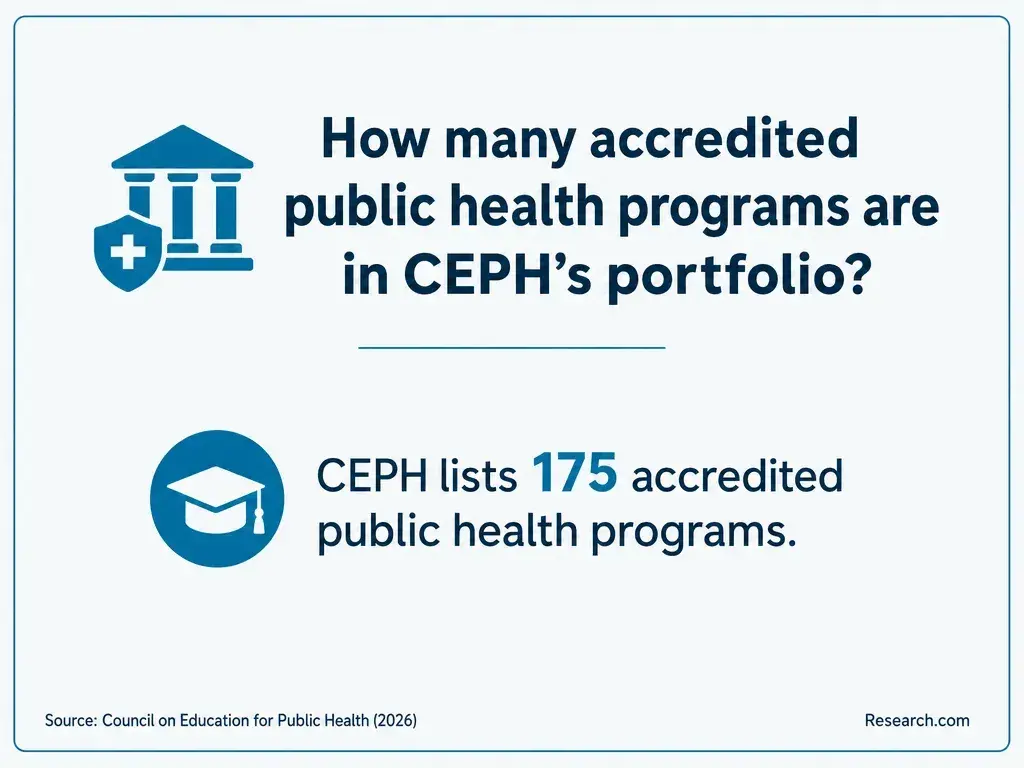
If the project must satisfy an MPH applied practice experience, ask the program whether the tasks, supervision, site agreement, competencies, and deliverables qualify. When comparing CEPH-accredited graduate public health programs, check those practical requirements rather than assuming an online format or accreditation status approves a particular project.
Admission requirements matter here mainly if you are choosing a degree to support future air quality work. MPH applicants generally need to document prior undergraduate education and follow each program's application instructions; a relevant science major is not a universal requirement. An environmental health or quantitatively intensive MS may expect more specific preparation. Programs, not project topics, determine whether statistics coursework, tests, recommendations, or experience are required.
Compare your transcript and experience against the exact programs you are considering. A writing or community-organizing background may support the communication side of this brief, while a statistics or environmental science background may support its analysis; either applicant may need to fill a different gap. Reviewing eligibility for accessible MPH programs can help identify options, but confirm current prerequisites, application policies, and project opportunities directly with the program before applying.
The brief is a bounded course or portfolio project; a graduate degree is a much larger time and financial commitment. Program length depends on required credits, course sequencing, enrollment pace, and any fieldwork or culminating requirement. For this project specifically, budget time for locating usable observations, checking definitions, obtaining feedback, and revising the message - not just producing a chart.
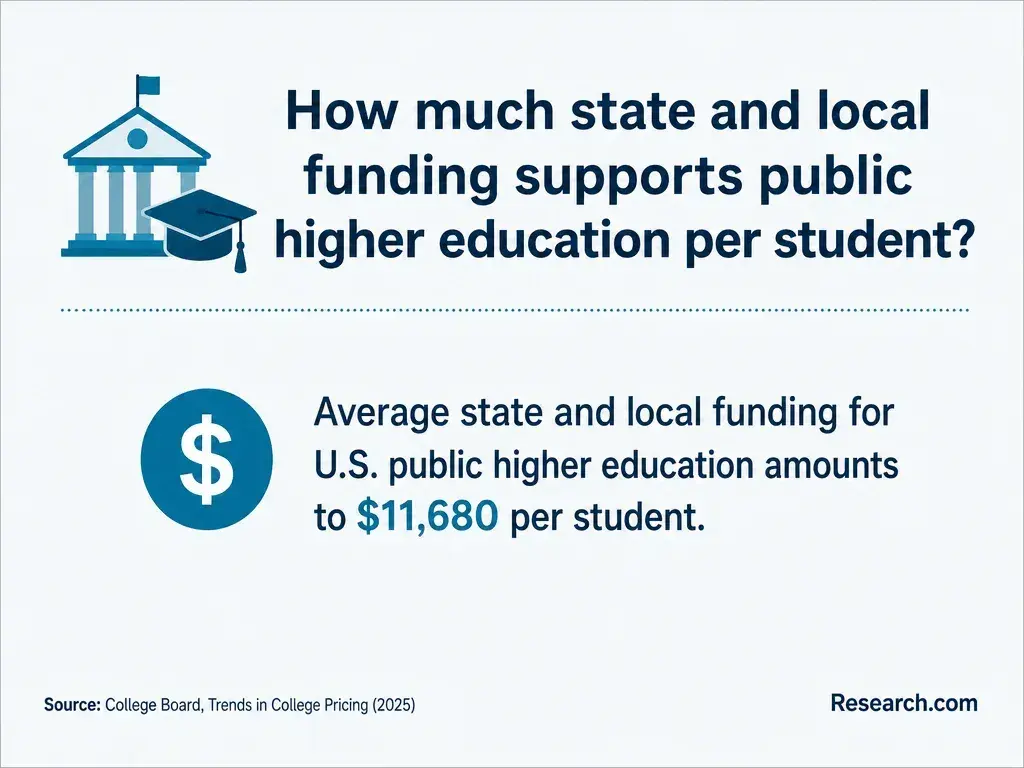
To compare degree costs, obtain each institution's current per-credit or term tuition, mandatory fees, required credits, and charges connected with fieldwork or travel. Add likely software, reduced work hours, and any unpaid placement costs before deciding whether the degree advances your goal. Comparing university scholarships for MPH study may help narrow options, but verify eligibility, renewal conditions, and the amount available for your enrollment pattern. If you only need this portfolio skill, a course, mentorship, or approved project may be more proportionate.
The brief can provide evidence of readiness for supervised tasks in a health department, community organization, environmental nonprofit, or research team. Entry-level responsibilities might include checking published monitoring information, preparing accessible graphics, documenting sources, and revising messages with a supervisor. Employers will still evaluate writing, data skills, experience, and the requirements of the specific position.
Health education specialists and communications staff may focus on audience needs and messaging. Environmental health specialists may work more directly with environmental conditions and regulatory processes; qualifications can vary by employer and jurisdiction. Epidemiologists and exposure researchers generally need deeper study-design and analytical preparation than one brief demonstrates. A research-directed student weighing that longer pathway should assess training and opportunity costs, including public health doctorate affordability and completion time, rather than treating a portfolio artifact as evidence that a doctorate is necessary.
There is no meaningful salary or job-growth figure for "graduates who made an air quality brief." Compare named occupations instead. The US Bureau of Labor Statistics Occupational Outlook Handbook publishes occupation-wide pay and employment projections for roles such as health education specialists and epidemiologists. Those figures describe workers in an occupation - not starting offers, air quality positions specifically, or outcomes attributable to an MPH.
For a practical comparison, select job postings whose duties resemble the work you want, note their education and experience requirements, and then check the matching BLS occupation's latest wage reference year and projection period. Public-sector pay scales, location, and specialist experience can materially change the comparison. Use public health graduate tuition and career value as a starting point for weighing education costs against plausible roles, not as a prediction of your earnings.
Which Accreditation and Certifications Matter for Public Health Careers?
Institutional accreditation and public health-specific accreditation answer different questions. Check the institution's recognized accreditation, then verify whether the Council on Education for Public Health (CEPH) accredits the relevant school, unit, or standalone program and whether the degree you want falls within its scope. Do not assume a university's accreditation, or a related accredited degree, covers every public health offering.
Credentials such as Certified in Public Health (CPH) or Certified Health Education Specialist (CHES) have separate eligibility and examination rules. An MPH, an air quality brief, or a CEPH-accredited education does not automatically award either credential. Check the certifying body's current pathway and the target employer's requirements; neither credential replaces any jurisdiction-specific qualification for regulated environmental or clinical work.
If the brief is your immediate goal and a graduate credential is not required for your target role, compare targeted training with the cost of a full degree - including inexpensive public health bachelor's education if you have not yet completed undergraduate study. Whatever route you choose, verify your program's project rules, seek appropriate review, and publish only the version of the brief you are authorized to share.
Other Things You Should Know About Public Health
Only with its permission. Without approval, present the work as an independent student exercise and avoid design choices that imply endorsement.
Ask the intended audience or partner what languages and formats are useful. Use a qualified reviewer for public-facing translations, especially for health guidance.
Include text labels and a readable legend so meaning does not depend on color alone. Check that the graphic remains understandable when printed or viewed on a small screen.
Date the data and the brief. Recheck source definitions and agency guidance before reusing it, and make clear when an older brief is an example of your work rather than current advice.
- Ethical Imperatives for Working With Diverse Populations in Digital Research - PMC https://pmc.ncbi.nlm.nih.gov/articles/PMC10546274/
- WHO Ambient Air quality database https://www.who.int/data/gho/data/themes/air-pollution/who-air-quality-database
- NAAQS Table | US EPA https://www.epa.gov/criteria-air-pollutants/naaqs-table
- Evaluating Sampling Data | PHA Guidance Manual | Community Engagement Playbook https://www.atsdr.cdc.gov/pha-guidance/selecting_sampling_data/evaluating-sampling-data.html
- Data visualizations | U.S. Web Design System (USWDS) https://designsystem.digital.gov/components/data-visualizations/
- Ethical considerations associated with Qualitative Research methods - UK Statistics Authority https://uksa.statisticsauthority.gov.uk/publications/ethical-considerations-associated-with-qualitative-research-methods/pages/4/
- The New York City Community Air Survey https://a816-dohbesp.nyc.gov/IndicatorPublic/data-features/nyccas/
- Visual Communication Resources | Health Literacy https://www.cdc.gov/health-literacy/php/develop-materials/visual-communication.html
- Data Visualizations, Charts, and Graphs | harvard.edu https://accessibility.huit.harvard.edu/data-viz-charts-graphs
- Community Monitoring 101: Safeguarding Public Health & Air Quality | Air Sensors International Conference https://asic.aqrc.ucdavis.edu/news/community-monitoring-101-safeguarding-public-health-air-quality