2027 From College Residence Life Staff to Public Health: Planning a Bachelor's Pathway

Co-Founder and Chief Data Scientist
Residence life staff already respond to health-related concerns, connect students with resources, and organize prevention programs. Moving from that work into public health, however, requires a clear target: a campus wellness job may call for different preparation than community outreach or data analysis. This guide helps resident assistants, hall directors, and other residence life professionals decide whether a public health bachelor's degree is the right next step - and, if so, how to choose coursework, applied experience, and a program that build on what they already do.
Key Things You Should Know
- Residence life experience is relevant to health communication, referrals, and program coordination, but public health employers will also look for evidence of population-level planning and evaluation skills.
- If you already hold a bachelor's degree, compare targeted training and relevant work experience with graduate study before committing to a second bachelor's degree.
- A bachelor's degree commonly requires about 120 semester credits overall; an official degree audit - not the number of credits a school accepts - determines what remains for a transfer student.
What is a bachelor's degree in public health, and what can it prepare you for?
A public health bachelor's degree studies how communities prevent illness and injury and improve health at the population level. Unlike training for direct clinical care, it emphasizes factors such as access to services, living conditions, policy, behavior, and the design of prevention programs. Schools may award a BA, BS, or another undergraduate credential, with different science and quantitative requirements.
For residence life staff, the strongest connection is a shift in scale: from helping an individual student find support to identifying a recurring need, planning an appropriate response with campus partners, and assessing whether that response reached its intended audience.
A bachelor's program can prepare you for supervised outreach, health promotion, program support, or entry-level evaluation tasks. It does not by itself qualify you for clinical practice or advanced epidemiology roles.
If you already have an undergraduate degree, compare the specific jobs you want with the skills you lack before pursuing another one. Comparing graduate public health degree types can help you distinguish a practice-oriented MPH from more specialized options, though a graduate degree is not necessary for every transition.
How do you transition from college residence life to a public health career?
Start by translating residence life responsibilities into evidence an employer can recognize. Crisis response may demonstrate sound referral practices, not clinical expertise. A wellness event may demonstrate coordination, not proof that the event improved health. Be precise about your role, the population served, the partners involved, and what you actually measured.
A practical transition has several stages:
- Choose a target function, such as campus health promotion, community outreach, prevention-program coordination, or entry-level program evaluation.
- Read local job postings and separate required qualifications from preferred ones; note recurring gaps in statistics, health education, data tools, or community-based experience.
- Seek supervised work with a campus wellness office, local health department, or community organization that lets you practice the missing tasks.
- Keep a portfolio of materials you are authorized to share, such as a deidentified outreach plan, a public-facing resource guide, or an evaluation framework.
If you already have a bachelor's degree, do not assume a lower undergraduate GPA makes a second bachelor's your only route into public health. Program-specific rules differ, and strengthening a lower-GPA public health master's application may be more relevant after you establish your career goal and readiness for graduate work.
What careers can you pursue with a bachelor's degree in public health?
The best initial match is usually a role that combines your student-facing experience with new public health skills. Job titles vary by employer, so compare duties rather than relying on a title alone. The examples below distinguish accessible functions from roles that typically demand further preparation.
| Career direction | Typical work | What to demonstrate |
| Community health worker or outreach worker | Connect people with services, provide health information, and report community needs | Respectful communication, referrals, documentation, and community trust |
| Health promotion or program assistant | Coordinate activities, prepare materials, track participation, and support partners | Program logistics, accessible messaging, and basic evaluation |
| Entry-level research or evaluation assistant | Help collect, check, and summarize data under supervision | Statistics, data handling, privacy practices, and careful interpretation |
| Epidemiologist or public health manager | Lead specialized analysis or manage substantial programs | Typically requires further education, relevant experience, or both |
Residence life can be especially useful for campus wellness and prevention-program roles, but some employers prefer health education coursework or prior community health work. Advanced leadership is a later decision, not an immediate outcome of earning a BS. If that is your eventual goal, a public health doctorate career value guide provides context for evaluating additional education after you have relevant practice experience.
Programs commonly cover population health, epidemiology, introductory biostatistics, environmental health, health policy, and social or behavioral influences on health. Requirements vary: a BS may demand more laboratory science or quantitative work than a BA, while a health education major may place greater emphasis on teaching and behavior-change strategies.
For a residence life transition, prioritize courses that let you answer practical questions:
- Who is being reached? What barriers affect access?
- How should a program be communicated?
- What evidence would show whether it was implemented as intended?
Statistics and evaluation coursework help you move beyond reporting event attendance as if it were a health outcome. An internship or capstone can add supervised evidence of these skills, provided the school approves the site and work.
If you already hold a bachelor's degree and need more advanced public health coursework, assess whether a few prerequisite or methods courses would meet your goal before shopping for online MPH degree options on a budget. Neither a second bachelor's nor a master's is automatically the most efficient way to fill a narrow skills gap.
A first bachelor's degree is commonly planned around four academic years of full-time study, but returning students should budget from a school-issued degree audit instead. Accepted credits may count only as electives; major prerequisites, required course sequences, minimum credits taken at the new institution, and internship availability can extend the timeline.
Ask when each required course is offered, not just how many credits remain. Compare the total cost of completing your degree: tuition and mandatory fees, books or software, commuting or campus visits, any unpaid fieldwork, and earnings you would give up.
Then review the financial-aid offer and your employer's undergraduate tuition-assistance rules. Support discussed for a different academic level - such as employer tuition support for epidemiology doctorates - does not establish what your residence life employer will pay toward a bachelor's degree.
Before enrolling, request a written evaluation showing which prior courses satisfy general education, major, prerequisite, and residency requirements. Use that evaluation to compare the remaining cost and time at each school.
Online delivery can support strong learning, but format alone does not establish quality or flexibility. Compare access to faculty, feedback on quantitative work, opportunities for group projects, internship placement support, and outcomes the school can document. A residence life employee on an evening or on-call schedule should also check live-session times, exam windows, and whether fieldwork must occur during business hours.
Shorter courses may help you focus on one subject at a time, but they can make statistics or science-intensive work more demanding week to week. When reviewing public health BS programs with shorter academic terms, ask for a sample course schedule and confirm whether required classes are offered often enough to prevent gaps in your degree plan.
First-year applicants generally provide secondary-school records and meet the institution's admissions rules. Transfer applicants typically submit transcripts from every college attended. Some schools admit students directly to public health; others require admission to the university first and a later application to the major. Check the program's rules for prerequisite courses, minimum grades, and transfer students rather than assuming one admission decision covers everything.
If you have completed college coursework while working in residence life, obtain an official degree audit before treating a program as affordable. When comparing affordable online public health colleges, ask admissions and the department which accepted credits actually satisfy public health requirements. The registrar or designated transfer-credit office has final authority over equivalencies; an adviser can explain how approved credits fit the degree plan.
First, confirm that the institution has recognized institutional accreditation. Then check whether the public health school, unit, or standalone program has Council on Education for Public Health (CEPH) accreditation and whether your exact bachelor's degree falls within its stated scope. Do not infer that a bachelor's program is CEPH-accredited because the same university offers an accredited MPH.
Use the accreditor's directory and the institution's current program materials, then ask the department to confirm coverage for your intended entry term.
Guidance on comparing accreditation across online MPH programs can clarify the distinction between institutional and public health-specific accreditation, but an MPH listing is not verification of a separate undergraduate degree. Also request evidence of course availability, fieldwork support, graduation requirements, and how the program reports student outcomes.
There is no universal license to work in public health. Requirements depend on the position and jurisdiction. A bachelor's degree does not grant clinical licensure, and completing health education coursework does not automatically award a professional certification.
For a health education target role, review the current eligibility rules for the Certified Health Education Specialist (CHES) credential with its certifying body and compare them with the employer's posting. Some community health worker positions involve state-specific certification or training rules. The Certified in Public Health (CPH) credential has its own eligibility pathways; check those rules rather than assuming every bachelor's graduate qualifies.
If postings for your target entry-level role do not require a credential, supervised experience or a specific skills course may be a better immediate investment. Compare the required training with affordable shorter online public health degrees only after confirming that a full degree - not a narrower qualification - is necessary.
What salaries and job outlook can public health graduates expect?
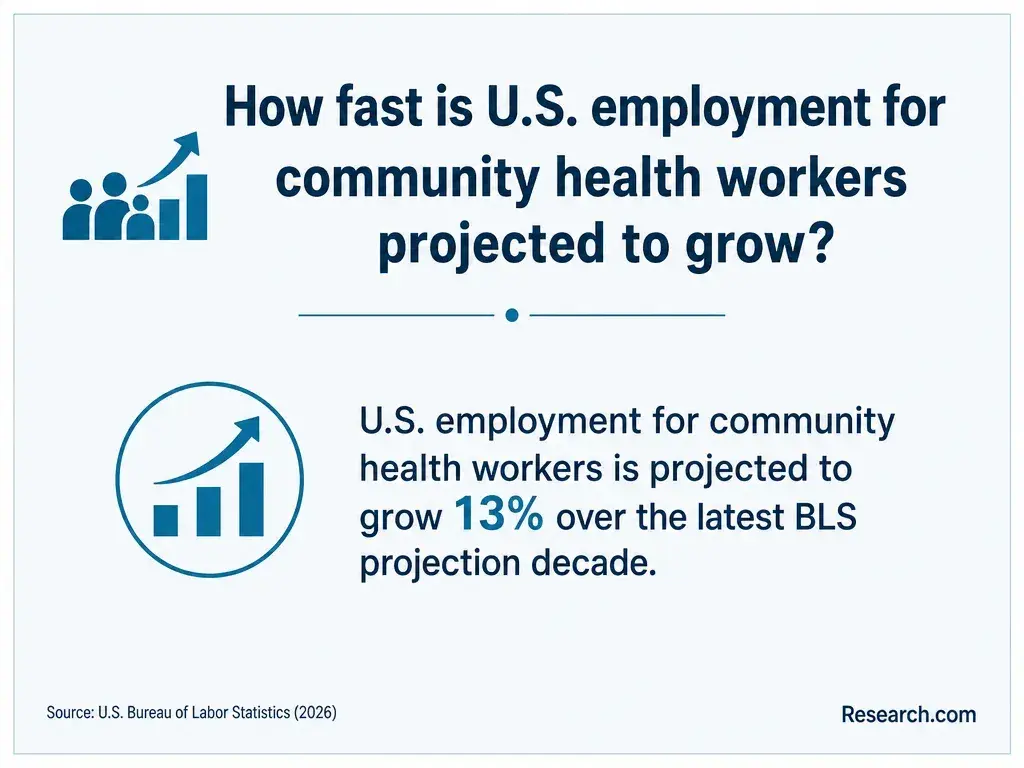
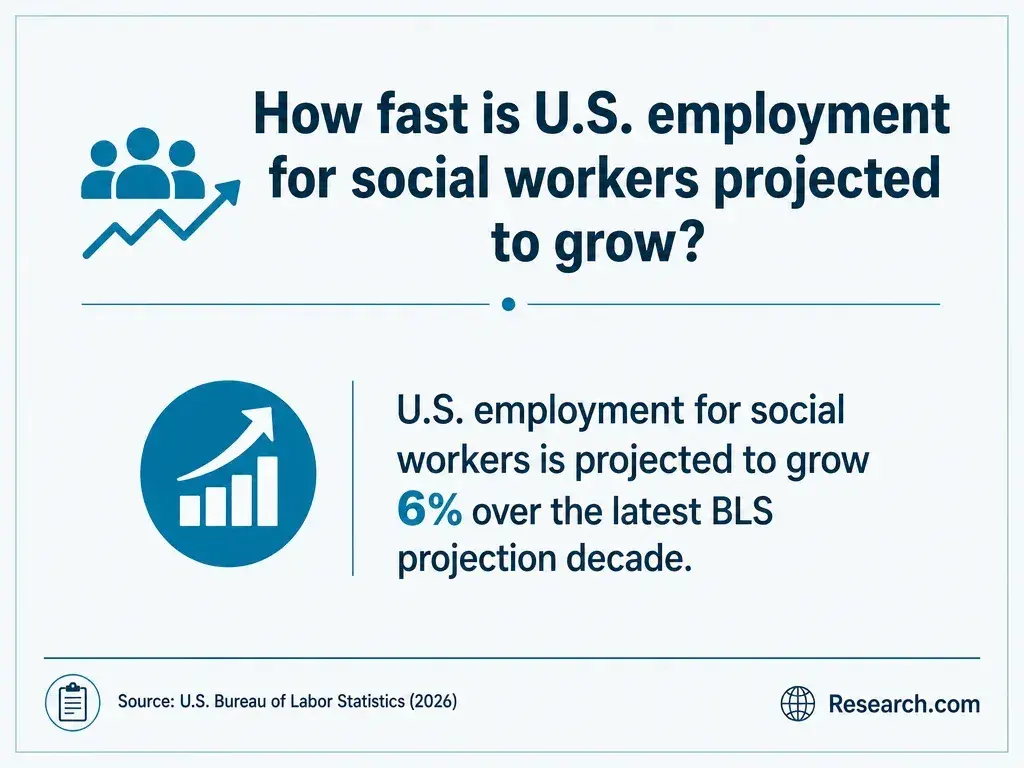
There is no reliable single salary figure for public health bachelor's graduates: pay depends on occupation, employer, location, responsibilities, and experience. The US Bureau of Labor Statistics reports wages and employment projections for defined occupations, such as community health workers and health education specialists - not for everyone holding a particular degree. Its occupational figures also include workers with varied educational backgrounds and experience.
For a useful comparison, match each job posting's duties and qualifications to the closest Bureau of Labor Statistics occupation, check the latest available wage and projection reference periods, and compare those figures with actual local postings.
A campus outreach job may have different pay and advancement opportunities from a government health education position. Likewise, public health master's salary outlook is context for a possible later decision, not a prediction of what a new bachelor's graduate will earn.
Before paying for a degree, identify several realistic target postings and determine whether the qualification would remove an actual hiring barrier. That evidence is more useful than estimating a return from an occupation-wide median alone.
Other Things You Should Know About Public Health
Usually, you can describe your responsibilities and share materials you created if your employer permits it. Remove student information and obtain permission before sharing internal reports, photos, or partner materials.
No. Describe the support, referral, and crisis-protocol tasks you performed without presenting them as clinical assessment or treatment.
Start with the setting where your experience is most relevant, but compare actual duties. Campus wellness may offer a closer transition; community roles may require additional experience working with the population served.
Speak with a campus health promotion team, local public health employer, or community organization about job duties and supervised opportunities. Ask what evidence would make a residence life applicant competitive.
- The Landscape of US Undergraduate Public Health Education | nih.gov https://pmc.ncbi.nlm.nih.gov/articles/PMC6134569/
- Competencies for Public Health Professionals | cdc.gov https://www.cdc.gov/infrastructure/training-professional-development/competencies-for-public-health-professionals.html
- Public Health | L.A. Southwest College https://programmap.lasc.edu/academics/interest-clusters/a33b1c3f-1e1f-42fc-9cf1-0bb34e1205c2/programs/47eb5481-655e-d8a2-219a-52a37b157b31
- How to Turn Work and Life Experience Into College Credit | St. Thomas University https://www.stu.edu/news/how-to-turn-work-and-life-experience-into-college-credit/
- Public Health | Edward J. Bloustein School of Planning & Public Policy https://bloustein.rutgers.edu/undergraduate/publichealth/
- Public Health Degree Requirements: A Complete Guide | American Public University https://www.apu.apus.edu/area-of-study/nursing-and-health-sciences/resources/public-health-degree-requirements/
- Public Health Science for Transfer (AS-T) Degree | WLAC https://www.wlac.edu/academics/aos/public-health
- How to Transfer College Credits to Finish Your Degree | post.edu https://post.edu/blog/how-to-transfer-college-credit-to-finish-your-bachelors-degree/
- BS, Public Health Practice | umd.edu https://sph.umd.edu/undergraduate-degrees/bs-public-health-practice
- How to Overcome Time and Cost Barriers to Complete Your Degree | Regis College https://www.regiscollege.edu/blog/completing-your-degree/how-much-is-a-bachelors-degree