2027 MPH Admissions After a Long Gap in Formal Education

Co-Founder and Chief Data Scientist
A long break from formal education does not, by itself, rule out admission to a Master of Public Health (MPH) program. It does change what you may need to show: why you want to study public health now, how your experience supports that goal, and whether you are ready for graduate coursework.
If you have been working, caregiving, volunteering, or building skills outside a classroom, this guide will help you evaluate admission requirements, prepare credible evidence of readiness, and decide whether an MPH fits your next move.
Key Things You Should Know
- There is no universal limit on how long ago you earned your bachelor's degree; each MPH program sets its own admission and prerequisite policies.
- After a long gap, your strongest application connects recent work or community experience to a specific public health goal and provides evidence that you can handle graduate-level writing and quantitative work.
- Before applying, check three separate questions: whether you meet formal requirements, whether your evidence makes you competitive, and whether the program's schedule and total cost work for you.
How Can You Apply to an MPH Program After a Long Education Gap?
Start with the work you want to do, not the number of years since graduation. Someone moving from nonprofit program management into evaluation may need different preparation from a clinician seeking a population-health role. That target helps you identify programs whose coursework and applied experience will build on what you already know.
A manageable application sequence is:
- Choose a target function, such as community program evaluation, health communication, or epidemiology, and identify the skills you still need.
- Compare each program's published degree, GPA, prerequisite, testing, and application rules for your intended entry term.
- Request transcripts early, then ask admissions staff how they review older grades and whether any prerequisite coursework must be recent.
- Gather evidence of current readiness, such as a recent course, analytical work product, professional training, or writing sample if the program accepts one.
- Ask recommenders who have recently supervised your work to describe specific responsibilities and results; use the statement of purpose to explain your transition.
Apply to programs that meet your goals and requirements rather than assuming a school described as easier to enter will be easier to complete. A guide to building a realistic online MPH application list can be a starting point, but the program's own admissions office has authority over its rules.
Do MPH Programs Accept Applicants Without Recent Academic Experience?
Yes, an applicant can be considered without recent academic enrollment if they meet the particular program's requirements. An education gap is different from a missing prerequisite: the former may need an explanation and evidence of readiness, while the latter may require a course or an approved alternative.
Ask admissions staff how they assess an older undergraduate GPA, whether they consider subsequent coursework or professional learning, and whether they offer conditional admission. Get any permitted substitution or waiver confirmed for the specific program and term. Public health master's admissions exceptions explained offers context, but an exception described elsewhere is not a promise that your chosen school will grant one.
If your record is strong but old, you may not need another course. If statistics or academic writing feels unfamiliar, a recent, graded course can serve two purposes: rebuilding skills and giving reviewers current evidence. Confirm first that the course addresses the gap the program actually cares about.
What Are the Admission Requirements for an MPH Degree?
MPH requirements vary. Many programs ask for a bachelor's degree, transcripts, a statement of purpose, recommendations, and a résumé; individual programs may also specify a minimum GPA, prerequisite courses, an interview, or other materials. Do not assume that a non-public-health major is disqualifying - or that every MPH requires biology, statistics, a GRE score, or prior public health employment.
The distinctions below help you decide what to verify before paying an application fee. Only the school can tell you how its policies apply to your record.
| Item | What to check after a long gap |
| Degree and transcripts | Accepted bachelor's credentials, required transcripts, and procedures for closed or renamed institutions |
| Grades | Minimum GPA rules and whether later coursework can provide additional evidence |
| Prerequisites | Required subjects, minimum grades, course-recency rules, and approved alternatives |
| Application materials | Testing policy, recommendation sources, essay prompts, deadlines, and application system |
If older grades are your main concern, low-GPA public health graduate application strategies can help you frame improvement honestly. A recent course may strengthen an application, but it does not erase an official minimum unless the program's policy allows an exception.
Experience is most persuasive when you show what you did and how it relates to public health practice. A community organization employee might describe developing outreach materials with partners and tracking participation. A manager from another industry might explain budgeting, staff coordination, or data-quality work, while acknowledging the population-health knowledge they still need.
Use your résumé and statement to distinguish responsibility from interest: name the problem, your role, the methods you used, and what you learned. Do not present routine work as research or imply that employment automatically meets a program's experience requirement. For an employer-based practicum later, separate your normal duties from proposed student learning activities and obtain program approval.
If you do not yet hold a qualifying bachelor's degree, work experience alone generally does not replace that credential for MPH admission. Comparing public health undergraduate study options may help you assess a degree-completion route before investing in graduate applications.
Rather than rely on a static list, check the Council on Education for Public Health (CEPH) directory for each school you are considering. Confirm the accredited school, unit, or individual program; whether the MPH you intend to enter is within that scope; and the status that applies to your entry term. Institutional accreditation and CEPH public health accreditation answer different questions.
Accreditation is a starting filter, not a ranking. For a returning student, a reputable fit also means accessible advising, courses offered when you can take them, a feasible applied practice experience, transparent costs, and credible information about student outcomes. Ask how the program supports students who need a statistics refresher and whether career or field-placement support is available at a distance.
The online public health master's accreditation guide can inform your shortlist; verify the exact program directly before applying.
Neither format is automatically easier academically. Online study may reduce commuting but still include live classes, group meetings, fixed deadlines, and fieldwork at an approved site. Campus study may make it simpler to use in-person support and build local connections, but class times and travel can be difficult alongside work or caregiving.
Request a sample course schedule and ask how often students attend live sessions, whether campus visits are required, and who finds and approves practice sites. If you are uncertain about your study routine, test it with a short graded course before committing to a full graduate load. If completing a bachelor's degree is the immediate hurdle, shorter course terms for a public health BS may be worth comparing; faster terms can also compress weekly assignments.
An MPH is a professional, population-health degree. Programs commonly teach epidemiology, biostatistics, social and behavioral approaches, environmental health, health policy, and program planning or evaluation, then provide opportunities to apply learning. The actual courses, concentration options, and applied requirements differ by school.
After time away from formal education, identify the first-semester skills you will need rather than trying to relearn every subject in advance. Practice interpreting a graph and a research finding, review introductory statistics, and get comfortable drafting a concise evidence-based argument.
If your goal is advanced statistical research, inspect the depth and sequence of methods courses; an MPH survey course alone may not be enough. Different routes through public health master's study can help distinguish a practice-oriented MPH from more research-focused options.
Time to completion depends on required credits, course sequencing, enrollment pace, and the availability of applied practice placements. Ask for a term-by-term plan based on the number of courses you can realistically manage - not just the program's fastest advertised timeline. Check maximum time-to-degree and leave policies if work or family obligations may interrupt study.
For cost, request a written estimate covering tuition, mandatory fees, books or software, any campus travel, and potential fieldwork expenses. Compare the estimate at your likely pace; part-time study can spread payments but may extend fees and delay a career change. Ask your employer about education assistance and check aid eligibility with the financial aid office before assuming it will cover part-time enrollment.
If your goal requires research leadership rather than practice preparation, compare the MPH with other pathways before borrowing. A resource on doctoral public health study costs and career directions may provide context, but doctoral study is not a shorter or automatically cheaper substitute for an MPH.
An MPH may support work in health departments, nonprofits, health systems, research organizations, and other population-health settings. The realistic next role depends heavily on what you did before the degree. Someone with community-program experience may move toward evaluation or program management; someone seeking an epidemiologist role may need stronger quantitative coursework and relevant analytical experience.
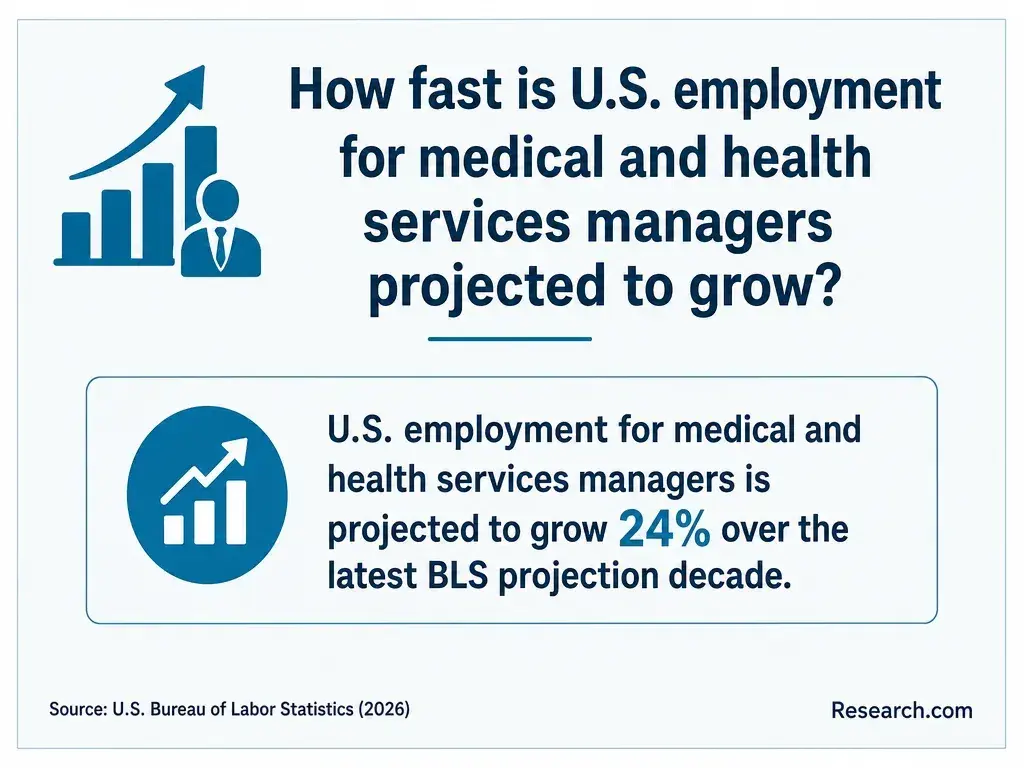
Do not treat an occupation-wide median wage as a graduate starting salary. The US Bureau of Labor Statistics reports wages and projected employment for defined occupations, not for everyone with an MPH. Compare the latest occupation entry for your target role with local job postings, paying attention to required experience, methods, credentials, and location.
If your aim is to conduct independent research, an MPH can be preparation, but research-focused graduate training may be a better fit; compare that goal against inexpensive public health research doctorates only after examining funding, supervision, and research expectations.
Do MPH Graduates Need Licensure or Professional Certification?
An MPH does not itself grant clinical licensure, and many public health jobs do not have a universal license requirement. Particular positions may require a separate clinical license, state credential, or employer-preferred certification. Check the job description and the responsible licensing board or certifying organization rather than assuming a degree or concentration makes you eligible.
Credentials such as Certified in Public Health (CPH) or health education certifications have their own eligibility and examination rules. If a job requires one, confirm the current pathway and whether your intended program qualifies. The distinction matters for later study too: a public health doctorate is an academic degree, not a clinical license. Public health doctorate eligibility comparisons concern admission to further education, not permission to practice a regulated profession.
Other Things You Should Know About Public Health
Yes, if it helps reviewers understand your timeline. Keep the explanation brief, factual, and focused on what you learned or why you are ready to study now. You do not need to disclose private family or health details.
If they know your work well, ask whether their letter can speak to relevant strengths. A recent supervisor may provide stronger evidence of current performance. Follow each program's rules about who may recommend you.
Yes. A graded statistics or public health course can help you test your study routine. Ask the MPH program first whether it will consider that course as a prerequisite or for possible graduate credit; neither outcome is automatic.
It can be if you need a defined skill rather than the full breadth of an MPH. Check the certificate's courses, cost, and employer relevance, and do not assume its credits will transfer into a later degree.
- Frequently Asked Questions | Graduate Programs in Public Health | University of Miami https://graduatestudies.publichealth.med.miami.edu/admissions/frequently-asked-questions/index.html
- How to Apply & FAQ's | Yale School of Public Health https://ysph.yale.edu/admissions-financial-aid/master-in-public-health-admissions/apply-to-yale-school-of-public-health/
- Master of Public Health Program - MPH Application Process https://www.med.wisc.edu/education/master-of-public-health-mph/application-process/
- MPH admission and application | missouri.edu https://healthsciences.missouri.edu/public-health/masters-degree-mph/admission-and-application/
- Public Health (MPH) | University of Arizona Online https://online.arizona.edu/programs/graduate/online-master-public-health-public-health-mph
- Academic Policies | NYU Bulletins https://bulletins.nyu.edu/graduate/global-public-health/academic-policies/
- MPH Admissions - Feinberg School of Medicine https://www.feinberg.northwestern.edu/sites/mph/degree-options/mph/admissions.html
- Which MPH Program is Right For Me? | Health Systems and Population Health https://hspop.uw.edu/cophpmph/which-mph-program-is-right-for-me/
- Admissions - Master of Public Health - The University of Chicago https://publichealth.bsd.uchicago.edu/about/admissions/