2027 From School Attendance Officer to Public Health: Planning a Bachelor's Pathway

Co-Founder and Chief Data Scientist
School attendance officers already see how health, housing, transportation, and family circumstances affect whether students reach school. Moving into public health means learning to address those patterns at a population level, not simply taking on a different title. This guide is for attendance professionals considering a public health bachelor's degree. It explains which skills carry over, where formal study helps, what entry-level jobs may fit, and how to check whether the time and cost of a degree are justified.
Key Things You Should Know
- Your experience with families, schools, and community referrals is relevant to public health, but population-level data, program evaluation, and health communication may require new training.
- A bachelor's degree commonly requires about 120 semester credits in total; only an official degree audit can show how prior college work applies to a particular program.
- Compare the degree with direct-entry community roles and targeted training before enrolling. A public health bachelor's does not itself provide clinical licensure or guarantee a job.
What Is a Public Health Bachelor's Degree?
A public health bachelor's degree studies how communities prevent illness and improve health through evidence, education, policy, and programs. Unlike direct clinical training, it focuses on populations and the conditions that shape health. Schools may award a BA or BS in public health or offer a related community health major; the course requirements are not interchangeable.
For an attendance officer, the degree's value lies in connecting individual encounters to broader questions: Are transportation barriers concentrated in particular areas? How could a district and local partners assess whether a referral process reaches families effectively? Coursework can supply methods for examining such questions without treating an attendance record as a medical diagnosis.
Compare required courses and fieldwork rather than relying on the degree name alone. A review of online public health bachelor's admissions and coursework can help you identify questions to put to each school about its actual curriculum.
How Can School Attendance Officers Transition Into Public Health?
Start with the work you already do: explaining policies, building trust with families, coordinating referrals, documenting barriers, and collaborating across agencies. Those skills align most closely with community outreach, health education support, and program coordination. The larger transition - to analyzing population patterns or evaluating interventions - usually calls for additional training and supervised practice.
Choose a target function before choosing a degree. These steps help distinguish an adjacent move from one that requires substantial retraining:
- Collect job postings for roles you would accept and separate required qualifications from preferred ones.
- Match your documented responsibilities to the postings, using examples of outreach, coordination, and communication rather than your job title alone.
- Identify gaps, such as spreadsheet analysis, introductory statistics, program evaluation, or experience in a health department or nonprofit.
- Ask prospective programs whether an approved internship can involve a school-community partnership and what supervision and data permissions it would require.
If you already hold a bachelor's degree, another bachelor's may be unnecessary: compare entry-level jobs, a focused course or certificate, and graduate study. A difficult earlier transcript does not automatically settle that choice; guidance on public health graduate admission after academic setbacks may help you frame questions for individual programs.
What Jobs Can You Get With a Bachelor's in Public Health?
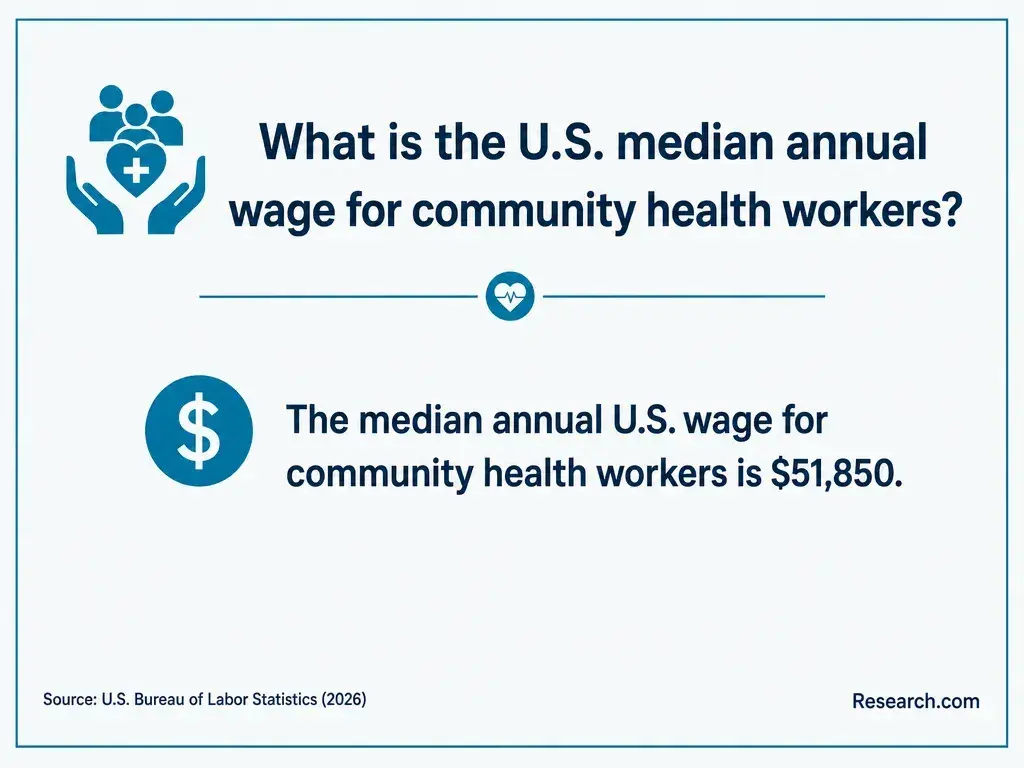
Relevant openings may include community health worker, outreach coordinator, health education program assistant, or public health program assistant. Duties and minimum qualifications vary by employer and state. Your attendance experience may be especially useful in organizations serving children and families, but it does not substitute for every role-specific requirement.
The distinction between supporting a program and directing one matters when assessing postings. The table shows plausible entry points, not jobs guaranteed by the degree.
| Role | Typical contribution | Evidence to bring from attendance work |
| Community health worker | Outreach, resource navigation, and follow-up | Family engagement and referral coordination |
| Program assistant | Scheduling, partner communication, and activity tracking | Cross-agency coordination and careful documentation |
| Health education support role | Helping deliver and assess educational activities | Clear communication with families and school staff |
Analyst, epidemiologist, and senior management postings commonly demand different technical preparation or experience. If those are your long-term aims, investigate their qualifications separately rather than assuming one undergraduate degree covers them. The same caution applies to doctoral study: finding public health doctorates that fit your background is a later-career decision, not a prerequisite for these entry roles.
Requirements vary, but programs often combine general education with epidemiology, introductory biostatistics, social and behavioral health, health policy, environmental health, and program planning. Some add a practicum or capstone. Check the catalog for your intended entry term: a course offered as an elective at one school may be required at another.
For attendance-to-public-health work, prioritize statistics, health communication, and program evaluation. Together, they help you move from an observation such as "families report transportation problems" to a defined question, an appropriate measure, and a carefully interpreted result. A bachelor's statistics course builds data literacy; it does not by itself qualify someone for a specialist biostatistics role. If that becomes your goal, compare advanced preparation and the scheduling demands of biostatistics master's schedules for employed students.
An online bachelor's can be a sound choice when the institution is appropriately accredited, the curriculum fits your target work, and you can complete any required applied learning. Delivery mode alone does not establish quality - or flexibility. Ask whether classes meet live, group projects require set hours, exams need proctoring, and placements can be completed near your home or workplace.
Campus study may make local networking and scheduled field experiences easier; online study may reduce commuting while requiring more independent planning. If you later consider advanced study, do not assume online formats work identically at every level: online public health PhD and DrPH comparisons involve different research or practice obligations from those of a bachelor's program.
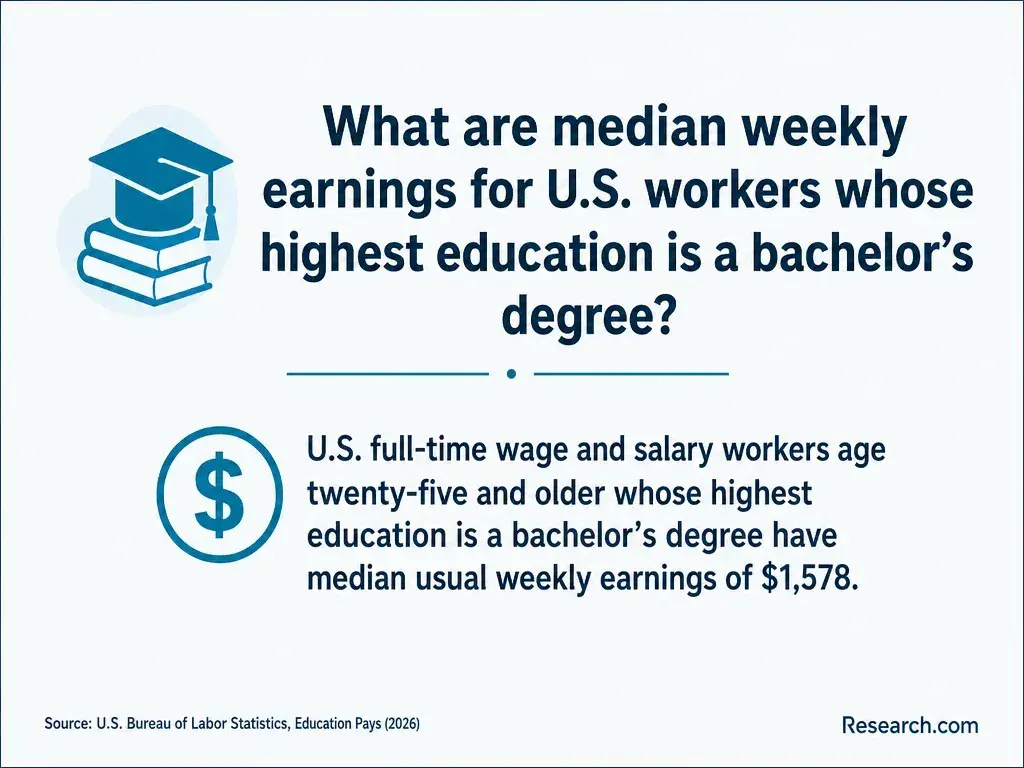
First-year applicants generally apply to the institution with their school records; transfer applicants provide transcripts from prior colleges. A school may admit you to the university before it admits you to a restricted major. Some programs also specify prerequisite courses or minimum grades. Request the requirements for your entry term rather than assuming one school's rules apply everywhere.
If you have prior college credit, ask for a written degree audit showing which courses count toward general education, prerequisites, the major, electives, and the school's residency requirement. Accepted credit is not necessarily credit that shortens your path to graduation. If you already have a bachelor's, ask whether a relevant master's is a better academic route before starting a second undergraduate degree; compare its admission rules and financing separately, including any verified university-funded aid for online MPH programs.
A bachelor's commonly totals about 120 semester credits, often planned as four years of full-time study from the start. Your remaining time depends on credits that satisfy actual degree requirements, course sequencing, enrollment pace, and whether required fieldwork fits your schedule. Work experience alone should not be counted as college credit unless the school has an applicable assessment policy and awards it.
Shorter classes can change the calendar without reducing required work. When comparing online public health bachelor's accelerated class options, ask how many courses you can realistically take while working, when prerequisites are offered, and whether an internship could delay graduation. Get a term-by-term plan from an adviser before relying on an advertised completion time.
There is no useful single price for this pathway. Compare each school's tuition basis - per credit, term, or program - along with required fees, books, commuting or technology expenses, and any travel or reduced work hours associated with fieldwork. Multiply the applicable charges by the credits in your approved remaining-degree plan, not by credits you merely hope will transfer.
Check whether your employer offers education assistance and whether the program's enrollment pace affects your financial aid eligibility. A comparison of budget-friendly online public health degrees is a starting point, not a substitute for a personalized cost and aid estimate. If an outreach job is attainable with your current background and targeted training, include the earnings and experience you could gain while studying - or instead of enrolling - in your decision.
Check the institution's accreditation and then check public health-specific accreditation separately. The Council on Education for Public Health (CEPH) accredits eligible public health schools and programs, but coverage must be confirmed for the exact unit and degree you are considering. Do not infer that a bachelor's is covered because its university offers a CEPH-accredited graduate degree.
A public health bachelor's is an academic credential, not a license to provide clinical care or an automatic professional certification. If a posting requests a particular certification, check the issuing organization's current eligibility rules. This distinction remains important if you later compare graduate credentials or low-cost PhD study in public health: price, institutional accreditation, public health accreditation scope, and job eligibility answer different questions.
What Salary and Job Outlook Can Public Health Graduates Expect?
There is no single salary or employment projection for public health bachelor's graduates. Pay depends on the occupation, employer, location, and experience. The US Bureau of Labor Statistics Occupational Outlook Handbook is useful for comparing named occupations such as community health worker and health education specialist, but an occupation-wide median is not an entry-level offer or a degree-specific outcome.
For your decision, compare local postings you qualify for now with postings that request a bachelor's, noting pay ranges and duties as well as credentials. Public-sector roles may follow published pay grades; nonprofit roles may depend on program funding. If you later weigh graduate study against work experience, examine public health graduate tuition and career value in relation to a specific target job - not a presumed salary increase.
Other Things You Should Know About Public Health
Not without the required school or district permissions. Student records can be protected by privacy rules and local policy. Ask your program and district about approved data access, review, and what may appear in a submitted or public portfolio.
It can demonstrate relevant outreach and community-coordination skills. Whether it meets an employer's experience requirement or a program's fieldwork requirement is a separate decision for that organization.
No. A public health bachelor's does not confer counseling or clinical licensure. If direct counseling is your goal, investigate the applicable licensed profession and your state's requirements.
Possibly. Look for district responsibilities involving family engagement, wellness partnerships, or program assessment, and discuss any change in duties with your supervisor. Such work can help you test the career direction before committing to a degree.
- A narrative review of the CEPH-accredited bachelor's public health programs' curricula in the United States | nih.gov https://pmc.ncbi.nlm.nih.gov/articles/PMC11371682/
- What can schools do to improve attendance | CT.gov https://portal.ct.gov/sde/publications/reducing-chronic-absence-in-connecticuts-schools/what-can-schools-do-to-improve-attendance
- General Schedule Qualification Policies | U.S. Office of Personnel Management https://www.opm.gov/policy-data-oversight/classification-qualifications/general-schedule-qualification-policies/
- Public Health Major - College of Health and Human Sciences https://hhs.purdue.edu/undergraduate-majors/public-health/
- Experiential Learning - WVU School of Public Health https://publichealth.hsc.wvu.edu/students/experiential-learning/
- Public health major receives CEPH accreditation | rutgers.edu https://bloustein.rutgers.edu/public-health-major-receives-ceph-accreditation/
- Transfer credit policies - Office of Admissions https://admit.washington.edu/apply/transfer/policies/
- Academic Policies and Procedures | buffalo.edu https://catalogs.buffalo.edu/content.php
- $14-$40/hr School Attendance Officer Jobs in Jersey City, NJ | ziprecruiter.com https://www.ziprecruiter.com/Jobs/School-Attendance-Officer/-in-Jersey-City,NJ
- Attendance Officer - Job Descriptions https://bridgeton.k12.nj.us/departments/human_resources/job_descriptions/non-_certificated_job_descriptions/attendance_officer