2027 Choosing Public Health BS Coursework for Local Health Department Outreach

Co-Founder and Chief Data Scientist
Local health department outreach calls for more than knowing public health terminology. Staff may need to explain prevention guidance, work with community partners, document what residents need, and recognize when a question requires a specialist. If you are choosing a public health BS, the most useful comparison is not which program lists the most subjects—it is which coursework lets you practice those tasks under supervision.
This guide identifies the classes and experiences to prioritize, what to verify with schools, and when a degree or a shorter training route makes more sense.
Key Things You Should Know
- Prioritize health communication, community assessment, program planning, introductory epidemiology and statistics, and supervised work with a community partner—not course titles alone.
- A public health BS commonly takes about four years of full-time study, but transfer credits, course sequencing, and fieldwork availability can change both time and cost.
- For outreach jobs, an approved project with usable work samples can be more persuasive than an additional elective; a BS does not itself confer clinical licensure or professional certification.
What Is a Public Health BS Degree for Local Health Department Outreach?
A public health Bachelor of Science is an undergraduate degree focused on health at the population level. It combines general education with subjects such as prevention, health systems, data interpretation, and community health. A BS may place more emphasis on science or quantitative coursework than a BA, but the actual requirements vary by school.
Local health department outreach means helping an agency connect people with reliable information, services, and opportunities to shape programs. Depending on the position, that could involve preparing accessible materials, supporting vaccination or chronic-disease initiatives, coordinating with neighborhood organizations, or recording questions residents raise. The work is collaborative; it is not independent clinical practice or authority to make policy.
For this goal, favor a degree that teaches you to translate evidence into plain language and test whether a proposed message fits the community it is meant to serve. Graduate study can become useful for specialized or supervisory work, but it is not the default next step for an entry-level outreach applicant. If your long-term target changes, compare public health graduate degrees and salary pathways against the responsibilities in actual job postings.
What Coursework Does a Public Health BS Include?
Public health BS curricula differ, so compare required courses, electives, prerequisites, and when each class is offered. For outreach, the strongest schedule builds from population-health concepts and basic data literacy toward communication, program design, and an applied project.
The comparison below separates courses that directly support outreach from those that help you understand the agency's broader work. It is a way to evaluate curricula, not a claim that every BS includes each course.
| Course area | Value for local health department outreach | What to look for in assignments |
| Health communication and social or behavioral health | Explaining evidence clearly and considering what influences people's decisions | Plain-language materials, audience testing, and feedback-based revisions |
| Community assessment and health equity | Understanding local priorities without treating a population as uniform | Use of local information alongside community perspectives |
| Program planning and evaluation | Linking an outreach activity to a purpose and measurable process | A logic model, implementation plan, or evaluation questions |
| Introductory epidemiology and statistics | Interpreting rates, uncertainty, and data limitations before sharing claims | Careful reading of surveillance reports and simple data summaries |
| Health policy, systems, and ethics | Understanding an agency's responsibilities, constraints, and public accountability | Casework on privacy, access, or implementation decisions |
If electives are limited, choose communication or community-engaged practice over an advanced technical course unless the outreach positions you want explicitly require that technical skill. Introductory epidemiology helps you explain a trend responsibly; it does not qualify you to lead epidemiologic investigations.
Students whose real aim is independent epidemiologic research should investigate different training and, eventually, the funding implications of online epidemiology doctoral funding options rather than treating an outreach-focused BS as specialist preparation.
How Does a Public Health BS Prepare Students for Community Outreach?
Coursework becomes job-relevant when students apply it with feedback. An appropriate internship, practicum, or class partnership might involve drafting a service-navigation handout, helping organize an event, or summarizing nonidentifiable feedback for a supervisor. The valuable part is the process: checking the audience's needs, using approved information, revising the work, and documenting what you contributed.
Ask whether students can work with a local health department or a comparable community-serving organization, who supervises the work, and whether placements are arranged or student-sourced. A school's relationship with an agency does not guarantee a placement. Any project using restricted records, participant information, or agency materials needs the relevant permissions; students should not put confidential work in a portfolio.
A practical portfolio can contain an authorized, redacted message draft, a sample outreach plan, and a short explanation of how feedback changed the work. This evidence can support entry-level applications without implying that the student independently ran a program. If later graduate study is the goal, experience may also clarify which preparation is missing; public health master's conditional admission options are worth examining only after checking a specific program's prerequisites and policies.
CEPH is the Council on Education for Public Health, a specialized public health accreditor. Its status can be a useful quality signal, but check what is accredited: a school of public health, a public health program, or a particular degree may have different coverage. Institutional accreditation is a separate matter and does not establish that the BS falls within CEPH's scope.
For an outreach-focused BS, compare accreditation alongside the actual courses, field opportunities, student support, and total cost. Before enrolling, find the institution's current accreditation statement, confirm whether your exact degree is included, and ask when that status applies to your entry term. Do not assume that CEPH coverage grants a certification or guarantees employer preference.
If you later consider a graduate degree, check its accreditation separately rather than carrying forward an assumption about the bachelor's program. A guide to CEPH-accredited Master of Public Health programs can provide a starting point for that distinct decision.
Requirements depend on whether you are entering college, transferring, or applying to a public health major after enrolling. A school may admit you to the institution before you qualify for the major. Ask about required preparatory courses, minimum grades, application timing, and whether major classes are available each term.
Transfer students should request a written degree audit that shows more than the number of accepted credits. It should identify which credits satisfy general education, major prerequisites, electives, and any residency requirement. Send transcripts and course descriptions when requested, and get substitutions approved by the office authorized to make that decision. Accepted credit that fills only an elective slot may not shorten the path to graduation.
Do not borrow graduate-admission assumptions for a BS application. Recommendation letters, for example, depend on the school and pathway; resources on public health graduate programs with no recommendation letters address a different level of study. Your undergraduate admissions office and public health department should confirm the requirements that apply to you.
Choose the format that makes both coursework and local practice feasible. Online study may reduce travel to class, but it can still include scheduled meetings, group work, in-person field hours, or a required campus visit. Campus study can make it easier to meet faculty and nearby partners, yet commuting and fixed schedules may limit time for a placement.
Before choosing, ask for a typical term schedule and the fieldwork rules: who finds the site, whether an agency near you is eligible, when hours must be completed, and who provides supervision. These answers matter more for outreach preparation than the delivery label. Compare programs on demonstrated access to community work, not a general promise of flexibility.
An online MPH is a separate, later decision. If advancement eventually calls for one, cost-conscious online MPH program choices can help frame a new comparison; they should not determine whether your present BS offers adequate local experience.
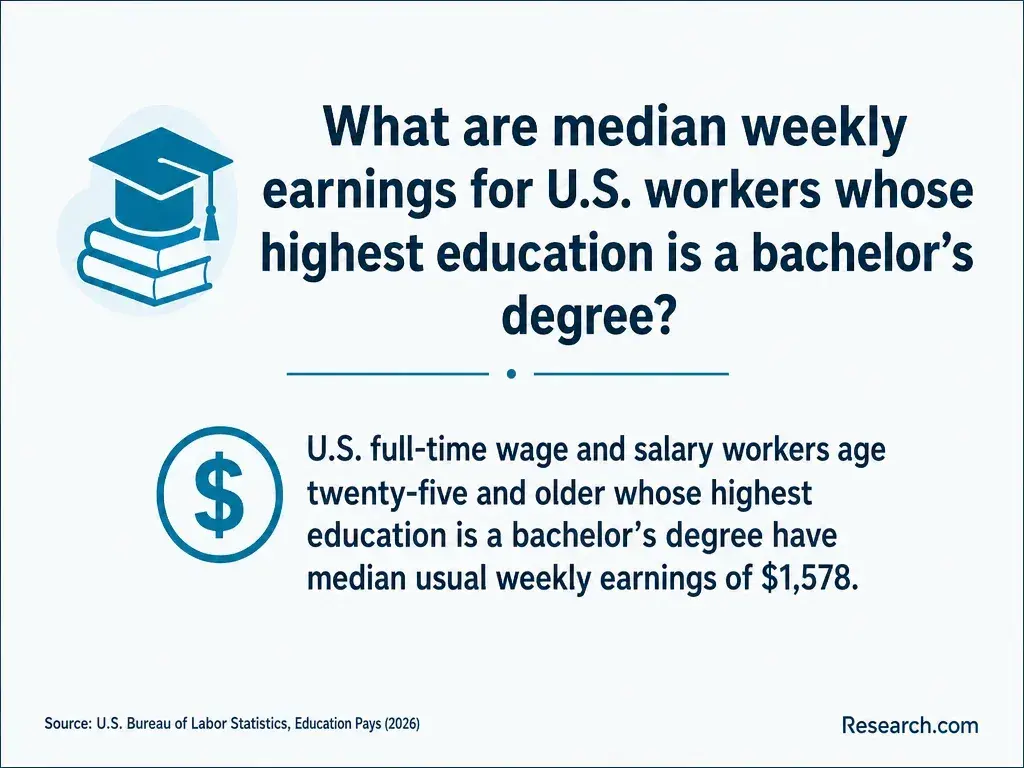
A full-time bachelor's pathway commonly spans about four years. Your remaining time depends on accepted credits that actually meet degree requirements, prerequisite order, course availability, and any required internship or capstone. Part-time study may spread charges across more terms while delaying graduation; transfer study may save time only after the receiving school completes its evaluation.
There is no reliable single price for a public health BS. Compare each school's published tuition and mandatory fees for your residency and enrollment status, then account for books, travel, fieldwork hours, and any income you might forgo. Request a term-by-term plan and an aid estimate rather than comparing advertised tuition alone.
If cost is the deciding constraint, use finding affordable undergraduate public health study as a starting point, then verify the exact BS, current charges, transfer evaluation, and fieldwork arrangements with each institution. A lower listed tuition is not necessarily a lower cost to finish.
Relevant entry-level openings may include outreach assistant, community health worker, program assistant, health education support, or an agency-specific community engagement role. Titles vary. Read the duties: one job may emphasize event coordination and referrals, while another asks for multilingual communication, data entry, or experience with a particular population.
A BS can provide a foundation, but employers may prefer direct community experience, language skills, or familiarity with local services. Community health worker positions may also have state- or employer-specific training and credential expectations. For a first application, match a posting's tasks to a supervised project, paid work, or volunteering you can describe accurately.
These roles are not the same as those of epidemiologists, program managers, or research directors. If your interests move toward advanced research, compare those occupations' qualifications before considering lower-cost public health doctoral career pathways; doctoral study is not a routine requirement for local outreach.
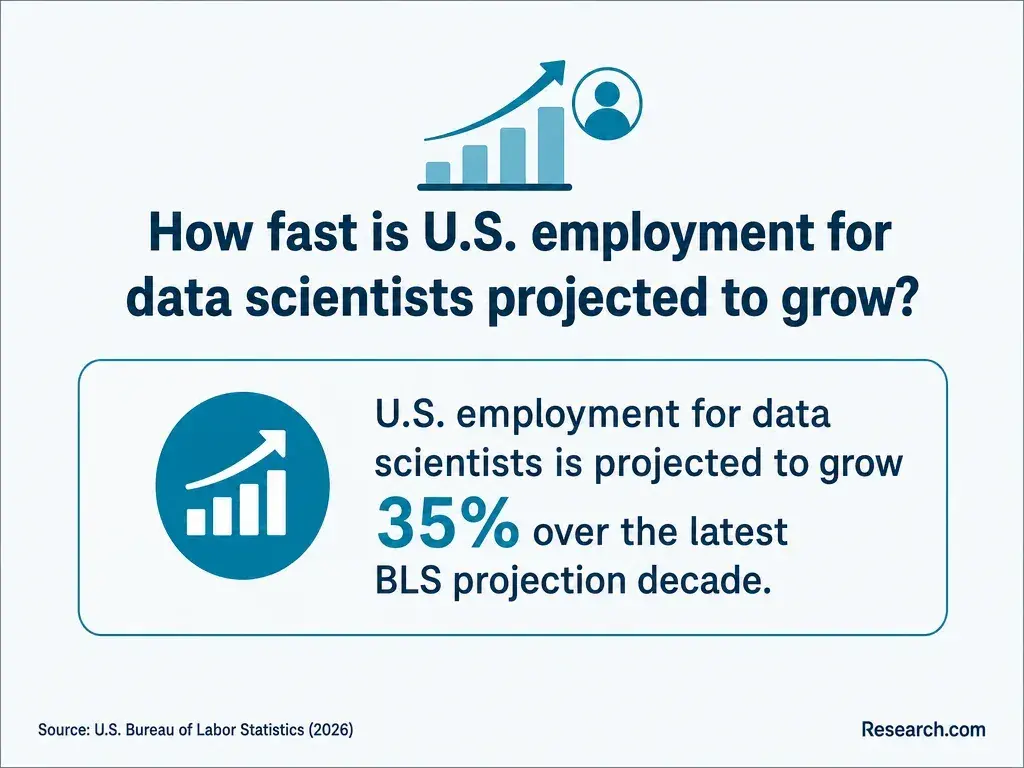
There is no single salary or job-growth figure for "public health BS graduates." The US Bureau of Labor Statistics reports by occupation, not undergraduate major. Its Occupational Outlook Handbook entries for community health workers and health education specialists are useful reference points, but neither occupation represents every health department outreach job. Also check each entry's typical education requirements before using its figures as a comparison.
For a realistic estimate, compare current postings for your target title and location, noting pay range, hours, benefits, required experience, and whether a credential is required. Public agencies may use established pay grades, so an occupation-wide median should not be treated as an offer to a new graduate. An MPH graduate compensation guide addresses another education level and should not be used to project BS earnings.
Which Certifications or Graduate Degrees Support Public Health Outreach Careers?
Start with the qualification named in the job posting. Employer training or a targeted course in plain-language communication, interpretation, or program evaluation may fill a specific gap more efficiently than another degree. Certifications such as CHES or CPH have their own eligibility and examination rules; a public health BS does not award either automatically. Check the relevant certifying organization's current requirements before planning coursework around a credential.
An MPH may make sense when a desired position calls for broader program leadership or specialized public health practice. A research-oriented degree is a different choice, and neither is necessary merely to show that you can support outreach. Compare the duties you want, the experience you already have, and the cost of meeting any remaining requirements. Public health master's tuition and salary comparisons can inform that later financial decision but should not substitute for an employer's stated qualifications.
For now, the strongest next step is to shortlist BS programs by their communication and community-engagement assignments, confirm access to supervised local work, and obtain a degree audit and cost estimate. If you already meet the requirements for a suitable outreach position, applying while building targeted skills may be a better choice than enrolling in another program.
Other Things You Should Know About Public Health
Not universally. Some positions specify language proficiency because of the communities they serve. Do not claim professional fluency you cannot demonstrate; ask how the agency provides interpretation and translated materials.
Usually, if sharing it follows your school's and partner's rules. Remove confidential information, identify it as student work, and explain your own contribution rather than presenting a proposed plan as an implemented program.
Outreach staff may explain approved public health information and connect people to services, but clinical advice belongs to appropriately qualified professionals. Ask a prospective employer about referral and escalation procedures.
Treat the concern as information to investigate, not a barrier to work around. Ask what is unclear or unsuitable, check the evidence and agency guidance, and revise the material with your supervisor and partner as appropriate.
- A narrative review of the CEPH-accredited bachelor's public health programs' curricula in the United States | nih.gov https://pmc.ncbi.nlm.nih.gov/articles/PMC11371682/
- Plain Language Materials & Resources | Health Literacy https://www.cdc.gov/health-literacy/php/develop-materials/plain-language.html
- Summary of the HIPAA Privacy Rule | hhs.gov https://www.hhs.gov/hipaa/for-professionals/privacy/laws-regulations/index.html
- Developing Goals and Measurable Objectives | samhsa.gov https://www.samhsa.gov/grants/how-to-apply/forms-and-resources/developing-goals-measurable-objectives
- Appendix L Internship Program Guide | ga.gov https://pamms.dhs.ga.gov/das/administration-5600-manual/appendix-l-internship-guide/
- Principles of plain language | Digital.gov https://digital.gov/guides/plain-language/principles
- Use plain language | who.int https://www.who.int/about/communications/understandable/plain-language
- How to Plan for Community-Driven Outreach and Engagement | colorado.gov https://dlg.colorado.gov/how-to-plan-for-community-driven-outreach-and-engagement
- Planning and Conducting Health Education for Community Members | Community Engagement Playbook | ATSDR https://www.atsdr.cdc.gov/community-engagement-playbook/php/activities/health-education-for-community.html