2027 Choosing Public Health BS Coursework for Maternal and Infant Health Nonprofits

Co-Founder and Chief Data Scientist
A maternal and infant health nonprofit may need help reaching families, coordinating services, interpreting local data, or showing a funder whether a program is working. Those tasks call for different coursework. If you are choosing a public health BS, the strongest schedule is not simply the one with the most maternal health classes: it combines population-health methods, community partnership skills, and supervised experience. This guide shows prospective and current undergraduates how to prioritize courses, assess programs, and build evidence of readiness for entry-level nonprofit work.
Key Things You Should Know
- Prioritize epidemiology, introductory statistics, community health, health communication, and program evaluation; use maternal and infant health electives to apply those skills to a specific population and setting.
- A typical bachelor's pathway takes about four years of full-time study, but transfer-credit decisions, course sequencing, and fieldwork can change both time and cost.
- For nonprofit hiring, a supervised project that demonstrates respectful community engagement or usable program data may be more persuasive than an elective title alone; a BS does not confer clinical licensure.
What Is a Public Health BS for Maternal and Infant Health Nonprofits?
A public health Bachelor of Science is an undergraduate degree focused on health at the population level. For maternal and infant health nonprofits, its value lies in preparing students to support prevention, outreach, service coordination, and program learning - not to diagnose or treat a parent or infant.
Nonprofits may work on prenatal care access, infant health education, postpartum support, or connections to housing and nutrition services. The right course mix depends on what the organization actually does. A student interested in family outreach needs different practice opportunities from one who hopes to maintain a program dashboard. When comparing public health degree choices for undergraduate students, look beyond the degree title to required methods courses, relevant electives, and opportunities to work with community organizations.
If you already work at a nonprofit, first identify the responsibilities you want to take on. A targeted evaluation course, mentorship, or supervised project may fill a specific gap more directly than starting another full degree.
Which Public Health BS Coursework Best Prepares You for Maternal and Infant Health Work?
Start with courses that transfer across nonprofit tasks. Epidemiology helps you interpret who is affected and how a rate is defined. Introductory statistics helps you assess uncertainty rather than mistake a small change for proof of impact. Social and behavioral health, health communication, and policy explain why information alone may not overcome barriers to care. Program planning and evaluation connect those concepts to an organization's activities and reporting obligations.
This comparison shows how foundational courses support distinct kinds of maternal and infant health work. Course names vary by school, so compare learning outcomes and assignments rather than titles alone.
| Course area | Useful nonprofit application | Limit of an introductory course |
| Epidemiology and statistics | Interpret local indicators and explain denominators, missing data, and uncertainty | Does not establish independent epidemiologist-level expertise |
| Community health and communication | Develop accessible materials with community input | Does not replace trust-building or language access |
| Program planning and evaluation | Connect activities, outputs, and outcomes for a grant-funded program | Does not prove that a program caused a health outcome |
| Health policy and systems | Understand how coverage, referrals, and service eligibility shape access | Does not qualify a graduate to give legal or clinical advice |
A workable sequence is introductory public health and statistics before epidemiology; community health before an applied planning or evaluation project; and, if available, a maternal and infant health elective before fieldwork. Check prerequisites and the term each course is offered. Students later seeking advanced analysis or leadership can use comparing graduate public health degree types to distinguish future training options; they do not need graduate-level specialization to choose useful BS coursework now.
How Does CEPH Accreditation Affect Public Health BS Program Quality?
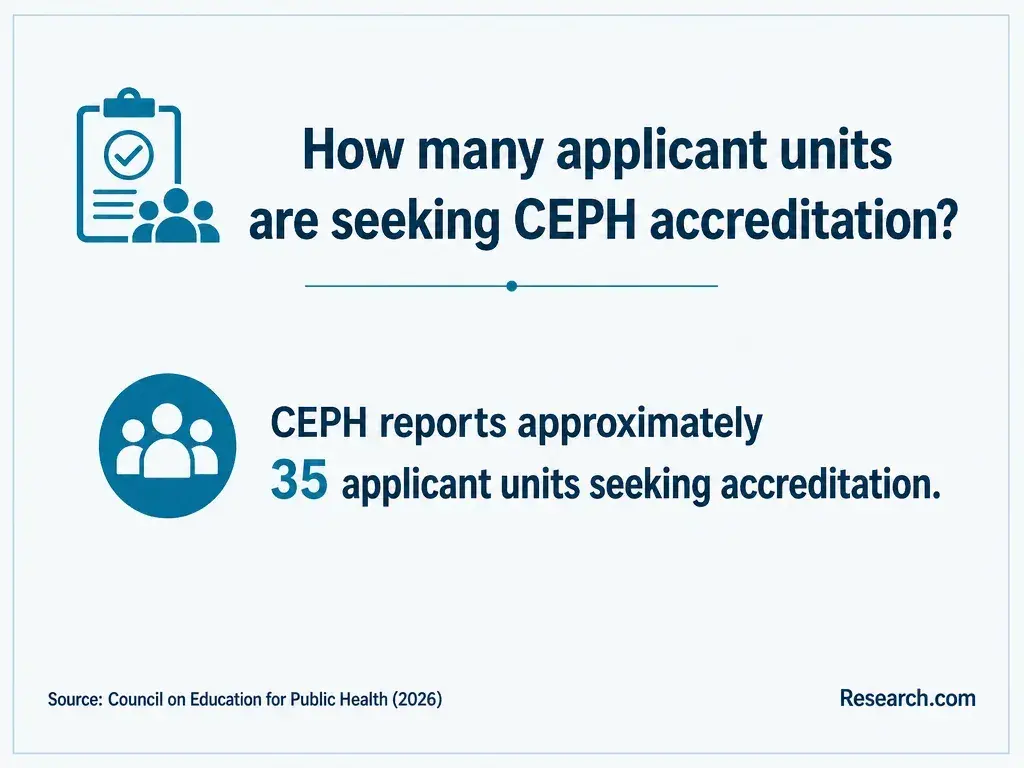
The Council on Education for Public Health, or CEPH, accredits eligible public health schools and programs against public health education standards. It is distinct from an institution's accreditation. Before treating CEPH status as a program feature, check the accreditor's directory and the school's documentation for the exact accredited unit, degree coverage, and status that apply to your intended program.
Accreditation is a useful quality check, not a substitute for examining the curriculum. Ask whether undergraduates can take evaluation and maternal and infant health courses, whether relevant classes run often enough to graduate on time, and who helps secure supervised placements. The distinction also matters if you later consider online MPH programs with CEPH accreditation: a graduate program's status should not be assumed to establish the status or features of a particular BS.
Choose electives for the work you want to do, not simply because "maternal" appears in the catalog. Reproductive and perinatal health can supply subject knowledge; nutrition, health equity, and social policy can illuminate barriers families face; qualitative methods can help students learn how to listen and interpret community feedback. Availability and prerequisites differ among schools, and one elective does not create a formal concentration unless the program awards one.
If space permits only one specialist elective, pair it with a methods course you can apply in a project. For example, a perinatal health course plus evaluation can prepare you to examine whether a referral process is being implemented as intended; the course alone cannot establish its effectiveness. If your longer-term aim is advanced maternal and infant health research, methods preparation matters more than collecting similarly named electives. That is a different, substantially longer path for which questions such as scholarship options for epidemiology doctoral students become relevant later - not a reason to take on doctoral costs for an entry-level nonprofit goal.
Either format can support a strong course plan if you can complete the required methods work and arrange meaningful practice. Online study may make attendance easier around employment or caregiving, but scheduled sessions, group work, examinations, and local field placements can still require fixed hours. Campus study may offer easier access to faculty projects and nearby partners, though commuting and daytime classes can limit feasibility.
Ask each program how often required courses run, whether classes are live or asynchronous, whether you must find your own placement, and who approves a site. A current nonprofit job may provide a possible project setting, but it does not automatically satisfy academic fieldwork rules. If price is a deciding factor, compare low-cost public health bachelor's programs online using the tuition and fees that apply to your residency and enrollment status, then confirm placement and scheduling requirements separately.
Requirements depend on whether you are entering college, transferring, or declaring a major after enrollment. A school may admit you to the institution before you meet separate public health major requirements. Review its current catalog for any statistics, science, GPA, or application requirements, and ask when those courses must be completed.
Transfer students should request a degree audit showing not just credits accepted, but which credits satisfy general education, prerequisites, and major requirements. The receiving institution makes the final determination; a course that transfers as elective credit may not replace required epidemiology or statistics. Graduate admissions advice, including public health graduate programs with no recommendation letters, addresses a separate application stage and should not be used to predict BS requirements.
A full-time bachelor's plan commonly spans four academic years, but your remaining timeline depends on accepted credits, major prerequisites, course availability, and any fieldwork requirement. For a returning student, the decisive number is the credits still needed for this specific degree, not the credits listed on a previous transcript.
To compare costs, obtain each school's term-by-term estimate for tuition, mandatory fees, books or software, and any travel needed for fieldwork. Include the cost of repeating a prerequisite or reducing paid work hours. Compare public health degrees by price and completion time only after checking how the published figures apply to your credits and circumstances. A shorter advertised pathway is not a savings if required courses delay graduation or a suitable placement is impractical.
A BS can support applications for program assistant, outreach coordinator, community health worker, or entry-level health education roles, depending on the employer's requirements and your experience. These jobs differ: outreach staff build relationships and connect people to services; program staff coordinate activities and records; evaluation assistants help collect and check data under supervision. Read job descriptions for actual tasks rather than assuming similar titles require the same preparation.
Build a small portfolio around the role you want: an accessible educational handout developed with appropriate feedback, a deidentified process map, or a sample evaluation plan clearly labeled as student work. Obtain permission before sharing anything from a nonprofit, and never expose client information. Leadership, independent research, and clinical positions generally require additional experience, education, or regulated credentials. If a later job requires graduate study, entry flexibility in public health master's programs is a separate question from whether you are ready for an entry-level nonprofit role.
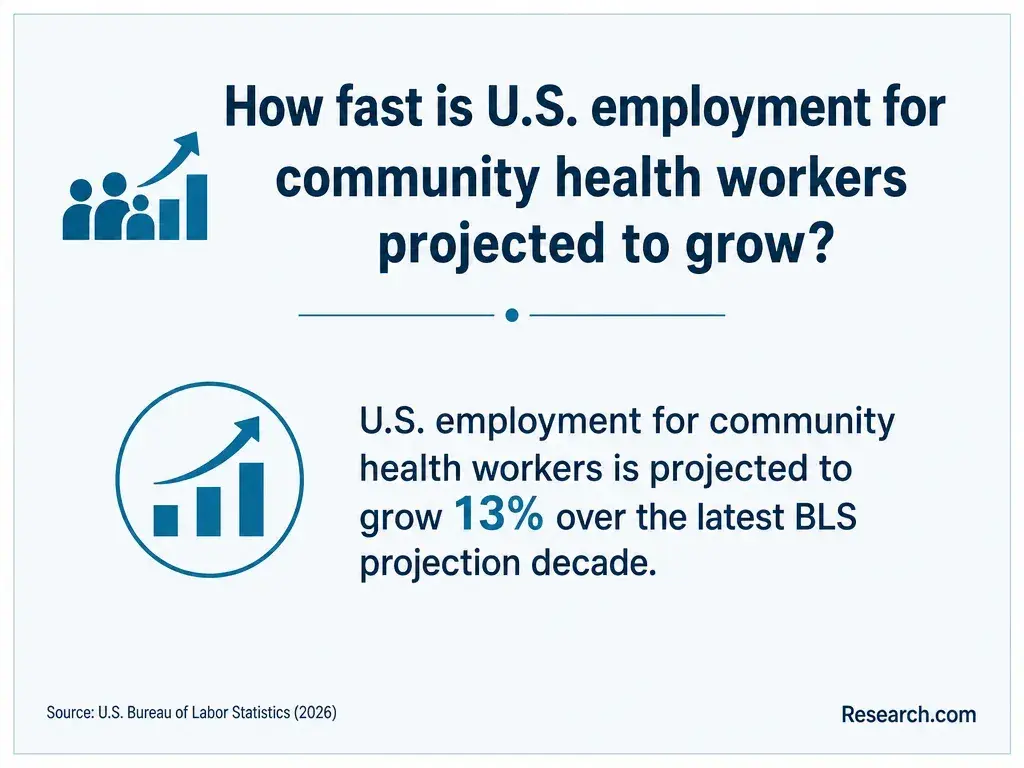
There is no single reliable salary or growth figure for "maternal and infant health nonprofit graduate." Employers use different titles, locations, funding sources, and experience requirements. The US Bureau of Labor Statistics Occupational Outlook Handbook reports occupation-wide pay and projections for roles such as community health worker and health education specialist, but those figures are not starting salaries or employment outcomes for public health BS graduates.
For a useful estimate, compare recent postings for the specific role and location you want, checking pay range, benefits, travel, evening work, and whether the position depends on grant funding. Then weigh that compensation against your remaining education costs. Do not assume that an affordable online graduate MPH pathway will raise pay enough to justify immediate graduate study; first establish whether your target employers require an MPH or instead value relevant supervised experience.
What Certifications and Experience Strengthen Maternal and Infant Health Careers?
For most students, relevant supervised work is the first priority: assist with outreach, referral tracking, accessible communication, or a modest evaluation task under a qualified supervisor. Ask who approves the work, what you may do with organizational data, and what evidence of your contribution you may retain. Community permission and privacy rules still apply when a project is for a class.
Some health education roles value the Certified Health Education Specialist (CHES) credential, but eligibility depends on the certifying organization's current rules and qualifying coursework; a public health BS does not award it automatically. Other roles may call for employer training or state-specific credentials. Check an actual posting before paying for a certificate. Likewise, exploring less selective MPH study pathways may help if graduate study becomes necessary, but easier admission is not a substitute for the community experience or technical skills the role requires.
Other Things You Should Know About Public Health
Not for many outreach, program support, or evaluation tasks. Direct clinical care requires the appropriate professional education and license; check the duties in the specific posting.
Do not treat outreach training as clinical authority. Use approved educational materials and referral procedures, and direct individualized medical questions to qualified professionals.
Look for a named supervisor, defined student tasks, realistic access to training and feedback, and a clear process for protecting families' information and perspectives.
Language skills can help where they match the community served, but partial fluency should not replace qualified interpretation for sensitive or clinical conversations. Follow the organization's language-access procedures.
- Pregnancy and Childbirth - Evidence-Based Resources | odphp.health.gov https://odphp.health.gov/healthypeople/objectives-and-data/browse-objectives/pregnancy-and-childbirth/evidence-based-resources
- Exploring key service-learning experiences that promote students' learning in higher education - PMC https://pmc.ncbi.nlm.nih.gov/articles/PMC9972304/
- Maternal and Child Health Resources for Training and Faculty Collaboration | MCHB https://mchb.hrsa.gov/programs-impact/focus-areas/building-mch-leaders-mch-workforce/resources-training-faculty-collab
- Service-Learning | Youth.gov https://youth.gov/youth-topics/civic-engagement-and-volunteering/service-learning
- 10 Essential Public Health Services | cdc.gov https://www.cdc.gov/infrastructure/public-health-systems-emerging-practices/10-essential-public-health-services.html
- Lessons Learned from Five Schools of Public Health - PubMed https://pubmed.ncbi.nlm.nih.gov/34982332/
- Healthy Texas Mothers and Babies Data https://www.dshs.texas.gov/maternal-child-health/texas-data
- Section 15. Qualitative Methods to Assess Community Issues | ku.edu https://ctb.ku.edu/en/table-of-contents/assessment/assessing-community-needs-and-resources/qualitative-methods/main
- Experiential Learning Examples at Boston University https://www.bu.edu/ioc/programs/bridge-builders-faculty-toolkit/experiential-learning-examples-at-boston-university/
- Department of Maternal and Child Health (GRAD) | unc.edu https://catalog.unc.edu/graduate/schools-departments/maternal-child-health/