2027 Choosing MPH Coursework for Cardiovascular Prevention Programs

Co-Founder and Chief Data Scientist
An MPH can prepare you to prevent cardiovascular disease across communities, but a course labeled "chronic disease" may not teach the methods your intended job requires. The right curriculum depends on whether you want to analyze risk patterns, run prevention programs, or change the policies and systems that shape health.
This guide shows prospective US students how to compare concentrations, courses, and supervised projects—and how to judge whether an MPH is worth the time and cost for their goal.
Key Things You Should Know
- Choose coursework by task: epidemiology and biostatistics for surveillance and analysis; program planning and evaluation for interventions; policy and implementation for systems change.
- Prioritize an approved applied project with a cardiovascular prevention partner over a concentration name alone. Confirm that the courses you need are offered during your enrollment.
- Compare total tuition, fees, and fieldwork obligations—not advertised tuition alone—and verify that CEPH accreditation covers the MPH you would enter.
What Is Cardiovascular Prevention in Public Health?
Cardiovascular prevention aims to reduce heart disease and stroke across populations, not just treat one patient at a time. Public health work may involve tracking blood pressure patterns, improving access to preventive services, evaluating community programs, or examining policies that affect food, physical activity, and tobacco exposure.
That distinction should guide your degree choice. An MPH develops population-level analysis and practice skills; it does not qualify a graduate to diagnose, prescribe, or provide clinical cardiac rehabilitation. If you only need a limited set of population-health skills for an existing job, targeted training may be more efficient than a degree. If a full degree is necessary, compare the curriculum—not just the price—of budget-friendly online public health degrees.
Which MPH Concentrations Prepare Students for Cardiovascular Prevention Careers?
There is no single required concentration. Match the concentration's methods and practice opportunities to the work you want to do; a school's official concentration list matters more than a cardiovascular-themed elective mentioned in its marketing.
The comparison below shows what each common route contributes and where you may need electives:
| MPH concentration | Strongest fit | Likely gap to check |
| Epidemiology | Surveillance, risk-factor studies, and interpreting population trends | Intervention design and community partnership experience |
| Community health or health promotion | Designing and evaluating prevention programs with communities | Advanced analysis for data-heavy roles |
| Health policy or management | Prevention policy, health-system initiatives, and implementation | Depth in cardiovascular epidemiology and evaluation methods |
| Generalist MPH | Combining relevant electives and an applied project | Guaranteed access to specialized courses and advising |
For a career centered on statistical modeling rather than program delivery, compare the MPH with a more method-intensive degree. Balancing employment with a biostatistics master's is a different decision from selecting an MPH concentration with a few quantitative electives.
What Coursework Should an MPH Include for Cardiovascular Prevention?
A strong sequence starts with epidemiology and biostatistics, then applies those methods to cardiovascular risk, prevention strategies, and evaluation. Look for courses that require students to define a population and outcome, assess evidence, select appropriate measures, and explain limitations—not merely recognize disease names.
When comparing catalogs and syllabi, look for these connected learning opportunities:
- Methods: epidemiologic study design, interpretation of observational evidence, data analysis, and clear communication of uncertainty.
- Prevention practice: social and structural determinants, community engagement, health communication, program planning, and evaluation.
- Systems context: access to preventive care, policy analysis, implementation, and responsible use of health data.
- Applied work: a supervised project such as an approved needs assessment, evaluation plan, or analysis for a health department or community partner.
Check prerequisites and sequencing before counting on an elective: an advanced analysis course may require earlier statistics work, and a specialized course may not run every term. Ask who approves applied sites, what deliverables are assessed, and what data permissions a project requires.
If your goal is to lead original cardiovascular research rather than implement prevention programs, investigate comparing affordable public health PhD pathways; MPH electives are not a substitute for doctoral research training.
CEPH accreditation indicates that the accredited public health school or program has been reviewed against public health education standards. It is useful evidence of an MPH's general foundation, but it does not certify that a particular cardiovascular elective, instructor, or field placement will meet your needs. Institution-level accreditation is a separate matter.
Verify the exact accredited school or program and whether the MPH you plan to enter is covered. Then inspect the current curriculum, course schedule, applied practice requirements, and available partners. Do not assume that accreditation of an MPH extends to every degree at the same institution; the distinction also matters if you later compare online DrPH and public health PhD options.
Requirements belong to the individual MPH program, not to cardiovascular prevention as a field. Applicants commonly need a qualifying bachelor's degree and application materials, but schools differ on prerequisites, tests, experience, and how they evaluate prior study. A clinical or biology major is not universally required; relevant preparation can also come from social science, community work, policy, or quantitative fields.
Before applying, compare your transcript and experience with each program's stated requirements. If you want an analysis-heavy route, ask whether introductory statistics is required or merely recommended and whether preparation can be completed before enrollment. Explain your intended prevention task in your application, using a specific example of research, service, or professional work. If obtaining recommenders is a constraint, check the actual policy rather than assuming every school accepts public health graduate applications without references.
Neither format is inherently better. An online program can work well for someone who can arrange a relevant local project; a campus program may make it easier to work with nearby faculty, datasets, or health-system partners. The decisive issue is whether the format lets you complete the courses and supervised experience your target role calls for.
Ask about live sessions, group-work schedules, campus visits, project-site approval, and support for finding a placement. Online does not necessarily mean asynchronous, and remote coursework does not remove fieldwork obligations. If online admission options are a concern, compare less selective online MPH programs separately from their cardiovascular coursework and applied opportunities; accessibility of admission is not evidence of curricular fit.
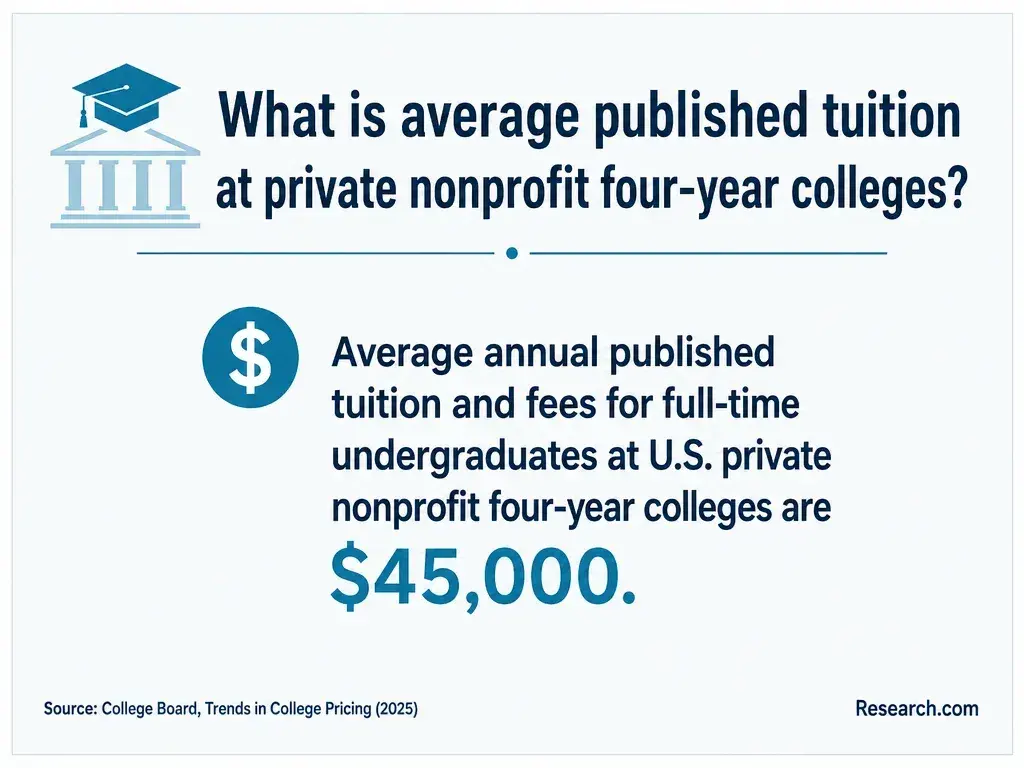
Time and cost depend on the school's required credits, tuition structure, enrollment pace, and fieldwork arrangements. Cardiovascular prevention is often built through an existing MPH concentration and electives rather than a separately priced degree. A faster schedule may also limit when specialized electives or a suitable placement are available.
Request a term-by-term plan showing required courses and when they run. For cost, calculate required credits at your applicable tuition rate, then add mandatory fees, materials, and any travel or reduced earnings associated with fieldwork. Confirm the conditions for aid or employer reimbursement before subtracting either from your estimate. Online MPH scholarships and eligibility can help guide your questions, but do not include an award in your budget until the school confirms your eligibility and the amount.
Potential settings include health departments, community organizations, health systems, research teams, and prevention-focused nonprofits. Job titles vary, so compare duties: a program coordinator may organize screening referrals and partnerships; a health education specialist may develop and assess outreach; an epidemiologist may analyze surveillance or study data. More advanced analytic, management, or research responsibilities usually depend on relevant experience and demonstrated method skills, not the MPH alone.
Build evidence for the role you want through an approved project and a portfolio that can be shared without exposing confidential information. A clinician entering population prevention may need evaluation and community-engagement experience; a community practitioner seeking an analyst role may need more statistics and data work. Later leadership or independent research goals may warrant doctoral study, but review public health doctorate eligibility comparisons against your actual responsibilities and goals rather than treating another degree as an automatic promotion path.
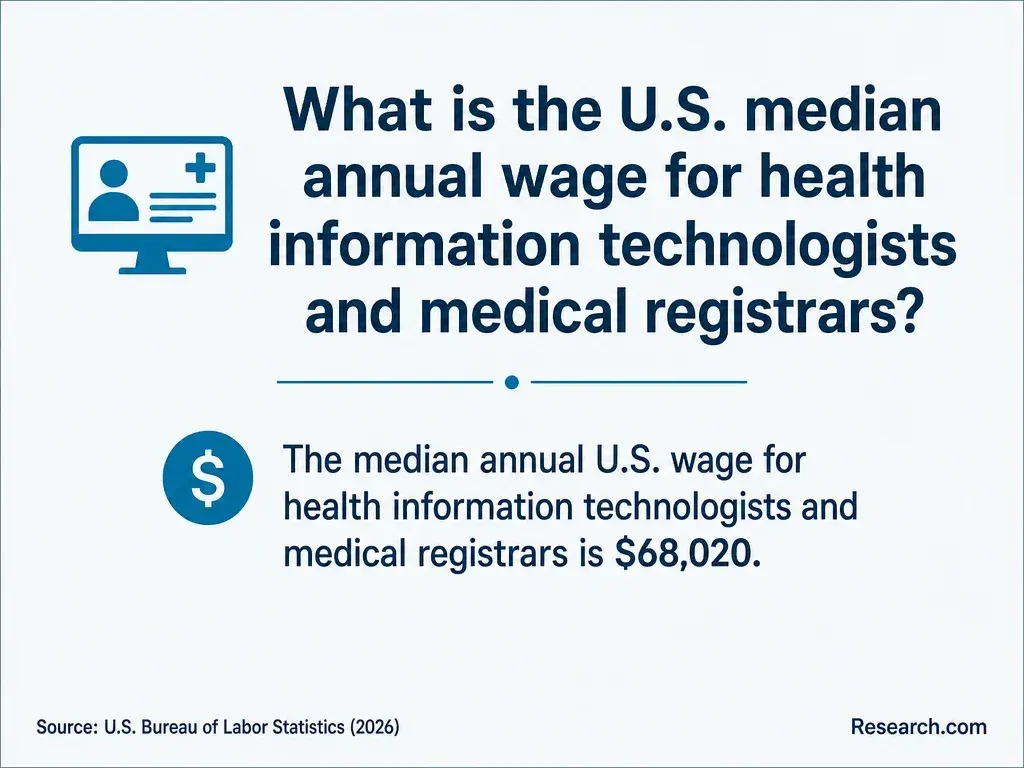
There is no reliable single salary for "cardiovascular public health professionals." The relevant US wage benchmark depends on whether the job is classified as an epidemiologist, health education specialist, program manager, or another occupation. The Bureau of Labor Statistics publishes occupation-wide wages and employment projections, not earnings promised to MPH graduates or cardiovascular specialists.
For a useful comparison, identify job postings you could realistically qualify for, check their pay ranges where available, and compare them with the corresponding Bureau of Labor Statistics occupation. Account for geography, employer type, and required experience. MPH career pay comparisons can provide context, but they should not replace a role-specific estimate when judging whether tuition is worthwhile.
What Certifications Support Cardiovascular Prevention Careers After an MPH?
The Certified in Public Health (CPH) credential may be relevant for broad public health practice. The Certified Health Education Specialist (CHES) and Master Certified Health Education Specialist (MCHES) credentials may be relevant to health education roles. Eligibility and exam rules differ, so check the responsible certifying organization's current requirements; an MPH does not automatically award any of these credentials or a clinical license.
Let job duties determine whether certification is useful. For an analyst role, a well-documented analysis may matter more than a general credential; for a health education role, an employer may value a specific certification. If you already have the degree or experience your target employer requires, supervised work or a targeted course may be more direct than another degree. If you do need a broader qualification, compare its curriculum and fieldwork obligations alongside affordable public health programs with faster schedules.
Other Things You Should Know About Public Health
Possibly. Obtain your program's approval before relying on it; the work must meet its learning, supervision, and deliverable requirements. Employer permission to work there is not the same as permission to use its data for coursework.
Ask for a recent syllabus. Look for assignments that appraise current evidence, consider the population and setting, and distinguish established guidance from findings that remain uncertain.
Only with the required institutional permissions and safeguards. Ask your faculty and site supervisor about data access, privacy rules, any data-use agreement, and whether research or other review is needed before starting.
Seek training and supervised work in trial design, biostatistics, and research ethics. An MPH can provide a foundation, but trial responsibilities may require deeper methods training, relevant experience, and collaborators with clinical expertise.
- Action learning and public health pedagogy: Student... - PMC https://pmc.ncbi.nlm.nih.gov/articles/PMC10086179/
- Framework for Program Evaluation in Public Health | cdc.gov https://www.cdc.gov/mmwr/preview/mmwrhtml/rr4811a1.htm
- Training | Prevention Research Methods | ODP https://prevention.nih.gov/education-training/training-prevention-research-methods
- Competencies | Public Health and Preventive Medicine https://www.upstate.edu/public-health/education/public-health/competencies.php
- Practicum & Capstone | Colorado School of Public Health https://coloradosph.cuanschutz.edu/education/practicum-capstone
- Which MPH Program is Right For Me? | Health Systems and Population Health https://hspop.uw.edu/cophpmph/which-mph-program-is-right-for-me/
- mph foundational competencies | gsu.edu https://publichealth.gsu.edu/academics-admissions/georgia-state-mph-program/masters-of-public-health-foundational-competencies/
- MPH Epidemiology vs Public Health Practice | Enrollment Services https://www.utmb.edu/spph/about-us/home/news/2026/03/02/mph-epidemiology-vs-public-health-practice
- How to Choose the Best Specialization for Your MPH Degree | tufts.edu https://medicine.tufts.edu/news-events/news/how-choose-best-specialization-your-mph-degree