2027 Electrical Engineering Degree vs. Certificate: Which Should You Choose?

Co-Founder and Chief Data Scientist
Today's students and professionals face crucial decisions when choosing between earning a degree or a certificate in electrical engineering. Both paths can significantly advance a career, yet they differ in duration, depth of study, and job opportunities. A degree typically offers comprehensive education, while a certificate focuses on specific skills or technologies within the field.
Electrical engineering degree programs usually require two to four years and provide strong theoretical understanding, which can lead to higher-paying roles. Certificates, often completed in months, are ideal for quick skill acquisition or career shifts. This article will explore these key differences to help readers select the best path aligned with their career ambitions and lifestyle.
Key Points About Electrical Engineering Degree vs. Certificate Programs
- An electrical engineering degree typically requires four years, offering in-depth theoretical knowledge and higher salary potential, averaging 20% more than certificate holders according to recent labor data.
- Certificate programs focus on practical skills, provide faster entry into the workforce, and suit professionals seeking targeted expertise or career shifts without full degree commitment.
- Degree holders enjoy broader professional growth opportunities, including leadership roles, while certificates enhance specific technical abilities but may limit advancement to senior engineering positions.
What Are the Differences Between Electrical Engineering Degree and Certificate Programs?
Both an electrical engineering degree and a certificate program can open doors to meaningful career paths, but they differ significantly in various aspects. Recognizing these differences allows students to select the most appropriate educational route aligned with their career goals and available time.
Below is a comparison of key distinctions between electrical engineering degrees and certificate programs. The main areas where they diverge include:
- Depth of Learning: A degree offers comprehensive knowledge covering theory, design, and advanced concepts, ideal for those seeking a thorough understanding and long-term career growth. Certificates focus on specific skills or practical applications, suiting learners who want targeted training without extensive theoretical study.
- Time Commitment: Degree programs typically require several years of full-time study, demanding a larger time investment, while certificate programs are shorter and more flexible, beneficial for working professionals or those needing quick skill upgrades.
- Career Advancement: Degrees often open doors to higher-level positions, leadership roles, or research opportunities due to their broad scope. Certificates may enhance immediate employability in technical or technician roles but usually offer limited upward mobility alone.
- Cost and Accessibility: Certificates generally cost less and offer easier entry, making them accessible for individuals seeking affordable education. Degrees usually involve higher expenses and stricter admission criteria but provide a more extensive educational experience.
How Long Does It Take to Complete a Electrical Engineering Degree vs. a Certificate Program?
Completion time is a crucial factor for students deciding between an electrical engineering degree vs. certificate program. Understanding the typical duration and flexibility of each option helps prospective students align their educational goals with their personal circumstances and career timelines.
Here is a comparison based on electrical engineering degree completion time and certificate program duration:
- Typical Duration: A bachelor's degree in electrical engineering usually requires about four years of full-time study, while an associate degree typically takes two years. In contrast, an electrical engineering certificate program is designed for quicker completion, often ranging from a few months up to two years depending on the program and study pace.
- Flexibility: Certificate programs often offer part-time or online options, allowing working professionals to balance studies with job responsibilities. Degree programs are frequently full-time but may provide part-time or accelerated tracks. For example, some students can complete degrees in as little as three years or take five years or more if studying part-time.
- Factors Affecting Timeline: Program structure plays a significant role. Certificate programs focus on practical, job-specific skills, while degree programs include broader foundational subjects like math and science. Prior experience and transfer credits may reduce completion time for both options. Additionally, balancing work, family, and studies can lengthen the timeline, especially for part-time learners.
For those interested in a fast-track credential, an online associate degree in 6 months may be an appealing alternative. Overall, the choice between electrical engineering degree completion time and certificate program duration depends on one's educational needs and career objectives.
Can You Complete a Electrical Engineering Degree or Certificate Entirely Online?
The rapid expansion of online education has enabled students to pursue a variety of credentials in electrical engineering, including both degrees and certificates. Many universities as the University of Southern Indiana and Arizona State University-offer bachelor's degrees in electrical engineering that can be completed entirely online, providing full remote access to lectures, assignments, and even laboratory experiences.
These accredited online electrical engineering courses ensure quality and flexibility, although some programs require prior college credits or maintain hybrid elements like optional on-campus labs or internships. Certificate programs are also widely available online, often featuring accelerated formats suited for professionals seeking to upskill quickly without long-term commitments.
When choosing between an online electrical engineering degree program and a certificate, consider factors such as the need for hands-on training, internships, or professional licensure. Many online degrees include virtual labs and capstone projects, but some states require on-site experience for professional engineering licensure.
Certificates, while faster to complete, typically do not meet licensure requirements due to their limited scope. For those aiming to become licensed engineers or occupy advanced roles, an ABET-accredited online electrical engineering degree is essential. For rapid skill acquisition, an online certificate may suffice.
Always review program details carefully to match your goals, and explore options like the easiest master degree to get for further educational advancement.
Admission requirements are a critical factor when deciding between an electrical engineering degree and a certificate program, as they determine your eligibility and preparedness for each educational path. Understanding these criteria helps prospective students and professionals make informed decisions that align with their academic background and career goals.
Below is a side-by-side comparison of typical admission requirements for electrical engineering degree and certificate programs.
Admission Requirements for Electrical Engineering Degree Programs
- Educational Background: Applicants usually must have completed high school with strong preparation in mathematics and sciences, including courses in algebra, calculus, chemistry, and physics.
- GPA: Most degree programs require a minimum cumulative GPA, commonly ranging from 2.5 to 3.0, with some institutions specifying higher standards for math and science courses.
- Standardized Test Scores: Many universities require SAT or ACT scores, with competitive programs demanding minimum scores, such as a combined SAT score of 1210 or an ACT score of 24.
- Prerequisite Coursework: Completion of specific prerequisite courses like calculus, physics with calculus, and general chemistry is generally required for direct admission or transfer.
- Additional Criteria: Some schools consider class rank, extracurricular activities, and recommendation letters in a holistic review process.
Admission Requirements for Electrical Engineering Certificate Programs
- Educational Background: Certificate programs typically require a high school diploma or equivalent, with some preferring prior coursework in mathematics or basic sciences.
- GPA: Many certificate programs do not set minimum GPA thresholds, though competitive options may prefer applicants with a solid academic record.
- Professional Experience: Some certificate programs, especially those targeting working professionals, may require relevant work experience or a technical background in engineering or related fields.
- Prerequisite Knowledge: While not always mandatory, basic proficiency in algebra and introductory physics can be advantageous for success in certificate coursework.
- Application Materials: Certificate programs often feature streamlined applications and typically do not require standardized test scores or recommendation letters.
When evaluating admission requirements, prospective students should carefully consider how each path matches their current qualifications and career plans. For example, choosing a program that fits your academic record and experience is essential if you want to pursue one of the most profitable majors.
Understanding the distinctions in electrical engineering degree admission requirements versus electrical engineering certificate program prerequisites will help you select the educational route best suited to your goals.
Knowing the credit requirements for electrical engineering programs helps students effectively map out their educational path and manage their time commitments. Recognizing the differences in credit demands between degree and certificate options is essential for aligning academic goals with personal schedules.
Here is a straightforward comparison of typical credit expectations for electrical engineering degrees versus certificate programs:
- Bachelor's degree: Usually involves 120 to 130 semester credits, reflecting a four-year full-time study plan that covers both foundational courses and extensive specialized topics.
- Certificate programs: Require a significantly reduced credit load, typically ranging from 12 to 24 credits, emphasizing focused technical skills and often achievable within less than a year of part-time study.
When I spoke with a student who opted for an electrical engineering certificate, he shared that the concise credit requirement was a decisive factor. He appreciated how the certificate's streamlined curriculum let him balance work and study without the long-term pressure of a full degree. "It felt manageable yet challenging in the right ways," he said.
Taking targeted courses allowed him to quickly apply new skills on the job, which boosted his confidence and motivation. He also mentioned that although the depth wasn't as broad as a degree, the certificate gave him a clearer focus on practical engineering concepts. Overall, he found the journey rewarding and well-suited to his career needs and lifestyle.

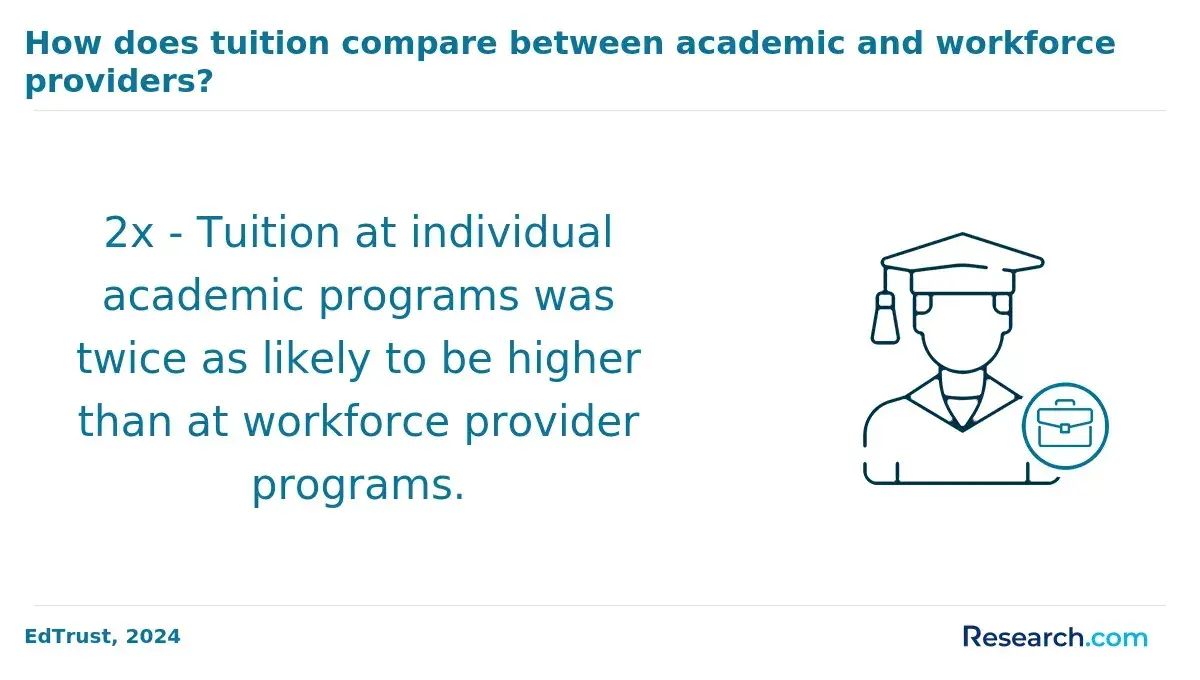
Tuition costs are a crucial factor when choosing between an electrical engineering degree and a certificate, as they directly affect your financial investment and potential return. A clear understanding of typical tuition expenses can help align your educational choice with both your career goals and budget.
Below is a comparison of average tuition ranges for electrical engineering degree programs versus certificate options that can aid in your decision-making process.
Average Tuition for Electrical Engineering Degree Programs
- Tuition range: For undergraduate electrical engineering degrees, in-state tuition typically averages between $10,000 and $11,214 per year, while out-of-state tuition can range from $25,000 up to $32,883 annually.
- Online vs. on-campus: Fully online bachelor's programs may cost as little as $4,162 to $17,220 per year, making them more affordable than many on-campus options, especially at public universities.
- Graduate degree costs: Master's degrees in electrical engineering generally run $30,000 to $80,000 total for the entire program, which usually spans one to two years.
- Public vs. private schools: Public institutions tend to offer lower tuition rates for state residents, whereas private universities can charge substantially more, sometimes exceeding $40,000 per year.
- Other fees: Additional costs such as lab fees, technology fees, and student services charges may add several hundred to a few thousand dollars annually to the base tuition.
Average Tuition for Electrical Engineering Certificate Programs
- Tuition range: Certificate programs in electrical engineering are significantly less expensive, with typical costs between $2,000 and $20,000 total, depending on the institution and delivery format.
- Program length: Certificates usually require fewer credits-often 12 to 30 credits-resulting in lower overall tuition compared to degree programs.
- Online vs. on-campus: Online certificate programs tend to offer the lowest tuition, with some community colleges and technical schools providing options for under $5,000.
- Target audience: Certificates are designed for working professionals and career changers seeking practical skills quickly without the financial commitment of a full degree.
- Additional costs: While less common, some certificate programs may include lab or technology fees, but these are generally minimal compared to degree-related fees.
To explore affordable study options, consider looking for an online school that accept financial aid, which can further reduce the financial burden of earning your degree or certificate.
Understanding the average tuition for electrical engineering degree programs in the United States is essential to weighing the cost of electrical engineering certificate vs degree pathways effectively.
Yes, certificate credits can often be transferred toward an electrical engineering degree, but this depends on specific institutional rules and the accreditation status of the certificate program. Typically, a university will only accept credits if courses align closely with its curriculum, maintain comparable rigor, and meet a minimum grade standard, usually a C or higher.
Transfer approval requires reviewing official transcripts alongside course content to ensure relevance. Programs designed to complement degree paths, such as certain engineering technology certificates, usually foster smoother credit transitions when students adhere to advised course sequences and consult academic advisors.
Key considerations include individual transfer limits set by universities, which may restrict how many certificate credits apply toward degree requirements. Not every course will transfer if it doesn't match core major or general education needs, and students must meet grade thresholds for eligibility.
Confirming credit transfer policies and consulting with admissions or academic advising offices prior to enrollment are essential steps. Doing so safeguards students from losing valuable credits and helps them strategically plan their educational route.
When I spoke with a student who later pursued an electrical engineering degree after completing a certificate program, she described her experience as eye-opening. Initially uncertain whether her credits would count, she carefully gathered syllabi and transcripts to present to her target university's transfer office.
"The process felt daunting at first," she admitted, "but getting clear answers made a huge difference." Ultimately, she transferred most of her certificate credits, which gave her a confident head start in the degree program and saved both time and tuition. Her journey underscored the importance of thorough preparation and proactive advising.
Certificate programs in electrical engineering are not accredited in the same manner as degree programs. Degree programs, such as a Bachelor of Science in electrical engineering, are typically accredited by specialized agencies like ABET (Accreditation Board for Engineering and Technology), which assess the entire program to verify it meets strict educational and industry standards.
In contrast, certificate programs tend to be shorter, skill-focused courses offered by colleges or professional organizations, with no universal accreditation process similar to ABET. While some certificate providers might be part of regionally accredited institutions, the certificates themselves do not undergo the same rigorous programmatic review that degree programs do.
This fundamental difference means that only degree programs carry recognized programmatic accreditation from ABET, which is critical for professional engineering credentials.
Accreditation is important because it guarantees the quality and credibility of the education provided, affecting credit transfers, employer acceptance, and eligibility for professional licensure. ABET accreditation, in particular, is essential for students who plan to pursue licensure as Professional Engineers or seek broader job opportunities within the engineering field.
When assessing programs, students should verify that degree programs have current ABET accreditation and check whether the institution offering a certificate is regionally accredited and if the certificate holds industry recognition. Ultimately, prospective students should always confirm accreditation status through recognized accrediting organizations before enrolling to ensure their education aligns with career goals and professional standards.
Both electrical engineering degrees and certificates can open doors to various career paths, though they typically lead to roles differing in responsibility and expertise. Understanding how each credential aligns with job opportunities can help guide your educational choices.
Below is a comparison of common positions available to graduates of each program.
Jobs You Can Get with a Electrical Engineering Degree
- Electrical engineer: Designs, develops, and tests electrical systems and components, often working on complex projects in manufacturing or infrastructure.
- Electronics engineer: Focuses on creating and improving electronic devices and circuits, frequently involved in product design and development.
- Controls engineer: Specializes in designing control systems for machinery and processes to optimize performance and safety.
- Systems engineer: Integrates various electrical and electronic systems to ensure they function together efficiently, typically in large-scale operations.
- Project engineer: Oversees technical project planning and execution, coordinating teams to meet engineering objectives and deadlines.
- Design engineer: Creates detailed electrical designs and specifications for new products or systems, collaborating closely with manufacturing teams.
Jobs You Can Get with a Electrical Engineering Certificate
- Electrical technician: Provides hands-on support in installing, maintaining, and repairing electrical equipment, often working on-site or in labs.
- Engineering technologist: Applies practical engineering knowledge to assist in product testing, troubleshooting, and process improvements.
- Electrical drafter: Prepares technical drawings and plans based on engineers' specifications, crucial for project documentation.
- Field service technician: Performs maintenance and repair work directly at customer locations, ensuring equipment operates reliably.
- Maintenance technician: Handles routine upkeep and emergency repairs of electrical systems to prevent downtime.
- CAD technician: Utilizes computer-aided design software to develop and modify electrical schematics and layouts.
Salary potential often varies notably between graduates holding an electrical engineering certificate and those with an electrical engineering degree. This difference reflects the level of education, skills, and career opportunities associated with each credential.
Below is a side-by-side comparison of starting salaries for graduates from each program type, including key factors that influence earnings and career outlooks.
- Typical Salary Range for Degree Holders: Electrical engineering degree starting salary in the US usually falls between $74,000 and $92,000 per year, representing the standard for most engineering roles requiring a bachelor's degree and offering broader career options.
- Typical Salary Range for Certificate Holders: Electrical engineering certificate average starting salary is generally between $40,000 and $60,000 annually, reflecting technician and specialist roles that require less formal education.
- Influencing Factors: For both groups, salaries vary depending on experience, geographic location, industry demand, and specific skill sets, with degree holders often benefiting from stronger growth prospects.
- Career Outlook: Degree holders enjoy stronger job growth and potential for rapid salary increases in specialized fields, while certificate holders may face slower wage growth without further education or experience.
For individuals considering further education, exploring options at online nationally accredited colleges can be a strategic step to enhance qualifications and salary potential over time.
Here's What Graduates of Electrical Engineering Programs Say About Their Degree or Certificate
- Yeshua: "Choosing the electrical engineering certificate program was a game-changer for me because it offered a fast-paced learning experience without the heavy financial commitment of a full degree. The certificate allowed me to quickly upgrade my skills and boost my career prospects in a cost-effective way-something I was really grateful for as someone balancing work and study. I'd definitely recommend weighing the cost and learning intensity when deciding between certificate and degree options."
- Hugh: "Pursuing a degree in electrical engineering was a deeply reflective journey for me. While it required more time and investment-considering the higher tuition and longer duration-the comprehensive curriculum and in-depth learning provided a solid foundation that opened many professional doors. Comparing degree programs with certificate options, I realized that the degree's extensive scope better prepared me for complex challenges in the field."
- Atlas: "Having completed both electrical engineering certificate and degree programs, I can confidently say each served a unique purpose in my growth. The certificate program delivered essential, targeted knowledge quickly and affordably, ideal for immediate skill application. Meanwhile, the degree program deepened my technical expertise and broadened career opportunities despite the higher cost and longer duration. Prospective students should carefully consider their career goals, learning pace preference, and budget when choosing between the two paths."
Other Things You Should Know About Electrical Engineering Degrees
Yes, credit transfers are possible between electrical engineering degree and certificate programs in 2027, depending on the institution's policy. Degree programs typically accept certificate credits if they align with their curriculum standards. Review transfer guidelines from your chosen school for specific eligibility.
No. In most U.S. states, the Fundamentals of Engineering (FE) exam requires at least a qualifying ABET-accredited engineering degree, typically a bachelor’s degree. A certificate can build skills, but it does not satisfy the education requirement set by state licensing boards for engineering licensure.
A 2027 electrical engineering degree typically includes extensive hands-on lab work and internship opportunities, providing students with deeper practical experience. In contrast, a certificate might focus on specific skills with less comprehensive practical training, suitable for professionals seeking to enhance knowledge without undertaking a full degree program.
- The Significance of Electrical Engineering Certification for Professional Advancement - CertLibrary Blog https://www.certlibrary.com/blog/the-significance-of-electrical-engineering-certification-for-professional-advancement/
- Electrical Engineering Program Contact Information https://catalog.ncsu.edu/graduate/engineering/electrical-engineering/electrical-engineering-certificate/
- Careers - Vault https://vault.com/professions/electrical-engineers/requirements
- Why Electrical Engineering Certification is Important for Your Career https://www.koenig-solutions.com/blog/electrical-engineering-certification
- Electrical & Computer Engineering Graduate Certificate https://ep.jhu.edu/programs/electrical-engineering-computer-engineering/graduate-certificate-requirements/
- Certificate Degrees - Electrical and Computer Engineering https://ece.ncsu.edu/grad/certificate/
- Tuition & Fees – Global Learning – Undergraduate Certificates | Oregon State Ecampus https://ecampus.oregonstate.edu/online-degrees/tuition/
- Electrical Engineering Post-Baccalaureate Credit Certificate Program https://bulletins.psu.edu/graduate/programs/certificates/electrical-engineering-postbaccalaureate-credit-certificate-program/
- Electrician vs. Electrical Engineer | New England Tech https://www.neit.edu/blog/electrician-vs-electrical-engineer