2027 Best Online Electrical Engineering Degree Programs at Nonprofit Universities

Co-Founder and Chief Data Scientist
Choosing an online electrical engineering degree requires more than finding a nonprofit university with remote classes: engineering employers and licensing pathways can depend on curriculum depth, lab access, and ABET accreditation. The U.S. Bureau of Labor Statistics projects 7% employment growth for electrical and electronics engineers from 2023 to 2033, faster than the average for all occupations.
This guide helps prospective students compare degree levels, online formats, total costs, and career fit so they can build a practical shortlist.
Key Things You Should Know
- For entry-level electrical engineering roles and the most direct path toward professional engineer licensure, prioritize a bachelor's program with ABET programmatic accreditation; institutional accreditation alone is not the same safeguard.
- Electrical and electronics engineers had a median annual wage of $111,910 in May 2024, but career outcomes depend on specialization, location, experience, internships, and employer—not degree delivery format alone.
- Public nonprofit universities can offer lower in-state tuition, while private nonprofit programs may provide smaller cohorts or tailored online support; compare total price, required labs, transfer credits, scheduling, and career alignment before deciding.
What Makes an Online Electrical Engineering Degree Program at a Nonprofit University Different?
An online electrical engineering degree at a nonprofit university is a degree offered by a public institution or a private institution that reinvests revenue into its educational mission rather than distributing profits to owners or shareholders. Nonprofit status may affect governance, financial-aid administration, and institutional priorities, but it does not independently prove that a program is affordable, accredited, flexible, or well matched to a student's goals.
Electrical engineering programs focus on the design and application of electrical systems. Core subjects commonly include circuit analysis, electronics, signals and systems, electromagnetics, programming, digital systems, power systems, communications, and controls. At the bachelor's level, students generally need substantial mathematics and laboratory work; fully online options can therefore be less common than online engineering technology, computer engineering, or graduate electrical engineering programs.
The most important distinction is between an online degree with equivalent academic expectations and one that simply has a similar title. A strong program should clearly explain how students complete hands-on learning, collaborate on engineering projects, access faculty, and meet any campus or laboratory requirements. Students exploring computing-intensive alternatives may also compare curricula with the best online AI degree programs, particularly when their intended work centers on embedded systems, automation, or machine learning rather than broad electrical engineering practice.
This comparison summarizes the common trade-offs among nonprofit institution types. Individual programs can differ significantly from these general patterns.
| Institution and program model | Potential advantages | Questions to investigate |
| Public nonprofit, in-state bachelor's program | May have comparatively lower resident tuition and established engineering facilities | Are online students eligible for in-state pricing, and are campus labs required? |
| Public nonprofit, out-of-state online program | May offer a recognizable public-university curriculum and broader course access | What is the nonresident price, and are there state authorization limits? |
| Private nonprofit bachelor's completion program | May provide structured advising and transfer pathways for adult learners | Does it award an electrical engineering degree or an engineering technology degree, and is it ABET accredited? |
| Nonprofit online master's program | Often designed for working engineers and may offer technical specializations | What undergraduate prerequisites, synchronous sessions, and culminating project requirements apply? |
How Can Students Verify Accreditation for an Online Electrical Engineering Degree at a Nonprofit University?
Students should verify two separate forms of quality assurance: institutional accreditation and programmatic accreditation. Institutional accreditation applies to the university as a whole and is important for federal financial aid, transfer evaluation, and general academic legitimacy. Programmatic accreditation evaluates a particular engineering degree against discipline-specific standards.
For a bachelor's degree intended to support entry-level engineering practice or future licensure, ABET accreditation is usually the central question. ABET accredits specific programs, not a university's entire catalog, and the exact degree title and campus or delivery pathway matter. An institution can be accredited while its electrical engineering program is not ABET accredited.
Use the school's catalog and ABET's official program-search directory to confirm the degree name, award level, location, and accreditation status. If the school describes an online pathway, ask in writing whether students following that pathway graduate from the ABET-accredited program and whether any additional on-campus components are required.
Before applying, complete these checks to avoid a common and costly mistake:
- Confirm the university's institutional accreditor through the institution's accreditation disclosure and the U.S. Department of Education database.
- Search for the exact electrical engineering program in ABET's directory and note its current accreditation status.
- Compare the published online degree plan with the accredited program's stated curriculum, including laboratory and design requirements.
- Ask whether the program meets educational requirements for engineer intern or professional engineer licensure in the state where you plan to work.
- Save the admissions response, catalog year, and tuition disclosure that apply to your intended enrollment term.
Accreditation is especially consequential for students seeking public-infrastructure, consulting, utility, defense, or regulated engineering work. Licensing rules are state-specific, and many electrical engineers do not pursue a PE license, but an ABET-accredited bachelor's degree typically preserves more options than an unaccredited degree.
How Rigorous Are Online Electrical Engineering Degree Programs at Nonprofit Universities?
Online electrical engineering programs can be academically rigorous because the discipline relies on cumulative math, physics, programming, analysis, design, and testing skills. A credible curriculum generally expects students to solve multi-step problems, write technical reports, use engineering software, participate in team design work, and demonstrate practical competence. Online delivery changes where and when learning occurs; it should not reduce the required outcomes.
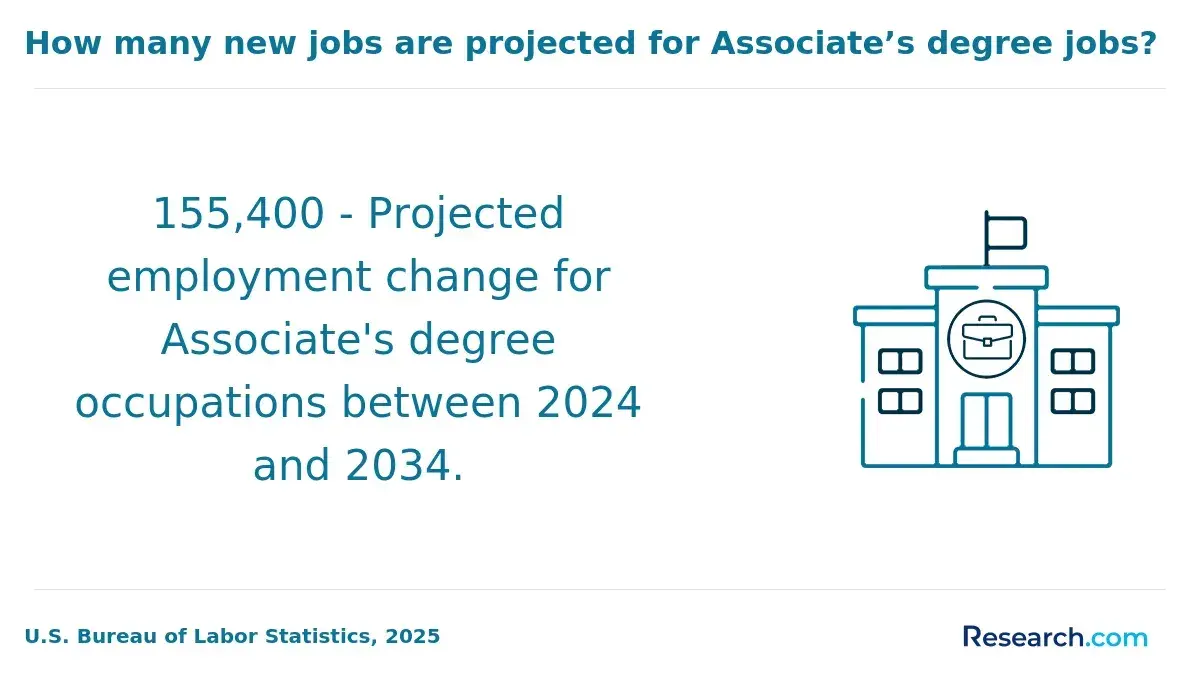
At the bachelor's level, students commonly complete calculus, differential equations, calculus-based physics, and laboratory sequences before advanced electrical engineering courses. This is why an associate degree can be a useful transfer starting point but is not usually equivalent to a professional electrical engineering bachelor's degree. An associate degree may prepare students for technician roles or lower-division transfer; a bachelor's degree is the standard starting credential for many engineer positions.
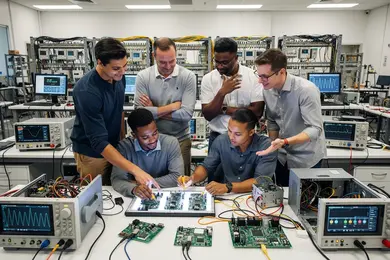
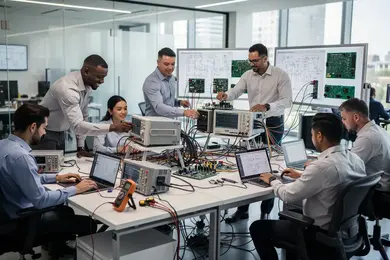
Students should examine how labs work rather than assuming "online" means entirely virtual. Programs may use simulation software, mailed lab kits, remote-controlled equipment, approved local facilities, short campus residencies, or a combination. A virtual simulation can build useful skills, but it may not replace every physical measurement, safety, troubleshooting, and instrumentation experience needed in a particular curriculum.
Technical rigor also affects fit. Professionals who want a management-oriented complement to an engineering career may find that a bachelor of business administration online serves a different goal; it is not a substitute for the mathematical and engineering-science foundation needed for electrical engineering roles.
The following indicators can help applicants distinguish a demanding, well-supported program from a course catalog that leaves key expectations unclear:
| Area to review | Evidence of meaningful rigor | Potential red flag |
| Mathematics and science | Clearly sequenced calculus, physics, and differential equations prerequisites | Advanced circuit courses with unclear math or physics preparation |
| Laboratories | Published explanation of equipment, experiments, assessment, and any residency | "Online labs" described without methods or required outcomes |
| Capstone design | Team project involving design constraints, documentation, testing, and presentation | No final design experience or no explanation of team collaboration |
| Faculty access | Office hours, technical tutoring, feedback timelines, and named instructors | Limited information about faculty availability or course support |
| Assessment | Proctored exams, project reviews, demonstrations, or other identity-verified work | Claims of easy completion with little detail about evaluation |
How Much Does an Online Electrical Engineering Degree Cost at a Nonprofit University?
The cost of an online electrical engineering degree at a nonprofit university depends on residency, transfer credit, course load, fees, required equipment, travel, and the number of credits needed after evaluation. Advertised cost per credit is useful only as a starting point. A lower per-credit price can become more expensive if a program accepts few prior credits or requires repeated prerequisite courses.
For context, College Board reported average published tuition and fees of $11,610 for in-state students at public four-year colleges and $43,350 at private nonprofit four-year colleges for 2024-25. Those figures are broad undergraduate benchmarks, not the price of a particular online engineering program, and they exclude many living, materials, and travel costs. They show why public versus private nonprofit status can matter, while also showing why a personal net-price estimate matters more than a national average.
Students should request a written estimate based on their anticipated transfer credits and expected completion timeline. Ask separately about technology fees, proctoring, lab kits, software, campus intensives, textbooks, and travel. If working fewer hours is necessary during difficult lab or capstone terms, include that lost income in the affordability decision.
This cost framework helps applicants compare total educational investment rather than headline tuition alone:
| Cost component | Why it matters for online electrical engineering | What to request from the school |
| Tuition and mandatory fees | Rates may differ by residency, course level, or online enrollment status | Term-by-term estimate using your expected credit load |
| Transfer-credit evaluation | Accepted credits can reduce both time and total charges | Preliminary review of transcripts and course syllabi when available |
| Laboratory expenses | Hardware, kits, instruments, and shipping can add costs | Required equipment list and replacement policies |
| Travel and residency | Some programs require campus labs, orientations, or capstone presentations | Number, location, duration, and estimated timing of visits |
| Opportunity cost | Heavy technical terms may limit employment hours | Recommended part-time and full-time course sequences |
A higher-priced program can still be the better value if it accepts more relevant credits, has the required accreditation, offers workable scheduling, and reduces the risk of changing programs. Conversely, do not assume the cheapest option has the strongest return on investment without checking curriculum, completion requirements, and career relevance.
What Financial Aid Is Available for an Online Electrical Engineering Degree at a Nonprofit University?
Eligible students at accredited nonprofit universities can generally pursue federal aid by submitting the Free Application for Federal Student Aid (FAFSA). Available support may include Federal Pell Grants for qualifying undergraduates, Direct Loans, work-study opportunities, institutional grants, state aid, military education benefits, and external scholarships. Aid eligibility and award amounts depend on the student's circumstances, enrollment level, program, and annual rules.
The maximum Federal Pell Grant for the 2024-25 award year was $7,395. This is a grant maximum rather than a typical award, and it is mainly relevant to undergraduates with demonstrated financial need. Graduate electrical engineering students generally rely more heavily on loans, employer support, assistantships where available, and institutional scholarships.
Electrical engineering students should ask about scholarships tied to STEM enrollment, transfer status, first-generation status, military service, and academic performance. Employer tuition assistance can be especially valuable for working technicians, technologists, and engineers, but students should confirm reimbursement caps, grade requirements, and any continued-employment obligation before depending on it.
Take these steps before signing a loan agreement. They focus attention on aid that reduces borrowing and on the practical terms of any remaining balance.
- Submit the FAFSA early and review each school's aid offer by grant, scholarship, work-study, and loan category.
- Compare the net price after gift aid instead of comparing only the total aid figure, which may include loans.
- Ask whether institutional scholarships continue for part-time online enrollment and summer courses.
- Check whether a reduced course load changes aid eligibility, degree progress, or expected graduation date.
- Use the federal loan repayment estimator and borrow only after evaluating likely payment obligations against a conservative career budget.
A financial-aid office can explain institutional policies, but it cannot guarantee future awards or job outcomes. Revisit the funding plan each year, especially if your course pace, employment, or household finances change.
How Flexible Are Online Electrical Engineering Degree Programs at Nonprofit Universities?
Flexibility in online electrical engineering is best measured by the program's actual course design, not by the word "online." Asynchronous courses let students review lectures and complete work within weekly deadlines, while synchronous courses require attendance at scheduled video sessions, labs, exams, or team meetings. Many rigorous engineering programs use a hybrid approach because live problem-solving and coordinated design work can be valuable.
Part-time enrollment often fits working adults better than an accelerated schedule, particularly when students are rebuilding math and physics skills. A traditional bachelor's program commonly requires about four years of full-time study, although prior college credit can shorten the timeline. A master's program often suits applicants who already hold a relevant bachelor's degree and want advanced study in areas such as power systems, embedded systems, communications, controls, microelectronics, or signal processing.
Students interested in technical fields with a more visual or creative emphasis should not assume flexibility means equivalent subject matter; an online graphic design degree develops a distinctly different portfolio, software, and career skill set.
Before enrolling, test whether the schedule matches your work, caregiving, time zone, and travel constraints. The comparison below identifies the format details that most often determine whether an online degree is realistically manageable:
| Format feature | Best fit | Question to ask |
| Mostly asynchronous courses | Students with variable work schedules who can meet weekly deadlines independently | Are exams, group meetings, or office hours still scheduled at fixed times? |
| Scheduled live instruction | Students who benefit from real-time explanations and routine | Which courses require attendance, and are sessions offered in multiple time zones? |
| Short campus residencies | Students able to plan travel for intensive labs or demonstrations | How many visits are required, and can dates change after enrollment? |
| Part-time sequence | Working students balancing technical coursework with other commitments | How long will prerequisites and course rotation extend completion? |
| Accelerated terms | Students with strong preparation and substantial weekly study time | How many hours per week are expected for each engineering course? |
What Student Support Services Do Nonprofit Universities Provide for Online Electrical Engineering Degree Students?
Online electrical engineering students need more than a learning management system. Strong nonprofit universities provide academic advising, engineering faculty access, tutoring in calculus and physics, library services, disability accommodations, technical support, career services, and pathways for resolving problems. The quality of support matters because technical prerequisites and sequential courses can make a missed class or delayed lab more difficult to recover from.
Ask whether online learners have the same access to career fairs, employer events, undergraduate research, internships, alumni networks, and counseling as campus-based students. Also confirm how quickly advisors respond, whether tutors understand engineering coursework, and whether career staff can help with technical resumes, portfolios, interview preparation, and internship searches.
Career services can also support students who may later move into project leadership or organizational roles. For that longer-term pathway, an online doctorate in organizational leadership is a separate advanced degree option, not an engineering credential or replacement for technical graduate study.
Evaluate support in a direct conversation with current students or program staff. Useful questions include the following:
- How do online students obtain help with circuit analysis, programming, calculus, and lab troubleshooting outside normal business hours?
- Can online students participate in internships, research projects, engineering clubs, and employer recruiting events?
- What happens if a required course is unavailable, a lab kit is delayed, or a student must pause enrollment?
- Is there a dedicated advisor who understands prerequisite chains and graduation requirements for electrical engineering?
- What career outcome information is available for students in this specific program rather than for the university overall?
Do Online Electrical Engineering Degree Programs at Nonprofit Universities Prepare Graduates for In-Demand Careers?
An online electrical engineering degree can prepare graduates for in-demand technical careers when the curriculum, hands-on experiences, and accreditation align with the employer's expectations. Electrical engineers design, test, improve, and maintain systems involving power, electronics, controls, communications, semiconductors, and embedded devices. Electronics engineers perform related work with electronic components and systems. Common workplaces include utilities, manufacturing firms, aerospace and defense contractors, telecommunications companies, engineering services, and technology organizations.
The U.S. Bureau of Labor Statistics projects about 17,500 openings each year for electrical and electronics engineers from 2023 to 2033, on average. Openings include replacement needs as well as growth, so this figure is not a promise of employment for every graduate. Students should use it as evidence that the field has a continuing labor-market need while still researching local employers and specialization requirements.
Employers commonly evaluate evidence of applied ability: coursework in relevant systems, programming experience, laboratory competence, design documentation, internships, security-clearance eligibility where relevant, and communication skills. A degree alone may not demonstrate all of these capabilities. Build a record of projects, technical reports, code, simulations, presentations, and supervised work without sharing proprietary employer information.
Career preparation differs by degree level and intended role. This summary can help students choose a program that supports a realistic next step:
| Degree path | Typical career purpose | Important consideration |
| Associate degree or transfer pathway | Technical support roles or preparation for bachelor's transfer | Confirm transferable calculus, physics, and engineering credits before enrolling |
| Bachelor's in electrical engineering | Entry-level engineering positions and a broad technical foundation | ABET accreditation, laboratories, capstone work, and internships are especially important |
| Master's in electrical engineering | Advanced specialization, career progression, or transition within a technical field | Review prerequisite requirements and determine whether a thesis, project, or coursework-only track fits your goal |
| Doctoral study | Research-intensive work, advanced development, or university teaching | Requires substantial research commitment and is not necessary for most industry engineering roles |
AI, automation, electrification, and connected-device development are increasing the value of skills in controls, embedded systems, power electronics, signal processing, and hardware-software integration. However, students should select a specialization based on documented interests and local opportunity, not a broad trend alone.
Can an Online Electrical Engineering Degree From a Nonprofit University Prepare Students for Graduate School?
Yes, an online electrical engineering degree from a nonprofit university can prepare students for graduate school if it provides a strong foundation in mathematics, engineering science, upper-division technical coursework, and faculty-supported academic work. Graduate admissions committees generally focus on the institution's accreditation, academic record, prerequisite preparation, recommendations, statement of purpose, and evidence that the applicant can succeed in advanced study. The online format itself is usually less important than the substance of the degree.
A bachelor's degree is normally the appropriate next step for students without an engineering bachelor's credential. A master's degree makes sense for engineers seeking advanced technical knowledge or a defined specialty. Doctoral programs fit applicants with sustained research interests and the preparation to complete original research; they are not automatically the best investment for management advancement.
Students considering graduate study should look for undergraduate opportunities to complete a technical capstone, research project, or advanced elective sequence. They should also cultivate relationships with faculty who can describe their analytical ability, persistence, and project work in recommendation letters.
Applicants who prefer a business-focused graduate direction may consider a business administration degree online as a separate educational route, but it does not supply the engineering prerequisites generally expected for a master's in electrical engineering.
Before choosing an online bachelor's program, ask whether graduate schools have previously accepted its alumni, whether advanced math electives are available online, and whether faculty can supervise research or independent design work. For a master's applicant, confirm whether the program requires a related engineering bachelor's degree, bridge courses, the GRE, a thesis, or on-campus examinations.
How Should Students Compare the Best Online Electrical Engineering Degree Programs at Nonprofit Universities?
The best online electrical engineering degree is the one that meets your required credential standard, fits your schedule, and remains financially workable through graduation. Start with a short list of programs that offer the degree level you need, are authorized to enroll students in your state, and disclose their online and in-person requirements. Then compare evidence rather than relying on nonprofit status, rankings, or a single tuition figure.
For most prospective bachelor's students, the first screening criterion should be ABET accreditation and a transparent laboratory plan. For master's students, the strongest criteria may be prerequisite fit, specialization, faculty expertise, project options, and scheduling. Students with substantial college coursework should prioritize a documented transfer evaluation before treating any program as affordable.
Use this decision matrix to compare each shortlisted program consistently. A "yes" should be supported by a catalog page, written confirmation, or formal estimate—not an assumption from a marketing page.
| Comparison category | What a strong answer looks like | Why it affects the decision |
| Degree and accreditation | Exact degree title, institutional accreditation, and ABET status, where applicable, are documented | Protects transfer, licensure, employer, and graduate-school options |
| Total net cost | Written estimate includes tuition, fees, transfer credits, labs, software, and travel | Prevents a low advertised rate from masking a higher completion cost |
| Curriculum alignment | Courses and electives match goals in power, controls, electronics, communications, or embedded systems | Builds relevant skills instead of a generic credential |
| Online structure | Live sessions, labs, exams, residencies, and group-work expectations are stated clearly | Determines whether the program works with employment and family responsibilities |
| Transfer and progression | School evaluates prior work and publishes prerequisite and course-rotation plans | Helps estimate actual time to graduation |
| Student and career support | Technical tutoring, advising, internship assistance, and online access are specific | Supports persistence and practical career preparation |
Common mistakes include confusing electrical engineering with engineering technology, assuming every online course is self-paced, overlooking residency and equipment costs, and treating institutional accreditation as proof of programmatic accreditation. Another red flag is a school that will not provide clear answers about lab delivery, transfer credit, completion requirements, or whether online students follow the same accredited degree plan.
Create a final shortlist of two to four programs, request written answers to the same questions from each, compare net costs after grants, and select the option that preserves the greatest number of career and education pathways within your practical budget and schedule.
Other Things You Should Know About Electrical Engineering
Electrical engineering usually requires more sustained work in calculus-based physics, circuits, electromagnetics, and hardware laboratories. Computer science emphasizes programming, algorithms, and software systems. Neither is universally harder; the better fit depends on whether you prefer physical systems and math-intensive analysis or software-focused problem solving.
Requirements vary. Students may need a reliable computer, scientific calculator, software access, and sometimes a lab kit or basic instruments. Ask for the complete equipment list before enrolling because some programs provide kits, loan equipment, or include software in student fees.
Relevant technical experience can strengthen your application and help with practical context, but it may not replace college-level calculus, physics, or engineering prerequisites. Request a transcript evaluation and ask whether prior learning, certifications, or military training may earn credit.
Refresh algebra, trigonometry, and basic physics; strengthen study habits for problem-based courses; and gain comfort with spreadsheets, introductory programming, and technical writing. Students who begin with a solid math foundation are better positioned to manage the sequential engineering curriculum.
References
- WELCOME TO BRADLEY UNIVERSITY ONLINE https://info.online.bradley.edu/
- Online Electrical Engineering Degrees https://www.affordablecollegesonline.org/degrees/engineering-programs/electrical-engineering/
- Best Tuition Free Colleges - OnlineDegree.com https://www.onlinedegree.com/article/best-free-tuition-colleges/
- Inside the Best Online Bachelor's in Electrical Engineering Degrees https://www.onlinecolleges.me/engineering-degrees/bachelors/electrical-engineering/
- Top Affordable Electrical Engineering Degree Online? | Lifehack https://vocal.media/lifehack/top-affordable-electrical-engineering-degree-online
- Short Circuited: Electrical Engineering Degrees in the United States https://itif.org/publications/2023/04/24/short-circuited-electrical-engineering-degrees-in-the-united-states/
- Online Programs Search https://amspub.abet.org/aps/online-search
- Top Electrical Engineering Schools Ranked for 2025 - Delta Wye Electric https://deltawye.com/top-electrical-engineering-schools/
- Best Online Electrical Engineering Degrees 2025 https://www.onlineu.com/degrees/electrical-engineering