2027 Best Accredited Online Early Childhood Education Bachelor's Degree Programs

Co-Founder and Chief Data Scientist
Choosing an online bachelor's degree in early childhood education is not just a question of convenience. The bigger decision is whether the program will be accepted by employers, support teacher licensure where you plan to work, provide meaningful field experience, and fit your budget without weakening your career options. For working adults, parents, transfer students, and learners outside commuting distance of a campus, accredited online early childhood education bachelor's degree programs can offer a practical route into preschool, childcare, family support, curriculum, and early learning roles.
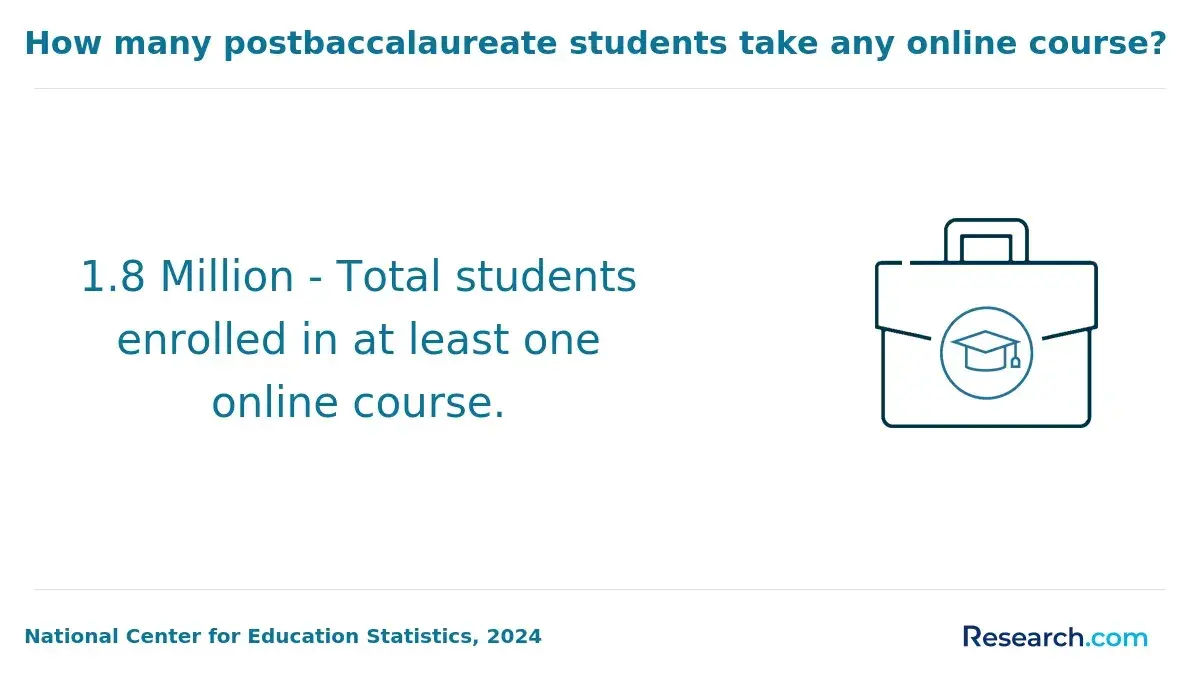
Online study has become a common pathway in education programs. According to the National Center for Education Statistics, enrollment in online undergraduate education programs has increased by over 30% in recent years, reflecting broader trust in remote learning. Still, quality varies widely. This guide explains how to compare accredited programs, what accreditation should mean, how to verify it, what costs to expect, what financial aid may be available, and how employers typically view graduates of online early childhood education bachelor's programs.
Key Points About the Best Accredited Online Early Childhood Education Bachelor's Degree Programs
- Students gain specialized skills in child development, curriculum design, and family engagement tailored to early childhood settings, enhancing practical competence for diverse educational environments.
- Online programs often reduce costs by eliminating commuting and housing fees, enabling many students to save up to 40% compared to traditional on-campus degrees.
- Graduates access a growing job market-projected to expand by 8%-in roles such as preschool teaching, childcare management, and educational consultancy, facilitated by the program's accredited status.
What are the best accredited online Early Childhood Education bachelor's degree programs?
The best accredited online early childhood education bachelor's degree program is the one that matches your career goal, state requirements, budget, and need for flexibility. A strong program should have recognized institutional accreditation, clear field experience expectations, qualified faculty, student support for online learners, and coursework that connects child development theory with real early learning environments. Programs with strong accreditation often have higher graduation rates, with some exceeding 80%, which can signal stronger student support and program quality.
The following accredited online early childhood education bachelor's degree programs stand out for different reasons. Use them as comparison points rather than assuming one program is best for every student.
- University of Florida: This program is regionally accredited by the Southern Association of Colleges and Schools. Its proprietary e-Learning platform supports interactive online learning through virtual classrooms and multimedia resources, which can be useful for students who want a structured digital learning environment.
- Liberty University: Liberty offers a program accredited by the Council for the Accreditation of Educator Preparation (CAEP). Its special education concentration may appeal to students who want to work with young children who have varied learning, behavioral, or developmental needs.
- Oregon State University: Oregon State's online bachelor's program emphasizes culturally responsive teaching, child development, and evidence-based strategies for learners from diverse backgrounds. This focus can be valuable for students planning to work in inclusive or community-based early childhood settings.
- Ball State University: Accredited by the National Association for the Education of Young Children (NAEYC), Ball State places emphasis on practical fieldwork through community partnerships. This can help online students connect coursework with supervised experience in real early childhood environments.
- Western Governors University: Western Governors University is known for a competency-based model that lets motivated students progress at their own pace. This format can work well for self-directed learners, especially those bringing prior college credit or relevant experience.
When comparing these and other programs, look beyond the school name. Confirm whether the degree is designed for licensure, non-licensure, childcare administration, preschool teaching, or broader child and family services. A program can be academically strong but still not meet your state's teacher certification requirements. Students comparing affordable online education options may also find Research.com's guide to the most affordable online MBA programs useful for understanding how online program costs and value can vary across fields.
What accreditation standards should an online Early Childhood Education bachelor's degree program meet?
An online early childhood education bachelor's degree program should meet both institutional and, when relevant, programmatic accreditation standards. Institutional accreditation applies to the college or university as a whole. Programmatic accreditation or approval applies to the education program and may be especially important if you want teacher licensure, certification, or employment in regulated early childhood settings. Fewer than 200 institutions in the U.S. meet national accreditation standards specific to this field, so careful verification matters.
At minimum, an accredited online early childhood education program should demonstrate quality in the following areas:
- Curriculum Quality: The program should cover child development, early learning theories, observation and assessment, classroom guidance, family engagement, inclusive practices, and developmentally appropriate instruction. Strong coursework should prepare students to work with infants, toddlers, preschoolers, and young children in varied learning environments.
- Faculty Qualifications: Instructors should have advanced degrees and relevant practical experience in early childhood education, child development, curriculum, assessment, or related areas. Qualified faculty are especially important online because students rely heavily on feedback, mentoring, and clear course design.
- Student Outcomes: Accredited programs should measure whether students are gaining the knowledge and skills expected of early childhood educators. Assessments may include exams, written assignments, teaching demonstrations, portfolios, field evaluations, and practicum performance.
- Field Experience: A credible program should include supervised hands-on experience in early childhood settings. Online students should ask how placements are arranged, who approves the site, who supervises the experience, and whether placements can be completed near home.
- Support Services: Online learners need reliable advising, library access, tutoring, technical support, career services, and clear communication about deadlines and fieldwork. Weak support can make an otherwise flexible program difficult to finish.
Two important names to recognize are the Council for the Accreditation of Educator Preparation (CAEP) and the National Association for the Education of Young Children (NAEYC). CAEP is commonly associated with educator preparation quality, while NAEYC focuses on standards specific to early childhood education. Depending on your career goal, state approval may matter as much as national programmatic accreditation.
Before enrolling, ask the school directly whether the online early childhood education bachelor's program is licensure-track or non-licensure-track. Then confirm that answer with your state education agency. Students comparing other accredited online education fields can also review Research.com's resource on an online library science degree to see how accreditation expectations differ by discipline.
How can I check the accreditation status of an online Early Childhood Education bachelor's program?
Do not rely only on a school's marketing page when checking accreditation. Accreditation should be verified through independent sources because it affects financial aid, credit transfer, graduate school options, and, in many cases, educator licensure. Approximately 85% of students in the U.S. enroll in regionally accredited institutions, which generally have stricter oversight than nationally accredited ones.
Use this step-by-step process before you apply or pay an enrollment deposit:
- Verify institutional accreditation. Check the U.S. Department of Education's Database of Accredited Postsecondary Institutions and Programs (DAPIP) to confirm that the college or university holds recognized accreditation. Make sure the institution name and campus or online division match the program you are considering.
- Check program accreditation. Look for recognition from the Council for the Accreditation of Educator Preparation (CAEP) if the program prepares teachers. Program accreditation can indicate that the curriculum, fieldwork, assessment, and faculty meet educator preparation standards.
- Review early childhood-specific recognition. Search for information from the National Association for the Education of Young Children (NAEYC), which promotes standards aligned with high-quality early childhood education preparation.
- Confirm state approval. Contact your state department of education or licensing agency. Ask whether the online program satisfies requirements for the specific credential you want, such as preschool teacher licensure, early childhood certification, or childcare director qualifications.
- Compare the school's claims with official records. The program website should clearly identify accrediting agencies, approval status, and any limitations. Be cautious if accreditation language is vague, outdated, or difficult to verify.
When I spoke with a professional who completed an online early childhood education bachelor's degree, he recalled how uncertain the process felt at first. "It was daunting to sift through multiple sites and directories to be sure the program was truly accredited," he said. Cross-checking the school, accreditor, and state agency took time, but it gave him confidence that the degree would be accepted by employers and licensing boards. That extra effort is worthwhile because accreditation problems are much harder to fix after you have already completed credits.
Why is it important to check if an online Early Childhood Education bachelor's program is accredited?
Accreditation is one of the most important checks you can make before enrolling in an online early childhood education bachelor's program. It helps establish that the school or program has been reviewed against recognized academic and professional standards. It can also affect whether you can receive federal financial aid, transfer credits, pursue graduate study, qualify for licensure, and compete for jobs. Research indicates that 85% of employers prefer candidates with degrees from accredited programs, which makes accreditation a practical career issue, not just an administrative detail.
- Financial Aid Eligibility: Students at non-accredited schools are often ineligible for federal aid and many scholarships. That can make the degree more expensive and limit your ability to finance enrollment responsibly.
- Credit Transferability: Credits from accredited online early childhood education bachelor's programs are more likely to be considered by other accredited institutions if you transfer or pursue graduate education. Transfer is never guaranteed, but accreditation improves your position.
- Professional Certification: Many teaching licenses and early childhood credentials require completion of an approved or accredited program. If your goal is public school teaching or a state-regulated role, confirm requirements before enrolling.
- Employment Prospects: Employers often use accreditation as a quick signal of academic credibility. This is especially important in education, where schools, childcare centers, and agencies may need to document staff qualifications.
Accreditation also protects you from a common mistake: choosing a program that sounds convenient but does not lead to the outcome you need. If you want to become a licensed teacher, a non-licensure early childhood degree may not be enough. If you want to direct a childcare center, your state may require specific coursework or experience. If you plan to continue into administration, you may later want to explore online educational leadership programs as part of a longer career path.
Does the online Early Childhood Education curriculum mirror the rigor of on-campus programs?
An accredited online early childhood education curriculum can be just as rigorous as an on-campus program when the same academic standards, faculty expectations, assessments, and field experience requirements apply. The difference is usually delivery, not substance. Online students may read, discuss, submit assignments, complete projects, and participate in supervised fieldwork through a different format, but the learning outcomes should remain comparable.
- Curriculum Content: Both online and on-campus programs should cover core topics such as child development, early learning theory, classroom management, assessment, family engagement, and inclusive practice. In accredited programs, the content is expected to align with the same quality standards regardless of delivery format.
- Practical Experience: On-campus students often complete fieldwork near the institution. Online students usually complete approved placements in their own communities. This can be convenient, but it also means online learners must pay close attention to placement deadlines, site requirements, background checks, and supervision rules.
- Engagement: On-campus classes offer face-to-face interaction and informal peer connection. Online programs may use live discussions, recorded lectures, group projects, discussion boards, and virtual meetings. Strong online programs build regular interaction into the course design rather than leaving students to work in isolation.
The main challenge for online students is not necessarily academic rigor; it is coordination. Field placements, work schedules, family responsibilities, and online deadlines can overlap. Before enrolling, ask whether classes are asynchronous, whether live attendance is required, how student teaching or practicum hours are scheduled, and what happens if you cannot secure a placement immediately.
A professional who completed an accredited online early childhood education bachelor's degree described the experience as demanding but credible. Balancing coursework with daily responsibilities was difficult, especially when arranging local field placements. "It felt isolating at times, but joining live sessions helped build a community," he noted. He also said the curriculum carried "the same deadlines, the same expectations, and the same rewarding moments" as on-campus study. That reflects what students should expect from a well-designed accredited online program: flexibility, but not lower standards.
How much does it cost to attend an accredited online Early Childhood Education bachelor's degree program?
The cost of an accredited online early childhood education bachelor's degree depends on the institution, transfer credits, residency status, program length, fees, and whether you enroll full time or part time. Tuition typically ranges from $200 to $500 per credit hour. Public institutions may be less expensive for in-state students, while private universities may charge one online rate for all students. The listed tuition, however, is only part of the total cost.
Common additional expenses include technology fees of $50 to $150 per semester, practicum charges of $300 to $700 per term, digital course materials of $100 to $300 annually, and administrative fees of $100 to $250 per semester. Students should also ask about background checks, testing fees, graduation fees, transcript fees, and costs related to field placements, since these may not appear in the headline tuition rate.
Online tuition for Early Childhood Education programs can be 20% to 40% less expensive than comparable on-campus options. Online study may also reduce indirect costs such as commuting, campus housing, parking, and meal plans. Those savings can be significant for working adults or students with family responsibilities, but they should not be assumed automatically. Some online programs charge separate distance learning fees that narrow the difference.
Before choosing a program, calculate the full degree cost based on the number of credits you still need to complete. Transfer students should request a formal transfer credit evaluation before committing. A program with a higher per-credit rate may cost less overall if it accepts more prior credits, while a cheaper per-credit option may cost more if it requires additional coursework.
What financial aid options are available for Early Childhood Education students?
Early childhood education students may qualify for several types of financial aid, including federal grants, federal loans, state aid, institutional scholarships, private scholarships, and employer tuition assistance. Nearly 85% of undergraduate students receive some form of financial aid, with billions distributed annually by the federal government to support higher education. The first step is usually completing the FAFSA and confirming that the school is eligible to participate in federal student aid programs.
- Federal Pell Grant: The Federal Pell Grant is a need-based grant that does not require repayment. Eligible students can use it for tuition and other education-related expenses.
- TEACH Grant: The TEACH Grant is designed for students who commit to teaching in high-need fields or low-income areas. Students should read the service obligation carefully because the grant can convert to a loan if the requirements are not met.
- Early Childhood Education Scholarships: State and national education organizations may offer scholarships for students enrolled in accredited early childhood education programs. These awards may consider academic achievement, financial need, community involvement, or commitment to working with young children.
- Institutional Scholarships and Grants: Many colleges provide scholarships or grants for online students. Ask the financial aid office whether online early childhood education majors qualify for the same awards as campus-based students.
- Employer Tuition Assistance: Students already working in childcare centers, preschools, schools, or education agencies may be eligible for tuition reimbursement or assistance. Confirm whether you must remain employed for a set period after receiving funds.
Compare aid packages carefully. A larger scholarship at a more expensive school may still leave you with a higher net cost than a lower-tuition program. Also check whether aid applies to summer courses, part-time enrollment, fieldwork terms, and online fees.
What are the career outcomes for graduates of online Early Childhood Education bachelor's degree programs?
Graduates of accredited online early childhood education bachelor's degree programs can pursue roles in preschool education, childcare administration, early intervention, family services, curriculum support, and related child development settings. The exact career options depend on state rules, the program's licensure status, field experience, and the graduate's prior work background. A bachelor's degree can strengthen qualifications, but some roles may require additional certification, exams, background checks, or supervised experience.
- Preschool Teacher: Preschool teachers support early learning, social development, routines, play-based exploration, and school readiness. Graduates use knowledge of child development, classroom management, and family communication to create age-appropriate learning environments.
- Early Intervention Specialist: Early intervention specialists support children with developmental delays or disabilities. Their work may involve assessment, individualized support plans, collaboration with families, and coordination with other professionals. Requirements vary by state and employer.
- Childcare Center Director: Directors manage staffing, compliance, curriculum quality, family communication, and daily operations in childcare settings. A bachelor's degree can be useful for leadership roles, although states may set additional director credential requirements.
- Family Support Worker: Family support workers connect families with resources, provide guidance, and help address barriers that affect children's development and learning. Cultural competence and communication skills are especially important in this role.
- Curriculum Developer: Curriculum developers create or adapt learning materials for young children. This path may suit graduates who combine early childhood knowledge with writing, assessment, training, or instructional design skills.
For graduates who want to move into administration, operations, or program management, leadership and project coordination skills can also be valuable. Some may explore related study options such as a project manager degree online to broaden their organizational expertise in education or adjacent fields. The strongest career outcomes usually come from matching the degree type to a specific goal: licensure, childcare leadership, family services, intervention, or curriculum work.
What is the employer perception of online Early Childhood Education graduates?
Employer perception of online early childhood education graduates has improved as online learning has become more common and as accredited institutions have expanded remote programs. Many employers now focus less on whether a degree was completed online and more on whether the institution is accredited, the program is reputable, the graduate completed supervised field experience, and the candidate can demonstrate practical skills with young children. A 2023 survey by the National Association for the Education of Young Children found that 78% of employers trust the quality and rigor of accredited online degrees in this field.
Online graduates can also bring strengths that employers value. They often develop self-management, written communication, comfort with digital tools, and experience collaborating remotely. These skills can matter in modern early childhood settings, where educators may use digital documentation systems, family communication platforms, assessment tools, and online training resources.
Still, accreditation and experience remain central. Hiring managers may ask where fieldwork was completed, whether the program met state requirements, what age groups the graduate worked with, and whether the candidate has experience with inclusive classrooms, family engagement, and behavior guidance. To improve employer confidence, online students should keep records of practicum hours, supervisor evaluations, portfolios, lesson plans, assessments, and any certifications earned during the program.
How can I choose the best accredited online Early Childhood Education bachelor's degree for my goals?
To choose the best accredited online early childhood education bachelor's degree, start with your intended outcome. A student who wants public school licensure should evaluate programs differently from someone who wants to manage a childcare center, work in family services, or build a foundation for graduate study. Affordability is also a major factor: 65% of students identify affordability as a top priority when choosing a program.
- Curriculum Relevance: Review the course list, not just the program title. Look for coursework in child development, early literacy, play-based learning, assessment, inclusive education, family engagement, classroom management, and culturally responsive practice.
- Field Experience Opportunities: Ask how practicum and student teaching placements work for online students. Strong programs provide clear placement procedures, supervision standards, and support if a local site falls through.
- Program Flexibility: Compare asynchronous courses, live class requirements, part-time options, full-time pacing, transfer credit policies, and maximum completion timelines. Flexibility matters most when it is paired with predictable scheduling and strong advising.
- Career Support Services: Look for resume support, licensure guidance, job search help, partnerships with early childhood centers, and alumni networks. Career services are especially useful for online students who may not have access to campus-based networking.
- Cost and Financial Aid Options: Compare total cost after transfer credits, fees, scholarships, grants, and employer support. Do not choose based only on per-credit tuition.
Also check whether the institution is nonprofit or for-profit, whether credits are likely to transfer, and whether the program is approved in the state where you plan to work. Prospective students looking for a non profit online university should still verify the specific early childhood education program, because institutional type alone does not guarantee licensure alignment or field placement quality.
A practical final test is to contact admissions, financial aid, and the program director with the same question: "Will this online bachelor's degree meet the requirements for the career I want in my state?" If the answers are unclear or inconsistent, keep researching before enrolling.
What Graduates Say About Their Online Bachelor's in Early Childhood Education
- : "I chose an accredited online early childhood education bachelor's degree program because I wanted the assurance that my credentials would be recognized nationwide. The affordability of the program was a huge factor, allowing me to balance work and study without incurring massive debt. This degree has truly opened doors for me in the education field, giving me confidence and the skills needed to make a real difference in young children's lives. — Azai"
- : "Reflecting on my online bachelor's experience, I am grateful for the flexibility the accredited early childhood education program offered. Being able to study at my own pace while maintaining my job was invaluable. The cost was reasonable compared to traditional programs, and this degree has propelled my career forward by increasing my qualifications for leadership roles in childcare. — Russell"
- : "The decision to pursue an accredited online early childhood education bachelor's degree was strategic for advancing my career in education. I appreciated the program's cost-effectiveness and rigorous curriculum, which prepared me well for certification requirements. Since graduating, I've noticed a significant impact in my professional growth and am now better equipped to support diverse learning environments. — Christian"
Other Things You Should Know About Early Childhood Education Degrees
Online early childhood education programs in 2027 typically require a reliable computer with a high-speed internet connection, a webcam, and access to specific software like learning management systems. These tools are essential for participating in virtual classes and completing coursework.
Yes, many accredited online early childhood education programs are designed to meet state requirements for teacher certification or licensure. However, certification eligibility depends on the program's alignment with specific state standards and completion of required practicum hours. It is important for students to verify that their chosen online program prepares them for certification in the state where they plan to teach.
An accredited online early childhood education bachelor's degree program in 2027 typically takes about four years to complete. However, some programs offer accelerated tracks, which may reduce the timeframe to around three years, depending on the credit transfer policies.
Many online early childhood education programs offer options to concentrate in areas such as special education, literacy, or administration. Specializations allow students to tailor their degree to specific career goals or interests within the early childhood field. Prospective students should review program details to find available tracks and consider how each specialization may impact certification and job prospects.
References
- How to Get an Online Early Childhood Education Degree | Pacific Oaks https://www.pacificoaks.edu/voices/education/takes-get-online-early-childhood-education-degree/
- Degree Validation - Individual Services | European Association for Higher Education Advancement https://www.eahea.org/services/eahea-degree-validation-6.html
- How to choose a bachelor's in early childhood education | edX https://www.edx.org/resources/how-to-choose-a-bachelors-in-early-childhood-education
- The 30 Most Affordable Online Bachelor's in Early Childhood Education https://www.greatvaluecolleges.net/affordable/online-early-childhood-education-degree-programs/
- Average Cost of Online College [2025]: Yearly Tuition + Fees https://educationdata.org/average-cost-of-online-college
- Is Accreditation Meaningful in Early Childhood Programs? https://greendayearlylearning.com/blog/f/is-accreditation-meaningful-in-early-childhood-programs
- NAEYC Higher Education Accreditation Standards | NAEYC https://www.naeyc.org/accreditation/higher-ed/standards
- What Does Accreditation Mean for Early Childhood Education Programs? - Tobin Afterschool https://tobinafterschool.org/what-does-accreditation-mean-for-early-childhood-education-programs/
- Top Online Early Childhood Education Courses & Tips for Choosing the Right One https://www.hannahshope.org/news/top-online-early-childhood-education-courses-tips-for-choosing-the-right-one
- Early Childhood Education Bachelor's Degree Online: Navigating Your Path to a Rewarding Career https://www.worldwondersgardens.co.uk/blog/Early_Childhood_Education_Bachelors_Degree_Online_Navigating_Your_Path_to_a_Rewarding_Career.html