2027 How to Become a Substance Abuse Counselor in Memphis, TN: Requirements & Certification

Co-Founder and Chief Data Scientist
If you want to become a substance abuse counselor in Memphis, the main decision is not simply whether the career is meaningful. It is whether you are ready for Tennessee’s education, supervised experience, exam, and renewal requirements—and whether the Memphis behavioral health job market matches your goals, income expectations, and preferred work setting.
Substance abuse counselors help people affected by alcohol use, drug use, relapse risk, co-occurring mental health concerns, and recovery barriers. In Memphis, this work often takes place in outpatient clinics, residential treatment programs, hospitals, nonprofit agencies, and community-based recovery organizations. The role can be emotionally demanding, but it also offers a direct way to serve individuals and families in need of addiction treatment support.
This guide explains how to become a substance abuse counselor in Memphis, TN; what Tennessee licensure requires; where counselors work; what salaries may look like; how demand is changing; and how to decide whether this path is right for you.
Quick Answer: Becoming a Substance Abuse Counselor in Memphis, TN
- To practice as a substance abuse counselor in Memphis, you generally need relevant education, supervised clinical experience, an approved exam, and licensure through Tennessee’s Licensed Alcohol and Drug Abuse Counselor pathway.
- Tennessee recognizes LADAC I and LADAC II credentials, and requirements vary based on education level, documented experience, exam completion, and renewal obligations.
- Memphis counselors may find roles in hospitals, outpatient programs, residential rehabilitation centers, nonprofit treatment agencies, correctional or justice-related programs, and community recovery organizations.
- Salary figures vary by source and role. The article notes an average annual salary of around $61,130 in Memphis, while another 2025 estimate places substance abuse counselors at approximately $49,280, with entry-level roles near $40,000 and experienced or supervisory roles exceeding $60,000.
- This career can be a strong fit for people who are comfortable with crisis situations, documentation, ethical boundaries, relapse prevention work, and long-term client support.
- Academic requirements for substance abuse counselors in Memphis
- Tennessee licensing requirements for addiction counselors
- Working across state lines with a Tennessee counseling license
- Internship and practicum opportunities in Memphis
- Substance abuse counselor salary in Memphis
- Job demand for substance abuse counselors in Memphis
- Moving from substance abuse counseling to LPC licensure
- Common workplaces for addiction counselors in Memphis
- Related career paths for substance abuse counselors
- Continuing education options for counselor growth
- Is Memphis a good place for this counseling career?
- Challenges substance abuse counselors face in Memphis
- Mental health counselor requirements in Memphis
- Advanced interdisciplinary training for counselors
- Telehealth in Memphis counseling practice
What are the academic requirements to become a substance abuse counselor in Memphis, TN?
The academic path for substance abuse counselors in Memphis depends on the level of credential and scope of practice you want. At a minimum, you should expect to study addiction, counseling methods, ethics, human behavior, assessment, relapse prevention, case documentation, and client communication. Many candidates begin with undergraduate study and then move into graduate education if they want broader clinical authority or future advancement.
A common starting point is a bachelor’s degree in psychology, social work, counseling, or a closely related field. These programs introduce core concepts in mental health, substance use disorders, social systems, trauma, interviewing, and behavioral change. They may also include practicum or internship experiences that help students begin building supervised client-contact hours.
Students who want stronger long-term mobility often pursue a master’s degree in counseling, social work, or a related behavioral health field. Graduate programs usually place greater emphasis on clinical assessment, diagnosis, treatment planning, group counseling, ethics, research, and supervised practice. Some programs also require a capstone, thesis, or applied project to show that students can connect research with counseling practice.
Tennessee’s Licensed Alcohol and Drug Abuse Counselor process requires documented supervised experience. Academic programs can help you accumulate relevant training, but you should confirm directly with the school and Tennessee licensing authority that the coursework and fieldwork align with the credential you plan to seek.
| Academic step | Why it matters | What to verify before enrolling |
| Bachelor’s degree in psychology, social work, counseling, or a related field | Builds a foundation in addiction, behavior, ethics, and client support | Whether the curriculum includes addiction-related coursework and supervised field experience |
| Undergraduate practicum or internship | Gives early exposure to treatment settings and client-facing work | Whether hours are supervised, documented, and relevant to Tennessee credentialing |
| Master’s degree in counseling, social work, or substance abuse treatment | Can support advanced practice options and future movement into broader counseling roles | Whether the program’s clinical training matches Tennessee licensure expectations |
| Graduate practicum or internship | Provides structured supervised clinical experience with real clients | Supervisor qualifications, site approval, hour tracking, and documentation procedures |
| Capstone, thesis, or applied project | Demonstrates the ability to use research and clinical reasoning in practice | Whether the project connects to addiction treatment, prevention, or behavioral health practice |
If you are still comparing entry routes, Research.com’s guide on how to start as a substance abuse counselor can help you understand the broader career pathway before committing to a program.
Prospective students should also compare programs by field placement support, faculty experience in addiction counseling, course alignment with Tennessee requirements, online versus campus format, and whether credits can later support a graduate degree.
What are the licensing requirements for substance abuse counselors in Memphis, TN?
Substance abuse counselors in Memphis follow Tennessee’s licensing process, which is overseen by the Tennessee Department of Mental Health and Substance Abuse Services. The main credential pathway is the Licensed Alcohol and Drug Abuse Counselor credential, commonly referred to as LADAC. Tennessee recognizes LADAC I and LADAC II, and candidates should review the exact state rules before choosing a degree, internship, supervisor, or exam.
The process typically includes four major requirements: application, supervised experience, examination, and ongoing renewal. Missing documentation can delay licensure, so candidates should track hours carefully from the beginning of training.
- Submit the state application: Applicants must provide required forms, fees, education records, and documentation showing supervised experience under an approved supervisor.
- Document supervised counseling experience: Tennessee requires proof that candidates have completed practical training in addiction counseling duties, not just general workplace exposure.
- Pass an approved examination: Candidates may need to pass the NCAC or another state-approved exam that measures knowledge in substance abuse counseling practice.
- Receive Tennessee licensure: Once education, supervision, exam, and application requirements are satisfied, the state can authorize professional practice.
- Complete renewal education: Licensed counselors must complete continuing education for renewal, including approximately 40 hours every two years, with training commonly focused on ethics, treatment updates, and professional standards.
| Licensure factor | What candidates should ask | Why it affects your timeline |
| Education level | Does my degree meet Tennessee’s LADAC I or LADAC II expectations? | The credential level you pursue may depend on your academic background. |
| Supervision | Is my supervisor approved, and are my hours being recorded correctly? | Unverified hours may not count toward licensure. |
| Exam | Which exam is accepted for my credential pathway? | Exam preparation and scheduling can affect when you become eligible to practice. |
| Renewal | How will I complete continuing education before my renewal deadline? | Failure to renew can interrupt employment or practice eligibility. |
If you are comparing counseling careers more broadly and want to understand faster routes into the field, see Research.com’s guide on how to become a counselor.
Can Memphis, TN substance abuse counselors practice in other states?
A Tennessee substance abuse counseling credential does not automatically authorize practice in another state. Counseling and addiction treatment credentials are regulated at the state level, so a Memphis counselor who wants to relocate or provide services across state lines must follow the rules of the destination state.
The usual process is to review the new state’s licensing board requirements, compare education and supervised experience standards, and apply through endorsement or reciprocity if the state offers that option. Some states may require additional coursework, extra clinical hours, a jurisprudence exam, a background check, or a different addiction counseling examination.
This issue is especially important for telehealth. If you counsel a client who is physically located outside Tennessee, the other state may consider that practice within its jurisdiction. Before offering remote services across state lines, confirm both Tennessee rules and the client’s state rules.
Are there internship opportunities for substance abuse counselors in Memphis, TN?
Internships and practicums are essential because they turn classroom training into supervised counseling practice. They also help candidates build the documented experience needed for Tennessee licensure. In Memphis, students may look for placements in outpatient programs, residential treatment centers, adolescent services, hospitals, recovery nonprofits, and community agencies.
Examples of local internship options include:
- The Healing Center: This program runs 6 to 12 months and may expose interns to outpatient and residential treatment work, giving trainees a broader view of the recovery continuum.
- Memphis Recovery Centers: This 9-month internship emphasizes individual and group counseling approaches and can help interns practice evidence-based addiction treatment methods.
- The Bridge: Located in nearby Bartlett, TN, this 6-month placement focuses on family and adolescent substance abuse counseling, making it useful for students interested in youth and family systems.
Before accepting any placement, ask whether the site provides qualified supervision, written evaluation, hour verification, exposure to core addiction counseling duties, and experience with documentation standards. A placement that is emotionally meaningful but poorly documented may not help your licensure file.
Students comparing counseling programs should also understand how accreditation affects training quality and future portability. Research.com’s overview of CACREP accreditation criteria can help you evaluate counseling programs with greater confidence.
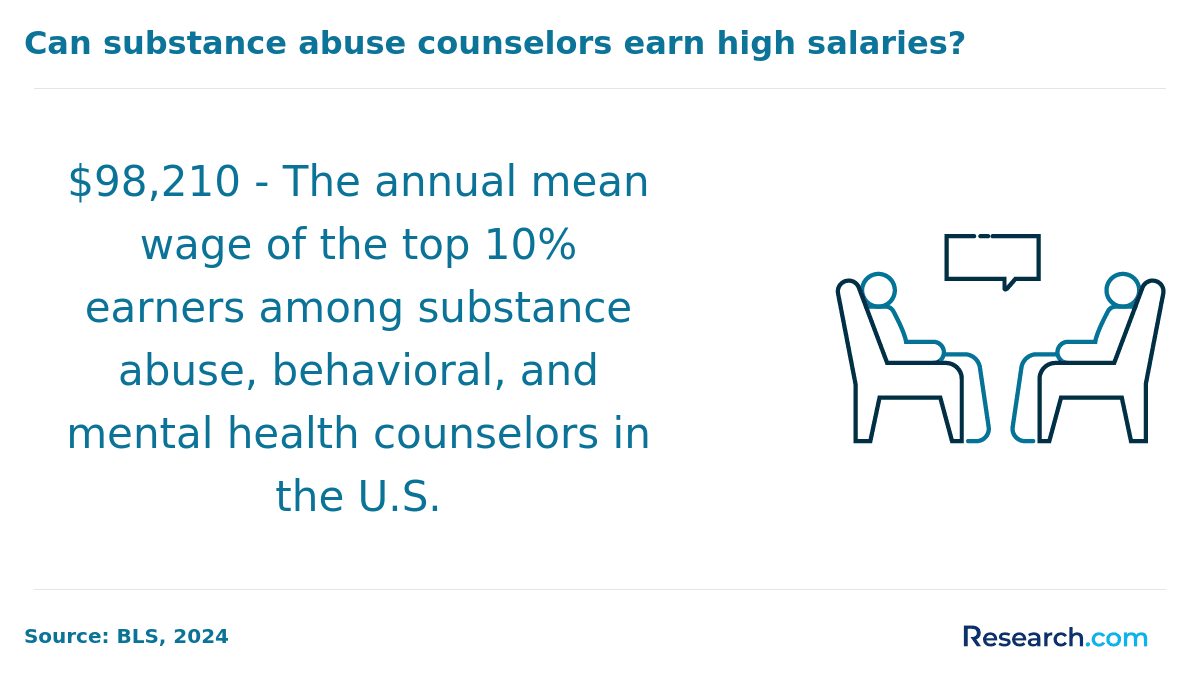
How much do substance abuse counselors in Memphis, TN earn?
Reported pay for substance abuse counselors in Memphis varies by data source, credential level, employer, job title, and whether the role includes clinical supervision or administrative leadership. One figure places the average annual salary in Memphis at around $61,130. Another 2025 estimate reports that substance abuse counselors in Memphis earn approximately $49,280 per year, with entry-level positions starting around $40,000 and advanced certification or supervisory roles paying over $60,000.
Related counseling roles may pay differently. Mental health counselors in the area typically earn around $57,600 annually, while licensed professional counselors report average salaries of about $82,000. These figures should not be treated as guarantees; actual earnings depend on licensure, experience, employer budgets, caseload responsibilities, and whether the position is clinical, case management-focused, or supervisory.
| Role or career stage | Salary information stated for Memphis | What can influence pay |
| Entry-level substance abuse counselor | Starting around $40,000 | Credential status, supervised experience, employer type, and caseload duties |
| Substance abuse counselor | Approximately $49,280 per year as of 2025 | Experience, certification, work setting, and specialization |
| Substance abuse counselor, broader estimate | Around $61,130 annually | Data source, role definition, and inclusion of more experienced professionals |
| Mental health counselor | Around $57,600 per year | Scope of practice, degree level, and clinical responsibilities |
| Licensed professional counselor | About $82,000 on average | Independent practice authority, advanced licensure, supervision, and employer type |
To improve earning potential, candidates can complete licensure steps on schedule, document supervised hours accurately, pursue continuing education in high-need treatment areas, and seek employers that support clinical growth. Students trying to control education costs may want to compare affordable online colleges for counseling degree options before choosing a program.
The chart below shows salary percentile information for this occupation.
Are substance abuse counselors in demand in Memphis, TN?
Yes. Memphis continues to need trained substance abuse counselors because addiction treatment, behavioral health access, opioid-related services, and recovery support remain major priorities. Tennessee expects about a 13% increase in counseling positions by 2030, and Memphis has around 500 to 600 job openings connected to treatment expansion, opioid response efforts, and behavioral health service needs.
Demand alone does not mean every applicant will be hired quickly. Employers often prefer candidates who already understand documentation, crisis response, group counseling, trauma-informed care, relapse prevention, and Medicaid or community resource navigation.
- Finish Tennessee-specific credentialing: Memphis employers need candidates who can legally provide the services attached to the job description.
- Use internships strategically: A strong placement can become a job lead, reference, or specialization pathway.
- Follow local public health priorities: Funding, grants, opioid initiatives, and community treatment programs can influence where hiring occurs.
- Develop documentation discipline: Treatment plans, progress notes, and compliance records are central to many counseling jobs.
How can substance abuse counselors transition to an LPC role in Memphis, TN?
Substance abuse counselors who want a wider clinical scope may consider becoming a Licensed Professional Counselor. The LPC path typically requires graduate-level counseling education, additional supervised clinical experience, and state-required examinations. This route can open access to broader mental health counseling roles, but it is not simply an automatic upgrade from addiction counseling.
Before beginning the transition, compare your current degree, clinical hours, supervision, and coursework against Tennessee LPC requirements. If gaps exist, you may need additional graduate coursework or supervised practice. Research.com’s guide on how to become an LPC in Memphis explains the steps in more detail.
| Path | Best fit | Important trade-off |
| Remain focused on substance abuse counseling | Professionals committed to addiction treatment, recovery support, relapse prevention, and treatment program roles | Scope may be narrower than broader mental health licensure. |
| Move toward LPC licensure | Counselors who want to assess and treat a wider range of mental health concerns | Requires additional education, supervision, exams, and time. |
| Add specialized continuing education | Working counselors who want to strengthen skills without changing licensure track immediately | May improve competence but may not expand legal scope of practice by itself. |
Where do substance abuse counselors work in Memphis, TN?
Substance abuse counselors in Memphis work in several types of treatment and support settings. The right workplace depends on whether you prefer crisis stabilization, long-term recovery work, group facilitation, case management, hospital-based care, adolescent services, or community outreach.
- Methodist Healthcare: Counselors in hospital and outpatient environments may complete assessments, coordinate treatment plans, provide individual or group support, and collaborate with physicians, nurses, social workers, and case managers.
- Memphis Recovery Centers: In nonprofit addiction treatment settings, counselors may lead counseling sessions, facilitate groups, support relapse prevention, and connect clients with recovery resources.
- The Salvation Army Adult Rehabilitation Center: Residential recovery programs may require counselors to manage cases, deliver educational sessions, support life-skills development, and coordinate with social service or legal systems when needed.
Other possible settings include outpatient clinics, residential treatment centers, correctional programs, community mental health agencies, school-connected prevention programs, and telehealth providers. When comparing job postings, look closely at caseload size, supervision, documentation expectations, evening or weekend requirements, crisis responsibilities, and whether the role requires LADAC, LPC, or another credential.
What other careers can substance abuse counselors pursue in Memphis, TN?
Substance abuse counseling skills can transfer into related behavioral health, recovery, prevention, and program administration roles. Some positions involve direct client support, while others focus on coordination, education, or leadership.
| Related role | Typical focus | Memphis salary range stated |
| Behavioral health technician | Supports treatment plan implementation under supervision in hospitals, clinics, or rehabilitation centers | $30,000 to $40,000 annually |
| Case manager | Coordinates services, referrals, benefits, and community resources for clients with substance use disorders | $35,000 to $45,000 |
| Prevention specialist | Designs and delivers education or outreach programs aimed at reducing substance misuse | $40,000 to $50,000 annually |
| Addiction recovery coach | Provides motivation, peer-style support, accountability, and recovery guidance rather than clinical treatment | Around $30,000 to $40,000 per year |
| Program director | Oversees operations, staff, compliance, budgets, and service delivery within a treatment organization | $50,000 to $65,000 |
If you want to explore broader options after earning a counseling-related degree, Research.com’s guide to careers with a counseling degree outlines additional career directions.
What continuing education options enhance professional growth for counselors?
Continuing education helps Memphis substance abuse counselors maintain licensure, update clinical skills, and respond to changing client needs. Useful training areas may include ethics, trauma-informed care, co-occurring disorders, motivational interviewing, medication-assisted treatment concepts, cultural responsiveness, group counseling, crisis intervention, telehealth, and documentation.
Counselors who want to broaden their practice may also study adjacent fields. For example, behavior analysis can strengthen skills in assessment, behavior change, and treatment planning. Research.com’s guide on how to become a BCBA in Memphis explains one advanced pathway for professionals interested in behavioral intervention.
Is Memphis, TN a good place to work as a substance abuse counselor?
Memphis can be a strong place to build a substance abuse counseling career if you want steady community-facing work, exposure to diverse treatment settings, and opportunities to serve people affected by addiction and related behavioral health challenges. It may be less ideal for someone who wants low-stress work, minimal paperwork, predictable client progress, or a fast path to high earnings without advanced credentials.
| Reason Memphis may be a good fit | What it means in practice |
| Consistent need for addiction treatment | Counselors may find opportunities in recovery centers, hospitals, nonprofits, and community programs. |
| Meaningful community impact | The work can affect clients, families, and neighborhoods, but it requires emotional resilience. |
| Multiple employer types | Candidates can compare residential, outpatient, hospital, nonprofit, and prevention-focused roles. |
| Credential-based career ladder | LADAC, LPC, and related training can help counselors advance, specialize, or shift settings. |
| Professional networks | Organizations such as the Tennessee Association for Alcohol, Drug and other Addiction Services can help counselors stay connected to training and job leads. |
A Memphis substance abuse counselor described the career as demanding but deeply purposeful: “You are often meeting people during the most painful point in their lives, and you have to stay steady with them.” They noted that healthcare rules, funding issues, and service coordination can feel difficult, but strong supervision and community relationships make the work more sustainable. Their main advice was to keep learning, use supervision well, and avoid trying to carry every client outcome alone.
What challenges do substance abuse counselors face in Memphis, TN?
Substance abuse counseling in Memphis can be rewarding, but candidates should understand the pressures before entering the field. The work often involves relapse, trauma histories, court involvement, family conflict, unstable housing, limited treatment access, and clients with co-occurring mental health needs.
- Heavy service demand: Opioid and methamphetamine-related needs can contribute to high caseloads. Look for employers that provide supervision, crisis protocols, and reasonable workload expectations.
- Licensure and compliance pressure: Tennessee credentialing and renewal rules require careful tracking. Keep copies of supervision logs, continuing education certificates, exam records, and state correspondence.
- Cultural and community complexity: Memphis clients may come from different racial, economic, religious, family, and neighborhood backgrounds. Cultural humility and local resource knowledge can improve engagement.
- Funding limitations: Some treatment programs operate under tight budgets. Skills in grant writing, program evaluation, and service coordination can make counselors more valuable.
- Burnout risk: Progress is not always linear in addiction recovery. Counselors need boundaries, peer consultation, supervision, and recovery-informed expectations.
| Common mistake | Better approach |
| Choosing a program without checking whether it supports Tennessee licensure goals | Ask the school to show how coursework and practicum align with LADAC or future LPC requirements. |
| Focusing only on tuition | Compare total cost, field placement support, transfer policies, supervision access, and time to completion. |
| Assuming every online program meets local credentialing rules | Confirm state approval, practicum arrangements, and supervision requirements before enrolling. |
| Waiting until graduation to look for supervised experience | Start researching approved sites, supervisors, and internship deadlines early. |
| Expecting salary growth without additional credentials | Build a plan for licensure, specialization, supervision experience, or graduate education. |
What are the mental health counselor requirements in Memphis?
Substance abuse counselors who want to treat a broader range of mental health concerns should review Tennessee’s mental health counseling requirements carefully. This pathway usually involves graduate-level education, supervised clinical hours, counseling theory, assessment, diagnosis, ethics, and state-approved examinations.
Because mental health counseling requirements differ from addiction-specific credentials, do not assume that LADAC preparation automatically satisfies all mental health counselor standards. Research.com’s guide to mental health counselor requirements in Memphis can help you compare the two pathways.
How can advanced interdisciplinary training enhance counseling outcomes?
Addiction recovery rarely involves substance use alone. Clients may also face family stress, trauma, relationship conflict, housing instability, medical concerns, legal issues, or co-occurring mental health symptoms. Interdisciplinary training helps counselors understand these overlapping needs and coordinate more complete care.
Training in family systems, for example, can improve how counselors address family communication, relapse triggers, support networks, and household patterns that affect recovery. Counselors interested in this direction can review Research.com’s guide to marriage and family therapist education requirements in Memphis.
How can telehealth enhance counseling practices in Memphis, TN?
Telehealth can make counseling more accessible for clients who face transportation barriers, work schedule conflicts, childcare challenges, or mobility limitations. In addiction counseling, virtual care may support follow-up sessions, relapse prevention check-ins, group programming, and coordination with other providers.
However, telehealth requires careful attention to confidentiality, emergency planning, client location, documentation, and state practice rules. Counselors must use secure platforms and understand when in-person care or crisis referral is more appropriate. Professionals who want to understand how digital tools fit into broader healthcare delivery can also explore Research.com’s guide on how to become a nurse practitioner in Memphis.
What substance abuse counselors in Memphis, TN say about their careers
- "Substance abuse counseling in Memphis has given me stable work and a salary that helps me support my family. The need for qualified counselors is visible every day, and that makes the role feel important as well as practical." –Sophia
- "Memphis can be a complicated place to practice because clients bring many different life experiences and barriers into treatment. That challenge has made me more flexible and more intentional about adapting counseling strategies to the person in front of me." –Cass
- "The local training and workshop options have helped me keep improving. Continuing education has made me more confident with clients and better prepared for changes in counseling practice." –AJ
Related Articles for Nearby Cities
- 2027 How to Become a Substance Abuse Counselor in Nashville, TN: Requirements & Certification
- 2027 How to Become a Substance Abuse Counselor in Huntsville, AL: Requirements & Certification
- 2027 How to Become a Substance Abuse Counselor in St. Louis, MO: Requirements & Certification
- 2027 How to Become a Substance Abuse Counselor in Louisville, KY: Requirements & Certification
- 2027 How to Become a Substance Abuse Counselor in Atlanta, GA: Requirements & Certification
- 2027 How to Become a Substance Abuse Counselor in Tulsa, OK: Requirements & Certification
- 2027 How to Become a Substance Abuse Counselor in New Orleans, LA: Requirements & Certification
- 2027 How to Become a Substance Abuse Counselor in Lexington, KY: Requirements & Certification
- 2027 How to Become a Substance Abuse Counselor in Kansas City, MO: Requirements & Certification
- 2027 How to Become a Substance Abuse Counselor in Indianapolis, IN: Requirements & Certification
Which industries in Memphis, TN pay substance abuse counselors the most?
Pay can differ by employer type. Hospitals, government-funded programs, larger healthcare systems, residential treatment providers, and supervisory roles may offer different compensation structures than small nonprofits or entry-level community programs. When comparing offers, look beyond the base salary and review benefits, supervision support, continuing education funding, paid documentation time, on-call expectations, and advancement opportunities.
Which schools in Memphis, TN offer degree programs for aspiring rehab counselors?
Students interested in rehabilitation or addiction counseling should compare local and online programs by accreditation, curriculum, field placement access, faculty expertise, transfer credit policies, and alignment with Tennessee licensure. Before enrolling, ask the admissions office and program director whether graduates have used the program to pursue LADAC, LPC, social work, or related behavioral health credentials.
Are there online certification programs for substance abuse counselors in Memphis, TN?
Online coursework can be convenient for working adults, but certification and licensure still depend on Tennessee rules. An online program may cover required academic content, yet candidates may still need in-person or locally supervised practicum hours. Always confirm whether an online option is accepted for your intended Tennessee credential before paying tuition or fees.
Are there good substance abuse prevention and treatment programs in Memphis, TN?
Memphis has treatment and prevention organizations that serve clients through outpatient counseling, residential care, recovery support, education, and community outreach. For aspiring counselors, the best programs are not only those with strong reputations but also those that provide ethical supervision, evidence-informed care, clear documentation practices, and opportunities to learn from experienced clinicians.
Key insights
- Becoming a substance abuse counselor in Memphis requires more than completing a degree; you need a Tennessee-aligned plan for education, supervision, examination, licensure, and renewal.
- The LADAC pathway is central for addiction counseling in Tennessee, while LPC licensure is a separate and broader clinical route that may require graduate study and additional supervised experience.
- Salary estimates for Memphis vary, with figures including around $61,130, approximately $49,280 as of 2025, entry-level roles around $40,000, and experienced or supervisory roles above $60,000.
- Demand is supported by behavioral health and addiction treatment needs, with Tennessee expecting about a 13% increase in counseling positions by 2030 and Memphis showing around 500 to 600 openings.
- The best program or job is not always the cheapest or highest-paying option. Accreditation, supervision quality, licensure fit, caseload, documentation expectations, and career mobility matter.
- Memphis can be a strong market for mission-driven counselors, but the work requires resilience, cultural competence, ethical boundaries, and ongoing professional development.
References:
- Garnet, M. & Miniño, A. (December 2024). Drug Overdose Deaths in the United States, 2003–2023. Centers for Disease Control and Prevention. https://stacks.cdc.gov/view/cdc/170565
- Gotadki, R. (May 2025). Substance Abuse Treatment Market Research Report Information By Type (Alcohol Dependence and Tobacco & Drug Abuse), By End User (Outpatient Treatment Centers, Residential Treatment Centers, and Inpatient Treatment Centers), and By Region (North America, Europe, Asia-Pacific, And Rest Of The World) – Market Forecast Till 2032. Market Research Future. https://www.marketresearchfuture.com/reports/substance-abuse-treatment-market-7230
- IBISWorld (November 2024). Drug & Alcohol Rehabilitation Clinics in the US - Market Research Report (2014-2029). https://www.ibisworld.com/united-states/industry/drug-alcohol-rehabilitation-clinics/4619
- International Certification & Reciprocity Consortium (n.d.). Alcohol & Drug Counselor (ADC). https://internationalcredentialing.org/icrc-credentials/credentials Data retrieved May 2025
- Mikulic, M. (May 2024). Total substance abuse funding by National Institutes for Health 2013-2025. Statista. https://www.statista.com/statistics/713359/substance-abuse-funding-by-the-national-institutes-for-health
- National Center for Drug Abuse Statistics (2023). Average Cost of Drug Rehab. https://drugabusestatistics.org/cost-of-rehab
- National Center for Health Workforce Analysis (November 2024). State of the Behavioral Health Workforce, 2024. Bureau of Health Workforce. https://bhw.hrsa.gov/sites/default/files/bureau-health-workforce/state-of-the-behavioral-health-workforce-report-2024.pdf
- National Center for Health Workforce Analysis (n.d.). Workforce Projections. Health Resources and Services Administration. https://data.hrsa.gov/topics/health-workforce/workforce-projections Data retrieved May 2025
- O*NET OnLine (n.d.). O*NET OnLine Help. https://www.onetonline.org/help/online/find_occ Data retrieved May 2025
- O*NET OnLine (n.d.). Substance Abuse and Behavioral Disorder Counselors, 21-1011.00. https://www.onetonline.org/link/details/21-1011.00 Data retrieved May 2025
- Reinert, M., Fritze, D. & Nguyen, T.(July 2024). The State of Mental Health in America 2024. Mental Health America. https://mhanational.org/wp-content/uploads/2024/12/2024-State-of-Mental-Health-in-America-Report.pdf
- Shatterproof (April 2025). Shatterproof Statement on SAMHSA National Survey on Drug Use and Health Staffing Cuts. PR Newswire. https://www.prnewswire.com/news-releases/shatterproof-statement-on-samhsa-national-survey-on-drug-use-and-health-staffing-cuts-302421026.html
- Substance Abuse and Mental Health Services Administration (July 2024). Key Substance Use and Mental Health Indicators in the United States: Results from the 2023 National Survey on Drug Use and Health. https://www.samhsa.gov/data/sites/default/files/reports/rpt47095/National%20Report/National%20Report/2023-nsduh-annual-national.pdf
- U.S. Bureau of Labor Statistics (April 2024). Occupational Employment and Wages, May 2023, 21-1018 Substance Abuse, Behavioral Disorder, and Mental Health Counselors. https://www.bls.gov/oes/2023/may/oes211018.htm
- U.S. Bureau of Labor Statistics (April 2025). Substance Abuse, Behavioral Disorder, and Mental Health Counselors. https://www.bls.gov/ooh/community-and-social-service/substance-abuse-behavioral-disorder-and-mental-health-counselors.htm
- U.S. Bureau of Labor Statistics (n.d.). Occupational Employment and Wage Statistics, Industry: Cross-industry, Private, Federal, State, and Local Government, Period: May 2024. https://data.bls.gov/oes/#/industry/000000 Data retrieved May 2025
- Vankar, P. (November 2024). Number of people in the U.S. who received treatment for alcohol use 2023, by age. Statista. https://www.statista.com/statistics/620295/people-with-alcohol-use-treatment-in-the-us-by-age-group
- Vankar, P. (November 2024). Share of people in the U.S. who received treatment for alcohol use 2023, by ethnicity. Statista. https://www.statista.com/statistics/620318/alcohol-use-treatment-in-the-us-by-ethnicity
- Vankar, P. (March 2025). Most important health issues facing the U.S. according to U.S. adults 2024. Statista. https://www.statista.com/statistics/986209/most-important-health-issues-facing-america-us
- Vankar, P. (April 2025). Addiction treatment among U.S. college students receiving mental healthcare 2010-2024. Statista. https://www.statista.com/statistics/827363/addiction-treatment-among-college-students-receiving-mental-health-services-us-by-year
- Vankar, P. (April 2025). Substance use among adults in the United States as of 2023, by any mental illness. Statista. https://www.statista.com/statistics/252470/substance-use-among-us-adults-by-any-mental-illnes
- Yang, J. (December 2024). Number of substance abuse treatment facilities in the U.S. by operation type 2023. Statista. https://www.statista.com/statistics/452517/number-of-substance-abuse-treatment-facilities-in-the-us-by-operation-type
- Yang, J. (December 2024). Number of substance abuse treatment facilities in the U.S. 2003-2023. Statista. https://www.statista.com/statistics/450281/total-number-of-substance-abuse-treatment-facilities-in-the-us
- Yang, J. (December 2024). Share of substance abuse treatment facilities in the U.S. by care setting 2023. Statista. https://www.statista.com/statistics/452486/distribution-of-substance-abuse-treatment-facilities-in-the-us-by-care-type
- Zippia (January 2025). Substance Abuse Counselor demographics and statistics in the US. https://www.zippia.com/substance-abuse-counselor-jobs/demographics
- Zippia (January 2025). Substance Abuse Counselor Education Requirements. https://www.zippia.com/substance-abuse-counselor-jobs/education
- Zippia (January 2025). Substance Abuse Counselor skills for your resume and career. https://www.zippia.com/substance-abuse-counselor-jobs/skills
Other Things You Should Know About Being a Substance Abuse Counselor in Memphis, TN
Tennessee certification pathways usually require supervised clinical experience, often totaling 2,000 to 4,000 hours depending on the credential level. The exact requirement is set by the Tennessee Department of Mental Health and Substance Abuse Services or the certifying board, along with documented supervision from an approved supervisor.
Yes, candidates must complete a supervised internship or practicum, typically totaling at least 300 hours, as part of their educational program to meet the requirements for becoming a licensed substance abuse counselor in Memphis, TN in 2027.
In 2027, aspiring substance abuse counselors in Memphis, TN, typically need a bachelor's degree in psychology, counseling, or a related field. Additional steps include completing state-approved training and accumulating supervised work experience hours before obtaining certification.
In 2027, certification for substance abuse counselors in Memphis, TN can be obtained through organizations like the Tennessee Board of Alcohol and Drug Abuse Counselors or the National Association for Alcoholism and Drug Abuse Counselors. Requirements vary by organization.