2027 Online vs On-Campus Accounting Degree Programs: Pros & Cons

Co-Founder and Chief Data Scientist
Choosing between an online and an on-campus accounting degree is not only a question of convenience. It affects how you study, how much you pay, how you build professional relationships, and how easily the program fits around work, family, commuting, or relocation.
Online accounting programs have become more common as digital learning has gained credibility, with recent data showing a 20% increase in enrollment over the past three years. Still, the best format depends on the student. A working adult may value flexible deadlines and remote access, while a recent high school graduate may prefer campus structure, in-person faculty contact, and face-to-face networking.
This guide compares online and on-campus accounting degrees across structure, admissions, support services, completion time, cost, financial aid, credibility, employer perception, salary outcomes, and fit. The goal is to help you choose the format that supports your academic needs, career plans, budget, and learning style.
Key Benefits of Online vs On-Campus Accounting Degrees
- Online accounting degree programs offer flexible schedules that allow 89% of students to balance work and study efficiently, making them ideal for working professionals.
- These programs often come at a lower cost, with online degrees averaging 30% less in tuition and fees compared to traditional on-campus options.
- On-campus accounting degrees provide direct access to campus resources such as career services and face-to-face networking, which 72% of graduates report as beneficial for job placement.
Are Online vs. On-Campus Accounting Programs Structured the Same Way?
Online and on-campus accounting programs usually cover the same core subject matter, especially when they lead to the same degree from the same institution. Students in either format can expect coursework in financial accounting, managerial accounting, auditing, taxation, accounting information systems, business law, ethics, and data analysis. The main difference is not what students learn, but how the program is delivered and how students are expected to manage their time.
For accounting students, structure matters because the subject builds in sequence. Weak understanding of early topics such as debits and credits, adjusting entries, or financial statement preparation can make later courses more difficult. The right format should match how consistently you can study, ask questions, and keep up with deadlines.
Key structural differences
- Course delivery: Online programs commonly use asynchronous lectures, digital assignments, recorded demonstrations, accounting software exercises, and discussion boards that students can access outside traditional class hours. On-campus programs rely more heavily on scheduled classroom meetings, live lectures, in-person labs, and immediate classroom discussion.
- Class schedules: Online accounting courses may offer multiple start dates during the year and shorter terms, typically lasting 8-10 weeks. On-campus programs more often follow 15-16 week semesters with fixed meeting times and several courses running at once.
- Interaction and collaboration: On-campus students can speak with instructors before or after class, work with classmates in person, and participate in campus-based group projects. Online students collaborate through forums, video meetings, shared documents, and virtual group assignments, which can work well but require more intentional communication.
- Student engagement: Campus programs create structure through attendance, live discussion, and visible faculty oversight. Online programs place more responsibility on the student to log in regularly, track due dates, complete practice problems, and seek help before falling behind.
- Program duration: Both formats can require 1-2 years with 30-36 credit hours in some accounting pathways, depending on degree level, transfer credit, and enrollment intensity. Online programs may provide more flexible or accelerated options, while on-campus timelines are often tied more closely to the academic calendar.
Which structure works better?
An online accounting program may be a better fit if you need control over when and where you study, already have work experience, or can stay organized without frequent in-person reminders. An on-campus program may be stronger if you learn best through live explanations, want immediate feedback, or value daily access to professors, classmates, and campus resources.
Are Admission Requirements the Same for Online vs On-Campus Accounting Degree Programs?
Admission standards are often similar for online and on-campus accounting programs, especially when both formats are offered by the same accredited college or university. Schools generally want evidence that applicants can handle college-level quantitative coursework, written communication, and business concepts. The main difference is that online programs may also evaluate whether applicants are prepared for remote learning.
Students should not assume an online accounting degree is automatically easier to enter. Some online programs are designed for adult learners and transfer students, while others use the same admissions process as campus-based programs.
Common admission requirements
- Academic qualifications: Both formats usually require a high school diploma or equivalent. A minimum GPA often set at 2.0 or higher may apply. Transfer credits and prior college coursework may also be accepted in either format.
- Standardized test scores: Many accounting programs, especially those serving adult or nontraditional students, no longer require SAT or ACT scores. Some larger universities may still request or require scores for on-campus applicants, while online programs may be more likely to waive them.
- Application materials: Applicants typically submit an application and official transcripts. Some schools may also ask for essays, personal statements, or letters of recommendation. Online programs aimed at working adults may make recommendations optional.
- Work experience: Undergraduate accounting programs generally do not require work experience. However, online programs often enroll older students, and some institutions may consider professional background during holistic review or when evaluating prior learning.
- Technical readiness: Online applicants may need reliable internet access, basic computer proficiency, and the ability to use a learning management system. Some schools require an online orientation before classes begin. This step is less common for on-campus students.
How to compare admissions policies
Before applying, check whether the online and campus versions of the program have the same accreditation, faculty, degree title, transfer credit policy, and prerequisites. If you already have college credits, ask for a formal transfer evaluation early. If you want to finish quickly after an undergraduate degree, it may also be useful to compare accounting pathways with broader options such as one year master programs.
Do Online Accounting Students Receive the Same Academic Support as On-Campus Students?
Online accounting students can receive academic support comparable to on-campus students, but the delivery method is different. The strongest online programs do not simply post lectures and leave students on their own. They provide remote tutoring, faculty access, writing help, library databases, accounting software support, and career services designed for distance learners.
The quality of support matters in accounting because students often need help working through detailed problems, interpreting standards, preparing spreadsheets, and applying tax or audit concepts. When comparing programs, ask not only whether support exists, but how quickly students can use it and whether it is available outside standard business hours.
Support services to compare
- Tutoring services: Both formats may provide tutoring for difficult accounting courses. Online students often use chat-based tutoring, video appointments, screen sharing, and virtual whiteboards. On-campus students may have access to drop-in tutoring centers and scheduled face-to-face sessions.
- Career counseling: Online learners may receive resume reviews, mock interviews, virtual job fairs, and access to job boards. On-campus students may have more in-person recruiting events, employer visits, and networking sessions. In both cases, career support is especially important for internships and entry-level accounting roles.
- Library access: Online students usually rely on digital libraries, databases, e-books, research guides, and remote librarian consultations. On-campus students can use those tools plus physical library collections and study spaces.
- Faculty interaction: Online communication often happens through email, announcements, discussion boards, office-hour video calls, and feedback on submitted work. Campus students can attend in-person office hours and ask questions during or after class. In either format, consistent faculty presence is a major indicator of program quality.
- Technical support: Online accounting students need reliable help with the learning platform, exam proctoring systems, accounting software, spreadsheets, and file submissions. On-campus students may also use IT support, computer labs, and help desks, but technical issues are usually more central to the online experience.
Questions to ask before enrolling
- Is accounting tutoring available during evenings or weekends?
- Can online students meet with faculty by video, or only by email?
- Does the program provide access to required accounting software?
- Are career services available to online students in the same way as campus students?
- Does the school publish response-time expectations for instructors or support staff?
Completion time depends on degree level, transfer credits, course load, term length, and whether the student attends full time or part time. The format can influence pace, but it does not guarantee a faster or slower path by itself.
For many students, the biggest advantage of online accounting programs is scheduling flexibility. That flexibility can shorten the timeline for students who can take accelerated courses, or extend it for working adults who need a lighter course load. On-campus programs tend to be more predictable but less flexible because courses are tied to fixed semesters or quarters.
Typical timelines by format
- Online Accounting Degree: Most online accounting bachelor's programs are designed to be completed in about four years by full-time students. Accelerated tracks may allow students with transfer credits or prior experience to finish in one to three years. Part-time learners and working professionals may take five or six years, depending on course availability and personal workload.
- On-Campus Accounting Degree: Traditional on-campus accounting programs typically require four years of full-time study. Part-time students often take five to six years because required courses may be offered only in certain terms or at fixed times. Accelerated options exist but are less common and generally depend on prior credits, allowing completion in one to three years for eligible students.
What can speed up or slow down completion?
- Transfer credits: Students who bring in approved general education or business credits may reduce the number of courses needed.
- Course sequencing: Accounting courses often have prerequisites. Missing one course in a sequence can delay the next term.
- Work and family obligations: Online students may be able to continue steadily with a lighter load, while campus students may find scheduling conflicts harder to manage.
- Accelerated terms: Shorter online terms can help motivated students move faster, but they also require disciplined weekly study.
A professional who pursued an online accounting degree while balancing full-time work and family responsibilities said the pace was one of the main reasons the format worked. He completed the degree in about five years rather than the standard four. “I wasn't in a rush, but having the option to accelerate if needed was reassuring,” he recalled.
He found that the online format allowed him to take more courses during slower periods at work and reduce his load when personal commitments increased. The extended timeline required patience, but it helped him complete the degree without sacrificing employment, family responsibilities, or academic quality.
Online accounting programs are often cheaper overall, but not always. Tuition, fees, residency rules, housing, transportation, technology, textbooks, and time to completion all affect the final cost. A low tuition rate does not automatically mean the lowest total price, especially if fees are high or credits do not transfer cleanly.
The strongest cost comparison looks at total cost of attendance, not tuition alone. Students should also consider whether a program allows them to keep working, avoid relocation, and graduate sooner.
Main cost differences
- Tuition and fees: Online accounting programs often charge lower tuition than on-campus options, with savings averaging several thousand dollars annually. Some online schools charge flat tuition regardless of residency, which can help out-of-state students. Public institutions may use different pricing models, so students should confirm the exact rate before applying.
- Living expenses: Online students can often avoid room and board costs by studying from home. On-campus students may pay significantly more for housing, meals, and other daily living expenses tied to campus attendance.
- Commuting and incidental costs: Online study can eliminate parking, fuel, public transportation, and some campus-based fees. Digital materials may also reduce textbook costs, although this varies by course.
- Technology costs: Online students need a reliable computer, internet connection, webcam, and sometimes specific software. These costs are real, but they usually do not outweigh the savings from avoiding commuting or campus housing.
- Financial aid availability: Both formats may qualify for federal aid if the institution and program meet eligibility rules. However, some scholarships may be tied to campus enrollment, full-time attendance, or specific institutional policies.
- Accelerated and flexible scheduling: Online programs may offer accelerated courses, prior learning assessment, or transfer-friendly pathways that reduce time in school. Finishing sooner can lower total tuition and reduce opportunity cost.
How to judge affordability
Ask each school for a program-level cost estimate that includes tuition, mandatory fees, books or materials, technology fees, and expected time to completion. Students focused primarily on price can compare options such as the cheapest accounting degree online, but they should still verify accreditation, transfer policies, and CPA-related coursework requirements before enrolling.
If you are still deciding how much college you need before committing to an accounting pathway, broader resources on what is the easiest associate degree to get online can help you think through accessibility, workload, and entry-level options alongside cost.
Online and on-campus accounting students can often use the same major financial aid sources when they enroll in an eligible accredited institution. The important differences usually involve enrollment status, state residency, institutional scholarship rules, and whether the program is approved for federal aid.
Students should complete financial aid research before choosing a format. An online program with lower tuition may still be unaffordable without aid, while a more expensive campus program may become competitive after grants, scholarships, and employer assistance.
Financial aid sources to compare
- Federal Aid (FAFSA, Pell Grants, Direct Loans): Both online and on-campus students can apply for federal aid by completing the FAFSA. The Federal Pell Grant, which does not require repayment, offers up to $7,395 for the 2025-2026 year. Pell Grants can support part-time enrollment, which is common among online students, while federal Direct Loans generally require at least half-time enrollment.
- State Aid: State financial aid may be available to students in either format when the school and program meet state requirements. Some states restrict aid to residents or to students attending in-state institutions, which can affect online learners enrolled through out-of-state schools.
- Scholarships and Grants: Accounting scholarships and institutional grants may be available to both online and campus students. However, some awards require full-time enrollment, campus participation, or attendance at a specific location. Students should ask whether online learners are eligible for the same scholarship pool as campus students.
- Employer Tuition Reimbursement: Working students may qualify for employer tuition assistance or reimbursement. Online programs can be especially practical for employees because they make it easier to study without leaving a job or changing work schedules.
- Private Student Loans: Private loans are available to both online and on-campus students, but interest rates, repayment protections, and approval requirements vary by lender. Students should compare private loans carefully and understand that they generally offer fewer borrower protections than federal aid.
Financial aid checklist for accounting students
- Confirm that the institution is accredited and eligible for federal aid.
- Ask whether online accounting students qualify for the same institutional scholarships as campus students.
- Check whether part-time enrollment affects grants, loans, or tuition reimbursement.
- Review state aid rules if you plan to enroll in an out-of-state online program.
- Compare net price after aid, not just published tuition.
Cost and career return should be considered together. Accounting remains a strong option in many earnings-focused degree comparisons, and students weighing long-term value may find it useful to review research on the best major to make money.
Online accounting programs can be as credible as on-campus programs when they are properly accredited, academically rigorous, and offered by a reputable institution. Employers, graduate schools, and licensing bodies generally care more about accreditation, curriculum, degree level, school reputation, and student performance than whether coursework was completed online or in person.
Credibility is not automatic, though. Students should be cautious with programs that lack recognized accreditation, provide limited faculty access, make unrealistic promises, or do not clearly explain how their coursework aligns with professional goals such as CPA eligibility.
What makes an accounting program credible?
- Accreditation: Accrediting organizations such as the Association to Advance Collegiate Schools of Business (AACSB) and the Accreditation Council for Business Schools and Programs (ACBSP) apply standards that can cover both online and on-campus formats. Accreditation helps signal that the program meets external quality expectations.
- Faculty qualifications: Many institutions use the same professors for online and campus courses. This can help keep course expectations, grading standards, and content quality consistent.
- Curriculum alignment: Credible programs cover foundational accounting principles, ethics, data analytics, taxation, auditing, and business topics. Most programs require about 120 credits over four years at the bachelor's level.
- Assessment quality: Strong online programs use proctored exams, applied projects, simulations, case studies, and accounting software assignments to verify student learning.
- Professional preparation: Students planning to become CPAs should confirm that the program’s coursework supports state CPA education requirements, since licensing boards prioritize required credits and subject coverage over delivery format.
How perceptions have changed
Perceptions of online accounting degrees have improved as universities have expanded remote instruction and employers have become more familiar with online education. In many cases, diplomas do not specify whether a degree was completed online or on campus. Licensing boards, including state CPA agencies, typically focus on accreditation and curriculum requirements rather than the mode of study.
Technology has also strengthened online accounting education. Interactive simulations, remote proctored exams, collaboration tools, and virtual accounting software exercises make it easier for students to demonstrate skill mastery. For employers, the key question is increasingly whether a graduate can do the work, communicate clearly, meet deadlines, and use accounting tools accurately.
Employer preferences are mixed. Some employers still prefer on-campus accounting degrees, especially for entry-level roles where they associate campus study with face-to-face collaboration, structured mentoring, and interpersonal development. Research suggests that up to 96% of hiring gatekeepers favor on-campus degrees when candidates are otherwise comparable.
At the same time, employer attitudes are changing. Accredited online accounting programs from reputable institutions are more widely accepted, particularly when graduates can show strong grades, internships, software skills, communication ability, and readiness for remote or hybrid work.
What employers usually evaluate
- Accreditation and school reputation: Employers are more likely to trust an online degree from an accredited, recognized institution than a poorly documented program with limited academic oversight.
- Relevant experience: Internships, part-time accounting work, volunteer tax preparation, bookkeeping experience, or project-based coursework can reduce concerns about degree format.
- Technical skills: Employers value spreadsheet proficiency, accounting software experience, data analysis ability, and attention to detail.
- Communication and professionalism: Accounting roles require client communication, documentation, teamwork, and ethical judgment. Campus students may demonstrate these through in-person activities, while online students can highlight remote collaboration and self-management.
- CPA or certification preparation: For roles tied to public accounting or advancement, employers may focus on whether the program supports CPA eligibility or other credential goals.
Employer surveys indicate that 41.6% of Certified Public Accountants (CPAs) acknowledge that degree format influences hiring decisions, often because of concerns about course integrity and limited live interaction in online formats. However, remote and hybrid work have made online learning experience more relevant. Graduates who can show discipline, adaptability, and verified skill development may be able to overcome format-based skepticism.
When I spoke with a professional who completed her accounting degree fully online, she said she initially worried about employer perception. During interviews, she focused on her internship experience, the rigor of her accredited program, and the projects she completed. “I made sure to communicate not just the degree but what I achieved through it,” she shared.
Her ability to work independently and communicate in remote settings became an advantage. She now sees her online degree as a practical choice that matched her lifestyle while still giving her the accounting knowledge and credentials needed to compete for roles.
Salary outcomes for accounting graduates depend more on degree level, accreditation, experience, location, employer type, certifications, and specialization than on whether the degree was earned online or on campus. The learning format can influence networking and internship access, but it is rarely the only factor affecting pay.
For students comparing return on investment, the better question is not simply “Which format pays more?” but “Which format helps me graduate with the right credentials, manageable debt, relevant experience, and access to the accounting roles I want?”
Factors that shape salary outcomes
- Accreditation and Program Reputation: Salary differences narrow when both programs are accredited and respected. Graduates of reputable online and on-campus programs are generally more comparable than graduates of programs with weak recognition or unclear accreditation.
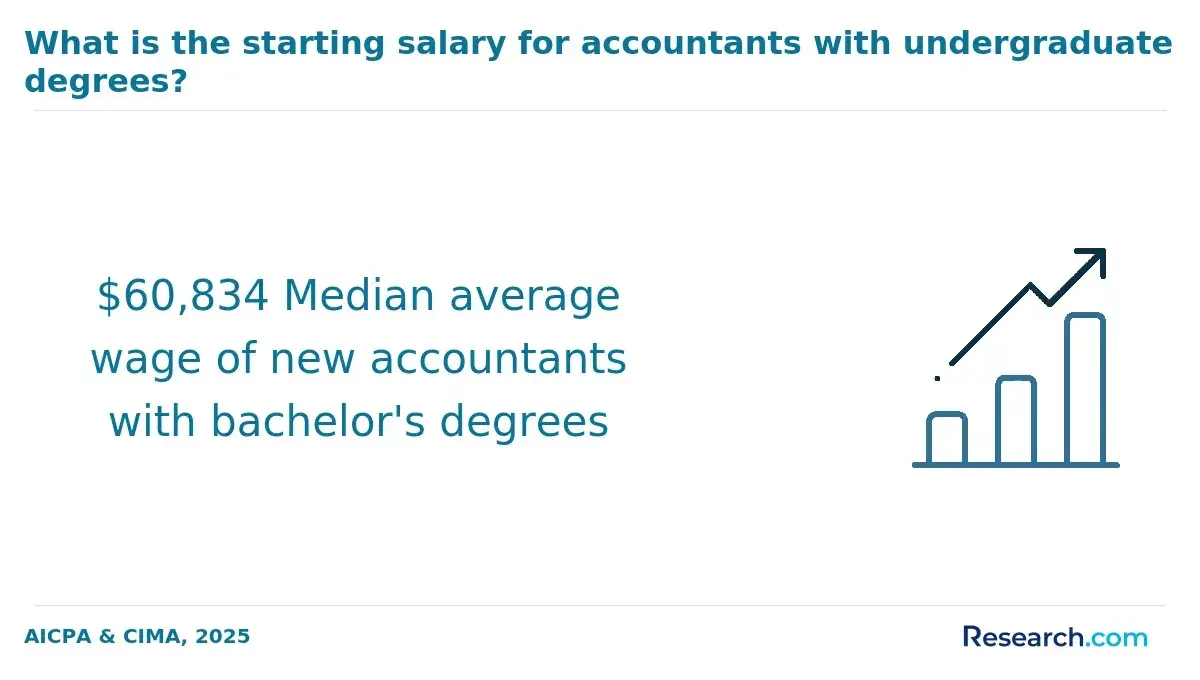
- Degree Level and Specialization: Degree level has a major effect on earnings. Bachelor's degree holders typically see average salaries around $79,000, while those with master's degrees may earn substantially higher, sometimes exceeding $137,000. Specializations in areas such as taxation, auditing, forensic accounting, analytics, or public accounting can also affect opportunities.
- Employer Perception: Many employers now view accredited online accounting degrees as credible, especially when students can document rigorous coursework, faculty interaction, and CPA exam preparation. Any remaining concerns are often addressed through internships, references, projects, and demonstrated technical skills.
- Cost and Return on Investment: Online accounting programs may improve ROI when they reduce tuition, housing, commuting, or time away from work. Some public institutions charge as little as $4,162 annually. Lower cost can matter even when salaries are similar because graduates may leave school with less debt.
- Access to Networking and Career Services: On-campus students may have more in-person recruiting and alumni events. Online students need to be more proactive with virtual career services, accounting associations, faculty outreach, and internship searches. Networking effort can influence salary growth in either format.
How to protect your earning potential
- Choose an accredited program with clear accounting outcomes.
- Confirm whether coursework supports CPA-related goals in your state.
- Complete internships, applied projects, or accounting-related work experience before graduation.
- Build proficiency with spreadsheets, accounting systems, and data tools.
- Use career services early rather than waiting until the final term.
The right accounting program format depends on how you learn, how much structure you need, how much flexibility you require, and what kind of professional network you want to build. A strong online program can be the better choice for one student, while a campus program can be the better choice for another.
Use the format decision as part of a broader evaluation. Accreditation, total cost, faculty access, CPA preparation, internship support, and graduation timeline matter more than convenience alone.
Choose online if these factors matter most
- You need flexibility: Online accounting degrees are often better for students balancing school with employment, caregiving, military service, or long commutes.
- You are self-directed: Online coursework requires consistent time management, independent reading, and the discipline to complete practice problems without in-person reminders.
- You want to avoid relocation or commuting: Remote study can reduce travel, housing, and schedule disruption.
- You may want accelerated or part-time pacing: Online programs often provide more options for year-round starts, shorter terms, or variable course loads.
Choose on-campus if these factors matter most
- You learn best in person: Campus programs may be better if you value live lectures, immediate questions, and face-to-face explanation of complex accounting problems.
- You want a traditional college experience: Student organizations, campus events, in-person faculty mentoring, and peer study groups can strengthen engagement.
- You need built-in structure: Fixed class schedules can help students who struggle with self-paced or asynchronous coursework.
- You want local networking: Campus programs may offer stronger in-person recruiting connections with regional accounting firms and employers.
Decision factors to compare before applying
- Learning Style: If you thrive on face-to-face discussion and immediate feedback, on-campus study may be better. If you can stay organized and learn independently, online study may work well.
- Flexibility Needs: Online programs usually fit better around work and family obligations. Campus programs may require commuting, relocation, or daytime availability.
- Budget: Cost comparison should include tuition, fees, housing, transportation, technology, and lost work time. Public university programs average $54,183 online versus $85,348 on campus, before considering additional savings from reduced housing and transportation costs. Some online programs may still have technology or faculty-related costs that reduce the gap.
- Networking Opportunities: On-campus programs may make networking easier through in-person events. Online students can still network effectively, but they usually need to be more intentional through virtual events, LinkedIn outreach, accounting associations, and internships.
- Access to Campus Resources: Campus students can use physical libraries, tutoring centers, clubs, and employer events. Online students should confirm that equivalent virtual services are available and easy to access.
If you are still comparing career pathways, it may help to review fields beyond accounting, including a list of trade school careers. Seeing alternatives can clarify whether an accounting degree, and which delivery format, best supports your long-term goals.
Here's What Graduates of Online vs On-Campus Accounting Programs Have to Say About Their Degree
- Jamal: "Completing my accounting degree entirely online was a game-changer for me. Balancing work and family while studying created challenges, but the flexibility allowed me to progress at my own pace. I appreciate how the program incorporated real-world scenarios that prepared me for a seamless transition into my financial analyst role. The ability to connect with professors and classmates virtually broadened my network across the country. This degree didn't just boost my career; it empowered me to pursue lifelong learning on my own terms."
- Isabella: "Attending an on-campus accounting program gave me an incredible foundation through face-to-face collaboration and campus resources. The immersive environment fostered deep connections with peers and mentors, which helped sharpen my interpersonal skills alongside technical knowledge. My confidence grew as I presented projects and participated in student organizations focused on community financial education. Now, as a tax consultant, I value how those in-person experiences cultivated both professional skills and a passion for giving back locally. It was truly transformative."
- Raj: "The hybrid format of my accounting degree struck the perfect balance between structured campus interaction and flexible online coursework. I gained hands-on experience during on-campus labs while still managing a part-time job through virtual classes. This blend helped me develop strong time management skills and adaptability valued in my auditing career. I also appreciated how the hybrid program exposed me to diverse learning methods and technologies that are essential in today's accounting field. Pursuing this degree broadened my perspective and increased my marketability in a competitive job market."
Other Things You Should Know About Online & On-Campus Accounting Degree Programs
Most online accounting programs require a Windows or Mac computer, reliable broadband, a webcam, a microphone, and Microsoft Excel. Some courses also require lockdown-browser software, dual monitors for exams, and a minimum of 8 GB RAM. Schools publish exact device rules before enrollment.
Admission requirements for online accounting degree programs in 2027 typically include a high school diploma or equivalent, a minimum GPA, and possibly standardized test scores such as the SAT or ACT. Some programs may also require prerequisite courses in math or business.
- Accounting - Eller College (BSBA) https://online.arizona.edu/programs/undergraduate/online-bachelor-science-business-administration-accounting-eller-college
- 6 Tips for Choosing an Accounting Degree Program https://www.husson.edu/online/blog/2021/12/tips-choosing-accounting-degree-program
- Online Bachelor's Degree in Accounting https://www.aiuniv.edu/degrees/business/bachelors-accounting
- The Surprising Cost of Online Education: Why 83% of Online Degrees Aren’t More Affordable https://www.nexford.edu/insights/the-surprising-cost-of-online-education-why-83-of-online-degrees-arent-more-affordable
- Cost of Online Education vs. Traditional Education [2025]: Comparison https://educationdata.org/cost-of-online-education-vs-traditional-education
- Online Bachelor's Degree in Accounting https://www.monroeu.edu/academics/undergraduate-programs/monroe-online/school-business-and-accounting/online-bachelors-accounting
- What Companies Expect Of New Hires With Online Accounting Degrees https://www.saintleo.edu/about/stories/blog/what-companies-expect-of-new-hires-with-online-accounting-degrees