2027 Evaluating an MPH Practicum in A Community Survey Research Team

Co-Founder and Chief Data Scientist
A community survey team can offer an MPH student unusually direct experience with how public health evidence is made - and how easily it can be misinterpreted. But a placement is valuable only if its tasks meet your program's requirements, its supervisor can teach you, and its data practices protect participants and community partners. This guide is for students comparing practicum sites or MPH programs. It shows what to verify before accepting a placement, what work to expect, and how to judge whether the experience supports your next career step.
Key Things You Should Know
- Approve the project with your MPH program before starting: a willing survey team, an available dataset, and an interesting topic do not by themselves make a qualifying practicum.
- Prioritize supervised responsibility for survey design, recruitment, data quality, analysis, or reporting - not observation or data entry alone. Check that the work can produce the required assessed work products.
- Confirm permissions, scheduling, and costs early. Access to identifiable responses, evening outreach, travel, and an unpaid placement can change whether an otherwise strong opportunity is feasible.
What Is an MPH Practicum in a Community Survey Research Team?
An MPH practicum, often called an applied practice experience, is supervised work in a public health setting that lets a student demonstrate program-defined competencies. On a community survey research team, that work might support a health department, nonprofit, university-community partnership, or other organization gathering information to inform services or decisions.
The defining feature is practice with an accountable partner, not merely using survey software. A strong placement connects a community question to a feasible survey, responsible interpretation, and a usable output such as a recruitment protocol or findings brief. It may sit alongside academic research, but the MPH program determines whether the specific assignment qualifies as its practicum.
Students seeking an introductory survey-support role rather than a graduate-level applied practice experience may be better served by supervised work alongside distance learning options for public health undergraduates. An MPH is not necessary for every community data-collection job.
What Does a Community Survey Research MPH Practicum Involve?
The best assignment gives the student a defined contribution to a real partner decision. Survey work has distinct stages, and the educational value depends on which stages the student can actually help carry out.
The following comparisons help distinguish substantive practice from a placement that offers little beyond routine assistance.
| Team activity | Potential student contribution | What to assess |
| Planning | Draft questions or a sampling and outreach plan | Whether community priorities shape the questions and intended use |
| Fieldwork | Prepare interviewer guidance or monitor recruitment | Accessibility, language needs, consent, and uneven participation |
| Data management | Develop a codebook or check response quality | Authorized access, secure handling, and missing-data documentation |
| Interpretation | Summarize findings for the partner | Clear limitations and avoidance of unsupported population-wide claims |
A convenience sample, low response, or questions that different respondents understand differently can limit what a survey shows. The student should learn to explain those limits rather than turn descriptive results into causal claims. If the intended work is mainly introductory field assistance, online public health bachelor's accelerated class options may be a more direct educational route than entering an MPH solely to obtain a survey placement.
How Do You Choose an Accredited MPH Program for Survey Research?
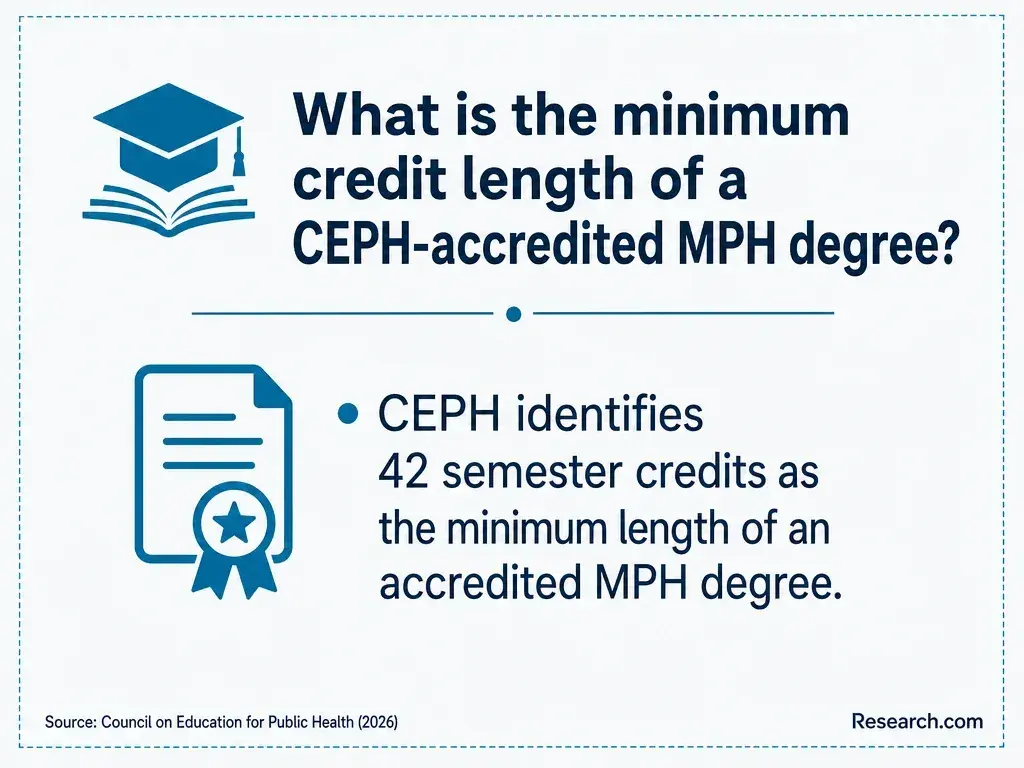
First confirm institutional accreditation and check the Council on Education for Public Health's published accreditation scope for the exact school or program and MPH degree. Institution-level accreditation alone does not establish CEPH accreditation. Then investigate the opportunity you actually need: survey-methods instruction, community partners, applied practice approval, and faculty or site expertise in ethical data collection.
Ask a program for its current practicum handbook and examples of permitted types of work products, without requesting confidential student or partner materials. Find out whether students find their own sites, whether the school has active community survey partners, and what happens if a proposed placement or data-access arrangement falls through. A named concentration is useful only if its courses and placement opportunities fit your intended tasks; comparing specialization fit across public health master's degrees can help frame that choice.
Look for a sequence that connects epidemiology and biostatistics with survey design, qualitative inquiry, program evaluation, community engagement, and research ethics. Introductory statistics helps students interpret estimates; it does not, by itself, prepare them to design a defensible sample, address nonresponse, or analyze a complex survey.
Before accepting a technical assignment, compare your preparation with the team's actual methods. A student helping draft accessible questions may need cognitive-interviewing and plain-language skills; one analyzing weighted survey data needs appropriate survey-design and software training plus close supervision. Ask whether relevant electives run before your placement term. Applicants still arranging preparatory coursework can examine public health graduate applications with outstanding requirements, but admission flexibility does not replace readiness for the assigned work.
Requirements vary by school. Typically, the academic program must approve the site, supervisor, learning objectives, competencies, work plan, and assessment process. The host must separately agree to supervise the work. Neither approval automatically grants access to survey responses, permission to contact residents, or the right to publish a report.
Before work begins, take these questions to the academic coordinator and site supervisor so that their answers become part of a realistic plan:
- Which competencies and assessed work products can this assignment demonstrate, and who signs off on them?
- Who provides day-to-day feedback, and what will the student do if recruitment or data access is delayed?
- What consent language, community permissions, data-use terms, privacy safeguards, or institutional review determinations are needed for the planned activities?
- Which findings may be shared with the partner, school, or a future employer, and what must be redacted?
Whether an activity is human-subjects research, program evaluation, or another form of practice depends on its design and governing policies; students should not make that determination on their own. If you are still applying to MPH programs, recommendation-free application options for MPH study address an admissions constraint, not these separate placement and data-permission requirements.
An online MPH may permit a local survey-team placement, while a campus program may have nearby partner relationships. Neither format guarantees a suitable site. Compare who identifies partners, how supervisors communicate with faculty, whether remote tasks count, and whether the student must attend live meetings, interviewer training, or community events.
For students balancing employment or caregiving, request the actual weekly schedule, including any evening outreach and fixed-time team meetings. For a remote placement, establish how authorized data access, feedback, and secure file transfer will work before assuming that analysis can be done from home. A program's advertised online flexibility - and even information about comparing accessible public health doctoral programs - cannot establish what an MPH survey practicum will permit. Get the MPH program's placement policy in writing.
The academic program sets its required hours, term structure, and deadlines. A survey project adds dependencies that a course calendar cannot control: question approval, recruitment, translation, partner review, and access to usable responses. Ask whether you can complete an approved planning or data-quality deliverable if collection runs late, rather than relying on a final dataset arriving on schedule.
Calculate the placement's full cost before committing: applicable tuition and fees, unpaid work hours, travel to community sites, childcare, equipment, and any extra enrollment term caused by delays. Do not assume the host will reimburse expenses or that a paid job can count as the practicum. When comparing programs, comparing public health tuition and study length is a starting point; the school's current charges and practicum calendar determine your actual exposure.
The most direct next steps are roles whose duties resemble the work you can document: public health research assistant or coordinator, community needs-assessment specialist, evaluation associate, health department analyst, or survey-operations staff member. Employers may value a clear example of how you improved questions, tracked participation, protected data, or communicated limitations more than a practicum title alone.
An epidemiologist or senior survey-methodologist position may require stronger quantitative training and relevant experience than a single placement provides. Ask a prospective supervisor which tools and decisions you will own, then leave with an approved, nonconfidential work sample and a precise description of your contribution. Later doctoral study is a separate decision: public health doctorate costs and career outcomes matter if your goal shifts toward advanced research or leadership, not simply because you completed an MPH practicum.
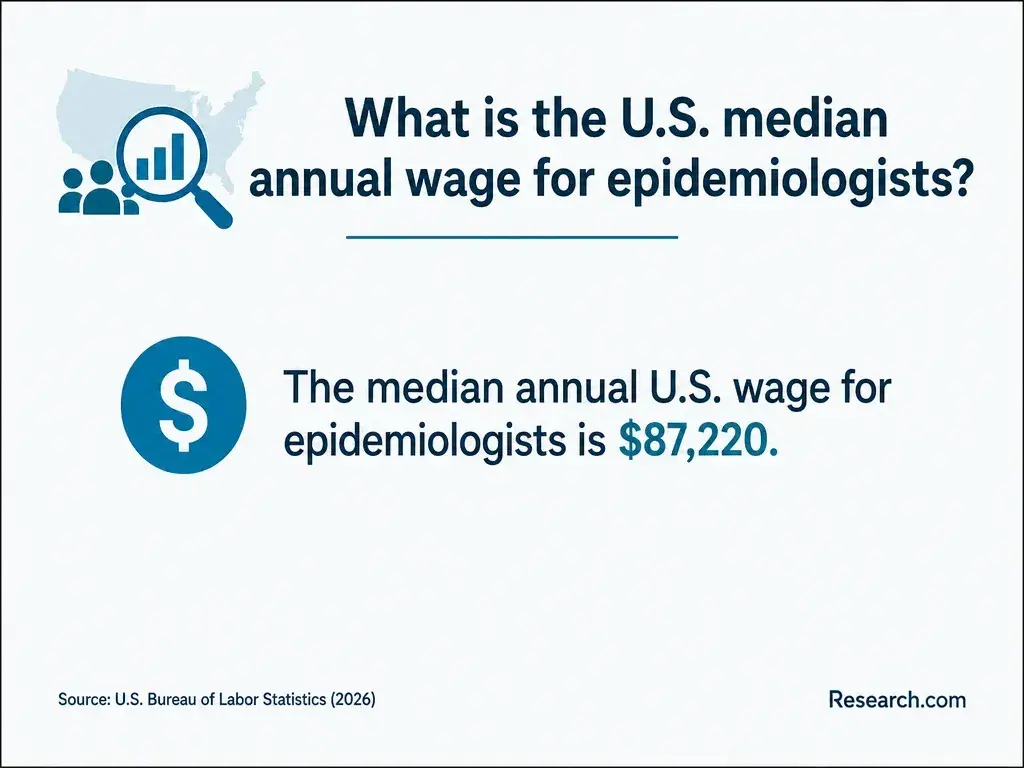
There is no reliable single salary for "an MPH graduate in survey research." Pay depends on the occupation, location, employer, technical duties, and experience. As one reference point, the US Bureau of Labor Statistics reports a May 2024 median annual wage of $83,980 for epidemiologists. That is an occupation-wide median, not an entry-level offer or a forecast for students completing a community survey placement.
Compare openings by their actual responsibilities: field coordination, evaluation reporting, and epidemiologic analysis may have different pay structures even when each uses survey data. For a financial decision, pair local job postings with program-specific costs; public health graduate program costs versus salaries can provide context, but broad earnings comparisons cannot establish your return on a particular practicum.
Which Certifications Improve Careers in Public Health Survey Research?
No general certification is required simply to help conduct a community health survey. The Certified in Public Health (CPH) credential may signal broad public health knowledge where its current eligibility rules fit; health education credentials such as CHES or MCHES are more relevant when the job centers on health education and the applicant meets the certifier's requirements. None substitutes for demonstrated survey design, ethical fieldwork, data management, and interpretation.
Choose training against a target job description. Supervised instruction in questionnaire testing, qualitative interviewing, survey-weighted analysis, accessible communication, or secure data handling may close a more immediate gap than another credential. If the long-term goal is independent epidemiologic research, investigate doctoral preparation and online epidemiology doctorate financial assistance separately; a doctoral degree is not a survey-research certification or a prerequisite for most practicum-level work.
Other Things You Should Know About Public Health
Possibly, if the contribution meets the team's authorship policy and publication standards. Agree on expected contributions and review procedures early; completing a practicum does not automatically confer authorship.
Sometimes. The team must follow its approved protocol, budget, and applicable ethics and funder rules. Students should not promise an incentive that the partner has not authorized.
Budget time for qualified translation and testing with intended respondents. A literal translation alone may not preserve meaning, accessibility, or comparability across languages.
Yes, subject to confidentiality and partner agreements. Describe your tasks and methods; use only authorized, nonidentifiable examples, and do not imply that preliminary findings are final.
- Principles and Best Practices for Protecting Participant Privacy | Grants & Funding https://grants.nih.gov/policy-and-compliance/policy-topics/sharing-policies/dms/privacy/best-practices
- Master of public health community-based practicum | nih.gov https://pubmed.ncbi.nlm.nih.gov/21617409/
- A mixed-methods assessment of community-engaged... - PMC https://pmc.ncbi.nlm.nih.gov/articles/PMC10233587/
- Collecting Data | Field Epi Manual https://www.cdc.gov/field-epi-manual/php/chapters/collecting-data.html
- Supervision & Mentoring Skills | mit.edu https://urop.mit.edu/mentors/resources/supervision-skills/
- Data Security Guidance for Human Subjects Research | University of Connecticut https://ovpr.uconn.edu/services/rics/irb/data-security-guidance-for-human-subjects-research/
- Section 2. MPH Practicum - Master of Public Health Practicum Manual - Academic Guides at Walden University https://academicguides.waldenu.edu/masters-public-health-practicum-manual/practicum-overview
- A Handbook for Community Partnerships: Internship | High Tech High Graduate School of Education https://hthgse.edu/a-handbook-for-community-partnerships-internship/
- Practicum Examples | UW School of Public Health https://sph.washington.edu/mph-practicum/examples
- Considerations for Community Engagement in Design Education - ScienceDirect https://www.sciencedirect.com/science/article/pii/S2405872623000382