2027 Does a Public Health BS Prepare You for Public Health Volunteer Management?

Co-Founder and Chief Data Scientist
A public health volunteer coordinator must do more than recruit people willing to help. The role can involve training, scheduling, community partnerships, safety procedures, and showing whether volunteer efforts support a program's goals. If you are considering a public health BS, the useful question is whether its coursework and field opportunities will prepare you for those responsibilities.
This guide separates what the degree can teach from what employers may expect you to demonstrate, so you can choose a program, or a more direct experience-based route, with a clear goal.
Key Things You Should Know
- A public health BS can provide a strong foundation for volunteer coordination, but supervised experience recruiting, training, and supporting volunteers is the clearest evidence of job readiness.
- Many bachelor's programs are designed around roughly 120 semester credits; compare the remaining credits and fieldwork requirements on your own degree audit before estimating time or cost.
- Volunteer-management jobs generally do not require a dedicated license. Check each posting for experience, background-screening duties, and any employer-preferred credential instead of assuming the degree qualifies you automatically.
Does a public health BS prepare you for public health volunteer management?
A public health BS teaches why programs address population-level needs, how to communicate health information, and how to evaluate activities. Volunteer management adds operational responsibilities: matching people to appropriate tasks, maintaining schedules and records, setting boundaries, responding to concerns, and working with community partners.
The degree is most useful when you can apply it at a health department, nonprofit, community clinic, or preparedness organization. Look for a placement where a supervisor will let you contribute to volunteer onboarding or a defined coordination project. A student who can explain a recruitment plan, training material, or evaluation process has more relevant evidence than one who can list coursework alone.
If you already have a bachelor's degree and substantial volunteer-program experience, earning a second bachelor's may be unnecessary. A targeted course, mentorship, or graduate study may address a specific gap. Online MPH programs with accessible admissions are one option to investigate if you need broader graduate-level public health preparation, not a requirement for coordinating volunteers.
What public health volunteer management skills does a BS program teach?
A BS can develop the public health judgment behind a volunteer program. The table distinguishes classroom preparation from the work you should seek opportunities to practice.
| Program task | Useful BS preparation | Evidence to build in practice |
| Communicate with communities | Health communication, cultural responsiveness, and community engagement | Accessible recruitment or orientation materials reviewed by a supervisor |
| Organize services | Program planning, ethics, and emergency-preparedness concepts | A role description, training checklist, or scheduling process used with permission |
| Assess program activity | Basic statistics and evaluation | A privacy-conscious summary of participation, feedback, or process measures |
Courses rarely teach every part of screening, conflict resolution, recordkeeping, or volunteer retention. Ask prospective field sites whether you can observe those decisions and gradually take on responsibility.
Advanced analysis is usually unnecessary for a coordination role; biostatistics master's format and scheduling comparisons are more relevant if your goal shifts toward specialist data work.
What careers can you pursue in public health volunteer coordination?
Possible entry points include volunteer program assistant, outreach assistant, community engagement assistant, and preparedness program assistant. These roles may involve scheduling, event support, training logistics, and communication with volunteers.
A coordinator may own more of the recruitment and day-to-day program process; a manager may also supervise staff, manage budgets, address risk, and report to funders. Titles vary substantially by employer, so compare duties rather than titles alone.
A BS graduate with relevant field experience may compete for assistant or coordinator openings, while management roles commonly call for a record of leading people and improving operations. Community health worker and health education specialist positions can overlap with outreach, but neither title necessarily means managing volunteers.
An MPH may support later advancement into broader program leadership; evaluate that possibility using role-specific requirements rather than treating MPH compensation and career advancement as a promise for this job.
Prioritize courses in community health, health communication, program planning and evaluation, public health ethics, and organizational leadership where offered. An introductory epidemiology or statistics course helps you interpret a community need or a program measure; it does not need to turn you into an epidemiologist. Preparedness coursework becomes especially relevant if volunteers support emergency response.
Choose electives by the tasks you want to perform. For example, a community-engagement course paired with an internship that includes volunteer onboarding is more directly useful than an unrelated technical elective.
If your long-term goal is directing multiple programs rather than coordinating one, compare the leadership and management content of public health graduate degrees and salary pathways after gaining practice experience. A BS elective is not the same as a formal concentration or a graduate credential.
There is no general US license for public health volunteer management. Employers may instead ask for experience with screening, safeguarding, emergency procedures, or a particular population. Requirements can change with the setting: coordinating volunteers in a clinical facility does not authorize you or them to perform licensed clinical work.
Credentials such as Certified in Public Health (CPH) or Certified Health Education Specialist (CHES) have their own eligibility rules and are not automatically awarded with a BS. Check the certifying body's current criteria and whether a target employer actually values the credential. Even advanced study such as affordable epidemiology doctoral study with aid addresses a different career objective; it is not a volunteer-management license.
They can be, provided you can gain credible local experience. Online coursework can teach communication, planning, and evaluation, but a remote discussion assignment is not equivalent to handling real volunteer schedules or concerns under supervision. When comparing distance learning options for public health undergraduates, ask whether the program helps students arrange approved community placements near home and what a placement must include.
Also check whether classes require live attendance, group meetings, or campus visits. An asynchronous course may still have fixed deadlines, and volunteer events often happen outside standard class hours. For students balancing work or caregiving, the decisive question is whether both the academic schedule and a meaningful field placement are feasible.
A traditional full-time bachelor's path commonly spans four academic years, but your actual timeline depends on accepted credits, major sequencing, course availability, and placement requirements.
Many programs are structured around roughly 120 semester credits; transfer students should ask not just how many credits are accepted, but which general-education and major requirements those credits satisfy.
Calculate cost from the school's current tuition and mandatory fees for your remaining terms, then account for books, travel to field sites, and possible reductions in paid work hours. Published per-credit prices alone will not establish your total.
Public health degree affordability and completion planning can help frame the comparison, but request an individual degree audit and financial-aid estimate before choosing a program.
Requirements vary by institution. First-year applicants generally follow the college's undergraduate admissions process; transfer applicants submit prior transcripts for evaluation.
Some schools admit students directly to the major, while others require introductory courses, a minimum GPA, or a later major application. Admission to the university does not necessarily mean admission to its public health major.
If you have prior coursework, request a written evaluation showing how credits apply to the degree and ask when required courses and fieldwork are offered. That matters more to your completion date than an advertised fast course format alone.
Compare public health bachelor's pacing and course length against the school's actual course sequence and your available placement hours.
The Council on Education for Public Health (CEPH) evaluates eligible public health schools and programs against public health education standards. It is distinct from institutional accreditation.
To assess a BS, confirm the institution's accreditation and ask whether the specific bachelor's degree falls within a CEPH-accredited school or program's scope; do not infer coverage from a university's MPH or another degree.
Accreditation is one quality signal, not proof that students receive hands-on volunteer-management training. Compare the curriculum, placement expectations, supervision, and published outcomes as well.
Scope matters at other degree levels too. Lists of affordable online public health PhD programs cannot establish accreditation coverage for a bachelor's program or for every doctoral degree at the same institution.
What salary and job outlook can public health volunteer managers expect?
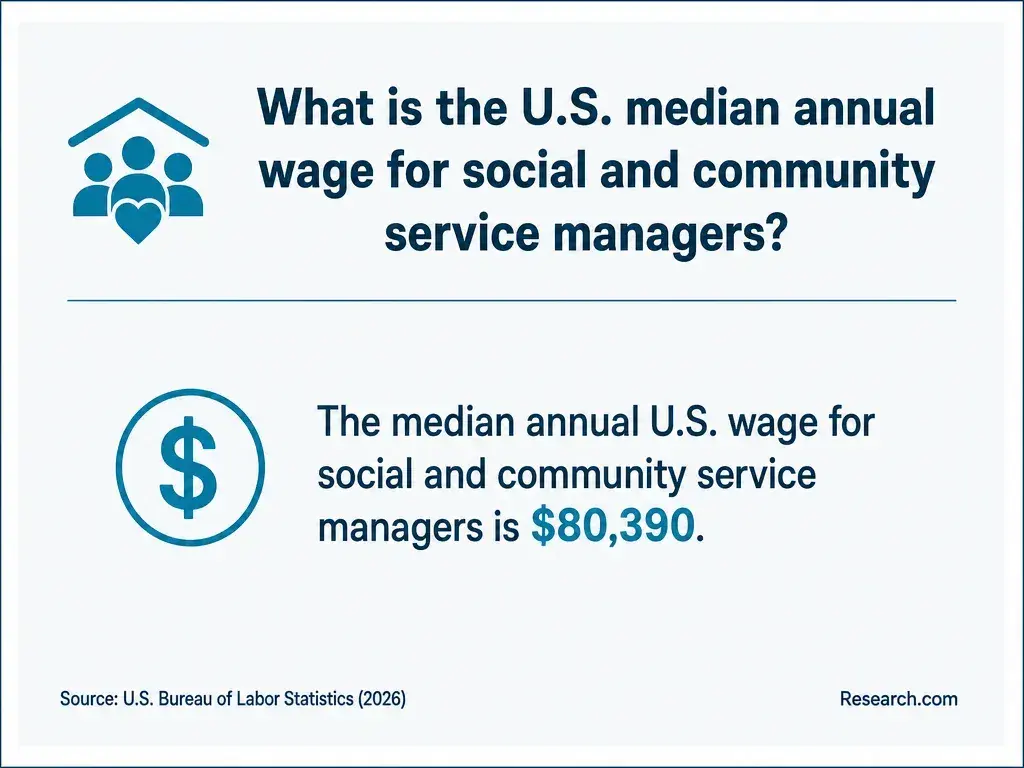
There is no single Bureau of Labor Statistics occupation called "public health volunteer manager," so no occupation-wide median reliably describes this exact job. Pay and hiring prospects depend on whether an employer classifies the work as outreach, health education, nonprofit program coordination, or management, as well as location, funding, and experience.
Bureau of Labor Statistics figures for health education specialists or community health workers may offer context for some postings, but their medians are not expected salaries for BS graduates or volunteer managers.
For a useful comparison, collect local postings with similar duties and note their published pay ranges, required experience, and supervisory scope. If advancement appears to require a graduate degree, weigh that evidence against its full cost and alternatives such as employer-supported training. Lower-cost public health master's career pathways are worth exploring only if the roles you actually want call for graduate preparation.
Other Things You Should Know About Public Health Programs
Yes, especially if you can document responsibilities such as orienting new volunteers, maintaining schedules, or improving a process. Hours served alone show less about coordination ability.
It should explain the role, boundaries, supervision, safety procedures, privacy expectations, and how to report a concern. The host organization should approve its content.
Track measures tied to the program's purpose, such as completed shifts or training participation, and gather feedback without collecting unnecessary personal information. Activity counts alone do not establish health impact.
Clear roles, reliable supervision, manageable commitments, and respectful feedback can help. Ask volunteers about barriers before assuming that recognition alone will solve retention problems.
- Competencies for Public Health Professionals | cdc.gov https://www.cdc.gov/infrastructure/training-professional-development/competencies-for-public-health-professionals.html
- BS in Public Health | UCLA Fielding https://ph.ucla.edu/degree-programs/undergraduate-programs/bs-public-health
- Public Health Certifications https://ph.byu.edu/mph/public-health-certifications
- What can you do with a public health degree? | About the University of Cincinnati https://www.uc.edu/blog/public-health-careers.html
- Volunteer Management for Nonprofits: Best Practices & Tips | University of San Diego Online Degrees https://onlinedegrees.sandiego.edu/volunteer-management/
- Guide to Undergraduate Practicum | uci.edu https://publichealth.uci.edu/degrees-programs/undergraduate-programs/guide-to-undergraduate-practicum/
- Career Guide: Community Health Worker | American College of Education https://ace.edu/student-success/career-guides/community-health-worker/