2027 Best Accredited Online Corrections Degree Programs: Compare Tuition, Admissions, and Career Outcomes

Co-Founder and Chief Data Scientist
Choosing an online corrections degree is really a decision about cost, credibility, flexibility, and career direction. The field matters because corrections agencies increasingly need staff who understand rehabilitation, case management, technology, ethics, and legal procedure.
According to the U.S. Bureau of Labor Statistics, probation officers and correctional treatment specialists had a May 2024 median wage of $64,520, showing why many students look beyond entry-level custody roles. This guide helps working adults, transfer students, and first-time college students compare accredited programs and choose an option with stronger long-term value.
Key Things You Should Know
- The best-value online corrections degree is usually a regionally accredited public or nonprofit program with transparent tuition, generous transfer credit, online advising, and coursework in corrections, rehabilitation, criminal law, ethics, and offender assessment.
- College Board's 2024 pricing data shows a large cost gap between sectors, with average published tuition and fees of $11,610 for in-state public four-year colleges versus $43,350 for private nonprofit four-year colleges, so total cost matters more than ranking alone.
- A corrections degree can support roles in correctional facilities, probation, parole, reentry services, juvenile justice, case management, and criminal justice administration, but many sworn or government positions still require background checks, physical standards, academy training, or state-specific requirements.
Which Accredited Online Corrections Degree Programs Offer the Best Overall Value?
The best overall value is not always the cheapest program. For online corrections students, value usually means a strong mix of institutional accreditation, affordable net price, flexible scheduling, transfer-friendly policies, relevant coursework, and credible student support.
Many schools do not offer a standalone "corrections" major; instead, they offer online criminal justice, criminology, justice studies, or public safety degrees with corrections, juvenile justice, rehabilitation, or homeland security electives. That can still be a strong fit if the curriculum prepares students for correctional environments and advancement-oriented roles.
The following comparison shows how common accredited online options differ by student goal. Use it as a starting point, then verify current tuition, transfer limits, and program outcomes directly with each school.
| Program type | Best fit | Value strengths | Possible drawback |
| Public university online criminal justice or corrections-focused bachelor's | Cost-conscious students, transfer students, first-time bachelor's students | Often lower tuition, broad employer recognition, access to public-university resources | May have less individualized pacing or limited corrections-specific electives |
| Private nonprofit online criminal justice bachelor's with corrections concentration | Working adults who want structured online terms and adult-learner advising | Frequent start dates, strong online infrastructure, career-focused support | Published tuition may be higher before grants, scholarships, or transfer credit |
| Competency-based or accelerated online criminal justice degree | Experienced corrections staff, military learners, adult learners with prior credits | Can reduce time to completion if the student moves quickly and transfers credits | Not ideal for students who need weekly live instruction or extensive faculty contact |
| Online associate-to-bachelor's pathway | Students starting at a community college or returning with partial credits | Can lower total cost and reduce unnecessary credit loss | Requires careful transfer planning before enrollment |
A strong value choice is usually the program that lets you graduate with the least unnecessary debt while still meeting your employment goals. For a current correctional officer seeking promotion, a low-cost public online bachelor's may be the best investment. For a student changing careers into probation, reentry, or juvenile justice, a program with internship coordination, research methods, and case-management coursework may justify a higher price.
A common mistake is choosing a school because it has "corrections" in the concentration name while ignoring accreditation, transfer credit, and support services. A broader criminal justice degree with strong corrections electives can be more useful than a narrowly named program with weak advising or limited employer recognition.
What Accreditation Should Students Look for in an Online Corrections Degree Program?
Accreditation is the first filter students should apply. For corrections degrees, the most important form is institutional accreditation from an agency recognized by the U.S. Department of Education or the Council for Higher Education Accreditation. Institutional accreditation affects federal financial aid eligibility, credit transfer, graduate school options, and employer acceptance.
Corrections programs usually do not have a single required programmatic accreditor in the same way nursing or teaching programs often do. That means students should focus on whether the institution is accredited, whether the degree is properly listed in the school catalog, and whether the curriculum aligns with correctional practice.
Before applying, use a short verification process so you do not rely only on marketing language. These steps help confirm that the degree will be recognized by employers, graduate schools, and financial aid systems.
- Search the institution in the U.S. Department of Education's accreditation database and confirm that the school, not just a campus or subdivision, is institutionally accredited.
- Check the school catalog to confirm the exact degree title, delivery format, credit requirement, and graduation requirements.
- Ask whether online students receive the same transcript designation as campus students, since many reputable programs do not mark the degree as "online."
- Review state authorization information if you live outside the school's home state, especially if the program includes fieldwork or internship placements.
- Confirm transfer policies in writing before enrollment if you plan to bring in community college, military, academy, or prior university credits.
Red flags include vague accreditation claims, pressure to enroll before receiving a degree audit, refusal to provide total cost estimates, or promises that the degree automatically qualifies you for a specific government job. Corrections hiring requirements vary by agency, and many positions still involve civil service exams, background checks, academy training, psychological screening, or physical ability standards.
How Do Tuition Costs Compare Across Accredited Online Corrections Degree Programs?
Tuition for online corrections degrees varies widely by institution type, residency rules, transfer credit, fees, and pace. The most useful comparison is not the per-credit price alone; it is the estimated remaining cost to finish the degree after transfer credits, grants, scholarships, and employer tuition assistance.
College Board's 2024 report shows why sector matters when estimating cost: average published tuition and fees were $11,610 at in-state public four-year institutions and $43,350 at private nonprofit four-year institutions. That gap does not mean private programs are always poor values, but it does mean students should compare net price carefully before assuming a higher-cost program will produce better outcomes.
The table below summarizes the major cost categories students commonly encounter in accredited online corrections programs. These figures should be treated as cost drivers to verify, not as universal prices.
| Cost factor | Why it matters | What to ask the school |
| Per-credit tuition | Most bachelor's programs require about 120 credits, but transfer students may need far fewer | What is my tuition rate after residency, military, employer, or online-student discounts? |
| Mandatory online fees | Technology, student service, graduation, and course fees can change the real cost | Which fees are required every term and which are one-time charges? |
| Transfer credit | Accepted credits can reduce both tuition and time to completion | How many of my credits apply to major, general education, and elective requirements? |
| Textbooks and materials | Some programs use open educational resources while others require paid access codes | What is the average book or course-material cost per term? |
| Internship or field experience costs | Some students may need travel, supervision, background checks, or documentation | Is fieldwork required for online students, and can it be completed near my home? |
Students comparing undergraduate corrections programs with graduate options should separate short-term affordability from long-term fit. If your eventual goal is social services, rehabilitation counseling, or community reentry leadership, it may be useful to compare a corrections bachelor's with pathways such as an affordable master degree after you understand the credential level employers prefer.
The biggest pricing mistake is comparing only published tuition. A program with a higher per-credit rate may cost less if it accepts more transfer credits, offers stronger scholarships, or allows faster completion. Conversely, a low per-credit rate can become expensive if many prior credits do not apply to the degree plan.
How Competitive Is Admission to Accredited Online Corrections Degree Programs?
Most online corrections-related bachelor's programs are moderately accessible, especially compared with highly selective campus programs. Admissions standards vary, but many accredited online programs are designed for working adults, transfer students, military learners, and public safety professionals.
Admission competitiveness depends on degree level. Associate and bachelor's programs often emphasize high school completion, prior college coursework, GPA, and transfer eligibility. Master's programs in criminal justice, public administration, social work, or counseling may require a bachelor's degree, minimum GPA, recommendations, a personal statement, or professional experience.
Here is how admissions requirements commonly differ by applicant type. This comparison helps you decide whether to apply directly, complete prerequisites first, or start with a lower-cost transfer pathway.
| Applicant type | Common requirements | Best strategy |
| First-time college student | High school diploma or GED, transcripts, application form, placement or advising review | Prioritize programs with strong first-year advising and clear general education planning |
| Transfer student | College transcripts, minimum GPA, credit evaluation, good academic standing | Request an official or preliminary degree audit before committing |
| Working corrections professional | Prior college credits, professional training records, resume in some adult-focused programs | Ask whether academy, military, or professional training can count as credit |
| Graduate applicant | Bachelor's degree, GPA threshold, statement of purpose, references, sometimes work experience | Match the graduate program to your target role before paying application fees |
Admissions flexibility does not automatically mean weak academic quality. Many reputable online programs use inclusive admissions because their students are adults balancing work, family, and prior education. The more important question is whether the school has enough advising, writing support, and degree planning to help admitted students finish.
A useful admissions checklist includes the following items. It can help you avoid applying to programs that look convenient but do not match your academic record or career timeline.
- Confirm whether the program requires a minimum GPA for admission to the university, the major, or upper-division coursework.
- Ask if there are prerequisite courses in criminal justice, statistics, writing, government, psychology, or sociology.
- Request a written transfer evaluation before enrollment, especially if you have credits from multiple institutions.
- Check whether start dates are fixed semesters, eight-week terms, monthly starts, or self-paced subscription periods.
- Find out whether dismissed or probationary transfer students must complete a conditional admission process.
Which Learning Formats Offer the Greatest Flexibility in Online Corrections Degree Programs?
The most flexible format depends on your schedule, learning style, and need for structure. Online corrections programs may be asynchronous, synchronous, hybrid, accelerated, self-paced, or cohort-based. Each format can work well, but not for every student.
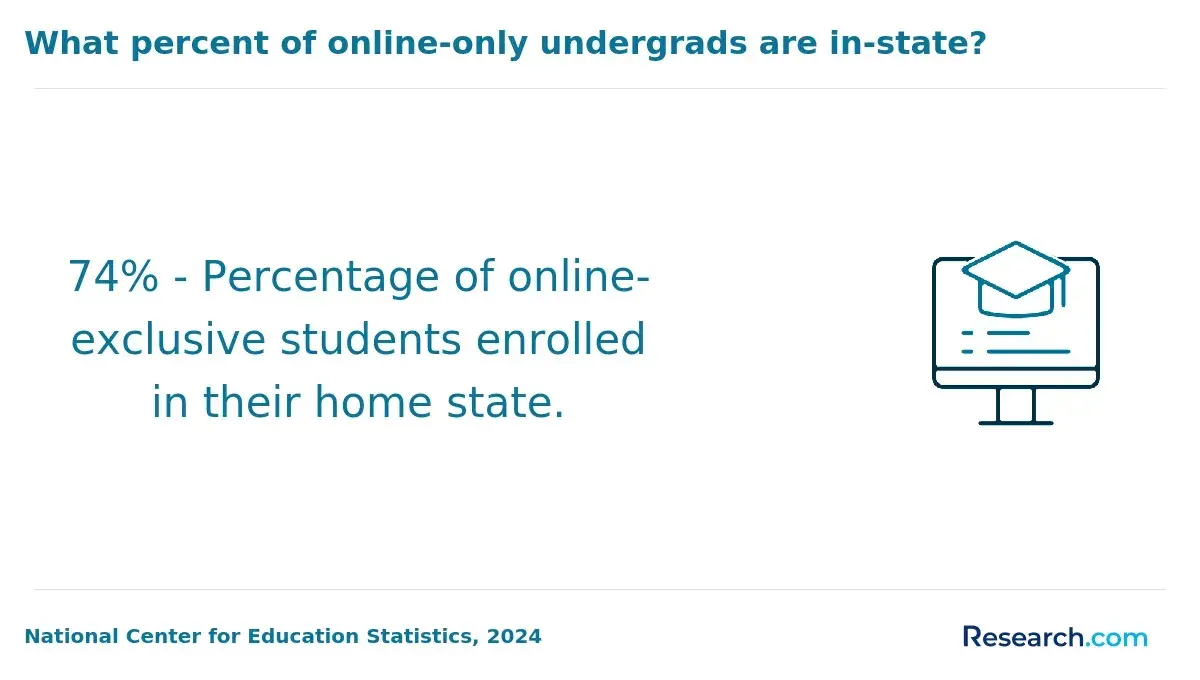
Online education has become a mainstream choice, not a fallback. The National Center for Education Statistics reported in 2024 that distance education remained a major part of U.S. higher education after the pandemic-era shift, which means students now have more legitimate online choices but also more formats to compare.
The table below explains which formats tend to work best for different learners. Use it to match program design with your work schedule and study habits.
| Online format | Best for | Trade-off |
| Asynchronous courses | Shift workers, parents, military learners, students with unpredictable schedules | Requires strong time management because there may be no live weekly class |
| Synchronous online courses | Students who want live discussion, accountability, and instructor interaction | Less flexible for correctional officers or public safety workers with rotating shifts |
| Hybrid programs | Students who can travel occasionally for labs, orientations, exams, or fieldwork | May not work for out-of-state students or those far from campus |
| Accelerated eight-week terms | Motivated adults who want faster progress and can handle compressed deadlines | Can be stressful if taking multiple courses while working full time |
| Self-paced or competency-based models | Experienced learners with prior knowledge and strong independent study skills | May offer less traditional class discussion or instructor pacing |
Flexibility also depends on the discipline. For example, students comparing online applied programs outside criminal justice, such as a graphic design bachelor degree, may need to evaluate portfolio requirements; corrections students should instead focus on discussion quality, writing assignments, legal analysis, and local field-placement expectations.
The most common mistake is assuming "online" means "anytime with no deadlines." Many online corrections courses require weekly discussions, timed exams, group projects, recorded presentations, or proctored assessments. Before enrolling, ask for a sample syllabus or course demo so you can see the real workload.
What Student Support Services Improve Success in Online Corrections Degree Programs?
Student support can be the difference between enrolling and graduating. Online corrections students often balance full-time work, rotating shifts, family responsibilities, and prior college credits, so strong advising and academic support should carry real weight in program comparisons.
Look for services that solve the problems online learners actually face. A program with lower tuition but weak advising can become expensive if you take unnecessary classes or stop out because requirements were unclear.
The most valuable support services usually include the following. These services help students stay on track academically and connect the degree to realistic career goals.
- Dedicated online academic advising that helps students sequence general education, major, elective, and transfer courses efficiently.
- Career services with resume help, public-sector application guidance, interview preparation, and support for probation, parole, reentry, and administrative roles.
- Writing, tutoring, and research help for students who have been away from college or who need support with legal and policy analysis assignments.
- Technology support outside standard business hours, especially for students completing coursework after correctional shifts.
- Veteran, military, and first responder support for students who may bring academy training, military credits, or public safety experience.
- Internship or field-placement guidance when the program includes experiential learning or when students want local agency experience.
Support quality is not always obvious from a website. Ask admissions counselors how often advisors contact online students, whether each student receives a degree map, and how quickly faculty typically respond to questions. If the answers are vague, that is a warning sign.
Students interested in corrections-adjacent helping professions should also consider whether the school offers pathways into counseling, public administration, or social work. For example, a student focused on reentry services may eventually compare a corrections degree with an MSW degree if clinical or social-service roles become the long-term goal.
Which Financial Aid Options Are Available for Accredited Online Corrections Degree Students?
Accredited online corrections degree students may qualify for many of the same aid options as campus students, as long as the institution participates in federal student aid programs and the student meets eligibility requirements. Aid can include grants, scholarships, loans, employer assistance, military benefits, and state programs.
Federal Student Aid's current undergraduate loan structure makes planning important: dependent first-year students may borrow up to $5,500 in federal direct loans, while independent first-year students may borrow up to $9,500. Those limits can help cover costs, but they also show why grants, transfer credit, and employer assistance should be explored before borrowing heavily.
Students should compare financial aid offers in a consistent way. The steps below help reveal the real cost of each program instead of relying on the largest scholarship number.
- Submit the FAFSA early and list every school you are seriously considering.
- Ask each school for a net price estimate that includes tuition, required fees, books, and expected transfer credits.
- Separate grants and scholarships from loans so you can see how much aid does not have to be repaid.
- Check whether your employer, union, correctional agency, or state workforce program offers tuition reimbursement.
- Ask about scholarships for criminal justice majors, public safety workers, veterans, military spouses, adult learners, and transfer students.
- Compare repayment impact before accepting the full loan amount, especially if your target role has modest starting pay.
Graduate-bound students should also compare aid across credential levels. If you are deciding whether to complete a bachelor's first or move later into a field such as social work, counseling, or public administration, it can help to review how master's in social work online programs structure timelines and costs before committing to a long-term education plan.
A common financial aid mistake is choosing the school with the biggest award letter without checking the remaining balance. A $10,000 scholarship at a high-tuition institution may still leave you paying more than a lower-cost public program with a smaller award.
Which Career Outcomes Are Associated With Accredited Online Corrections Degree Programs?
An accredited online corrections degree can support several career paths, but outcomes depend on degree level, work experience, agency requirements, location, and background eligibility. The degree is often most valuable when it helps a student move from entry-level custody work into supervision, probation, parole, case management, investigations support, juvenile justice, reentry services, or criminal justice administration.
The U.S. Bureau of Labor Statistics reported a May 2024 median wage of $55,830 for correctional officers and jailers. That figure is useful because it shows that a degree should be evaluated for advancement potential, not just entry into the field; many correctional officer roles require a high school diploma and academy training, while bachelor's-level education may matter more for promotion or specialized positions.
The table below connects common corrections-related roles with the type of education and preparation students should investigate. Requirements can vary substantially by state, agency, and employer.
| Career direction | Typical degree fit | Additional requirements to verify |
| Correctional officer or jail officer | Associate or bachelor's degree may support hiring competitiveness or advancement | Age requirements, background check, academy training, physical standards, civil service process |
| Probation or parole officer | Bachelor's degree in criminal justice, corrections, psychology, sociology, or related field is commonly preferred or required | State certification, field training, driver's license, background investigation, casework skills |
| Correctional treatment specialist | Bachelor's degree is common; some roles prefer related graduate study | Assessment skills, counseling knowledge, report writing, rehabilitation planning |
| Juvenile justice caseworker | Bachelor's degree in criminal justice, human services, psychology, or related field | Child welfare rules, state agency requirements, crisis intervention training |
| Reentry program coordinator | Bachelor's degree in criminal justice, social services, public administration, or related field | Community partnerships, grant reporting, case management, employment and housing resources |
| Corrections supervisor or administrator | Bachelor's degree often supports advancement; graduate study may help for leadership roles | Years of experience, agency promotion exams, leadership training, policy knowledge |
Skills matter as much as the degree title. Students should look for courses that build legal reasoning, report writing, ethics, crisis communication, evidence-based rehabilitation, risk assessment, cultural competence, data use, and policy analysis.
Corrections are also being shaped by technology and data. Facilities and community supervision agencies increasingly use electronic monitoring, case-management software, body-worn camera policies, digital records, and risk assessment tools. Students should not expect automation to replace human judgment in corrections, but they should choose programs that help them understand technology, privacy, bias, and ethical decision-making.
How Do Online and Campus-Based Corrections Degree Programs Compare?
Online and campus-based corrections programs can lead to the same degree when offered by the same accredited institution. The better choice depends on your schedule, need for in-person networking, local agency access, learning preferences, and support needs.
Online programs are often stronger for working adults and public safety employees because they reduce commuting and allow study around shifts. Campus programs may offer easier access to in-person faculty relationships, student organizations, mock courtrooms, local agency visits, or internships arranged through established regional partnerships.
The comparison below shows where each format tends to have an advantage. Students should treat these as practical differences, not assumptions about academic quality.
| Decision factor | Online corrections degree | Campus-based corrections degree |
| Schedule flexibility | Usually stronger for working adults, parents, and shift workers | More structured weekly schedule, which can help students who need routine |
| Networking | Often virtual and career-service driven | Often easier through campus events, faculty offices, and local agency visits |
| Field experience | May require students to arrange approved local placements | May have established placements near campus |
| Cost | Can reduce commuting and housing costs, but fees vary | May include campus costs but can offer in-person resources |
| Learning style | Best for self-directed students who communicate well in writing | Best for students who prefer face-to-face discussion and immediate interaction |
It is worth noting that online quality varies across fields and institutions. Just as business students might compare accreditation and format when reviewing the best AACSB online MBA programs, corrections students should look beyond convenience and verify faculty access, assessment methods, academic integrity policies, and employer-relevant coursework.
Choose online if your main barriers are time, distance, rotating shifts, or relocation. Choose campus if you need in-person structure, want local agency networking, or learn best through face-to-face discussion. Choose a hybrid only if required campus visits are realistic for your location and work schedule.
How Should Students Choose the Best Accredited Online Corrections Degree Program?
The best accredited online corrections degree is the one that fits your career target, budget, transfer history, learning style, and timeline. A school's ranking can be useful, but it should not replace your own comparison of cost, accreditation, curriculum, support, and outcomes.
Use a structured process before applying. This approach helps you avoid common mistakes such as overpaying, losing transfer credits, choosing the wrong format, or assuming a degree alone will satisfy agency hiring requirements.
- Define your target role first, such as correctional officer advancement, probation, parole, juvenile justice, reentry services, treatment planning, or administration.
- Confirm whether that role requires a specific degree level, major, certification, academy training, background check, or state process.
- Verify institutional accreditation using an official accreditation database before reviewing tuition or rankings.
- Request a transfer evaluation and estimate your remaining credits to graduation.
- Compare net price, not just tuition, by including fees, books, transfer credits, scholarships, and employer assistance.
- Review the curriculum for corrections law, ethics, rehabilitation, risk assessment, report writing, research methods, diversity, mental health, and public policy.
- Ask how online students receive advising, tutoring, faculty access, career services, and internship support.
- Check course format carefully, including live meetings, deadlines, proctored exams, and accelerated-term workload.
- Compare career outcome information, but avoid schools that imply guaranteed employment or salary outcomes.
- Choose the program that offers the strongest balance of affordability, completion support, and relevance to your intended career path.
Students who are uncertain about corrections should compare adjacent fields before enrolling. For example, public safety leadership, psychology, human services, public administration, cybersecurity, social work, and emergency management may lead to different daily work and different credential expectations.
The best final question to ask each school is simple: "Based on my credits, work schedule, career goal, and financial aid estimate, what will it take for me to graduate?" A school that can answer clearly is usually a safer choice than one that only promotes speed or convenience.
Other Things You Should Know About Corrections
Tuition for online corrections degree programs in 2027 varies significantly. On average, costs range from $300 to $700 per credit hour, depending on the institution. It is advisable to check individual school websites for the most current and specific tuition details and potential financial aid options.
Most online corrections degree programs in 2027 require a high school diploma or GED for admission. Some programs may also request standardized test scores such as the SAT or ACT, and a minimum GPA, typically around 2.5, depending on the institution.
Some do, but many fully online programs offer internships as optional electives or capstone alternatives. If you want probation, juvenile justice, or reentry work, an internship can be valuable even when it is not required.
In 2027, students enrolling in online corrections degree programs can access various financial aid options, including federal grants, state scholarships, and student loans. Programs like the Pell Grant and TEACH Grant are available, subject to eligibility requirements such as financial need and enrollment status.
References
- Are Education Programs in Prisons Worth It? https://www.mackinac.org/S2023-01
- Best Online Colleges with High Acceptance Rates https://www.degreesforgood.org/online-degrees/online-colleges-with-high-acceptance-rates/
- Criminal Justice Programs | Choose The Right One For You https://online.aurora.edu/program-resources/choosing-the-right-online-criminal-justice-program/
- Criminal Justice Careers | Accredited Schools Online https://www.accreditedschoolsonline.org/criminal-justice-degree/careers/
- Top Online Criminal Justice Degrees https://www.criminaljusticeprograms.com/online-criminal-justice-degrees/
- Corrections Careers in Prisons | University of Phoenix https://www.phoenix.edu/articles/criminal-justice/corrections-careers-in-jails-prisons-detention-centers.html
- 15 Best Online Bachelor's In Criminal Justice https://www.criminaljusticedegreeschools.com/rankings/best-online-bachelors/
- Online Degrees for Correctional Officers: What Counts Toward Promotion https://www.collegetransitions.com/blog/best-online-degrees-for-correctional-officers/
- Criminal Justice And Corrections Degree: Career Outcomes, ROI & Job Market Reality | JobPolaris https://jobpolaris.com/majors/criminal-justice-and-corrections