2027 Fastest Accredited Online Corrections Degree Programs That Accept Transfer Credits

Co-Founder and Chief Data Scientist
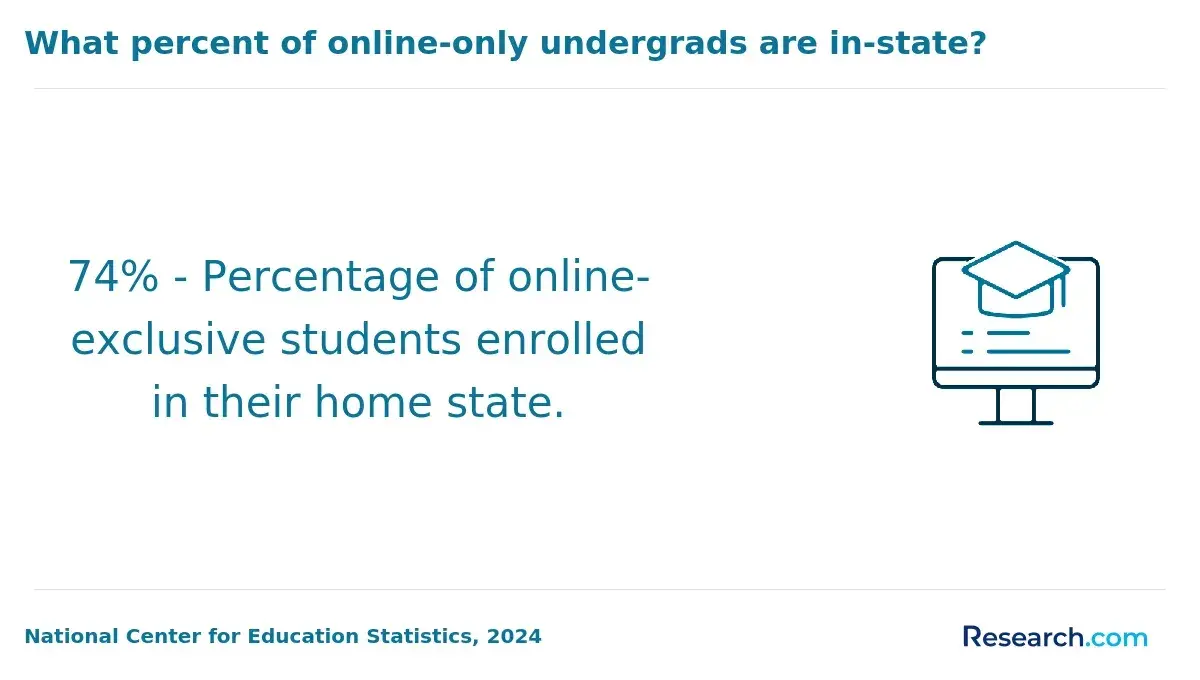
Many corrections students are not starting from zero; they already have community college credits, military training, academy coursework, or unfinished college work. NCES reported in 2024 that 53% of undergraduates took at least one distance education course, making online degree completion a mainstream option.
This guide is for transfer students and adult learners who want the fastest legitimate path to an accredited online corrections degree. You will learn how transfer limits, residency rules, prior learning credit, accreditation, tuition, and accelerated formats affect real graduation timelines.
Key Things You Should Know
- The fastest realistic route is usually a regionally accredited bachelor's program that accepts up to 90 transfer credits, leaves about 30 credits in residence, and offers 8-week or year-round online courses; highly prepared transfer students may finish in about 12 months.
- Transfer-friendly options often include online criminal justice bachelor's degrees with corrections, corrections administration, rehabilitation, or human services concentrations; the key is not the advertised transfer maximum but how many credits apply to general education, electives, and the major.
- Programs with 30-credit residency requirements, clear prior learning credit policies, and quick transcript evaluations are usually faster than programs that accept many credits institution-wide but require extensive upper-division major coursework after admission.
What Are the Fastest Accredited Online Corrections Degree Programs That Accept Transfer Credits?
The fastest accredited online corrections degree programs are usually not standalone "corrections" degrees only. They are often online criminal justice, public safety, justice studies, or human services degrees with a corrections-focused concentration, transfer-friendly curriculum, and accelerated course calendar.
For transfer students, the strongest programs combine three things: recognized accreditation, high transfer-credit acceptance, and a degree plan that lets previously earned credits satisfy actual graduation requirements.
In practical terms, the best fit depends on how many credits you already have and where those credits fall. A student with a completed associate degree in criminal justice may move faster in a bachelor's-completion program than a student with 90 mixed credits that do not satisfy major or general education requirements.
This comparison shows the kinds of accredited online programs that tend to be fastest for corrections-focused transfer students. The examples are program categories rather than a ranking, because the fastest option changes after an official transfer-credit evaluation:
| Program type | Typical degree format | Why it may be fast | Best for | Common limitation |
| Online bachelor's completion in criminal justice with corrections concentration | BA or BS | Often accepts large blocks of lower-division transfer credits and offers 8-week courses | Students with an associate degree or 60 to 90 prior credits | Upper-division major courses usually must be completed at the school |
| Online corrections administration or public safety administration degree | BS, BAS, or applied bachelor's | May accept technical, academy, or applied associate credits more easily | Working correctional officers, jail staff, and public safety employees | Some credits may count only as electives |
| Online competency-based criminal justice degree | Self-paced bachelor's | Students can progress quickly through material they already know | Experienced professionals with strong writing and self-management skills | Not every program offers a corrections concentration |
| Online interdisciplinary or liberal studies degree with corrections-related electives | BA or BS | Can absorb more varied transfer credits than a tightly prescribed major | Degree completers with many older or mixed credits | May be less targeted for corrections leadership roles |
A corrections degree can also be a stepping stone to related graduate study in rehabilitation, social services, public administration, or behavioral health. If your long-term goal includes reentry services, family support, or case management, compare corrections programs with pathways such as an MSW degree, because graduate prerequisites and fieldwork expectations may affect which bachelor's curriculum is most useful.
The fastest programs are usually built for adult learners. Look for rolling admissions, multiple start dates, online transcript evaluation, asynchronous coursework, and a published transfer-credit database. Avoid choosing a program based only on a phrase like "transfer up to 90 credits." You need to know whether those credits reduce the exact number of courses left before graduation.
How Fast Can You Complete an Online Corrections Degree With Transfer Credits?
Completion time depends on remaining credits, course length, course load, and whether the school offers year-round terms. Most U.S. bachelor's degrees require about 120 semester credits. If a program accepts 90 applicable credits and requires 30 credits in residence, a motivated full-time online student may finish in about one academic year by taking courses across multiple terms.
The table below estimates realistic timelines based on remaining credits. It assumes the student is academically prepared, takes courses continuously, and does not need remedial, prerequisite, or repeated coursework:
| Applicable transfer credits | Approximate credits remaining | Fast full-time pace | Working-student pace | What this means |
| 90 | 30 | About 10 to 12 months | About 12 to 18 months | Fastest common bachelor's-completion path if major requirements are satisfied |
| 75 | 45 | About 15 to 18 months | About 18 to 24 months | Still accelerated, but course sequencing matters more |
| 60 | 60 | About 20 to 24 months | About 24 to 36 months | Typical associate-to-bachelor pathway |
| 30 | 90 | About 3 years | About 3 to 4 years | Faster than starting over, but not a true degree-completion track |
| 0 | 120 | About 4 years | More than 4 years | Standard first-time bachelor's timeline |
The advertised calendar can be misleading. A school may offer 8-week courses, but a student cannot always take four major courses at once. Corrections courses may require prerequisites, writing-intensive assignments, capstones, or internship alternatives that are only offered in certain terms.
To estimate your fastest legitimate timeline, follow a sequence rather than relying on marketing language:
- Request an unofficial transfer review before applying if the school offers one.
- Ask which credits apply to general education, the corrections or criminal justice major, free electives, and upper-division requirements.
- Confirm the minimum number of credits that must be completed at the institution.
- Ask whether all remaining required courses are offered online at least once per year.
- Build two schedules: an aggressive full-time plan and a safer working-adult plan.
Students who plan to continue into human services, counseling-adjacent work, or social work should also think beyond speed. Some accelerated bachelor's programs are excellent for graduation but may not include the social science or fieldwork background that supports admission to masters in social work online programs.
How Many Transfer Credits Can You Apply Toward an Online Corrections Degree?
Many accredited online bachelor's programs allow transfer students to bring in up to 75% of the degree, which commonly means 90 semester credits toward a 120-credit bachelor's degree. However, "accepted" credits and "applied" credits are different. A school may accept a course on your transcript but apply it only as an elective, which may not reduce the number of required corrections major courses you still need.
The most important transfer-credit categories are summarized below. Use them to read degree audits more carefully and to avoid assuming every previous course moves you closer to graduation:
| Credit category | How it usually applies | Why it matters for speed | Question to ask |
| General education | Composition, math, science, humanities, social science | Can clear broad requirements quickly if courses match the school's core curriculum | Will my associate degree waive general education requirements? |
| Lower-division major | Intro to criminal justice, policing, courts, corrections | Can reduce foundation courses but may not replace upper-division work | Which criminal justice courses count toward the major? |
| Upper-division major | Corrections administration, ethics, policy, research, capstone | Often limited because schools want advanced coursework completed in residence | How many upper-division corrections credits can transfer? |
| Free electives | Courses that do not match specific requirements | Helpful only if the degree has elective space left | How many of my credits will become unused excess electives? |
| Prior learning or professional credit | Academy, military, certifications, portfolio assessment | May shorten the degree if mapped to requirements | Is there a cap on nontraditional credit? |
Credit age can also matter. General education courses may remain usable for many years, while technology, law, policy, or procedure-based courses may be reviewed more closely. Corrections is affected by changing standards in inmate supervision, reentry, mental health response, use-of-force policy, and constitutional law, so older professional coursework may not always replace current upper-level courses.
A common mistake is choosing the school with the largest transfer-credit maximum instead of the school with the smallest number of remaining required courses. The better question is: "After the degree audit, how many credits, courses, terms, and total costs remain?"
How Can You Verify Accreditation for Fast Online Corrections Degree Programs?
Accreditation is what separates a legitimate accelerated degree from a risky shortcut. For most corrections students, institutional accreditation recognized by the U.S. Department of Education is the baseline. It affects federal financial aid eligibility, graduate-school recognition, transferability, and employer confidence.
Before enrolling, verify accreditation through official sources, not just school marketing pages. A fast program is only useful if the credential is recognized when you apply for promotions, graduate school, or public-sector roles:
- Search for the institution in the U.S. Department of Education's accreditation database.
- Confirm the accreditor is currently recognized and that the institution's status is active.
- Check whether online programs are covered under the institution's accreditation.
- Review state authorization information if you live outside the school's home state.
- Ask whether the degree title, concentration, and transcript wording match your career goals.
- Save written documentation from admissions, registrar, and financial aid offices before committing.
Corrections degrees usually do not require a specialized programmatic accreditor in the same way that nursing, counseling, or teacher preparation may. That said, students interested in graduate business, public administration, or leadership roles should think about future academic mobility.
For example, someone who later pivots into administration may compare options such as the best AACSB online MBA programs, where institutional recognition and transcript quality can matter during admissions review.
Red flags include unclear accreditation language, pressure to enroll before a transcript review, vague claims about "life experience degrees," no published transfer policy, or refusal to provide a written degree plan. Speed should never require sacrificing accreditation.
Which Types of Transfer Credits Can Count Toward an Online Corrections Degree?
Transfer credit can come from more than previous college courses. Corrections students often have professional training, military experience, academy instruction, emergency management coursework, or employer-sponsored credentials. Whether those credits count depends on the school's policies and how the learning aligns with the degree plan.
These are the most common sources a transfer-friendly corrections program may review. Each can help, but only if the school applies it to a requirement you still need:
- Regionally accredited college credits: Courses from community colleges and four-year universities are usually the easiest to evaluate, especially if grades meet the school's minimum transfer policy.
- Associate degrees: An AA, AS, AAS, or applied criminal justice degree may satisfy general education blocks, lower-division major courses, or elective requirements, depending on articulation agreements.
- Police, corrections, or detention academy training: Some schools award credit if the training has been evaluated by a recognized credit recommendation service or reviewed through institutional prior learning assessment.
- Military training: Joint Services Transcript entries may count toward electives, leadership, physical security, emergency management, or criminal justice-related requirements.
- Standardized exams: CLEP, DSST, and similar exams may satisfy general education or elective requirements, which can free up time for corrections major courses.
- Professional certifications: Certifications in areas such as emergency management, supervision, homeland security, or public safety may be reviewed for prior learning credit.
- Portfolio assessment: Experienced corrections professionals may document college-level learning through work products, training records, reflective essays, and supervisor verification.
The highest-value credits are usually those that replace required courses, not those that simply add to your total credit count. For example, a prior course in introduction to corrections is more useful if it replaces a required foundation course than if it becomes a free elective after your elective slots are already full.
Students with creative, communications, or digital evidence interests sometimes combine justice studies with design, media, or public information work. If that is your direction, compare the flexibility of a corrections degree with a graphic design bachelor degree, especially if you want roles involving public education, victim advocacy communications, or agency training materials.
How Do Residency and Major Requirements Affect Transfer Credits for an Online Corrections Degree?
Residency requirements are one of the biggest reasons a student with many credits may still need several terms to graduate. In this context, "residency" usually does not mean living on campus. It means the minimum number of credits you must complete through the degree-granting institution.
For bachelor's degrees, a common residency requirement is around 30 credits, although policies vary. Schools may also require a certain number of upper-division major credits, a capstone, or the final credits to be completed in residence. These rules protect academic integrity, but they can also limit how much transfer credit speeds up graduation.
The table below shows how residency and major rules can change the real value of transfer credits. This is why two students with the same number of prior credits may have very different timelines:
| Requirement | What it means | Impact on transfer students | Best-case outcome |
| Institutional residency | Minimum credits completed at the school awarding the degree | May require 30 or more new credits even if the student transfers many credits | Student completes only the required residency block |
| Upper-division requirement | Minimum junior- and senior-level coursework | Community college credits may not satisfy advanced requirements | Lower-division credits clear prerequisites and electives |
| Major residency | Specific criminal justice or corrections courses taken at the institution | Can prevent outside courses from replacing core major classes | Transferred courses reduce non-major requirements |
| Capstone requirement | Final project, research paper, or applied policy course | Almost always completed through the school | Student uses prior work experience as a capstone topic |
| Grade minimum | Minimum grade required for transfer | Courses below the threshold may not count | Strong prior grades transfer cleanly |
Ask for a written degree audit before you make an enrollment decision. The audit should show remaining courses, not just accepted credits. If a school says it can accept 90 credits but your audit leaves 45 credits of required coursework, it is not the fastest option for you.
Another common mistake is ignoring course sequencing. If the final capstone is offered only after a research methods course, and research methods is offered once per year, your timeline may stretch even if you have very few credits left.
Can Prior Learning, CLEP, Military Training, or Certifications Help You Finish an Online Corrections Degree Faster?
Yes, nontraditional credit can shorten an online corrections degree, but it works best when planned before enrollment. Prior learning credit is not automatic. Schools decide what evidence they accept, how much credit they award, and whether it applies to general education, electives, or major requirements.
Use this process before paying tuition for courses you might not need. It is especially important for correctional officers, veterans, detention staff, probation employees, and adult learners with extensive workplace training:
- Collect every transcript, including community college, university, Joint Services Transcript, academy records, and employer training certificates.
- Ask the school which credit recommendation systems it recognizes for military, workplace, or academy learning.
- Identify general education gaps that could be filled by CLEP or DSST exams before you enroll in full courses.
- Request written confirmation of how prior learning credits will apply to the degree plan.
- Compare the cost of exam fees, portfolio fees, and tuition to determine whether the time savings are worth it.
- Complete prior learning submissions early, because reviews can take time and may affect course registration.
Prior learning credit is most valuable when it removes a bottleneck. For example, testing out of a general education requirement may let you focus immediately on upper-level corrections courses. However, it is less useful if your degree already has no elective space left or if the school limits nontraditional credits near graduation.
Students considering graduate school should be careful with heavy use of pass/fail or exam-based credit. It may be perfectly valid for bachelor's completion, but some graduate programs prefer graded coursework in statistics, research methods, psychology, sociology, or writing-intensive subjects.
How Much Does a Fast Online Corrections Degree Cost After Transfer Credits and Financial Aid?
The cost of a fast online corrections degree depends less on the sticker price and more on the number of credits you still need. College Board's 2024 pricing data listed average published tuition and fees for in-state students at public four-year institutions at $11,610 for the 2024-25 academic year.
For transfer students, the practical question is how much of that cost remains after credits, grants, employer benefits, and military education benefits are applied.
Use remaining credits as the starting point for cost comparison. A school with higher per-credit tuition may cost less overall if it accepts more applicable credits and helps you graduate sooner:
| Cost factor | Why it matters | What to compare |
| Per-credit tuition | Determines the direct cost of remaining coursework | Tuition for online students, in-state rates, and military or public safety discounts |
| Remaining credits | Often the biggest driver of total cost | Credits left after the official degree audit |
| Fees | Online, technology, graduation, transcript, and portfolio fees can add up | Total program estimate, not tuition alone |
| Books and course materials | Accelerated terms can require frequent material purchases | Inclusive textbook models versus separate textbook costs |
| Financial aid | Grants and loans depend on eligibility and enrollment intensity | Federal aid, state grants, scholarships, employer reimbursement, and veterans benefits |
| Time away from work | Heavy course loads can reduce overtime or shift flexibility | Fastest schedule versus sustainable schedule |
To avoid overpaying, ask each school for a total completion estimate after transfer review. Do not compare only annual tuition, because a 12-month completion path and a 24-month path may create very different total costs.
For students who may continue beyond the bachelor's level, affordability should be evaluated across the whole education path. If you expect to pursue graduate credentials later, compare undergraduate borrowing with future options such as an affordable master degree so you do not use up financial flexibility too early.
Financial aid can help, but it does not make every accelerated schedule affordable. Taking more credits per term may increase short-term workload, affect satisfactory academic progress, or create out-of-pocket costs if employer reimbursement pays only after grades are posted.
How Do Accelerated, Competency-Based, and Self-Paced Online Corrections Degree Programs Compare?
Accelerated, competency-based, and self-paced formats can all be fast, but they reward different kinds of students. The right format depends on your work schedule, prior knowledge, writing ability, motivation, and how many structured deadlines you need.
The comparison below helps identify which online format is most likely to shorten your corrections degree without creating unnecessary academic risk:
| Format | How it works | Fastest for | Potential drawback |
| Accelerated 8-week courses | Courses run in shorter sessions throughout the year | Students who can handle frequent deadlines and steady reading | Workload can feel intense, especially with writing-heavy courses |
| Competency-based education | Students progress by demonstrating mastery | Experienced professionals who already know the material | Requires strong self-direction and may have fewer live lectures |
| Self-paced online courses | Students complete work within a flexible enrollment window | Students with irregular shifts or family obligations | Easy to fall behind without external deadlines |
| Traditional online semester | Courses follow a standard academic calendar | Students who want predictable pacing and more time per course | May take longer even with transfer credits |
| Cohort-based online program | Students move through courses with the same group | Students who value structure and peer interaction | Less flexible if you want to accelerate independently |
Current online education trends favor flexibility, but flexibility is not the same as ease. Corrections students working night shifts, rotating schedules, or mandatory overtime should be especially cautious about taking too many accelerated courses at once.
A practical rule is to choose the fastest format you can sustain with strong grades. If you have recent college success and predictable work hours, accelerated 8-week terms may be efficient.
If you have years of corrections experience and strong independent study habits, competency-based coursework may be faster. If your schedule is unpredictable, a slightly slower but more flexible format may prevent withdrawals that delay graduation.
Are Fast Accredited Online Corrections Degrees Respected by Employers and Graduate Schools?
Fast accredited online corrections degrees can be respected when the institution is properly accredited, the curriculum is relevant, and the student can explain the value of the degree. Employers generally care more about recognized accreditation, job-related skills, experience, professionalism, and whether the degree meets promotion or application requirements than whether the courses were online.
The degree may support roles in corrections, detention, probation support, reentry services, case management, public safety administration, victim services, and related justice fields. For context, the BLS reported a median annual wage of $64,520 for probation officers and correctional treatment specialists in May 2024.
That figure does not guarantee earnings, but it shows why some corrections professionals pursue bachelor's completion to qualify for broader justice or rehabilitation roles.
Graduate schools may also accept an online bachelor's degree if it comes from an accredited institution. However, admissions committees can look at GPA, prerequisites, recommendation letters, writing ability, statistics or research coursework, and relevant experience. A fast path should still leave you with a transcript that supports your next step.
Employers and graduate programs are more likely to respect your degree when you can point to specific skills gained. Strong corrections-related programs often build competency in ethics, constitutional rights, report writing, crisis intervention, evidence-based rehabilitation, diversity, mental health awareness, leadership, and policy analysis.
Be cautious with programs that promise unusually fast completion without reviewing your credits. A legitimate fast degree is fast because you already completed college-level learning, not because the school removes meaningful academic requirements.
Other Things You Should Know About Corrections
An associate degree may be enough for some entry-level correctional officer, detention, or public safety support roles, depending on the employer and state requirements. A bachelor's degree may be more useful for advancement, probation-related roles, case management, administration, or graduate study.
Some programs require an internship, practicum, or capstone, while others offer alternatives for working professionals. If you already work in corrections or public safety, ask whether your job experience can support a capstone project or fieldwork substitution.
Admission policies vary by school, and employment eligibility varies by agency. A criminal record may not automatically prevent enrollment, but it can affect internships, background checks, security clearance, licensing, or public-sector employment. Ask schools and potential employers direct questions before committing.
Important skills include clear report writing, calm communication, ethical judgment, conflict de-escalation, cultural awareness, teamwork, attention to policy, and emotional resilience. Technology skills are also becoming more important as agencies use digital records, surveillance systems, analytics, and online training platforms.
References
- Access to online college courses can speed students’ degree completion | Brookings https://www.brookings.edu/articles/access-to-online-college-courses-can-speed-students-degree-completion/
- Top 20 Fastest Accelerated Online Degrees [by Degree Level] https://www.edsmart.org/fastest-accelerated-online-degrees/
- Online Criminal Justice Degrees (Types, Benefits & FAQ) https://www.allcriminaljusticeschools.com/criminal-justice/criminal-justice-online-degree/
- Transformative Edtech Solutions for Prison Learning Programs https://www.jff.org/idea/transformative-edtech-solutions-for-prison-learning-programs/
- Corrections Learning Academy - IPS Innovative Prison Systems https://prisonsystems.eu/corrections-learning-academy/
- Top Online Schools That Accept Transfer Credits https://www.edvisorly.com/student-guides/online-schools-that-accept-transfer-credits
- New Data on Completion Rates | HESA https://higheredstrategy.com/new-data-on-completion-rates/
- Earn An Online Criminal Justice Degree | OEDb.org https://www.oedb.org/rankings/online-criminal-justice-programs/
- Postsecondary Education in Prison Programs and Accreditation—General… https://www.vera.org/publications/postsecondary-education-prison-accreditation-guidebook
- 15 Best Online Bachelor's In Criminal Justice https://www.criminaljusticedegreeschools.com/rankings/best-online-bachelors/