2027 Cheapest Accredited Online Corrections Degree Programs: Tuition, Fees, and Financial Aid

Co-Founder and Chief Data Scientist
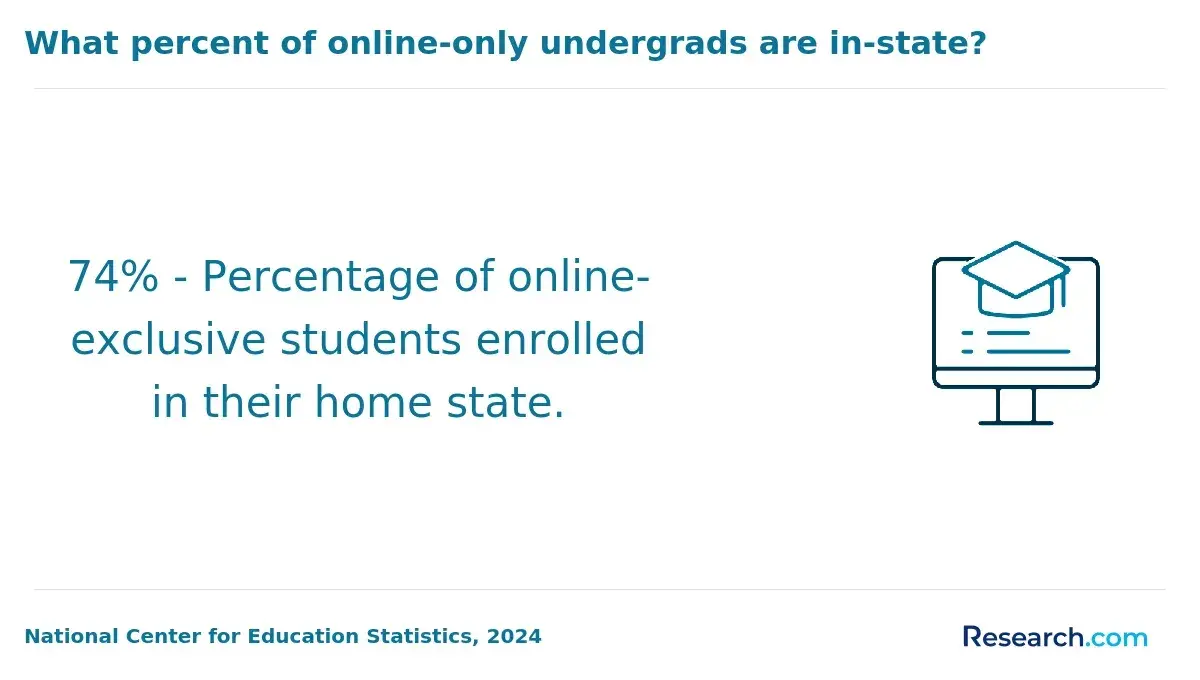
Choosing an online corrections degree is no longer just about finding the lowest tuition. College Board data for the current academic cycle puts average published tuition and fees at $11,610 for in-state public four-year students, making fees, transfer credit, and financial aid central to affordability. This guide is for students comparing accredited online corrections, criminal justice, and corrections-focused programs. You will learn how to compare tuition, mandatory fees, total program cost, FAFSA eligibility, scholarships, accreditation, and net price so you can identify genuinely affordable options and avoid costs that are easy to miss.
Key Things You Should Know
- The lowest advertised online corrections-related bachelor's tuition commonly starts around $220 to $270 per credit at affordable accredited options, but the cheapest net price depends on fees, transfer credits, grants, and residency rules.
- Institutional accreditation matters more than the program label because corrections degrees are usually offered as criminal justice, criminology, or justice studies programs with corrections coursework rather than a standalone programmatic accreditation.
- Federal aid can sharply change affordability: the maximum Pell Grant has been $7,395 in recent award years, so a FAFSA-eligible school with higher tuition may cost less out of pocket than a lower-tuition school with limited aid.
What Are the Cheapest Accredited Online Corrections Degree Programs?
The cheapest accredited online corrections degree programs are often not named "corrections" on the diploma. Many schools place corrections coursework inside online bachelor's degrees in criminal justice, criminology, justice administration, or law enforcement, with classes in correctional systems, community supervision, juvenile justice, offender rehabilitation, case management, ethics, and criminal law.
The table below compares affordable accredited online bachelor's-level options that are relevant to corrections careers. Published tuition can change by term, and some schools add technology, distance learning, graduation, transcript, or course fees, so use this as a decision starting point rather than a final bill.
| School | Online corrections-related degree | Accreditation type to verify | Published online tuition signal | Estimated tuition for 120 credits | Best affordability fit |
| University of the Cumberlands | BS in Criminal Justice | Regional institutional accreditation | About $220 per credit | About $26,400 before fees and aid | Students seeking a low private-university online tuition rate |
| Fort Hays State University | BA or BS in Criminal Justice | Regional institutional accreditation | About $250 to $260 per credit for online undergraduate study | About $30,000 to $31,200 before fees and aid | Students who want a public university with one online rate |
| Columbia Southern University | BS in Criminal Justice Administration | Recognized institutional accreditation | About $270 per credit | About $32,400 before fees and aid | Working adults seeking flexible pacing and included course materials |
| Arkansas State University | BA in Criminology | Regional institutional accreditation | About $280 per credit for many online undergraduate programs | About $33,600 before fees and aid | Students comparing public online criminology options |
| American Public University | BA in Criminal Justice with corrections-relevant coursework | Regional institutional accreditation | About $350 per credit for many civilian undergraduate students | About $42,000 before fees and aid | Military-affiliated, public safety, and working adult students |
| Eastern Kentucky University | BS in Criminal Justice | Regional institutional accreditation | About $430 to $440 per credit for many online undergraduate students | About $51,600 to $52,800 before fees and aid | Students who value a long-established online public safety school |
Based on published tuition alone, University of the Cumberlands, Fort Hays State University, and Columbia Southern University tend to appear among the lowest-cost options. However, "cheapest" changes once you include mandatory fees, transfer credit, Pell Grants, employer tuition assistance, military benefits, and whether a school's accreditation is accepted by your employer, graduate school, or state agency.
A strong shortlist should include at least one low-tuition public university, one low-tuition private nonprofit or private online option, and one school that offers generous transfer-credit review. That mix helps you compare not only the sticker price but also the likely net price after aid.
How Were the Cheapest Online Corrections Degree Programs Ranked?
Affordability was ranked by total cost signals, not by tuition marketing alone. A low per-credit rate is useful, but it can be misleading if the program charges high mandatory online fees, limits transfer credits, or lacks federal financial aid eligibility.
The ranking logic prioritized the cost factors that most directly affect what a student pays to finish the degree. These criteria are especially important for adult learners, transfer students, military-affiliated students, and public safety employees who may already have credits or work experience.
- Recognized accreditation: The school must hold institutional accreditation from an accreditor recognized by the U.S. Department of Education or otherwise be verifiable through official accreditation databases.
- Online availability: The degree must be available fully or primarily online, with no routine campus attendance that would add travel or relocation costs.
- Corrections relevance: The program must include corrections-related coursework or fit corrections career paths through criminal justice, criminology, justice studies, law enforcement, or public safety administration.
- Published tuition transparency: Schools with clearly published per-credit or program-level tuition are easier to compare and were treated as more useful for cost-conscious students.
- Total-cost risk: Mandatory fees, textbooks, course materials, residency requirements, and transfer-credit limits were considered because they can raise the real cost above advertised tuition.
- Financial aid access: FAFSA eligibility, institutional scholarships, military benefits, employer reimbursement compatibility, and payment plans can reduce out-of-pocket cost.
The table below shows how each affordability factor should affect your decision. It also explains why the lowest tuition rate is not automatically the best value.
| Ranking factor | Why it matters | What to check before applying |
| Per-credit tuition | Sets the base price for each class | Whether the rate applies to all online students or only in-state residents |
| Mandatory fees | Can add hundreds or thousands to the degree | Online, technology, proctoring, course, graduation, and student service fees |
| Transfer credit policy | Can reduce the number of credits you must buy | Maximum transfer credits, residency requirement, and age limits on prior coursework |
| Federal aid eligibility | Determines access to Pell Grants, federal loans, and work-study where available | School participation in Title IV aid and program eligibility |
| Employer acceptance | Some corrections agencies require degrees from specific types of accredited institutions | Whether the agency accepts the school's accreditation and online degree format |
A practical ranking should also account for completion risk. A program that costs slightly more per credit may be a better value if it offers stronger advising, predictable course schedules, internship options, and easier transfer-credit evaluation.
How Can You Verify the Accreditation of an Online Corrections Degree Program?
Accreditation is the first affordability checkpoint because an unrecognized or poorly accepted degree can waste both money and time. For online corrections programs, institutional accreditation is usually the key issue because corrections and criminal justice degrees do not have one universal programmatic accreditor required for employment across the U.S.
Use this verification process before you request information, submit an application, or pay a deposit. It helps you confirm that the school is legitimate and that the degree is likely to qualify for financial aid, transfer, graduate school, or employer review.
- Search the school in the U.S. Department of Education accreditation database: Confirm the institution name, accreditor, and active accreditation status.
- Check the school's financial aid participation: Make sure the institution and the specific online program are eligible for federal student aid if you plan to use FAFSA-based aid.
- Confirm the degree name and delivery format: Ask whether the online degree transcript and diploma match the campus degree or show a separate online designation.
- Ask your target employer: State departments of corrections, probation departments, sheriff's offices, and federal agencies may have their own degree-recognition rules.
- Review transfer and graduate-school acceptance: If you may pursue a master's degree later, confirm whether credits and the bachelor's degree will be accepted by regionally accredited graduate programs.
Be careful with schools that use vague phrases such as "fully approved," "internationally recognized," or "career certified" without naming a recognized institutional accreditor. Those terms do not necessarily mean the degree qualifies for federal financial aid or employer advancement.
Programmatic accreditation is less common in corrections than in fields such as nursing, teaching, counseling, or business. For this field, the practical question is whether the institution is accredited, the program is eligible for aid, and the curriculum matches the requirements of the corrections or public safety roles you want.
How Much Does an Accredited Online Corrections Degree Really Cost?
The real cost of an online corrections degree includes tuition, mandatory fees, books or digital materials, technology costs, application and graduation fees, transcript fees, exam proctoring, and the number of credits you still need after transfer evaluation. Tuition is the base price. Total program cost is the estimated full price before aid. Net price is what you may pay after grants, scholarships, tuition benefits, and other aid that does not have to be repaid.
The gap between sticker price and net price can be large. The College Board's current published averages show why: public in-state tuition and fees are far below out-of-state and private nonprofit prices, but online programs sometimes use separate flat online rates that ignore residency. That means an online student should never assume the campus tuition table applies.
The table below illustrates how the same advertised per-credit rate can lead to different totals depending on credits needed and mandatory fees. It is a planning tool, not a replacement for a school-specific financial aid estimate.
| Cost scenario | Credits needed | Tuition rate | Tuition subtotal | Estimated fee risk | Cost lesson |
| First-time bachelor's student | 120 | $250 per credit | $30,000 | Moderate to high | Small per-credit fees multiply across the full degree |
| Transfer student with associate degree | 60 | $300 per credit | $18,000 | Moderate | A higher tuition rate can still cost less if fewer credits are required |
| Adult learner with prior learning credit | 45 | $350 per credit | $15,750 | Depends on assessment fees | Prior learning can reduce tuition but may add evaluation costs |
| Part-time student taking one class per term | 120 | $250 per credit | $30,000 | Higher if term fees repeat | Repeated semester fees can raise the final bill |
Students comparing a corrections bachelor's with another affordable master degree should use the same principle: compare the full credential cost, not only the tuition rate. In both cases, the best value usually comes from a program that combines recognized accreditation, reasonable fees, strong transfer policies, and aid eligibility.
To estimate your own cost, ask each school for a written cost breakdown based on your transfer credits and expected enrollment pace. The most useful estimate should separate tuition, mandatory fees, optional fees, books, aid that does not need repayment, loans, and remaining out-of-pocket cost.
Which Tuition Models Make Online Corrections Degree Programs More Affordable?
Online corrections programs use several tuition models, and the model can matter as much as the rate. A student taking 18 credits per term, a student taking one course at a time, and a student transferring 75 credits may each find a different "cheapest" option.
The most common tuition models are listed below. Compare them against your schedule, transfer-credit total, and ability to study consistently while working.
- Per-credit tuition: You pay for each credit attempted, which is simple to compare but can become expensive if you repeat classes or take many electives that do not apply to the degree.
- Flat-rate full-time tuition: You pay one term price for a credit range, which can reduce cost if you can safely take a heavier course load without hurting grades or completion.
- Online-rate tuition: The school charges one rate for online students regardless of state residency, which can help out-of-state students avoid nonresident tuition.
- Competency-based tuition: You pay by term or subscription period and progress by demonstrating mastery, which can help experienced students who can complete courses quickly.
- Employer-billed or tuition-assistance model: The school may defer payment while your employer processes reimbursement, reducing short-term cash pressure.
Flat-rate and competency-based models can be powerful, but they are not automatically cheaper. They work best for disciplined students who can complete a high volume of coursework during each paid period.
Tuition-model comparison is useful across online education fields. For example, students evaluating the best AACSB online MBA programs often face similar trade-offs between per-credit pricing, bundled fees, and accelerated completion. Corrections students should apply the same cost logic before choosing a school.
If you work in corrections, probation, detention, or law enforcement, also ask whether your schedule can support accelerated courses. Eight-week terms may shorten the calendar, but they can feel intense when combined with shift work, overtime, court appearances, or field duties.
What Fees and Hidden Costs Should Online Corrections Degree Students Expect?
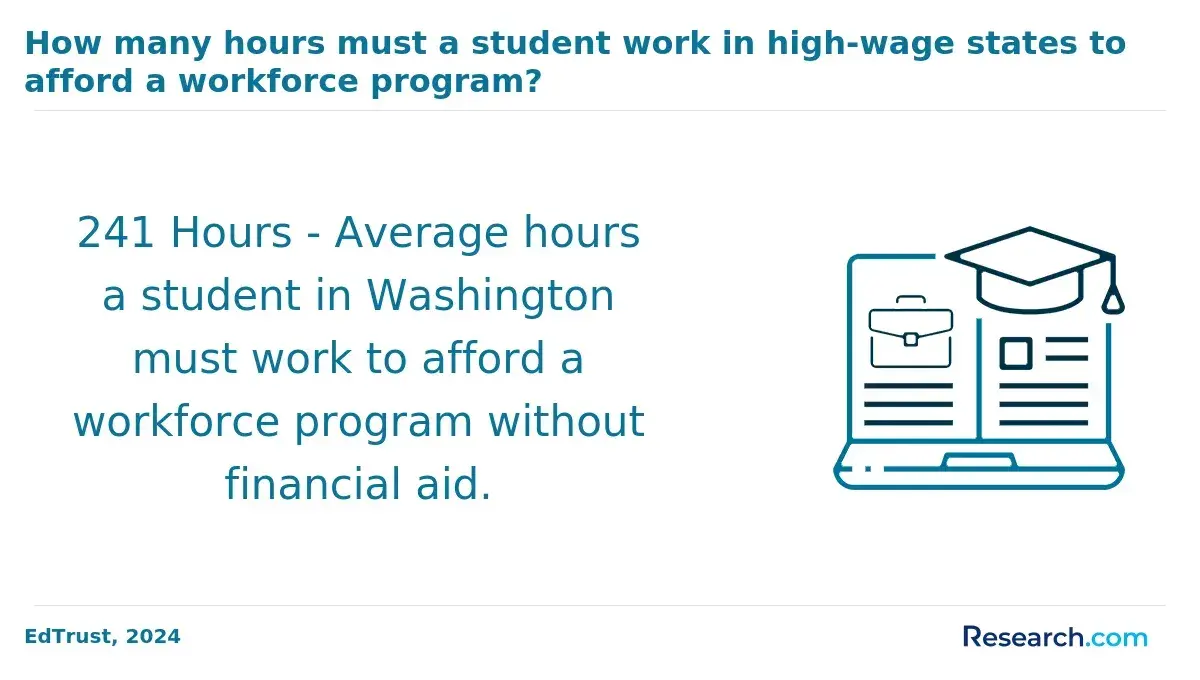
Fees are where many "cheap" online corrections degrees become less cheap. A school with a low tuition rate may charge online course fees, technology fees, textbook fees, proctoring fees, portfolio-assessment fees, or repeated term fees that raise the actual cost.
Before you compare programs, request a fee schedule and ask whether each fee is charged per credit, per course, per term, or one time. That distinction matters because per-credit and per-course fees multiply quickly across a full degree.
- Online learning or technology fees: These may cover the learning platform, student systems, and digital services, but they can add up across every enrolled term.
- Course materials and textbook costs: Some schools include digital materials in tuition, while others require separate textbook purchases or courseware access codes.
- Exam proctoring fees: Online classes may require remote proctoring, identity verification, or testing-center fees.
- Criminal background check or field placement costs: If the program includes internship, practicum, or agency-based learning, you may need background screening or documentation.
- Portfolio or prior learning assessment fees: These can be worthwhile if they replace tuition-bearing credits, but the fee should be compared with the tuition saved.
- Graduation and transcript fees: These are usually smaller than tuition but should be included in the final cost estimate.
- Residency or final-credit requirements: A school may require you to complete a minimum number of credits through that institution even if you have many transfer credits.
A common mistake is comparing two programs by per-credit tuition while ignoring repeated term fees. A part-time student who takes six years to finish may pay more in recurring fees than a full-time student who completes the same degree faster.
Another red flag is a school that cannot provide a written estimate after reviewing your transcripts. Affordable programs should be able to tell you how many credits apply, how many remain, and which fees are mandatory.
How Does FAFSA and Federal Financial Aid Work for Online Corrections Degree Programs?
FAFSA-based aid can apply to accredited online corrections programs if the school participates in federal student aid and the specific program is eligible. Online delivery alone does not disqualify a student from federal aid, but the school, program, enrollment level, citizenship or eligible noncitizen status, satisfactory academic progress, and other rules matter.
The maximum Pell Grant has been $7,395 in recent award years, which can significantly reduce the net price for eligible undergraduate students. The key takeaway is that a school with a slightly higher tuition rate may become cheaper after grants than a lower-tuition school where you receive little or no grant aid.
Use this FAFSA checklist to compare corrections degree programs consistently. Complete it before relying on any advertised scholarship or payment-plan language.
- Confirm the school's federal school code: This helps verify that the institution participates in federal student aid.
- Ask whether the online corrections-related degree is Title IV eligible: Do not assume every certificate, concentration, or nondegree track qualifies.
- Submit the FAFSA as early as possible: Some state and institutional grants have limited funding or priority deadlines.
- Compare aid offers by net price: Subtract grants and scholarships from direct costs before comparing loan amounts.
- Separate grants from loans: Grants and scholarships usually do not need repayment, while federal loans must be repaid with interest.
- Check satisfactory academic progress rules: Dropping courses, failing courses, or taking too long to complete the degree can affect future aid eligibility.
FAFSA rules matter in many public-service degree paths, not only corrections. Students weighing a criminal justice route against an MSW degree should compare aid eligibility, field requirements, and total borrowing before deciding which path best fits their career goal.
Federal student loans can help cover costs, but they should not be treated as a discount. When comparing programs, rank grants, scholarships, employer benefits, military education benefits, and transfer credits ahead of borrowing whenever possible.
Which Scholarships, Grants, and Tuition Benefits Can Help Pay for an Online Corrections Degree?
Corrections students may qualify for several types of aid beyond the Pell Grant and federal loans. The best options are funds that do not require repayment or benefits that reduce tuition before borrowing becomes necessary.
The table below separates common funding options by source and explains how each one can affect net price. The most affordable strategy is often a combination of several smaller awards rather than one large scholarship.
| Funding source | Who may qualify | How it lowers cost | Key question to ask |
| Federal Pell Grant | Eligible undergraduate students with financial need | Reduces tuition and fee cost without repayment | Is the online program eligible for federal aid? |
| State grants | Residents who meet state-specific rules | May reduce in-state or online public-university cost | Does online enrollment count for this grant? |
| Institutional scholarships | Students meeting GPA, transfer, military, adult learner, or major criteria | Reduces direct charges if renewable | Is the scholarship renewable and stackable with other aid? |
| Employer tuition assistance | Corrections officers, detention staff, probation staff, or public employees at participating agencies | Reimburses or prepays eligible coursework | What grade, school, and degree rules must I meet? |
| Military and veteran benefits | Eligible service members, veterans, spouses, or dependents | Can cover tuition, fees, books, or housing depending on benefit type | How will benefits apply to online credits and term dates? |
| Union or professional association awards | Members or dependents of public safety organizations | Provides smaller awards that may fill remaining gaps | Can the award be used for online tuition? |
Students working in corrections-adjacent fields such as reentry services, behavioral health, victim advocacy, or community supervision may also compare criminal justice programs with masters in social work online pathways. The better financial choice depends on your target role, required credential, field placement demands, and employer tuition policies.
Always ask whether an award is renewable. A one-term scholarship can make the first bill look affordable but leave you with a much higher cost in later terms.
Can Transfer Credits, Prior Learning, and Competency-Based Study Lower the Cost of an Online Corrections Degree?
Transfer credit is one of the strongest cost-saving tools for online corrections students. If you already have community college credits, academy training, military education, law enforcement coursework, corrections officer training, or prior college work, you may be able to reduce both tuition and time to graduation.
The key is to evaluate transfer value before enrolling. A school with the lowest tuition may not be the cheapest if it accepts fewer credits than a slightly higher-priced competitor.
- Community college transfer: Completing general education or an associate degree first can lower total cost if the bachelor's program accepts the credits cleanly.
- Prior learning assessment: Some schools award credit for documented training, professional certifications, academy coursework, or portfolio evidence.
- Military credit: Joint Services Transcript or Community College of the Air Force credit may apply toward electives, criminal justice requirements, or general education.
- Credit by exam: CLEP, DSST, or other approved exams may replace lower-division courses when accepted by the school.
- Competency-based study: Experienced students may finish faster if they can demonstrate mastery rather than sit through a full traditional term.
Ask for an official or pre-enrollment transcript evaluation that shows which credits apply to the major, which count only as electives, and which do not transfer. Elective credit is useful, but it will not lower your cost if you still need many required major courses.
Transfer strategy also matters outside criminal justice. Students comparing a public safety degree with a graphic design bachelor degree face the same issue: the most affordable program is often the one that accepts the most applicable credits toward graduation requirements.
Watch for residency requirements. If a school requires the final 30 credits to be completed through that institution, transferring 100 credits may not reduce the cost as much as you expect.
How Should Students Compare the Net Price, Quality, and Return on Investment of Online Corrections Degree Programs?
The best-value online corrections degree is the one that gives you a credible credential, manageable total cost, relevant coursework, and realistic career mobility. Corrections careers vary widely: some entry-level correctional officer roles do not require a bachelor's degree, while probation, parole, case management, supervisory, federal, and administrative roles may prefer or require college coursework or a degree.
Current federal labor projections show a challenging outlook for correctional officer and bailiff employment, with projected decline over the decade, while roles such as probation, community supervision, reentry, investigations, and public safety administration may have different education expectations. This means students should choose a degree for broader mobility, not only for one entry-level job title.
The table below summarizes common comparison mistakes and better alternatives. Use it after receiving financial aid offers and transfer evaluations from each school.
| Common mistake | Why it can cost you | Better comparison method |
| Choosing the lowest per-credit tuition | Fees, transfer limits, and poor aid can raise the final cost | Compare net price for the credits you personally need |
| Ignoring accreditation type | The degree may not be accepted by employers or graduate schools | Verify institutional accreditation and employer recognition |
| Assuming online means cheaper | Some online rates are higher than in-state campus rates | Compare online, in-state, and out-of-state tuition tables |
| Borrowing up to the full aid offer | Loans can make a low-cost degree expensive after interest | Use grants, employer benefits, transfer credits, and payment plans first |
| Overlooking outcomes and support | Low support can delay graduation and increase total cost | Ask about advising, course availability, completion rates, and career services |
Before enrolling, ask each school direct questions that lead to comparable answers. The goal is to produce a side-by-side cost and quality picture rather than relying on admissions language.
- What is my total estimated cost to finish after transfer credits are applied?
- Which fees are mandatory, and are they charged per credit, per course, per term, or one time?
- Is the online program eligible for FAFSA-based federal aid?
- How much grant or scholarship aid is renewable after the first term?
- What is the maximum number of credits I can transfer into the degree?
- Does the curriculum include corrections, probation, reentry, ethics, criminal law, and evidence-based supervision topics?
- Will my target employer or graduate program recognize this degree and accreditation?
- How often are required courses offered online, and can I finish on my preferred timeline?
Affordability is important, but it should not be the only factor. A slightly higher-cost accredited program may be the better investment if it accepts more transfer credits, offers stronger advising, aligns with your agency's promotion rules, and helps you move beyond entry-level corrections work.
Other Things You Should Know About Corrections
Yes, an online corrections-related degree can be respected when it comes from an accredited institution and matches the employer's education requirements. Most employers care more about accreditation, degree level, relevant coursework, experience, background checks, and job performance than whether classes were online.
Not always. Many correctional officer roles require a high school diploma or equivalent plus academy or agency training. A bachelor's degree may be more useful for federal roles, probation or parole work, supervisory positions, investigations, reentry services, and long-term advancement.
No. Corrections is one part of the criminal justice system. A criminal justice degree usually covers policing, courts, law, criminology, ethics, corrections, and policy, while a corrections-focused curriculum emphasizes jails, prisons, rehabilitation, supervision, reentry, and offender management.
Many students do, especially in asynchronous programs. The safest approach is to start with one or two courses, confirm weekly workload expectations, and choose a program with flexible terms if you work shifts, overtime, nights, or rotating schedules.
References
- 2025 Most Affordable Online Associate Degrees in Criminal Justice https://www.onlineu.com/most-affordable-colleges/criminal-justice-associate-degrees
- Programmatic Accrediting Organizations https://www.chea.org/programmatic-accrediting-organizations
- 15 Best Online Bachelor's In Criminal Justice https://www.criminaljusticedegreeschools.com/rankings/best-online-bachelors/
- Types of Financial Aid for Online Colleges https://www.umassglobal.edu/blog-news/types-financial-aid-online-colleges
- Costs of Online and Campus Colleges | University of Phoenix https://www.phoenix.edu/blog/comparing-the-costs-of-online-and-campus-colleges.html
- Top Online Criminal Justice Degrees https://www.criminaljusticeprograms.com/online-criminal-justice-degrees/
- Find Top Online Bachelor's In Criminal Justice Programs https://www.accreditedschoolsonline.org/criminal-justice/bachelors/
- Your Guide for College Financial Aid - Finaid https://finaid.org/
- Financial Aid Resources | All Criminal Justice Schools https://www.allcriminaljusticeschools.com/financial-aid/
- Financial Aid Guide for Online College Students | Onlinedegrees.com https://www.onlinedegrees.com/degree360/student-loans-scholarships/