2027 From Health Nonprofit Fundraising Assistant to Public Health: Planning a Bachelor's Pathway

Co-Founder and Chief Data Scientist
Fundraising for a health nonprofit can put you close to community needs without giving you the training - or responsibility - to design and evaluate health programs. If you want to move from supporting the work financially to doing more of the work itself, a public health bachelor's degree may help.
This guide is for fundraising assistants weighing that transition. It explains which skills you already bring, what a degree would add, how to compare programs while working, and when experience or targeted training may be a more direct next step.
Key Things You Should Know
- Fundraising experience transfers most directly to grant coordination, outreach, partnerships, and program support; it does not substitute for training in population health, data interpretation, or evaluation.
- A public health bachelor's degree commonly takes about four years of full-time study from the start, but a returning student's timeline depends on an approved credit evaluation and the remaining course sequence.
- Compare the degree against the job you want: the U.S. Bureau of Labor Statistics reported a May 2023 median wage of $48,200 for community health workers, an occupation-wide figure - not an expected salary for public health graduates.
What can a public health bachelor's degree lead to after nonprofit fundraising experience?
The most realistic first move is often from raising money for a health initiative to helping coordinate, communicate, or assess that initiative. You may already know how to maintain partner relationships, explain a mission, track grant deadlines, and write for different audiences. A bachelor's program can add the population-health framework and basic methods needed to use those strengths in program work.
Target roles by their duties, not just their titles. A program assistant might organize services and maintain reporting records; an outreach coordinator might develop materials with community partners; a grants and evaluation assistant might track activities against funder requirements. None of those titles guarantees that you will conduct independent research or manage a program. Reviewing public health BS programs and career preparation can help you look for applied work that matches the responsibilities you want next.
If you mainly want to advance in fundraising, a full degree may be unnecessary. Ask your supervisor whether you can take on supervised reporting, needs-assessment support, or program-meeting responsibilities first. That experience can clarify whether you want a new function or simply a broader development role.
What does a bachelor's degree in public health cover?
A public health bachelor's degree studies health across populations rather than diagnosing or treating individual patients. Programs typically introduce prevention, social and structural influences on health, epidemiology, health policy, environmental health, community engagement, and ethical communication. Applied work may involve planning an outreach activity or assessing whether a program reached its intended audience.
For a fundraising assistant, the valuable shift is from reporting that a grant paid for activities to asking what was delivered, who could access it, how outcomes were measured, and what the evidence can actually support. Introductory statistics and epidemiology help you interpret a report; they do not, by themselves, qualify you to lead complex analyses. If advanced quantitative work later becomes your goal, online graduate biostatistics options for professionals represent a substantially different level of preparation.
How do you choose an accredited public health bachelor's program?
First, confirm that the university has recognized institutional accreditation. Then check the exact public health degree and its academic home: a university's accredited status does not establish that every public health degree has separate accreditation from the Council on Education for Public Health (CEPH). Verify any claimed CEPH coverage against the accreditor's directory and the program's current documentation, rather than assuming that coverage of a school or graduate program extends to a particular bachelor's degree.
Program fit matters just as much as the label. Ask for the current degree map, required statistics sequence, fieldwork rules, course rotation, and examples of approved projects. If you may eventually seek graduate study, CEPH-accredited MPH program selection is a separate decision; do not choose a bachelor's program solely because its university also offers an MPH.
Online study can preserve a fundraising work schedule, but it is not automatically self-paced. Campus study may make local partnerships and scheduled faculty contact easier. The better format is the one in which you can complete required courses and any fieldwork without repeatedly disrupting employment.
Before enrolling, ask whether classes meet live, whether group work has fixed meeting times, how often required courses run, and whether an internship can be completed locally or at your employer with prior approval. Public health bachelor's programs with compressed classes may shorten individual course blocks while increasing weekly workload. Compare actual assignments and placement obligations, not just the advertised course length.
Requirements vary, but expect general education alongside foundational public health courses, introductory statistics, epidemiology, health behavior or communication, policy, and research or evaluation methods. Some programs require biology, environmental health, a capstone, or supervised field experience. A BA and a BS may allocate different amounts of coursework to science and quantitative subjects; check the degree map rather than relying on the letters alone.
Choose electives for the work you want to perform. For grant-supported program roles, budgeting, qualitative inquiry, evaluation, and accessible health communication may be more immediately useful than an advanced topic with no applied component. If research or doctoral study becomes a later aim, examine whether courses build progressively toward stronger methods preparation; a public health doctoral program selectivity overview cannot replace checking each program's actual academic and experience requirements.
First-year applicants generally apply to the university with secondary-school records. Returning applicants submit prior college transcripts and may need prerequisites or a separate application to enter the public health major. University admission, major admission, acceptance of transfer credit, and application of that credit toward graduation are distinct decisions.
If you have earlier coursework, request a written degree audit showing what fulfills general education, statistics, major, elective, and residency requirements. Send course descriptions or syllabi when an equivalency is unclear, and ask the registrar or designated academic office about appeals before paying to repeat a course. Fundraising work can strengthen an application statement, but it is not ordinarily academic credit unless the institution has an approved prior-learning process. Graduate admissions and aid operate differently; university scholarships for online public health master's study should not be treated as bachelor's-level funding.
A bachelor's degree is commonly structured around roughly 120 semester credits and four years of full-time study from the beginning. Your remaining time may differ substantially. Accepted credits might satisfy electives without replacing a required statistics course, and an infrequently offered prerequisite can delay graduation even when many credits transfer.
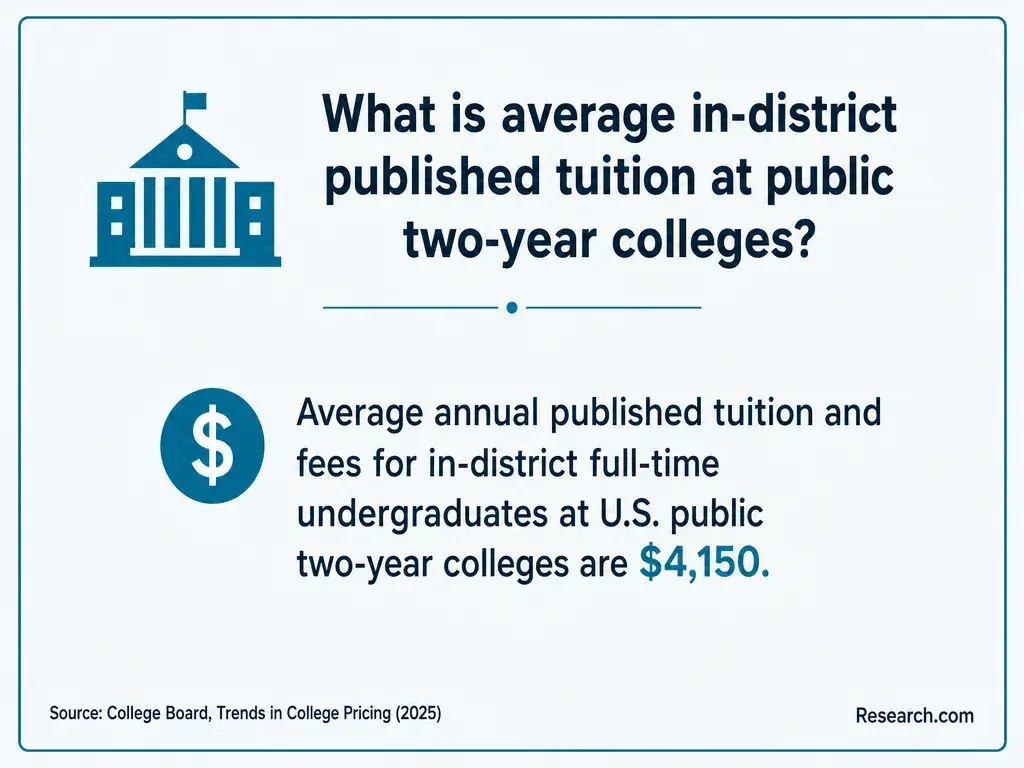
Compare schools using a written estimate of remaining credits at that school, tuition by credit or term, mandatory fees, books, and any placement-related travel or reduced work hours. Then check financial-aid eligibility for your intended enrollment pace. Budget and pacing choices for public health students are most useful after each school has evaluated your transcript: a lower advertised price per credit does not necessarily mean a lower cost to finish.
Potential roles include public health or nonprofit program assistant, outreach coordinator, community health worker, grants coordinator, and entry-level evaluation support. Employers may use the same title for very different work, so compare postings for data duties, community contact, travel, supervision, and required experience. A fundraising assistant with a bachelor's degree may be particularly competitive for positions combining grant reporting and program operations, but the degree alone does not establish program-management readiness.
Build evidence while studying: seek permission to help define an activity measure, draft a plain-language program brief, or assist with a supervised evaluation task. Keep confidential donor and participant information out of any portfolio. Leadership or research careers can require substantial later experience and education; cost-conscious public health doctoral advancement is a much later consideration, not a prerequisite for these entry-level moves.
Pay depends on the occupation, employer, location, and responsibilities - not simply the degree. The U.S. Bureau of Labor Statistics reported a May 2023 median annual wage of $62,860 for health education specialists. That figure describes workers across the occupation, including experienced workers; it is not an entry-level offer or a public health bachelor's graduate outcome.
Compare local postings for the specific roles you could pursue now with your current pay, then weigh any expected difference against tuition and foregone work time. An advanced degree should face the same test. Even a public health PhD affordability guide cannot establish a return on investment for someone whose immediate goal is to move from fundraising into program support.
Do public health careers require certification, licensure, or graduate study?
Many nonprofit program-support jobs do not require a public health license, but requirements vary by employer and state. Health education specialist postings may prefer or require a relevant credential, while clinical care requires its own professional education and licensure. A public health bachelor's degree does not automatically award certification or authorize clinical practice.
Check the credential named in each target posting and confirm eligibility with the certifying organization. Roles in epidemiology or specialized analysis commonly call for more advanced preparation than an introductory bachelor's curriculum provides. If an MPH later becomes relevant, compare its applied training and total cost using resources on reviewing tuition across online MPH degrees; do not enroll in graduate study merely because a future job title sounds appealing.
Other Things You Should Know About Public Health
Describe the funds raised and activities supported accurately, but do not equate them with improved health outcomes. An impact claim needs appropriate measures, a defensible interpretation, and permission to use the information.
Only with your organization's permission. Remove donor, participant, and restricted information, and clarify what you personally contributed. A newly written, nonconfidential sample may be safer.
If the relationship permits, frame the conversation around responsibilities you hope to learn and ask whether supervised program work is available. You need not promise to leave fundraising to explore it.
Seek a course project, internship, or mentor with qualified supervision elsewhere. Being asked to report a number is not the same as learning how to design a measure or interpret it responsibly.
- Accreditation in the U.S. | ed.gov http://www.ed.gov/laws-and-policy/higher-education-laws-and-policy/college-accreditation/accreditation-in-the-us
- The Landscape of US Undergraduate Public Health Education | nih.gov https://pmc.ncbi.nlm.nih.gov/articles/PMC6134569/
- Your financial path to graduation | consumerfinance.gov https://www.consumerfinance.gov/paying-for-college/your-financial-path-to-graduation/
- Careers in Public Health - New York State Department of Health https://www.health.ny.gov/prevention/public_health_works/careers/
- Cost of Attendance (Budget) | 2025-2026 Federal Student Aid Handbook https://fsapartners.ed.gov/knowledge-center/fsa-handbook/2025-2026/vol3/ch2-cost-attendance-budget
- MPH Admissions | Department of Public Health https://publichealth.sfsu.edu/mph-admission
- 11 Best Degrees for a Career in Nonprofit | University of San Diego Online Degrees https://onlinedegrees.sandiego.edu/best-nonprofit-degrees/
- Master of Public Health | UNE Online https://online.une.edu/program/master-of-public-health/
- Is an Online MPH Right for You? | University of Bridgeport https://www.bridgeport.edu/news/is-an-online-mph-right-for-you/
- Fundraiser Job Description and Outlook - ECU Flight Path https://onlineprograms.ecu.edu/blog/fundraiser-job-description/