2027 Evaluating an MPH Practicum in A Healthy Housing Coalition

Co-Founder and Chief Data Scientist
A healthy housing coalition can offer an MPH student unusually practical work: turning concerns about mold, lead, pests, or unsafe repairs into community-informed public health action. But a worthwhile placement is not automatically an approved practicum. Students need to know whether the coalition can supervise substantive work, support assessable deliverables, and provide appropriate access to residents and data.
This guide is for prospective and current MPH students comparing field sites. It explains what to verify before committing, and when a different placement would better serve your learning goals.
Key Things You Should Know
- A coalition is a strong practicum site when an approved supervisor can support defined work products, not just meeting attendance or outreach observation.
- Under CEPH's MPH applied practice criteria, students demonstrate at least five competencies, including at least three foundational competencies, through at least two work products; confirm your program's current implementation.
- Check data permissions, resident safety, scheduling, travel, and unpaid-work costs before accepting a project. Coalition willingness alone does not constitute school approval.
What is an MPH practicum in a healthy housing coalition?
An MPH practicum, often called an applied practice experience, is supervised work in a public health setting that connects coursework to usable products. A healthy housing coalition brings together organizations or residents concerned with housing conditions and health. Depending on its membership, it may coordinate education, referrals, policy advocacy, or evaluation; it does not necessarily provide inspections, legal representation, or clinical care.
For a student, the distinction is between participating in a coalition and completing an approved learning experience within it. A placement might produce a resident-informed resource guide or an evaluation plan.
Attending meetings without a defined contribution is less likely to demonstrate applied competence. Students comparing environmental health, community engagement, and policy interests can use specialization choices in public health graduate study to clarify which work they want the placement to test.
How does a healthy housing practicum meet CEPH applied practice requirements?
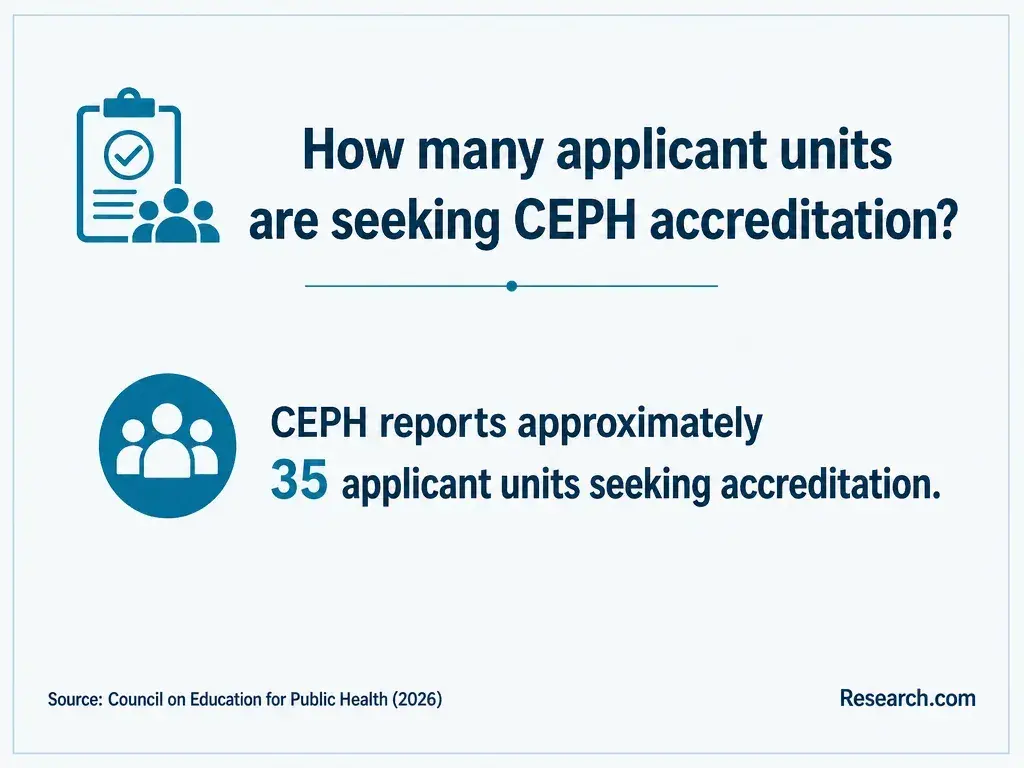
CEPH accredits eligible public health schools and programs; it does not approve an individual coalition placement on a student's behalf. Its MPH applied practice criteria call for work products demonstrating at least five competencies, including at least three foundational competencies.
The student's program determines how those criteria are documented, approves the site and supervisor, and assesses the work. Verify the criteria and program rules applicable to your entry term.
A workable agreement names the public health problem, the student's tasks, the competencies each product will demonstrate, a qualified supervisor, and a faculty or practicum contact. For example, a coalition briefing and an evaluation plan may show different skills. Two versions of the same handout should not be assumed to count as two adequate products.
Keep degree requirements distinct. A prospective student exploring public health doctoral programs with broader entry options should not assume that doctoral applied-project rules replace an MPH program's practicum requirements.
What projects can MPH students complete with a healthy housing coalition?
The best project answers a question the coalition can act on within the placement period. The comparison below separates plausible deliverables from the permission or capacity each would require; these are examples, not claims about any particular site.
| Potential project | Useful deliverable | Key feasibility check |
| Referral pathway review | Service map and identified handoff gaps | Partner agreement to describe their services |
| Resident education | Accessible materials reviewed by intended users | Language access and appropriate resident input |
| Program monitoring | Indicator definitions and a reporting template | Reliable, permitted access to relevant records |
| Policy support | Evidence brief distinguishing findings from recommendations | Coalition approval of its advocacy position |
A dashboard or exposure analysis may be appealing, but it is unsuitable if records are unavailable, inconsistent, or too sensitive to share.
Students seeking substantially deeper modeling training should compare the project with biostatistics master's study and work commitments rather than treating a short practicum as equivalent preparation. Do not promise to measure health effects when the available data can support only service or process measures.
Healthy housing work connects environmental conditions with population health, but competency claims should follow the student's actual tasks. A service map can demonstrate assessment of community needs and partnership work; a resident-reviewed handout can demonstrate health communication; an indicator plan can demonstrate evaluation design. A policy brief may demonstrate evidence appraisal and policy communication without proving that a policy changed.
Coalition work also tests whether students can describe structural constraints without blaming residents for conditions beyond their control. Prior online bachelor's study in public health may provide useful foundations, but the practicum must still document the competencies required by the MPH program. Ask your faculty contact to map each proposed product to specific competencies before work begins.
Environmental health provides a basis for understanding housing-related exposures; epidemiology and biostatistics help students interpret evidence without mistaking association for causation.
Community-engaged practice, program evaluation, and health policy are especially useful when the assignment involves residents, referral systems, or local decision-makers. The necessary depth depends on the project: a referral map does not require advanced exposure modeling, while an analytical project may require more methods preparation than a generalist MPH supplies.
Students entering from another discipline should distinguish formal prerequisites from skills they can develop before fieldwork. Someone with organizing experience may need more data literacy; someone with laboratory experience may need practice facilitating community review.
Accelerated online coursework for public health undergraduates may be relevant to an applicant still completing a bachelor's degree, but an MPH program, not a general course list, decides its admission and practicum prerequisites.
Online MPH students can complete their practicum remotely if both the program and coalition approve the arrangement and the remote tasks support meaningful supervision and deliverables.
Remote work can suit document review, virtual partner interviews conducted with permission, resource development, or analysis of approved data.It may be a poor fit for work that depends on resident trust-building, in-person meetings, or observing local service pathways.
Ask when meetings occur, whether local visits are required, who supplies secure technology, and how feedback will be given. An online course schedule does not make coalition meetings asynchronous. Students weighing efficient public health degree pathways and earnings should include the placement's fixed hours and travel demands in any flexibility comparison.
Admission is generally to an MPH program, not to a guaranteed housing coalition placement. Universities set their own degree, transcript, application, and any prerequisite requirements.
Relevant organizing, tenant-service, environmental, clinical, or data experience can strengthen a statement of purpose, but it does not automatically satisfy an admission rule or secure a site.
Ask admissions staff whether students may propose community partners, when site matching begins, and whether a housing-focused placement has previously been feasible under the current practicum policy.
Applicants concerned about their academic record can consult guidance on building an MPH application with weaker grades, then confirm the specific program's current standards rather than assuming a universal cutoff.
Required hours, enrollment timing, and credit charges vary by MPH program. A coalition's project calendar can add constraints: a policy briefing tied to a public meeting or a resource review requiring partner feedback may not fit a short academic term. Request the program's required hours and approval deadlines, then ask the site how long its review cycle takes.
Calculate the full placement cost, not tuition alone: practicum credits and fees, travel, accessibility needs, equipment, and income lost to unpaid hours may matter. Confirm whether the site pays students and whether your employer permits fieldwork during paid time; neither should be assumed.
Comparing online public health doctoral costs and professional opportunities makes sense only if you are also considering a doctorate for a different career goal. It is not a substitute price estimate for this MPH placement.
A strong placement can provide evidence for community health, environmental health, housing program, evaluation, or policy-support roles. The portfolio value lies in showing what you did: who reviewed a resource, how you defined an indicator, or how you communicated limitations.
An entry-level applicant might pursue coordinator or program specialist work; leading inspections, directing research, or practicing law or clinical care can require different credentials and experience.
A practicum does not guarantee a job or a particular wage. Because these roles span different employers and occupations, a single salary figure would be misleading. Use understanding salary variation after an MPH as context, then compare actual job postings for their tasks, location, experience requirements, and any required license or certification.
How should students evaluate a reputable MPH program and practicum site?
Check institutional accreditation separately from CEPH accreditation, including whether the exact MPH is within the accredited school, unit, or program's scope. Then evaluate the placement itself. A respected coalition may still lack time to supervise a student, while a smaller partner may offer a clearly bounded, useful project.
Before agreeing, ask the academic coordinator and proposed supervisor these questions:
- Will the program approve this site, supervisor, schedule, and proposed deliverables in writing before work starts?
- What decisions can the student contribute to, and who will review each product?
- What resident contact, data access, travel, safety training, and confidentiality rules apply?
- What happens if a partner cannot provide feedback or the project changes midterm?
Get separate confirmation for site approval, supervision, and permission to use or share information; none implies the others.
If a school advertises flexible placement options, test that claim against its written policies and past support rather than assuming it can arrange a housing site. Guidance on building a realistic online MPH application list can help organize program choices, but practicum feasibility requires direct answers from each school.
Other Things You Should Know About Public Health Programs
Some programs permit it, but may require duties and products distinct from your regular job. Obtain program approval before counting work hours.
Do not assume student status authorizes inspections or testing. Ask the site which tasks require trained or licensed personnel under applicable rules, and keep your assignment within approved responsibilities.
Not every interview is research, but students should not decide oversight status alone. Consult the program and site before recruitment or recording, and follow their review, consent, and data-handling requirements.
Only with the coalition's permission. Remove confidential information and resident details, respect ownership and review agreements, and describe your contribution accurately if the original product cannot be shared.
- Elements of an Evaluation Plan | Agency for Healthcare Research and Quality https://www.ahrq.gov/talkingquality/assess/evaluation-plan.html
- Writing and Using Learning Objectives - PMC - NIH https://pmc.ncbi.nlm.nih.gov/articles/PMC9582829/
- MPH Practicum - Washington University Bulletin - WashU https://bulletin.wustl.edu/publichealth/mph/practicum/
- Practicum Examples | UW School of Public Health https://sph.washington.edu/mph-practicum/examples
- Creating and Maintaining Coalitions and Partnerships | ku.edu https://ctb.ku.edu/en/creating-and-maintaining-coalitions-and-partnerships
- Know Where You Are Going! Simple Steps to Writing SMART Learning Objectives | CTL Blog https://ctl.jhsph.edu/blog/posts/SMART-learning-objectives/
- MPH Practicum Overview for Preceptors | Host Organizations | Harvard T.H. Chan School of Public Health https://hsph.harvard.edu/office/field-education-and-practice/host-organizations/mph-practicum-overview-for-preceptors/
- National Safe and Healthy Housing Coalition | NCHH https://nchh.org/build-the-movement/nshhc/