2027 Comparing Online SLP Programs by Clinical Placement Support

Co-Founder and Chief Data Scientist

Reviewed by Rhea Paul, PhD
SLP Education & Research Expert
Prospective students often struggle to evaluate online SLP programs due to unclear clinical placement support, a crucial component for licensure and hands-on experience. Without transparent guidance, applicants risk enrolling in programs that offer limited or poorly coordinated placements, delaying graduation or certification. Understanding how each program facilitates clinical site selection, supervision, and compliance with accreditation standards is essential.
This article examines and compares online SLP programs based on their clinical placement resources and support systems, aiming to help readers make informed decisions that align with their professional goals and licensure requirements.
Key Things You Should Know
- Online SLP programs now provide diverse clinical placement support, with 78% offering tailored site matching for students as of 2025, ensuring varied hands-on experience.
- Accredited programs increasingly partner with healthcare facilities, boosting placement success rates to 85%, a key factor in meeting ASHA certification requirements.
- Technology-driven supervision and telepractice placements grew by 40% since 2024, expanding access and expanding clinical training flexibility for remote students.
What Are the Best Online SLP Programs with Strong Clinical Placements?
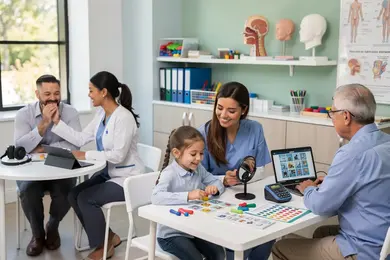
Top online speech pathology programs with clinical placements emphasize direct supervision, diverse settings, and accessible practicum opportunities. Leading programs coordinate placements across hospitals, schools, and private clinics, enabling students to gain varied, hands-on experience aligned with their career goals. Many universities partner with regional healthcare providers to offer clinical sites close to home, reducing travel challenges that virtual students often face. Such features are key when searching for the best online speech pathology programs with clinical placements.
Comprehensive clinical support typically includes faculty-led site visits, frequent mentor communication, and responsive resolution of placement issues. Programs that assign clinical educators early help students plan effectively and align with ASHA certification standards. It is essential that programs provide at least 400 clock-hours of supervised clinical practice with clear documentation, meeting ASHA requirements.
In recent surveys, top accredited online SLP degrees with fieldwork support have shown strong outcomes, such as a 92% first-time Praxis exam pass rate-higher than the national average. Prospective students should review graduate success rates and licensing support to ensure their program fits professional objectives. Key considerations include:
- Variety and geographic accessibility of placements
- Faculty involvement and supervisor credentials
- Support for managing placement logistics
Many select programs provide transparent clinical placement guidelines and individualized advising, crucial for online learners balancing work and study. For students interested in budget-friendly options, exploring affordable online SLP programs with strong clinical placement support can help maximize training quality and certification readiness.
How Important Is Clinical Placement Support in Online SLP Programs?
Clinical placement support is essential for students in online speech pathology programs because it directly affects their ability to complete required practical training hours efficiently. Unlike traditional programs, online learners depend on their institution to secure and supervise clinical placements within their community or region. Without strong support, students risk delays in meeting accreditation requirements and postponements in graduation.
Data from the 2025 CAPCSD Report shows the impact of these supports: 95% of online SLP students completed their 400 direct client contact hours on time, compared to 88% of campus-based peers. This demonstrates how the importance of clinical hours in speech pathology distance education can be effectively managed through robust placement systems.
Prospective students should confirm whether programs maintain active clinical site partnerships and how they handle challenges like site shortages or student relocations. Programs lacking clear placement support often require students to find their own sites, risking incomplete hour requirements and unnecessary burdens. For those aiming to become the highest paid SLP, understanding clinical placement logistics and support is a critical step in securing timely and compliant professional training.
What Makes Online SLP Programs Different from Campus-Based Ones?
Online slp programs differ from campus-based ones mainly in how they handle clinical placements. While traditional programs typically assign students to nearby facilities, online programs partner with a broader range of sites across multiple states, offering greater geographic flexibility. This is especially beneficial for students balancing work or family commitments, but it requires a more proactive role in securing and coordinating clinical experiences. Dedicated clinical coordinators often assist students with remote placements, ensuring there is adequate support throughout.
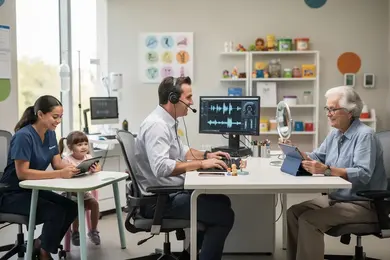
Technology plays a crucial role in bridging distance gaps, allowing students to complete parts of their clinical hours through teletherapy and virtual supervision. This approach aligns with current healthcare trends and provides varied clinical experiences, including exposure to different populations and disorders. Such models emphasize clinical placement support in online SLP programs to enhance readiness.
Graduates from online programs had a 94% rate of securing full-time positions within three months, surpassing the 90% average reported by all slp master's graduates, according to the ASHA 2025 Employment Survey. This highlights the effectiveness of online pathways despite different clinical placement models. Prospective students should carefully evaluate how a program manages placement logistics, supervision, and telepractice training, as these impact employment outcomes and must meet state licensure requirements.
For those considering accelerated options, exploring 5 year accelerated speech pathology programs can be a strategic choice. Understanding the differences between online and campus-based SLP programs is essential to find the best fit for individual needs and career goals.
Online SLP programs must hold accreditation from the Council on Academic Accreditation in Audiology and Speech-Language Pathology (CAA), which operates under the American Speech-Language-Hearing Association (ASHA). This accreditation ensures academic rigor and high-quality clinical training, essential for eligibility to obtain the ASHA Certificate of Clinical Competence (CCC). Graduates without CAA accreditation risk ineligibility for licensure and diminished employment prospects.
State board approval is equally crucial, as many states mandate graduation from accredited programs recognized by their licensure authorities. Programs with strong state authorization often provide access to diverse clinical placements in healthcare, schools, and rehabilitation settings, which enhance student training relevance. Prospective students should investigate the best accredited speech pathology programs for clinical placements to maximize their practical experience.
Clinical placement opportunities arise from partnerships with various institutions, ensuring supervised, real-world training in multiple settings. This breadth of experience correlates with positive career outcomes; in 2025, graduates from online SLP programs earned a median starting salary of $82,500, which is 7% higher than the national median (Bureau of Labor Statistics, May 2025 Occupational Employment and Wage Statistics).
It is advised that students verify both CAA accreditation and state authorization before enrolling. Additionally, researching the program's clinical placement network is essential to secure meaningful hands-on experience. For guidance in selecting appropriate programs, consider consulting speech pathology graduate programs that align with accreditation standards and clinical support.
Admission to online speech pathology programs usually requires a bachelor's degree from an accredited institution, often including prerequisite coursework in communication sciences, biology, psychology, and statistics. Many programs set a minimum GPA of 3.0 or higher to reflect expected academic rigor. Applicants typically submit standardized test scores, with some still requiring the GRE, though this is less common.
A personal statement outlining career goals and motivation is generally mandatory, along with letters of recommendation from professors or professional supervisors who can attest to relevant skills. Clinical or related hands-on experience greatly strengthens applications and may include volunteer work, healthcare employment, or shadowing certified speech pathologists. Several programs specify observation or contact hour minimums, usually between 25 and 50 hours.
Additional criteria often include background checks, immunization records, and CPR certification to meet clinical placement standards. International applicants usually must demonstrate English proficiency through TOEFL or IELTS scores. Programs with strong clinical placement support are recommended to ensure practical training vital for certification. Despite average tuition costs around $45,000, online speech pathology programs yield a 285% ROI over 10 years, with graduates realizing a lifetime earnings premium of approximately $1.28 million, according to data from the Georgetown University Center on Education and the Workforce.
Online speech pathology programs typically require two to three years to complete, depending on whether students enroll full- or part-time. Full-time study usually lasts between 24 and 27 months and results in a master's degree, the minimum qualification for certification and licensure. Part-time pathways extend to about 36 months, accommodating working professionals and other commitments. Program length also depends on clinical placement scheduling and the pacing of coursework.
Tuition for online speech pathology programs varies widely, often ranging from $20,000 to $60,000 total. Factors influencing costs include the type of institution, residency status, and eligibility for financial aid. Additional expenses may cover clinical placement fees, textbooks, and technology. Some schools charge per credit hour-typically between $800 and $1,200-while others apply flat semester fees. Students should budget for potential travel or housing costs related to clinical placements near healthcare facilities.
Clinical placement support remains a significant hurdle. According to the ASHA Clinical Fellowship Supervisor Survey 2025, 68% of online speech pathology programs reported a shortage of CCC-SLP supervisors for medical placements, up from 52% two years earlier. This shortage could lengthen time to completion if students struggle to find supervised clinical experiences required for certification. Prospective students are advised to research each program's clinical placement network and supervisor availability. Some programs mitigate these challenges with established partnerships or remote supervision options.
Online speech pathology programs deliver curricula that meet rigorous standards comparable to traditional programs, emphasizing clinical competency. Coursework usually covers anatomy and physiology of speech and hearing, phonetics, language development, assessment techniques, evidence-based therapy methods, and multicultural communication. These programs leverage digital platforms for lectures, discussions, and interactive case studies to enhance learning remotely.
Clinical placements remain fundamental, with telepractice fulfilling 42% of clinical hours by 2035, linked to a 17% increase in student satisfaction (Journal of Telemedicine and Telecare, 2025 SLP Education Study). This approach provides valuable remote experiential learning and exposure to diverse client populations. Many online programs blend local hands-on internships with telepractice to satisfy ASHA certification requirements.
Program structures vary according to resources and state licensure rules. Some offer simulated clinical environments and standardized patient interactions online; others mandate on-site internships. Programs that effectively integrate telepractice prepare graduates for evolving clinical roles. Students should review curricula for clear clinical placement guidance and support services to ensure alignment with certification standards.
Online speech pathology programs require students to complete supervised clinical practicum hours to meet licensure and certification standards. These hours must be fulfilled across multiple settings such as schools, hospitals, and outpatient clinics, with state licensure boards and the American Speech-Language-Hearing Association (ASHA) specifically mandating a minimum number of clinical experiences. Programs typically assist by connecting students with approved local clinical sites or using remote site matching to accommodate geographic challenges.
This remote site matching is supported by findings from the 2025 Allied Health Workforce Report by Rural Health Information Hub, showing that rural online speech pathology students completed placements 22% faster due to such program assistance. Graduates must also earn ASHA's Certificate of Clinical Competence (CCC) by submitting verified clinical hours and passing the Praxis exam.
Online programs provide guidance on documentation and help navigate state-specific licensure requirements like jurisprudence exams or specialized endorsements. Prospective students are encouraged to confirm how a program manages clinical placement, supervision, and compliance with regulatory standards to ensure a smooth path to licensure and certification.
SLP graduates enter diverse career paths, with salaries influenced by clinical settings, specializations, and geographic factors. Common roles include school-based speech-language pathologists, hospital clinicians, rehabilitation specialists, and telehealth providers. Each setting involves unique populations and responsibilities, impacting income and work environment.
School-based SLPs, typically employed by public or private schools, focus on children with speech and language disorders. Their median annual salaries usually range from $65,000 to $80,000, depending on district funding and location. Hospital and rehabilitation clinicians often earn more, with median salaries between $75,000 and $90,000, reflecting care complexity.
Telehealth roles have grown significantly, partly due to expanded clinical exposure in training. According to the 2025 CAPCSD Diversity and Inclusion Metrics report, online programs offer students experience in an average of 3.2 unique clinical settings versus 2.1 in traditional programs. This diversity increases employability by 18%, highlighting the advantage of varied clinical practica for emerging delivery models.
Specializations such as pediatric feeding disorders, voice therapy, or cognitive-communication rehabilitation affect job demands and pay. Entry-level salaries start near $60,000 but can exceed $100,000 for supervisory or advanced roles. Certification status and years of experience also play major roles in compensation and career development.
What Is the Job Outlook for Speech-Language Pathologists?
Employment for speech-language pathologists (SLPs) is projected to grow steadily through 2026, driven by rising demand in healthcare, education, and private practice. Healthcare growth, especially among aging populations needing rehabilitation, increases the need for clinicians skilled in diagnosing communication and swallowing disorders. Schools also employ many SLPs to support students with speech and language impairments under special education laws. Outpatient clinics and telepractice opportunities continue to expand, requiring flexible, tech-savvy professionals.
The ASHA State-by-State Workforce Survey 2025 found that 78% of SLP hiring managers believe graduates from online programs are as prepared-or more prepared-for clinical work than those from campus-based programs. This highlights the importance of diverse, high-quality clinical placements included in training programs. Students should seek programs offering supervised experiences in hospitals, schools, and community settings to build adaptability.
For professionals aiming to advance, credentials and varied clinical experience are vital for standing out in this competitive market. Graduates who demonstrate strong real-world skills will meet employer expectations and enjoy broad career options.
Other Things You Should Know About Speech Pathology
Yes, accredited online speech pathology programs arrange supervised clinical hours through partnerships with local healthcare and educational facilities. Students complete these hours in person while enrolled remotely, ensuring they meet the clinical practicum requirements for certification. This hybrid approach balances flexible coursework with essential hands-on experience.
Most programs require an immunization record, a background check, CPR certification, liability insurance, and a health form before placement approval. Some sites also require drug screening or HIPAA training. These items must usually be completed before the clinical site accepts the student.
Many online speech pathology programs provide dedicated placement coordinators who assist students in securing clinical sites suited to their geographic location and interests. They maintain partnerships with a network of facilities and help navigate the paperwork and supervision requirements. This support helps ensure students complete their required practicum hours efficiently and successfully.
- U.S. Bureau of Labor Statistics - Speech-Language Pathologists https://www.bls.gov/ooh/healthcare/speech-language-pathologists.htm
- ASHA EdFind - Accredited Speech-Language Pathology Programs https://find.asha.org/ed/
- ETS Praxis - Speech-Language Pathology (5331) https://praxis.ets.org/test/speech-language-pathology-5331.html
- University of Wisconsin-Eau Claire - Master of Science in Speech-Language Pathology (Online) https://www.uwec.edu/speech-language-and-hearing-sciences-department/graduate-program/speech-language-pathology-online
- New York University - Online MS, Communicative Sciences and Disorders (Speech@NYU) https://steinhardt.nyu.edu/degree/online-ms-communicative-sciences-and-disorders
- Baylor University - Master of Science in Speech-Language Pathology (Online) https://csd.robbins.baylor.edu/graduate/online-csd-graduate-program
- Nova Southeastern University - SLP Program - Master of Science in Speech-Language Pathology https://osteopathic.nova.edu/degrees/masters/speech-language-pathology/index.html
- University of Scranton - Master of Science (M.S.) in Speech-Language Pathology https://www.scranton.edu/academics/pcps/health-and-human-performance/programs/speech-language-pathology/index.shtml