2027 Clinical Doctorate in SLP vs PhD: Which Advanced Degree Fits Your Career Goals?

Co-Founder and Chief Data Scientist

Reviewed by Rhea Paul, PhD
SLP Education & Research Expert
Choosing between a clinical doctorate in SLP and a PhD is less about earning the highest credential and more about deciding how you want to contribute to the profession. A clinical doctorate strengthens advanced practice and leadership; a PhD prepares researchers and academic faculty.
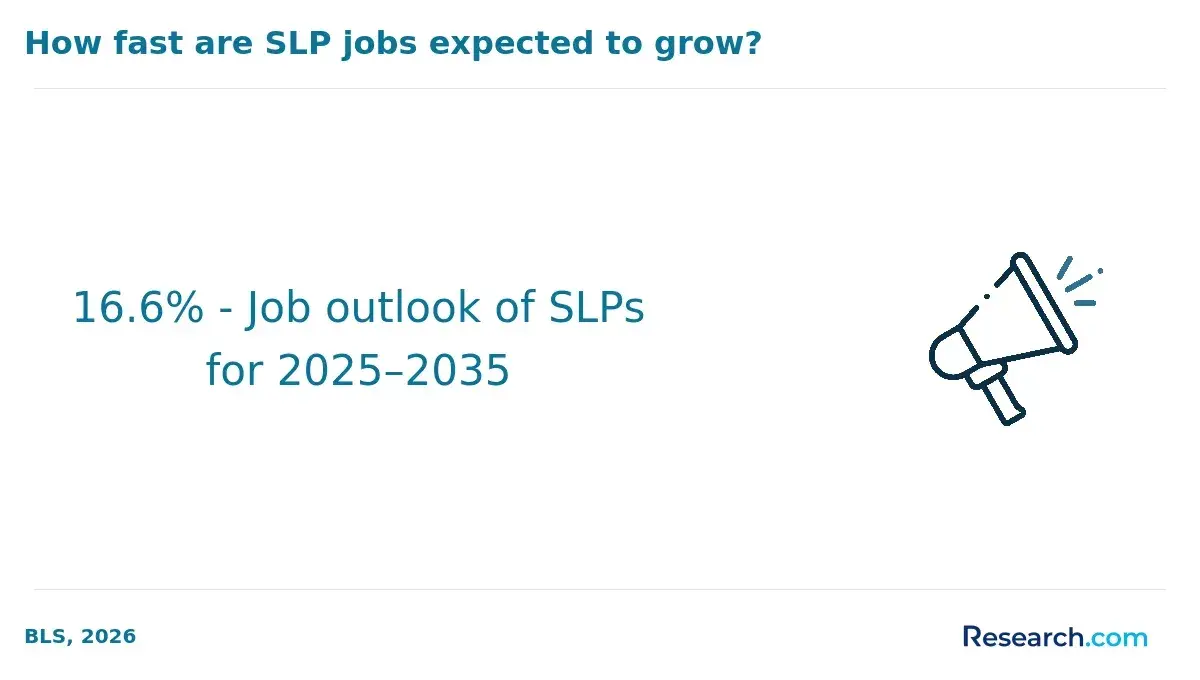
With speech-language pathology employment projected to grow 17% from 2025 to 2035, this guide helps practicing SLPs and future scholars compare the pathways, costs, training, and professional consequences before applying.
Key Things You Should Know
- A clinical SLP doctorate is usually a practice-focused post-master's degree for licensed clinicians, while a PhD is a research doctorate designed to produce independent scholars, faculty members, and investigators.
- Neither degree is normally required for ASHA certification or entry-level SLP licensure; the master's degree, supervised clinical experience, examination, and state-specific rules remain the usual entry route.
- For financial planning, compare lost earnings and funding as carefully as tuition: PhD students may receive assistantships, whereas clinical doctorate students more often pay tuition while continuing to work.
Clinical Doctorate in SLP vs PhD: how do these advanced degrees fundamentally differ?
The central difference is purpose. A clinical doctorate, sometimes called a practice doctorate or clinical doctoral degree, develops a clinician's ability to lead evidence-based practice, improve services, supervise others, and solve complex clinical or organizational problems. A PhD develops the ability to create new knowledge through original research, publish scholarship, obtain research funding, and teach at the university level.
Neither credential is automatically "better." The better fit depends on whether your preferred work product is improved patient care and clinical systems or original research and academic scholarship.
| Decision factor | Clinical doctorate in SLP | PhD in SLP or communication sciences and disorders |
| Primary purpose | Advanced clinical practice, implementation, leadership, and quality improvement | Research training and creation of new knowledge |
| Typical applicant | Practicing, often licensed SLP with clinical experience | Applicant with research interests; may enter after a master's degree or, at some universities, a bachelor's degree |
| Capstone work | Practice-based project, clinical innovation, or implementation project | Original dissertation based on independent research |
| Common employment setting | Healthcare, schools, private practice, administration, clinical education | Universities, research centers, hospitals, government, industry, policy organizations |
| Usual funding pattern | Employer support, personal payment, or standard graduate aid may be available | Assistantships, fellowships, stipends, and tuition support may be available but are not universal |
A clinical doctorate should not be confused with the entry-level clinical master's degree required by most states for SLP practice. It is an advanced credential for an already prepared clinician. Likewise, a PhD does not replace the clinical preparation needed to independently practice if the program does not include the required clinical education and state-specific requirements.
Which SLP career paths align best with a clinical doctorate instead of a PhD?
A clinical doctorate makes the most sense when you want to remain closely connected to service delivery while taking on more complex clinical, educational, or operational responsibility. It can be valuable when an employer recognizes advanced practice expertise, though readers should confirm whether the credential changes pay, title, promotion eligibility, or job duties at their own organization.
The following paths commonly align with practice-focused doctoral study because they emphasize applying and implementing evidence rather than leading a long-term independent research agenda.
- Clinical specialist or advanced practice SLP in medical, rehabilitation, pediatric, voice, swallowing, neurogenic communication, or other specialty settings
- Clinical program manager, rehabilitation director, service-line leader, or quality-improvement lead
- Clinical educator, preceptor coordinator, or supervisor of student and Clinical Fellowship training
- Private-practice owner or director seeking stronger skills in outcomes tracking, program design, and organizational leadership
- School-district or agency leader overseeing evidence-based service models, compliance processes, and staff development
- Clinical consultant, professional-development provider, or implementation leader for a health system or education organization
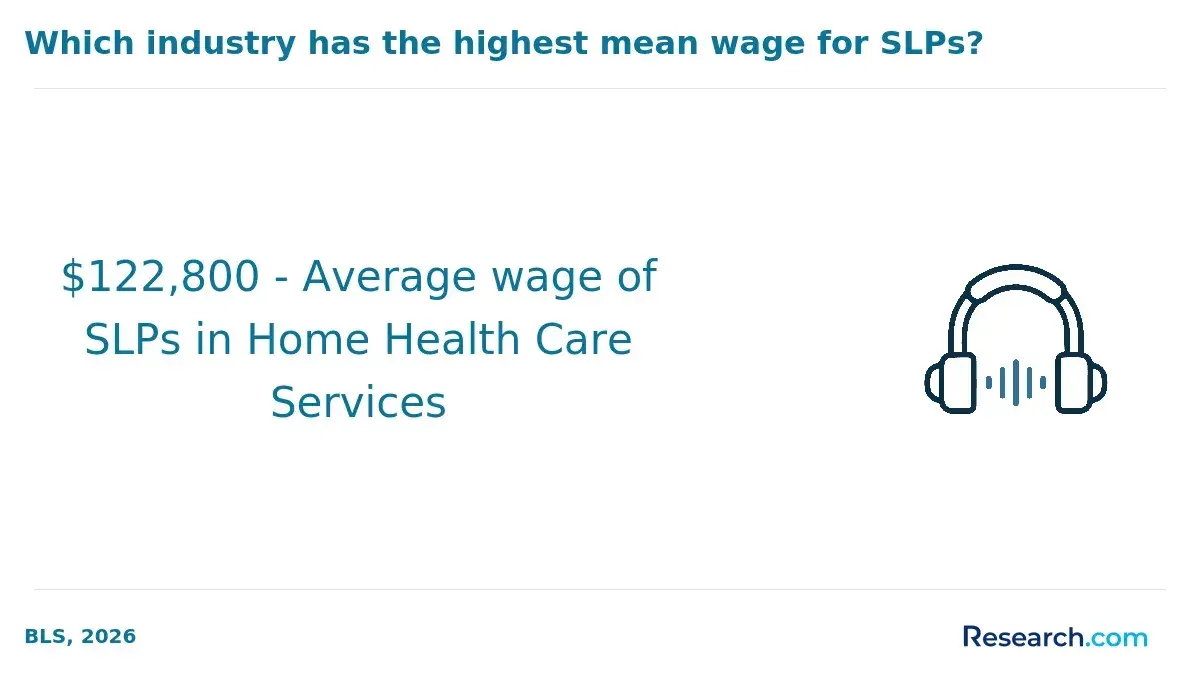
The labor market can support continued clinical work regardless of doctoral degree. The U.S. Bureau of Labor Statistics reports a May 2025 median annual wage of $97,870 for speech-language pathologists and projects about 12,500 openings each year on average from 2025 to 2035. Those figures describe the occupation overall, not a guaranteed doctorate premium. Review a detailed speech pathology salary guide alongside local job postings and your employer's compensation policy before assuming the degree will pay for itself.
A clinical doctorate is usually a weaker fit if your nonnegotiable goal is tenure-track faculty work, principal-investigator research, or a career built around publishing original studies. Those goals generally require PhD-level research preparation.
Which roles in research, academia, and leadership make a PhD in SLP preferable?
A PhD is preferable when research is the core of your intended career rather than an occasional tool for improving practice. Doctoral research training teaches students to formulate research questions, design studies, analyze data, navigate research ethics, write scholarly papers, and defend a dissertation that contributes original knowledge.
These roles generally favor a PhD, although individual job descriptions and institutions can set different requirements.
- Tenure-track professor or research-intensive university faculty member
- Principal investigator leading externally funded communication sciences, rehabilitation, education, or health-services research
- Postdoctoral researcher pursuing specialized research methods or a faculty career
- Research scientist in a hospital, university center, government agency, or nonprofit organization
- Clinical trials, outcomes-research, or health-technology researcher
- Academic administrator whose role includes a sustained research and publication portfolio
- Policy analyst or scientific advisor focused on evidence generation and evaluation
PhD study can also suit clinicians who want to research an unresolved problem they see in practice, such as access to services, multilingual assessment, dysphagia outcomes, neurorehabilitation, or technology-supported communication. The degree is demanding because the student must develop both subject expertise and methodological independence. It is not simply a longer clinical program.
Faculty shortages and expanding service needs can make academic careers appealing, but prospective students should assess the reality of available jobs in their specialty and geographic preferences. Ask each program where recent graduates work, whether graduates complete postdoctoral training, and how the department supports publication and grant development.
How do curriculum, training focus, and competencies differ between clinical SLP doctorates and PhDs?
Curriculum reveals the practical difference between the degrees. Clinical doctoral coursework commonly uses practice cases and organizational challenges to help experienced SLPs implement evidence. PhD coursework treats research itself as the discipline: students learn how to evaluate claims, produce defensible findings, and communicate them to scientific and professional audiences.
| Training area | Clinical doctorate emphasis | PhD emphasis |
| Evidence | Applying and translating research into services | Critiquing, designing, and producing research |
| Methods | Quality improvement, implementation, leadership, and program evaluation | Quantitative, qualitative, mixed-methods, and discipline-specific research methods |
| Clinical learning | Advanced clinical reasoning and specialty application may be central | Clinical work may inform research but is not necessarily the primary training focus |
| Final requirement | Capstone, portfolio, clinical innovation, or implementation project | Dissertation and usually a formal defense |
| Faculty mentorship | Practice expertise and applied project guidance | Close alignment with a research advisor's scholarly agenda |
Format matters, too. Some practice doctorates are designed for working professionals and may combine online coursework with limited residencies. Research PhDs are more commonly campus-based because lab work, advisor collaboration, teaching, research meetings, and funded assistantships often require regular participation. An online SLP program can be useful for the entry-level master's stage, but prospective doctoral students should evaluate doctoral delivery separately rather than assuming online availability or licensure compatibility carries forward.
Technology is becoming more relevant in both paths. Clinical doctoral students may examine telepractice workflows, electronic documentation, outcomes dashboards, and responsible use of AI-supported tools. PhD students may use computational methods or study communication technologies, but both groups must protect privacy, avoid unsupported clinical conclusions, and use technology within employer and professional standards.
What are the accreditation and ASHA CAA implications of each advanced SLP degree type?
ASHA's Council on Academic Accreditation in Audiology and Speech-Language Pathology (CAA) is most consequential for students seeking the professional education that supports initial clinical certification and licensure. The key program to verify is usually the entry-level graduate program in speech-language pathology, not an optional post-master's doctorate.
CAA accreditation does not mean every doctoral program serves the same purpose. A clinical doctorate may be an advanced academic credential without functioning as a CAA-accredited entry-level professional degree. A PhD may be housed in a department that also has a CAA-accredited master's program, but the PhD itself is generally a research degree and should not be assumed to provide clinical eligibility.
Before enrolling, distinguish these questions clearly:
- Is the entry-level SLP master's program accredited by CAA, or does it hold a recognized status that applies to the student's cohort?
- Is the post-master's clinical doctorate an institutional degree with a curriculum appropriate for the applicant's professional goal?
- Does the PhD department provide the research mentorship, facilities, and advisor match needed for the proposed topic?
- If clinical practice is part of the goal, does the applicant already meet the educational and clinical prerequisites for ASHA certification and the intended state license?
Use ASHA's official accreditation and program directories to confirm current status, because accreditation categories and program status can change. Do not rely only on a university marketing page, an old catalog, or the fact that a school has a well-known SLP department.
How does each degree affect ASHA certification, state licensure, and scope-of-practice authority?
For most SLPs, a clinical doctorate and a PhD are advanced credentials, not substitutes for the requirements behind ASHA's Certificate of Clinical Competence in Speech-Language Pathology (CCC-SLP) or a state license. Initial certification and licensure generally depend on an appropriate graduate degree, required supervised experience, a passing Praxis examination score, and other rules set by ASHA or the applicable state board.
Neither doctorate automatically expands legal scope of practice. Scope is governed by state law and regulation, employer credentialing, professional competence, payer rules, and the specific service setting. A doctoral degree may strengthen expertise, but it does not independently authorize medical procedures, diagnoses outside SLP scope, billing privileges, or practice in a state where the clinician is not licensed.
| Professional question | Clinical doctorate | PhD |
| Automatically earns CCC-SLP? | No | No |
| Automatically grants state licensure? | No | No |
| Can support clinical expertise? | Potentially, depending on curriculum and practice experience | Potentially, but clinical competency is not its primary purpose |
| May affect employer advancement? | Possibly; verify employer policy | Possibly, especially in academic or research settings |
| Changes legal scope by itself? | No | No |
If you plan to move, practice across state lines, or provide telepractice, check each relevant licensing board directly. State requirements differ, and interstate practice arrangements do not eliminate the need to verify current eligibility. Applicants who still need entry-level preparation may also explore speech pathology 5-year programs, but should confirm accreditation and state authorization before treating an accelerated route as a shortcut to licensure.
What are typical admissions requirements and applicant profiles for clinical doctorates and PhDs in SLP?
Admissions criteria vary substantially by institution, especially because clinical doctorates and PhDs serve different applicants. A competitive clinical doctorate applicant typically demonstrates professional maturity and a clear practice problem to address. A competitive PhD applicant demonstrates intellectual curiosity, research potential, and alignment with available faculty mentors.
| Application component | Often important for a clinical doctorate | Often important for a PhD |
| Prior degree | Master's degree; many programs expect SLP preparation | Master's degree or, in some programs, a bachelor's degree with sufficient preparation |
| Professional credentials | Licensure and CCC-SLP may be expected or strongly preferred | May be helpful but not always required |
| Work experience | Often important, particularly advanced clinical experience | Research experience may matter more than years of clinical employment |
| Statement | Practice goals, leadership interests, and intended project | Research questions, methodological interests, and advisor fit |
| References | Supervisors or professional colleagues who can assess clinical leadership | Faculty or research supervisors who can assess scholarly potential |
| Interview | May assess professional goals and readiness | Often assesses mentor match, research fit, and program expectations |
Before applying, contact potential PhD advisors only after reading their recent work and determining genuine alignment. Ask whether they are accepting new doctoral students, how students are funded, and whether your topic can be supported. For a clinical doctorate, ask whether the program requires active licensure, how capstones are supervised, and whether coursework accommodates full-time employment.
A common mistake is treating the GRE, GPA, or a professional credential as the only gatekeeper. Those requirements matter when stated, but an unfocused purpose statement or weak faculty fit can be equally consequential. For applicants still comparing entry-level options, review online speech pathology programs carefully rather than equating easier admission with clinical or licensure suitability.
How do time-to-degree, tuition models, funding, and opportunity costs compare between the two paths?
Cost comparison requires more than looking at published tuition. Clinical doctorates may be structured for part-time completion by working clinicians, reducing lost wages but extending the calendar timeline. PhD programs often require full-time study and may take longer, yet funded assistantships can offset tuition and provide a stipend. Funding terms differ widely by institution, department, advisor, and year.
Use the following framework to compare actual financial exposure rather than assuming either doctorate is inherently cheaper.
| Cost and time factor | Clinical doctorate | PhD |
| Enrollment pattern | Often part-time or designed around continued employment | Often full-time, though policies vary |
| Tuition model | Frequently charged per credit or term | May be charged by credit or term; some programs provide tuition support |
| Funding | Employer tuition assistance, scholarships, loans, and personal funds may be common | Assistantships, fellowships, grants, tuition remission, and stipends may be available |
| Largest hidden cost | Tuition, fees, travel, and time away from work for required experiences | Reduced full-time clinical earnings and uncertainty about multi-year funding |
| Financial payoff | Depends on employer recognition, advancement, and personal practice goals | Depends on academic, research, industry, or leadership career outcomes |
Ask each school for a written estimate of tuition, mandatory fees, residency travel, health insurance where applicable, and typical funding terms. Then calculate the difference between your current annual earnings and any expected stipend or reduced-work income. The BLS occupation median is a useful labor-market reference, but it cannot predict your individual lost earnings, regional pay, or post-degree compensation.
Do not borrow based only on a hoped-for title change. A sound plan identifies the total amount you may pay, the income you may forgo, your employer's promotion rules, and a repayment strategy if funding changes.
How should mid-career SLPs decide between a clinical doctorate, PhD, or staying at the master's level?
Mid-career SLPs should begin with the problem they want their next credential to solve. More education is not automatically the best answer if your desired role, employer, and state requirements already recognize your current preparation. Staying at the master's level can be the strongest financial and professional choice for clinicians who enjoy direct practice and can reach their goals through continuing education, specialty training, supervision, or leadership experience.
Use this decision test before submitting applications:
- Write the job title or work activity you want in five years, such as clinical director, faculty researcher, private-practice owner, or specialist clinician.
- Review at least 10 current job postings or promotion policies and identify whether a doctorate is required, preferred, or not mentioned.
- Calculate total tuition, fees, travel, reduced earnings, expected funding, and debt exposure for each path.
- Compare the curriculum with the skills gap you actually need: advanced implementation and leadership point toward a clinical doctorate; research design and scholarship point toward a PhD.
- Interview current students, graduates, faculty, and your employer about schedule demands, career outcomes, and whether the degree changes responsibilities or compensation.
- Apply only after verifying accreditation, state implications, funding conditions, and the availability of an appropriate advisor or capstone support.
Choose a clinical doctorate if you want to stay rooted in practice and the curriculum directly supports your next professional role. Choose a PhD if you would be satisfied spending substantial time on research questions, writing, analysis, teaching, and scholarly revision. Consider remaining at the master's level if no documented career requirement or compelling learning goal justifies the cost and time.
What verification steps ensure a clinical or PhD SLP program is reputable and professionally aligned?
Program names can be confusing, and delivery formats change. Verification protects you from enrolling in a degree that sounds advanced but does not serve your career target. Obtain answers in writing when a claim affects licensure, funding, required travel, or graduation requirements.
Complete these checks before paying an application fee or accepting admission:
- Confirm the university's institutional accreditation and verify the status of any relevant CAA-accredited entry-level SLP program through official ASHA resources.
- Read the current graduate catalog for total credits, residency requirements, dissertation or capstone expectations, transfer-credit limits, and time-to-completion rules.
- For a clinical doctorate, ask whether active licensure or CCC-SLP is required and whether the program has a defined clinical-practice, leadership, or implementation focus.
- For a PhD, identify a faculty advisor whose current research fits your interests and confirm that the advisor is accepting students.
- Request a written funding summary that separates tuition remission, stipend amount, assistantship workload, health insurance, renewal conditions, and years of support.
- Check state licensure disclosures and contact the intended state board if you expect the degree to affect your eligibility, relocation plans, or telepractice work.
- Ask for outcomes that distinguish graduates' roles, such as clinical leadership, faculty appointments, research positions, publications, or postdoctoral placements.
Red flags include vague answers about accreditation or state eligibility, pressure to enroll before funding is documented, no clear capstone or dissertation structure, a PhD program with no feasible faculty fit, or a clinical doctorate marketed as though it independently grants new legal authority. A reputable program will explain both its strengths and its limits.
Other Things You Should Know About Speech Language Pathology
Degree holders may use their academic title where permitted, but healthcare organizations often have policies on how titles are displayed to avoid confusing patients about professional role. Follow employer policy, state rules, and ethical guidance, and clearly identify yourself as a speech-language pathologist.
Possibly in clinical education, lecturer, or practice-faculty roles, depending on the institution. However, tenure-track and research-intensive faculty jobs commonly prefer or require a PhD because research productivity, publications, and grant potential are central to those positions.
Respect depends more on the university, curriculum rigor, your demonstrated competencies, and employer needs than on online delivery alone. Verify residency requirements, faculty qualifications, capstone quality, institutional accreditation, and whether your employer recognizes the credential for advancement.
A specialty certification, focused continuing education, or leadership training may be a better option when you need targeted expertise rather than a broad doctoral credential. Compare the credential's cost, time, employer recognition, and relevance to the exact role you want before deciding.
References
- Six Reasons to Earn a Doctorate in Speech Language... https://www.mgbu.edu/news-and-more/opinions/csd-discussions/six-reasons-earn-doctorate-speech-language-pathology
- What Is a Clinical Doctorate in Speech Language Pathology... https://www.online.uc.edu/blog/what-is-clinical-doctorate-speech-language-pathology-slpd.html
- Choosing the "Right" Doctoral Program: How To Decide... https://blog.nsslha.org/2024/07/09/choosing-the-right-doctoral-program/
- Find Speech Pathology Clinical Doctorate Programs https://speechpathologymastersprograms.com/speech-pathology-programs/clinical-doctorate-speech-pathology/
- SLPD vs PhD in Speech-Language Pathology: What's the... https://www.youtube.com/watch