2027 CSD Bachelor's Graduates Returning to School After a Long Gap: SLP Master's Options

Co-Founder and Chief Data Scientist

Reviewed by Rhea Paul, PhD
SLP Education & Research Expert
A communication sciences and disorders bachelor's degree can remain a strong foundation for becoming a speech-language pathologist even after a long career break. The challenge is determining whether old coursework, grades, clinical observations, and work schedules still fit current master's admissions and licensure rules.
This guide explains how returning CSD graduates can assess readiness, refresh academic skills, compare flexible SLP master's options, budget realistically, and verify that a program supports their intended state license.
Key Things You Should Know
- A long gap after a CSD bachelor's degree does not automatically prevent admission, but programs may require recent prerequisite coursework, updated observation hours, and evidence that you can handle graduate-level science and writing.
- Choose a CAA-accredited master's program first: graduation from an accredited program is central to ASHA certification and is typically expected for state SLP licensure and school-based practice.
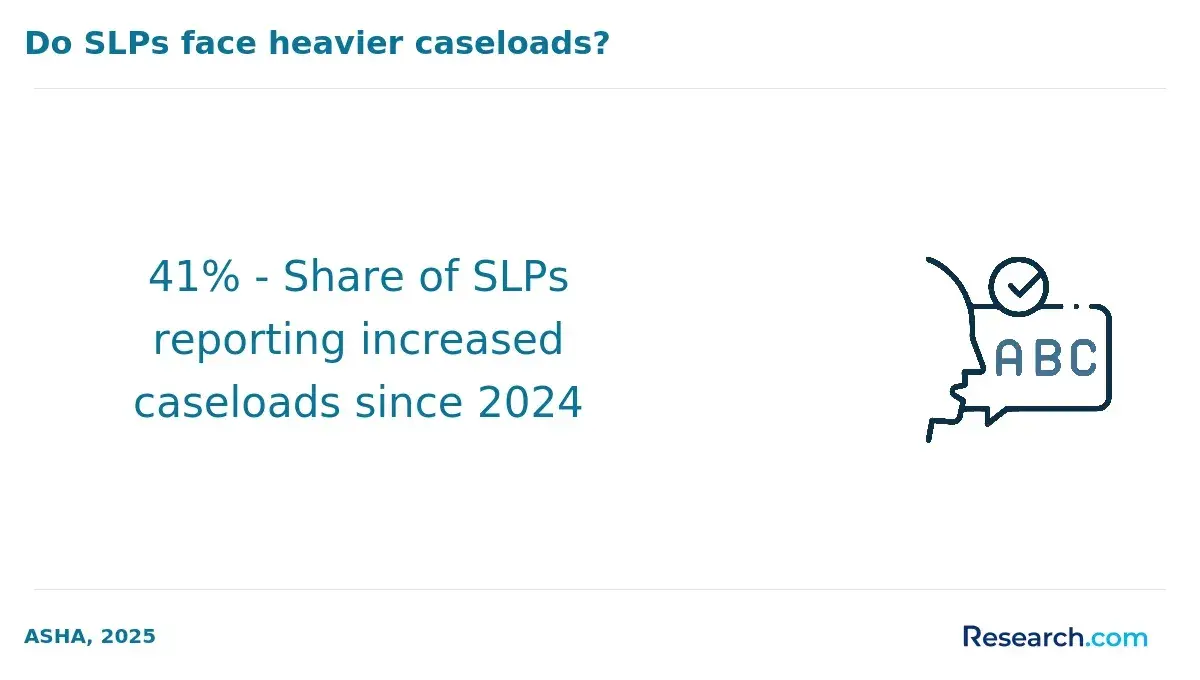
- The career case can be meaningful, but the commitment is substantial: BLS reports a $97,870 median annual wage for speech-language pathologists in May 2025 and projects 17% employment growth from 2025 to 2035.
How common is it for CSD bachelor's graduates to return to SLP master's study after long gaps?
There is no national dataset that reports exactly how many CSD bachelor's graduates return to master's study after a long gap. Still, a delayed return is a recognizable admissions pattern. Programs regularly review applicants with prior careers in education, healthcare, family caregiving, business, and related human-services work, especially when applicants can show recent academic preparation and a well-defined reason for entering clinical practice.
Demand can make the transition worth investigating. The U.S. Bureau of Labor Statistics projects about 12,500 openings for speech-language pathologists each year, on average, from 2025 through 2035. That does not mean admission or employment is automatic; it does indicate a labor market in which a properly credentialed SLP may have broad settings to consider, including schools, hospitals, rehabilitation facilities, and private practices.
A returner's strongest advantage is often maturity rather than recency. Professional experience can strengthen interviewing, documentation, collaboration, time management, and communication with families. The main admissions question is whether those strengths are paired with current knowledge of anatomy, language development, phonetics, research methods, and evidence-based practice.
Applicants with the best fit usually have a clear reason for returning and can accommodate the intensive clinical requirements. A conventional residential program may still require full-time daytime availability, even when classes are partly online. Applicants who need to keep a job should specifically seek a program with a published part-time sequence rather than assuming an "online" label means self-paced study.
What academic and clinical background do SLP master's programs expect from past CSD majors?
Most SLP master's programs expect a completed bachelor's degree, foundational CSD coursework, acceptable academic performance, recommendation letters, a statement of purpose, and evidence that the applicant understands the profession. Requirements differ by institution, so an older CSD degree should be reviewed course by course rather than treated as automatically current or automatically unusable.
Many programs look for the academic areas below because they support graduate clinical and diagnostic coursework. A school may accept an older course, request a syllabus, require a grade threshold, or ask the applicant to repeat it.
| Background area | Why programs evaluate it | Long-gap applicant consideration |
| Phonetics and speech science | Supports speech-sound analysis and transcription | Review the International Phonetic Alphabet and current terminology if coursework is dated. |
| Anatomy and physiology of speech and hearing | Supports assessment and treatment of communication and swallowing disorders | Programs may prefer recent science preparation when prior coursework is many years old. |
| Language development and disorders | Builds the basis for pediatric and adult language intervention | Refresh current developmental frameworks and culturally responsive practice. |
| Audiology and aural rehabilitation | Provides essential hearing-science context | Confirm whether your course satisfies the particular program's prerequisite list. |
| Research methods and statistics | Supports evidence-based clinical decision-making | A recent statistics course can demonstrate renewed quantitative readiness. |
| ASHA basic science prerequisites | May be needed for future certification standards | Check whether biological science, physical science, statistics, and social/behavioral science are documented on your transcript. |
Clinical observation is another common requirement. Programs often ask for documented guided observation hours, but the number, supervisor qualifications, timing, and verification method vary. Do not rely on informal shadowing completed years ago unless the program explicitly accepts it. Ask whether new observation hours must be completed under an ASHA-certified SLP and whether telepractice observations count.
Applicants without current clinical employment should explain how they rebuilt awareness of contemporary practice. Reading peer-reviewed clinical literature, completing approved observation experiences, working in a related support role, and discussing what has changed in disability advocacy and culturally responsive care can make a personal statement more credible than simply emphasizing prior grades.
How do professional accreditation and state licensure shape SLP master's options for returning students?
For an applicant who wants to practice as an SLP, accreditation is not a cosmetic distinction. The Council on Academic Accreditation in Audiology and Speech-Language Pathology (CAA) accredits graduate education programs. A CAA-accredited degree is the standard educational route toward the Certificate of Clinical Competence in Speech-Language Pathology (CCC-SLP) and is commonly expected by state licensing boards and employers.
Graduation alone does not create a license. In most states, applicants must also complete supervised post-graduate clinical experience, meet examination requirements, apply to the state board, and satisfy any background-check or continuing-education rules. School-based positions may involve a separate state education credential or school-services license. Requirements can change and may differ from rules for medical settings.
The following distinction is essential when comparing programs, particularly distance programs.
| Term | What it means | What a returning applicant should verify |
| CAA-accredited | The program has accreditation from ASHA's Council on Academic Accreditation. | Confirm the current status for the specific degree and campus or delivery pathway. |
| CAA candidate | A newer program is pursuing accreditation under CAA processes. | Understand the school's written information about graduate eligibility and the risk tolerance appropriate for your career plan. |
| State authorization | The institution is permitted to deliver education to residents of a state. | Ask whether your state of residence is eligible for enrollment before applying. |
| Licensure disclosure | A school's statement about whether its curriculum meets a state's educational requirements. | Read the disclosure for the state where you expect to seek initial licensure, not only where the university is located. |
| Clinical placement agreement | An arrangement allowing supervised fieldwork at a site. | Ask who secures the placement, whether travel is possible, and whether a site near you can be promised. |
A major red flag is enrolling based only on a school's general statement that its degree "prepares students for licensure." Ask for the program's current disclosure for your target state, then independently check the relevant state licensing board. If you may relocate, verify every plausible destination before enrolling; a program compatible with one state may not satisfy every state's rules.
Which types of CAA-accredited SLP master's programs are most flexible for mid-career returners?
The most flexible option is not necessarily the shortest or fully online option. For a returning student, flexibility means that the program's published sequence, live class times, clinical placement expectations, campus travel, and leave policies match real work and caregiving obligations. CAA standards still require substantial supervised clinical education regardless of delivery method.
These program models create different trade-offs for mid-career applicants.
| Program model | Potential advantage | Main trade-off | Best fit |
| Full-time residential | Structured cohort, campus resources, and concentrated completion timeline | Often limits outside employment and may require relocation | Applicants able to step away from full-time work |
| Part-time campus-based | May spread academic coursework over more terms | Clinical semesters can still require daytime availability | Local students with limited but predictable work flexibility |
| Online or distance cohort | Reduces relocation needs and may offer distributed learning | Usually includes scheduled sessions, placements, travel, and fixed clinical rotations | Students with strong self-management and state eligibility |
| Hybrid program | Combines online coursework with planned on-campus skill development | Required immersions can add travel, lodging, and leave-from-work costs | Students who can travel periodically and value in-person practice |
| Post-baccalaureate leveling plus master's | Addresses missing or outdated prerequisites systematically | Adds time and tuition before graduate clinical training | Applicants whose CSD foundation is incomplete or no longer accepted |
Do not confuse an accelerated pathway with a flexible one. 5-year accelerated speech pathology programs are generally designed for students moving directly from undergraduate to graduate study, so they may not solve the scheduling or prerequisite issues facing someone who has already been out of school for years.
Before applying, request a term-by-term sample plan. A program may permit part-time didactic coursework but require full-time availability during practica, externships, or final clinical placements. That distinction is often more important than whether lectures are delivered online.
How can long-gap applicants refresh prerequisite CSD coursework and clinical readiness for SLP admission?
A targeted refresh plan is more efficient than repeating an entire bachelor's degree. Start by collecting unofficial and official transcripts, old course descriptions if available, and a list of every program you may apply to. Then compare your record against each school's current prerequisite grid and ask admissions staff which courses, if any, require updating.
The following sequence helps turn a vague return-to-school goal into an application-ready plan.
- Identify your intended practice state and confirm that CAA-accredited graduate education is the appropriate educational route.
- Make a prerequisite inventory covering CSD courses, statistics, biological science, physical science, and social or behavioral science.
- Ask each prospective program in writing whether older courses are accepted and whether course syllabi, catalog descriptions, or retakes are required.
- Complete only the missing or expired coursework through an institution the target program will recognize.
- Arrange current guided observation or related exposure according to each program's rules.
- Rebuild study routines through reading, note-taking, statistics practice, and timed academic writing before submitting applications.
- Use your statement to connect past work, refreshed preparation, and a realistic plan for managing clinical training.
For many returners, one or two recent courses in statistics, anatomy, phonetics, or language development can provide stronger evidence of readiness than a broad collection of unrelated certificates. However, only the receiving program can decide whether a course meets its requirements. Get that confirmation before paying for a course.
Clinical readiness also includes professional expectations. Review confidentiality, documentation, patient safety, professional boundaries, disability-affirming care, and the realities of working with children and adults who have complex communication needs. A prior career in education or healthcare can help, but it does not replace supervised graduate clinical training.
What GPA, test policies, and portfolio expectations do SLP programs apply to older academic records?
SLP programs commonly consider cumulative undergraduate GPA, CSD-major GPA, prerequisite GPA, writing quality, recommendations, and relevant experience. A long gap does not erase a low undergraduate GPA, but it can provide context and an opportunity to demonstrate a stronger recent academic record. Schools set their own minimums and may use holistic review, so applicants should avoid treating a published minimum as a likely-admission threshold.
GRE policies vary. Many programs no longer require the GRE, while others may still accept or require it. The practical question is not whether a test is broadly popular; it is whether a strong score would materially strengthen your application at your selected programs. Never spend money on an exam until you confirm each school's current policy.
Older transcripts are usually still official records, but they may raise reasonable questions about academic currency. This comparison shows how an applicant can address common evidence gaps.
| Application concern | Useful current evidence | What to avoid |
| Low cumulative GPA | Strong recent prerequisite grades and a concise explanation of changed circumstances | Ignoring the record or making unsupported promises about performance |
| Old science coursework | Recent approved retakes or documented course equivalencies | Assuming age alone disqualifies or validates a course |
| Few recent academic references | Instructor recommendations from refresh courses plus a supervisor who can address professional skills | Submitting generic letters from people who cannot evaluate readiness |
| Limited direct SLP exposure | Verified observation, informed reflection, and relevant client-facing work | Presenting unrelated volunteer work as clinical experience |
| Competitive admissions environment | A focused school list that matches your academic profile and format needs | Applying only to highly selective options or relying on "easy" labels |
Applicants comparing admissions accessibility can review the easiest SLP programs to get into, but should still verify each program's accreditation, state eligibility, prerequisite rules, and clinical schedule. A lower stated GPA threshold does not make a program a good choice if it cannot support licensure where you intend to work.
How do online, hybrid, and part-time SLP master's formats compare for working CSD graduates?
Online SLP master's programs can reduce relocation and commuting, but they do not remove clinical education requirements. Distance students may attend live online classes, complete skill checks, travel for residencies, and work at assigned clinical sites during standard business hours. The meaningful comparison is therefore between total scheduling constraints, not simply campus versus online instruction.
This format comparison can help applicants identify which questions matter most before they pay an application fee.
| Factor | Online/distance format | Hybrid format | Campus-based part-time format |
| Course delivery | May combine asynchronous work with scheduled live sessions | Online instruction plus required in-person sessions | Usually scheduled classroom or campus sessions |
| Travel | May require residencies, assessments, or placement travel | Regular or periodic campus travel is common | Lower travel if you live nearby, but commuting remains |
| Clinical placements | Often arranged or approved within a broader geographic area | May occur near home or near campus depending on the model | Frequently coordinated through local institutional partners |
| Work compatibility | Can help during academic terms, but clinical terms may limit employment | Depends on travel calendar and clinical sequence | Depends on daytime course and placement requirements |
| Key verification item | State authorization, residency requirements, and placement responsibility | Frequency and cost of required visits | Whether part-time status continues through clinical training |
For applicants prioritizing distance delivery, compare the best online SLP programs only after confirming that the institution accepts residents of your state and can provide the licensure disclosures you need. "Affordable" should include travel, fees, lost work time, clinical-site commuting, and any added prerequisite courses - not just advertised tuition.
Choose online or hybrid study when geographic flexibility is your primary constraint and you can manage structured deadlines independently. Choose a nearby campus program when local clinical relationships, face-to-face mentoring, and fewer travel unknowns matter more than remote coursework. In either case, ask whether placements are guaranteed, facilitated, or primarily the student's responsibility.
What funding, loan, and repayment considerations matter when returning to graduate SLP training later in life?
Returning students should calculate the full financial effect of graduate education before enrolling. Tuition is only one part of the decision. Required clinical hours may reduce work availability, and hybrid or distance programs can add travel, lodging, technology, health-insurance, background-check, immunization, and placement-related costs.
Build a budget that separates direct school charges from the cost of attending. This prevents a program with a lower tuition rate from appearing less expensive than it actually is.
| Cost or funding factor | Why it matters for returners | Practical check |
| Tuition and mandatory fees | May be billed per credit, term, or program and can change annually | Request the current published rate and estimate total required credits. |
| Prerequisite coursework | Leveling or retakes can add cost before master's enrollment | Confirm which refresh courses are truly required. |
| Reduced earnings | Clinical schedules may prevent full-time employment | Budget for lost income, not only school bills. |
| Federal graduate loans | May help eligible students cover education expenses | Review borrowing limits, origination fees, interest, and repayment terms through official federal aid information. |
| Employer assistance | Some employers support relevant education or offer flexible scheduling | Ask about reimbursement caps, service commitments, and whether clinical leave is covered. |
| Scholarships and assistantships | Can reduce borrowing but may be limited or incompatible with employment | Ask whether distance and part-time students are eligible. |
Use salary information as context, not a repayment guarantee. The national median annual wage for speech-language pathologists was $97,870 in May 2025, according to BLS, but individual pay varies by setting, geography, experience, hours, and employer. For a fuller view of settings and compensation differences, see how much do speech language pathologists make.
A sound affordability decision compares projected borrowing with a conservative household budget and likely early-career earnings in your intended location. Be especially cautious about private loans, variable-rate debt, or programs that cannot clearly explain clinical placement, accreditation, and state eligibility. Financial aid staff can explain institutional costs, but a borrower should independently read federal loan terms and repayment options.
How should returning CSD graduates verify accreditation, program outcomes, and licensing eligibility before enrolling?
Verification should happen before you submit a deposit, not after admission. Program websites can be useful starting points, but the decisive sources are the CAA accreditation listing, the university's official catalog and licensure disclosures, and the licensing board in the state where you intend to practice.
Use the following due-diligence checklist to compare every finalist program on the same basis.
- Confirm the program's current CAA accreditation status and verify that it applies to the exact degree and delivery pathway you would enter.
- Confirm that the institution is authorized to enroll students who live in your state and obtain its written professional-licensure disclosure for that state.
- Read the state SLP licensing board's current educational, examination, supervised-experience, and application requirements.
- Ask for the official curriculum sequence, total required credits, expected completion pattern, and any policy on leaves, deceleration, or reentry.
- Ask how clinical placements are sourced, what travel radius may be required, whether placements can occur near home, and what happens if a site falls through.
- Review published outcome information carefully, including completion, Praxis, employment, and accreditation disclosures when available; compare definitions and reporting periods before drawing conclusions.
- Get a written estimate of tuition, mandatory fees, residency travel, and any costs associated with clinical compliance requirements.
Do not treat program outcomes as a promise of your own result. Cohort sizes, reporting rules, geographic markets, and individual circumstances differ. Use outcomes to identify questions: an unusually low completion rate, unclear clinical placement language, or missing state disclosures deserves a direct conversation with admissions and the program director.
If a school says it cannot determine whether its curriculum meets your state's requirements, pause before enrolling. That answer may not make the degree unusable, but it means you need written clarification from the state board and should understand the risk before taking on debt.
What academic, clinical, and personal supports help long-gap returners persist through rigorous SLP master's programs?
Long-gap returners often succeed when they plan for support before the first term rather than waiting for a crisis. Graduate SLP education combines advanced academics, clinical performance, documentation, feedback, and professional conduct. The adjustment may be greatest for students returning after years away from formal writing, exams, learning-management systems, or scientific coursework.
Look for support that addresses both academic reentry and practical constraints. The most useful supports are those that remain available during clinical semesters, when time pressure is usually highest.
| Support | How it helps | Question to ask the program |
| Faculty advising | Helps sequence courses and respond to academic or clinical concerns early | How often do students meet advisers, and who helps if I need to slow my plan? |
| Writing, tutoring, and accessibility services | Supports evidence-based writing, study habits, and approved accommodations | Are services available to online, hybrid, and clinical-phase students? |
| Clinical education team | Coordinates placements and supervises clinical progression | Who is responsible for securing sites, and how are placement problems handled? |
| Peer cohort and mentoring | Reduces isolation and creates accountability | How are distance students included in cohort communication and mentorship? |
| Technology support | Prevents avoidable disruption in online learning and telepractice-related tasks | What equipment, software, broadband, and technical competency requirements apply? |
| Family and employer planning | Protects time for coursework, travel, and clinical hours | When will I receive enough advance notice to plan for daytime placements? |
Common mistakes include underestimating the time needed for documentation and studying, assuming evening coursework means evening clinical placements, and delaying conversations about accommodations or caregiving needs. A better approach is to create a weekly time budget before enrolling, identify backup childcare or transportation plans, and discuss clinical-term availability with employers early.
Technology is increasingly part of learning and service delivery, including telepractice platforms, electronic documentation, and digital assessment systems. These tools can expand access but do not reduce the need for clinical judgment, privacy safeguards, and supervision. Returning students who are less comfortable with technology should ask what onboarding and practice opportunities the program provides.
Other Things You Should Know About Speech Language Pathology
Yes, potentially. Your degree can provide much of the academic foundation, but each master's program decides whether older prerequisites remain acceptable. Expect to submit transcripts and possibly complete updated coursework, observation hours, or other evidence of current readiness.
Usually not. Many applicants need only selected prerequisite retakes or leveling courses. Obtain written confirmation from each target program before enrolling in refresh coursework, because requirements differ substantially.
Some students work during portions of part-time, online, or hybrid programs, but clinical placements commonly occur during daytime hours and can sharply limit employment. Review the term-by-term clinical schedule rather than relying on the program's general format description.
No. CAA accreditation is a critical educational credential, but state licensure requirements vary. You must also meet your target state's requirements for supervised experience, examinations, applications, and any school-based credentialing rules.
References
- Master of Science in Speech-Language Pathology https://www.wilson.edu/master-science-speech-language-pathology-core-leveling-pathway
- Speech-Language Pathology M.A. - UNI Catalog https://catalog.uni.edu/chas/speechlangpathologyma/