2027 Part-Time vs Full-Time SLP Master's Costs: Tuition Increases and Time Out of Work

Co-Founder and Chief Data Scientist

Reviewed by Rhea Paul, PhD
SLP Education & Research Expert
Choosing between a part-time and full-time speech-language pathology master's program is not simply a question of tuition. The lower annual bill of part-time enrollment can be offset by additional semesters, tuition increases, delayed SLP earnings, and reduced time for clinical work. This guide helps prospective SLPs compare the real financial and career-timing trade-offs, including program structure, lost wages, funding, accreditation, and a practical way to model their own decision before enrolling.
Key Things You Should Know
- Part-time SLP master's study can preserve some current income early in the program, but clinical placements often make sustained full-time employment impractical near the end of either pathway.
- Most entry-level SLP master's degrees require roughly 50 to 65 graduate credits plus extensive supervised clinical education; a longer part-time timeline can expose students to more annual tuition and fee changes.
- The median annual wage for speech-language pathologists was $97,870 in May 2025, according to the U.S. Bureau of Labor Statistics, so the value of graduating sooner must be weighed against debt, borrowing costs, and forgone income.
How do part-time and full-time SLP master's programs structure coursework and clinical timelines differently?
Full-time SLP master's programs generally use a lockstep cohort sequence: students take a full graduate course load, complete on-campus or simulation-based clinical preparation, then progress into externships and other clinical placements. This structure commonly targets completion in about two academic years, although prerequisite work, summer terms, and program design can change the timeline.
Part-time programs spread the same required curriculum across more terms. They can be a practical option for applicants who need to keep a job, manage caregiving responsibilities, or complete prerequisites gradually. However, "part-time" usually describes didactic coursework rather than every phase of the degree. Clinical practica and final placements may require daytime availability that conflicts with a conventional full-time job.
The comparison below shows the planning difference that matters most: schedule control early in the degree does not necessarily continue through clinical education.
| Decision factor | Typical full-time structure | Typical part-time structure |
| Course sequencing | Fixed, cohort-based sequence each term | Fewer courses per term, often with sequencing limits |
| Expected completion pace | Usually shorter if prerequisites are complete | Usually longer because required courses are spread out |
| Ability to keep working | Often limited from the beginning | Potentially better during early coursework |
| Clinical placement impact | High time commitment built into the program schedule | May still require daytime availability and reduced employment |
| Exposure to annual price changes | Fewer tuition cycles before graduation | More tuition cycles before graduation |
Students exploring master's in speech pathology online options should evaluate live-class times, required campus visits, and the school's clinical-placement process with the same care as tuition. Online delivery does not mean clinical requirements can be completed on a fully self-scheduled basis.
What are the typical tuition ranges for part-time versus full-time SLP master's programs?
There is no single authoritative national tuition price for SLP master's programs because published charges vary by public or private institution, residency classification, online modality, required credits, and mandatory fees. The important point is that part-time and full-time students at the same school may pay the same per-credit rate but face different total prices if annual rates increase before the part-time student finishes.
Compare each school using total required credits multiplied by the applicable per-credit tuition, then add charges that are not included in the advertised tuition figure. A public university's resident rate may be lower than an out-of-state or online rate, while private institutions may charge one rate regardless of residency. Neither format is automatically cheaper.
This cost checklist separates figures that schools often present differently. Ask admissions or student accounts staff to confirm which items apply to your cohort and enrollment pace.
| Cost category | Why it matters for part-time students | Why it matters for full-time students |
| Per-credit tuition | May increase in later academic years before all credits are taken | More credits may be completed before a later rate change |
| Program or college fees | May be charged per term, increasing the cost of more terms | May be concentrated into fewer terms |
| Clinical, lab, and simulation charges | Often required regardless of pace | Often required regardless of pace |
| Technology and distance-learning fees | Important for online or hybrid enrollment | Important for online or hybrid enrollment |
| Travel and relocation | May continue for a longer period | May be higher per year if attendance is intensive |
| Health insurance and living costs | Can accumulate over additional terms | May require a larger short-term cash-flow commitment |
A defensible comparison uses the same unit for every school: estimated tuition and mandatory fees for all required graduate credits, excluding or clearly separating living expenses. Do not compare one program's per-credit price with another program's annual tuition or total cost of attendance.
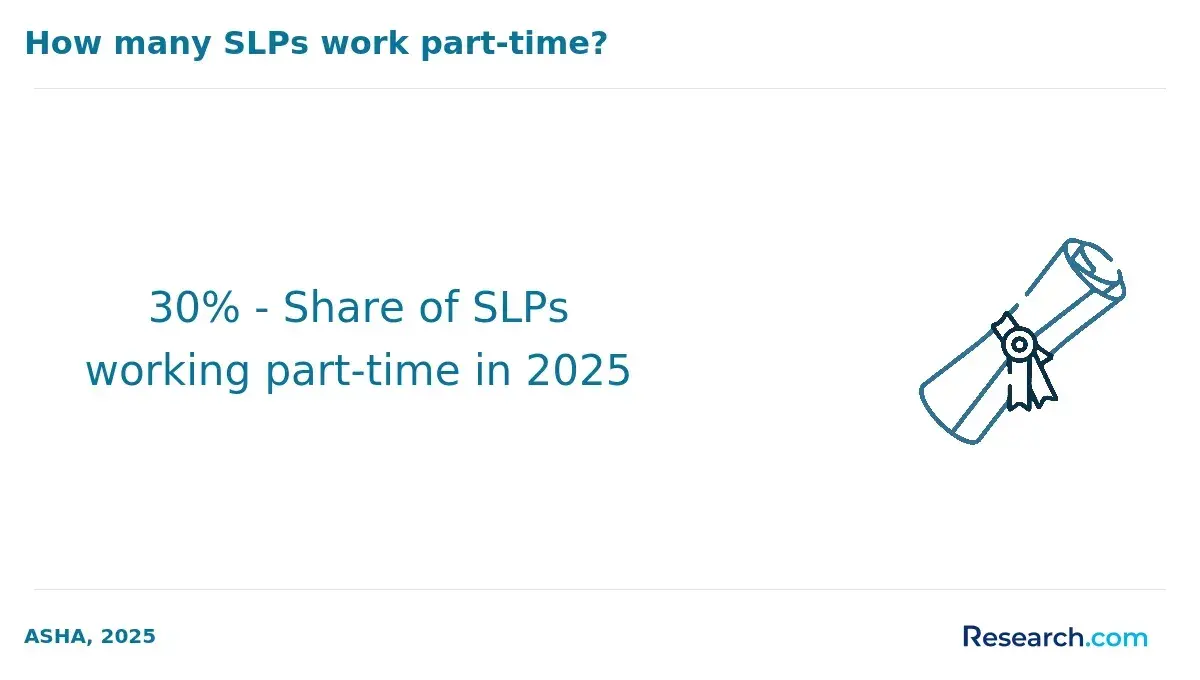
How have SLP master's tuition rates changed recently for part-time and full-time enrollment options?
Graduate tuition commonly changes by academic year, and institutions may publish revised rates only shortly before a new term begins. For an SLP student, the relevant risk is not merely whether tuition rose last year; it is how many future rate-setting cycles remain between enrollment and graduation.
Part-time students are generally more exposed to this uncertainty because they remain enrolled longer. A school may hold a cohort rate constant, use a published annual rate schedule, or reserve the right to adjust tuition and fees. Policies differ substantially, so applicants should not assume that the first-term rate will apply through graduation.
Before accepting an offer, obtain written answers to these questions. They reveal whether an apparently affordable part-time path could become materially more expensive over time.
- Is tuition locked for my entering cohort, or can the per-credit rate change each academic year?
- How many credits are required, and which mandatory fees are assessed per term versus per program?
- Has the program's tuition schedule changed for the past several entering cohorts?
- Will a reduced course load change eligibility for institutional grants, assistantships, health insurance, or employer reimbursement?
- What happens financially if a clinical placement, leave of absence, or course sequencing issue extends my completion date?
Use the school's graduate catalog and tuition schedule for the academic year in which you would enroll, then create a second estimate that allows for future rate changes. Treat that second estimate as a planning reserve, not as a prediction.
How does taking a part-time SLP master's affect total time spent out of the workforce?
Part-time enrollment can reduce immediate time out of the workforce, especially during prerequisite and classroom-heavy terms. A student may retain a current role, reduce to fewer hours, or choose work with flexible shifts. That income can lower borrowing and preserve benefits, professional relationships, and work history.
Its limitation is that SLP clinical education is not fully flexible. Programs must provide supervised experiences that meet educational and accreditation expectations, and placement schedules are often determined by clinical sites. A school may not be able to guarantee evening, weekend, remote, or employer-compatible placements. Students who plan to work should budget for a later reduction in hours even when the degree is marketed as part-time.
The financial effect depends on what type of work the student can keep. Remaining in a job with stable pay and benefits is different from trying to fit variable hourly work around clinical assignments. The latter may produce unpredictable income and make a longer degree harder to finance.
A part-time plan tends to fit applicants who have reliable flexible employment, manageable household obligations, and a realistic plan for the clinical phase. It may be a poor fit for someone who must maintain a fixed full-time daytime schedule throughout the entire program.
Do not assume that delaying graduation eliminates opportunity cost. It shifts the calculation: you may earn more while studying, but you begin earning as an independently licensed SLP later. Readers comparing that later-career income potential can review how much does a speech therapist make alongside local salary listings and their own current compensation.
In what ways does full-time SLP graduate study reduce or increase time away from paid employment?
Full-time study can reduce total calendar time away from a long-term career transition because students complete required coursework and clinical experiences sooner. For career changers who can temporarily step away from work, that shorter path may mean reaching eligibility for licensure and employment earlier.
Full-time study is usually strongest financially when a student has adequate savings, family support, scholarships, a manageable borrowing plan, or a clear opportunity to return to the labor market quickly after graduation. It is less attractive when leaving work would cause the loss of essential income, healthcare, or employer tuition support that cannot be replaced.
Full-time students should also avoid assuming every accelerated option is interchangeable. Some 5-year accelerated speech pathology programs combine undergraduate and graduate study, while a post-baccalaureate master's follows a different admissions, prerequisite, and cost path. Confirm exactly which degree stage and clinical requirements an advertised timeline covers.
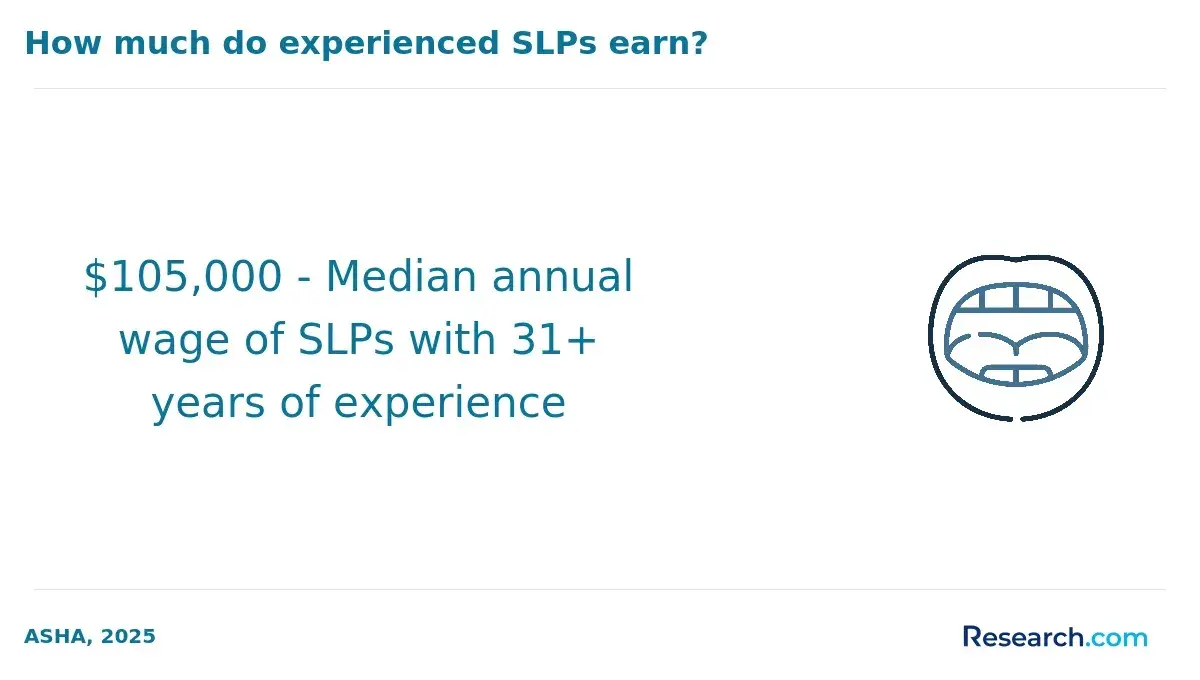
How do total degree costs compare when factoring tuition, fees, and lost wages for SLP pathways?
The most useful comparison is total economic cost, not tuition alone. Total economic cost combines direct education charges with the income and benefits you give up or retain while enrolled. It does not mean every lost wage is a cash bill; rather, it shows the trade-off between entering the SLP workforce sooner and preserving current earnings while studying.
The formula below can be used for either enrollment pace. Keep tuition, borrowing, and earnings assumptions separate so you can see which variable drives your result.
| Component | How to estimate it | Common comparison error |
| Tuition | Required credits multiplied by your applicable published rate | Using the lowest advertised rate rather than your residency or online rate |
| Mandatory fees | Program, clinical, technology, lab, and term-based charges | Ignoring fees assessed every semester |
| Living and travel costs | Incremental housing, transportation, childcare, relocation, and placement travel costs | Counting all living costs when some would exist even if you were working |
| Income retained while enrolled | Expected after-tax earnings from realistic work hours | Assuming a work schedule that clinical placement makes impossible |
| Income forgone | Current compensation and benefits reduced or lost because of enrollment | Treating gross salary as available cash without considering taxes and work expenses |
| Financing cost | Expected interest and fees based on the aid actually accepted | Comparing borrowed principal only |
As a labor-market reference point, the U.S. Bureau of Labor Statistics reports a $97,870 median annual wage for speech-language pathologists in May 2025 and projects 17% employment growth from 2025 to 2035. These national figures do not predict an individual's pay, location, first-job timing, or debt repayment capacity. They are most useful for testing whether a faster completion path could reasonably matter in your own local market.
A common mistake is choosing the program with the lowest sticker tuition while ignoring a longer completion period, per-term fees, or the income needed to cover household expenses. The opposite mistake is choosing the fastest program without calculating whether the near-term loss of earnings forces excessive borrowing.
Which funding options and employer tuition benefits are most accessible to part-time SLP students?
Part-time students may have an advantage when they remain employed by an organization with tuition assistance, but eligibility rules can be restrictive. Benefits may require a minimum weekly schedule, satisfactory grades, preapproval, employment through reimbursement, repayment if the employee leaves, or coursework that the employer considers job-related.
Federal student aid eligibility can also depend on enrollment intensity and school policy. Students should confirm their expected status each term rather than assuming that every part-time course load qualifies for the same aid, loan, assistantship, or institutional scholarship options available to full-time students.
These funding sources are worth investigating early because their deadlines and employment conditions may shape the best enrollment pace.
- Employer tuition assistance or reimbursement, including service or retention obligations
- Institutional scholarships that specify full-time, part-time, need-based, merit-based, or cohort eligibility
- Graduate assistantships, recognizing that clinical and course schedules may limit availability
- Federal student aid and federal loans for students who meet applicable enrollment and eligibility rules
- State workforce, vocational rehabilitation, or service-related education benefits when eligibility requirements are met
- Clinical employer partnerships that may offer support in exchange for a future work commitment
Read reimbursement agreements carefully. A benefit that must be repaid if you change employers may be less flexible than a scholarship, even if its headline value is larger. Also ask whether the employer will accommodate clinical placements before relying on work-based funding.
How do accreditation, clinical hour requirements, and licensure rules influence SLP study load choices?
Accreditation and licensure planning should come before a cost comparison. In the United States, aspiring speech-language pathologists generally need a graduate degree that supports the educational and clinical requirements for professional practice, followed by state-specific licensure steps. Requirements vary by state, and school completion alone does not automatically establish eligibility everywhere.
For a master's degree intended to lead to SLP practice, verify the program's status with the American Speech-Language-Hearing Association Council on Academic Accreditation and review the school's licensure disclosures for the state where you expect to work. Ask whether the program accepts residents of your state, how it arranges placements, and whether any travel is required.
Clinical requirements can narrow a student's schedule regardless of whether courses are online, hybrid, part-time, or full-time. Schools need to sequence academic preparation before certain clinical experiences, and sites may require daytime attendance, background checks, onboarding, immunizations, or other compliance steps. Those requirements can delay a plan built around uninterrupted full-time employment.
Prospective students reviewing SLP online programs should be especially careful not to equate online coursework with unrestricted clinical flexibility. Verify where clinical placements occur, who secures them, what happens if a site is unavailable, and whether the program's state authorization and licensure disclosures apply to your location.
What do recent SLP graduate cohorts report about balancing work, debt, and program intensity?
There is no single standardized national dataset that reliably reports how all recent SLP master's cohorts balance employment, debt, clinical placements, and program intensity. That limitation matters: anecdotes from classmates, social media, and individual school reviews can identify questions to ask, but they should not be treated as proof that a particular schedule will work for you.
Across programs, the recurring pressure points are predictable. Students often find that the clinical phase is less controllable than classroom scheduling, that placement travel can add time and expense, and that a plan to work substantial hours can become less realistic as clinical responsibilities increase. These are planning risks, not universal outcomes.
When speaking with an admissions representative or current student ambassador, seek concrete operational details rather than broad reassurance. Ask about typical weekly scheduling during each phase, the range of placement locations, whether students have been able to keep jobs, and how program staff respond when employment conflicts with clinical requirements.
Debt decisions should be grounded in your own borrowing, expected living expenses, and repayment plan. National wage data can provide context, but the BLS median wage is not an entry-level salary promise, and it may differ considerably by employer setting and geography. The BLS also projects about 12,500 openings for speech-language pathologists each year on average from 2025 to 2035, which indicates demand but does not guarantee a job in a particular area.
How can prospective SLPs model personalized cost and time-out-of-work scenarios before enrolling?
Create two scenarios using the same target program or comparable accredited programs: one for full-time enrollment and one for part-time enrollment. Use conservative assumptions for work hours during clinical terms, because that is where optimistic financial plans most often fail.
Build the model in the following order. Keep copies of the tuition page, fee schedule, and any written answers from the program so you can update the calculation if costs or plans change.
- List the required graduate credits, projected terms, tuition rate, mandatory fees, and estimated clinical travel costs for each path.
- Map each term's likely course and clinical workload, identifying when your current job hours would need to decrease or stop.
- Estimate income retained during enrollment using realistic hours, then separately estimate wages and benefits forgone.
- Identify scholarships, employer assistance, savings, and loans, including conditions that could make funding unavailable.
- Calculate the cash shortfall for each term rather than looking only at the degree total.
- Compare expected graduation dates, licensure steps after graduation, and the earliest realistic date you could begin paid SLP work.
- Stress-test both scenarios for a tuition increase, a reduced work schedule, added placement travel, or one extra term.
The better option is not automatically the cheapest or fastest. Choose part-time study when retained income and flexibility meaningfully reduce financial risk and you can accommodate clinical requirements. Choose full-time study when a shorter path, lower exposure to future tuition changes, and earlier career entry outweigh the immediate loss of earnings. If neither scenario is financially stable, postponing enrollment while building savings, completing prerequisites, or seeking an employer-supported option may be the more prudent decision.
Other Things You Should Know About Speech Language Pathology
Possibly during some coursework terms, but it is often difficult during practicum and externship periods. Ask each program for expected daytime clinical commitments and whether students are responsible for adjusting employment around placement schedules.
Not necessarily. The per-credit price may be the same, while part-time enrollment can add terms, per-term fees, living costs, and exposure to future tuition increases. It can still cost less overall if it allows you to retain meaningful income and reduce borrowing.
Do not assume so. Online academic courses may offer flexibility, but clinical sites and supervisors often operate during standard business hours. Confirm placement timing, location, travel expectations, and the school's placement support before enrolling.
Confirm minimum work-hour requirements, eligible expenses, grade rules, preapproval procedures, reimbursement timing, and any repayment obligation if you leave the employer. Also determine whether your employer can accommodate the schedule demands of clinical placements.
References
- Online Graduate Program Tuition & Financial Aid - Baylor CSD https://csd.robbins.baylor.edu/graduate/masters-programs/online-masters-program/tuition-financial-aid
- 2026 Most Affordable Online Speech Pathology Master's... https://www.onlineu.com/most-affordable-colleges/speech-pathology-masters-degrees
- How Much Does It Cost to Become a Speech Pathologist https://www.advancedtherapyclinic.com/blog/how-much-does-it-cost-to-become-a-speech-pathologist
- How many hours can a single mom work part-time while... https://www.facebook.com/groups/123939594310021/posts/28203212482622689/
- Would I be able to work full-time while going to grad school... https://www.reddit.com/r/slpGradSchool/comments/14xtj6z/would_i_be_able_to_work_fulltime_while_going_to/