2027 Becoming an SLP With a Music Degree: Prerequisites and Graduate Program Options

Co-Founder and Chief Data Scientist

Reviewed by Rhea Paul, PhD
SLP Education & Research Expert
A music degree can be a strong starting point for speech-language pathology, but it usually does not include all of the science and communication-disorders coursework needed for graduate admission. This guide is for music majors and graduates considering an SLP career. It explains which credits may transfer, how to complete missing prerequisites, how to compare graduate pathways, and how to confirm that a program supports your eventual licensure goal. The payoff can be substantial: the U.S. Bureau of Labor Statistics reports a May 2025 median annual wage of $97,870 for speech-language pathologists.
Key Things You Should Know
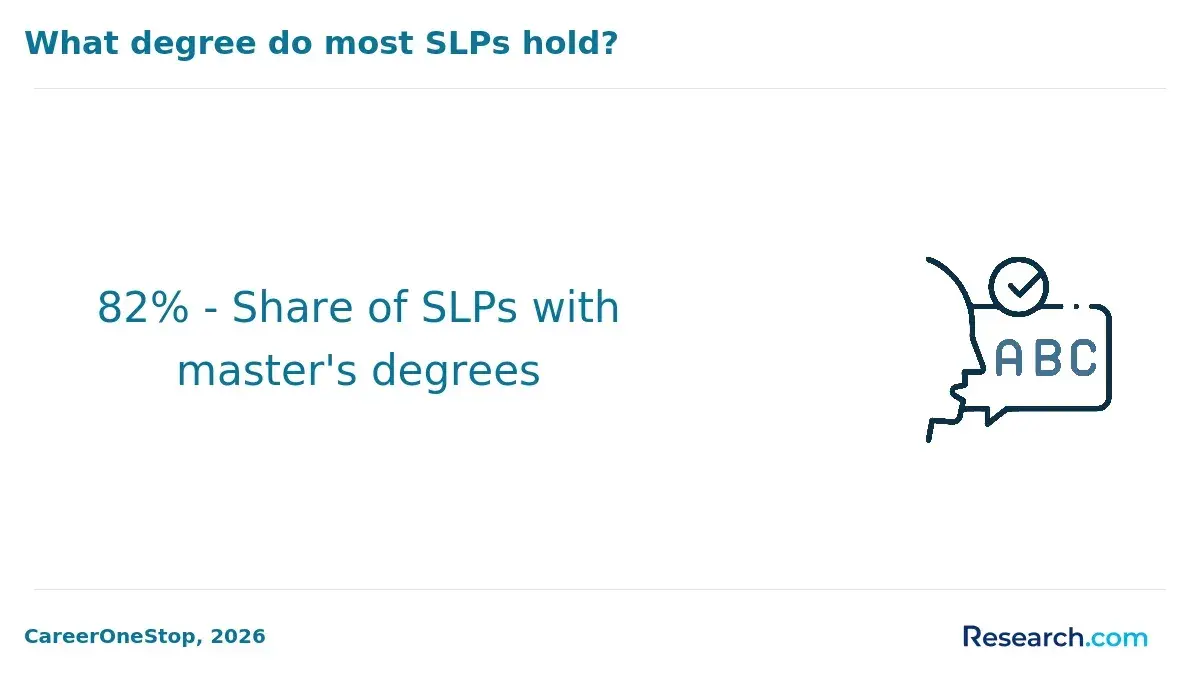
- A music degree does not prevent admission to an SLP master's program, but most applicants need foundational courses in communication sciences and disorders, anatomy, statistics, psychology, and biological or physical sciences.
- CAA-accredited master's education is central to the usual clinical SLP pathway; graduates also generally need supervised clinical experience, a Praxis examination, a clinical fellowship, and state-specific licensure approval.
- SLP employment is projected to grow 17% from 2025 to 2035, with about 12,500 openings annually on average, but completing prerequisites can add meaningful time and tuition before graduate school.
What prerequisites do SLP graduate programs expect from music majors?
Prerequisites are undergraduate courses a graduate program expects applicants to complete before beginning clinical master's coursework. Requirements differ by university, so a music major should never assume that one school's checklist applies everywhere. Some programs admit students with non-CSD majors and build leveling courses into the degree; others expect most prerequisites at application or enrollment.
Many programs look for a combination of communication sciences and broader academic foundations. The table distinguishes commonly requested categories from courses that are frequently required for national certification standards.
| Requirement area | Common examples | Why it matters |
| Communication sciences and disorders | Introduction to communication disorders, phonetics, speech and hearing science, language development, audiology, speech anatomy, and speech-language assessment | These courses establish the vocabulary and scientific base used in graduate clinical training. |
| ASHA foundational content areas | Biological science, physical science, statistics, and behavioral or social science | These content areas are commonly needed for ASHA certification eligibility, although a graduate program may apply its own rules. |
| Academic performance | Official transcripts, cumulative GPA, prerequisite GPA, and sometimes recent-course GPA | Programs use academic history to assess readiness for a rigorous, science-based clinical curriculum. |
| Exposure to the profession | Observation hours, volunteering, employment, or informational interviews | Experience can demonstrate informed interest, but it rarely replaces required academic coursework. |
Start by making a course-by-course inventory from your transcripts. Ask each target program whether a particular course satisfies its requirement; course titles alone are not reliable evidence. A "Voice Pedagogy" class, for example, may be relevant preparation but may not substitute for an anatomy or phonetics course.
A common mistake is completing only the four broad foundational areas and assuming that this creates graduate-school readiness. Those areas are important, but many programs separately require multiple communication disorders courses. Obtain written confirmation before registering for classes.
Which music degree courses can satisfy speech pathology requirements?
Music training can contribute meaningful transferable preparation, particularly in acoustics, voice, language, performance, teaching, and research. Whether it satisfies a formal prerequisite depends on the course syllabus, credit level, instructor qualifications, and the graduate program's policy.
The following comparison helps music graduates identify courses worth submitting for review rather than automatically retaking.
| Music-related course or experience | Possible SLP relevance | Important limitation |
| Music acoustics or sound studies | May overlap with physical-science concepts or introductory speech and hearing science. | It will not necessarily cover speech perception, hearing anatomy, or audiometric principles. |
| Diction, lyric diction, or vocal production | Can support knowledge of articulation, resonance, phonetic symbols, and vocal mechanism. | Programs may require a dedicated linguistics or phonetics course with a specific scope. |
| Voice pedagogy or vocal health | Supports an interest in voice disorders and counseling performers. | Usually does not replace anatomy and physiology of speech and hearing. |
| Music education or child development coursework | May support behavioral or social science requirements and demonstrate work with children. | Eligibility depends on the course's discipline and institutional classification. |
| Research methods or quantitative music research | May satisfy statistics if the course includes recognized statistical methods and is accepted by the school. | Programs often specify an introductory statistics course; verify before relying on it. |
Save syllabi, catalog descriptions, assignments, and official course numbers for any potentially equivalent class. Admissions staff may be able to make a preliminary decision, but the final determination can rest with the program or graduate school.
Music coursework remains valuable even when it does not transfer as a prerequisite. Vocal training can inform a future interest in voice therapy, ensemble leadership can demonstrate collaboration, and teaching lessons can show communication skills. These are application strengths, not substitutes for required science content.
How can you fill missing prerequisites before applying?
Most music graduates fill gaps through individual undergraduate courses, a structured post-baccalaureate sequence, or a master's program with integrated leveling. The best choice depends on how many courses are missing, whether you need schedule flexibility, and how consistently your target schools define prerequisites.
Use this sequence to avoid paying for classes that do not advance your admissions plan.
- Choose a realistic list of CAA-accredited graduate programs and download each school's current prerequisite list.
- Create a spreadsheet matching every requirement to completed coursework, including course credits, grades, and syllabus availability.
- Ask admissions offices to evaluate unclear equivalencies before enrolling in replacement courses.
- Complete missing courses through an accredited college or university and protect your grades, especially in science-heavy classes.
- Confirm application timing because some programs allow courses in progress while others require completion before review or enrollment.
Taking individual courses is often the most targeted approach when only two or three requirements are missing. A formal sequence can be more efficient when you need most of the CSD foundation, because courses are planned in the appropriate order.
An integrated leveling master's can reduce the need to apply twice, but it commonly takes longer than a traditional two-year master's program.
Do not choose a course solely because it is inexpensive or online. Confirm its credit-bearing status, transcript notation, laboratory requirements, transfer policy, and whether your target schools accept online prerequisite coursework. Also factor in application fees, textbooks, lab charges, and the opportunity cost of postponing graduate enrollment.
Do SLP programs accept applicants without a communication sciences background?
Many universities consider applicants with degrees in music, education, linguistics, psychology, biology, and other fields. However, "accepts non-CSD majors" can mean very different things: one program may require prerequisites before entry, while another admits students to an extended curriculum that begins with leveling courses.
A speech language pathologist degree guide can help you identify admissions factors to compare, but accessibility should not be the only criterion. A program must still be academically suitable, accredited as needed for your goal, available to residents of your state, and realistic for your finances and schedule.
Non-CSD applicants are often strongest when they clearly connect their prior field to SLP while also showing that they understand the clinical profession. A music graduate can explain how training in listening, vocal production, teaching, performance anxiety, or accessibility shaped an interest in communication disorders.
The statement should be specific and evidence-based rather than implying that music therapy and speech-language pathology are the same profession.
Be wary of vague admissions claims. Ask whether non-CSD students enter the same cohort as CSD majors, how many additional credits are required, whether prerequisite grades have minimum thresholds, and whether the stated completion time includes leveling coursework.
Which graduate program types work best for music degree holders?
The best program type is the one that closes your academic gaps without creating avoidable licensure or clinical-placement barriers. For a music graduate, the central trade-off is usually between completing prerequisites first and enrolling in a longer program designed for career changers.
| Pathway | Best fit | Main advantage | Trade-off to examine |
| Traditional CAA-accredited master's after prerequisites | Applicants who can finish required CSD courses before enrollment | Usually follows the standard graduate sequence without built-in leveling. | Requires planning, separate enrollment, and potentially another application cycle before the master's begins. |
| Extended or leveling master's | Applicants missing most CSD prerequisites | Combines foundational and graduate coursework in one admissions pathway. | Total credits, duration, and tuition may exceed a traditional master's program. |
| Post-baccalaureate CSD certificate or sequence followed by a master's | Career changers seeking a structured academic foundation | Provides a coherent progression and may improve readiness for competitive admissions. | Admission to the post-baccalaureate program does not guarantee master's admission. |
| Online or hybrid clinical master's | Students who need distance coursework and can meet placement and travel demands | May expand geographic choices and support some scheduling needs. | Clinical rotations, campus immersions, state authorization, and live classes can limit flexibility. |
A speech language pathologist online degree may be worth considering if location or work responsibilities limit campus options. Still, online coursework does not mean fully remote clinical training. Students typically complete in-person practicum experiences and should ask exactly who secures placements, whether travel is required, and what happens if a placement is unavailable.
Choose a traditional route if you can complete prerequisites efficiently and want the shortest graduate-only timeline. Choose an integrated route if you need broad CSD preparation and prefer one coordinated curriculum.
Students needing substantial income while studying should compare part-time availability carefully; clinical semesters can substantially reduce work flexibility regardless of delivery format.
How do accredited SLP programs differ in admissions and clinical preparation?
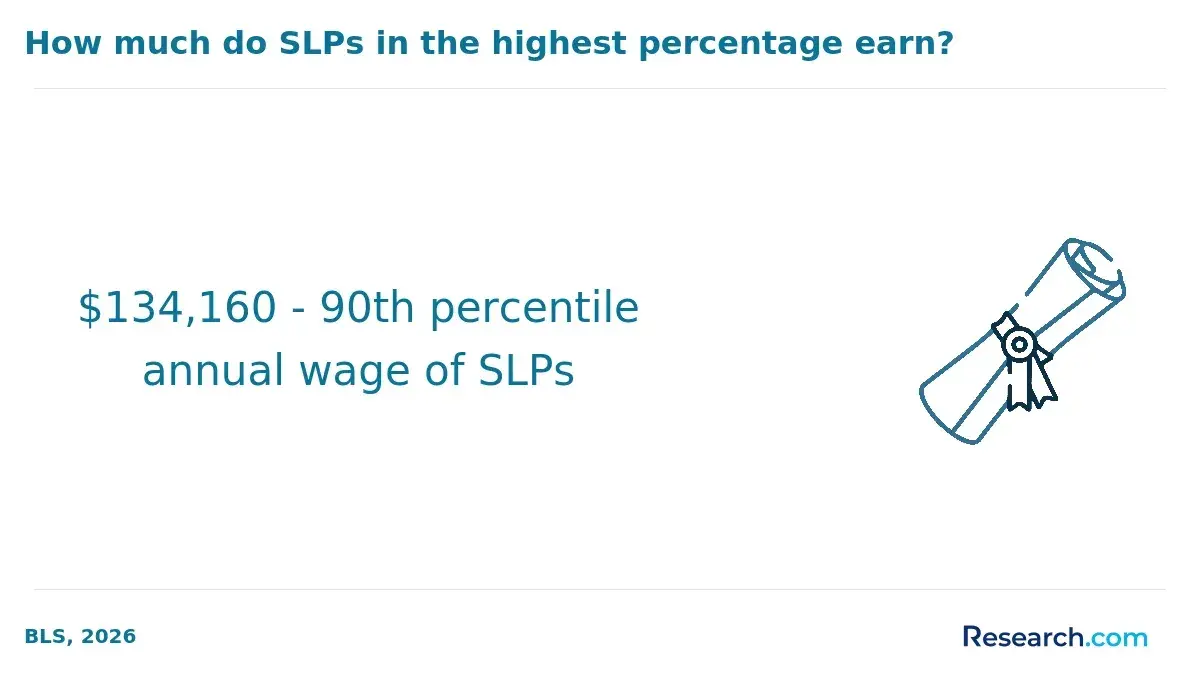
Accreditation is not simply a quality label. For the common path toward the Certificate of Clinical Competence in Speech-Language Pathology (CCC-SLP), students generally need a master's or higher degree from a program accredited by the Council on Academic Accreditation in Audiology and Speech-Language Pathology (CAA), along with other certification requirements. State boards and employers may impose additional conditions.
CAA accreditation does not make programs interchangeable. Schools can differ significantly in selectivity, prerequisite policy, cohort model, specialty opportunities, practicum support, and the practical burden placed on students.
| Comparison point | Why it matters for a music graduate | What to verify |
| Accreditation status | It affects certification and licensure planning. | Confirm current CAA accreditation or candidacy status directly through the institution and CAA listings. |
| Prerequisite structure | Music majors may need a full CSD foundation or only selected courses. | Identify which courses must be completed before application, before enrollment, or within the curriculum. |
| Clinical placement model | Practicum is essential and may affect employment, caregiving, and travel plans. | Ask whether the school assigns sites, how far students may travel, and whether students must locate placements. |
| Delivery requirements | Online coursework may still include live meetings or campus experiences. | Review time-zone expectations, required residencies, and clinical-semester attendance requirements. |
| State eligibility disclosures | Distance learners must ensure the program can serve them where they live. | Read the school's current authorization and professional-licensure disclosures for your state. |
Clinical preparation should be a deciding factor, not an afterthought. A low tuition figure may be less affordable if it requires repeated travel, unpaid time away from work, or self-funded relocation for placements.
Ask for typical placement settings, supervision arrangements, and support processes rather than relying on a general claim that placements are available.
Technology is increasingly part of clinical education, including telepractice platforms, digital documentation, and augmentative and alternative communication tools. These tools can support service delivery, but they do not eliminate the need for direct supervised clinical education or state-specific practice rules.
What should music majors know about GRE, GPA, and observation hours?
Admissions policies vary more than many applicants expect. Some programs do not require the GRE, some use it only in limited circumstances, and others may change their policy by admission cycle. Treat the published requirements for the specific term you intend to enter as controlling.
GPA deserves early attention because a music transcript may contain relatively few science courses. Graduate schools may review overall GPA, CSD prerequisite GPA, the most recent credits, or a combination of these measures.
Strong grades in anatomy, statistics, phonetics, and speech and hearing science can help demonstrate readiness, but they do not erase a school's stated minimum GPA.
Observation hours are valuable for understanding the role, yet requirements differ. Some programs recommend observation, while graduate clinical programs generally incorporate required supervised practicum.
Do not represent informal watching of a therapist as formal observation unless it was completed and documented according to the relevant school or professional standard.
Before submitting applications, prepare the materials that usually create avoidable delays.
- Request official transcripts early and verify that all prerequisite courses, including in-progress work, appear accurately.
- Ask recommenders who can address academic ability, teaching, communication, professional judgment, or readiness for clinical graduate study.
- Tailor your personal statement to the program's prompt and connect music experience to a well-informed SLP goal.
- Keep a dated record of observation, volunteering, and employment, including setting, supervisor, and responsibilities.
- Check whether the program uses CSDCAS, its own application, or both, and allow time for transcript processing.
A speech language pathology accelerated program can look appealing, but a shorter published timeline may assume completed prerequisites, full-time enrollment, and uninterrupted clinical placements. It is not necessarily the faster choice for someone beginning with a music degree.
Which undergraduate music experiences strengthen an SLP application?
Music experiences can make an application distinctive when they show relevant capabilities and are explained with appropriate boundaries. Admissions reviewers are not looking for a claim that musical talent alone predicts clinical competence. They are looking for evidence of academic readiness, communication, ethical maturity, collaboration, and a realistic understanding of SLP practice.
The most useful experiences are those that demonstrate transferable skills in context.
- Teaching private lessons or classroom music can demonstrate lesson planning, patient explanation, behavior support, and communication with families.
- Choir, ensemble, or conducting leadership can show collaboration, active listening, feedback delivery, and group facilitation.
- Voice study can support a focused interest in vocal health, professional voice, resonance, or communication needs among performers.
- Work with children, older adults, disability communities, or multilingual communities can show service orientation when described respectfully and specifically.
- Research, recital preparation, and performance can demonstrate persistence, data awareness, self-reflection, and comfort receiving supervision.
Frame these experiences around skills and learning, not assumptions about clients. For example, a singer interested in voice therapy should also show an understanding that diagnosing and treating voice disorders requires clinical education, evidence-based practice, and supervised training.
Music graduates should explore whether the daily work of an SLP fits their interests. A speech language pathologist career overview can help distinguish employment settings and potential areas of practice. The profession may involve assessment, documentation, family counseling, interdisciplinary coordination, and treatment across communication, swallowing, cognitive, and voice needs - not only voice work or work with performers.
How do post baccalaureate and leveling options compare for music majors?
Post-baccalaureate and leveling options both help non-CSD graduates build academic eligibility, but they solve different problems. A post-baccalaureate program is typically a separate undergraduate-level or certificate sequence completed before a master's application. Leveling is generally embedded in, or attached to, a graduate admission pathway.
| Factor | Post-baccalaureate sequence | Integrated leveling route |
| Admissions process | Usually requires admission before later applying separately to master's programs. | May admit students directly to an extended graduate pathway. |
| Course selection | Can offer flexibility to take only missing courses, especially through individual enrollment. | Usually follows a fixed sequence determined by the graduate program. |
| Timeline certainty | Depends on course availability and later master's admission outcomes. | Can provide a clearer sequence once admitted, subject to progression rules. |
| Cost planning | May permit lower-cost public or community-based course choices where accepted. | May simplify billing but can increase total graduate credits and overall tuition exposure. |
| Best use case | Applicants wanting broad choice among graduate schools or needing only selected requirements. | Applicants seeking a single institution and needing extensive foundational CSD coursework. |
Compare total path cost, not just the cost per credit. Include prerequisite tuition, graduate tuition, fees, health insurance if required, travel, lost work time during clinical placements, and the possibility that a post-baccalaureate program does not guarantee admission to its affiliated master's program.
For many music majors, a targeted post-baccalaureate plan offers the most flexibility. An integrated pathway can be a better fit when the applicant values a prescribed curriculum and has verified that the full program is accredited or appropriately positioned for their licensure objective.
In either case, ask whether credits can be transferred, whether grades have expiration limits, and whether the institution will evaluate previous coursework before enrollment.
How should you verify that an SLP program leads to licensure eligibility?
Licensure is issued by states, not by universities or ASHA. A program can be academically strong yet be unsuitable for your situation if it does not accept students from your state, does not make required disclosures, or cannot support clinical experiences where you live. Verify eligibility before paying a deposit.
Use the following checks for every program under serious consideration.
- Confirm the program's current CAA accreditation status and determine whether the status applies to the degree and campus or delivery pathway you would attend.
- Read the university's professional-licensure disclosure for your state and contact the program if the disclosure is unclear, conditional, or absent.
- Review your state SLP licensing board's current education, examination, supervised-experience, and application requirements.
- Ask the program how it handles out-of-state clinical placements, telepractice training, background checks, immunizations, and potential travel.
- Verify the requirements for ASHA certification separately if your intended employers may expect the CCC-SLP credential.
Keep written records of responses from admissions and licensure contacts. Policies can change, especially for distance education and state authorization, and an informal verbal assurance is not a substitute for published requirements.
Red flags include a school that will not clarify its accreditation status, a program that offers only broad statements about licensure, or an online option that cannot explain who is responsible for arranging clinical placements.
Also avoid assuming that graduating from an accredited program automatically grants a state license. Graduates must still satisfy the state's application and post-degree requirements.
The career outlook supports careful preparation: BLS projects 17% employment growth for speech-language pathologists from 2025 to 2035. That demand can make the field attractive, but the smart investment is a program that aligns with your state, budget, academic starting point, and ability to complete clinical training - not simply the first program that accepts non-CSD majors.
Other Things You Should Know About Speech Language Pathology
Yes, but a music bachelor's degree alone does not qualify someone to practice as a speech-language pathologist. You will typically need prerequisite coursework, a qualifying graduate degree, supervised clinical training, examination results, and state licensure. Exact requirements depend on the program and state.
The timeline depends on how many prerequisites you already have and whether you choose a separate post-baccalaureate sequence or an integrated leveling master's. A traditional clinical master's program often takes about two academic years after prerequisites, while career-change pathways can take longer.
Many SLP programs require anatomy and physiology related to speech, hearing, or the human body, and some also expect specific biological science coursework. Review each program's course list because a general music anatomy or vocal pedagogy course may not meet the required scope.
No. Music therapy and speech-language pathology are separate professions with different education, credentialing, and scopes of practice. They can collaborate with some of the same clients, but music therapy training does not replace the graduate clinical education required for SLP licensure.
References
- How To Become A Speech Pathologist: Complete SLP Career... https://healthscience.pepperdine.edu/online-masters-in-speech-language-pathology/article/how-to-become-a-speech-language-pathologist-complete-slp-guide.htm
- Admission Requirements - SLP | University of Cincinnati https://www.cahs.uc.edu/academic-programs/graduate-programs/slp/on-campus/admission-requirements.html
- MA-SLP Prerequisite Information https://sphs.osu.edu/grad/ma/ma-slp-prerequisite-information
- Speech Language Pathologist: Step-by-Step Career Guide https://www.ghreducation.com/blog/become-speech-language-pathologist