2027 School District Sponsorship for SLP Training: Funding, Service Commitments, and Program Fit

Co-Founder and Chief Data Scientist

Reviewed by Rhea Paul, PhD
SLP Education & Research Expert
A district-sponsored speech-language pathology pathway can reduce graduate-school costs, but it can also limit where and how long you work after graduation. These arrangements are most relevant to prospective SLPs, school employees, and career changers considering a master's degree in speech-language pathology. This guide explains how district funding, repayment terms, clinical training, licensure, and job placement commonly fit together so you can decide whether a sponsored route is a sound professional and financial choice.
Key Things You Should Know
- District sponsorship is usually a workforce-recruitment arrangement: the district contributes toward eligible SLP education costs in exchange for a written commitment to work in the district after graduation, licensure, and often the Clinical Fellowship.
- Funding can range from partial tuition reimbursement to broader support for tuition, fees, books, and paid release time; candidates should calculate the uncovered cost and the financial consequence of leaving before the service term ends.
- Demand makes these pathways worth investigating: the U.S. Bureau of Labor Statistics projects 17% employment growth for speech-language pathologists from 2025 to 2035 and about 12,500 annual openings, but sponsorship availability, pay, caseloads, and credential rules vary substantially by district and state.
How do school district sponsorships for SLP training generally work from funding to placement?
A school district sponsorship for SLP training is an employer-supported education agreement designed to address vacancies and strengthen special education staffing. It is not a standardized national program. A district, regional education service agency, state initiative, university partnership, or union contract may shape the arrangement, so the written agreement - not a verbal description - controls the terms.
Most pathways follow a sequence: the candidate applies for district sponsorship, gains admission to an eligible graduate program, completes required coursework and supervised clinical experiences, earns the graduate degree, meets state credential requirements, and begins employment with the sponsoring district. Some candidates are existing school employees pursuing a career change; others are recruited specifically for a hard-to-fill SLP position.
The usual workflow below shows where applicants need to confirm responsibilities before accepting support.
- Confirm that the district has an active sponsorship, tuition-assistance, grow-your-own, or loan-forgiveness pathway for SLP preparation.
- Review eligible schools, accreditation status, prerequisites, delivery format, clinical placement expectations, and state authorization before applying.
- Sign a funding agreement that identifies covered expenses, payment timing, academic standards, service length, and repayment triggers.
- Complete the master's program and clinical requirements while maintaining the academic and professional standards in the agreement.
- Apply for the state license, school credential, and any required education-agency authorization; complete the Clinical Fellowship when required for independent practice and ASHA certification.
- Enter the sponsoring district's placement process and fulfill the required period of employment.
Placement is not always a guaranteed assignment to a preferred school, grade band, or specialty. Districts commonly retain discretion to assign staff where student need is greatest. Candidates who need a particular commute, pediatric caseload, bilingual role, or telepractice option should ask whether those preferences can be written into the offer.
A sponsored path can be especially attractive when it connects to an accredited speech language pathologist degree online that is available to the candidate's state and can support required clinical education. However, an online academic format does not eliminate in-person practicum, internship, or placement requirements.
What funding models do districts use to pay for graduate SLP programs and fees?
District support is best understood as a funding model rather than "free graduate school." The value depends on what the district pays, when it pays, whether taxes apply, and what expenses remain the student's responsibility. Tuition assistance may also interact with federal aid, scholarships, employer benefits, and state workforce programs.
The following comparison distinguishes common approaches and the trade-offs that matter when estimating your personal cost.
| Funding model | How it commonly works | Candidate cost and trade-off |
| Upfront tuition payment | The district pays an approved school directly or advances funds for specified terms. | Reduces immediate borrowing, but usually comes with clear service and repayment obligations. |
| Tuition reimbursement | The student pays first and receives reimbursement after completing a course, term, or degree. | May require substantial cash flow or loans before reimbursement arrives. |
| Annual education benefit | The employer provides a capped benefit each fiscal or academic year. | Can be useful for part-time study, but the cap may cover only part of tuition and fees. |
| Paid release time or salary continuation | An existing employee receives paid time, reduced duties, or leave to attend required training. | Can be highly valuable, though the agreement may restrict outside work or require return to the district. |
| District-university cohort partnership | The district reserves seats or negotiates a cohort arrangement with an institution. | May improve scheduling and placement coordination, but can limit program choice. |
| Loan repayment or retention payment | The district contributes after hiring, often in installments tied to continued employment. | Does not reduce upfront tuition, but may be preferable for applicants who want program flexibility. |
Ask for an itemized award estimate. Tuition alone is not total educational cost. Graduate SLP students may face application fees, technology costs, background checks, immunizations, professional liability coverage, clinical attire, transportation, housing during placements, testing fees, licensure fees, and lost earnings if the schedule limits employment.
Tax treatment deserves attention. Employer educational-assistance benefits can have tax consequences depending on the benefit structure and current tax rules. Ask payroll or a qualified tax professional how the benefit will be reported rather than assuming the full stated amount will be tax-free.
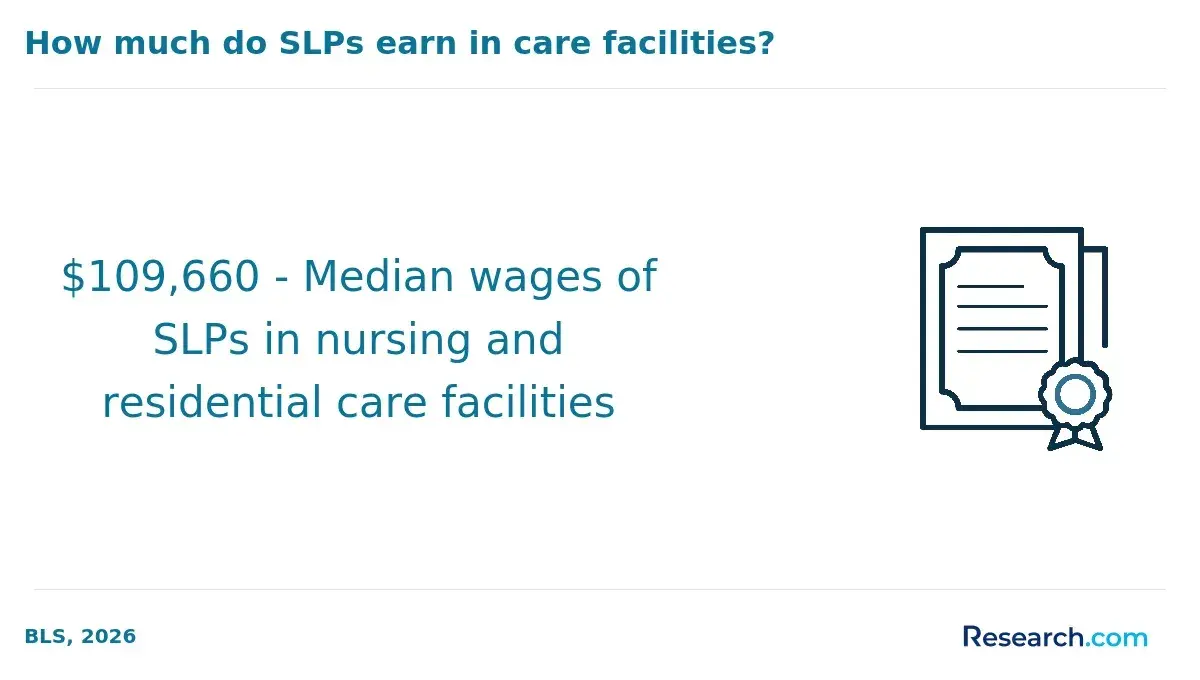
Compare the support to the obligation, not just to the tuition headline. The BLS reports a May 2025 median annual wage of $97,870 for speech-language pathologists, but local school salary schedules can differ from that occupation-wide figure. A sponsorship can still be valuable, yet its return depends on the district's actual salary lane, benefit package, workload, commute, and required years of service.
What service commitments and work obligations typically accompany district-paid SLP training?
Service commitments are the central trade-off in district-paid SLP training. In exchange for funding, the candidate commonly agrees to work for the sponsor for a defined period after becoming eligible for the role. The obligation may begin after graduation, after full licensure, after the Clinical Fellowship, or upon the first day of district employment; that start date can materially change its value.
Common obligations include continued employment, full-time status, satisfactory performance, maintaining required credentials, and accepting assignments within the district. Read whether summers, unpaid leave, part-time work, probationary periods, layoffs, or time in a related role count toward the service clock.
Before signing, ask the district to answer these practical questions in writing.
- How many months or school years of service are required, and exactly when does the obligation begin?
- Is the position guaranteed if the candidate completes the program and obtains credentials on time, or is hiring contingent on vacancies and budget approval?
- Can the district assign the sponsored SLP to any campus, program, grade level, or service model within its boundaries?
- Does the candidate have to work full time, and do approved leaves or reduced schedules extend the obligation?
- What happens if the district cannot employ the graduate, eliminates the position, or changes the work location materially?
- Is repayment prorated for completed service, and are interest, collection costs, or payroll deductions permitted?
A reasonable agreement distinguishes voluntary departure from circumstances outside the candidate's control. For example, a contract may appropriately address resignation before the service term, but it should also explain what happens after a nonrenewal, reduction in force, credentialing delay, medical leave, or district failure to offer a qualifying role.
Do not assume that a service commitment is automatically unfavorable. It can fit candidates who want school-based pediatric practice, value predictable public-school calendars, and would likely seek employment in that district anyway. It is less suitable for people who need geographic mobility, are uncertain about school settings, expect to pursue medical SLP roles immediately, or cannot accept a potentially broad district assignment.
How do district sponsorship agreements for SLPs interact with licensure and ASHA certification requirements?
A district can fund education and offer employment, but it cannot waive professional credential requirements. In most states, independent practice as an SLP requires a graduate degree, supervised postgraduate experience, a passing national examination, and a state license. School employment may also require a separate education credential, certificate, or authorization issued by the state education agency.
ASHA's Certificate of Clinical Competence in Speech-Language Pathology, commonly called the CCC-SLP, is a national professional certification rather than a substitute for state licensure. Many employers prefer or require it, and many state licensure pathways use similar educational and clinical standards. Requirements can change, and the licensing board - not the district or university - makes the final determination of eligibility.
The credentialing checkpoints below help candidates identify which entity is responsible for each decision.
| Checkpoint | Why it matters | Who should verify it |
| Graduate program accreditation | A program accredited by the Council on Academic Accreditation in Audiology and Speech-Language Pathology is generally the clearest route toward national certification expectations. | Candidate and program; confirm current status directly with ASHA CAA information. |
| State authorization to enroll | Online and distance programs may limit enrollment by state. | Candidate and university compliance office. |
| Clinical education | Practicum and internship experiences must meet program, certification, and applicable state standards. | Program clinical director and candidate. |
| Clinical Fellowship | Postgraduate supervised experience is generally needed for the CCC-SLP and may affect state licensing. | State board, ASHA requirements, and employing district. |
| School credential | Public-school practice may require a state education credential in addition to a health-profession license. | State education agency and district human resources. |
Sponsored candidates should obtain a written statement of the district's intended role during the Clinical Fellowship. Some districts hire Clinical Fellows under provisional, temporary, or supervised credentials where state rules permit; others expect the graduate to secure a separate fellowship placement before applying for a fully credentialed school job.
Do not choose a program solely because it is convenient or faster. Candidates considering accelerated SLP programs should confirm that the pacing still permits required clinical experiences, board eligibility, and the state-specific credentials needed for the sponsoring job. An accelerated schedule can shorten coursework but cannot bypass required competencies or licensure steps.
What eligibility criteria do districts set for SLP sponsorship, including GPA, prerequisites, and program type?
Eligibility often has two layers: admission to a qualifying graduate SLP program and selection by the sponsoring district. Meeting a university's minimum requirements does not guarantee district funding, and district endorsement does not override university admissions decisions.
Districts may prioritize current paraprofessionals, speech-language pathology assistants, special education staff, bilingual staff, residents of the community, or applicants willing to work in shortage schools. They may also require a background check, satisfactory employment record, supervisor recommendation, interview, and evidence that the candidate can realistically complete the program while meeting work obligations.
Applicants should expect some combination of the following screening factors.
- A completed bachelor's degree, which may be in communication sciences and disorders or another field depending on the graduate program.
- A minimum cumulative and, where relevant, prerequisite GPA set by the university, district, or both.
- Foundational coursework in areas such as phonetics, language development, anatomy and physiology of speech and hearing, audiology, speech science, and statistics, when required by the program.
- Admission to a qualifying master's program, usually one that is accredited or has a status accepted by the district and compatible with the candidate's state pathway.
- Evidence of readiness for graduate clinical training, including communication skills, professional conduct, and the ability to complete background and health-clearance requirements.
- Agreement to a service term, assignment flexibility, and any minimum enrollment or academic-progress standard.
Program type matters. A district may approve only a partner university, limit funding to in-state public institutions, require a CAA-accredited program, or exclude programs that cannot place students in local clinical sites. If you have a non-CSD bachelor's degree, determine whether prerequisite or leveling courses are included in the sponsorship cap; they are often excluded or funded differently.
Do not confuse an accessible admissions process with a low-risk academic choice. Resources on the easiest SLP masters to get into may help applicants identify programs with different admissions profiles, but the better decision is the program that satisfies accreditation, clinical, state-eligibility, and sponsorship requirements - not simply the one that offers admission first.
How can candidates evaluate whether a sponsored SLP program is academically and clinically a good fit?
A strong sponsorship cannot compensate for a program that does not prepare you for the credentials or setting you want. Evaluate academic fit, clinical fit, and employment fit separately. A cohort schedule that works well for an employed school aide may be unmanageable for a candidate who must travel for clinical placements or maintain another job.
Start with the program's current accreditation status, state enrollment eligibility, curriculum, faculty support, student-services model, and graduation requirements. Then examine clinical education with equal care. Ask who secures placements, whether the program has existing relationships in your area, what travel may be necessary, whether placement hours conflict with school-day employment, and how the program responds if a site falls through.
This comparison can help applicants weigh two common sponsorship-compatible program formats.
| Factor | Campus-based or hybrid program | Distance or online academic program |
| Class access | May offer face-to-face instruction and campus-based support. | Can reduce relocation needs, but may include live sessions and time-zone constraints. |
| Clinical placements | Often coordinated near the institution, though travel may still be required. | May seek placements near the student, but local availability is not guaranteed. |
| Scheduling | May require daytime attendance that conflicts with work. | Coursework can be more flexible, while clinical rotations remain schedule-intensive. |
| District partnership fit | May align well with a local university-district cohort. | May fit geographically dispersed candidates if the district accepts the program. |
| Key verification point | Required campus attendance and clinical travel. | State eligibility, required immersions, and placement responsibility. |
Request direct answers from both the university and district before enrolling. The university should explain its placement process and academic requirements; the district should confirm whether it accepts the program, how it handles work release, and whether program completion leads to a viable hiring pathway.
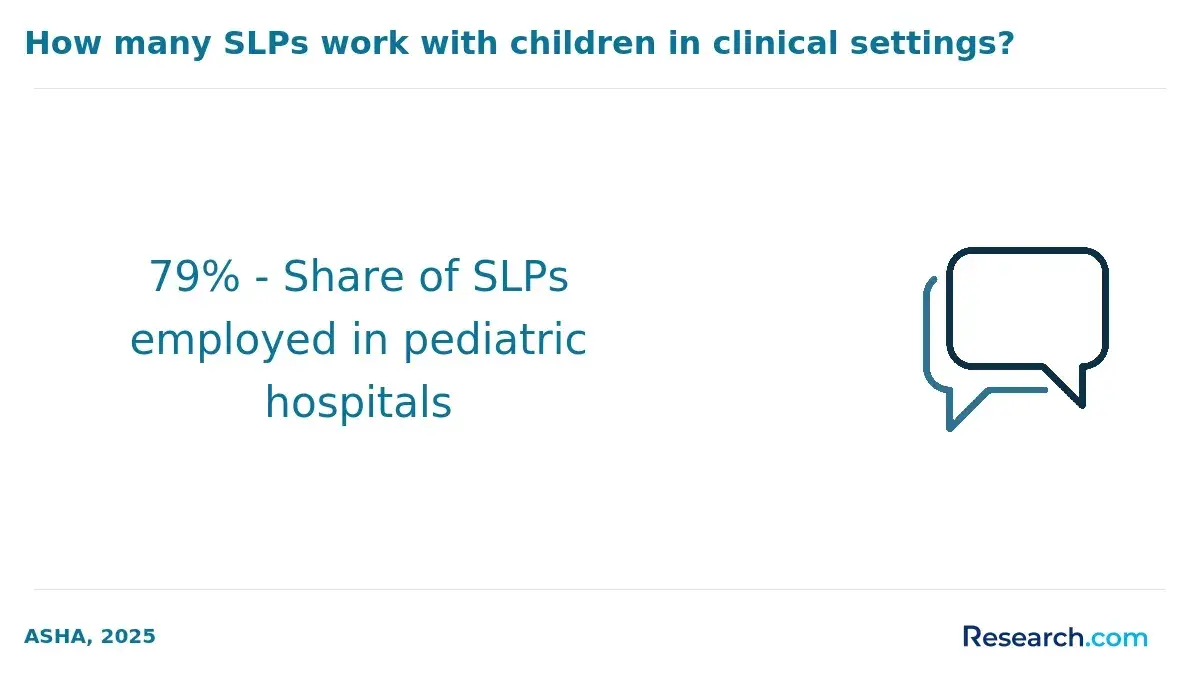
Academic fit also includes the population you expect to serve. School SLPs work with speech sound disorders, language disorders, fluency, voice, augmentative and alternative communication, feeding-related issues within scope, and communication needs associated with disability. Look for coursework and supervised experiences that build broad entry-level competence rather than assuming a district job will provide all specialty preparation.
What risks and protections should SLP students look for in district sponsorship contracts?
The principal risk is accepting a large repayment obligation without a clear, enforceable path to complete the service requirement. Sponsorship agreements can be beneficial, but they should state the obligations in plain language and allocate risk fairly when education, employment, licensing, or district budgets do not unfold as expected.
Have the agreement reviewed carefully before signing. Depending on the amount at stake and your circumstances, consider consulting a qualified attorney, union representative, financial-aid professional, or employee-assistance resource. A school or district may use standard forms, but standard does not mean the terms are inconsequential.
Look for these protections and clarifications in the written document.
- A precise list of covered costs, maximum amount, payment schedule, documentation rules, and whether awards depend on annual appropriations.
- A clear definition of satisfactory academic progress, including the grade standard, leave policy, retake rules, and notice or appeal process.
- A specific service period with a stated start date, eligible job classification, required FTE status, and rules for counting summers, leaves, and partial years.
- A prorated repayment formula that reduces the amount owed as required service is completed instead of demanding the full award after nearly complete service.
- Terms for involuntary events, including layoff, position elimination, failure to place the graduate, disability-related leave, military service, or district reassignment.
- Details on interest, collection costs, payroll deduction authorization, tax treatment, and whether the obligation is forgiven on death or permanent disability.
- A statement of whether the district can change the work site, caseload assignment, salary classification, or program approval list after the candidate begins study.
Common mistakes include treating a recruitment email as a contract, assuming "tuition covered" includes fees and lost wages, and signing before confirming that the selected program is acceptable to the district. Another mistake is overlooking a clause that requires repayment if licensure takes longer than expected, even when the delay is caused by an examination, paperwork, or placement issue outside the student's control.
Keep copies of the application, award letter, contract, invoices, grade reports, program communications, and records of service completed. If a disagreement occurs years later, documentation can be as important as the original promise.
How do sponsored SLP training pathways compare with traditional self-funded graduate study and fellowships?
The best route depends on whether your highest priority is lower upfront cost, professional mobility, program choice, or speed to a particular career setting. A district-sponsored pathway exchanges some freedom for financial support and a defined employment destination. Self-funded study preserves more choice but places more financial and job-search risk on the student.
The comparison below focuses on decision factors rather than assuming one option is universally better.
| Pathway | Best fit for | Main advantage | Main trade-off |
| District-sponsored graduate study | Applicants committed to school-based work and a particular community or region. | May reduce educational costs and create a direct route to a district role. | Service commitment, assignment limits, and possible repayment exposure. |
| Self-funded graduate study | Applicants who want broad program, location, and employer choice. | Maximum flexibility to change employers, specialties, or regions after graduation. | More reliance on savings, loans, aid, scholarships, or employment income. |
| University scholarship or assistantship | Applicants whose programs offer competitive institutional support. | May reduce cost without a district-specific employment term. | Funding can be limited, competitive, workload-dependent, or unavailable in clinical programs. |
| Post-hire tuition assistance or loan repayment | Applicants who want to choose a program independently before selecting an employer. | Can preserve education choice and reward retention after hiring. | Usually does not solve the upfront cost of graduate school. |
For a financially realistic comparison, estimate net cost and the value of restricted mobility. Subtract confirmed grants and nonrepayable support from total educational expenses, then separately identify loans, earnings you may forgo, and any repayment liability. Do not count a possible future salary as proof that a debt or service obligation is affordable.
Career outlook supports careful planning rather than rushed enrollment. The BLS projects 17% growth in SLP employment from 2025 to 2035, indicating sustained demand across settings, but employment conditions and pay differ among school districts, health systems, private practices, and regions. Use a speech-language pathologist salary comparison as context, then verify the sponsoring district's actual salary schedule, step placement policy, and benefits.
Choose sponsorship when the job location and school-based role are benefits, not merely conditions you hope to tolerate. Self-funding or a less restrictive aid source can be the better investment when you need freedom to relocate, pursue medical specialization, or choose among employers after graduation.
What district, state, and federal policies shape SLP sponsorships, reimbursement, and special education compliance?
SLP sponsorship operates within several policy systems. District employment is shaped by local budgets, collective bargaining agreements where applicable, hiring policies, and special education staffing plans. Graduate preparation is shaped by university rules and accreditation. Professional practice is governed by state licensing boards and, for public schools, state education agencies.
At the federal level, the Individuals with Disabilities Education Act affects why districts need qualified SLPs: eligible students must receive services described in individualized education programs, and districts must provide special education and related services consistent with applicable requirements. Speech-language services may be delivered as a related service or, depending on the student's eligibility and needs, through other service structures. A sponsorship does not reduce the district's duty to employ appropriately qualified personnel.
Medicaid and other reimbursement arrangements may also influence district staffing strategies where school-based services are billable under state rules. Reimbursement is not interchangeable with a candidate's tuition award, and districts should not represent anticipated reimbursement as guaranteed funding for an individual student's education.
Policy questions are especially important when the program is online, crosses state lines, or includes paid employment during training. Candidates should verify the following with the responsible authority rather than relying on broad statements.
- Whether the university may enroll students in the candidate's state and whether it publishes a professional-licensure disclosure for that location.
- Which state agency issues the school-based credential and whether it is separate from the professional SLP license.
- Whether a Clinical Fellow may work under a provisional or supervised school credential and what supervision is required.
- Whether district funding is subject to annual board approval, grant continuation, or collective bargaining provisions.
- Whether tuition support affects federal financial aid, institutional aid, tax reporting, or employee benefit limits.
Technology is also changing school speech services. Telepractice, digital documentation platforms, and augmentative and alternative communication tools can expand service options, but they do not remove privacy, supervision, licensure, accessibility, or workload considerations. Candidates should ask how the district trains SLPs to use these tools and whether telepractice is an optional delivery method or an expected part of the role.
How do sponsored SLPs impact school speech services, caseloads, retention, and student outcomes over time?
District sponsorship can improve recruitment by creating a local pipeline of candidates who understand the community and intend to work in schools. It may be particularly useful where vacancies, rural geography, high living costs, or competition from medical employers make recruitment difficult. Its effectiveness, however, should be judged through workforce and service indicators - not simply by the number of awards issued.
A district should track whether sponsored candidates complete programs, obtain required credentials, enter qualifying roles, remain beyond the service term, and receive appropriate mentorship. Candidates should ask for realistic information about vacancy history, supervision, onboarding, caseload management, evaluation expectations, and professional-development access.
The indicators below show what a sustainable program should monitor and why each affects both staff and students.
| Indicator | Why it matters | What candidates should ask |
| Vacancy duration and turnover | Shows whether sponsorship is part of a long-term retention strategy or a short-term staffing response. | How often are SLP positions vacant, and why do clinicians leave? |
| Caseload and workload practices | High workload can affect documentation, collaboration, assessment, and service quality even when caseload counts appear manageable. | What are typical caseloads, travel expectations, meeting duties, and paperwork supports? |
| Mentorship and Clinical Fellowship supervision | Early-career guidance supports competent practice and credential progress. | Who supervises Clinical Fellows, and what release time or mentoring is provided? |
| Service continuity | Stable staffing can reduce disruptions in student relationships and program implementation. | How are absences and vacancies covered without overloading remaining staff? |
| Retention after obligation | Reveals whether the role remains attractive after contractual service ends. | What supports, advancement options, and salary progression exist after the commitment? |
Student outcomes depend on many factors beyond staffing, including student needs, intervention quality, collaboration with educators and families, attendance, service minutes, and access to appropriate materials. It would be misleading to promise that sponsorship alone improves outcomes. Still, a well-designed pathway can support continuity by reducing avoidable vacancies and helping clinicians build lasting community knowledge.
For candidates, the strongest signal is not a recruiting bonus or a tuition headline. It is evidence that the district has manageable work expectations, qualified supervision, a transparent service model, and reasons for SLPs to stay after the contract ends.
Other Things You Should Know About Speech Language Pathology
Some districts may offer conditional sponsorship before admission, but payment commonly depends on acceptance into an approved program. Ask whether the award is reserved pending admission, whether there is an application deadline, and what happens if you are admitted only to a nonapproved program.
It depends on the agreement. Contracts may require repayment, pause funding, allow a retake, or permit approved leave. Review the academic-progress and leave provisions before enrolling, and obtain any exception or extension in writing.
Possibly. The district must accept the program, the university must be authorized to enroll you in your state, and the program must support the clinical education and credential pathway required for your intended role. Confirm each point with the university, district, and state authorities.
It can be a strong fit for clinicians who enjoy pediatric communication needs, collaboration with educators and families, special education processes, and a school-calendar schedule. It may be less suitable if you strongly prefer adult medical practice, highly specialized clinical work, or unrestricted geographic mobility immediately after graduation.
References
- Jose P. Graduate Scholarship Program - Teach NYC http://www.teachnycprograms.net/getpage.php
- 2024-2025 Master's Level SLP Stipend for School-Based... https://sites.google.com/pattan.net/pa-apr/2024-2025-masters-level-slp-stipend-for-school-based-placements
- OSEP Personnel Preparation Grants for SLP Programs https://www.clinicnote.com/resources/osep-personnel-preparation-grants-slp-programs/
- Primer for Local Education Agencies (LEAs) on Medicaid... https://www.youtube.com/watch