2027 Deferring Admission to an SLP Master's Program: Policies and Alternatives

Co-Founder and Chief Data Scientist

Reviewed by Rhea Paul, PhD
SLP Education & Research Expert
An admission offer to a speech-language pathology master's program is valuable, but starting immediately is not always realistic. Health, family, finances, prerequisite work, military service, and career obligations can make a deferral year appealing. This guide explains how SLP admission deferrals typically work, the questions to ask before accepting one, and the alternatives that may better protect your funding, accreditation pathway, and long-term licensure plans. It is designed for admitted students deciding whether to enroll now, postpone, or apply again later.
Key Things You Should Know
- SLP admission deferrals are never automatic: obtain written approval showing the exact start term, whether your seat is held, and which admission conditions must be completed before enrollment.
- Most programs that approve a deferral limit it to one academic year, may require a nonrefundable deposit, and often require students to reapply for scholarships, assistantships, clinical placements, or financial aid.
- Accreditation and licensure eligibility matter more than convenience: ASHA certification generally depends on graduating from a CAA-accredited program, and state licensing rules can change while you wait.
What does it mean to defer admission to a speech-language pathology master's program?
Deferring admission means that a program agrees to move your accepted admission offer from one entering cohort to a later cohort, usually the following fall or spring. You remain an admitted student only under the conditions stated in the school's written approval. A deferral is not the same as declining an offer, being waitlisted, taking a leave after enrollment, or receiving automatic admission in a future cycle.
For an SLP master's student, deferral can be more complicated than it is in some graduate fields. Cohort-based curricula, sequenced clinical practica, faculty supervision capacity, and external placement availability may limit a program's ability to reserve a future seat. A school may approve a deferral but require you to meet updated health, background-check, immunization, prerequisite, technical-standard, or onboarding requirements before classes begin.
The practical distinction is important: a true deferral preserves an offer subject to stated conditions, while reapplying places you back in the competitive applicant pool. Ask admissions to use clear language such as "admission is deferred to fall term" rather than relying on an informal email saying that the school "expects" to have space later.
| Option | What happens to your admission | Best fit | Primary trade-off |
| Approved deferral | Your offer moves to a stated future term, subject to conditions. | A short, documented interruption when the program can hold your seat. | Funding and policy terms may not carry forward. |
| Decline and reapply | You give up the current offer and submit a new application later. | You need more than a short delay or want materially different programs. | No guaranteed future admission. |
| Waitlist | You may receive an offer only if a seat opens in the current cycle. | You have not yet been admitted and can start on short notice. | There may be no offer or time to plan. |
| Leave of absence | You begin enrollment and later pause under university rules. | An unexpected issue arises after matriculation. | Usually cannot be used before starting the program. |
Which SLP graduate programs commonly allow admission deferrals and under what conditions?
There is no universal CAA or ASHA rule requiring speech-language pathology programs to grant deferrals. Policies are set by each university, graduate school, and department. Programs with fixed annual cohorts and limited clinical capacity may allow deferrals only in exceptional circumstances; other programs may consider requests case by case.
Programs are most likely to consider a documented, time-limited reason that makes immediate enrollment impractical without suggesting the applicant has lost interest in the profession. Common examples include serious personal or family medical needs, childbirth or caregiving, military obligations, visa delays, unexpected financial disruption, and required employment commitments. Approval remains discretionary, even when a reason is compelling.
Before requesting a delay, compare the program's format with your actual scheduling constraint. Some SLP online masters program options may offer different course-delivery structures, but online coursework does not eliminate required clinical education, supervision, or possible travel. A change in format may solve a scheduling problem more effectively than a deferral.
The following factors commonly influence whether a school can approve a request. They are not guaranteed criteria, so use them to prepare a precise question for the admissions office.
- The program's cohort size, start terms, and ability to place another student in the current seat.
- Whether the applicant has paid an enrollment deposit and met acceptance conditions by the stated deadline.
- The reason for postponement, its expected duration, and whether supporting documentation is appropriate.
- Whether prerequisites, observation hours, background checks, immunizations, or other records will still be valid at the deferred start date.
- Whether curriculum, tuition, accreditation status, or clinical-placement capacity is expected to change before the next cohort begins.
How do ASHA CAA accreditation and state licensure timelines affect SLP admission deferral decisions?
For most students pursuing practice as speech-language pathologists, graduating from a program accredited by the American Speech-Language-Hearing Association's Council on Academic Accreditation in Audiology and Speech-Language Pathology (CAA) is central to the certification pathway. A delayed start can be sensible, but only if the program's accreditation trajectory and your expected graduation date remain compatible with your career plan.
CAA accreditation concerns the graduate program, not simply the institution. A university can be well known while a specific SLP program has a distinct accreditation status, review schedule, or reporting obligations. Programs may be fully accredited, in candidacy status, or subject to an accreditation decision that deserves closer review. Do not assume that a prior cohort's status automatically answers the question for your cohort.
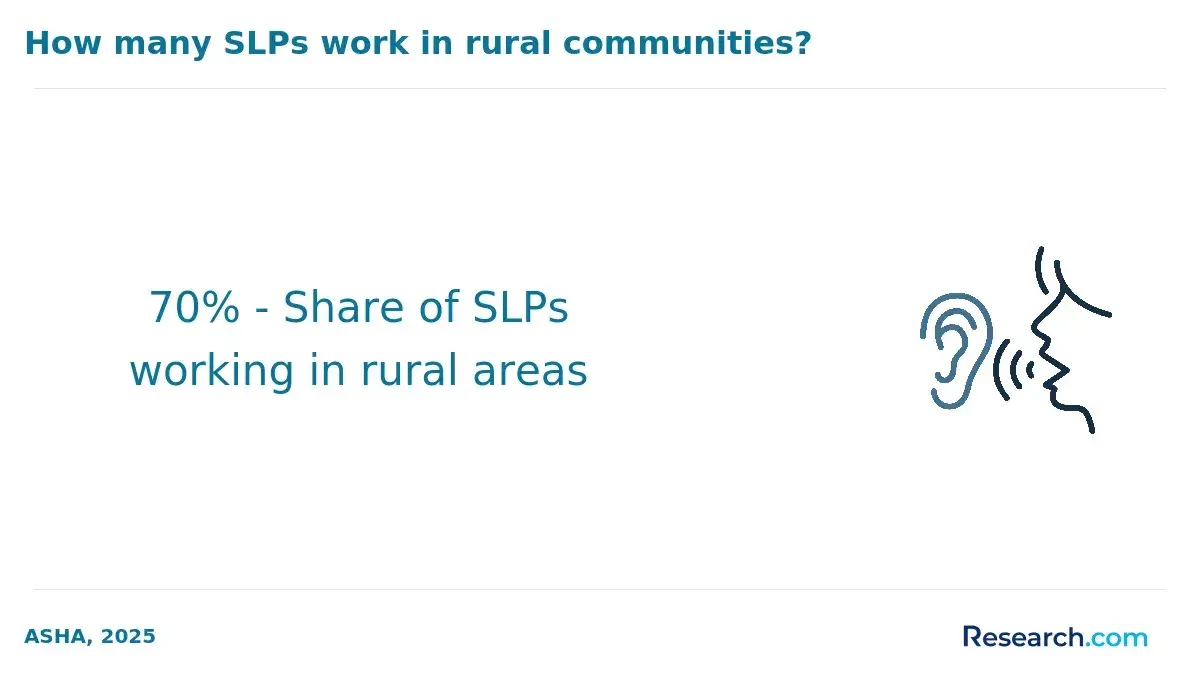
State licensure is separate from ASHA certification. States set their own rules for education, supervised clinical experience, examinations, criminal-history review, and other conditions. In many cases, students finish a master's degree and complete a clinical fellowship before becoming fully licensed. A one-year deferral may push every later milestone forward: graduation, fellowship start, state application, and independent practice.
The labor-market context can help frame that delay. The U.S. Bureau of Labor Statistics projects 17% employment growth for speech-language pathologists from 2025 to 2035, with about 12,500 openings per year on average. That demand does not eliminate the cost of postponement, but it suggests that a carefully planned delay is different from abandoning a field with limited prospects.
| Decision point | Why a deferral matters | What to verify before agreeing |
| Program accreditation | Your degree's professional pathway depends heavily on the program's CAA status. | Current status, next review information, and any official notices affecting students. |
| Curriculum sequence | SLP coursework and practica are commonly sequenced by cohort. | Whether the future cohort has the same required courses and expected completion timeline. |
| Clinical education | Placement timing can affect graduation and fellowship plans. | How sites are assigned, whether the school arranges placements, and required travel. |
| State licensure | Rules differ by intended practice state and may change. | Current state-board requirements and the school's licensure disclosures for that state. |
What are typical SLP program deferral policies on duration, documentation, and reasons for postponing?
Although each school sets its own rules, one academic year is a common maximum deferral period. Some programs allow only a move to the next available cohort; others do not permit spring entry because their clinical sequence starts in fall. Longer postponements often require a new application because admissions standards, prerequisites, curriculum, and cohort capacity may change.
A strong request is short, timely, and specific. It should confirm that you want to attend, identify the requested entry term, explain the situation without oversharing, and ask for the exact terms of approval in writing. If documentation is requested, provide only what the school needs and use secure university channels where available.
Before accepting a deferral, request answers to the following questions in an email or signed letter. Written terms reduce the risk of misunderstanding when admissions staff or program policies change.
- Is my admission guaranteed for the named term, or will I be reconsidered with a later applicant pool?
- What deadline applies to accepting the deferral, paying a deposit, and completing any new paperwork?
- Must I repeat prerequisite courses, observation hours, interviews, background checks, health clearances, or English-proficiency testing?
- Will my curriculum, graduation timeline, delivery format, clinical-placement model, and tuition rate be the same as those for the current cohort?
- Which scholarships, assistantships, federal aid steps, and loans must be reapplied for?
- What event would cancel the deferral, such as a missed deadline, policy change, unavailable cohort, or loss of accreditation?
Do not assume a deposit is refundable or transferable. Some schools apply it to future tuition, some retain it if you later withdraw, and some require a new deposit for the deferred term. The school's written policy controls.
How might deferring an SLP master's offer affect funding, scholarships, and graduate assistantships?
Funding is often the most consequential part of an SLP deferral decision. Admission and institutional aid are usually separate decisions. A program may preserve your academic offer while requiring a new scholarship review, assistantship application, or financial-aid file for the later year.
Federal student aid must generally be renewed for each award year through the Free Application for Federal Student Aid process. Your eligibility can change with income, dependency information, enrollment intensity, cost of attendance, borrowing history, and federal policy. A private scholarship or employer benefit may have its own deadline and enrollment requirement.
Graduate assistantships can be especially uncertain because they depend on departmental budgets, faculty needs, available roles, and eligibility rules. Clinical schedules in professional programs may also limit the time students can devote to assistantship work. Treat an assistantship mentioned during recruitment as unconfirmed unless the program provides a written award for your deferred term.
This comparison identifies the financial questions most likely to change during a delayed start. Use it to compare a deferral against enrolling now or reapplying later.
| Funding item | What may happen after deferral | Best question to ask |
| Merit scholarship | May expire, be reduced, or require a new competition. | Is the amount reserved in writing for my deferred cohort? |
| Need-based aid | Must usually be recalculated for the new academic year. | Which financial-aid application and priority date apply to my new start term? |
| Graduate assistantship | May not be available because positions depend on annual staffing and budgets. | Must I reapply, and is the role compatible with the SLP course and clinical schedule? |
| Tuition and fees | You may be charged the future cohort's published rates. | Does the deferral lock my tuition rate, and which mandatory fees are excluded? |
| Employer tuition support | Eligibility can depend on continued employment or enrollment dates. | Will my employer's policy cover the later term and clinical-placement schedule? |
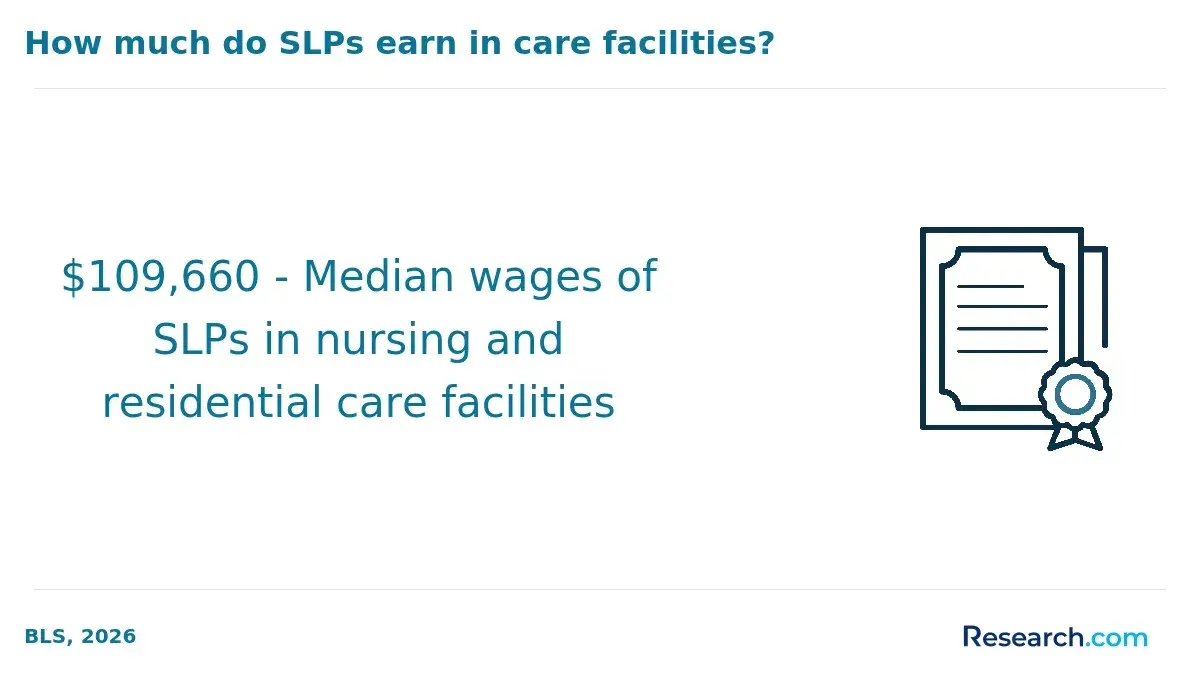
If affordability is the reason for postponing, calculate the complete effect rather than focusing only on one year of tuition. Include expected tuition changes, lost scholarship value, living expenses, income during the year, and the later date when you can enter the clinical fellowship. The BLS reported a median annual wage of $97,870 for speech-language pathologists in May 2025, but that national figure is not a personal earnings guarantee and varies by setting, location, and experience.
What risks do SLP applicants face if program accreditation status changes during a deferral period?
The central risk is assuming that a deferred admission offer protects every professional outcome. It does not. Accreditation decisions, institutional operations, faculty staffing, clinical-placement availability, state authorization, and program curriculum can change before you enroll.
A status change does not always mean that students cannot pursue certification or licensure, and the consequences can depend on the effective date, the student's enrollment date, teach-out provisions, and applicable ASHA and state rules. However, the uncertainty alone can be serious enough to justify getting formal answers before you delay.
Pay particular attention if the program is new, is in candidacy status, has recently changed delivery formats, has experienced leadership turnover, or has issued notices affecting admissions or enrollment. These are not automatic reasons to reject a program, but they make written verification more important. The same caution applies to programs that promise flexibility without clearly explaining how they secure supervised clinical placements.
For students evaluating an accelerated route, compare the sequence and accreditation status of 5-year speech pathology programs with traditional graduate pathways. Acceleration can reduce total time to graduation, but it may offer less room to pause, change pace, or recover from a missed clinical sequence.
Warning signs should lead to questions, not assumptions. Contact the program director and graduate school promptly if you encounter any of the following.
- Admissions staff cannot state the program's current CAA status or direct you to an official accreditation record.
- The deferral approval does not identify a cohort, start term, or conditions for retaining admission.
- The school will not explain whether deferred students are covered by the same teach-out or student-protection plans as enrolled students.
- Clinical-placement responsibilities, travel expectations, or state eligibility restrictions are vague or changed after admission.
- The program asks you to rely on verbal assurances about certification, licensure, tuition, or financial aid.
What alternatives exist to deferring, such as reapplying, waitlisting, or starting part-time in SLP?
A deferral is useful when the obstacle is temporary and the school can preserve your place on acceptable terms. It is not automatically the best answer. If your situation will last more than a year, your financial plan has changed substantially, or you want a different format or location, declining and applying strategically may provide more control.
Reapplying makes sense when you need time to strengthen prerequisites, improve academic readiness, earn income, complete relevant work, or broaden your program list. It also lets you evaluate programs with different schedules and clinical models. Review speech language pathology programs carefully rather than treating a less selective admissions profile as a substitute for accreditation, clinical quality, or state eligibility.
Part-time enrollment can work for students whose program explicitly offers it, but it may lengthen the degree and may not reduce clinical obligations later in the curriculum. A part-time label does not guarantee evening classes, remote practica, or a manageable workload while working full time. Ask for a term-by-term plan, not just a statement that part-time study is available.
| Alternative | When it may be better than deferring | Major limitation |
| Reapply in a future cycle | You need more time, want different programs, or cannot accept the deferral terms. | Admission, aid, and cohort placement are not guaranteed. |
| Accept a waitlist position | You can start this cycle if an opening occurs and have backup plans. | Timing is uncertain and an offer may never arrive. |
| Begin part-time | The program publishes a valid part-time pathway and your constraint is ongoing. | May extend costs and delay clinical fellowship eligibility. |
| Choose a different start term or format | Another accredited option better fits work, caregiving, or location needs. | Clinical requirements may still demand daytime availability and travel. |
| Gain relevant experience before reapplying | You need income, clearer career confirmation, or a stronger application narrative. | Experience does not replace required graduate preparation or guarantee admission. |
Use a waitlist differently from a deferral. A waitlist is a current-cycle admissions status, while a deferral concerns an offer you already hold. If you are waitlisted, avoid making irreversible commitments until you know whether an offer will arrive and whether you can meet the enrollment timeline.
How do SLP applicants verify that a deferred program still meets ASHA certification requirements?
Verification should be repeated shortly before you enroll, even if you checked accreditation when you applied. Start with the program's official accreditation information and confirm that it refers to the specific master's program and location or delivery pathway you will attend. Then compare that information with the current CAA listing and ask the school to explain any difference in wording.
Next, ask how the curriculum supports the educational and clinical requirements relevant to ASHA certification. The school should be able to explain required coursework, supervised clinical education, faculty supervision, and how students progress to graduation. It should not promise that every graduate will automatically receive certification, because students must also meet individual requirements after completing the degree.
Your intended state of practice is equally important. Review the state licensing board's current requirements and the university's professional-licensure disclosures. If you may relocate, check each realistic destination state rather than assuming that a program meeting requirements in one state necessarily meets them everywhere.
Use this verification sequence before signing a deferral agreement or paying a nonrefundable deposit.
- Confirm the exact degree, campus, and delivery pathway named in your admission and deferral letter.
- Check the program's current CAA accreditation status and ask whether any decision, monitoring matter, or planned change affects your entering cohort.
- Request the projected course and clinical sequence for your deferred cohort, including any campus, simulation, or placement requirements.
- Read the school's written licensure disclosure for the state where you expect to seek a license after the clinical fellowship.
- Save dated copies of the admission letter, deferral approval, accreditation information, tuition estimate, and all written responses.
- Repeat the status check before matriculation if several months have passed or the program has announced a change.
What consumer-protection steps should SLP admits take before agreeing to a deferral?
Think of a deferral as a new enrollment agreement, not a casual courtesy. The goal is to document what the school is promising, what it is not promising, and what you must do to keep your place. This is especially important because the financial and clinical components of professional graduate education can change from one cohort to the next.
Ask for a written confirmation that identifies the deferred term, degree program, campus or format, deposit status, expiration date, and any conditions. If the response merely says that you "may enroll next year," ask whether that means guaranteed admission or a future application review. If the school cannot clarify that distinction, consider whether reapplying gives you a more transparent path.
Also keep your own decision file. It can help you compare offers, resolve later misunderstandings, and explain your choices to employers or lenders. Include the original offer, deferral correspondence, scholarship notices, tuition estimates, program handbook, clinical-placement information, and licensure disclosures.
The following precautions address common avoidable mistakes.
- Do not rely on a phone call alone; send a short follow-up email confirming the terms discussed and ask the school to correct any error.
- Do not assume tuition, scholarships, assistantships, housing, or federal aid will transfer to the new cohort without written confirmation.
- Do not make a deposit before learning whether it is refundable, transferable, or forfeited if circumstances change again.
- Do not assume online coursework eliminates clinical travel, synchronous attendance, health clearances, or daytime placement requirements.
- Do not postpone checking state licensure rules until graduation; verify the rules in the state where you intend to work.
- Do not let a single deadline force a decision if material accreditation or financing questions remain unanswered.
Career planning can also help you assess the cost of waiting. Specialized settings may have different compensation patterns and work demands; for example, students considering hospital-based work can review context around NICU SLP salary while remembering that pay varies by employer, region, credentials, schedule, and experience.
How should SLP applicants explain a deferral year on resumes and clinical fellowship applications?
A deferral year usually needs no elaborate explanation. On a resume, account for the time honestly and emphasize activities that demonstrate responsibility, growth, and readiness for graduate clinical training. Relevant work may include patient-facing support roles within your scope, childcare or education work, research assistance, caregiving, community service, coursework, or full-time employment that funded your education.
Do not imply that you provided speech-language pathology services independently if you were not licensed or supervised to do so. Use accurate job titles and describe transferable skills such as communication, documentation, cultural responsiveness, teamwork, privacy awareness, and reliability.
For a later clinical fellowship application, a concise explanation is generally enough: "I deferred graduate enrollment for one year to meet a family obligation and worked full time while maintaining my preparation for SLP graduate study." If the year involved health or personal matters, you may keep details private. Focus on your readiness to complete the program and enter supervised practice.
A productive deferral year can also reduce transition stress. Keep a professional record of major activities, dates, supervisors, trainings, and accomplishments. Before enrollment, refresh foundational knowledge, organize financial documents, and confirm onboarding deadlines. The strongest explanation is factual, brief, and supported by a consistent timeline across your resume, application materials, and interviews.
Other Things You Should Know About Speech Language Pathology
It depends on the written terms. A school may condition approval on meeting deadlines, maintaining prerequisite eligibility, completing updated compliance requirements, or the availability of the stated cohort. Ask what circumstances could cancel the agreement and retain the approval letter.
Ask the program first if possible. Some schools require a deposit before reviewing a request, while others accept a deferral request before the payment deadline. Confirm whether the deposit is refundable, transferable, or lost if you do not enroll later.
Some students work, but full-time employment can be difficult once coursework and clinical practica begin. Clinical schedules may occur during standard business hours and can change by placement. Request a realistic term-by-term schedule before relying on employment income.
Usually not by itself. Clinical fellowship employers generally focus on degree completion, required credentials, clinical preparation, fit, and hiring needs. A well-explained year that reflects work, caregiving, financial planning, or continued preparation is not inherently negative.
References
- Apply to Clinical MS Program | Speech, Language, and... https://slhs.arizona.edu/apply-ms-program
- Apply for a MS in Communication Disorders and Sciences https://education.uoregon.edu/cds/apply/ms
- Admissions | School of Health Professions https://healthprofessions.stonybrookmedicine.edu/programs/speech-language-pathology/admissions
- Speech-Language Pathology Master's Program Policies https://nsc.smartcatalogiq.com/en/2025-2026/graduate-catalog/soe/slp-program-policies