2027 Telepractice Training in SLP Master's Programs: Compare Coursework and Clinical Experience

Co-Founder and Chief Data Scientist

Reviewed by Rhea Paul, PhD
SLP Education & Research Expert
Telepractice can expand access to speech-language services, but an online class alone does not prove that an SLP graduate is ready to deliver care remotely. This guide is for prospective master's students comparing programs that advertise telehealth, virtual clinics, or distance learning. It explains what meaningful telepractice preparation looks like, how clinical hours may count, what accreditation does and does not require, and the questions that reveal whether a program offers genuine supervised experience before graduation.
Key Things You Should Know
- CAA-accredited SLP programs must provide at least 400 supervised clinical clock hours, including 375 direct client-contact hours and 325 graduate-level hours, but accreditation does not set a separate minimum number of telepractice hours.
- Strong telepractice preparation combines explicit coursework, simulated practice, live technology troubleshooting, supervised remote client sessions, documentation, and training on state licensure and privacy rules.
- Do not assume an online program provides virtual clinical placements: ask for the number of telepractice hours available, who secures placements, whether sessions are live, and whether the experience can support licensure in your intended state.
What is telepractice training in SLP master's programs?
Telepractice in speech-language pathology is the delivery of assessment, intervention, consultation, supervision, and related professional services through secure telecommunications technology. In graduate education, telepractice training should teach students how to provide clinically appropriate services when the clinician and client are in different locations.
A meaningful telepractice experience is more than watching a recorded session or using videoconferencing for a class meeting. Students should learn to adapt materials for a screen, verify audio and video quality, coach caregivers or on-site facilitators, protect confidential information, respond to technology failures, and document care accurately. They also need supervised opportunities to decide when remote service is appropriate and when an in-person evaluation or treatment session is safer or more effective.
Programs use several models. A university clinic may provide remote sessions to community clients; an externship site may operate a hybrid caseload; or a program may use structured simulations before students treat live clients. These models have different value. Simulations can build confidence with platforms and workflows, while live remote client contact is the better evidence that a student has practiced clinical judgment in telepractice conditions.
Telepractice is relevant across many SLP settings, including schools, private practices, hospitals, early-intervention programs, and rural health systems. It is not automatically the right service model for every client, diagnosis, home environment, or clinical task. A good program therefore frames telepractice as one delivery method within evidence-based practice rather than as a replacement for in-person care.
Which coursework topics prepare SLP students for telepractice?
The best coursework connects technology to core clinical decision-making. A standalone telepractice course can be useful, but students can receive equally strong preparation when telepractice competencies are deliberately embedded across assessment, intervention, ethics, counseling, and clinical methods courses.
The following topics indicate that a curriculum addresses the practical and professional dimensions of remote care rather than only the use of a video platform.
| Coursework topic | Why it matters in telepractice | What strong instruction looks like |
| Remote assessment | Not all standardized measures or administration conditions translate to a virtual setting. | Students evaluate test publisher guidance, environmental limitations, validity concerns, and alternatives when remote testing is unsuitable. |
| Teletherapy methods | Remote intervention requires different cueing, pacing, materials, and engagement strategies. | Students adapt goals and activities for children and adults, including clients who need caregiver support. |
| Ethics and privacy | Remote sessions create risks involving confidentiality, recording, device access, and client consent. | Students practice informed consent, secure communication, documentation, and professional boundaries. |
| Cultural and linguistic responsiveness | Technology access, home routines, language use, and caregiver roles can affect service quality. | Students plan accessible services without assuming every household has reliable equipment, privacy, or broadband. |
| Clinical technology and troubleshooting | Audio delays, camera placement, connection failures, and inaccessible digital materials can disrupt care. | Students use backup plans, accessibility features, and quality checks before and during sessions. |
| Interprofessional and caregiver collaboration | Remote care often depends on parents, teachers, aides, nurses, or other facilitators. | Students learn clear coaching, role boundaries, and communication workflows. |
A course title alone is not enough to judge depth. Ask whether students must complete case analyses, mock consultations, remote assessment planning, consent exercises, or observed teletherapy sessions. Coursework has more value when faculty evaluate students' clinical reasoning, not merely their familiarity with software.
Students should also look for instruction on artificial intelligence and digital tools in clinical practice. AI-assisted transcription, note drafting, translation, and activity-generation tools may affect workflows, but they do not remove the clinician's responsibility to protect privacy, verify accuracy, obtain appropriate consent, and exercise independent professional judgment.
How much clinical telepractice experience do programs require?
There is no universal national requirement for a specific number of telepractice clinical hours in an SLP master's degree. Instead, accredited programs must ensure that graduates achieve required competencies and minimum supervised clinical education hours. Whether a particular telepractice activity counts depends on the nature of the client contact, supervision, documentation, and the program's clinical-education policies.
For context, CAA standards require at least 400 supervised clinical clock hours across the academic program. That total includes 25 hours of guided clinical observation and 375 hours of direct client or patient contact; at least 325 of the total hours must be earned at the graduate level. These are graduation and accreditation baselines, not a promise that a student will receive remote-care cases.
| Experience type | May support telepractice readiness? | Usually counts as direct clinical contact? | What to confirm |
| Observed live teletherapy | Yes, especially for workflow and modeling. | Generally no; it may fit guided observation requirements. | Whether the observation is structured, supervised, and documented. |
| Role-play or simulation | Yes, for technology, communication, and troubleshooting practice. | Usually no. | Whether faculty provide performance feedback and repeat practice. |
| University telepractice clinic with real clients | Yes; this is among the strongest forms of preparation. | Potentially, when it meets program and supervision requirements. | Typical caseload, expected hours, client populations, and supervisor access. |
| Hybrid or remote externship | Yes, when students provide supervised services to actual clients. | Potentially. | Whether remote hours are guaranteed, optional, or dependent on site availability. |
| Watching recordings or completing modules | Limited; useful as orientation only. | No. | What hands-on training follows the modules. |
Prospective students should treat the word available carefully. A program may offer telepractice opportunities without requiring or guaranteeing them for every student. This distinction matters most if remote service delivery is a major career goal. When comparing speech pathology programs online, ask admissions staff and clinical coordinators for the typical - not maximum - telepractice exposure of recent cohorts.
A smaller number of well-supervised remote cases can be more educationally valuable than many lightly supervised sessions. Look for direct observation, prompt feedback, formal competency evaluations, and opportunities to revise a treatment plan after a technical or clinical challenge.
How do on-campus and online SLP programs differ in telepractice preparation?
Online delivery and telepractice training are related but different. An online program teaches the student at a distance; telepractice training teaches the student to serve clients at a distance. A student can complete online academic courses yet receive all clinical training in person, while an on-campus program can offer extensive remote clinical care through a university clinic or community partners.
This comparison highlights the practical differences to investigate. Neither format is inherently better; the stronger choice is the program with a documented clinical model that fits your location, schedule, learning preferences, and licensure plans.
| Comparison factor | On-campus program | Online or hybrid program | Decision implication |
| Academic instruction | Often includes face-to-face labs and campus-based faculty access. | May combine asynchronous modules, live online classes, virtual labs, or short residencies. | Confirm live-session times, attendance rules, and whether technology practice is assessed. |
| Clinical access | May draw on an affiliated university clinic and nearby placement network. | May arrange placements near the student, use partner networks, or require student participation in placement search. | Ask exactly who identifies, approves, and monitors placement sites. |
| Telepractice exposure | May be available through campus clinics or faculty-led specialty services. | May align naturally with remote workflows but is not automatically part of clinical education. | Request required and typical telepractice hours, not just online course descriptions. |
| Travel | Regular commuting or relocation may be necessary. | Travel may still be required for immersions, skills checks, or clinical placements. | Budget for travel, lodging, lost work time, and local placement commuting. |
| Peer practice and equipment | Often easier to access physical labs, standardized patients, and in-person practice partners. | May require students to maintain a private workspace, reliable broadband, and specified equipment. | Confirm technical specifications and accessibility support before enrolling. |
Online programs can be a sound fit for students who need geographic flexibility and can maintain a suitable private learning environment. They may be less suitable for applicants who need a school to guarantee every local placement or who cannot attend required campus experiences. Students seeking a shorter route should also distinguish flexible delivery from reduced training requirements; accelerated speech pathology programs online still need to provide the clinical education and competency assessment necessary for graduation.
The central trade-off is not campus versus screen. It is predictability versus flexibility: a campus-based clinic may offer a more controlled experience, while distance programs may broaden location options but leave more variables to placement availability and state authorization.
Which accreditation standards affect telepractice training in SLP programs?
For prospective SLPs, program accreditation is the first screening criterion. The Council on Academic Accreditation in Audiology and Speech-Language Pathology administers accreditation for graduate education programs in the field. A CAA-accredited master's program is commonly required or expected for clinical certification and is central to most state licensure pathways.
CAA accreditation evaluates whether a program has a curriculum, qualified faculty, clinical education structure, assessment system, and resources capable of preparing graduates for entry-level practice. The standards emphasize student learning outcomes and supervised clinical education. They do not require every program to use the same telepractice course, platform, number of virtual sessions, or remote-hour threshold.
This distinction matters: accreditation can demonstrate that a program meets broad educational standards, but it does not answer the narrower question of how deeply telepractice is integrated. A program's catalog, clinic handbook, clinical-placement materials, and direct responses from its clinical education office are better sources for that detail.
Applicants should separately verify four issues: current CAA accreditation status, eligibility to enroll from their state, the institution's professional licensure disclosure for that state, and whether telepractice placements can be arranged under applicable laws and site policies. Accreditation is essential, but it does not override state licensing-board rules or authorize a graduate to practice independently in every jurisdiction.
Be cautious with programs described as "accreditation-seeking," "aligned with standards," or "designed for certification." Those phrases are not substitutes for current CAA accreditation. Candidates may be legitimate educational options in some circumstances, but their status can carry added risk for applicants who need a predictable certification and licensure path.
How do programs integrate telepractice into externships and practica?
Programs generally introduce telepractice in stages: foundational instruction, guided practice, closely supervised client sessions, and then more independent performance within the student scope of practice. The sequence should mirror how clinical responsibility grows across the degree rather than placing a student alone with a remote caseload after a brief orientation.
Externships and practica can integrate telepractice through school districts using remote services, health systems with hybrid outpatient care, private practices, early-intervention programs, or university-operated clinics. The site's setting matters because it shapes the client populations, caregiver involvement, technology support, documentation system, and emergency procedures a student will encounter.
Before a remote placement begins, a responsible program should establish expectations for supervisor availability, observation methods, consent procedures, secure platforms, client identity verification, technology testing, missed-session protocols, and emergency escalation. These details protect clients and give students a realistic model of professional practice.
Students can use the following sequence to evaluate an externship model before accepting an offer.
- Ask whether telepractice is required, elective, or dependent on placement-site availability.
- Request examples of client populations and clinical tasks students commonly complete remotely.
- Confirm how often an approved supervisor directly observes and provides documented feedback.
- Ask whether the program records remote contact separately from in-person hours in its clinical tracking system.
- Verify who resolves site agreements, technology failures, client emergencies, and state-specific authorization questions.
A red flag is a placement description that promises "virtual experience" but cannot say whether students provide live services, receive feedback, or work with actual clients. Another is a program that shifts all responsibility for finding a compliant remote site to the student without clear support, approval processes, or contingency plans.
Which telepractice skills are most important for speech-language pathology students?
Telepractice-ready clinicians need the same foundation as all entry-level SLPs: evidence-based assessment and intervention, communication, cultural responsiveness, ethical judgment, and professional documentation. Remote delivery adds skills that determine whether those competencies can be applied safely and effectively through technology.
The most important skills combine clinical reasoning with operational reliability.
- Remote clinical judgment: deciding whether a client, task, setting, and available support make telepractice appropriate.
- Digital communication: using clear verbal instructions, visual supports, camera positioning, pacing, and confirmation checks to maintain shared understanding.
- Caregiver and facilitator coaching: guiding another adult without asking them to perform duties beyond their role or training.
- Technology readiness: checking sound, video, lighting, connectivity, accessibility features, and backup communication options.
- Privacy and consent management: protecting client information, addressing recording and device-sharing risks, and documenting informed consent.
- Remote assessment literacy: recognizing limits on test administration, observation quality, and interpretation when services occur at a distance.
- Adaptability: modifying a plan when a client disengages, a caregiver is unavailable, or a connection fails.
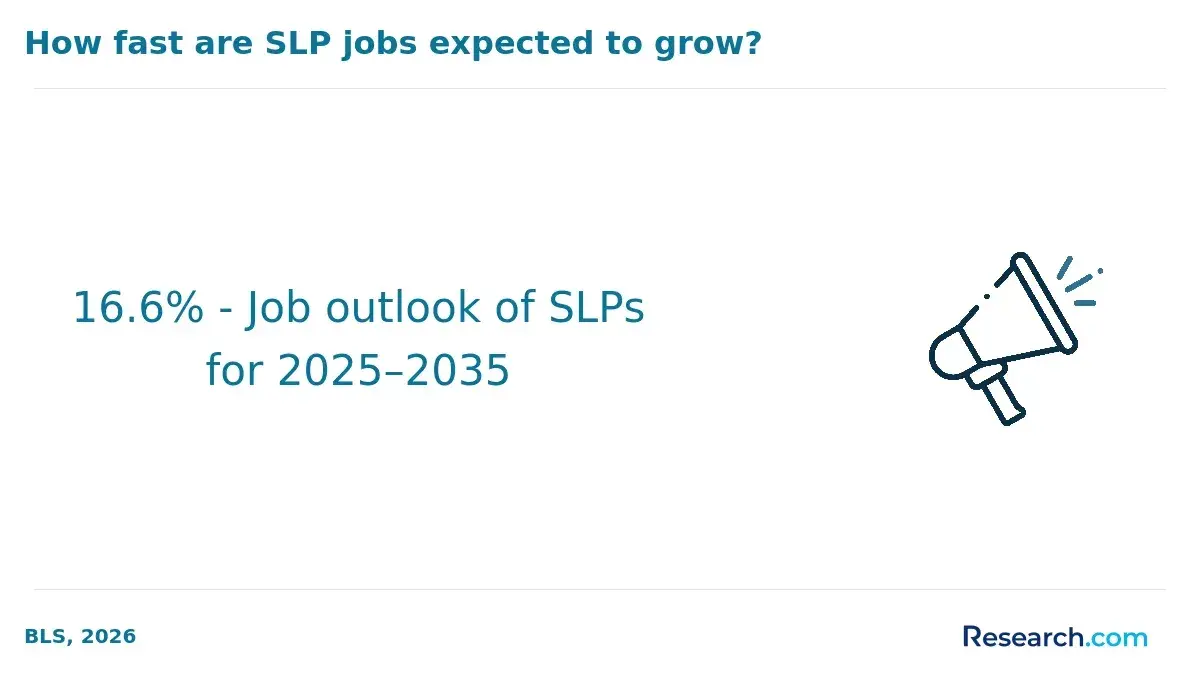
These skills matter in a growing profession. The U.S. Bureau of Labor Statistics projects 17% employment growth for speech-language pathologists from 2025 to 2035, with about 12,500 openings projected annually on average over the decade. That outlook does not mean every telepractice-focused role will pay the same or be available in every location, but it reinforces the value of entering the field with adaptable clinical and technology skills. Students exploring setting and compensation differences can also review highest paying speech pathology jobs.
Strong skill development is observable. A student should be able to explain why a remote session is appropriate, set up a safe session, deliver a responsive intervention, manage an unexpected problem, and reflect on what should change next time. Familiarity with a platform is useful, but it is not the same as clinical competence.
How can students verify whether a program offers real telepractice experience?
Marketing language can blur the difference between virtual coursework and supervised remote clinical care. The fastest way to verify a program is to ask for specific, current operational details from the clinical education office rather than relying only on a general program webpage.
Ask these questions in writing or during an admissions conversation so you can compare answers across schools.
- How many telepractice direct-contact hours do students typically complete, and are any hours required for every student?
- Are remote sessions conducted with real clients, simulations, standardized patients, or a combination?
- Which client populations, age groups, diagnoses, and settings are commonly available through telepractice?
- Who secures practicum and externship placements, and what happens if a local or remote placement falls through?
- How are supervisors assigned, how frequently do they observe sessions, and how is feedback documented?
- Which secure platform, equipment, privacy procedures, and technology support are provided?
- Are students responsible for travel to campus, regional sites, or placement locations despite the program's online format?
- Does the program have a written disclosure addressing educational and licensure eligibility for residents of your state?
Request the clinical handbook, sample placement timeline, and program-specific technical requirements if they are available. Written materials are more useful than broad assurances because they show whether requirements, student responsibilities, and contingency procedures are defined.
It is also reasonable to ask whether the school tracks telepractice experiences separately. A program that can describe its workflows and outcomes without revealing private student information is usually better positioned to explain what you can realistically expect. If representatives cannot answer basic questions about supervision, client contact, or state eligibility, treat that uncertainty as a decision factor rather than assuming the details will work out after enrollment.
What limitations or compliance issues affect telepractice training in graduate SLP education?
Telepractice can improve access, but it has practical and legal limits. A student's ability to deliver remote services is shaped by the placement site, supervisor, university policies, payer requirements, client needs, technology access, and rules in the jurisdiction where the client receives services. Programs must manage these constraints while students remain under appropriate supervision.
Licensure is especially important. In many situations, the relevant jurisdiction is where the client is physically located during the service, not where the student, supervisor, or university is located. Requirements can vary by state and may change. An interstate compact or employer policy may eventually broaden mobility in some locations, but students should not assume it replaces current state authorization or site requirements.
Privacy and security are equally central. Remote sessions may expose information through unsecure networks, shared household devices, screen captures, unapproved recording, or conversations that others can overhear. Students need training in secure technology, informed consent, private workspaces, emergency contacts, and procedures for a lost connection during a session.
Telepractice may also be clinically unsuitable or less effective in certain circumstances. Examples can include clients who need hands-on examination, lack a reliable facilitator when one is necessary, cannot access a private or stable environment, or require immediate in-person support. Appropriate care means recognizing these limitations and making referrals or changes to service delivery when needed.
Common mistakes include assuming that a video platform makes a service compliant, counting every virtual activity as clinical contact, or treating a supervisor's license as blanket permission for a student to work with any client anywhere. Avoid these errors by following the university's clinical policies, the placement site's procedures, supervisor direction, and the current rules of the client's jurisdiction.
How should prospective students compare programs for telepractice readiness?
Start by deciding what telepractice readiness means for your goal. If you want a hybrid school job, a program with strong school-based placements and caregiver collaboration may fit well. If you hope to work in medical, adult, or private-practice settings, prioritize programs that can document relevant remote assessment, counseling, and interprofessional experiences. If telepractice is merely a useful secondary skill, prioritize accreditation, state eligibility, total cost, and overall clinical quality first.
Use the following comparison factors to separate programs that offer a virtual learning format from those that provide deliberate telepractice education.
| Comparison factor | Strong evidence | Potential concern |
| Accreditation | Current CAA accreditation is clearly stated and independently verifiable. | Vague claims of alignment, approval, or future accreditation. |
| Telepractice curriculum | Published course descriptions or clinical competencies cover remote assessment, intervention, ethics, and technology. | A general statement that courses are delivered online. |
| Live clinical experience | The program explains whether students serve real remote clients and describes typical opportunities. | No distinction between simulation, observation, and direct client contact. |
| Supervision | Clear processes for supervisor credentials, observation, feedback, and competency evaluation. | Unclear responsibility for oversight during off-site or remote sessions. |
| Placement support | Written explanation of who arranges sites, how sites are approved, and backup plans. | Students are broadly told to find their own placements without defined support. |
| State and travel fit | Current state-authorization and licensure disclosures plus transparent residency requirements. | Assumptions that online enrollment means local eligibility or no travel. |
| Total investment | Tuition, mandatory fees, travel, equipment, background checks, and placement-related costs are considered together. | Comparison based only on a per-credit tuition figure. |
After narrowing the list, contact each program's admissions and clinical-placement offices with the same questions. Compare written answers, not just impressions from a recruitment event. Applicants who need flexibility may also investigate speech pathology 5 year programs, but should confirm that an accelerated academic timeline does not reduce access to the clinical depth they need.
The best fit is usually the program that can document accredited preparation, realistic placement support, applicable state eligibility, and supervised experiences aligned with your intended clients and work setting. Choose another option when the program cannot clearly explain its clinical model, expects unavailable travel or technology resources, or leaves major licensure questions unanswered.
Other Things You Should Know About Speech Language Pathology
They may count when they involve supervised direct client or patient contact and meet the program's clinical-education policies. Observation, platform training, recorded-session viewing, and many simulations can be educationally useful but generally are not the same as direct client-contact hours. Confirm how a specific program records each activity.
Yes, if you complete an appropriately accredited graduate program and meet the applicable clinical, examination, certification, and state licensure requirements. However, online academic delivery does not eliminate in-person clinical placement, campus residency, travel, or state authorization requirements that a particular program may impose.
Usually, students need reliable internet, a computer meeting program specifications, a webcam, headphones or a headset, and a private workspace. Programs and placement sites may require secure software, specific browsers, background checks, or other technology. Obtain the written requirements before buying equipment or committing to a program.
No. Many SLP positions are primarily in person. Still, telepractice experience can be useful because employers may use hybrid service models, remote consultations, or digital documentation systems. The most important preparation is broad clinical competence plus the ability to determine when remote care is appropriate and compliant.
References
- Clinical Experiences | Online SLP Grad Program - Baylor CSD https://csd.robbins.baylor.edu/graduate/masters-programs/online-masters-program/curriculum/clinical-experiences
- Online Master's in Speech-Language Pathology | NEIT https://www.neit.edu/academics/graduate-degrees/speech-language-pathology-ms
- Online Speech Therapy Degree Programs: What Students... https://hellonote.com/blogs/online-speech-therapy-degree-programs-guide/
- Online Master of Science in Speech-Language Pathology - General Pathway https://slponline.ithaca.edu/programs/masters-speech-language-pathology-online
- Online MSLP Programs with No GRE Requirement for Admissions https://www.speechpathologydegrees.com/online/mslp-no-gre-required