2027 Social Work to Speech-Language Pathology: Compare Education Paths and Career Fit

Co-Founder and Chief Data Scientist

Reviewed by Rhea Paul, PhD
SLP Education & Research Expert
Choosing between social work and speech-language pathology means choosing two very different ways to help people. Social workers address people's mental health, safety, family, housing, and community needs; speech-language pathologists assess and treat communication and swallowing disorders. Both can be meaningful, licensed careers, but their graduate education, clinical training, daily work, and earning potential differ substantially. This guide helps prospective students compare the paths, identify their strongest fit, and plan practical next steps before investing in a degree.
Key Things You Should Know
- Social work offers multiple entry points: a BSW may qualify graduates for many generalist roles, while clinical therapy usually requires an MSW, supervised experience, and independent clinical licensure.
- Speech-language pathology generally requires a CAA-accredited master's degree, extensive supervised clinical education, a clinical fellowship, and state licensure; SLPs had a $97,870 median annual wage in May 2025.
- Choose social work for broad systems, counseling, advocacy, and crisis-oriented work; choose SLP for communication or swallowing assessment, structured therapy, and science-based clinical practice.
How do social work and speech-language pathology education paths differ?
Social work education centers on human behavior, social policy, ethics, assessment, case management, community practice, and clinical intervention. Speech-language pathology education is a health-professions pathway rooted in communication sciences and disorders, anatomy and physiology, language development, audiology, diagnostics, and supervised treatment.
The largest practical difference is that social work permits more career entry points. A bachelor's degree in social work can lead to many direct-service and case-management roles, while independent psychotherapy requires graduate education and licensure. Speech-language pathology is more standardized: most people seeking to become an SLP complete a qualifying master's program before entering professional practice.
This comparison shows how the educational models affect the time, coursework, and role options available to a career changer.
| Factor | Social work | Speech-language pathology |
| Primary academic focus | People-in-environment perspective, social systems, behavioral health, advocacy, and services | Communication, speech, language, cognition, voice, hearing, and swallowing |
| Common undergraduate major | Social work, psychology, sociology, or related field | Communication sciences and disorders; other majors may require prerequisites |
| Graduate credential for clinical practice | Master of Social Work (MSW) | Master's degree in speech-language pathology |
| Field education | Practicum or internship placements, usually involving agencies and client services | Required clinical practicum with supervised assessment and treatment experience |
| Postdegree supervised period | Usually required for independent clinical licensure; details vary by state | Clinical fellowship and state-specific requirements before or alongside full licensure |
| Career flexibility | Broad across social services, schools, health care, policy, nonprofit, and behavioral health settings | Focused clinical profession across schools, health care, rehabilitation, and private practice |
Students who already know they want a tightly defined clinical specialty may prefer SLP's clearer professional sequence. Students who want flexibility across direct services, policy, administration, community work, and therapy may find social work more adaptable. For students able to commit early, 5-year speech pathology programs can combine undergraduate and graduate study, but applicants should still verify accreditation and licensure eligibility.
Which degree levels do each field require for entry?
The degree required depends on the job you want, not simply the profession's name. Social work has bachelor's-level and master's-level roles, whereas speech-language pathology ordinarily requires a graduate degree for professional SLP practice.
The table below separates common credentials from the work they can support. Titles and scope of practice can vary by employer and state.
| Credential | Typical path | What it may support | Important limitation |
| BSW | Bachelor's degree in social work | Generalist social services, case management, community outreach, and some school or agency positions | Does not ordinarily qualify someone for independent clinical psychotherapy |
| MSW | Graduate social work degree | Advanced casework, behavioral health roles, clinical practice under applicable credentials, leadership, and specialized services | Independent clinical practice requires additional state licensure and supervision |
| SLP master's degree | Graduate degree in speech-language pathology or communication sciences and disorders | Required educational foundation for the professional SLP pathway | Degree completion alone does not replace clinical fellowship, examination, or state licensing steps |
| SLP doctorate | PhD, EdD, or clinical doctorate, depending on the program | Research, faculty, leadership, or advanced specialty goals | Not generally required to become a practicing SLP |
A BSW can also create an efficient MSW route because many CSWE-accredited MSW programs offer advanced standing to eligible BSW graduates. By contrast, applicants to SLP graduate school who majored outside communication sciences often need prerequisite coursework before starting clinical graduate study.
When comparing speech language pathology master's programs, look beyond admissions accessibility. Confirm whether the school accepts your prior coursework, whether it requires leveling classes, and whether its accreditation status supports the license you intend to pursue.
How does licensure compare for social workers and speech-language pathologists?
Both fields are regulated primarily at the state level, so no national overview can replace checking the licensing board where you plan to work. However, their licensure structures differ in an important way: social work licenses are tiered by education and scope, while SLP licensure generally follows a more uniform graduate-degree-to-clinical-practice sequence.
Social work license names vary, but states commonly use credentials such as Licensed Baccalaureate Social Worker, Licensed Master Social Worker, and Licensed Clinical Social Worker. An LCSW or comparable independent clinical credential typically requires an MSW, a licensing examination, and postdegree supervised clinical experience. Some states also regulate bachelor's-level social work practice, while others focus licensing requirements on master's-level practice.
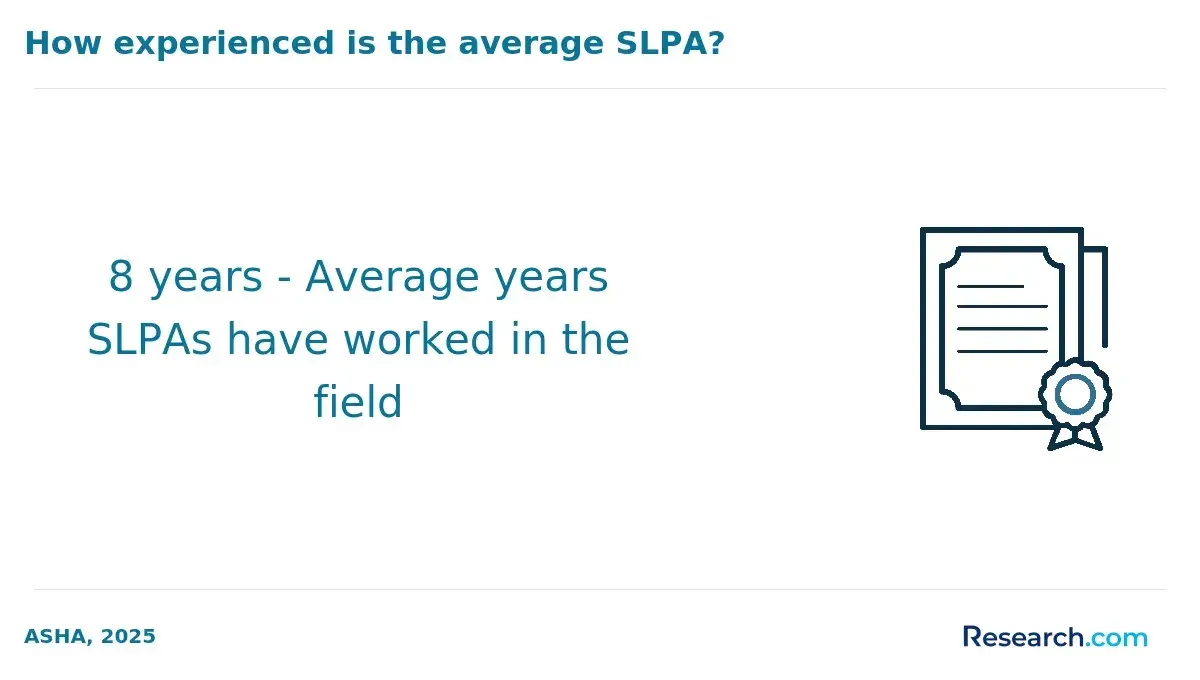
SLPs typically need a qualifying master's degree, supervised clinical education, a national examination, and a postgraduation clinical fellowship or comparable supervised professional experience to meet state requirements. Many employers prefer or require the Certificate of Clinical Competence in Speech-Language Pathology (CCC-SLP) from the American Speech-Language-Hearing Association, although a professional certification is not identical to a state license.
Before enrolling, use this sequence to reduce a costly licensing mismatch.
- Identify the state or states where you expect to work, including states where you may provide telepractice.
- Read the licensing board's current education, supervision, examination, and background-review rules.
- Ask the school for its written professional licensure disclosure for your state.
- Confirm that online coursework, clinical placements, and supervised hours will be accepted by the relevant board.
- Keep copies of syllabi, practicum records, supervisor documentation, and licensure correspondence.
A common mistake is treating a degree title as proof of licensure eligibility. A degree may be academically relevant but still fail to meet a particular state's course, clinical-hour, residency, or supervised-experience rules.
What accreditation should social work programs have?
For a U.S. BSW or MSW leading to professional social work practice, the central programmatic accreditation to verify is accreditation by the Council on Social Work Education (CSWE). CSWE accreditation indicates that a program meets its Educational Policy and Accreditation Standards and is especially important for licensure eligibility, advanced standing admission, and employer confidence.
Students should verify the exact program and degree level, not merely the institution. A university may be institutionally accredited while a particular social work program is not CSWE-accredited. This distinction matters most when you want an MSW that may lead to clinical licensure or a BSW that may qualify you for advanced standing.
Ask each program these questions before applying:
- Is the specific BSW or MSW program currently accredited by CSWE, and what is its current status?
- Does the curriculum meet the educational requirements for licensure in my intended state?
- How are field placements assigned, monitored, and supported for online or distance students?
- Can my prior BSW qualify me for advanced standing, and what GPA or recency rules apply?
- What are the total tuition, fees, travel expectations, and field-placement costs beyond published tuition?
Do not rely only on a school's marketing language such as "aligned with" or "designed for" social service careers. Confirm CSWE status through the accreditor and review the school's current catalog and state authorization information.
What accreditation should speech-language pathology programs have?
For the standard SLP licensure pathway, prospective students should prioritize a graduate program accredited by the Council on Academic Accreditation in Audiology and Speech-Language Pathology (CAA), which is part of ASHA. CAA accreditation is a major eligibility safeguard because state boards, employers, and ASHA certification pathways commonly rely on a qualifying accredited graduate education.
Accreditation status requires careful reading. A program may be fully accredited, in candidacy, or pursuing accreditation; those categories can have different implications depending on graduation timing and state requirements. Obtain confirmation in writing from both the program and the licensing authority if your eligibility depends on a newer program's status.
The following checks help distinguish an appropriate online or campus-based SLP program from one that may create licensing barriers.
- Verify the program's CAA status and review the dates associated with that status.
- Confirm the program accepts students residing in your state and has a professional licensure disclosure for that state.
- Ask how clinical practicum sites are secured, who approves them, and whether travel or relocation may be necessary.
- Determine whether the program requires campus immersions, live online classes, or daytime clinical availability.
- Confirm that all required clinical education can be completed within the program's planned sequence.
Online delivery does not mean fully remote clinical training. Students may complete academic courses online while attending in-person practicum or externship placements. The practical placement model, not the marketing label, determines whether an online option works with your work and family obligations.
Which skills and work settings fit social work best?
Social work is usually the stronger fit for people who want to understand a client's challenges within family, financial, cultural, institutional, and community contexts. The work often combines relationship building with documentation, care coordination, crisis response, resource navigation, advocacy, and - at the clinical level - psychotherapy.
Common settings include child and family service agencies, hospitals, behavioral health organizations, schools, veterans' services, correctional settings, nonprofit organizations, public agencies, and private therapy practices. Day-to-day work can shift quickly because clients may face urgent housing, safety, health, or legal concerns.
Social work may fit you well if these patterns feel energizing rather than draining:
- You want to work with complex life circumstances, not only a single clinical condition.
- You can build trust with people from different backgrounds while maintaining professional boundaries.
- You are comfortable coordinating with families, schools, insurers, courts, health professionals, and public agencies.
- You value advocacy and systems change alongside direct client support.
- You can tolerate emotionally difficult cases, paperwork, and competing service demands.
Consider another helping profession if you strongly prefer highly structured one-to-one clinical sessions, measurable skill drills, and a narrower treatment focus. Social work can offer those elements in therapy practice, but its broader systems orientation remains central.
Which skills and work settings fit speech-language pathology best?
Speech-language pathology is often the better fit for people drawn to communication science, developmental milestones, rehabilitation, and repeated clinical measurement. SLPs evaluate and treat speech, language, social communication, cognitive-communication, voice, fluency, and swallowing disorders, depending on their setting and population.
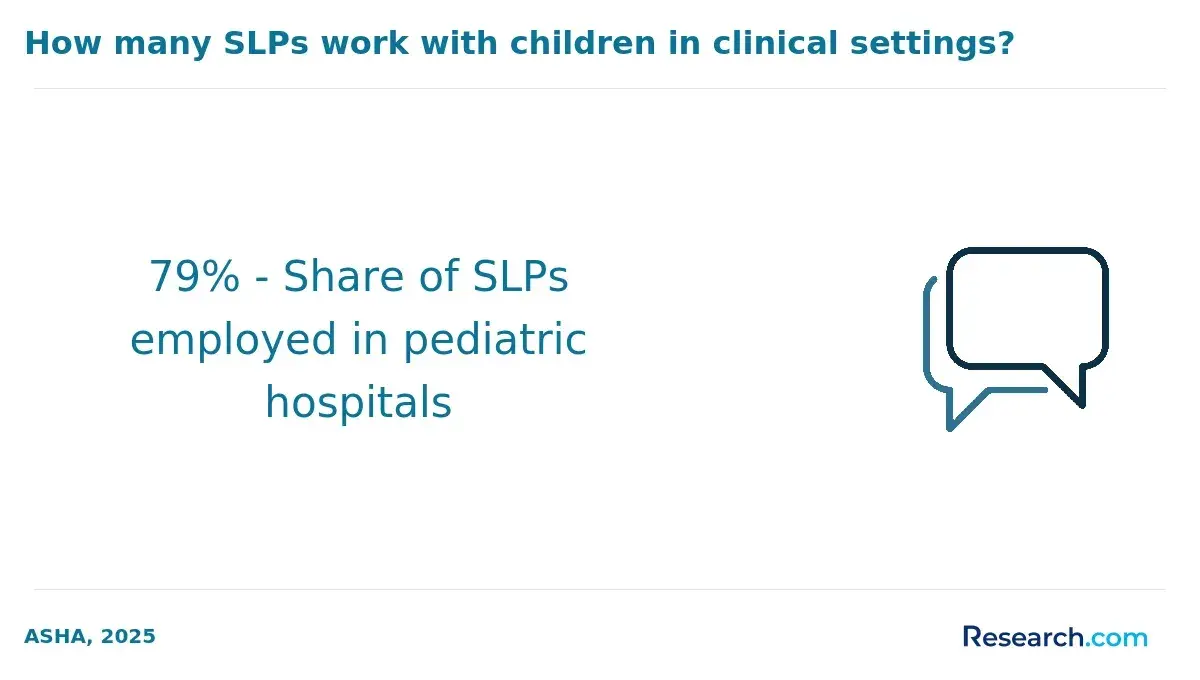
SLPs commonly work in public schools, early-intervention programs, hospitals, outpatient clinics, rehabilitation facilities, skilled nursing facilities, universities, and private practices. A school-based SLP may manage eligibility meetings, individualized education program documentation, and communication goals. A medical SLP may assess swallowing or communication changes related to stroke, brain injury, cancer treatment, or neurological disease.
SLP is generally a strong fit when you enjoy the following work characteristics:
- Using observation, testing, and clinical evidence to identify a specific communication or swallowing need.
- Planning structured, individualized interventions and tracking progress over time.
- Teaching clients, families, educators, and care teams how to support communication goals.
- Working with detailed clinical documentation and treatment plans.
- Applying technology such as augmentative and alternative communication tools, telepractice platforms, and digital assessment systems.
Technology can support SLP care, particularly through telepractice and communication devices, but it does not eliminate the need for clinical judgment, hands-on assessment, and relationship-based intervention. If flexibility is important, compare online masters in speech language pathology by their clinical-placement support and state eligibility, not just by whether lectures are online.
How do salaries and job outlook compare between these careers?
Speech-language pathology has a higher national median wage than social work overall, but pay is not the only return-on-investment factor. Geographic location, work setting, license level, experience, productivity expectations, benefits, and whether you work a school-year schedule can materially affect individual compensation.
The figures below use the latest published national BLS information available for each occupation series. Because the projection periods are published on different schedules, use them as directional labor-market context rather than an exact head-to-head forecast.
| Occupation | National median annual wage | Employment outlook | What the data means |
| Speech-language pathologists | $97,870 in May 2025 | 17% projected growth from 2025 to 2035; about 12,500 openings annually on average | Demand is projected to grow much faster than average, supporting a strong market outlook for qualified SLPs. |
| Social workers | $61,330 in May 2024 | 7% projected growth from 2023 to 2033 | Social work remains a broad occupation with demand across service systems, though pay varies widely by specialty and license level. |
The wage gap should be interpreted alongside training cost and role preference. An MSW may provide a less expensive or faster transition for someone already holding a relevant bachelor's degree, while SLP often requires more prerequisite science coursework and a tightly sequenced clinical program. At the same time, SLP's higher national median wage can improve the financial case for students who genuinely want its clinical focus.
For a closer look at role and setting differences, review current speech therapy salary information alongside local job postings. Do not assume national medians predict an offer in your city or specialty.
What are the biggest cost and time differences in training?
The biggest financial difference is usually the number of required steps before earning independent professional standing. A student with a BSW may qualify for advanced-standing MSW study, reducing graduate coursework. An aspiring SLP with an unrelated bachelor's degree may need prerequisite or leveling courses before entering a master's program, followed by supervised professional experience.
Published tuition is only one part of the decision. This table identifies the costs and time commitments that commonly change the real price of each path.
| Cost or time factor | Social work | Speech-language pathology |
| Possible undergraduate route | BSW can lead to entry-level work and may shorten a later MSW through advanced standing | Communication sciences major is common; unrelated majors may need prerequisite coursework |
| Graduate-study structure | MSW length varies by prior degree, pacing, and concentration | Master's programs are typically cohort-based and clinically sequenced |
| Field training | Agency-based field education may affect ability to maintain full-time employment | Clinical practicum and externships may require daytime availability and travel |
| Postdegree requirement | Supervised experience for independent clinical licensure | Clinical fellowship or comparable state-approved supervised experience |
| Often-overlooked expenses | Background checks, transportation, professional liability coverage, licensure fees, and reduced work hours during placement | Prerequisites, assessment materials, travel to placements or campus sessions, background checks, examination fees, and reduced work hours during clinical training |
A frequent mistake is selecting the lowest per-credit tuition without calculating prerequisites, mandatory fees, lost work time, travel, and the likelihood of completing placements on schedule. Another is assuming an online program removes placement-related costs or daytime commitments.
Use the following comparison process before accepting admission:
- Request a written estimate of required credits, mandatory fees, and expected additional program expenses.
- Map every prerequisite, practicum, internship, clinical fellowship, and licensing step on a calendar.
- Calculate whether you can work during each placement period and estimate any income reduction.
- Compare federal aid, scholarships, employer assistance, and assistantship opportunities before considering private loans.
- Choose the program that meets licensure requirements with the lowest realistic total cost, not simply the lowest advertised tuition.
Which path is better for your goals and personality?
Neither path is universally better. Social work is usually the better match for someone who wants broad client advocacy, mental health or community services, flexibility across systems, and the option to pursue clinical therapy after an MSW and supervised licensure. Speech-language pathology is usually the better match for someone who wants a specialized health profession focused on communication and swallowing, structured assessment, and skill-based intervention.
Use this direct comparison to make the decision based on the work you want to perform rather than a job title or salary statistic.
| If you most want to... | Usually stronger fit | Why |
| Address mental health, family systems, housing, safety, and resource barriers | Social work | The profession is designed to connect individual needs with services, systems, and advocacy. |
| Provide psychotherapy after graduate education and clinical supervision | Social work | An MSW followed by independent clinical licensure can support therapy practice, subject to state rules. |
| Assess and treat speech, language, voice, cognitive-communication, or swallowing disorders | Speech-language pathology | SLP education and licensure are specifically built around these clinical needs. |
| Work primarily through structured therapeutic exercises and measurable communication goals | Speech-language pathology | Assessment data and individualized treatment planning are core components of SLP practice. |
| Keep multiple career directions open across public service, nonprofit, health care, and policy | Social work | Social work credentials can support a wider range of systems-oriented and direct-service roles. |
| Pursue a defined clinical specialty with a higher national median wage | Speech-language pathology | SLP has a more standardized clinical path and a higher reported national median wage, but requires substantial clinical preparation. |
Before committing, try to observe both professions if possible. Speak with a school social worker, hospital social worker, school-based SLP, and medical SLP; ask what they document, how they handle difficult cases, how much schedule control they have, and what they would change about their training. Your reaction to their everyday work is often more revealing than comparing program brochures.
If you remain uncertain, start with the least irreversible step: complete relevant prerequisite courses, volunteer in a setting serving your preferred population, or take a role such as behavioral health support staff, case-management assistant, rehabilitation aide, or speech-language pathology assistant where permitted. Verify local scope-of-practice rules before pursuing assistant roles.
Other Things You Should Know About Speech Language Pathology
Possibly. Many SLP master's programs accept applicants from other majors, but they commonly require prerequisite courses in communication sciences, phonetics, language development, audiology, statistics, and related areas. The exact prerequisites and their acceptable completion dates vary by program.
No. An independently licensed clinical social worker may provide mental health services within the scope allowed by state law, but diagnosing and treating speech, language, and swallowing disorders is within the SLP scope of practice. Clients may benefit from coordinated care involving both professionals.
It depends on the program and placement schedule. Both degrees include field training that can conflict with full-time work. SLP programs are often especially rigid because clinical experiences must occur in a required sequence, while some MSW programs offer part-time pacing. Ask each school for typical daytime placement expectations.
Yes. In addition to professional licensure, public schools may require state education credentials, school-service endorsements, or other approval. Requirements differ by state and sometimes by district, so check both the professional licensing board and the state education agency before enrolling.
References
- Medical vs. School-Based SLP: Choosing the Right Path for You https://onlinegrad.pepperdine.edu/blog/medical-slp-vs-school-slp/
- OT vs. PT vs. SLP: Which Career Fits You Best? https://www.sacredheart.edu/news-room/news-listing/ot-vs-pt-vs-slp-which-career-fits-you-best/
- Is Speech Pathology Right For You? 5 Questions to Ask https://bouve.northeastern.edu/news/is-speech-pathology-right-for-you-5-questions-to-ask/