2027 What to Look for in an Online SLP Program's Support Services

Co-Founder and Chief Data Scientist

Reviewed by Rhea Paul, PhD
SLP Education & Research Expert
Imagine enrolling in an online SLP program only to find limited access to academic advising, technical help, or career support. This lack of services can delay progress and increase frustration, especially for students juggling work and family. Support services often determine how smoothly students transition from coursework to professional practice.
Comprehensive advising, accessible faculty, and responsive tech teams ensure students stay on track and meet certification requirements. This article examines critical support features in online SLP programs and guides prospective students in selecting programs that offer practical assistance for a successful educational and career journey.
Key Things You Should Know
- Online SLP programs in 2026 must provide strong academic advising and responsive technical support to improve retention; 78% of students report better success with accessible support services.
- Quality clinical placement assistance is vital, as 90% of graduates rely on program services for securing diverse practicums needed for ASHA certification.
- Robust mental health and peer networking resources enhance student well-being, crucial for intensive online SLP coursework and practicum demands in 2024-2025 studies.
What accreditation should an online SLP program have?
Accreditation by the Council on Academic Accreditation in Audiology and Speech-Language Pathology (CAA) is essential for online SLP programs to ensure quality education and professional recognition. CAA accreditation verifies that programs meet national standards for curriculum, faculty qualifications, and clinical practicum requirements.
Without this accreditation, programs may have limited oversight, placing licensure eligibility and career prospects, especially in public schools, at risk.
Employers and school districts prefer graduates from CAA-accredited programs. The 2024 ASHA Schools Survey indicated a 25.7% response rate, reflecting the demand for certified professionals.
Completing a CAA-accredited online SLP program ensures graduates fulfill licensure boards' clinical hour requirements and meet educational standards for ASHA's Certificate of Clinical Competence in Speech-Language Pathology (CCC-SLP).
Some states mandate graduation from a CAA-accredited program to obtain state licensure, so confirming accreditation can prevent legal practice barriers. Accredited programs also tend to provide stronger academic support, approved clinical practicum locations, and updated technology, boosting learning outcomes.
When considering programs, it is important to evaluate both CAA and regional accreditation since regional accreditation for speech pathology programs alone may not suffice for many career paths.
For those seeking affordable options, exploring online speech pathology master's programs with proper accreditation can be highly beneficial.
How do you verify an online SLP program's legitimacy?
Verify accreditation of online SLP programs by ensuring they are accredited by the Council on Academic Accreditation in Audiology and Speech-Language Pathology (CAA), recognized by the American Speech-Language-Hearing Association (ASHA). This accreditation guarantees the curriculum meets national standards necessary for certification.
Clinical placement support is critical, as hands-on experience is required for certification. Many online students face challenges securing quality placements, with reports highlighting issues related to site sourcing and licensing. Reliable programs assist with clinical placements through vetted, supervised sites.
Assess faculty qualifications-licensed educators with active ASHA certification are essential. Look for transparent communication about academic advising, mentorship, and technical support to gauge a program's commitment to student success.
Check graduate outcomes like certification pass rates and employment data. It's also important to check state licensure requirements for online speech pathology degrees because they vary and affect your ability to practice in your state.
Ask key questions before enrolling:
- Is accreditation current and ASHA-recognized?
- What clinical placement support is available?
- How do graduates perform on the Praxis exam?
- Are faculty members licensed?
- Does the program satisfy your state licensing criteria?
Gather information from official program materials, direct admissions contacts, and independent forums to avoid programs that don't meet licensure and career standards.
For insight on career potential and where do SLPs make the most money, consider researching job markets post-certification.
What support services are essential in online SLP programs?
Essential support in online SLP programs includes comprehensive academic advising, technical assistance, and clinical placement coordination.
Personalized academic advising helps students navigate course selections, certification requirements, and licensing pathways, aligning education with career goals. These features represent key academic and clinical support services in speech pathology online programs.
Technical support is vital given telepractice's dependence on digital platforms. Effective programs provide 24/7 IT help desks, tutorials, and troubleshooting.
A PMC study revealed only 1.8% of surveyed SLPs in 2015 continued telepractice after initial trials, highlighting ongoing technology barriers. Reliable platforms and continuous training help reduce dropout risks and sustain learning.
Clinical placement coordination ensures students secure supervised practicum experiences in diverse settings like schools, hospitals, or private clinics.
Strong program-site partnerships guarantee students meet ASHA certification criteria and gain practical skills. Comprehensive student support for online speech pathology programs also involves mental health counseling, virtual study groups, and mentorship to counteract isolation and stress common in remote learning.
Financial aid advising is another pillar, guiding students through scholarships, loans, and grants tailored for SLP students, easing financial pressure and allowing focus on studies. Prospective students interested in accelerated options can explore fast track speech pathology programs to meet their career goals efficiently.
Top online speech pathology programs integrate a rigorous, evidence-based curriculum covering foundational sciences, clinical practice, and telehealth competencies.
Core courses typically include anatomy and physiology of speech and hearing, phonetics, language development, and neuroanatomy to ensure a clear understanding of communication disorders' biological and cognitive mechanisms.
Advanced topics address assessment and intervention strategies for pediatric and adult populations, emphasizing articulation, fluency, voice disorders, and swallowing dysfunctions.
The best curriculum for online speech pathology programs often features telepractice training, reflecting the rising demand for remote services.
For example, programs like USAHS's hybrid MS-SLP curriculum offer virtual clinical experiences with high-risk adult patients while highlighting the need for faculty skilled in telehealth methods. Prospective students should prioritize programs that combine robust telepractice modules with supervised clinical hours.
Specialized coursework may include multicultural communication and bilingual speech pathology, preparing candidates for diverse clients. Evidence-based research methods and ethics are also key components, sharpening critical thinking and professionalism.
Look for courses balancing theoretical knowledge with hands-on clinical practica, including synchronous virtual labs or local clinical placements. This hybrid approach meets ASHA certification standards and supports remote clinical skill development.
Prospective students should verify faculty credentials and available support services in clinical training pathways with telehealth integration.
For those exploring options, a comprehensive list of speech pathology programs can guide informed decisions about online SLP program curriculum content across various schools.
Admission to online speech pathology degree programs generally requires a bachelor's degree from an accredited institution with a minimum GPA around 3.0. Applicants must provide official transcripts, letters of recommendation, and a personal statement demonstrating their dedication to the field.
GRE scores are often requested, though some programs waive them based on relevant academic or professional experience. Volunteer or work experience in speech-language pathology or related healthcare areas significantly strengthens applications.
Prerequisite courses usually include biology, anatomy, psychology, linguistics, and statistics, often with grades of B or higher. Some schools offer conditional admission allowing completion of these courses during the program. International applicants may need TOEFL or IELTS scores to prove English proficiency.
Because clinical training is essential, online students must complete in-person practicum hours. This requires living near approved clinical sites or arranging placements independently.
Early and thorough communication with admissions advisors helps clarify specific steps and deadlines. Preparing all documentation carefully improves application success.
Online speech pathology programs usually take 2 to 3 years to complete master's degrees, similar to traditional campus-based timelines.
Accelerated options can shorten this to about 18 months, while part-time or specialized tracks may extend beyond 3 years depending on the student's pace and clinical hour requirements. Doctoral degrees typically range from 3 to 5 years, influenced by research scope and dissertation work.
A major factor in program length is the balance between coursework and supervised clinical practicum. Most states require at least 400 clinical hours before certification, which presents challenges for fully online students in securing diverse, hands-on placements.
This practical experience is essential for competence, and some online graduates report gaps in well-rounded clinical exposure, affecting job readiness and career opportunities.
Programs that include telehealth training better prepare students for the evolving service delivery landscape. Flexibility in scheduling and access to local clinical sites also impact completion time and educational quality.
Key questions to consider include:
- How are clinical hours structured and supervised remotely?
- Is telehealth integrated into clinical training to reflect current workplace realities?
- Are part-time options available that might extend duration but improve work-study balance?
Considering these aspects can help align expectations with program demands and future career goals in speech pathology education.
Costs for online speech pathology programs vary significantly and extend beyond tuition to include fees for technology, course materials, and support services. Tuition can range from $15,000 to over $50,000 depending on the institution and degree level.
Additional expenses often include mandatory course fees, licensing exam preparation, and required textbooks or software necessary for remote learning.
Technical support is a crucial but sometimes overlooked expense. Reliable 24/7 assistance maintains uninterrupted access to coursework, especially important since budget constraints limited school telepractice usage to 1.8% in surveys, underscoring the need for robust tech support in online speech pathology programs. Verify whether a program offers dedicated IT help without hidden charges.
Equipment requirements add to costs, as students may need high-speed internet, quality webcams, headsets, and specialized software licenses. These can sum to several hundred dollars annually depending on technical demands.
Some programs charge clinical practicum or supervision fees, usually ranging from $500 to $2,000 based on placement and administrative costs. These fees cover arranging and overseeing hands-on speech pathology practice essential to training.
Students should ask programs about what tuition covers, fees for technical support or software, assistance with practicum placement costs, and whether required equipment is provided or subsidized.
- What is included in tuition versus additional fees?
- Are there costs for technical support or software?
- Does the program assist with practicum placement fees?
- What equipment is required and is it provided or subsidized?
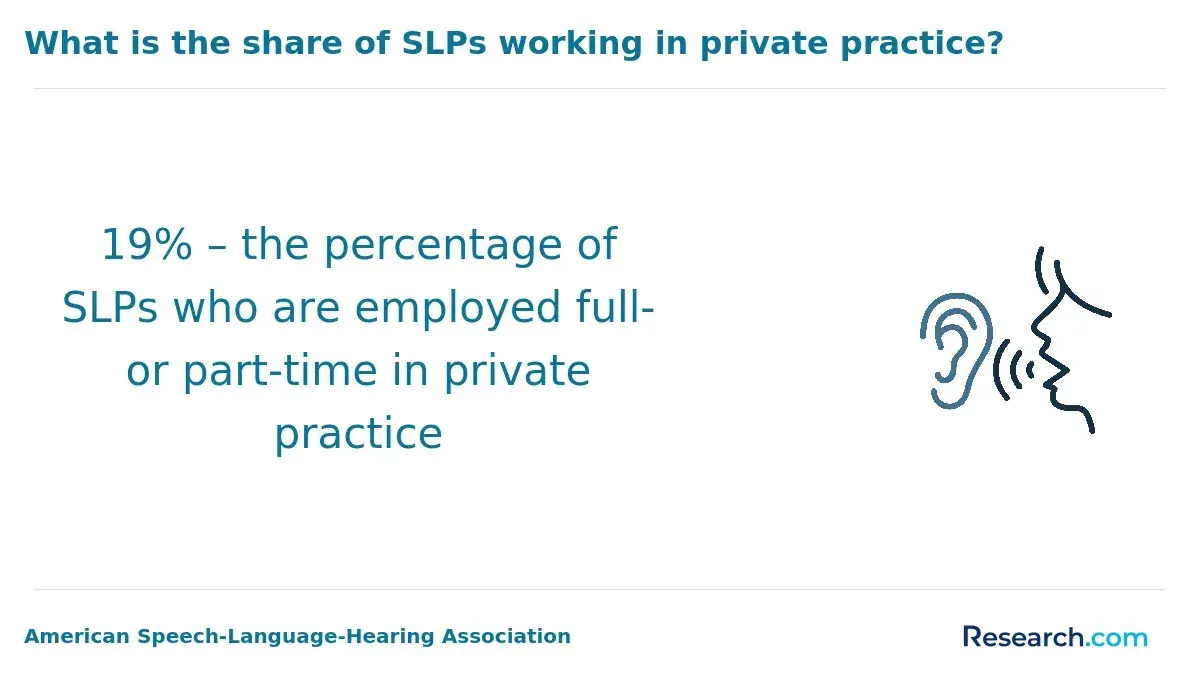
An online speech pathology (SLP) degree opens diverse career opportunities across clinical, educational, and telepractice settings. Graduates often work as licensed speech-language pathologists in schools, hospitals, rehabilitation centers, and private practices.
Telepractice roles are rapidly expanding, enabling SLPs to deliver remote therapy services to varied populations.
Career paths also include specialties such as pediatric, geriatric, neurological rehabilitation, voice therapy, and fluency disorders. Some professionals engage in research, program administration, or policy development addressing communication disorders.
Data from the Career Services and Networking ASHA 2024 schools survey, which included 3,749 SLP professionals out of 14,611 respondents, reveals an increasing demand for career services tailored to telepractice trends. This highlights the importance of programs offering clinical placement support, telepractice training, and networking opportunities with licensed professionals.
Prospective students should seek programs with strong alumni connections and career counseling to enhance job placement and assist with navigating certification across states.
Emerging fields like technology-assisted assessments and interdisciplinary collaboration with healthcare teams offer additional growth potential.
Staying informed on credentialing requirements and continuing education advances career mobility and earning potential in speech pathology.
Speech pathology graduates entering the workforce in 2026 can expect median salaries from $70,000 to $85,000 annually, influenced by employment setting and location.
Entry-level roles in public schools or outpatient clinics typically start near $65,000, while hospital and private practice positions may exceed $90,000. Advanced degrees and specialized certifications, such as expertise in pediatric or neurological disorders, often boost earning potential.
Tuition costs for part-time online programs can be substantial, with some fees nearing $80,000. Prospective students should carefully assess career services, internships, and alumni employment rates before enrolling.
Key factors influencing salary outcomes include:
- State and regional salary differences, with urban areas generally paying more than rural ones.
- Employment sector, where healthcare facilities and private practices usually offer higher wages than school districts or community clinics.
- Additional certifications, including fluency in bilingual speech pathology.
- Experience level, as salaries rise substantially after five years in practice.
Programs offering comprehensive career counseling and strong employer networks can improve job placement rates, which is vital for justifying high tuition costs. Transparent financial aid options and realistic salary expectations are essential when evaluating program value.
What is the job outlook for SLPs?
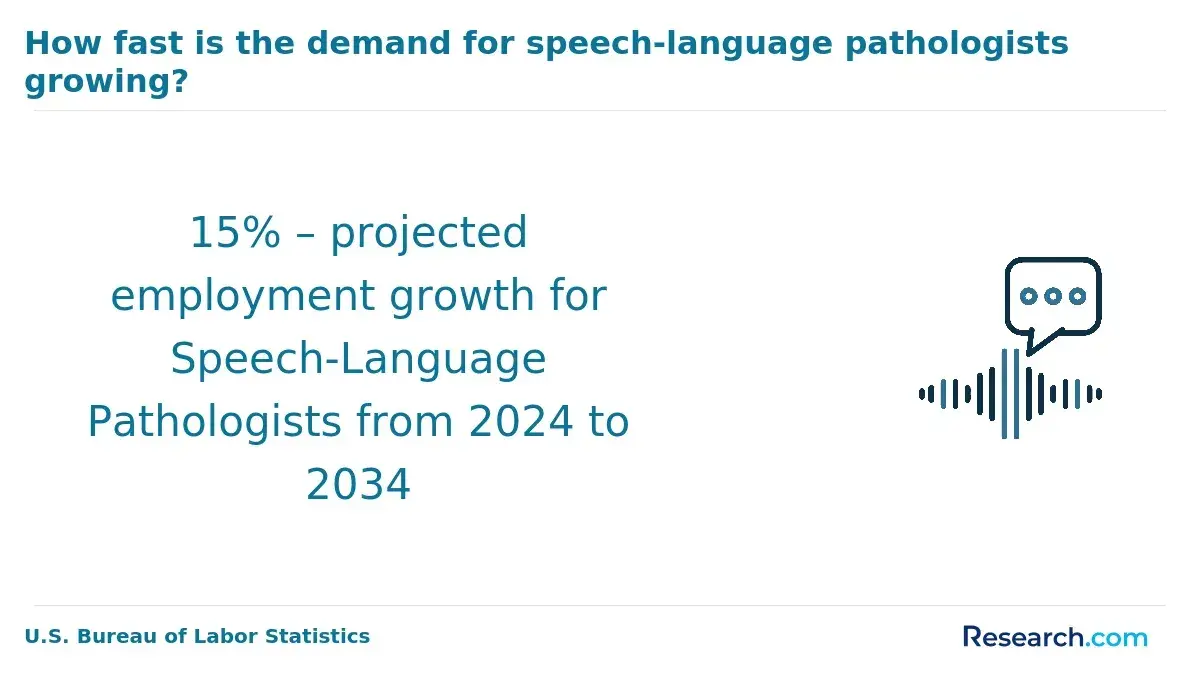
The U.S. Bureau of Labor Statistics projects a 17% growth for speech-language pathologists (SLPs) from 2025 to 2035, driven by an aging population needing rehabilitation and increased recognition of communication disorders in children. Demand spans schools, healthcare, private practice, and teletherapy platforms.
Key employment factors include:
- A rise in conditions like stroke, autism spectrum disorder, and developmental delays that require specialized care.
- Growth in educational settings where SLPs assist children with speech and language impairments, often supported by IDEA (Individuals with Disabilities Education Act).
- Expansion of telehealth programs demanding professionals skilled in digital tools and flexible service delivery.
Workforce entrants should expect competition in metropolitan areas but strong demand in rural or underserved regions. Schools are adopting data analytics to improve service efficiency.
Candidates must also navigate reimbursement challenges and state licensing variations. Programs offering career support and credentialing guidance enhance employment prospects. Staying updated on evolving technology and evidence-based practices is essential for long-term success in the field.
Other Things You Should Know About Speech Pathology
Speech pathology programs typically require students to complete a set number of supervised clinical hours to develop practical skills. These experiences often include assessments, therapy sessions, and case management with diverse client populations. Such hands-on training is crucial for meeting certification standards and prepares students to work in various settings.
In 2027, online SLP programs should offer comprehensive academic support, including access to speech-language pathology mentors, virtual tutoring sessions, and extensive online resource libraries. Additionally, they should provide platforms for peer interaction and regular feedback from instructors to enhance learning outcomes.
A strong program should provide Praxis-aligned study guides, practice tests, and faculty-led review sessions before graduation. The Praxis Speech-Language Pathology exam is the national certification test used by ASHA, and programs should also explain testing windows, score reporting, and retake policies.
Speech pathology licenses are generally issued at the state level and requirements vary across states. Professionals must obtain licensure in each state where they intend to practice, meeting local standards for education, clinical experience, and exams. Some states participate in interstate compacts to facilitate easier license portability, but checking specific state rules is essential.
- U.S. Bureau of Labor Statistics - Speech-Language Pathologists https://www.bls.gov/ooh/healthcare/speech-language-pathologists.htm
- ASHA EdFind - Accredited Speech-Language Pathology Programs https://find.asha.org/ed/
- O*NET OnLine - Speech-Language Pathologists https://www.onetonline.org/link/summary/29-1127.00
- University of Wisconsin-Eau Claire - Master of Science in Speech-Language Pathology (Online) https://www.uwec.edu/speech-language-and-hearing-sciences-department/graduate-program/speech-language-pathology-online
- Ithaca College - Online Master of Science in Speech-Language Pathology https://slponline.ithaca.edu/programs/masters-speech-language-pathology-online
- James Madison University - Master of Science (M.S.) in Speech-Language Pathology (Distance Education / Online) https://www.jmu.edu/chbs/csd/online_ms/index.shtml
- New England Institute of Technology - Master of Science in Speech Language Pathology https://www.neit.edu/academics/graduate-degrees/speech-language-pathology-ms
- Nova Southeastern University - SLP Program - Master of Science in Speech-Language Pathology https://osteopathic.nova.edu/degrees/masters/speech-language-pathology/index.html