
2027 Bachelor’s to Master’s: Advancing Your Nursing Degree

Co-Founder and Chief Data Scientist
Across the healthcare landscape, many registered nurses with a BSN find their career growth plateauing, desiring greater autonomy and impact. With the Bureau of Labor Statistics projecting a 45% growth for nurse practitioners alone by 2032, advancing your nursing degree to the master's level isn't just an option—it’s a strategic move to unlock new leadership and specialized clinical opportunities.
This comprehensive guide, crafted by career planning experts with over a decade of experience, offers the clarity and direction you need to confidently navigate your educational future and redefine your professional trajectory.
What are the benefits of getting a BSN to MSN degree program?
- This advanced credential opens doors to high-impact roles such as Nurse Practitioner, Clinical Nurse Specialist, Nurse Educator, or Nursing Administrator, allowing you to influence patient care and healthcare systems more broadly.
- Graduates with a Master's in Nursing can expect a median annual salary around $125,900, reflecting the increased responsibility and specialized expertise these roles demand.
- Pursuing your master's in nursing online provides the flexibility needed to balance your current professional and personal commitments while advancing your education.
What can I expect from a BSN to MSN degree program?
Expect an advanced nursing degree program to significantly build upon your existing BSN foundation, preparing you for complex, autonomous roles in patient care, leadership, or education. These programs are designed to deepen your theoretical knowledge, refine your clinical judgment, and equip you with specialized skills essential for advanced practice.
You'll engage with advanced pathophysiology, pharmacology, and health assessment, alongside coursework tailored to your chosen specialization. The curriculum emphasizes critical thinking, evidence-based practice, and often includes extensive clinical hours, culminating in the expertise needed to excel in a leadership or advanced practice role and to sit for certification exams.
Where can I work with a BSN to MSN degree?
With an BSN to MSN nursing degree, your professional opportunities expand significantly beyond traditional bedside roles, allowing you to practice in diverse and influential settings. You can find yourself in acute care hospitals, leading specialized units or providing advanced critical care. Many graduates move into outpatient clinics, private practices, or community health centers, offering primary care or specialized services.
Furthermore, opportunities exist in academic institutions as nurse educators, in research facilities contributing to medical advancements, or within healthcare administration, shaping policy and managing services. These roles enable a greater scope of practice and a profound impact on patient populations and healthcare systems alike.
How much can I earn with a BSN to MSN degree?
Advancing your nursing degree significantly boosts your earning potential, reflecting the expanded responsibilities and specialized expertise that come with higher qualifications. While a bachelor's provides a solid foundation, earning a Master of Science in Nursing (MSN) or a Doctor of Nursing Practice (DNP) often places you in a much higher salary bracket.
For instance, the median salary for Advanced Practice Registered Nurses (APRNs), including Nurse Practitioners, Certified Nurse-Midwives, and Clinical Nurse Specialists, is around $125,900 annually, with top earners exceeding $160,000. This substantial increase underscores the financial benefit and strong return on investment an advanced degree offers for your career.
- What is the difference between a bachelor’s and master’s in nursing? Master vs Bachelor
- What are the GPA requirements for BSN to MSN programs? GPA requirements
- How long does it take to earn an MSN after a BSN? Program Length
- What jobs can you get with a master’s in nursing? Potential Jobs
- How much more do nurses with a master’s degree make than those with a bachelor’s? Salary Comparison
- How much does a BSN to MSN program cost? Program Cost
- What financial aid is available for MSN students? Financial Aid
- Why is accreditation important for MSN programs? Why is accreditation important for MSN programs?
- What certifications can you get after completing an MSN? What certifications can you get after completing an MSN?
- What is the job outlook for nurses with a master’s degree? Job Outlook
- What factors should you consider when choosing a BSN to MSN program? What factors should you consider when choosing a BSN to MSN program?
- Should I pursue a DNP instead of an MSN? Should I pursue a DNP instead of an MSN?
BSN to MSN Programs: What Nurses Should Know Before Enrolling
A BSN to MSN program is a graduate pathway for registered nurses who already hold a Bachelor of Science in Nursing and want to move into advanced practice, nursing education, administration, informatics, or another specialized role. The decision matters because an MSN can change your scope of practice, earning potential, clinical responsibilities, and long-term career options—but it also requires time, money, clinical hours, and careful program selection.
This guide explains how BSN and MSN degrees differ, how long BSN to MSN programs usually take, what admissions committees look for, which jobs and certifications may follow, how much programs can cost, and how to decide whether an MSN—or a DNP—is the better fit for your goals.
Quick Answer: Is a BSN to MSN Worth It?
A BSN to MSN program can be worth it if you want to qualify for advanced nursing roles such as nurse practitioner, nurse educator, nurse administrator, clinical nurse specialist, nurse informaticist, nurse midwife, or nurse anesthetist. Many full-time students finish in 18 months to 3 years, though timelines vary by specialization, clinical requirements, and enrollment pace. Most competitive programs expect at least a 3.0 GPA on a 4.0 scale, but many schools also review work experience, leadership, certifications, recommendations, and career goals.
The degree is not the right choice for every nurse. If you are unsure about your specialty, cannot complete required clinical hours, or need the fastest route to a nonclinical role, you may want to compare certificates, RN to BSN options, MSN concentrations, and DNP programs before applying.
What is the difference between a bachelor’s and master’s in nursing?
The main difference between a BSN and an MSN is the level of preparation. A Bachelor of Science in Nursing prepares nurses for registered nursing practice, bedside care, care coordination, patient education, and early leadership responsibilities. A Master of Science in Nursing builds on that foundation and prepares nurses for advanced clinical practice, specialized decision-making, teaching, informatics, management, or systems-level leadership.
BSN coursework focuses on core nursing practice, health assessment, evidence-informed care, community health, leadership basics, and professional nursing judgment. MSN coursework goes further into advanced pathophysiology, pharmacology, health assessment, research application, health policy, population health, and specialty-specific clinical practice.
For nurses who choose an advanced practice registered nurse pathway, the MSN may support preparation for roles such as nurse practitioner, clinical nurse specialist, nurse midwife, or nurse anesthetist. Depending on state law and role, advanced practice nurses may have more clinical autonomy, including authority connected to diagnosing, treating, and prescribing. If prescribing authority is central to your goal, review state scope-of-practice rules and learn more about whether nurse practitioners can prescribe medication.
| Category | BSN | MSN |
| Primary purpose | Prepares nurses for general registered nursing practice | Prepares nurses for advanced practice, leadership, teaching, informatics, or specialization |
| Typical focus | Patient care, clinical foundations, safety, assessment, care coordination | Advanced assessment, pharmacology, pathophysiology, research use, policy, specialty practice |
| Common outcomes | Registered nurse roles in hospitals, clinics, community health, and long-term care | Nurse practitioner, nurse educator, nurse administrator, clinical nurse specialist, nurse informaticist, and related roles |
| Decision point | Best if you want entry or continued RN practice | Best if you want broader responsibility, specialization, or eligibility for advanced credentials |
What are the GPA requirements for BSN to MSN programs?
Most competitive BSN to MSN programs expect a minimum undergraduate GPA of 3.0 on a 4.0 scale. Some programs, especially selective advanced practice tracks, may prefer 3.2 or higher. However, GPA is usually only one part of the review process.
Graduate nursing admissions committees often look at the full application: RN experience, clinical performance, specialty exposure, leadership responsibilities, professional certifications, recommendations, prerequisite grades, and the clarity of your career goals. A nurse with a slightly lower GPA may still be competitive if the rest of the application shows readiness for graduate-level work.
If your GPA is below the stated preference, do not apply blindly. Ask each program whether it offers conditional admission, whether recent coursework can strengthen your file, and whether prerequisite grades carry more weight than older undergraduate performance. A focused personal statement can also help if it explains your goals, shows maturity, and connects your experience to the MSN track you are choosing.
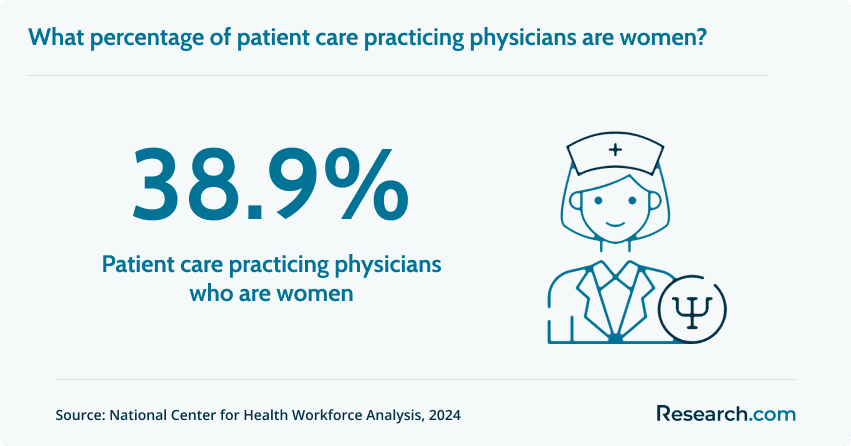
Workforce data also shows why schools increasingly evaluate applicants beyond numbers alone. In 2022, 38.9% of patient care practicing physicians were women, reflecting broader shifts in healthcare education and professional pathways. In nursing admissions, holistic review can help programs identify applicants who have strong clinical judgment, persistence, and patient-care experience even when a GPA does not tell the whole story.
The process is similar to researching qualifications in any regulated career: you need to know the minimum standards, the preferred credentials, and the factors that make an applicant stand out. Students comparing requirements across professions sometimes examine guides such as how to become an air marshal, but for BSN to MSN admissions, your nursing background and graduate readiness matter most.
| Applicant profile | What it may mean | How to strengthen the application |
| GPA at or above 3.0 | Meets the common minimum for many programs | Use your statement and references to show specialty fit and leadership potential |
| GPA around 3.2 or higher | May be more competitive for selective tracks | Highlight clinical achievements, certifications, and advanced practice goals |
| GPA below the preferred range | May require additional explanation or evidence of readiness | Ask about conditional admission, complete strong prerequisite work, and secure detailed recommendations |
How long does it take to earn an MSN after a BSN?
Most BSN to MSN programs take 18 months to 3 years after the BSN, depending on whether you study full time or part time, which concentration you choose, and how the school structures clinical hours. Full-time students may finish in 1.5 to 2 years, while working nurses often choose part-time schedules that extend the timeline to 2.5 to 3 years or somewhat longer.
Specialization matters. An MSN in nursing administration or education may have different requirements than an advanced practice track. Nurse practitioner, nurse midwife, nurse anesthetist, and clinical nurse specialist pathways typically include supervised clinical hours and may require careful coordination with approved preceptors or clinical sites.
Program format also affects your timeline. Online coursework can make graduate study easier for working nurses, but online programs still may require in-person clinical experiences, campus intensives, skills assessments, or local placement approvals. Before enrolling, confirm whether the school arranges clinical placements or expects students to find their own.
In 2022, 17.4% of registered nurses held a master’s degree and 2.7% held a doctoral degree, while 79.9% held other nursing degrees such as associate, bachelor’s, or diploma. Those figures show that graduate nursing education remains a more advanced pathway within the profession. For roles such as family nurse practitioner, an MSN can be especially important because advanced credentials affect both scope of practice and compensation; nurses researching this route often compare family nurse practitioner salary by state.
| Enrollment choice | Typical timeline stated in the article | Best for |
| Full-time MSN study | 1.5 to 2 years | Nurses who can reduce work hours or commit heavily to school |
| Part-time MSN study | 2.5 to 3 years or slightly longer | Working nurses balancing employment, family, and clinical requirements |
| Specialized advanced practice track | May take longer depending on clinical-hour requirements | Nurses pursuing certification-based clinical roles |
What jobs can you get with a master’s in nursing?
An MSN can qualify nurses for roles that require advanced clinical preparation, graduate-level leadership training, teaching ability, or health technology expertise. The best job for you depends on the MSN concentration, state licensure rules, certification requirements, and the type of healthcare setting where you want to work.
- Nurse Practitioner (NP): Nurse practitioners provide primary or specialty care, assess patients, diagnose conditions, manage treatment plans, and may prescribe medication depending on state law and role authorization.
- Clinical Nurse Specialist (CNS): Clinical nurse specialists bring expert knowledge to a defined population, specialty, setting, or type of care, often combining patient care, staff consultation, quality improvement, education, and research use.
- Nurse Educator: Nurse educators teach nursing students, train clinical staff, design curriculum, evaluate competencies, and support ongoing professional development.
- Nurse Administrator or Nurse Manager: These leaders oversee teams, staffing, budgets, policies, patient-care quality, and operational improvement within healthcare organizations.
- Nurse Informaticist: Nurse informaticists connect clinical practice with data and technology, helping improve electronic health records, workflows, reporting, and patient-care systems.
Employment data illustrates the size of several advanced practice roles. As of 2023, there were 292,500 nurse practitioners, 49,900 nurse anesthetists, and 7,200 nurse midwives practicing in the U.S. These roles are not interchangeable, so students should choose an MSN track based on the patients they want to serve, the work setting they prefer, and the credential they plan to pursue.
Some students compare advanced nursing with other graduate healthcare paths to understand cost, training length, and professional return. For example, those weighing clinical doctorate options may also research affordable online PsyD programs, but an MSN is specifically designed for nurses who want to build on RN licensure and graduate nursing preparation.
| MSN career direction | Good fit if you want to... | Important consideration |
| Advanced clinical practice | Diagnose, treat, manage patient care, or specialize clinically | Check state licensure and national certification requirements |
| Education | Teach students, train nurses, or develop clinical education programs | Ask whether the program includes teaching practicums or education-focused coursework |
| Administration | Lead teams, manage operations, improve systems, or oversee budgets | Look for coursework in leadership, finance, policy, and quality improvement |
| Informatics | Use data, technology, and workflow design to improve care delivery | Evaluate whether the curriculum includes health information systems and analytics |
How much more do nurses with a master’s degree make than those with a bachelor’s?
Nurses with a master’s degree often earn more than BSN-prepared nurses because MSN-level roles may involve advanced assessment, prescriptive authority, leadership, education, or specialized clinical responsibility. The cited difference is 12.8% more annually for nurses with a master’s degree than for nurses with a bachelor’s degree.
That difference should not be treated as a guaranteed raise. Actual pay depends on specialty, state, employer, experience, certification, overtime, shift differentials, union agreements, and whether the role is clinical, academic, administrative, or informatics-based. A nurse practitioner in a high-demand specialty may see a different return than a nurse educator or manager in a smaller organization.
Before enrolling, estimate the financial return using your intended role rather than a broad degree average. Compare tuition, fees, lost work time, loan interest, employer reimbursement, and the salary range in your local labor market. Nurses who are still deciding among healthcare careers may also compare MSN pathways with options such as online ultrasound tech schools, but the right comparison should include licensure requirements, career ceiling, and long-term goals—not salary alone.
How much does a BSN to MSN program cost?
BSN to MSN costs vary widely. Tuition may range from about $9,000 on the low end to over $100,000 at prestigious universities. Programs commonly require 30 to 55 credits, and per-credit tuition may range from $300 to $2,000.
Lower-cost online options such as WGU, Fort Hays State, or ACE may keep total tuition closer to $10,000–$15,000, especially for students who progress quickly. Mid-range schools such as the University of Alabama or Ohio University may cost between $20,000 and $40,000. Higher-cost institutions such as Johns Hopkins or Georgetown may exceed $70,000, often reflecting reputation, clinical resources, and institutional pricing.
Tuition is only part of the cost. Students should also plan for books, technology fees, clinical fees, background checks, immunization documentation, travel to clinical sites, campus intensives, certification exam costs, and possible reductions in work hours. The median debt for MSN graduates is about $47,000, so financing strategy matters.
To judge affordability, compare total program cost against the job you are actually pursuing. A leadership-focused MSN, a nurse practitioner program, and a nurse educator track may all produce different financial outcomes. Some students also examine other healthcare occupations, such as dental assistant salary by state, to understand how education level and compensation differ across allied health and nursing careers.
| Cost factor | Why it matters | Question to ask |
| Tuition and credits | Programs may require 30 to 55 credits, with tuition charged per credit | What is the total tuition for the full program, not just the per-credit rate? |
| Fees and supplies | Clinical, technology, books, and compliance costs can add to the bill | Which costs are not included in the advertised tuition? |
| Clinical placement | Travel and placement support can affect both cost and completion time | Does the school secure placements, or must students find preceptors? |
| Work schedule | Reducing hours can increase the true cost of attendance | Can I complete this program while maintaining my current income? |
| Debt and aid | The median debt for MSN graduates is about $47,000 | What scholarships, reimbursement, or repayment programs can reduce borrowing? |
What financial aid is available for MSN students?
MSN students may use several funding sources, but the best mix depends on school type, employment status, military background, specialty, and long-term career plan. Start with the financial aid office at each school, then compare employer benefits, scholarships, and loan repayment options before borrowing.
Graduate students comparing professional degrees often face similar affordability questions. Whether you are looking at an MSN or evaluating the most affordable online counseling degrees, the key is to compare total cost, credential value, and repayment options.
- Federal Student Aid: Graduate nursing students may use federal loan options such as Stafford Loans and Graduate PLUS Loans after completing the FAFSA.
- Scholarships and Grants: Nursing organizations, specialty associations, private foundations, and universities may offer awards that do not need to be repaid.
- Employer Tuition Reimbursement: Hospitals and healthcare systems may help pay for graduate study when the degree supports workforce needs.
- Military and Veteran Benefits: Eligible service members and veterans may use education benefits such as the GI Bill.
- Nurse Faculty Loan Program (NFLP): Students preparing for nurse faculty roles may qualify for partial loan forgiveness in exchange for teaching at a school of nursing.
Apply early, because scholarships and institutional funds may have deadlines before admission or before the term begins. Also ask whether changing from full-time to part-time status affects aid eligibility.
Why is accreditation important for MSN programs?
Accreditation is one of the most important checks before enrolling in a BSN to MSN program. It signals that the program has been reviewed against professional nursing education standards and may affect financial aid, certification eligibility, licensure, employer acceptance, and future doctoral study.
For advanced practice tracks, accreditation is especially important because certification boards and state licensing agencies may require graduation from an accredited program. If you enroll in a program that does not meet the right standards, you may spend money and time on a degree that does not qualify you for your intended role.
- Education quality: Accreditation helps confirm that the curriculum, faculty, clinical experiences, and outcomes meet recognized standards.
- Certification and licensure: Many advanced nursing credentials and state approvals require graduation from an accredited program.
- Employer acceptance: Healthcare employers often prefer or require degrees from accredited nursing programs.
- Credit transfer and further study: Accredited coursework is more likely to be recognized if you later pursue another graduate credential.
- Financial aid access: Federal aid and many other funding sources are tied to accredited institutions and programs.
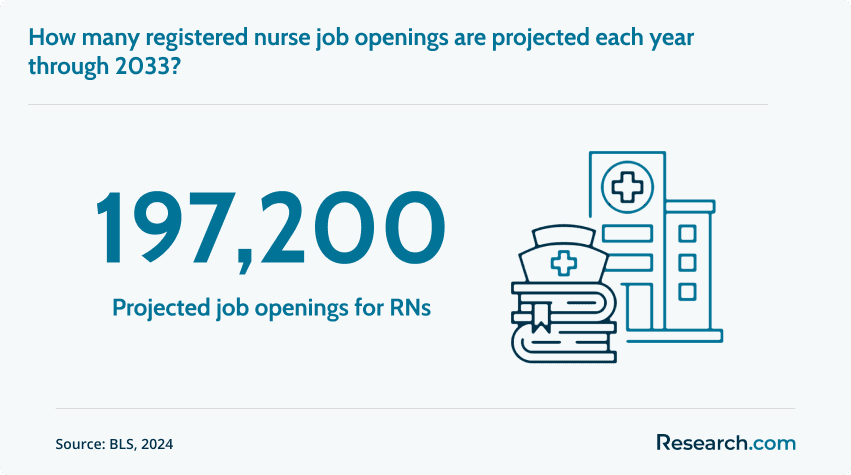
Recent data projects about 197,200 openings for registered nurses each year through 2033. As the profession continues to need well-prepared nurses, choosing an accredited MSN can protect your ability to move into specialized or leadership roles. Accreditation should carry as much weight as other selection tools, including rankings in adjacent areas such as the best HBCUs for healthcare administration.
What certifications can you get after completing an MSN?
The certifications available after an MSN depend on your concentration. You do not earn every credential simply by completing the degree; you usually need to complete the correct track, meet clinical requirements, graduate from an eligible program, and pass the relevant certification exam.
Choosing the right certification begins with understanding the difference between similar-looking pathways. Just as professionals may ask whether bookkeeping is the same as accounting, nursing students should ask how each MSN certification differs in patient population, scope, exam eligibility, and job market.
- Family Nurse Practitioner (FNP-BC or FNP-C): Supports primary care practice across the lifespan.
- Adult-Gerontology Nurse Practitioner (AGNP-C or AGPCNP-BC): Focuses on adult and older adult patients in primary or acute care settings.
- Pediatric Nurse Practitioner (CPNP-PC or CPNP-AC): Prepares nurses for primary or acute care with children and adolescents.
- Psychiatric-Mental Health Nurse Practitioner (PMHNP-BC): Prepares nurses to assess, diagnose, and treat mental health conditions.
- Certified Nurse Midwife (CNM): Centers on pregnancy, childbirth, reproductive health, and women’s health.
- Certified Registered Nurse Anesthetist (CRNA): Focuses on anesthesia care and advanced pain management.
- Clinical Nurse Specialist (CNS): Demonstrates advanced expertise in a specialty area such as oncology, critical care, cardiovascular nursing, or another defined field.
- Nurse Executive (NE-BC or CNE): Supports leadership, management, executive, or education-focused career goals.
Graduate nursing enrollment is changing. Between 2022 and 2023, master’s program enrollment dropped by 0.9% (about 1,176 students), while PhD nursing programs declined 3.1% (137 students). Over the past decade, PhD enrollment has fallen by 17.5%, from 5,145 to 4,244 students. In that context, MSN-level certifications remain a practical route for nurses who want advanced responsibilities without necessarily pursuing a research-focused doctorate.
What is the job outlook for nurses with a master’s degree?
The outlook for many MSN-level advanced practice roles is strong. According to the U.S. Bureau of Labor Statistics, employment for nurse practitioners, nurse midwives, and nurse anesthetists is projected to grow 38% from 2022 to 2032, much faster than the average for all occupations.
Demand is tied to several healthcare pressures: an aging population, greater need for preventive care, and physician shortages in some areas. Advanced practice nurses may work in hospitals, outpatient clinics, primary care practices, specialty offices, schools, community health centers, and underserved settings.
Compensation can also be competitive. The median annual wage for nurse practitioners was $129,480 in 2023, while nurse anesthetists earned significantly more. However, job outlook and pay vary by specialty, state scope-of-practice rules, employer type, and local competition. Nurses should review state-specific licensure rules and local job postings before choosing a concentration.
What factors should you consider when choosing a BSN to MSN program?
The best BSN to MSN program is the one that matches your intended role, meets credentialing requirements, fits your schedule, and offers a realistic path to completion. Do not choose a program based only on tuition, name recognition, or whether coursework is online.
| Factor | Why it matters | What to verify |
| Accreditation | Affects aid, certification, licensure, and employer recognition | Programmatic nursing accreditation and institutional accreditation |
| MSN concentration | Determines which jobs and certifications you may pursue | Whether the curriculum matches your target role |
| Clinical placement support | Can affect graduation timing and stress level | Whether the school finds sites or requires students to secure them |
| State authorization | Online programs may not meet requirements in every state | Whether your state accepts the program for licensure or certification |
| Schedule and format | Working nurses need realistic pacing | Full-time, part-time, asynchronous, synchronous, and in-person requirements |
| Total cost | Tuition alone can understate the full expense | Fees, travel, books, exam costs, and lost income |
| Student support | Graduate nursing programs are demanding | Advising, writing help, career services, board preparation, and faculty access |
If you still need to finish a bachelor’s degree or want a more flexible stepping-stone before graduate study, comparing easy online RN to BSN programs may help you understand online nursing formats and transfer-friendly options before committing to an MSN.
Should I pursue a DNP instead of an MSN?
Choose an MSN if your immediate goal is to qualify for an advanced practice, education, informatics, or leadership role that requires master’s-level preparation. Choose a DNP if your goals point toward the highest level of clinical practice preparation, systems leadership, evidence-based practice implementation, or executive-level influence.
The DNP typically requires a larger time and financial commitment than the MSN, so the decision should be tied to your long-term role rather than prestige alone. If you want to practice as soon as possible in an MSN-eligible role, the MSN may be the more direct route. If you want advanced clinical leadership, healthcare system change, or a terminal practice degree, a DNP may align better.
Before deciding, compare admission requirements, clinical hours, total cost, local employer expectations, and whether your target role now prefers or requires doctoral preparation. Nurses considering doctoral pathways can review options such as an easy DNP degree program, but “easy” should never replace proper checks for accreditation, licensure alignment, and program quality.
| Question | MSN may fit better if... | DNP may fit better if... |
| How soon do you want to move into an advanced role? | You want a shorter graduate route into eligible MSN-level positions | You are prepared for a longer doctoral pathway |
| What kind of leadership do you want? | You want unit, department, education, or practice-focused leadership | You want system-level, executive, or advanced clinical practice leadership |
| How important is doctoral preparation? | Your target employers accept MSN preparation | Your long-term goals favor a terminal practice degree |
| What is your budget? | You need to control cost and time in school | You can justify the added investment for your career plan |
Common Mistakes to Avoid When Choosing a BSN to MSN Program
- Choosing without checking accreditation: A low-cost program is not a bargain if it does not support certification, licensure, or employer recognition.
- Focusing only on tuition: Clinical travel, fees, books, exam costs, and reduced work hours can change the real price.
- Assuming online means fully remote: Many online MSN programs still require in-person clinical work, campus visits, skills checks, or local preceptors.
- Ignoring state rules: A program may be reputable but still not meet requirements for your state or intended credential.
- Picking a concentration too early: If you are unsure whether you want family practice, psychiatric-mental health, education, leadership, or informatics, speak with nurses in those roles before enrolling.
- Relying only on rankings: Rankings can be useful, but they do not replace accreditation, clinical placement quality, faculty access, cost, and certification outcomes.
- Assuming salary outcomes are guaranteed: Degree level matters, but pay depends on role, location, employer, experience, and certification.
How to Compare BSN to MSN Programs Step by Step
- Define your target role first. Decide whether you want advanced clinical practice, education, leadership, informatics, or another specialty.
- Match the concentration to the credential. Make sure the MSN track prepares you for the certification or job you actually want.
- Confirm accreditation and state eligibility. Check both institutional and nursing program accreditation, then verify state authorization and licensure alignment.
- Calculate total cost. Include tuition, fees, books, clinical expenses, travel, exam fees, and possible income changes.
- Ask about clinical placement. Find out who secures preceptors, what happens if a site falls through, and whether placements are available near you.
- Compare support services. Look for advising, board exam preparation, writing help, faculty access, and career support.
- Review outcomes carefully. Ask about completion rates, certification exam pass rates, employment support, and graduate satisfaction when available.
- Speak with current students or alumni. They can tell you how flexible the program really is for working nurses.
Questions to Ask Before Applying
- Is the MSN program accredited by a recognized nursing accreditor?
- Does this concentration meet certification and licensure requirements in my state?
- How many clinical hours are required, and who arranges the placement?
- Can I complete the program while working my current schedule?
- What is the full cost, including fees and clinical-related expenses?
- What financial aid, scholarships, employer reimbursement, or loan repayment options are available?
- What happens if I need to pause, reduce course load, or change tracks?
- What support is available for certification exam preparation?
- Do graduates commonly work in the role I want?
Key Insights
- A BSN prepares nurses for registered nursing practice, while an MSN prepares nurses for advanced practice, education, administration, informatics, or specialized leadership roles.
- Most competitive BSN to MSN programs look for at least a 3.0 GPA on a 4.0 scale, though some prefer 3.2 or higher and many use holistic review.
- BSN to MSN programs often take 18 months to 3 years, with full-time options commonly taking 1.5 to 2 years and part-time study often taking 2.5 to 3 years or longer.
- Cost varies dramatically, from about $9,000 to over $100,000, with common credit requirements of 30 to 55 credits and per-credit tuition ranging from $300 to $2,000.
- Accreditation is nonnegotiable because it can affect financial aid, certification eligibility, licensure, employer acceptance, and future study.
- An MSN can lead to roles such as nurse practitioner, clinical nurse specialist, nurse educator, nurse administrator, and nurse informaticist, but each path has different requirements.
- A DNP may be a better fit for nurses seeking terminal practice preparation or higher-level systems leadership, while an MSN may be the more direct route for many advanced nursing roles.
- The smartest program choice starts with your target role, not the school’s marketing. Match the concentration, clinical requirements, accreditation, state eligibility, cost, and support services to your actual career plan.
References:
- American Association of Colleges of Nursing (AACN). (2024). Nursing faculty shortage fact sheet. AACN.
- Health Resources & Services Administration (HRSA). (2024). State of the U.S. health care workforce, 2024. National Center for Health Workforce Analysis.
- Journal of Nursing Regulation. (2023). Journal of Nursing Regulation. Journal of Nursing Regulation.
- U.S. Bureau of Labor Statistics. (2024). Nurse anesthetists, nurse midwives, and nurse practitioners. In Occupational Outlook Handbook. U.S. Bureau of Labor Statistics.
- U.S. Bureau of Labor Statistics. (2024). Registered nurses. In Occupational Outlook Handbook. U.S. Bureau of Labor Statistics.
Other Things You Should Know About BSN to MSN Degrees
Yes. Most BSN-to-MSN programs require an active, unencumbered RN license before enrollment or by the first clinical course. Schools also usually ask for a BSN from an accredited program, a minimum GPA of 2.75 to 3.0, and proof of recent clinical experience.
In 2027, advancing to a Master's in Nursing typically requires completing an additional 500-700 clinical hours beyond those in a Bachelor's program. This requirement varies by state and institution, ensuring students gain necessary advanced practice experience.


