2027 Leadership Career Outcomes by Degree Level Report: Pay, Employment, and Advancement Patterns

Co-Founder and Chief Data Scientist
Choosing the right degree level in leadership presents a complex challenge for adult learners balancing time, cost, and career ambitions. With 2024 data revealing that professionals holding master's degrees in leadership experience 18% higher promotion rates within five years compared to bachelor's holders, understanding these distinctions becomes critical.
This gap highlights how advanced degrees may provide more access to management roles but also demands longer educational commitments and possible income interruption. For working professionals or military-affiliated students, these trade-offs impact not only immediate job prospects but long-term career mobility. This article analyzes pay, employment, and advancement patterns by degree level to guide informed leadership education decisions.
Key Things to Know About Leadership Career Outcomes by Degree Level
- Associate degrees in leadership offer faster entry but limit access to upper management, reflecting a tradeoff between quicker workforce integration and longer-term advancement potential.
- Employers increasingly prefer master's-level leadership credentials for strategic roles, signaling a workforce trend valuing advanced critical thinking and cross-functional skills over basic qualification.
- Doctoral leadership programs often require extended time and financial investment, which can delay practical career progress, making them more suited for specialized academic or consulting paths rather than immediate job-market gains.
- What Career Outcomes Can Students Expect From Each Leadership Degree Level? Career Outcomes by Degree
- How Much Do Leadership Graduates Earn by Degree Level? Salary by Degree Level
- Which Leadership Degree Level Offers the Strongest Employment Prospects? Best Degrees for Employment
- What Entry-Level Jobs Can You Get With a Leadership Degree? Entry-Level Career Opportunities
- How Do Leadership Degree Levels Affect Career Advancement and Promotion Opportunities? Career Growth by Degree
- Is a Leadership Degree Worth It Based on Salary, Employment, and ROI? Salary, ROI, and Value
- How Do Associate, Bachelor's, Master's, and Doctoral Leadership Degrees Compare? Comparing Degree Levels
- Which Industries and Employers Hire Leadership Graduates by Degree Level? Which Industries and Employers Hire Leadership Graduates by Degree Level?
- What Skills, Credentials, and Experience Improve Leadership Career Outcomes? What Skills, Credentials, and Experience Improve Leadership Career Outcomes?
- Which Leadership Degree Level Is Best for Your Career Goals? Choosing the Right Degree
What Career Outcomes Can Students Expect From Each Leadership Degree Level?
Career outcomes in leadership differ markedly by degree level, shaping employment access, advancement potential, and pay trends with tangible tradeoffs around time and specialization. For example, associate's often open doors to mid-level administrative roles and operational management but may limit upward mobility without concurrent work experience or further study.
Bachelor's degrees typically serve as the baseline credential for supervisory and managerial positions, with greater employer expectations for strategic competencies, internship experience, and discipline-specific concentrations driving access to broader leadership pathways. Adult learners and transfer students weighing these options must consider not only immediate employability but also how prior credits and credentials fit into progression toward higher-level roles.
Advancing to master's degrees in leadership shifts focus towards upper management capacity, emphasizing nuanced problem-solving, ethical decision-making, and cross-functional expertise valued in complex organizations. Research from recent employment outlook studies highlights accelerated promotion potential for master's graduates, who often negotiate flexible program schedules to balance work commitments.
Doctoral credentials, favored for academic, consultancy, or executive roles, come with high opportunity costs but yield the greatest long-term earnings and influence, as indicated by 2024 IPEDS data.
Choosing a certificate versus a degree similarly affects early employment trajectories; certificates may expedite entry-level support roles but tend to impose credential ceilings in competitive markets. This underscores why many professionals explore combinations, such as pairing leadership degrees with certifications or targeted credentials, to meet evolving employer expectations and sector-specific demands, including increasingly common requirements in healthcare leadership.
The differential impact of leadership degree career outcomes by education level informs critical decisions for working adults, military-affiliated students, and those balancing education with employment. Considering these nuances alongside data from sources like the National Center for Education Statistics ensures learners align credentials with their advancement goals and realistic employer valuation.
For those pursuing graduate options, exploring the most affordable online MBA programs can provide a pragmatic pathway that combines cost efficiency with advanced leadership preparation, enhancing opportunities for upward mobility within leadership-adjacent fields.
How Much Do Leadership Graduates Earn by Degree Level?
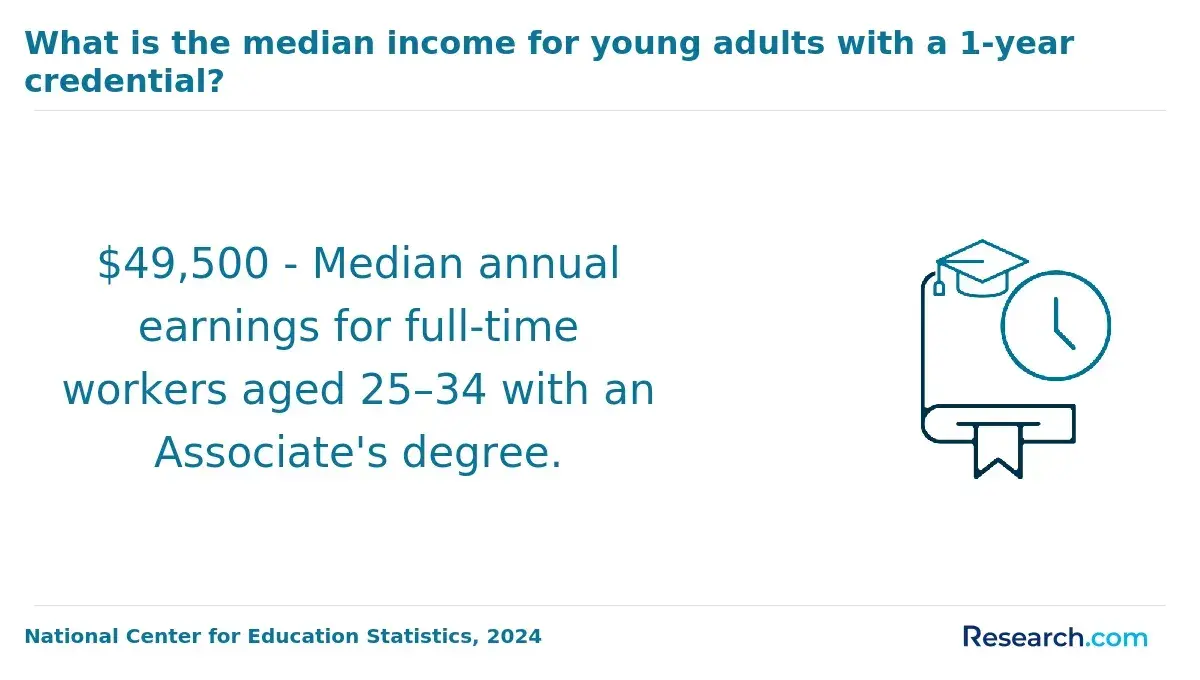
Earnings for leadership graduates vary not only by degree level but also depend heavily on industry, location, and employer priorities, making broad salary assumptions misleading without context. For those holding certificates or associate degrees, median salaries often fall between $40,000 and $55,000, reflecting roles typically limited to entry-level supervision where the speed of workforce entry and lower education costs are key advantages.
Bachelor's degrees usually open doors to mid-level management with pay scaling closer to $65,000-$80,000, though this gain often correlates with requirements for critical thinking and strategic skills, which also influence advancement potential and eligibility for certifications.
As graduates pursue master's or doctoral credentials, salaries rise further-exceeding $90,000 to beyond $110,000-but these gains must be weighed against longer completion times, higher costs, and sometimes the necessity of significant work experience, especially in sectors like healthcare or tech where specialized skills may outweigh degree level alone.
Data from the U.S. Bureau of Labor Statistics in 2024 confirms a stepped decline in unemployment with increased educational attainment among leadership pathways, underscoring more stable employment prospects at higher degree levels.
However, the practical value of advanced credentials varies by regional job markets and the nature of leadership roles sought; for example, an associate degree might suffice for a team lead in manufacturing, whereas a master's is often vital for organizational change leadership in competitive corporate environments.
For adult learners balancing work, family, and studies, transfer credit policies and program flexibility play a critical role in deciding whether pursuing higher degrees justifies the cost given incremental salary increases and career goals. Understanding local employer licensing requirements and advancement criteria is essential for interpreting pay data alongside educational investment and timing.
A leadership graduate recalls initially aiming for a bachelor's degree but hesitated after reviewing job listings where some employers emphasized certifications and practical experience over formal degrees for supervisory roles. After consulting with industry contacts, they realized completing an associate credential first could provide immediate entry-level wages near $45,000 while allowing later transfer to a bachelor's program without excessive cost or delay.
This approach helped balance earnings with education, offering a pragmatic path to test the job market and decide on further investment in a master's degree when clearer advancement opportunities arose in their sector.
Which Leadership Degree Level Offers the Strongest Employment Prospects?
Employment outcomes for leadership degree holders vary widely depending on credential level, with bachelor's and master's degrees offering the most substantial advantage in job stability and career scope. Employers typically favor bachelor's credentials for roles involving strategic oversight and team leadership, contributing to an unemployment rate around 3.5%, notably lower than the approximately 6% rate for certificate holders, according to the U.S. Bureau of Labor Statistics 2024.
While associate degrees and certificates can expedite entry into supervisory positions, they often limit upward mobility, especially in competitive markets where credential inflation pressures candidates toward higher qualifications for middle and upper management roles.
Master's degrees in leadership tend to unlock senior and specialized opportunities, including executive coaching and consulting. Practical components such as internships, which correlate with a 15% increase in employment likelihood within six months of graduation (based on CAEL 2024 data), are often included.
Doctoral and professional leadership degrees, while narrower in occupational reach, provide a pathway to academia, research, and high-level consultancy roles that demand extensive work experience and long-term commitment.
Prospective students must weigh tradeoffs between quicker workforce entry via lower-level credentials and the broader, longer-term career flexibility that advanced degrees support, considering regional demand variations and employer expectations for experiential learning and credential depth.
What Entry-Level Jobs Can You Get With a Leadership Degree?
Entry-level leadership career opportunities vary significantly by degree level, affecting both job scope and advancement potential. Graduates with associate degrees often enter support roles focused on operational or administrative tasks, whereas those with bachelor's degrees are more likely to secure strategic positions involving team oversight and project coordination.
Many employers prefer candidates who supplement their education with internships or practical experience to demonstrate applied leadership, with certification requirements-such as human resources credentials-further influencing eligibility and starting salaries.
According to the U.S. Bureau of Labor Statistics' 2024 outlook, demand for entry roles like management trainees or junior project managers is expected to grow moderately, around 6%, reflecting a competitive environment where transferable skills like communication and problem-solving can bridge experience gaps.
For recent leadership degree graduates, regional differences significantly impact the availability and nature of entry roles. Urban areas generally offer more diverse opportunities, including remote and hybrid work options, while rural markets may emphasize direct supervisory experience and limit entry points.
Candidates pursuing advanced degrees or additional certifications can leverage early roles as stepping stones toward higher responsibilities. However, many institutions expect bachelor's degree completion for structured leadership pipelines. Evaluating entry-level job options alongside employment stability and skill-building potential is crucial.
Those intending graduate study or long-term mobility should weigh immediate hands-on leadership practice against roles primarily designed for career initiation. Prospective students considering online programs should consult accredited schools online to ensure the credentials align with these practical workforce demands.
How Do Leadership Degree Levels Affect Career Advancement and Promotion Opportunities?
Career progression in leadership roles often hinges on the level of academic credential held, with graduate degrees frequently opening doors to mid- and senior-management positions more swiftly than associate or bachelor's degrees.
Data from the 2024 Integrated Postsecondary Education Data System indicates that employers increasingly expect a master's degree for roles involving strategic oversight and supervision of multiple teams, creating formal thresholds that can delay promotions for those without advanced qualifications.
While individuals holding bachelor's degrees may require additional years of practical experience to reach similar leadership tiers, master's graduates tend to advance faster due to exposure to specialized theory and decision-making frameworks embedded in their programs.
The tradeoff for pursuing higher degrees involves balancing the time and financial investment against potential acceleration in career timing and access to leadership roles demanding advanced competencies and certifications, notably in regulated fields like healthcare and education.
These credential distinctions also impact internal promotion pathways and professional credibility. Many employers view graduate coursework that integrates experiential leadership practice as a critical factor in readiness for organizational change management responsibilities.
For working adults and military-affiliated students, transfer credits and continuing education options often facilitate reentry into formal leadership education, positioning them competitively amid evolving employer requirements.
However, a graduate degree does not guarantee immediate promotion. Real-world advancement depends heavily on sector demands, existing experience, and specific licensure or certification prerequisites tied to leadership functions. Notably, leadership positions requiring graduate credentials tend to exhibit lower unemployment rates and stronger job growth, reinforcing the strategic advantage of advanced qualifications while underscoring the necessity for pragmatic career planning.
One Leadership student, contemplating whether to pursue a master's after completing a bachelor's while already managing a frontline team, wrestled with the decision's relevance to promotion eligibility. The student's employer required a master's for departmental supervisory roles, but time constraints and current job demands made the choice difficult.
After consulting colleagues and assessing the company's internal promotion patterns, the student felt cautiously optimistic, recognizing that completing the advanced degree could remove a key barrier to upward mobility even if practical experience remained equally important. This nuanced perspective helped balance ambition with realistic considerations about timing, effort, and professional expectations.
Is a Leadership Degree Worth It Based on Salary, Employment, and ROI?
Salary and employment outcomes vary significantly depending on the level of leadership degree attained, and this influences whether pursuing further education is a practical investment. Workers holding a bachelor's degree in leadership-related fields generally experience wage premiums over high school graduates, but the incremental increase from a master's degree can be more decisive for access to senior managerial roles.
For example, a mid-career professional balancing work and study might find part-time master's programs crucial to qualifying for promotions, whereas a recent high school graduate may face larger opportunity costs completing multiple degrees without prior experience.
Given the BLS projects steady demand for management roles, regional labor market dynamics and specific sector growth—such as healthcare administration and nonprofit leadership—should also shape decisions about degree level and timing.
Return on investment is closely tied to the interplay between tuition costs, student debt burden, and time-to-completion, especially for working adults and military-affiliated students. While average bachelor's degree costs in leadership fields can reach $40,000 to $60,000 with typical debt near $30,000, loans are more manageable when graduates secure employment in their field quickly.
However, many employers prioritize relevant work experience in tandem with credentials, making it practical to consider programs that cater to professional schedules. Advancement beyond mid-level supervision generally requires postgraduate credentials or targeted certifications, which can yield stronger career mobility but must be weighed against opportunity costs and personal circumstances.
For those exploring flexible human resources credentials, there are human resources master's programs online that may serve as relevant alternatives to traditional leadership degrees.
Ultimately, leadership degree salary and employment outcomes depend on factors like prior credits, specialization, and local demand rather than degree completion alone. Candidates should critically assess how additional education fits into their broader career plans, recognizing that higher degree levels can open selective advancement pathways but also require careful timing and resources.
Those with substantial work experience may benefit more from part-time or online pathways that allow earning while learning, reducing disruption and enhancing ROI. This nuanced perspective helps avoid overgeneralizing leadership degree benefits and aligns education choices with practical, individualized workforce considerations.
Employer Confidence in Online vs. In-Person Degree Skills, Global 2024

How Do Associate, Bachelor's, Master's, and Doctoral Leadership Degrees Compare?
Career pathways in leadership vary notably by degree level, with each credential shaping access to roles, advancement prospects, and specialization differently. An associate degree generally opens doors to entry-level supervisory positions but may limit upward mobility without further education.
In contrast, a bachelor's degree remains the de facto baseline for many mid-level leadership opportunities, with roughly 78% of graduates in relevant fields employed within a year, according to the National Center for Education Statistics. This degree also provides greater flexibility for career changes and broader industry applicability, making it an important threshold for those targeting established management roles.
Master's degrees tend to enhance specialization and are often essential for senior leadership or executive careers, particularly in sectors requiring licensure or sector-specific credentials such as healthcare or education. The tradeoff involves additional time and financial investment, but the Bureau of Labor Statistics forecasts sustained demand for master's-educated leaders adept at complex organizational challenges.
Doctoral degrees, while less common and offering fewer direct job openings, focus heavily on research, policy formulation, and high-level strategic influence. These programs suit professionals aiming for academic positions, consultancy, or executive roles that emphasize systemic impact over traditional supervisory functions, though they entail longer completion times and generally lower credit transferability, factors crucial for working adults weighing return on investment.
Choosing where to stop-associate, bachelor's, master's, or doctoral-depends on one's career stage, financial resources, and desired leadership trajectory. For example, a manager in healthcare administration might find a master's degree indispensable for licensure and promotion within a hospital system, while a policy analyst may leverage a doctorate to transition into research-heavy roles or university positions.
Practical considerations such as employment stability, credential stacking, and licensure prospects should guide decision-making more than blanket assumptions about degree prestige, ensuring educational investment aligns with real-world leadership opportunities and personal career timing.
Which Industries and Employers Hire Leadership Graduates by Degree Level?
The value of leadership credentials varies notably by degree level, shaping one's access to industries and roles with distinct operational demands and advancement criteria. Associate degree holders typically enter supervisory or operational functions within retail, hospitality, or mid-tier manufacturing firms, where practical management skills and direct team oversight are prioritized over advanced theory.
Employers in these sectors often weigh relevant experience and foundational leadership training more heavily than formal academic credentials, making this a pragmatic pathway for those seeking immediate workforce entry without extended education.
Bachelor's graduates gain wider eligibility for mid-level management positions in fields like healthcare administration, finance, government, and corporate business. These domains increasingly require at least a bachelor's degree for entry-level leadership roles.
The 2024 Bureau of Labor Statistics reports that employers in these domains emphasize analytical decision-making, communication, and project coordination abilities, with hiring standards reflecting a balance of education and applicable experience.
Those with master's degrees in leadership are positioned for senior management and strategic roles in technology, consulting, public policy, and higher education administration. Advanced credentials in these fields correlate with accelerated promotion and higher compensation bands, as supported by data from the National Center for Education Statistics.
At the doctoral level, leadership graduates frequently find opportunities in academic administration, specialized research institutions, and high-level policy advisement roles requiring not only leadership expertise but also an advanced research foundation and theoretical depth.
Meanwhile, certificates serve largely as targeted skill enhancers for middle management or industry-specific technical leadership, valued less as standalone qualifications for senior roles. Students must recognize how degree level intersects with employer screening preferences, sector-specific licensure, and the complexity of managerial duties to strategically align educational investments with their desired career trajectory.
What Skills, Credentials, and Experience Improve Leadership Career Outcomes?
Leadership candidates improve their career outcomes most effectively by aligning role-specific technical skills with practical experience and credentials that employers explicitly recognize. Entry- and mid-level leadership roles often prioritize foundational competencies such as communication, critical thinking, and project management, reinforced by internships or apprenticeships that demonstrate applied knowledge.
For example, 63% of employers emphasize internships when assessing bachelor's degree holders for leadership positions, indicating the premium placed on experiential learning over theoretical credentials alone. Military experience and relevant industry exposure also strengthen leadership portfolios, especially for working adults or transfer students leveraging prior career backgrounds.
Advanced leadership roles typically require a higher level of credential stacking, including certifications like PMP or Certified Manager (CM), which signal specialized expertise and readiness for upper management. These certifications often require substantial financial and time commitments, meaning the tradeoff between early career mobility and long-term advancement must be carefully evaluated.
Graduates must weigh whether pursuing such credentials matches their targeted industry's expectations and their current career stage. Portfolios showcasing leadership in academic or practical settings further differentiate candidates by presenting measurable leadership accomplishments rather than mere academic credentials, which is critical for those evaluating how to combine experience and new credentials.
For students considering an easiest online MBA program or similar pathways, understanding these dynamics helps balance costs and outcomes. Leadership skills certifications for career advancement should be chosen with a clear focus on sectors valuing applied learning alongside credentials.
Incorporating experience and credentials that enhance leadership career outcomes involves strategic decisions about which competencies and credentials to pursue based on targeted pay scales, employment prospects, and promotion readiness within one's field.
Which Leadership Degree Level Is Best for Your Career Goals?
Choosing the right degree level in leadership shapes career trajectories by balancing immediate employability against long-term specialization and advancement opportunities. For instance, bachelor's degrees typically provide access to broad supervisory roles and flexible entry points across industries, reflecting their status as the most common credential for leadership positions in 2024 workforce data.
However, working professionals must weigh time and financial investment, as master's degrees often unlock higher senior-level potential and specialized pathways like organizational development but require longer commitments and may be less flexible depending on credit transfer policies. Adult learners and military-affiliated students often benefit from accelerated or part-time master's formats to manage opportunity costs without sacrificing depth of expertise.
The employment premium for leadership master's graduates includes a reported 12% higher placement rate in executive roles compared to those holding only undergraduate qualifications. Yet, doctoral degrees, while valuable for research-intensive careers, introduce significant delays and costs that reduce immediate mobility and often necessitate concurrent professional development or certification to meet employer expectations.
Combining degree attainment with targeted credentials in specialized leadership or licensure frequently determines advancement more than degree level alone. Prospective students should analyze how degree choice impacts licensure eligibility, specialization demand, and employer preferences, especially given growing calls for credentials that complement academic qualifications.
Transfer students or those re-entering education must strategically consider how prior credits affect program length and costs, a critical factor in selecting the best leadership degree for career advancement. Programs that allow recognition of prior learning can shorten time to completion, improving return on investment.
For professionals considering pivoting fields or seeking emerging opportunities, practical options like a fast cyber security degree may also complement leadership skills, reflecting workforce trends favoring interdisciplinary expertise. Ultimately, the strategic alignment of degree level with career timing, credentialing, and specialization shapes sustainable employment outcomes and occupational growth.
References
- How leadership skills can improve your career? | 3CIR https://www.3cir.com/how-leadership-skills-can-improve-your-career/
- Benefits of Organization Leadership Degrees in Management https://www.umassglobal.edu/blog-news/benefits-organization-leadership-degrees-management
- Labor Market | ELA https://ela.nauka.gov.pl/en/labor-market/who_earns_more_after_studies
- Types of College Degrees https://www.act.org/content/act/en/students-and-parents/high-school-success/what-to-do-after-high-school/college-degrees.html
- Career earnings by college major - The Hamilton Project https://www.hamiltonproject.org/data/career-earnings-by-college-major/
- Career development opportunities: better than a promotion https://www.neobrain.io/en/blog/redefining-career-growth-opportunities
- Essential Leadership Skills for Career and Personal Growth https://www.scu.edu/business/blog/leadership-ethics/essential-leadership-skills/
- Importance of On-The-Job Experiences in Developing Leadership Capabilities - Southern Regional Education Board https://www.sreb.org/publication/importance-job-experiences-developing-leadership-capabilities
- The Case for Career Learning Outcomes https://www.careerleadershipcollective.com/post/the-case-for-career-learning-outcomes
- The Core Leadership Skills You Need in Every Role https://www.ccl.org/articles/leading-effectively-articles/fundamental-4-core-leadership-skills-for-every-career-stage/
Other Things You Should Know About Leadership
Program reputation and accreditation can significantly affect how employers perceive graduates at each degree level. In leadership fields, degrees from well-established, accredited institutions often translate into smoother hiring and promotion processes, especially for higher degree levels where employers expect rigorous training.
Prioritizing programs with recognized accreditation can reduce uncertainty around credential recognition and improve job market leverage, particularly for master's and doctoral candidates aiming for executive roles.
Flexibility is critical for working adults pursuing leadership degrees, but tradeoffs exist. Part-time or online leadership programs offer practical benefits like maintaining employment and applying learning in real time, yet they may extend graduation timelines and limit networking opportunities compared to full-time formats. Candidates must weigh immediate career momentum against the potential long-term benefits of immersive, cohort-based learning models typically found in full-time study.
Higher-level leadership degrees demand substantial time investment and cognitive load, which can slow career progression if students cannot balance work and study effectively. For example, doctoral programs require long-term research commitments that may delay job changes or promotions. Those aiming for career advancement while studying should consider programs with modular or accelerated formats that fit within their professional schedules to avoid stagnation or excessive burnout.
Jumping straight into graduate leadership study often limits the ability to contextualize concepts with real-world experience, which employers highly value. Gaining several years of relevant leadership or management experience before enrolling tends to improve classroom engagement and career outcome relevance, especially for master's degrees. Prioritizing work experience before graduate study generally leads to stronger advancement prospects and a clearer ROI.