
2027 Best Nursing Schools in Tennessee – Accredited ADN, BSN, MSN Programs

Co-Founder and Chief Data Scientist
Choosing a nursing school in Tennessee is not only about finding a nearby campus. The program you select can affect your NCLEX preparation, clinical experience, tuition costs, licensure timeline, and long-term career options. Tennessee is also a practical place to evaluate nursing as a career because the state reported a 94.89% NCLEX pass rate for first-time RN test takers in 2024, compared with the national pass rate of 91.16%.
This guide is designed for students comparing nursing schools in Tennessee, career changers considering an accelerated pathway, licensed practical nurses planning to become RNs, and working nurses thinking about graduate study. You will learn how nursing careers in Tennessee compare with the cost of living, what steps lead to licensure, how long different nursing programs take, what tuition can look like, which schools offer nursing programs, and how to evaluate whether a program is the right fit for your goals.
Best Nursing Schools in Tennessee Table of Contents
- Quick answer: Is nursing a strong career choice in Tennessee?
- How to become a nurse in Tennessee
- How long nursing programs take in Tennessee
- Nursing school tuition and cost factors
- Scholarships and financial aid for Tennessee nursing students Review nursing program costs
- Tennessee schools offering nursing programs for 2027
- How to choose a Tennessee nursing program
- Work-life balance and nurse satisfaction in Tennessee Compare program fit
- Online nursing education options
- How Tennessee’s nursing shortage affects students and employers
- Using online education for nursing career advancement
- Advanced practice options for Tennessee nurses
- Tennessee nursing license renewal and continuing education
- Professional support and career growth resources
- Nursing informatics and healthcare outcomes
- How nurses and pharmacists work together
- Why starting as an LPN can help your nursing career
- Education requirements for nurse midwives in Tennessee LPN pathway context Team-based care context
Is Nursing a good job in Tennessee?
Yes, nursing can be a strong career option in Tennessee for students who want a healthcare role with clear licensure requirements, multiple education pathways, and broad employment settings. The decision still depends on your tolerance for shift work, clinical pressure, tuition costs, and the time required to complete training. Nursing is not an easy path, but it can be a practical one for students who want direct patient-care work and a credential with statewide demand.
- Cost of living fit. A single Tennessee resident with no children needs an estimated annual income of $44,959 before taxes to cover typical expenses. That estimate includes housing fees of $13,300, food costs of $4,458, transportation fees of $9,325, and other standard living costs.
- Earning potential. Nursing is often discussed among the best college majors to pursue in the US because it connects directly to a licensed occupation. In Tennessee, registered nurses had a median annual wage of $79,030, and some earned as much as $102,040.
- Employment outlook within the state. Healthcare employers continue to need nurses in hospitals, clinics, long-term care facilities, community health organizations, and rural care settings. This demand is one reason many students consider the advantages of establishing a nursing career in Tennessee.
| Factor | Why it matters before choosing nursing | What to ask yourself |
| Licensure requirements | You must complete an approved program and pass the required exam before practicing as an RN. | Am I ready for a structured academic and clinical pathway? |
| Schedule demands | Nurses may work nights, weekends, holidays, long shifts, or rotating schedules depending on the employer. | Can I manage nontraditional work hours? |
| Program cost | Tuition varies by degree level, residency status, and school type. | Have I compared total costs, not just tuition per credit? |
| Career mobility | Nurses can move into specialty care, leadership, education, informatics, or advanced practice with additional preparation. | Do I want an entry-level role only, or a pathway to graduate study? |
What are the steps to becoming a nurse in Tennessee?
The path to nursing licensure in Tennessee is sequential: choose an accredited program, complete the required education and clinical training, pass the applicable licensing or certification exam, and apply through the state board. Because each step affects the next, students should verify requirements before enrolling rather than waiting until graduation.
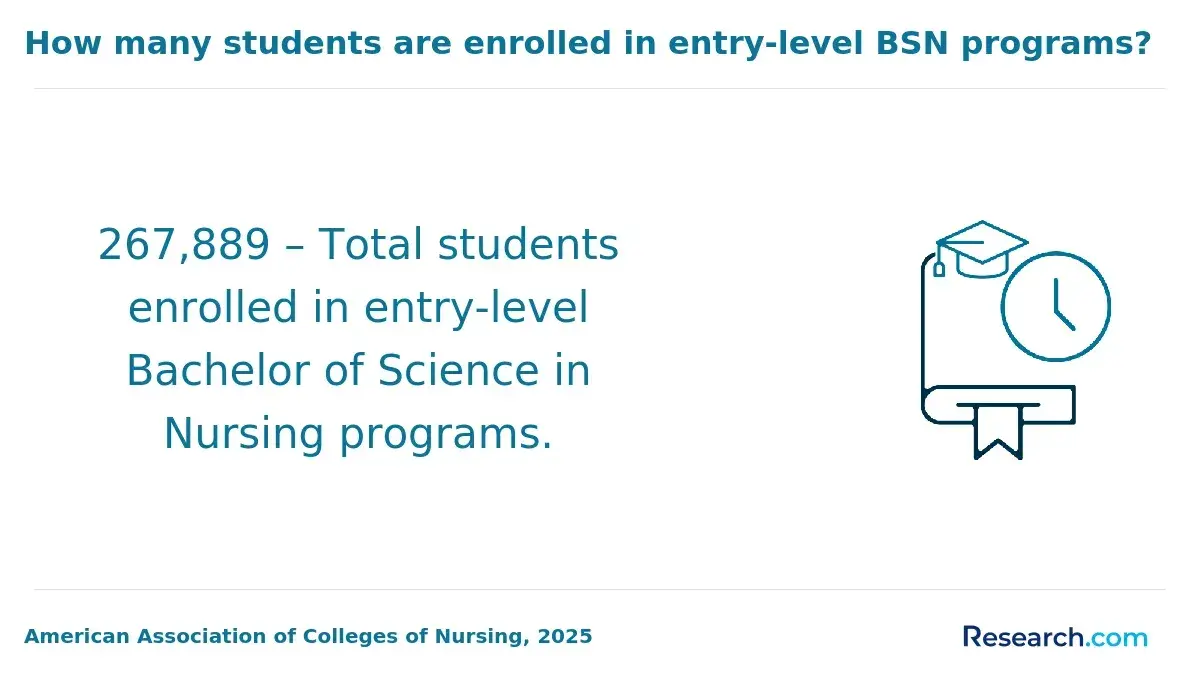
- Finish an accredited nursing program. Most future registered nurses complete either an associate degree in nursing or a bachelor of science in nursing. These levels of nursing prepare students in patient assessment, clinical judgment, pharmacology, care planning, health systems, and supervised practice.
- Register for the required examination. Near the end of nursing school, candidates should register for the certification or licensure examination that applies to their credential. Exams such as the NCLEX and the medication aide certification exam are developed by the National Council of State Boards of Nursing. Examination dates are scheduled 45 days after graduation, and results are usually released after another 45 days.
- Apply for Tennessee licensure. After passing the required examination, candidates apply for their credential through the Tennessee Board of Nursing, which regulates nursing education and practice in the state.
Nursing Program Length in Tennessee
Nursing program length in Tennessee depends on your starting point. An ADN can usually be completed in two years, while a BSN generally takes four years. Students who already hold a bachelor’s degree in another field may consider an accelerated BSN. Nurses pursuing graduate study, including an MSN, may spend two additional years in university-level training. If you are comparing affordable online MSN programs, check both tuition and accreditation before applying.
An RN-to-BSN program commonly takes about two to four years, depending on transfer credits, enrollment pace, and clinical or practicum requirements. Students comparing a cheap RN to BSN option should also review faculty qualifications, student support, course format, and graduation requirements.
Working students should be realistic about time. Full-time study can shorten the timeline, but part-time enrollment may be more sustainable for students balancing employment, family responsibilities, and clinical hours.
| Pathway | Typical timeline stated for Tennessee programs | Best fit |
| ADN | Two years | Students seeking a shorter RN pathway and a lower-cost community college option |
| BSN | Four years | Students who want a broader undergraduate nursing education and long-term advancement flexibility |
| RN-to-BSN | About two to four years | Licensed RNs who want to complete a bachelor’s degree while continuing to work |
| MSN | Two more years in university | Registered nurses preparing for advanced clinical, leadership, education, or specialty roles |
Tuition and Costs of Nursing Programs in Tennessee
Nursing tuition in Tennessee varies widely by degree level, residency status, institution, and program format. Traditional undergraduate nursing programs may charge between $216 and $952 per credit. Students should also budget for fees, books, uniforms, background checks, immunizations, testing, transportation to clinical sites, and housing if they relocate. Comparing types of nursing degrees can help you estimate how much education you need for your target role.
For ADN students, Tennessee residents may pay between $216 and $244 per credit. Non-resident ADN students may pay between $766 and $794 per credit at schools such as Jackson State Community College and Pellissippi State Community College.
At the BSN level, resident students can expect about $616 per credit, while non-resident students may be charged around $952 per credit at the University of Tennessee at Chattanooga. At the graduate level, MSN students may pay about $1,939 per credit at Vanderbilt University.
| Range of Cost per Credit by Degree Level | ||
| Degree Level | In-state | Out-of-state |
| ADN/AAS | between $216 and $244 | between $766 and $794 |
| BSN | $616 | $952 |
| MSN/MN | $1,939 | $1,939 |
What scholarships and financial aid options are available for nursing students in Tennessee?
Nursing school can be expensive, especially when students factor in clinical-related costs and reduced work hours. Tennessee students should compare federal aid, state aid, institutional scholarships, employer support, and service-based scholarship programs before taking on unnecessary debt.
- Tennessee Promise Scholarship: This program provides tuition-free access to Tennessee community and technical colleges for high school graduates. It can be especially useful for students beginning with an associate degree pathway.
- Tennessee Student Assistance Award: The TSAA is a need-based grant for Tennessee residents attending eligible in-state institutions. Nursing students with financial need may use this award to help reduce tuition and fee costs.
- HOPE Scholarship: Supported by the Tennessee Lottery, the HOPE Scholarship assists undergraduate students who meet academic criteria. Traditional and non-traditional nursing students may use it toward BSN study when eligible.
- Federal Pell Grant: Students with demonstrated financial need may qualify for a Pell Grant. Because it does not require repayment, it can be valuable for ADN and BSN students trying to control borrowing.
- National Health Service Corps Scholarship Program: Students interested in serving underserved communities may consider the NHSC Scholarship Program, which covers tuition, fees, and other educational costs in exchange for a service commitment.
- Tennessee Nurses Foundation Scholarships: The TNF offers scholarships and grants for nursing students at multiple degree levels, particularly students committed to nursing practice in Tennessee.
- Employer tuition assistance: Healthcare employers may offer tuition reimbursement or education benefits for employees moving from support roles into nursing or from RN roles into advanced study.
- School-based awards: Institutions such as Vanderbilt University and the University of Tennessee may offer scholarships based on need, merit, program level, or specialty interest.
Tennessee Schools Offering Nursing Programs for 2027
In 2025, Tennessee ranked 44th among the 50 states and the District of Columbia for overall health system performance. Strong nursing education matters because nurses are central to patient monitoring, care coordination, medication administration, health education, and safety practices. The schools below represent Tennessee nursing options at associate, bachelor’s, and graduate levels.

1. University of Tennessee at Chattanooga
The University of Tennessee at Chattanooga School of Nursing offers two campus-based BSN options designed to prepare students for RN licensure: a traditional BSN and an accelerated BSN. The traditional program builds a foundation in nursing practice, research, leadership, pediatrics, medical-surgical nursing, mental health, and related areas. The 1-year accelerated BSN is intended for students who already hold a bachelor’s degree in another field and want to transition into nursing.
On-campus nursing programs:
- Traditional BSN
- Accelerated BSN
Accreditation: Commission on Collegiate Nursing Education (CCNE)
2. Pellissippi State Community College
Pellissippi State Community College’s nursing program offers an associate of applied science in nursing. Students may enter through a traditional pathway or a bridge pathway. The bridge option is for students who already hold an LPN diploma or certification or emergency medical technician-paramedic licensure. Coursework covers nursing fundamentals, women’s health, pediatric nursing, mental health nursing, and medical-surgical nursing.
On-campus nursing program: Associate of Applied Science in Nursing (AAS)
Accreditation: Accreditation Commission for Education in Nursing (ACEN)
3. Jackson State Community College
Jackson State Community College offers an AAS in nursing with both a traditional track and an LPN-to-RN pathway. The curriculum is designed to help students build entry-level RN competencies and prepare for the NCLEX-RN. Required study areas include nursing foundations, lifespan psychology, nutrition, and adult health nursing.
On-campus nursing program: Associate of Applied Science in Nursing (AAS)
Accreditation: Southern Association of Colleges and Schools Commission on Colleges (SACSCOC); ACEN
4. University of Tennessee Knoxville
The University of Tennessee Knoxville College of Nursing offers traditional BSN and accelerated BSN options. Its 47-credit accelerated BSN can be completed in 12 months. Course areas include fundamentals, clinical immersion, pathophysiology, mental health nursing, and maternal-newborn nursing. The university does not currently offer an MSN, but it does provide graduate certificate programs in clinical and non-clinical areas. Students also learn in technology-supported classrooms and advanced simulation laboratory facilities.
On-campus nursing programs:
- Traditional BSN
- Accelerated BSN
- Graduate Certificate Programs
Accreditation: CCNE
5. Vanderbilt University
Vanderbilt University School of Nursing focuses on graduate nursing education. It offers an MSN and a master of nursing program. The master of nursing pathway allows students with a bachelor’s degree in another field to enter nursing preparation at the graduate level. Program options prepare nurses for roles such as nurse midwife and nurse practitioner in areas including adult-gerontology acute care, neonatal care, pediatrics, women’s health, and nursing informatics.
On-campus nursing programs:
- MSN
- Master of Nursing (MN)
Accreditation: SACSCOC; CCNE; Accreditation Commission for Midwifery Education (ACME)
What to Look for in a Nursing Program in Tennessee
A good nursing program should match your career goal, budget, academic background, and licensure needs. The best choice is not always the most famous school or the cheapest option. It is the program that prepares you for the credential you need, offers appropriate clinical experiences, and fits your financial and scheduling reality. This is also where students should think carefully about whether they can make the most out of a nursing degree.
- Accreditation and approval. Accreditation signals that a program meets recognized nursing education standards. It can also affect licensure eligibility, transfer credit, graduate admissions, and employer confidence.
- NCLEX preparation. Ask how the program supports exam readiness through curriculum design, testing resources, simulation, remediation, and faculty advising.
- Clinical placements. Nursing is a hands-on profession. Review where students complete clinical rotations, how placements are assigned, and whether travel is required.
- Curriculum fit. ADN, AAS, and BSN students should look for strong coverage of medical-surgical nursing, mental health, maternal-newborn care, pediatrics, pharmacology, assessment, and evidence-based practice. MSN and MN students should confirm that the school offers their intended specialty.
- Total affordability. Compare tuition, fees, travel, supplies, housing, lost wages, and loan interest. Online courses may reduce commuting demands, but clinical requirements still usually need in-person completion.
- Student support. Tutoring, advising, simulation labs, career services, and faculty access can make a major difference, especially in rigorous programs.
| Question to ask before enrolling | Why it matters |
| Is the nursing program accredited and accepted for Tennessee licensure? | Licensure eligibility is the most important outcome of an entry-level nursing program. |
| Where will I complete clinical hours? | Clinical location affects commuting time, schedule flexibility, and exposure to different patient populations. |
| What happens if I fail a course or need to pause enrollment? | Progression policies can affect your timeline and total cost. |
| How much will the full program cost after fees and supplies? | Per-credit tuition does not show the full cost of attendance. |
| Does the program support working students? | Course sequencing, clinical schedules, and attendance rules may limit work availability. |
Work-Life Balance and Job Satisfaction for Nurses in Tennessee
Nursing can be meaningful, but it is also physically and emotionally demanding. Tennessee nurses may work long shifts, nights, weekends, and holidays. Staffing pressure can be especially difficult in high-need areas and rural communities. Students should understand this reality before entering the field rather than assuming that licensure automatically leads to an easy schedule.
Work-life balance often improves when nurses move into roles that better match their preferred pace, specialty, or schedule. Some nurses pursue graduate education, leadership roles, outpatient care, school nursing, telehealth-related roles, or advanced practice. For nurses exploring family nurse practitioner education while continuing to work, comparing the cheapest FNP programs online may help identify flexible options.
Job satisfaction often comes from patient impact, professional autonomy, team support, and advancement opportunities. However, burnout is a real risk. Prospective nurses should ask employers and schools about workload expectations, support systems, preceptor quality, and transition-to-practice programs.
What Opportunities Exist for Online Education in Nursing?
Online nursing education can be useful for students who need flexibility, but it is important to understand what can and cannot be completed remotely. Many didactic courses may be online, while clinical training, labs, simulations, or practicums may still require in-person attendance. Students comparing online nursing programs in Tennessee should verify clinical placement rules, state authorization, accreditation, and licensure alignment before applying.
| Online nursing option | When it may make sense | What to verify |
| Online RN-to-BSN | You are already licensed as an RN and want a bachelor’s degree with more scheduling flexibility. | Transfer credit policy, practicum requirements, tuition, and employer recognition. |
| Online MSN | You are a working nurse preparing for leadership, education, informatics, or advanced practice. | Accreditation, specialty requirements, clinical placement support, and state rules. |
| Hybrid pre-licensure nursing | You need some online coursework but can attend labs and clinicals in person. | Campus visit requirements, clinical sites, lab schedule, and NCLEX preparation. |
The Impact of Tennessee's Nursing Shortage on Education and Employment Opportunities
Tennessee faces an estimated shortage of 63,720 registered nurses by 2030. For students, this creates both opportunity and pressure. Demand can increase hiring activity and support bridge pathways, but it can also mean heavy workloads for practicing nurses and intense competition for clinical placements in some areas.
What the shortage means for nursing students
Schools have responded with bridge programs, accelerated options, simulation-based learning, and more accessible pathways. Students comparing the easiest nursing schools to get into should still avoid treating admission accessibility as the only measure of quality. A program must also prepare students for licensure and safe practice.
What the shortage means for new graduates
Employers in Tennessee may recruit across hospitals, long-term care facilities, clinics, and community organizations. Some organizations use tuition reimbursement, flexible scheduling, or hiring incentives to attract nurses. Students should evaluate not only the first job offer but also orientation quality, nurse residency support, patient ratios, and specialty training.
What the shortage means for advancement
High demand can create pathways into charge nurse roles, specialty practice, graduate education, and leadership. Nurses who pursue MSN or DNP-level preparation may help address care gaps in specialty areas such as nurse midwifery, neonatal nursing, and primary care.
How can online education accelerate your professional development in nursing?
Online education can help working nurses build credentials without leaving the workforce. Programs may offer flexible pacing, asynchronous coursework, and access to faculty or peers outside a traditional campus schedule. Choosing from accredited online nursing programs can support career growth in areas such as leadership, informatics, education, advanced practice, or specialty certification preparation.
The key is to choose a program that fits your license level and career target. A nurse who wants bedside advancement may need a different program than a nurse aiming for a nurse practitioner role, informatics role, or administrative position.
Navigating the Licensing and Certification Landscape in Tennessee
Licensing is the step that turns nursing education into legal practice authority. In Tennessee, future RNs typically complete an accredited ADN or BSN program, pass the NCLEX-RN, and apply for licensure through the Tennessee Board of Nursing. Students should confirm that their program is designed to meet Tennessee requirements before enrolling.
After initial licensure, nurses may pursue certifications in areas such as pediatrics, acute care, leadership, or specialty practice. Tennessee’s participation in the Nurse Licensure Compact can also be useful for nurses who want practice flexibility in other compact member states.
For a more detailed licensing roadmap, see this guide on how to become an RN in Tennessee.
What advanced practice opportunities are available for nurses in Tennessee?
Advanced practice roles allow nurses to move beyond entry-level RN responsibilities and develop deeper clinical specialization. Nurse practitioners, nurse midwives, and other advanced practice nurses may provide direct patient care in specialty areas such as family health, acute care, pediatrics, women’s health, and neonatal care. Students interested in this route should compare accreditation, specialty tracks, clinical placement support, and state practice requirements. Reviewing nurse practitioner programs in Tennessee can help nurses align graduate training with their intended role.
How can I meet continuing education and renewal requirements for my nursing license in Tennessee?
Maintaining a Tennessee nursing license requires attention to renewal rules, continuing education expectations, and documentation. Nurses should keep records of completed education, clinical practice, and any specialty certifications so they are prepared for renewal or audit requirements. Staying current also supports patient safety, regulatory compliance, and professional credibility. For a step-by-step explanation, review the guide to nursing license in Tennessee.
What professional support and career growth opportunities are available for nurses in Tennessee?
Nurses in Tennessee can build long-term careers by using professional associations, mentorship, continuing education, employer-sponsored training, specialty certifications, and bridge programs. A student may begin as an LPN, become an RN, complete a BSN, and later pursue graduate study. For those starting at the practical nursing level, understanding LPN requirements in Tennessee can clarify the first step.
Career growth is strongest when nurses make intentional moves instead of waiting for promotion. Track your interests during clinical rotations, ask about specialty training, document accomplishments, and choose continuing education that supports your next role.
What role does nursing informatics play in advancing healthcare outcomes in Tennessee?
Nursing informatics connects clinical nursing knowledge with data, digital systems, and workflow improvement. Nurse informaticists may work with electronic health records, clinical dashboards, documentation processes, medication safety tools, and quality improvement projects. In a healthcare environment with staffing pressure and complex patient needs, informatics can help teams make faster, safer, and better-coordinated decisions. Nurses interested in this area can review the list of most affordable online nursing informatics degree programs.
Become Part of the Backbone of Healthcare
Nurses are central to Tennessee’s healthcare system, but nursing is not a career to enter casually. The best candidates understand the academic workload, clinical expectations, licensure process, emotional demands, and long-term learning requirements. Students who choose accredited programs, compare costs carefully, and plan their career progression can build a strong foundation for patient care and advancement.
How do nurses and pharmacists collaborate to enhance patient care in Tennessee?
Nurses and pharmacists work together to support medication safety, patient education, care transitions, and treatment monitoring. Nurses often observe patient responses at the bedside, while pharmacists contribute medication expertise, interaction screening, and dosing guidance. Strong collaboration can improve communication and reduce preventable errors. Students interested in broader healthcare teamwork may also review how to become a pharmacist in Tennessee through this guide on how to be a pharmacist in Tennessee.
How can starting as an LPN benefit my nursing career in Tennessee?
Beginning as a licensed practical nurse can be a practical entry point for students who want to start working in healthcare before committing to a longer RN or BSN pathway. LPN programs can help students build basic clinical skills, gain patient-care experience, and evaluate whether nursing is the right long-term career. Many nurses later use bridge programs to move from LPN to RN preparation. Students comparing this route should review accreditation, clinical placements, tuition, and transfer policies. To explore options, see the guide to the best online LPN programs in Tennessee.
What are the education requirements to become a nurse midwife in Tennessee?
Nurse midwives need nursing preparation followed by graduate-level education in nurse-midwifery. Training typically includes maternal and newborn health, reproductive care, evidence-based practice, clinical decision-making, and supervised clinical experience. Because licensure and certification requirements matter, students should choose an accredited program that fits Tennessee practice expectations. For more detail, review this guide to nurse midwife education requirements in Tennessee.
Common Mistakes to Avoid When Choosing a Tennessee Nursing School
- Choosing only by tuition. A low per-credit price can still lead to high costs if fees, travel, supplies, or repeated courses add up.
- Ignoring accreditation. Accreditation can affect licensure, transfer credit, graduate school eligibility, and employer confidence.
- Assuming online means fully remote. Many nursing programs still require in-person labs, simulations, practicums, or clinical placements.
- Overlooking clinical placement quality. Strong clinical experiences can shape confidence, skill development, and job readiness.
- Failing to plan for work-school conflict. Nursing schedules can be rigid. Students should ask about clinical hours before assuming they can keep a full-time job.
- Relying only on rankings. Rankings can be a starting point, but program fit, licensure outcomes, cost, and support services matter more.
Key Insights
- Tennessee nursing outcomes are strong by one major measure: The state’s 2024 NCLEX-RN pass rate for first-time test takers was 94.89%, higher than the national rate of 91.16%.
- Nursing can align well with Tennessee’s cost of living: A single adult with no children needs an estimated $44,959 before taxes for typical expenses, while Tennessee RNs had a median annual wage of $79,030.
- Program choice should match your entry point: ADN programs can take two years, BSN programs generally take four years, RN-to-BSN programs often take about two to four years, and MSN study may require two additional years.
- Costs vary significantly: ADN tuition ranges from $216 to $244 per credit for in-state students and $766 to $794 for out-of-state students, while BSN tuition may be $616 for residents and $952 for non-residents. MSN/MN tuition may reach $1,939 per credit.
- Demand creates opportunity but not guaranteed ease: Tennessee has an estimated shortage of 63,720 registered nurses by 2030, but students should still prepare for workload pressure, clinical rigor, and demanding schedules.
- Accreditation, clinical placement, NCLEX preparation, and total cost matter most: A nursing school is only a good choice if it supports licensure, fits your budget, and prepares you for safe patient care.
Related Articles for Nearby States
- 2027 Best Nursing Schools in Kentucky – Accredited ADN, BSN, MSN Programs
- 2027 Best Nursing Schools in Mississippi – Accredited ADN, BSN, MSN Programs
- 2027 Best Nursing Schools in Alabama – Accredited ADN, BSN, MSN Programs
- 2027 Best Nursing Schools in Georgia – Accredited ADN, BSN, MSN Programs
- 2027 Best Nursing Schools in North Carolina – Accredited ADN, BSN, MSN Programs
- 2027 Best Nursing Schools in Missouri – Accredited ADN, BSN, MSN Programs
- 2027 Best Nursing Schools in Arkansas – Accredited ADN, BSN, MSN Programs
- 2027 Best Nursing Schools in Virginia – Accredited ADN, BSN, MSN Programs
- 2027 Best Nursing Schools in Indiana – Accredited ADN, BSN, MSN Programs
- 2027 Best Nursing Schools in South Carolina: Accredited ADN, BSN, MSN Programs
References:
- American Association of Colleges of Nursing. (2025). 2024-2025 Enrollment and Graduations in Baccalaureate and Graduate Programs. https://www.aacnnursing.org/news-data/all-news/schools-of-nursing-enrollment-increases
- Living Wage Institute. (2026). Living Wage Calculation for Tennessee. Retrieved March 2026, from https://livingwage.mit.edu/states/47
- Market Research Future. (2025). Nursing Care Market Size, Share, Trends. https://www.marketresearchfuture.com
- Radley, D., Kolb, K., & Collins, S. (2025). 2025 Scorecard on State Health System Performance. https://www.commonwealthfund.org/publications/scorecard/2025/jun/2025-scorecard-state-health-system-performance
- Tennessee Center for Nursing Advancement. (2024). 2024-2025 Annual Report. https://tcfna.org/wp-content/uploads/2025/07/Annual-Report-24-25.pdf
- U.S. Bureau of Labor Statistics. (2026). Occupational Employment and Wage Statistics - Tennessee, May 2024. Retrieved March 2026, from https://data.bls.gov/oes/#/area/4700000
Other Things You Should Know About the Best Nursing Schools in Tennessee
When selecting a nursing program in Tennessee, consider factors like accreditation status, NCLEX pass rates, program length, clinical experience opportunities, faculty qualifications, and tuition costs. Additionally, assess resources like student support services and partnerships with local healthcare facilities for clinical placements.
To become a nurse in Tennessee, you must complete an accredited nursing program (ADN or BSN), pass the NCLEX or another relevant licensure exam, and obtain a nursing license from the Tennessee Board of Nursing.
An ADN program typically takes two years, while a BSN program takes four years. An MSN program may require an additional two years of study.
Tuition for ADN programs ranges from $216 to $794 per credit, BSN programs cost between $616 and $952 per credit, and MSN programs can cost up to $1,939 per credit.
Yes, some schools, like the University of Tennessee at Chattanooga, offer accelerated BSN programs that can be completed in about one year.


