
2027 Best Online Nursing Programs in Connecticut – Accredited RN to BSN Programs

Co-Founder and Chief Data Scientist
Choosing an online nursing program in Connecticut is usually not just about earning another credential. For many students, it is a licensing, scheduling, cost, and career decision all at once. Connecticut ranked third best among U.S. states for the share of residents with a usual source of care (SHADAC, n.d.), and that healthcare access depends on a strong nursing workforce. At the same time, hospitals and healthcare employers increasingly value BSN-prepared nurses, which is why many working RNs are comparing RN to BSN options that fit around full-time jobs and family responsibilities.
This guide is for Connecticut residents, licensed RNs, career changers, and online learners who want to understand how nursing education works in the state. You will learn how to become a nurse in Connecticut, what online programs can and cannot do, how much programs may cost, how long different pathways take, what to check before enrolling, and how to compare nursing schools without relying only on rankings. If you are specifically exploring flexible bachelor’s options, online RN to BSN programs can help licensed nurses complete upper-division coursework while continuing to work.
Research.com reviewed available information on Connecticut nursing schools, degree costs, program timelines, licensure steps, and career outcomes to help you make a practical and informed decision.
Best Online Nursing Programs in CT Table of Contents
- How to become a nurse in Connecticut?
- What is the typical cost of nursing programs in CT?
- How long does it take to become a nurse in CT?
- Can you become a nurse in CT with an online degree?
- Online Nursing Programs in CT for 2027
- Is Connecticut good for nursing?
- What can I do with a nursing degree in CT?
- How do I choose the best online nursing program in Connecticut?
- Do online nursing programs in CT fulfill licensing and regulatory standards?
- Can I specialize in psychiatric nursing through online programs in Connecticut?
- How do allied healthcare programs complement nursing careers in Connecticut?
- What types of support services are available for online nursing students in Connecticut?
- What financial aid and scholarship options are available for online nursing programs in Connecticut?
- What are the benefits of online RN to BSN programs for non-nurses in Connecticut?
- Can I complete my online RN to BSN program in Connecticut faster through an accelerated option?
- How do online nursing programs in Connecticut support targeted specialization?
- How do regulatory changes and healthcare policies shape advanced nursing roles in Connecticut?
- Understanding Career Advancement Opportunities for Connecticut Nurses
- What are the graduate outcomes and NCLEX pass rates for online nursing programs in CT?
- How do online nursing programs in CT balance virtual coursework with hands-on clinical training?
- What distinguishes online nursing programs from traditional ones in Connecticut?
- How can additional healthcare certifications diversify your nursing career in Connecticut?
Quick Answer: Are online nursing programs in Connecticut worth considering?
Yes, online nursing programs in Connecticut can be a strong option for licensed RNs who want a BSN, working adults who need flexible coursework, and nurses preparing for leadership or graduate study. However, online does not mean fully remote for every pathway. Prelicensure nursing programs still require supervised clinical practice, and students must confirm that the program is properly accredited and acceptable for Connecticut licensure before enrolling.
The safest approach is to compare programs by accreditation, clinical placement support, total cost, transfer credit policy, NCLEX preparation, student support, and whether the degree matches your actual goal: LPN, ADN, BSN, RN to BSN, MSN, or advanced practice nursing.
How to become a nurse in Connecticut?
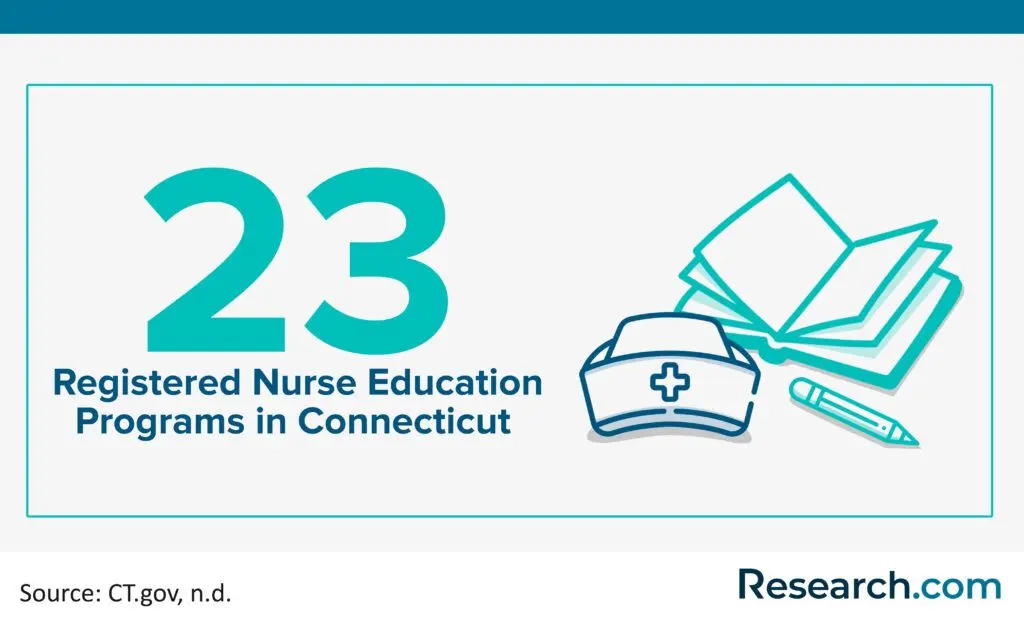
CT.gov (n.d.) lists 23 registered nurse education programs in Connecticut. Students can find nursing pathways through community colleges, state universities, private universities, and online or hybrid programs. The right route depends on whether you are starting from high school, already licensed as an RN, changing careers, or preparing for graduate-level nursing practice.
Step 1: Choose the nursing role you want
Connecticut nursing education begins with a clear career goal. A student who wants the fastest practical nursing route may consider an LPN program, while someone who wants to become an RN generally pursues an associate degree or bachelor’s degree. Licensed RNs who already hold an associate degree or diploma often choose an RN to BSN bridge program to complete bachelor’s-level nursing coursework.
| Pathway | Best for | Typical outcome | Key consideration |
| LPN program | Students seeking a shorter entry point into practical nursing | Licensed Practical Nurse preparation | Scope of practice is more limited than RN practice |
| Associate Degree in Nursing | Students who want to become registered nurses through a shorter college degree | Eligibility to pursue RN licensure after meeting requirements | Some employers may prefer or require a BSN |
| Traditional BSN | Students who want a broader undergraduate nursing education | BSN preparation and RN licensure pathway | Usually takes longer than an ADN route |
| RN to BSN | Licensed RNs with an ADN or diploma | Bachelor’s degree completion | Usually requires an active RN license or eligibility requirements set by the school |
| MSN or DNP | RNs preparing for advanced practice, education, leadership, or specialization | Graduate-level nursing roles | Admissions, clinical hours, and licensure requirements vary by specialty |
Step 2: Complete an approved nursing program
Connecticut students may complete some nursing coursework online through nursing colleges in CT, especially in RN to BSN and graduate programs. In most cases, clinical learning still occurs in approved healthcare settings such as hospitals, clinics, community agencies, or other supervised care environments. Admission requirements commonly include a high school diploma and prerequisite courses such as Anatomy, Biology, Nutrition, and Statistics.
Step 3: Pass the licensing exam and apply for licensure
After finishing the appropriate nursing program, graduates preparing for RN licensure must pass the National Council Licensure Examination for Registered Nurses (NCLEX-RN). Candidates should also budget for examination and Connecticut license application fees. Requirements can change, so applicants should verify current rules directly with the Connecticut nursing board before submitting an application.
What is the typical cost of nursing programs in CT?
The cost of a nursing degree in Connecticut depends on the school, residency status, degree level, number of credits accepted in transfer, technology fees, clinical costs, books, background checks, uniforms, and whether the student attends full time or part time. When comparing cheap online RN to BSN programs, look beyond the advertised per-credit price and calculate the full degree cost.
For example, Central Connecticut State University (n.d.) lists its online RN to BSN program at $495 per credit for in-state students and $695 per credit for out-of-state students. Franklin University (n.d.) lists nursing programs in CT at a flat rate of $298 per credit, which can make cost comparisons simpler for students regardless of residence.
| Cost factor | Why it matters | Question to ask before enrolling |
| Per-credit tuition | This is the most visible price, but it is not the full cost | How many credits will I actually need after transfer evaluation? |
| Residency pricing | Some schools charge different rates for in-state and out-of-state students | Does the online program use separate in-state and out-of-state tuition? |
| Clinical and lab fees | Hands-on courses may require additional payments | Are simulation, lab, or clinical placement fees included in tuition? |
| Books and technology | Online programs may require software, testing tools, or digital course materials | What technology platforms and proctored testing costs should I expect? |
| Time to completion | A lower per-credit rate may not be the cheapest option if more credits are required | Can the school provide a written degree plan before I commit? |
Students considering graduate nursing education can also compare cheap MSN programs if their goal is advanced practice, nursing education, administration, or another master’s-level pathway.
How long does it take to become a nurse in CT?
The timeline depends on the credential. Some students can complete an LPN program in about a year, while an ADN often takes around 24 months, and a traditional BSN typically takes four years. Students should also allow time to prepare for and pass the NCLEX-RN and complete the Connecticut licensing process.
| Program type | Typical academic timeline stated | Common goal | Important note |
| LPN program | About a year | Licensed Practical Nurse preparation | Shorter route but more limited than RN preparation |
| Associate Degree in Nursing | Around 24 months | Registered nurse preparation | Graduates become eligible to take the NCLEX-RN for licensure |
| BSN | Typically four years | Registered nurse preparation with broader bachelor’s-level education | BSN graduates may have stronger access to employers that prefer bachelor’s-prepared nurses |
| RN to BSN | Varies by school and transfer credits | BSN completion for licensed RNs | Often designed for nurses who already completed an ADN or diploma program |
The BSN has become especially important for long-term career planning. The American Association of Colleges of Nursing reported that 69.8% of employers expressed a strong preference for BSN-prepared nurses in 2024. For RNs who want leadership roles, specialty practice, graduate study, or wider mobility, completing a BSN can be a strategic next step after initial RN preparation.
Can you become a nurse in CT with an online degree?
Yes, but the answer depends on the program type. Many RN to BSN and graduate nursing programs can be completed largely online because students already have nursing experience or complete advanced coursework through a distance format. Prelicensure programs, by contrast, still require in-person clinical training, skills practice, and supervised patient care experiences.
CT Data Collaborative (n.d.) reports that many Connecticut nurses hold advanced educational credentials: 55% have a bachelor’s degree and 20% have a master’s degree. This shows that continued education is common in the state’s nursing workforce, but students still need to confirm that their chosen online program meets Connecticut standards.
The Connecticut Board of Examiners for Nursing accepts online nursing schools in Connecticut that are accredited by a national or regional agency recognized by the United States Department of Education. Students should verify accreditation, clinical placement expectations, state authorization, and whether the program is designed for Connecticut licensure before enrolling. If the program satisfies state criteria and the student passes the NCLEX-RN when required, the graduate may move forward with the Connecticut licensing process.
Online Nursing Programs in CT for 2027
The programs below were selected from available information on online nursing options in Connecticut, with attention to accreditation, affordability, curriculum structure, and suitability for working nurses. Use this list as a starting point, not as the only factor in your decision. Always confirm current tuition, admission rules, clinical expectations, and transfer credit policies directly with the school.
| School | Program length | Cost per credit | Required credits to graduate | Accreditation |
| Southern Connecticut State University | Two years | $450 | 120 | Commission on Collegiate Nursing Education (CCNE) |
| Sacred Heart University | One and a half to three years | $390 | 120 | CCNE |
| Goodwin University | One year | $595 | 96 | CCNE |
| University of Bridgeport | Two years | $345 | 120 | CCNE |
| Central Connecticut State University | One year | $495 to $695 | 60 | CCNE |
1. Southern Connecticut State University
Southern Connecticut State University (SCSU) offers an RN to BSN pathway for registered nurses who already hold an associate degree or diploma and want to complete a bachelor’s degree. The program is structured to recognize the clinical experience that RNs bring into the classroom while expanding their preparation in professional nursing practice. Students receive support through SCSU’s School of Nursing as they build on prior nursing education and workplace experience.
- Program Length: Two years
- Cost per Credit: $450
- Tracks/concentrations: Pediatric Nursing, Geriatric Nursing, Psychiatric Mental Health Nursing, Informatics Nursing
- Required Credits to Graduate: 120
- Accreditation: Commission on Collegiate Nursing Education (CCNE)
2. Sacred Heart University
Sacred Heart University (SHU) provides a flexible online RN to BSN option with six start date options throughout the year. The program is designed to broaden the professional perspective of working nurses and includes study across nursing and liberal arts subjects such as Literature, Religion, Philosophy, and Sociology. SHU also offers nursing education across multiple levels, from BSN to DNP, which may appeal to students who want a long-term academic pathway.
- Program Length: One and a half to three years
- Cost per Credit: $390
- Tracks/concentrations: Pediatric Nursing, Geriatric Nursing, Psychiatric Mental Health Nursing, Informatics Nursing
- Required Credits to Graduate: 120
- Accreditation: CCNE
3. Goodwin University
Goodwin University offers an online RN to BSN program built for working nurses who need a schedule-conscious bachelor’s completion route. The curriculum is intended to strengthen nursing knowledge across healthcare settings. Students who have passed the NCLEX and hold RN licensure may enroll in NUR 300 to 400-level courses as part of the bachelor’s degree sequence.
- Program Length: One year
- Cost per Credit: $595
- Tracks/concentrations: Pediatric Nursing, Geriatric Nursing, Psychiatric Mental Health Nursing, Informatics Nursing
- Required Credits to Graduate: 96
- Accreditation: CCNE
4. University of Bridgeport
The University of Bridgeport offers an online RN to BSN program for registered nurses who want to move toward leadership, stronger clinical reasoning, and broader professional practice. Coursework builds on prior associate degree or diploma nursing education and covers evidence-based practice, health assessment, quality, leadership, safety, informatics, professional seminars, and community health.
- Program Length: Two years
- Cost per Credit: $345
- Tracks/concentrations: Pediatric Nursing, Geriatric Nursing, Psychiatric Mental Health Nursing, Informatics Nursing
- Required Credits to Graduate: 120
- Accreditation: CCNE
5. Central Connecticut State University
Central Connecticut State University offers an online RN to BSN program taught by nursing professionals familiar with the changing healthcare environment. Applicants in the final year of a diploma or associate degree program may receive provisional admission while waiting for NCLEX results. The program includes community immersion experiences and access to simulation suites and laboratory facilities that support applied learning.
- Program Length: One year
- Cost per Credit: $495 to $695
- Tracks/concentrations: Pediatric Nursing, Geriatric Nursing, Psychiatric Mental Health Nursing, Informatics Nursing
- Required Credits to Graduate: 60
- Accreditation: CCNE
Is Connecticut good for nursing?
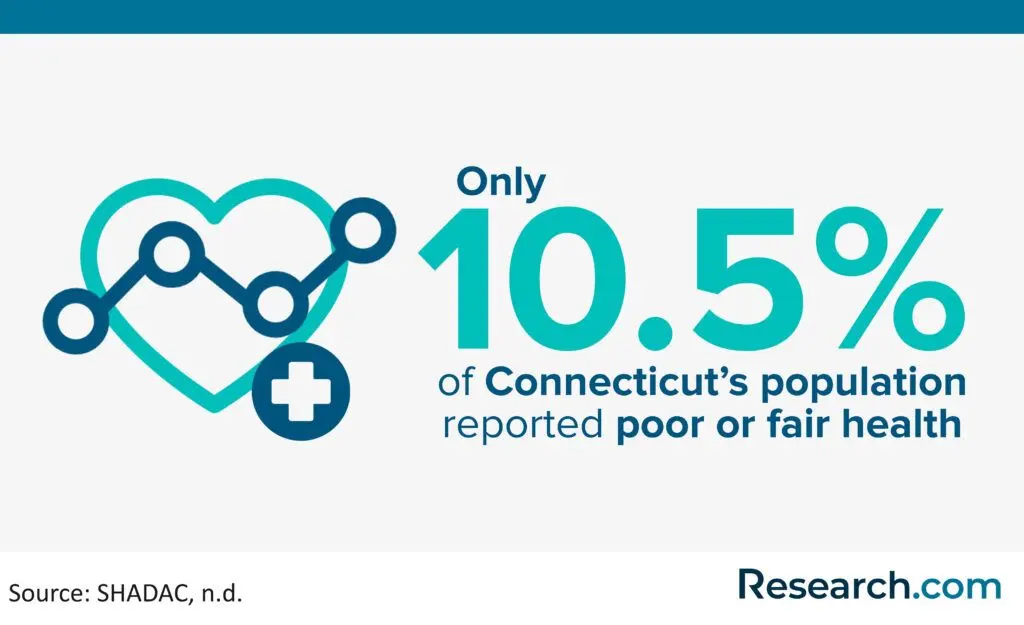
Connecticut can be a strong state for nursing students and working nurses because it combines major healthcare employers, competitive RN compensation, and a population with substantial access to routine care. America’s Health Rankings (2025) reported that only 10.2% of Connecticut adults described their health as poor or fair in 2024, which reflects the state’s broader healthcare environment.
Salary is one of the clearest advantages. Registered nurses in Connecticut earn a higher median pay than the national median figures shown in this guide. However, students should balance that benefit against Connecticut’s higher cost of living, commuting expenses, and the possibility that some positions may prefer a BSN or specialty experience.
The state also offers a range of nursing workplaces, including hospitals, medical centers, outpatient clinics, long-term care providers, behavioral health settings, community agencies, and advanced practice environments. Students comparing the best schools for RNs should think not only about school reputation but also about where graduates complete clinicals, build employer connections, and transition into first nursing roles.
| Why Connecticut may appeal to nurses | What to consider carefully |
| RN pay shown for Connecticut is higher than the national figure listed in this guide | Housing, transportation, and daily living costs may reduce the practical value of higher pay |
| Many healthcare settings create varied career options | Preferred credentials can differ by employer, unit, and specialty |
| Strong emphasis on healthcare access and education | Clinical placement availability can still vary by school and location |
| BSN and graduate education are common among nurses in the state | Additional education requires careful cost and ROI planning |
What can I do with a nursing degree in CT?
A nursing degree in Connecticut can lead to clinical, community health, leadership, informatics, education, and advanced practice opportunities. The national median pay for RNs is $77,600 per year or $37.31 per hour. In Connecticut, the figures shown are $94,260 per year and $45.32 per hour. Employment growth is listed as 6% for both the United States and Connecticut.
| Job and Location | Mean Annual Salary | Mean Hourly Salary | Employment Growth |
| Registered Nurses in the United States | $77,600 | $37.31 | 6% |
| Registered Nurses in Connecticut | $94,260 | $45.32 | 6% |
RNs with graduate preparation, including those who complete MSN degrees, may pursue advanced roles in areas such as nurse practitioner practice, education, clinical leadership, and specialized patient care. Still, salary and job outcomes are never guaranteed. They depend on your license, experience, employer, location, shift, specialty, bargaining agreements, and degree level.
Common nursing career directions in Connecticut
- Hospital nursing: Medical-surgical, emergency, critical care, maternity, pediatric, perioperative, and specialty units.
- Community and public health: Patient education, preventive care, home health, school health, and community-based programs.
- Long-term and geriatric care: Skilled nursing facilities, rehabilitation settings, assisted living, and care coordination for older adults.
- Behavioral health nursing: Psychiatric units, outpatient behavioral health programs, crisis services, and integrated care teams.
- Nursing leadership: Charge nurse, unit educator, quality improvement, case management, administration, and nurse manager roles.
- Graduate-level practice: Nurse practitioner, nurse educator, clinical nurse specialist, nurse midwife, or other advanced pathways depending on education and licensure.
How do I choose the best online nursing program in Connecticut?
The best online nursing program is the one that matches your current license status, your career goal, your budget, and Connecticut’s regulatory expectations. Start by confirming accreditation and licensure alignment, then compare the learning format, clinical requirements, transfer credits, faculty access, and student outcomes. Students who want a step-by-step licensing overview can also review how to become an RN in Connecticut.
| Selection factor | What to verify | Why it matters |
| Accreditation | Confirm institutional and nursing program accreditation | Accreditation affects licensure, transferability, employer acceptance, and graduate study options |
| Licensure alignment | Ask whether the program meets Connecticut requirements for your intended license | Online programs may not automatically qualify students in every state |
| Clinical placement support | Find out whether the school arranges placements or expects students to locate sites | Clinical delays can extend graduation timelines |
| Transfer credit policy | Request a written transfer evaluation before committing | Accepted credits can lower cost and shorten completion time |
| Course format | Compare synchronous, asynchronous, hybrid, and intensive course models | The wrong format can be difficult for working nurses to sustain |
| Total cost | Calculate tuition, fees, supplies, travel, books, and lost work time | The cheapest per-credit rate is not always the cheapest degree |
| Student outcomes | Ask about graduation rates, NCLEX pass rates when relevant, and job placement support | Outcomes help show whether students complete and progress successfully |
Do online nursing programs in CT fulfill licensing and regulatory standards?
Some do, but students should never assume that every online nursing program meets Connecticut requirements. Before applying, confirm that the curriculum, clinical experiences, faculty qualifications, and accreditation status align with the nursing license requirements in Connecticut. This is especially important for prelicensure students, out-of-state online programs, and advanced practice tracks.
Ask the admissions office for written confirmation of state authorization and licensure preparation. Also check whether the program explains continuing education, renewal expectations, clinical documentation, and any required approvals from state agencies. A program that is convenient but not license-aligned can cost you time, money, and career momentum.
Can I specialize in psychiatric nursing through online programs in Connecticut?
Yes, some online nursing pathways can support psychiatric-mental health specialization, especially at the certificate, MSN, post-master’s, or nurse practitioner level. Psychiatric nursing preparation usually combines theory, assessment, pharmacology, therapeutic communication, behavioral health care, and supervised clinical experience with appropriate populations.
Students should verify whether the program prepares graduates for the specific credential or role they want. If affordability is a major concern, compare options such as the cheapest online PMHNP certificate programs, but do not choose on price alone. Clinical placement quality, faculty expertise, and state compliance matter just as much.
How do allied healthcare programs complement nursing careers in Connecticut?
Allied healthcare training can strengthen a nursing career by adding practical knowledge in patient intake, documentation, procedures, communication, billing workflows, and interdisciplinary teamwork. This can be useful for nurses who want to work in ambulatory care, care coordination, quality improvement, or administrative roles.
For example, medical assistant programs in Connecticut can help healthcare workers understand front-office and clinical support functions that intersect with nursing practice. For licensed nurses, allied health education should be viewed as a complement, not a replacement for nursing credentials required by law or employers.
What types of support services are available for online nursing students in Connecticut?
Online nursing students need more than recorded lectures. The strongest programs provide academic, technical, clinical, and career support that helps students stay enrolled and progress through demanding coursework. This is especially important for working RNs balancing shifts, family responsibilities, and degree completion.
- Academic advising: Advisors help students map prerequisites, transfer credits, nursing courses, and graduation requirements into a realistic plan.
- Clinical coordination: Strong programs explain how clinical placements work, what documentation is required, and whether students receive help securing approved sites.
- Faculty access: Online learners should have clear ways to contact instructors, attend virtual office hours, and receive feedback on assignments.
- Career services: Resume support, interview preparation, employer connections, and career coaching can help nurses move into new roles after graduation.
- Technology support: Because online programs depend on learning platforms, proctored exams, simulations, and digital resources, reliable tech help is essential.
- Tutoring and writing help: Nursing students often benefit from support in evidence-based writing, statistics, pharmacology, health assessment, and research interpretation.
- Peer and faculty mentoring: Mentorship can help students manage workload, prepare for clinical expectations, and make informed decisions about specialties or graduate school.
What financial aid and scholarship options are available for online nursing programs in Connecticut?
Students should compare institutional scholarships, grants, employer tuition assistance, state-supported aid, federal aid eligibility, military or veteran benefits, and loan repayment or forgiveness options where applicable. The right funding package depends on program type, enrollment status, income, employer benefits, and whether the school participates in financial aid programs.
When researching accredited nursing schools in Connecticut, ask each school for a full cost estimate and financial aid review. A useful estimate should include tuition, fees, books, technology costs, clinical expenses, and expected time to completion. Working nurses should also ask employers whether tuition reimbursement requires a work commitment after graduation.
What are the benefits of online RN to BSN programs for non-nurses in Connecticut?
This is an important distinction: RN to BSN programs are generally designed for people who are already registered nurses. A non-nurse usually cannot enter an RN to BSN program because the “RN” portion assumes prior nursing education and licensure. If you do not already hold RN licensure, you should look for a prelicensure ADN, traditional BSN, accelerated BSN, direct-entry nursing pathway, or another program designed for students new to nursing.
That said, online and hybrid options can still help career changers. Some programs offer online didactic coursework combined with in-person labs and clinical rotations. If you are exploring a transition into nursing, review online BSN programs for non nurses and confirm whether each program leads to NCLEX-RN eligibility in Connecticut.
| Your current status | Program to consider | Program to avoid |
| No nursing license | Prelicensure ADN, traditional BSN, accelerated BSN, or approved entry-level nursing program | RN to BSN programs that require an active RN license |
| Licensed RN with ADN or diploma | RN to BSN program | Prelicensure BSN unless you need a different foundation for a specific reason |
| BSN-prepared RN | MSN, certificate, DNP, or specialty preparation | Another BSN program unless required for a unique credential issue |
| Healthcare worker but not a nurse | Approved prelicensure nursing route with clinical training | Programs that imply nursing licensure without supervised clinical requirements |
Can I complete my online RN to BSN program in Connecticut faster through an accelerated option?
Some RN to BSN students can finish faster through accelerated course formats, generous transfer credit, year-round enrollment, or competency-based options. A faster program can be useful for licensed nurses seeking promotion, graduate school admission, or eligibility for BSN-preferred positions. However, speed should not come at the expense of learning quality, clinical relevance, or work-life balance.
Benefits of Accelerated Programs
- Shorter completion timeline: Condensed courses may help nurses finish the BSN sooner and move toward career or graduate-school goals.
- Potential cost savings: Finishing more quickly may reduce some total expenses, although students should still compare full program costs rather than assuming acceleration is cheaper.
- Focused academic momentum: Accelerated formats can keep students engaged in a continuous sequence of nursing coursework.
Important Considerations
- Heavy workload: Shorter terms can mean faster deadlines, more reading each week, and less recovery time between assignments.
- Time management pressure: Working nurses must realistically assess shifts, overtime, family duties, and clinical or project requirements.
- Limited availability: Not every Connecticut online RN to BSN program offers an accelerated structure, so careful research is required.
Alternatives for a Quicker Path
- Challenge Exams: Some schools may allow experienced nurses to demonstrate knowledge in specific areas and reduce required coursework.
- Credit Transfers: Prior nursing, general education, healthcare, or certification coursework may shorten the degree plan if accepted by the institution.
Exploring Accelerated Options
Before choosing an accelerated track, compare your learning style, work schedule, support system, and tolerance for intensive coursework. To explore faster and cost-conscious options beyond Connecticut, review Research.com’s guide to affordable accelerated nursing programs.
How do online nursing programs in Connecticut support targeted specialization?
Online nursing programs can support specialization through focused electives, simulation activities, advanced assessment coursework, practicum experiences, and faculty mentoring. Common areas of interest include telehealth, geriatric care, community health, informatics, psychiatric-mental health, leadership, and nurse practitioner preparation.
Students considering advanced practice should compare specialty admissions requirements, clinical hour expectations, certification alignment, and state practice rules. Some learners begin by researching the easiest NP specialty, but the better question is which specialty fits your patient population, clinical strengths, long-term schedule, and licensure goals.
How do regulatory changes and healthcare policies shape advanced nursing roles in Connecticut?
Nursing roles are shaped by state scope-of-practice rules, licensure requirements, federal healthcare policy, payer expectations, employer staffing models, and patient access needs. These factors influence how programs design advanced coursework, how clinical placements are structured, and what documentation graduates need for certification or licensure.
Policy changes can also affect pathways into advanced roles such as nurse midwifery, nurse practitioner practice, and other specialized areas. Nurses who want a broader scope of practice should study the specific requirements for their intended credential. For example, those interested in maternity and reproductive health can review how to become a nurse midwife in Connecticut through this guide on how to become a nurse midwife in Connecticut.
Understanding Career Advancement Opportunities for Connecticut Nurses
Connecticut nurses can advance by earning a BSN, completing graduate education, gaining specialty certifications, moving into leadership, or developing expertise in high-need clinical areas. The best path depends on whether the nurse wants more autonomy, higher-level clinical decision-making, education roles, administrative responsibilities, or a specialty patient population.
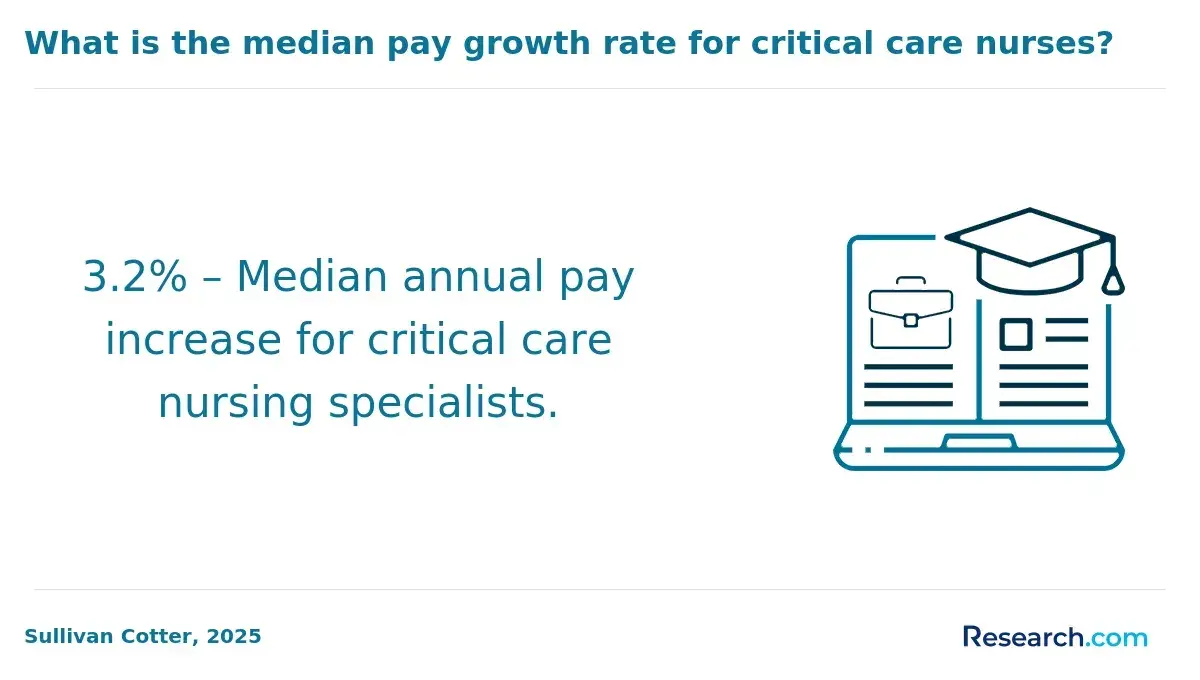
RNs may consider certifications such as Certified Emergency Nurse (CEN), Critical Care Registered Nurse (CCRN), or Oncology Certified Nurse (OCN) if their work aligns with emergency, critical care, or oncology practice. Nurses with management goals may explore credentials such as Nurse Executive Certification (NE-BC), depending on experience and eligibility requirements.
Graduate education can open doors to roles such as Nurse Practitioner, Nurse Educator, Clinical Nurse Specialist, and other advanced positions. Nurse Practitioners in Connecticut are granted full-practice authority, allowing them to diagnose, treat, and prescribe medications without physician oversight. This autonomy can be a major reason some nurses pursue advanced practice, but students should still verify the current requirements for their intended specialty.
Mentorship and networking also matter. Professional organizations, employer-based leadership programs, preceptors, and alumni networks can help nurses learn about specialty units, graduate school options, research projects, and leadership openings. Nurses comparing nurse practitioner programs in Connecticut should evaluate not only curriculum but also clinical placement support and graduate outcomes.
What are the graduate outcomes and NCLEX pass rates for online nursing programs in CT?
Graduate outcomes are among the most useful ways to evaluate a nursing program. For prelicensure programs, ask for NCLEX pass rates, graduation rates, student retention, clinical placement quality, and job placement information. For RN to BSN programs, NCLEX pass rates may be less relevant because students are already licensed RNs, so graduation rates, transfer credit acceptance, employer recognition, and graduate school placement may matter more.
Students should request current, verifiable outcome data directly from each school. A strong program should be willing to explain how it supports licensure preparation, clinical readiness, and career progression. Learners exploring practical nursing routes can also compare requirements in this guide on how to become an LVN nurse in Connecticut.
How do online nursing programs in CT balance virtual coursework with hands-on clinical training?
Online nursing programs usually separate theory from practice. Lectures, discussions, papers, exams, care planning, informatics modules, and evidence-based practice assignments may happen online. Clinical skills, assessment practice, simulations, and supervised patient care must occur in approved hands-on settings when required by the program and licensure pathway.
Connecticut programs may use local healthcare partnerships, simulation labs, virtual patient scenarios, and faculty-supervised clinical activities to connect online learning with real-world nursing care. Before enrolling, ask whether the school secures clinical sites, whether travel is required, and how placements are approved. Students planning advanced practice can also review the pathway for how to become a nurse practitioner in Connecticut.
How can additional healthcare certifications diversify your nursing career in Connecticut?
Additional healthcare certifications can help nurses move into roles that combine clinical knowledge with administration, documentation, technology, revenue cycle operations, or care coordination. Credentials in healthcare administration, coding, billing, quality improvement, case management, or informatics may be useful for nurses who want options beyond direct bedside care.
These credentials should be chosen strategically. A certification is most valuable when it supports a specific job goal, employer requirement, or transition plan. Nurses interested in documentation and revenue cycle roles can explore how to become a medical biller and coder in Connecticut as one way to understand administrative healthcare pathways that may complement nursing experience.
What distinguishes online nursing programs from traditional ones in Connecticut?
The main difference is how classroom learning is delivered. Online nursing programs use learning management systems, recorded or live lectures, discussion boards, virtual simulations, and remote assignments. Traditional programs rely more heavily on scheduled campus classes. Both formats must still meet academic, clinical, and regulatory expectations when they prepare students for nursing licensure or advancement.
| Feature | Online nursing program | Traditional campus program |
| Course delivery | Often asynchronous or hybrid, with online lectures and assignments | Usually scheduled in-person classes on campus |
| Flexibility | Often better for working nurses and adult learners | May be easier for students who prefer fixed schedules and face-to-face learning |
| Clinical training | Still requires approved in-person clinical or practicum experiences when applicable | Usually coordinated near or through campus and partner sites |
| Technology use | Heavy use of online platforms, virtual labs, simulations, and remote communication | May use technology but with more campus-based interaction |
| Best fit | Self-directed students who can manage time independently | Students who benefit from in-person structure and immediate campus access |
Students considering a shorter entry route should compare practical nursing and RN pathways carefully. For a concise overview of practical nursing preparation, review how to become an LPN in Connecticut.
Common mistakes to avoid when choosing an online nursing program in Connecticut
- Assuming every online program meets Connecticut licensure rules: Always verify state authorization, accreditation, and clinical requirements before applying.
- Choosing by tuition alone: A low per-credit rate can be misleading if the program accepts fewer transfer credits or charges high fees.
- Ignoring clinical placement details: Ask who finds clinical sites, where they are located, and what happens if a placement is delayed.
- Confusing RN to BSN with prelicensure BSN: RN to BSN programs generally require existing RN licensure and are not the right first step for most non-nurses.
- Relying only on rankings: Rankings can help you build a shortlist, but program fit, outcomes, accreditation, cost, and support services matter more.
- Not asking for a transfer credit evaluation: Transfer policies can significantly change your timeline and total cost.
- Overestimating capacity for accelerated study: Faster programs can be efficient, but they can also be difficult to manage with full-time nursing work.
Thrive in the Health Industry through Nursing Programs in CT
Online nursing programs in Connecticut can be a smart path for licensed RNs who want to complete a BSN, nurses preparing for graduate study, and healthcare professionals who need flexible education options. Programs such as the best RN to BSN online programs can help working nurses build stronger preparation in leadership, evidence-based care, community health, informatics, and professional practice.
For nurses with long-term goals in advanced practice, education, or administration, a master’s degree in nursing may be the next step after the BSN. The key is to choose a program that fits your license status, budget, schedule, and intended career outcome while meeting Connecticut’s regulatory expectations.
Key Insights
- Online nursing can work in Connecticut, but clinical requirements still matter: Many courses can be completed remotely, yet prelicensure and advanced practice pathways still require approved hands-on training.
- RN to BSN is mainly for licensed RNs: Non-nurses should look for prelicensure ADN, BSN, accelerated BSN, or approved entry-level nursing routes instead.
- Cost comparisons require more than tuition: Use per-credit rates, transfer credits, fees, clinical expenses, and completion time to estimate the real price.
- Connecticut offers strong RN compensation figures: The guide lists $94,260 per year and $45.32 per hour for Connecticut RNs, compared with $77,600 and $37.31 nationally.
- BSN preparation is increasingly valuable: In 2024, 69.8% of employers expressed a strong preference for BSN-prepared nurses, making bachelor’s completion important for many RNs.
- Accreditation and licensure alignment are non-negotiable: Before enrolling, verify that the program is recognized, state-compliant, and appropriate for your intended credential.
- The best program is the best fit, not just the highest-ranked option: Prioritize clinical support, student outcomes, schedule compatibility, total cost, and your long-term nursing goals.
Related Articles for Nearby States
- 2027 Best Online Nursing Programs in New York – Accredited RN to BSN Programs
- 2027 Best Online Nursing Programs in Massachusetts – Accredited RN to BSN Programs
- 2027 Best Online Nursing Programs in New Jersey – Accredited RN to BSN Programs
- 2027 Best Online Nursing Programs in Pennsylvania: Accredited RN to BSN Programs
- 2027 Best Online Nursing Programs in New Hampshire – Accredited RN to BSN Programs
- 2027 Best Online Nursing Programs in Delaware – Accredited RN to BSN Programs
- 2027 Best Online Nursing Programs in Maryland – Accredited RN to BSN Programs
- 2027 Best Online Nursing Programs in Maine – Accredited RN to BSN Programs
- 2027 Best Online Nursing Programs in Ohio – Accredited RN to BSN Programs
- 2027 Best Online Nursing Programs in West Virginia – Accredited RN to BSN Programs
References:
- CT.gov. (n.d.). Registered Nurse Education Programs. https://portal.ct.gov/DPH/Public-Health-Hearing-Office/Board-of-Examiners-for-Nursing/Registered-Nurse-Education-Programs
- NCSBN. (2025). 2024 National Nursing Workforce Study. https://www.ncsbn.org/workforce
- Nurse.org. (2025). New 2025 Report Shows Where Nurse Pay Is Growing Fastest. https://nurse.org
- SHADAC. (n.d.). State Health Compare. https://www.shadac.org/news/SHC-NHISdata2023
- US BLS. (2025). Registered Nurses. https://www.bls.gov/ooh/healthcare/registered-nurses.htm
Other Things You Should Know About Online Nursing Programs in Connecticut
Some of the best online RN to BSN programs in Connecticut for 2027 include those offered by the University of Connecticut, Sacred Heart University, and Southern Connecticut State University. These programs are accredited, flexible, and designed to accommodate working professionals.
The cost of nursing programs in Connecticut varies depending on the institution and the student's residency status. For example, Central Connecticut State University charges $495 per credit for in-state students and $695 per credit for out-of-state students. Other institutions like Franklin University offer flat rates, such as $298 per credit for all students.
In 2027, an online RN to BSN program in Connecticut typically takes 12 to 18 months to complete, depending on the student's pace and enrollment status. These programs are designed for registered nurses aiming to enhance their credentials and knowledge while balancing professional responsibilities.
Yes, you can become a nurse in Connecticut with an online degree as long as the program is accredited by a recognized agency. Online nursing programs in Connecticut must meet the state’s licensure criteria, and students must fulfill clinical requirements at local healthcare facilities.
Some of the best online nursing programs in Connecticut include Southern Connecticut State University, Sacred Heart University, Goodwin University, University of Bridgeport, and Central Connecticut State University. These programs offer flexibility, accreditation, and diverse specializations.
Connecticut is a favorable state for nursing due to its competitive salaries, strong healthcare infrastructure, and a high emphasis on residents' health. The state offers numerous career opportunities and specializations in various healthcare settings.
Pursuing a BSN in Connecticut can enhance your career prospects, provide opportunities for higher salaries, and position you for leadership roles in healthcare. Additionally, many employers prefer or require a BSN for employment, making it a valuable credential in the nursing profession.


