
2027 Best Nursing Schools in Vermont – Accredited ADN, BSN, MSN Programs

Co-Founder and Chief Data Scientist
Choosing a nursing school in Vermont is not just a program decision. It is a workforce, licensing, cost, and career-planning decision. Vermont already has around 15,000 nurses, but state leaders expect the state to need another 9,000 over the next five years because of retirements and existing shortages. That demand is shaping scholarships, hiring incentives, clinical placement opportunities, and employer recruitment across the state.
This guide is for future RNs, LPNs, BSN students, career changers, and working nurses comparing nursing schools in Vermont. It explains which Vermont nursing programs stand out, how licensure works, what degrees fit different goals, how online and campus options compare, and what questions to ask before enrolling. You will also find practical guidance on cost, accreditation, NCLEX preparation, specialty certification, and career advancement.
Vermont is also a strong healthcare state. U.S. News & World Report ranked Vermont as the best state for healthcare in its 2024 Best States for Health Care ranking, using data from the U.S. Census Bureau and the Kaiser Family Foundation across measures such as medical office staffing adequacy, hospital affordability, and reported health status. If you are still comparing the different types of nursing degrees, Vermont offers a focused but meaningful set of ADN, BSN, MSN, DNP, bridge, and practical nursing pathways.
Best Nursing Schools in Vermont Table of Contents
- Quick answer: Are Vermont nursing schools worth considering?
- How to become a nurse in Vermont
- How long nursing programs take in Vermont
- Nursing school tuition and cost factors in Vermont
- Best nursing schools in Vermont for 2027
- Networking and career development for Vermont nursing students
- How to choose a Vermont nursing school
- Preparing for specialty nursing certifications after graduation
- Online nursing programs in Vermont: advantages and trade-offs
- Nurse practitioner programs and advanced practice options in Vermont
- Using Vermont’s nursing shortage to build career momentum
- Alternative nursing pathways in Vermont
- How advanced nursing degrees can expand Vermont career options
- How to become an LPN in Vermont
- Continuing education options for Vermont nurses
- Career growth options for LPNs in Vermont
- Vermont nursing licensing and regulatory updates
- How to become a nurse midwife in Vermont
- Trends shaping nursing education and practice in Vermont
- Interprofessional collaboration in Vermont healthcare
- Nonclinical careers for Vermont nurses
Quick answer: Are Vermont nursing schools worth considering?
Yes, nursing schools in Vermont are worth considering if you want to work in a state with strong healthcare rankings, active demand for nurses, compact licensure mobility, and public investment in healthcare workforce development. The best choice depends on your goal: an ADN can prepare you for RN licensure faster, a BSN may offer broader long-term mobility, an RN-to-BSN program can help working nurses advance, and an MSN or DNP can support advanced practice, leadership, or nurse educator roles.
The strongest Vermont nursing school for you is not automatically the highest-ranked program. You should compare accreditation, NCLEX-RN pass rates, clinical placement access, total cost, commute or online flexibility, financial aid, transfer credit policies, and whether the program fits your intended license or specialty.
| Student goal | Best-fit pathway | Why it may make sense |
| Become an RN as efficiently as possible | ADN | Usually shorter than a BSN and designed for NCLEX-RN eligibility. |
| Build broad career mobility | BSN | Often preferred for hospital, leadership, public health, military, and graduate-school pathways. |
| Advance from RN to bachelor’s-level preparation | RN-to-BSN | Useful for licensed RNs who want a bachelor’s credential while continuing to work. |
| Move into advanced practice or leadership | MSN, DNP, or postgraduate certificate | Supports nurse practitioner, clinical nurse leader, educator, and other advanced roles. |
| Start in practical nursing | LPN program | Can be a shorter entry point into patient care and may lead later to RN bridge options. |
Is nursing a good job in Vermont?
Nursing can be a strong career choice in Vermont, especially for students who want to work in community hospitals, rural health settings, primary care, long-term care, public health, or advanced practice. The state has a respected healthcare system, but it also faces staffing pressure. That combination creates opportunity, though students should still weigh salary against Vermont’s cost of living and the cost of nursing education.
Why Vermont may appeal to future nurses
1. Demand is a major workforce issue. U.S. Sen. Bernie Sanders, I-Vt., proposed a 60% increase in Vermont nurses of all levels over the next five years to help stabilize the state’s nursing workforce. That would move the current workforce from about 15,000 nurses to 25,000 nurses by an updated target year of 2029. Hospitals have also relied heavily on traveling nurses; based on Vermont Association of Hospitals and Health Systems data, this cost hospitals more than $82 million in 2023.
The policy argument is straightforward: Vermont can reduce long-term dependence on temporary staffing by educating, recruiting, and retaining nurses who plan to stay. The state also needs more nurse educators, a challenge made harder because nursing faculty are often paid significantly less than nurses working directly in clinical practice.
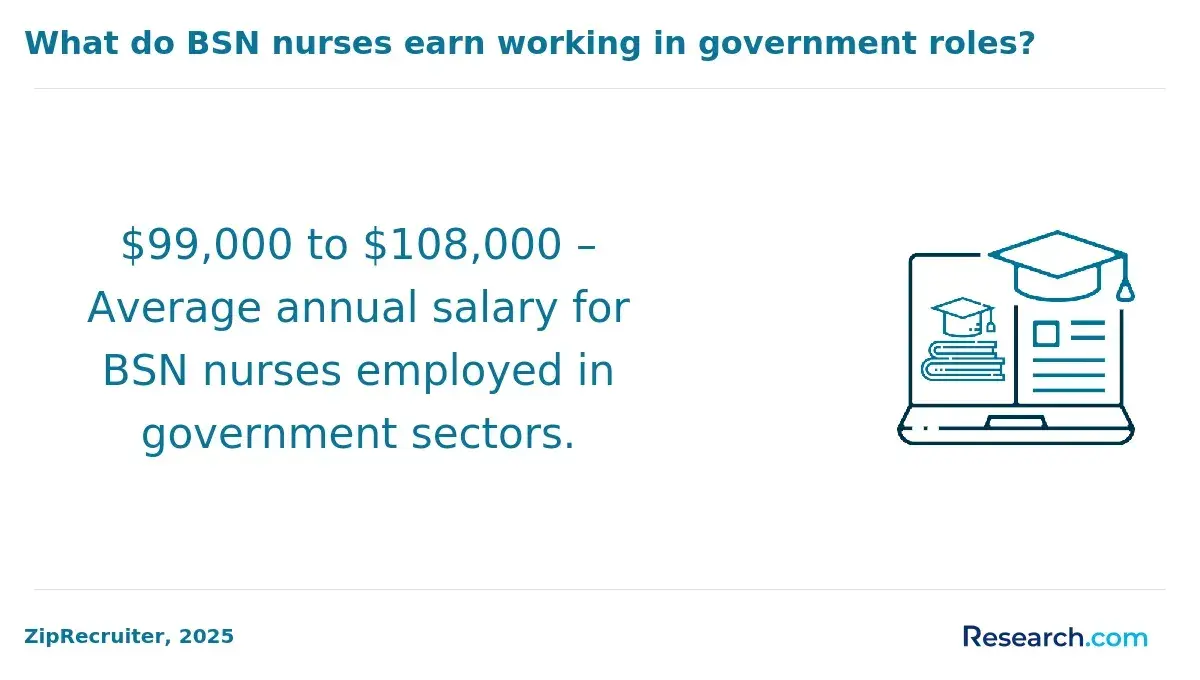
2. State leaders are putting money into healthcare workforce development. The average annual RN salary in Vermont is $84,978 (Salary.com, 2024). Nurse practitioners earn an annual average salary of $127,150. Those numbers should be read alongside Vermont’s cost of living. The MIT Living Wage Calculator estimates the living wage for a single adult in Vermont at $44,865.6 per year.
Gov. Scott adjusted the state budget to include $18 million for training, recruitment, and retention of Vermont’s current healthcare providers, plus $15 million for relocation and recruitment of international nurses. Vermont lawmakers also invested $4 million in nursing scholarships in 2021, and the Governor has earmarked $30 million in workforce recruitment and retention bonuses.
3. Vermont participates in the Nurse Licensure Compact. Vermont is an active Nurse Licensure Compact (NLC) state. If you hold a multistate license from another compact state, you may be able to practice in Vermont without completing the full Vermont licensing process again. Vermont nurses with multistate licenses also gain mobility if they later move to another compact state.
Vermont also does not require continuing education for RN license renewal. That can reduce administrative work, although nurses who pursue specialty certification or employer-sponsored advancement may still need continuing education for those credentials.
4. Lifestyle may matter if you plan to stay. A nursing career is tied to more than a job description. You may also want to consider commute patterns, rural access, housing, community fit, outdoor recreation, and environmental quality. WalletHub named Vermont the greenest state in the U.S. in 2024, ranking states by factors such as greenhouse gas emissions, renewable energy generation, and recycling and waste practices. Vermont ranked number one, had the lowest emissions per capita, and gets nearly all of its electricity from renewable energy sources.
What are the steps to becoming a nurse in Vermont?
To become an RN in Vermont, you need an approved nursing education, a passing NCLEX-RN result, and a license through the Vermont Office of Professional Regulation Board of Nursing. If you are comparing entry-level options, an ADN and BSN can both lead to RN licensure, but they differ in length, cost, and long-term career flexibility.
- Complete an accredited nursing program. Vermont RN candidates typically complete an ADN or BSN program. Students who already hold an RN license may consider cheap online BSN programs if they want a bachelor’s credential at a lower cost.
- Pass the NCLEX-RN. After finishing your entry-level nursing program, you must pass the National Council Licensure Examination for Registered Nurses. The NCLEX-RN uses computerized adaptive testing and is scored pass/fail. If you do not pass on your first attempt, you may retest after at least 45 days.
- Apply to the Vermont Board of Nursing. New graduates apply by examination through the Office of Professional Regulation Board of Nursing. You submit your application, register and pay for the NCLEX-RN through the authorized exam service, and wait for approval to test. Once the exam service reports a passing score, the OPR can process and issue the license.
- Use endorsement if you are already licensed elsewhere. Nurses who previously passed the NCLEX-RN and hold a license in good standing in another state can apply by endorsement. The online application includes a link to Nursys, the national nurse licensure and disciplinary database. If your state participates in Nursys, you can request verification through that system.
- Consider multistate licensure if eligible. You may apply to convert a Vermont single-state license into a Vermont multistate license. If you already hold a multistate license from another compact state, you can practice in Vermont. If Vermont becomes your primary state of residence, you should apply for a Vermont multistate license after establishing residency.
For official application and renewal details, review the Vermont nursing board information through the OPR site.
Steps to Becoming a Nurse Practitioner or APRN in Vermont
Advanced practice registered nurses need graduate preparation, national certification, and Vermont APRN licensure. The general sequence is:
- Earn a graduate nursing degree. Complete an MSN, DNP, or other approved graduate nursing pathway. Choose a specialty or major for nursing that matches your intended practice area.
- Obtain national certification. Vermont APRN licensure requires national board certification. Certification also matters for employer credentialing and insurance reimbursement.
- Apply for APRN licensure. Candidates need an active Vermont RN license or a valid multistate license from another compact state before receiving an APRN license.
Nursing Program Length in Vermont
Program length depends on your starting point, enrollment pace, transfer credits, clinical scheduling, and degree level. ADN programs generally take two to three years. Traditional BSN programs typically take about four years. Traditional or online MSN degrees generally take two to three years.
| Program type | Typical length | Best for |
| Practical nursing program | Varies by program | Students seeking LPN preparation and a shorter entry into nursing care. |
| ADN | Two to three years | Students who want RN eligibility with a shorter undergraduate pathway. |
| BSN | About four years | Students seeking broader clinical preparation and long-term advancement options. |
| RN-to-BSN | Varies by transfer credits and schedule | Licensed RNs who want to complete a bachelor’s degree. |
| MSN | Two to three years | RNs pursuing advanced clinical, leadership, educator, or specialist roles. |
Tuition and Costs of Nursing Programs in Vermont
Nursing school cost in Vermont depends on the institution, residency status, degree level, delivery format, fees, clinical costs, supplies, and living expenses. Do not compare schools by tuition alone. Nursing students often pay for uniforms, immunizations, background checks, drug screening, transportation to clinical sites, exam fees, books, simulation fees, and licensure-related costs.
At the University of Vermont, undergraduate tuition and fees for the 2024-2025 academic year are $19,630 for residents and $45,630 for out-of-state students. When food, housing, books, supplies, transportation, and miscellaneous expenses are included, the cost of attendance is $39,232 for in-state students and $65,036 for out-of-state students.
At Vermont State University, general tuition for an undergraduate nursing degree is $416 per credit hour and program tuition is $182 per credit hour, for a total of $598 per credit hour. Full-time annual total tuition is $14,352.
Students who need lower-cost or flexible options may compare campus programs with affordable online nursing programs. However, online nursing students still need approved clinical experiences. Before enrolling, ask where clinicals occur, who arranges them, and whether the program meets Vermont licensure expectations. At UVM, 91% of undergraduates receive scholarships or financial aid.
| Cost item | Why it matters | Question to ask |
| Tuition and fees | This is only one part of the total cost. | What is the full program cost, not just the per-credit rate? |
| Clinical transportation | Rural placements can require travel. | How far are typical clinical sites from campus or home? |
| Financial aid | Scholarships, grants, and employer support can change affordability. | What percentage of nursing students receive aid, and is it renewable? |
| Program length | Longer enrollment can increase living costs and lost income. | How many semesters are required if I attend part time? |
| NCLEX and licensure costs | Graduation does not automatically equal licensure. | Which exam, application, and background-check costs should I budget for? |
The Best Nursing Schools in Vermont for 2027
Research.com evaluated Vermont nursing schools using available indicators such as NCLEX-RN pass rates, program offerings, tuition and financial aid information, accreditation, and recognition from other sources. The list focuses on schools offering accredited ADN, BSN, or MSN pathways. Use this ranking as a starting point, then confirm current admission requirements, clinical availability, tuition, and accreditation status directly with each school.
1. University of Vermont
University of Vermont offers a BSN and an MSN Clinical Nurse Leader. Additional pathways include a Doctor of Nursing Practice (DNP), Accelerated MSN, Postgraduate DNP, and Postgraduate APRN.
The 124-credit BSN includes 594 hours of supervised clinical instruction. Clinical practicums begin in the second year, acute care rotations occur in the third year, and fourth-year students complete a 126-hour clinical practicum in an area such as pediatrics or geriatrics.
UVM’s NCLEX-RN results have exceeded national averages in recent reporting. For 2024, its passing rate was 92.15% while the national average passing rate was 88.07%. In 2023, UVM’s passing rate was 90% while the national average was 85%.
About 91% of UVM undergraduates receive scholarships or financial aid. The university reports a 96% BSN graduate employment rate.
- Campus location: Burlington
- Type: Public
- Nursing programs offered: BSN, MSN, DPN
- Accreditation: CCNE
- Tuition: $18,890 for in-state students; $43,890 for out-of-state students
- 2024 NCLEX-RN pass rate: 89.52%
2. Castleton University (Now Vermont State University)
Castleton University offers a BSN pathway with 600 hours of clinical experience through regional clinical affiliates. Some clinical partners offer tuition assistance because they hope to hire graduates after program completion.
The program emphasizes close faculty access through virtual and in-person office hours. Faculty include nurse educators, APRNs, and clinical nurse leaders. The university reports an NCLEX pass rate of 87%.
Nursing programs are offered at the Castleton and Bennington campuses in southern Vermont. Both sites include simulation centers where students practice procedures and patient communication in controlled learning environments.
Castleton describes itself as the third-most affordable college in Vermont, and eight out of 10 students receive a scholarship. On July 1, 2023, Castleton University, Northern Vermont University, and Vermont Technical College joined to become Vermont State University.
- Campus location: Castleton and Bennington
- Type: Public
- Nursing programs offered: BSN
- Accreditation: CCNE
- Tuition: $598/credit hour; full-time annual total tuition: $14,352*
- NCLEX-RN pass rate: 87%
* Tuition applies to Vermont State University
3. Vermont Technical College (Now Vermont State University)
Vermont Technical College offers a 70-credit ADN, an RN-to-BSN program, and nursing certificate options.
At VTC’s School of Nursing and Health Professions, 43% of credit hours are studio- and lab-based. The program is especially useful for students who want a stepwise career ladder instead of committing to one long uninterrupted degree sequence.
VTC uses a 1+1+2 structure with three exit or continuation points: practical nursing, ADN leading to RN licensure, and RN-to-BSN. Students may stop at one credential point or return later to continue.
On July 1, 2023, Castleton University, Northern Vermont University, and Vermont Technical College joined to become Vermont State University.
- Campus location: Randolph, Bennington, Brattleboro, Williston
- Type: Public
- Nursing programs offered: ADN, RN-to-BSN
- Accreditation: National League for Nursing Commission for Nursing Education Accreditation (NLN CNEA)
- Tuition: $598/credit hour; full-time annual total tuition: $14,352*
- NCLEX-RN pass rate: 87.23% (2024)
* Tuition applies to Vermont State University
4. Norwich University
Norwich University’s School of Nursing belongs to the country’s oldest private military college. Nursing options include an accelerated BSN, MSN, online BSN, online MSN, and Post-Master’s Certificate in Nursing.
Norwich uses updated lab environments, medium- and high-fidelity simulation equipment, and virtual reality simulation tools to help students practice patient care and communication before entering clinical settings.
The accelerated BSN requires 400 hours of clinical rotations in multiple locations, with study abroad opportunities available before graduation. About 95% of students benefit from $130 million of financial aid from state agencies, the federal government, and government contracts.
- Campus location: Northfield
- Type: Private
- Nursing programs offered: Accelerated BSN and MSN
- Accreditation: New England Commission of Higher Education, CCNE
- Tuition: $46,860 annual
- NCLEX-RN pass rate: not disclosed
5. Southern Vermont College
Southern Vermont College offers a 130-credit BSN program with coursework in health assessment, statistical methods, nursing research, and leadership and management for quality healthcare systems. Students develop applied skills through a simulation and skills lab and a clinical practicum program. The nursing division also offers an RN-to-BSN option.
The program emphasizes small classes and faculty guidance, with an average student-to-faculty ratio of 11:1. SVC reports an NCLEX first-time pass rate of 92%.
- Campus location: Bennington
- Type: Public
- Nursing programs offered: BSN
- Accreditation: CCNE
- Tuition: $19,984
- NCLEX-RN pass rate: 92%
How can Vermont nursing students leverage networking and career development resources?
Networking matters in Vermont because the healthcare community is relatively connected. Clinical rotations, simulation faculty, preceptors, career fairs, and professional associations can all lead to interviews or references. Students should treat every clinical placement as part of the job search, not just a graduation requirement.
Useful starting points include school-sponsored career fairs, local hospital recruitment events, faculty office hours, alumni panels, and state nursing organizations such as the Vermont State Nurses Association and the Vermont Nurse Alliance. These settings can help students learn which employers are hiring new graduates, which specialties need staff, and which units offer residency-style support.
Career changers should ask whether a school supports students who are new to healthcare. An online nursing school for non-nurses may be appropriate for students who need flexibility, but the program still needs credible clinical placement support and licensure alignment.
What to Look For in a Nursing School in Vermont
The right Vermont nursing school should prepare you for licensure, clinical practice, and a realistic financial outcome. Rankings help, but they should not replace your own evaluation. Use the following criteria before you apply or enroll.
| Selection factor | What to verify | Why it matters |
| Accreditation | Programmatic accreditation from recognized nursing accreditors such as CCNE or ACEN, when applicable. | Accreditation can affect licensure eligibility, graduate school admission, employer recognition, and financial aid access. |
| NCLEX-RN outcomes | Recent pass rates, not just multi-year marketing averages. | NCLEX performance can signal whether students are being prepared for licensure. |
| Clinical placements | Where clinicals occur, who arranges them, and how far students travel. | Clinical access is essential for graduation and hands-on readiness. |
| Total cost | Tuition, fees, supplies, transportation, housing, and licensure costs. | The cheapest tuition may not mean the lowest total cost. |
| Faculty support | Advising, tutoring, skills lab access, simulation time, and remediation plans. | Nursing programs are demanding, and support can affect persistence. |
| Program format | Campus, hybrid, online coursework, evening options, and part-time pacing. | The schedule must fit your work, family, and clinical obligations. |
Also compare career outcomes. Pursuing a career in nursing has many benefits, but it also requires emotional stamina, shift flexibility, physical endurance, and a willingness to continue learning after graduation.
How can Vermont nursing students prepare for specialty certifications after graduation?
Specialty certification can help nurses demonstrate focused knowledge in areas such as critical care, pediatrics, oncology, geriatrics, public health, or emergency nursing. Certification requirements vary, so students should plan early instead of waiting until after graduation.
- Choose a likely specialty before your final clinicals. You do not need to make a permanent decision, but identifying an area of interest can help you choose electives, capstone topics, preceptorships, and first jobs more strategically.
- Build relevant clinical experience. Many certifications require experience in the specialty area. New graduates should look for units, residencies, or employers that support their target specialty.
- Join the right professional association. Organizations such as the American Nurses Association or specialty-specific groups may provide review materials, exam discounts, conferences, mentorship, and continuing education.
- Use review courses and practice exams. Certification exams are different from course exams. Structured preparation can help nurses focus on the tested scope of practice.
- Track continuing education from the beginning. Even when Vermont does not require CE for RN renewal, certification bodies and employers may require documented learning.
- Ask employers about reimbursement. Some hospitals and clinics help pay for certification exams, preparation courses, or renewal fees.
What Are the Pros and Cons of Online Nursing Programs in Vermont?
Online nursing programs can be useful for Vermont students who live far from campus, work while enrolled, or already hold a nursing license. However, no legitimate prelicensure nursing program is fully virtual in the practical sense because students must complete supervised clinical and skills requirements.
| Online nursing program advantage | Potential drawback | What to check before enrolling |
| Flexible coursework | Clinical hours still require in-person participation. | Does the school arrange Vermont clinical placements? |
| Better fit for working adults | Self-paced learning can be difficult without strong time management. | Are tutoring, advising, and faculty office hours available online? |
| May reduce commuting for lectures | Travel may still be required for labs, intensives, or simulation days. | How often must students come to campus or a partner site? |
| Useful for RN-to-BSN or MSN students | Not every online program meets every state’s licensure expectations. | Has the program confirmed Vermont eligibility for your goal? |
Students worried about employer perception can review whether online nursing degrees are respected. In practice, accreditation, clinical quality, licensure outcomes, and school reputation usually matter more than whether didactic coursework was delivered online.
Which Nurse Practitioner Programs in Vermont Offer Exceptional Career Prospects?
Nurse practitioner preparation is a good fit for Vermont RNs who want a broader scope of practice, graduate-level clinical responsibility, and potential roles in primary care, rural health, family practice, or specialty settings. Strong NP programs should provide rigorous coursework, reliable clinical placement support, faculty with advanced practice experience, and preparation for national certification.
Prospective APRN students should compare curriculum structure, specialty tracks, clinical hour requirements, board certification outcomes, and alumni employment patterns. Research.com’s guide to nurse practitioner programs in Vermont can help narrow the search, but applicants should still confirm current requirements directly with the school and the Vermont Board of Nursing.
Leveraging Vermont’s Nursing Shortage to Accelerate Career Opportunities
Vermont’s need for nurses can create opportunity for well-prepared graduates, but a shortage does not guarantee every applicant a preferred schedule, unit, salary, or location. Students who combine licensure readiness with clinical professionalism, networking, and specialty interest are more likely to benefit from the market.
Scholarship and Financial Aid Opportunities
Vermont lawmakers have allocated $4 million in nursing scholarships and $30 million in workforce recruitment and retention bonuses. Students should ask schools and employers whether funding is tied to service commitments, employment agreements, academic standing, or geographic placement. Applicants comparing accessible programs may also review the easiest nursing schools to get into, but admission ease should never outweigh accreditation or licensure readiness.
Job Market Advantage
Salary data can vary by source and methodology. One cited figure reports that Vermont RNs earn an average annual salary of $85,020, while nurse practitioners earn $122,950 (BLS, 2024). Salary.com reports $84,978 for RNs and $127,150 for nurse practitioners. Use these numbers as reference points, then research local employers, shift differentials, rural incentives, benefits, and cost of living.
Career Growth and Specialization
Demand exists beyond entry-level bedside roles. Vermont nurses can pursue specialties in geriatrics, pediatrics, public health, primary care, informatics, education, leadership, and advanced practice. Employer tuition reimbursement may be available, but students should ask whether reimbursement requires a work commitment after graduation.
Exploring Alternative Nursing Pathways in Vermont
Not every student needs the same nursing pathway. Vermont students may enter through practical nursing, ADN, BSN, accelerated graduate-entry options, RN-to-BSN completion programs, or graduate pathways. The best choice depends on your prior credits, timeline, finances, work schedule, and long-term scope-of-practice goals.
Online and hybrid programs can help rural students or working adults complete coursework with less travel. Still, clinical and skills requirements must be completed in approved settings. Career changers should ask whether the program accepts prior bachelor’s coursework and whether prerequisites can be completed before admission.
For a state-specific licensing roadmap, review Research.com’s guide on how to become an RN in Vermont.
Make the Most of Nursing Schools in Vermont
Vermont has strong healthcare rankings, but it still needs more nurses across hospitals, clinics, long-term care facilities, community health settings, and rural service areas. Students who choose an accredited program, prepare seriously for the NCLEX, build clinical relationships, and compare financial aid carefully can position themselves well for Vermont’s nursing workforce needs.
After earning an ADN or BSN, nurses can continue into an MSN, DNP, specialty certificate, educator pathway, or public health role. For example, a nurse interested in population health may pursue graduate study with a special focus on public health degree, while a nurse drawn to teaching may explore nursing education pathways.
How Can Advanced Degrees Elevate Your Vermont Nursing Career?
Advanced nursing degrees can move Vermont nurses into roles with greater clinical authority, leadership responsibility, teaching opportunities, or specialized practice. These programs are especially relevant for nurses who want to become nurse practitioners, clinical nurse leaders, nurse educators, administrators, or quality improvement professionals.
Working nurses who need flexible study formats may compare BSN to MSN FNP online programs. Before enrolling, confirm clinical placement expectations, state authorization, certification preparation, and whether the program aligns with Vermont APRN requirements.
What Are the Essential Steps to Become an LPN in Vermont?
LPNs provide foundational nursing care in settings such as long-term care, outpatient clinics, rehabilitation facilities, and community health environments. To become an LPN in Vermont, students complete an approved practical nursing program, meet clinical requirements, pass the required licensure exam, and apply through the state licensing process.
Because practical nursing requirements can change, applicants should review current LPN requirements in Vermont, including background checks, application steps, and any renewal obligations.
What Continuing Education Opportunities Can Propel Vermont Nurses’ Careers?
Continuing education helps nurses keep up with new evidence, technology, patient safety standards, specialty practice, and leadership expectations. Even when CE is not required for Vermont RN renewal, it may be required by employers, specialty boards, graduate programs, or advanced practice credentials.
Nurses interested in advanced practice can use continuing education and specialty experience as preparation for graduate study. Research.com’s guide on how to become a nurse practitioner in Vermont explains the state-specific steps for nurses considering that path.
What Are the Career Advancement Opportunities for LPNs in Vermont?
LPNs in Vermont can build career mobility through specialty training, employer cross-training, RN bridge programs, or future ADN and BSN completion. Advancement may include charge roles in long-term care, medication-focused responsibilities where allowed, clinic team leadership, or transition into RN preparation.
Students comparing practical nursing pathways can review best online LPN programs in Vermont, but they should confirm that any online coursework is paired with approved in-person clinical training.
What Are the Latest Regulatory and Licensing Updates for Vermont Nurses?
Vermont nursing regulation continues to adapt to digital applications, compact licensure, workforce mobility, and documentation requirements. Nurses should rely on official state resources rather than unofficial summaries when checking renewal dates, compact eligibility, endorsement steps, or APRN requirements.
For a focused overview, review Research.com’s guide to obtaining or maintaining a nursing license in Vermont.
What Are the Pathways to Becoming a Nurse Midwife in Vermont?
Nurse midwifery is an advanced nursing pathway focused on reproductive health, pregnancy, childbirth, postpartum care, and wellness. Aspiring nurse midwives generally need RN preparation, graduate-level midwifery education, supervised clinical training, national certification, and state authorization to practice.
Prospective students should compare graduate program accreditation, clinical placement support, certification outcomes, and Vermont practice requirements. Research.com’s guide to nurse midwife education requirements in Vermont explains the academic and licensure steps in more detail.
What Are the Emerging Trends in Vermont Nursing Innovation?
Several trends are shaping nursing education and practice in Vermont. Simulation labs and virtual reality tools are helping students practice clinical judgment before working with patients. Telehealth and remote monitoring are increasingly relevant in rural care. Interprofessional training is preparing nurses to coordinate care with pharmacists, physicians, social workers, and public health teams.
Flexible study models are also expanding. Students who need remote coursework may compare nursing online programs, but they should prioritize programs with strong clinical placement systems and clear licensure alignment.
How Can Interprofessional Collaboration Enhance Vermont’s Healthcare Outcomes?
Nurses rarely work alone. In Vermont’s hospitals, clinics, pharmacies, public health departments, and long-term care facilities, patient outcomes often depend on coordinated care among multiple professionals. Strong collaboration can reduce medication errors, improve discharge planning, support chronic disease management, and clarify each team member’s responsibility.
Pharmacy collaboration is especially important because nurses frequently monitor medication effects, patient education, and adherence. Students interested in complementary healthcare roles can learn how to be a pharmacist in Vermont.
What Are the Nonclinical Career Opportunities for Vermont Nurses?
Nurses who want to use clinical knowledge outside direct bedside care can pursue roles in healthcare administration, case management, quality assurance, informatics, utilization review, education, compliance, public health, insurance, or clinical documentation. These paths may appeal to nurses seeking different schedules, less physical strain, or system-level impact.
Clinical knowledge can also support health information careers. Nurses considering administrative or revenue-cycle roles can explore how to become a medical biller and coder in Vermont.
Common Mistakes to Avoid When Choosing a Vermont Nursing Program
- Choosing a school without checking accreditation. Accreditation affects licensure confidence, employer recognition, graduate school options, and transferability.
- Looking only at tuition. Clinical travel, supplies, fees, housing, and exam costs can change the real price of attendance.
- Assuming online means fully remote. Nursing programs require hands-on clinical and skills training.
- Ignoring NCLEX-RN outcomes. A program should show evidence that graduates are prepared for licensure testing.
- Not asking about clinical placement. Students should know whether the school assigns placements or expects students to find their own.
- Assuming salary outcomes are guaranteed. Pay varies by employer, setting, shift, experience, specialty, and location.
- Overlooking lifestyle fit. Vermont’s rural geography, commute times, housing costs, and winter travel can affect the student experience.
Key Insights
- Vermont needs more nurses. The state has around 15,000 nurses and expects to need another 9,000 over the next five years because of retirements and current shortages.
- Degree choice should match your goal. ADN programs can lead to RN licensure sooner, BSN programs may support broader mobility, and MSN or DNP pathways can open advanced practice and leadership roles.
- Licensure mobility is a real advantage. Vermont’s Nurse Licensure Compact participation helps eligible multistate license holders practice across compact states with fewer barriers.
- Costs vary widely. UVM’s 2024-2025 undergraduate tuition and fees are $19,630 for residents and $45,630 for out-of-state students, while Vermont State University lists $598 per credit hour for undergraduate nursing tuition.
- Do not rely on rankings alone. Compare accreditation, NCLEX-RN pass rates, clinical placements, financial aid, faculty support, and licensure alignment before choosing a school.
- Advanced credentials can expand options. Specialty certifications, RN-to-BSN programs, MSN degrees, DNP pathways, and APRN licensure can help Vermont nurses move into higher-responsibility roles.
- Vermont’s shortage creates opportunity, not guarantees. Students still need strong clinical performance, NCLEX readiness, professionalism, and realistic salary expectations.
Related Articles for Nearby States
- 2027 Best Nursing Schools in New Hampshire – Accredited ADN, BSN, MSN Programs
- 2027 Best Nursing Schools in Massachusetts – Accredited ADN, BSN, MSN Programs
- 2027 Best Nursing Schools in New York – Accredited ADN, BSN, MSN Programs
- 2027 Best Nursing Schools in Connecticut – Accredited ADN, BSN, MSN Programs
- 2027 Best Nursing Schools in Rhode Island – Accredited ADN, BSN, MSN Programs
- 2027 Best Nursing Schools in Maine – Accredited ADN, BSN, MSN Programs
- 2027 Best Nursing Schools in New Jersey – Accredited ADN, BSN, MSN Programs
- 2027 Best Nursing Schools in Pennsylvania – Accredited ADN, BSN, MSN Programs
- 2027 Best Nursing Schools in Delaware – Accredited ADN, BSN, MSN Programs
- 2027 Best Nursing Schools in Maryland – Accredited ADN, BSN, MSN Programs
References:
- AACN. (2025). 2024-2025 Enrollment and Graduations in Baccalaureate and Graduate Programs in Nursing. https://www.aacnnursing.org/news-data/all-news/schools-of-nursing-enrollment-increases
- College Ave. (2025). BSN Nurse Salary: What Graduates Can Expect to Earn. https://www.collegeave.com
- Massachusetts Institute of Technology. (2024). Living Wage Calculator: Vermont. Retrieved January 15, 2026, from https://livingwage.mit.edu/states/50
- National Council of State Boards of Nursing. (2025). 2024 NCLEX-RN pass rates. NCSBN. https://www.ncsbn.org/publications/nclex-stats
- NSI Nursing Solutions. (2025). 2025 NSI National Health Care Retention Report. https://nsi.com
- NurseJournal. (2025). The Top 20 Highest-Paying Nursing Specialties. https://nursejournal.org/articles/best-nursing-specialities-for-the-future/
- Salary.com. (2024). Registered Nurse Salary in Vermont. Retrieved January 15, 2026, from https://www.salary.com/research/salary/benchmark/registered-nurse-salary/vt
- Salary.com. (2024). Nurse Practitioner Salary in Vermont. Retrieved January 15, 2026, from https://www.salary.com/research/salary/benchmark/nurse-practitioner-salary/vt
- University of Vermont Student Financial Services. (2024). Cost of Attendance 2024-2025. https://www.uvm.edu/studentfinancialservices/cost-attendance
- U.S. Bureau of Labor Statistics. (2025, April). Occupational Employment and Wages, May 2024: Vermont. U.S. Department of Labor. Retrieved from https://www.bls.gov/oes/current/oes_vt.htm
- U.S. Bureau of Labor Statistics. (2025). Occupational Employment and Wages: Nurse Practitioners. https://www.bls.gov/oes/current/oes291071.htm
- U.S. Bureau of Labor Statistics. (2025). Occupational Outlook Handbook: Registered Nurses. https://www.bls.gov/ooh/healthcare/registered-nurses.htm
- U.S. News & World Report. (2024). Best States for Health Care. https://www.usnews.com/news/best-states/rankings/health-care
- Vermont Association of Hospitals and Health Systems. (2024, February 15). Vermont hospitals face significant financial headwinds. VAHHS. https://www.vahhs.org/vermont-hospitals-face-significant-financial-headwinds/
- Vermont Department of Health. (2025). Healthcare Workforce Report 2024. https://www.healthvermont.gov/sites/default/files/documents/2025/01/healthcare-workforce-report-2024.pdf
- WalletHub. (2024, April 16). 2024's Greenest States in America. Retrieved January 15, 2026, from https://wallethub.com/edu/greenest-states/11915
Other Things You Should Know About The Best Nursing Schools in Vermont
In Vermont, an Associate Degree in Nursing (ADN) typically takes 2 years, a Bachelor of Science in Nursing (BSN) takes about 4 years, and a Master of Science in Nursing (MSN) usually requires an additional 2 years after acquiring a BSN.
In 2027, top nursing schools in Vermont include the University of Vermont for its comprehensive BSN and MSN programs, Vermont Technical College for its strong ADN and LPN pathways, and Norwich University for its leadership-focused nursing programs, each offering accredited education tailored to various career stages.
Vermont lawmakers have allocated $4 million in nursing scholarships and $30 million in workforce recruitment and retention bonuses. These investments aim to address nursing shortages and support the education and retention of healthcare professionals in the state.
In Vermont, consider schools that are accredited with strong NCLEX-RN pass rates. Look for programs offering flexible schedules, comprehensive clinical placements, and specialization options. Additionally, evaluate faculty expertise and support services available to students.
In Vermont, students pursuing nursing programs in 2027 have access to various financial aid options including federal and state grants, scholarships designed specifically for nursing students, and loan forgiveness programs for those committing to work in underserved areas. Additionally, some schools offer merit-based and need-based scholarships.
Nursing schools in Vermont offer unique opportunities for hands-on learning and community engagement through partnerships with local healthcare facilities, rural clinics, and community health organizations. Students gain practical experience in diverse settings, from large hospitals like the University of Vermont Medical Center to smaller rural health centers, allowing them to address a wide range of patient needs. Vermont's emphasis on community health initiatives provides nursing students with opportunities to participate in public health campaigns, wellness programs, and outreach activities. These experiences not only enhance clinical skills but also foster a strong sense of community involvement and commitment to improving local healthcare outcomes.


