2027 Best Accredited Online Human Resource Management Degree Programs: Compare Tuition, Admissions, and Career Outcomes

Co-Founder and Chief Data Scientist
Choosing an online human resource management degree is a cost, time, and career decision, not just a school search. HR roles now require stronger skills in analytics, compliance, employee relations, and AI-supported workforce planning. The U.S. Bureau of Labor Statistics reported a $72,910 median annual wage for human resources specialists in May 2024, showing why the field can appeal to career changers and working adults.
This guide explains how to compare accredited online HR programs by tuition, admissions, flexibility, support, and outcomes so you can choose a program with better long-term value.
Key Things You Should Know
- Best-value online HR management programs usually combine recognized institutional accreditation, transparent total cost, strong transfer-credit policies, and career-focused coursework in employment law, compensation, talent acquisition, HR analytics, and organizational behavior.
- Cost comparisons should go beyond tuition. A $150 per-credit difference can change the price of a 120-credit bachelor's degree by $18,000 before fees, books, technology charges, or lost transfer credits are considered.
- Career ROI depends on goal alignment: BLS May 2024 wage data places human resources specialists at a $72,910 median annual wage, while HR managers require more experience and show a much higher median pay benchmark.
Which Accredited Online Human Resource Management Degree Programs Offer the Best Overall Value?
The best accredited online human resource management degree program is the one that fits your career goal, transfer situation, schedule, and budget. For most students, "best value" means a program that is accredited, affordable after aid, flexible enough to finish, and connected to HR career skills employers actually use.
Students comparing HR programs should also look at whether the degree is housed in a business school, a labor and employment relations department, or an adult-completion college. A business-based HR degree often overlaps with management, accounting, and operations courses, which can be useful if you are comparing HR with a broader the best online business degree.
The table below highlights examples of accredited online HR-related degree options worth shortlisting. Program details can change, so use this as a comparison framework and confirm current accreditation, tuition, fees, and course delivery directly with each school before applying.
| Program example | Degree focus | Value strengths to compare | Best fit |
| Western Governors University | B.S. Business Administration, Human Resource Management | Competency-based pacing, online-first design, employer-oriented business curriculum | Self-directed working adults who can move quickly through familiar material |
| Colorado State University Global | B.S. Human Resource Management | Online public university model, accelerated course structure, transfer-friendly pathways | Students who want predictable online scheduling and applied HR coursework |
| Florida International University Online | BBA Human Resource Management | Public university business-school environment, fully online delivery, recognizable institutional brand | Students seeking an AACSB-connected business education with HR specialization |
| University of Maryland Global Campus | B.S. Human Resource Management | Adult-learner focus, military-friendly policies, broad online support infrastructure | Transfer students, military-affiliated students, and adults returning to college |
| Penn State World Campus | B.S. Labor and Human Resources | Strong labor and employment relations emphasis, national university network, online student services | Students interested in employee relations, labor issues, and organizational policy |
| Southern New Hampshire University | B.S. Business Administration with HR concentration | Flexible online terms, broad transfer pathways, business core plus HR concentration | Students who want a general business degree with HR career direction |
There is no single winner for every student. A lower-cost public program may offer the strongest return for a first-time bachelor's student, while a competency-based program may be cheaper for someone with professional experience who can finish faster. A more recognized university may be worth the higher price if it offers stronger alumni access, specialized employer connections, or a curriculum that fits your target HR niche.
Use the following decision rules when comparing value rather than relying only on rankings:
- Choose a low-tuition public or adult-completion program if your main goal is an accredited credential at the lowest realistic net cost.
- Choose a competency-based program if you are disciplined, already understand business fundamentals, and can complete courses quickly without weekly classroom structure.
- Choose a nationally recognized university if brand, alumni network, or graduate-school progression matters for your long-term plan.
- Choose a business-school HR program if you want broader options in operations, management, recruiting, compensation, or general business leadership.
- Avoid any program that will not clearly disclose accreditation, total program cost, transfer-credit limits, or online student support before you enroll.
What Accreditation Should Students Look for in an Online Human Resource Management Degree Program?
Accreditation is the first filter in any online HR degree search. Institutional accreditation means the college or university has been reviewed by an accreditor recognized by the U.S. Department of Education or the Council for Higher Education Accreditation, and it is often required for federal financial aid, credit transfer, employer tuition assistance, and admission to graduate programs.
Programmatic business accreditation can add another layer of quality review. For HR management degrees, common business accreditors include AACSB, ACBSP, and IACBE. Not every good HR program has business-specific accreditation, especially if it sits outside a business school, but students should understand the difference between institutional accreditation, business accreditation, and professional alignment.
Professional alignment is not the same as accreditation. Some HR programs align coursework with SHRM curriculum guidance or prepare students for HR certification concepts, but SHRM alignment does not replace institutional accreditation. The same verification habit matters if you later evaluate advanced options such as a doctorate in leadership, where institutional legitimacy and program fit are still critical.
The table below explains the main quality signals students are likely to see when reviewing online HR management programs.
| Quality signal | What it means | Why it matters | Red flag |
| Institutional accreditation | The college or university meets broad academic and operational standards | Supports federal aid eligibility, transferability, and employer recognition | The school avoids naming its accreditor or uses an unrecognized accrediting body |
| Business accreditation | A business school or business program has additional external review | May strengthen confidence in curriculum quality and business faculty standards | The school implies all programs are accredited when only some are covered |
| SHRM curriculum alignment | Coursework reflects recognized HR body-of-knowledge areas | Can help students prepare for HR concepts used in professional settings | The program markets alignment as if it were licensure or guaranteed certification |
| State authorization | The school is allowed to offer online education to students in specific states | Protects students who enroll across state lines | The school cannot confirm whether it can serve students in your state |
Before applying, verify accreditation in three places: the school's accreditation page, the accreditor's directory, and the U.S. Department of Education's accreditation database. If the information does not match, ask the admissions office for written clarification before paying an application or enrollment fee.
How Do Tuition Costs Compare Across Accredited Online Human Resource Management Degree Programs?
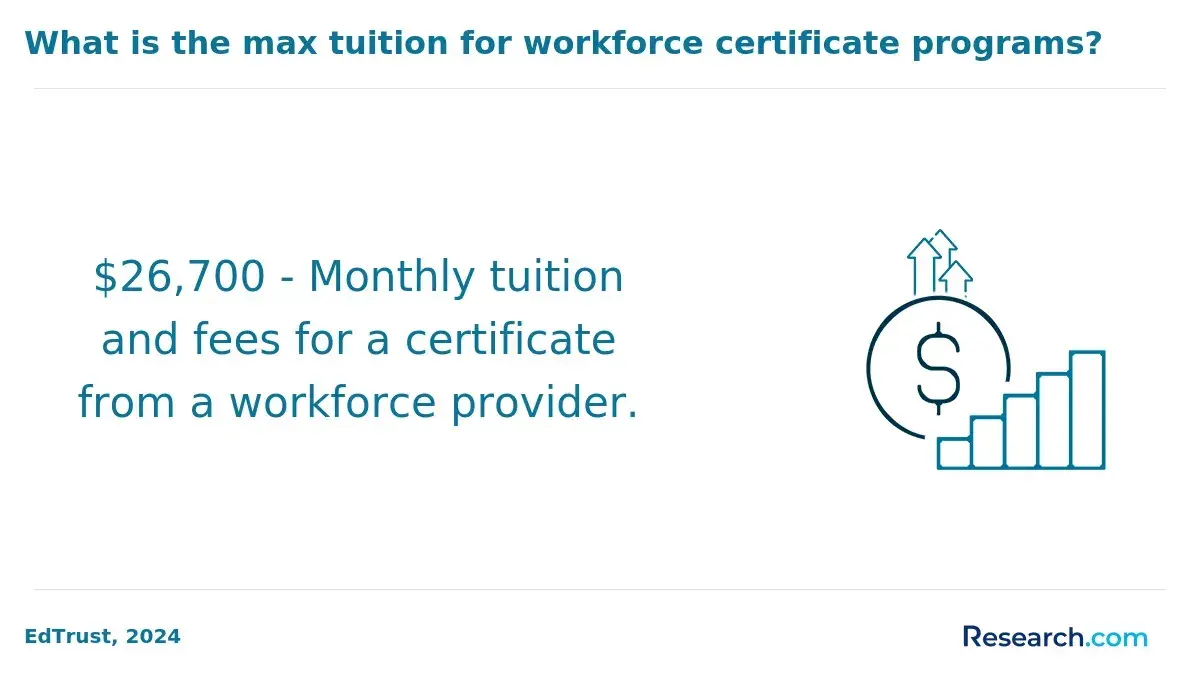
Online HR management tuition varies because schools charge by credit, term, residency status, course load, and sometimes subscription period. A bachelor's degree usually requires about 120 credits, while many master's programs require about 30 to 36 credits, so the per-credit rate is only meaningful when you multiply it by the number of credits you still need after transfer evaluation.
The most useful comparison is total net cost, not advertised tuition. Net cost includes tuition after accepted transfer credits, mandatory fees, books or digital materials, technology fees, prior-learning assessment charges, graduation fees, and the amount of grant or scholarship aid you actually receive.
The table below shows how common pricing models affect the way students should compare online HR management programs.
| Tuition model | How it works | When it can be a good value | Cost risk to watch |
| Per-credit tuition | You pay for each credit attempted | Best for part-time students who need predictable course-by-course billing | Repeating or withdrawing from courses can raise total cost |
| Flat-rate term tuition | You pay one price for a term and may complete multiple courses | Best for motivated students who can finish more credits per term | Slower progress can make the model more expensive than expected |
| Public in-state online tuition | Public universities may charge lower rates to state residents | Best for residents who qualify for the lowest online rate | Out-of-state rates or online fees can reduce the savings |
| Private nonprofit online tuition | Rates are often the same regardless of state residency | Best when institutional aid, transfer credit, or flexibility lowers net cost | Sticker price may be high if scholarship aid is limited |
| Employer-partner tuition | Some schools discount tuition for employees of partner organizations | Best for working adults with tuition benefits | Benefits may require staying employed or passing courses with a minimum grade |
To compare prices accurately, request a degree audit before you commit. The audit should show how many credits transfer, how many major credits remain, whether upper-division HR courses must be taken at the school, and whether prior learning or professional certifications can count toward electives.
When reviewing tuition pages and financial estimates, pay special attention to these cost items because they are easy to overlook:
- Mandatory online learning, technology, student services, or course-specific fees
- Digital textbooks, exam proctoring, HR simulation platforms, or subscription learning tools
- Residency rules that affect whether you receive in-state, out-of-state, or online-only pricing
- Transfer-credit caps that require you to retake business or general education courses
- Satisfactory academic progress rules that can affect financial aid if you withdraw or fail courses
A common mistake is choosing the lowest published tuition without checking completion cost. A program that accepts 75 transfer credits can be cheaper than a lower-tuition program that accepts only 45 credits, even if the second school looks more affordable on its tuition page.
How Competitive Is Admission to Accredited Online Human Resource Management Degree Programs?
Admission to online HR management programs is usually less selective than admission to highly residential flagship programs, but requirements still vary widely. Bachelor's programs often serve first-time students, transfer students, and working adults, while master's programs typically expect a completed bachelor's degree and may look for professional experience, prerequisite business coursework, or a minimum GPA.
Admissions flexibility does not automatically mean weak academic quality. Many accredited online programs are designed for adults who have college credits, military training, HR experience, or employer-sponsored education benefits. The key is to separate flexible entry from poor transparency.
The table below summarizes common admissions expectations by degree level so students can quickly identify where they may fit.
| Degree level | Typical applicant | Common admissions materials | What to confirm before applying |
| Associate degree in business or HR support | New college students or adults seeking an entry-level credential | High school transcript or GED, application, placement information if required | Whether credits transfer into a bachelor's HR program |
| Bachelor's degree in HR management | First-time students, transfer students, or adults changing careers | Transcripts, application, transfer-credit review, sometimes personal statement | How many credits count toward the major and upper-division requirements |
| Bachelor's completion program | Students with prior college credit or an associate degree | College transcripts, minimum transfer-credit threshold, GPA review | Whether missing prerequisites delay entry into HR courses |
| Master's degree in HR management | Professionals seeking advancement or specialization | Bachelor's transcript, resume, statement of purpose, possible recommendations | Whether business prerequisites or work experience are expected |
Students with a lower GPA should not rule out accredited online HR programs. Some schools offer provisional admission, success coaching, or a limited first-term course load. However, students should be cautious if a school promises instant admission without reviewing transcripts, discussing academic expectations, or explaining how credits apply to the degree.
Before applying, take these practical steps to avoid unnecessary denials, delays, or wasted application fees:
- Collect unofficial transcripts from every college attended and request a preliminary transfer evaluation.
- Ask whether HR major courses must be completed at the enrolling institution.
- Confirm whether the program requires statistics, accounting, economics, or business law before upper-level HR courses.
- Ask if professional HR experience, military training, or industry certifications can reduce elective requirements.
- Compare application deadlines with your financial aid timeline so admission and funding decisions line up.
Which Learning Formats Offer the Greatest Flexibility in Online Human Resource Management Degree Programs?
The most flexible online HR management programs are usually asynchronous, meaning students do not need to log in at fixed class times. However, flexibility also depends on term length, weekly workload, internship or capstone expectations, proctored exams, group projects, and whether the program allows part-time enrollment.
Online education formats are now common across many professional fields, from business to counseling-related pathways such as MFT programs online. For HR students, the most important question is not whether a program is online, but whether its schedule matches your work hours, caregiving responsibilities, and learning style.
The table below compares common online delivery formats and the types of students they tend to serve best.
| Online format | How it works | Best for | Potential drawback |
| Asynchronous courses | Students complete weekly work on their own schedule | Working adults with unpredictable hours | Requires strong self-management |
| Synchronous online courses | Students attend live virtual sessions at scheduled times | Students who want real-time discussion and structure | Less flexible for shift workers or caregivers |
| Accelerated terms | Courses run in shorter blocks, often with frequent start dates | Students who want faster progress one or two courses at a time | Workload can feel intense |
| Competency-based education | Students progress by demonstrating mastery | Experienced adults who can move quickly through known material | Can be difficult for students who need instructor-led pacing |
| Hybrid requirements | Most coursework is online, but some activities may be in person | Students near campus who want some face-to-face engagement | Travel can reduce the benefit of online learning |
Students often underestimate the time required for online courses. A three-credit HR course may involve readings, discussion posts, case analyses, group work, quizzes, and a final project. If you work full time, two courses per term may be realistic; if you have fewer outside obligations, a heavier load may shorten your timeline.
The biggest red flag is a program that advertises "learn anytime" without explaining deadlines. Most reputable online courses still have weekly due dates, academic integrity rules, participation expectations, and instructor feedback timelines.
What Student Support Services Improve Success in Online Human Resource Management Degree Programs?
Student support can affect whether an online HR student finishes on time. Because many online learners are balancing school with work and family responsibilities, the strongest programs provide proactive advising, career coaching, writing help, technical support, library access, and early alerts when students fall behind.
For HR management students, support should also connect classroom learning to workplace skills. That includes resume reviews for recruiter or HR coordinator roles, mock interviews, internship guidance, HR certification planning, and help translating prior work experience into career-ready language.
The table below shows which support services matter most and how they improve the student experience.
| Support service | Why it matters for HR students | Question to ask the school |
| Dedicated academic advising | Helps students sequence business, general education, and HR courses correctly | Will I have one advisor who understands online HR degree plans? |
| Career services for online students | Supports resumes, interviews, LinkedIn profiles, and job-search strategy | Are virtual career appointments available outside standard work hours? |
| Writing and research support | HR courses often require policy memos, case studies, and compliance research | Can online students use tutoring and library support remotely? |
| Technical support | Reduces disruption during exams, presentations, and group projects | Is help available during evenings or weekends? |
| Prior-learning and transfer advising | Can reduce cost and time to completion for experienced adults | How are certifications, military training, or workplace learning evaluated? |
Strong programs also help students build a professional HR identity before graduation. Look for virtual employer events, alumni panels, student chapters, case competitions, and assignments that produce portfolio-ready work such as employee handbooks, compensation analyses, training plans, or workforce dashboards.
A common mistake is assuming online support is identical to campus support. Ask whether services are available to fully online students, whether appointments are virtual, and whether support hours fit your schedule. If a program cannot clearly explain how online students get help, completion may be harder than the admissions process suggests.
Which Financial Aid Options Are Available for Accredited Online Human Resource Management Degree Students?
Students in accredited online HR management programs may qualify for many of the same financial aid options as campus students, including federal grants, federal loans, state aid, institutional scholarships, employer tuition assistance, military education benefits, and private scholarships. The key requirement is usually enrollment in an eligible program at an eligible institution.
For undergraduates with financial need, the federal Pell Grant remains one of the most important aid sources; the maximum award for the 2024-25 award year was $7,395. That figure matters because grants reduce net cost without requiring repayment, but the actual amount depends on financial need, enrollment intensity, and federal eligibility rules.
The table below compares common funding sources and what students should verify before relying on them.
| Financial aid option | Who may use it | What to verify |
| Federal Pell Grant | Eligible undergraduate students with financial need | Program eligibility, enrollment intensity, and annual award limits |
| Federal student loans | Eligible undergraduate and graduate students | Borrowing limits, interest rates, repayment plan options, and total debt |
| State grants | Students meeting state residency or eligibility rules | Whether online enrollment and out-of-state schools qualify |
| Institutional scholarships | Students who meet school-specific academic or need-based criteria | Renewal rules, GPA requirements, and whether aid applies to online programs |
| Employer tuition assistance | Employees whose organizations fund education | Annual caps, reimbursement timing, grade requirements, and service obligations |
| Military and veteran benefits | Eligible service members, veterans, and dependents | Approved program status, housing allowance rules, and benefit transfer rules |
Financial aid offers can look similar but produce very different out-of-pocket costs. Compare the amount you do not repay, the amount you must borrow, and the number of credits the aid package assumes you will take each term.
Use this process before choosing a program based on affordability:
- Submit the FAFSA if you plan to use federal aid and confirm the school's federal aid eligibility.
- Request a written cost estimate based on your actual transfer credits and expected enrollment pace.
- Separate grants and scholarships from loans so you understand what must be repaid.
- Ask whether scholarships renew automatically or require a minimum GPA or credit load.
- Compare total debt at graduation against realistic HR salary benchmarks, not best-case salary assumptions.
Avoid borrowing up to the maximum simply because it is offered. HR careers can provide stable advancement, but early roles such as HR assistant, recruiting coordinator, or payroll specialist may not support high monthly loan payments immediately after graduation.
Which Career Outcomes Are Associated With Accredited Online Human Resource Management Degree Programs?
An online HR management degree can support careers in recruiting, employee relations, compensation, benefits, payroll, training, HR analytics, compliance, and HR operations. The degree is most useful when it combines business fundamentals with employment law, data literacy, communication, conflict resolution, and ethical decision-making.
Career outcomes depend on degree level and experience. A bachelor's degree can support entry-level and mid-level HR roles, while a master's degree may help experienced professionals move toward HR business partner, HR manager, or organizational development roles. Students exploring people-focused careers outside HR may also compare adjacent pathways, such as jobs I can get with a master's in forensic psychology, but HR management is more directly tied to workforce policy and business operations.
The table below uses BLS May 2024 wage data as a labor-market benchmark. These figures are not guaranteed graduate outcomes; they reflect national median pay for occupations that may require different levels of education, experience, industry knowledge, and leadership responsibility.
| Career path | Common responsibilities | BLS May 2024 median annual pay | Typical preparation |
| Human resources specialist | Recruiting, onboarding, employee records, benefits support, HR policy administration | $72,910 | Bachelor's degree in HR, business, or related field is common |
| Human resources manager | HR strategy, employee relations, compliance oversight, compensation policy, team leadership | $140,030 | Bachelor's degree plus significant HR experience; some roles prefer graduate study |
| Training and development manager | Employee learning strategy, leadership development, training program evaluation | $127,090 | Bachelor's degree and experience in training, HR, or organizational development |
| Compensation and benefits manager | Pay structures, benefits programs, market analysis, compliance with compensation rules | $136,380 | HR, business, finance, or analytics background with relevant experience |
| Labor relations specialist | Collective bargaining support, union contracts, grievance procedures, labor policy interpretation | $89,980 | Labor relations, HR, business, or legal-policy coursework can be useful |
Current HR hiring trends make skills selection important. Employers increasingly expect HR professionals to understand HR information systems, people analytics, remote-work policies, pay transparency, compliance documentation, and responsible use of AI tools in recruiting and performance processes. A program that still treats HR as only paperwork and personnel administration may not prepare students as well for modern roles.
To evaluate career outcomes, ask schools for program-specific information when available: internship participation, job-placement support, employer partners, alumni job titles, graduate-school acceptance, certification preparation, and career coaching access. If the school provides only broad university-wide employment data, treat it as a limited signal rather than proof of HR program outcomes.
How Do Online and Campus-Based Human Resource Management Degree Programs Compare?
Online and campus-based HR management degrees can cover similar academic content when they are offered by accredited institutions. The main differences usually involve scheduling, networking style, access to campus activities, cost structure, and how students build professional relationships.
Online programs often work best for adults who need to keep working while earning a credential. Campus programs may be stronger for students who want in-person clubs, local internships, faculty interaction, or a traditional college environment. Students who later consider graduate or online doctoral programs should choose the format that helps them earn strong grades, build references, and complete a legitimate, accredited degree.
The table below compares online and campus-based HR programs by the factors that most often affect student decision-making.
| Comparison factor | Online HR degree | Campus-based HR degree |
| Schedule | Often better for working adults, caregivers, and students outside commuting range | Better for students who prefer fixed class times and face-to-face routines |
| Networking | Built through virtual events, discussion boards, online career services, and alumni platforms | Built through campus clubs, in-person events, local employers, and faculty access |
| Cost | May reduce commuting and housing costs, but online fees can apply | May include campus fees, housing, transportation, and meal costs |
| Learning style | Requires self-discipline, written communication, and comfort with learning technology | Provides more immediate in-person structure and classroom interaction |
| Employer perception | Generally strongest when the institution is accredited and the transcript does not signal a weaker credential | Often familiar to employers near the campus, especially with local internship pipelines |
Online is not automatically easier, and campus is not automatically higher quality. The better choice is the one you can complete successfully while building relevant experience. For many HR students, an online degree plus current HR work experience can be more valuable than a campus program that requires leaving the workforce.
The main mistake to avoid is choosing online only for convenience. If you need live discussion, frequent reminders, or face-to-face accountability, a synchronous online or hybrid program may be a safer fit than a fully asynchronous program.
How Should Students Choose the Best Accredited Online Human Resource Management Degree Program?
Students should choose an accredited online HR management degree by matching the program to a specific career outcome, then testing whether the cost, format, admissions pathway, accreditation, and support services make that outcome realistic. A program can be excellent and still be wrong for your schedule, budget, or career stage.
The strongest decision process compares programs side by side using the same criteria. This prevents common mistakes such as focusing only on tuition, choosing the most famous school without checking transfer credits, or assuming all accredited online degrees offer the same HR preparation.
Use these steps to build a practical shortlist:
- Define your target outcome, such as HR assistant, recruiter, HR generalist, compensation analyst, training coordinator, HR manager, or graduate study.
- Verify institutional accreditation and confirm whether business accreditation or SHRM-aligned coursework matters for your goal.
- Request a transfer-credit evaluation before comparing total cost.
- Calculate net cost using tuition, fees, remaining credits, grants, scholarships, employer benefits, and expected borrowing.
- Compare course format, term length, weekly deadlines, and part-time options against your real schedule.
- Review the curriculum for employment law, employee relations, compensation, benefits, talent acquisition, HR analytics, ethics, and organizational behavior.
- Ask about online career services, internship support, alumni outcomes, and preparation for HR certifications.
- Choose the program that offers the best mix of affordability, completion likelihood, and career relevance rather than the program with the strongest marketing.
Students should also know when not to choose an HR management degree. If you want to become a licensed counselor, therapist, attorney, accountant, or data scientist, a specialized degree in that field may be more direct. If you want broad business flexibility and are not sure about HR, a general business administration degree with HR electives may be safer than a narrow HR major.
Before enrolling, ask admissions counselors direct questions and request written answers where possible. Ask how many credits you need, whether tuition is locked, how online students receive advising, whether there are proctored exams, what happens if you stop out, and whether the school publishes HR-specific career outcomes. The best program is not simply the one that admits you fastest; it is the one that gives you a credible path to finish with manageable cost and marketable HR skills.
Other Things You Should Know About Human Resource Management
HR management students in 2027 should be proficient in HRIS (Human Resource Information Systems), data analytics tools like Excel or Tableau, and communication platforms like Slack or Zoom. Understanding ATS (Applicant Tracking Systems) and performance management software can also enhance their career prospects.
The typical duration of an online HR management degree program in 2027 is about 2 to 4 years, depending on the study mode. Full-time students generally complete it faster, while part-time students may take up to 4 years.
Prerequisites for enrolling in top online HR management degree programs typically include a high school diploma or equivalent, prior coursework in business or social sciences, and sometimes relevant work experience. Some programs may also require standardized test scores or letters of recommendation.
References
- Online Bachelor's Degree: Human Resource Management https://www.umgc.edu/online-degrees/bachelors/hr-management
- Best Value Human Resource Master’s Programs https://www.humanresourcesedu.org/most-affordable-hr-masters-programs/
- Study HR Management in Germany: from 219/month https://www.privathochschulen.net/en/courses/economics/human-resources
- Choosing a bachelor's in human resource management | edX https://www.edx.org/resources/how-to-choose-a-bachelors-in-human-resource-management
- Accredited Online HR Certification Programs & Courses - HRAcademia https://www.hracademia.com/
- Top Online HR Certification Courses To Boost Your Career https://hrcertification.com/blog/top-online-hr-courses-2025-biid1000047
- Universities in Malaysia with courses in Human Resources https://www.easyuni.my/malaysia/business-and-management/human-resources/all-levels/
- Salary Guide for Future HR Managers https://www.allbusinessschools.com/human-resources/salary/
- Online Human Resources Courses: Top 10 https://devsdata.com/online-human-resources-courses-top-10/
- Online Master's in Human Resources https://onlinecounselingprograms.com/online-counseling-degrees/online-masters-in-human-resources/