2027 Online Human Resource Management Degree Programs With No Application Fee and Rolling Admissions

Co-Founder and Chief Data Scientist
Choosing an online human resource management degree is easier when you can apply without paying upfront fees and without waiting for one annual deadline. It matters because HR roles remain steady career targets: the U.S. Bureau of Labor Statistics reported a May 2024 median pay of $72,910 for human resources specialists. This guide is for working adults, transfer students, and career changers comparing flexible HR programs. You will learn which admissions features matter, how to verify legitimacy, how costs compare, and when a no-fee, rolling-admission option is truly a better fit.
Key Things You Should Know
- No application fee usually saves only the upfront application cost; compare total tuition, technology fees, transfer-credit limits, and financial aid before deciding a program is affordable.
- Rolling admissions can help students start sooner, but it does not mean automatic admission, unlimited seats, or no financial aid deadlines.
- HR career value depends on the role: BLS data lists May 2024 median pay of $72,910 for HR specialists and $140,030 for HR managers, with both occupations projected to grow 6% from 2024 to 2034.
Which Online Human Resource Management Degree Programs Have No Application Fee and Rolling Admissions?
Several U.S. institutions offer online human resource management degrees or HR-focused business degrees that publicly advertise no application fee and flexible or rolling admissions. Because schools can change fee waivers, term calendars, and program names, students should treat the table below as a shortlist to verify directly before applying.
The programs below are examples of online HR-related degrees where admissions flexibility and no-fee applications are commonly part of the enrollment model. Use the table to compare degree level, format, and the specific admissions detail you should confirm.
| School | Relevant online HR degree option | Application fee status to verify | Rolling or flexible admissions feature | Best fit |
| Southern New Hampshire University | BS in Business Administration with Human Resource Management concentration; MS in Human Resource Management | No application fee is commonly advertised | Multiple online terms and rolling review | Students who want frequent start dates and broad business coursework |
| Purdue Global | BS in Business Administration with HR-focused options; MS in Human Resource Management | No application fee is commonly advertised | Several start dates during the year | Adults seeking career-focused online programs with structured terms |
| Colorado State University Global | BS in Human Resource Management | No application fee is commonly advertised | Monthly starts and rolling admissions model | Students who want a public, fully online institution with frequent starts |
| Franklin University | BS in Human Resources Management | No application fee is commonly advertised | Multiple start dates and adult-focused admission | Transfer students and working adults with prior college credit |
| Walden University | BS in Business Administration with HR concentration; MS in Human Resource Management | No application fee is commonly advertised | Flexible online start dates | Students comparing competency, professional, and graduate HR pathways |
A no-fee application is most useful when it lets you compare several legitimate programs without spending money before you know your transfer-credit evaluation, aid package, or final tuition estimate. Students still deciding between HR and a broader business pathway may also want to compare the best online business degree options, since many HR careers can start with a business administration degree plus HR coursework.
Before applying, confirm three details in writing: the application fee is currently $0, your intended degree or concentration is available fully online, and the next start date has seats in the HR courses you need. This prevents a common mistake: choosing a school because the application is free, then discovering that the total program cost or course schedule does not fit.
How Does Rolling Admission Work for Online Human Resource Management Degree Programs?
Rolling admission means a school reviews applications as they arrive instead of waiting until one fixed deadline. In online HR programs, this often pairs with multiple start dates, such as monthly, bi-monthly, or several times per academic year.
The key advantage is timing. A working adult who misses a traditional fall deadline may not need to wait a full year; they may be able to begin in the next available online term if transcripts, aid documents, and placement requirements are complete.
This comparison shows why rolling admission is more flexible but not deadline-free. It also highlights where students can make mistakes if they wait too long.
| Admissions model | How applications are reviewed | Typical student advantage | Possible drawback |
| Rolling admission | Applications are reviewed continuously until seats or start dates fill | Students can apply when ready and may start sooner | Popular terms, scholarships, or courses may close before the final date |
| Fixed deadline | Applications are reviewed after a set deadline | Students have a clear application calendar | Missing the deadline can delay enrollment by a full term or year |
| Priority deadline with rolling review | Early applications may receive first consideration, then later files are reviewed as space allows | Students can improve planning for aid, transfer review, and course selection | Late applicants may have fewer funding or course options |
Rolling admission also does not lower academic standards by itself. Schools may still require transcripts, minimum GPA thresholds, English proficiency documentation, graduate-level prerequisites, professional resumes, or interviews, depending on the degree level.
The smartest approach is to treat rolling admission as an earlier planning opportunity, not a reason to delay. Apply early enough to leave time for transcript delays, financial aid processing, employer tuition-reimbursement paperwork, and course registration.
How Much Can Students Save by Choosing an Online Human Resource Management Degree With No Application Fee?
A no-application-fee policy can reduce the cost of comparing schools, especially if you plan to apply to several programs. However, it is usually a small part of the full cost of an online HR degree.
The table below uses a simple illustration: it assumes each school would otherwise charge a $50 application fee. This helps show why application-fee savings matter most at the search stage, not as the main affordability measure.
| Number of applications | Cost with a $50 fee per application | Cost with no application fee | Potential upfront savings |
| 1 | $50 | $0 | $50 |
| 3 | $150 | $0 | $150 |
| 5 | $250 | $0 | $250 |
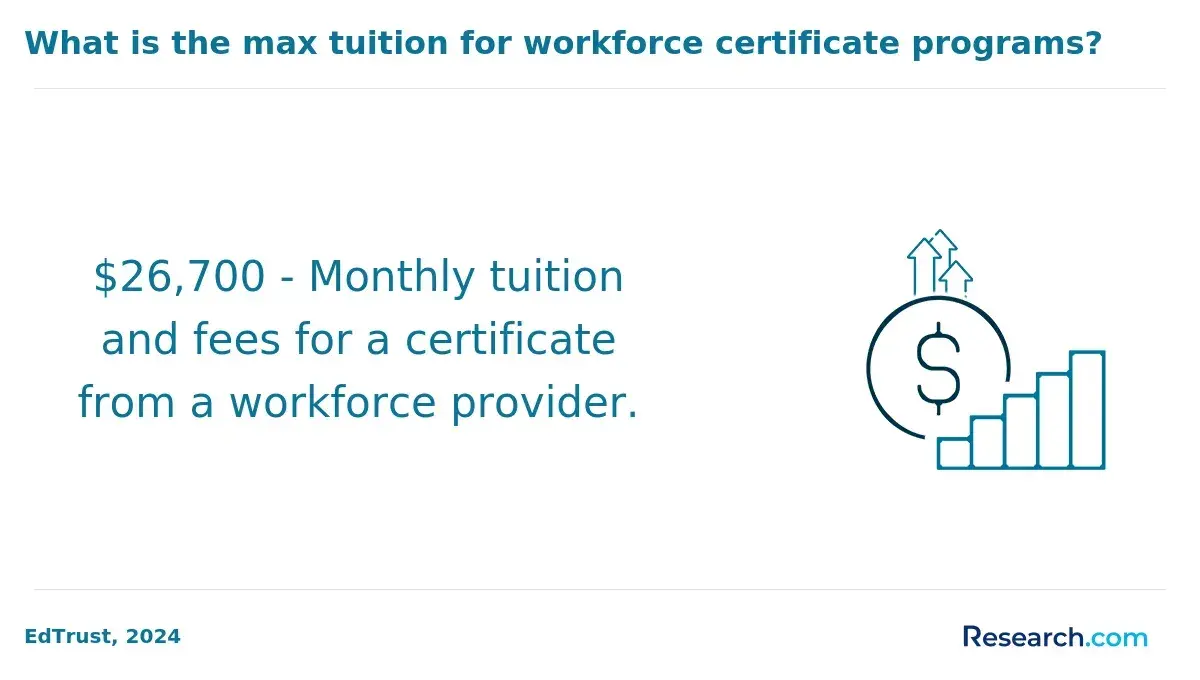
The larger financial question is tuition. The College Board's 2024 Trends in College Pricing report listed average published tuition and fees of $11,610 for in-state students at public four-year institutions and $43,350 at private nonprofit four-year institutions for 2024-25. Online HR programs can fall below or above those figures depending on school type, transfer credits, per-credit pricing, and required fees.
That means a free application should be seen as a way to gather more offers, not as proof of low cost. A program with a $0 application fee but higher tuition can easily cost more than a program with a modest application fee and stronger transfer-credit acceptance.
Students should compare the total estimated cost after transfer credits, not just the advertised per-credit rate. Ask each school for a written cost estimate that includes tuition, technology fees, graduation fees, books or digital materials, prior learning assessment fees, and any residency or proctored-exam costs.
What Are the Admission Requirements for No-Fee Online Human Resource Management Degree Programs?
No-fee online HR programs generally use the same academic admissions standards as comparable programs that charge an application fee. The waived fee changes the cost of applying, not the evidence a school needs to evaluate readiness.
Requirements vary by degree level, so the table below separates common undergraduate and graduate expectations. Use it to identify what you may need before requesting a start date.
| Requirement | Bachelor's-level HR programs | Master's-level HR programs | Why it matters |
| Application form | Usually required online | Usually required online | Creates the official admissions file |
| Transcripts | High school, GED, and any college transcripts | Bachelor's degree transcript and any graduate work | Used for admission and transfer-credit review |
| Minimum GPA | May be required or used for placement | More commonly required | Can affect full admission, conditional admission, or prerequisite needs |
| Resume | Sometimes optional | Often requested for professional programs | Shows HR, management, compliance, or administrative experience |
| Essay or statement | Sometimes required | Common in selective graduate programs | Explains career goals and readiness for online study |
| Recommendations | Less common | Varies by school | Can support academic or professional readiness |
For undergraduate applicants, transfer credits can be the biggest admissions-related cost factor. A student with an associate degree or prior business coursework may shorten time to completion if the school accepts those credits toward the HR major, general education, or electives.
For graduate applicants, professional experience may strengthen the file, but it does not always replace academic prerequisites. Some master's programs expect prior coursework in business, statistics, management, or organizational behavior, while others build those topics into the curriculum.
Common mistakes include assuming the school will request transcripts for you, submitting unofficial documents when official transcripts are required, or overlooking prerequisite courses until after admission. Start transcript requests early because rolling admissions cannot move forward if your file is incomplete.
When Should Students Apply to Online Human Resource Management Degree Programs With Rolling Admissions?
Students should apply as soon as they have identified a realistic target start date and can gather required documents. For most online HR programs, applying earlier improves planning even when it does not formally improve admission chances.
A practical timeline helps prevent missed aid deadlines, late transcript arrivals, and rushed course registration. Use the sequence below if you are aiming for a specific start term.
- Eight to twelve weeks before the desired start date, confirm the next available online term, application-fee policy, and whether HR courses are open to new students.
- Six to eight weeks before the start date, request official transcripts from every prior school and ask whether transfer-credit evaluations are completed before enrollment.
- Four to six weeks before the start date, submit the application and complete the FAFSA or school aid forms if you plan to use federal aid, scholarships, employer benefits, or payment plans.
- Two to four weeks before the start date, review the admission decision, transfer-credit report, estimated bill, and course schedule before signing enrollment documents.
- Before the add-drop deadline, confirm books, software, synchronous meeting requirements, and withdrawal policies in case your work schedule changes.
Rolling admissions can be especially helpful for students who need to align enrollment with employer tuition assistance cycles. Many employers reimburse only after course completion or require preapproval before the term begins, so a free application alone will not solve timing issues.
Do not wait until the last posted admissions date if you need financial aid. Aid processing, verification, loan counseling, and scholarship review can follow separate calendars, and those deadlines may be less flexible than admission itself.
How Can Students Strengthen an Online Human Resource Management Degree Application?
A strong HR application connects your academic record, work experience, and career goals to the program's curriculum. This is increasingly important as HR roles involve data systems, workforce analytics, employee relations, compliance, and AI-supported recruiting tools.
Use the following steps to make your application more credible and easier for admissions teams to evaluate. These steps are especially helpful for applicants with transfer credits, a lower prior GPA, or a non-HR work background.
- Prepare a concise resume that highlights hiring, onboarding, payroll, scheduling, training, customer service, supervision, compliance, or conflict-resolution experience.
- Explain why HR is the right next step, using specific goals such as employee relations, talent acquisition, compensation, benefits, training, or HR analytics.
- Address academic weaknesses directly if the program allows a statement; explain what changed and how you will manage online coursework now.
- Ask admissions whether certificates, military training, professional development, or prior learning assessment can reduce required credits.
- Review the curriculum for employment law, organizational behavior, HR information systems, compensation, and analytics because these areas often affect career readiness.
Applicants should also research outcomes before applying, not after admission. The same outcome-first mindset students use when researching jobs I can get with a masters in forensic psychology applies to HR: start with the roles you want, then choose the degree that builds the required skills.
Avoid submitting a generic application that says only that you "like working with people." HR work can involve sensitive investigations, policy enforcement, labor compliance, benefits administration, and difficult personnel decisions. Admissions reviewers and faculty are more likely to see fit when your goals reflect the actual responsibilities of the field.
Are Online Human Resource Management Degree Programs With No Application Fees Accredited and Legitimate?
Many legitimate online HR programs waive application fees, and many accredited schools use rolling admissions. These features alone are not red flags. The real question is whether the institution is properly accredited, financially transparent, and clear about academic requirements.
For U.S. degree programs, institutional accreditation is the baseline check. It affects federal financial aid eligibility, transfer-credit recognition, graduate school options, and employer confidence. Programmatic business accreditation, such as AACSB, ACBSP, or IACBE, can add another quality signal, but it is not required for every legitimate HR degree.
Students should know the difference between accreditation and curriculum alignment. Some HR programs may align coursework with Society for Human Resource Management competencies, but SHRM alignment is not the same as institutional accreditation or a guarantee of certification eligibility.
Before enrolling, look for these warning signs. They do not automatically prove a school is illegitimate, but they should prompt more questions before you commit.
- The school emphasizes "free application" more than accreditation, curriculum, faculty, tuition, and student support.
- The admissions team pressures you to enroll before you receive a written cost estimate or transfer-credit evaluation.
- The website does not clearly identify the accreditor or the exact legal name of the institution.
- The program claims that rolling admission guarantees acceptance, graduation, certification, or employment.
- The school will not explain online attendance expectations, withdrawal rules, complaint procedures, or refund policies.
This same accreditation check matters across online education, from HR degrees to online doctoral programs. Flexibility is valuable only when the credential is recognized and the academic expectations are clear.
How Do Financial Aid and Total Costs Compare Among Online Human Resource Management Degree Programs?
Financial aid and total cost can vary more than application fees. A $0 application fee may save money upfront, but tuition structure, transfer credits, employer reimbursement, scholarships, and loan borrowing determine the real cost of an HR degree.
The table below summarizes the cost categories students should compare across online HR programs. It is designed to help you request comparable estimates from each school.
| Cost or aid factor | What to compare | Why it affects total cost |
| Tuition model | Per-credit tuition, flat-rate terms, or subscription-style tuition | The cheapest model depends on enrollment pace and transfer credits |
| Technology and online fees | Per-course, per-term, or one-time fees | Fees can narrow the difference between schools with similar tuition |
| Transfer-credit policy | Maximum credits accepted and how prior courses apply | Accepted credits can reduce both time and tuition |
| Books and materials | Included digital materials or separate textbook costs | Included materials may make a higher tuition rate more competitive |
| Financial aid deadlines | FAFSA, institutional scholarships, state aid, and employer deadlines | Rolling admission does not always extend funding deadlines |
| Enrollment intensity | Full-time, part-time, accelerated, or self-paced options | Pace affects completion time, workload, and aid eligibility |
Federal aid eligibility typically requires enrollment in an eligible degree program at an accredited institution, but aid amounts depend on the student's status, cost of attendance, prior borrowing, and enrollment level. For online students, the most useful number is the school's written net cost estimate after grants, scholarships, employer benefits, and accepted transfer credits.
Loan costs also matter. Federal Student Aid lists a 1.057% origination fee for Direct Subsidized and Unsubsidized Loans first disbursed during the current federal fee period, which means the amount received is slightly lower than the amount borrowed. That fee is small compared with tuition, but it reinforces why students should borrow only after comparing total program cost.
A practical comparison should include at least three schools when possible. If one no-fee program costs substantially more, ask whether the higher price buys something meaningful, such as stronger student support, better transfer acceptance, specialized HR coursework, employer partnerships, or a shorter completion path.
Which Students Benefit Most From No-Fee, Rolling-Admission Online Human Resource Management Degrees?
No-fee, rolling-admission HR degrees are most valuable for students who need flexibility and want to compare options without paying to apply. They are not automatically the best choice for every student.
These programs often fit students with timing constraints, prior credits, or career goals that do not require a highly selective campus-based program. The following groups may benefit most.
- Working adults who need to start in a term that fits a job schedule, promotion timeline, or employer tuition-assistance window.
- Transfer students who want multiple schools to evaluate prior credits before choosing the lowest total-cost path.
- Career changers moving from administration, operations, customer service, payroll, recruiting support, or supervision into HR roles.
- Military-affiliated students who need flexible start dates and clear online delivery because of relocation or service obligations.
- Graduate applicants who want to compare HR master's programs without paying multiple application fees upfront.
Students should be more cautious if they are choosing a program only because it is free to apply. A traditional-deadline program may be better if it has stronger faculty fit, lower net cost, a more specialized HR curriculum, better employer recognition, or a cohort format that supports networking.
People comparing helping, counseling, and workplace-support careers may also explore adjacent online pathways, such as MFT programs online. That comparison can clarify whether your goal is organizational HR work, employee training, counseling, or another people-centered profession.
How Should Students Choose Among No-Fee Online Human Resource Management Degree Programs?
The best program is not simply the one with no application fee or the soonest start date. It is the program that offers the strongest combination of recognized accreditation, manageable total cost, realistic scheduling, useful HR coursework, and credible career alignment.
Use this decision process to compare programs in a way that protects both your budget and your career goals.
- Confirm the basics first: institutional accreditation, exact degree name, online availability, current application fee, and whether admission is truly rolling.
- Request a written transfer-credit evaluation before enrolling, especially if you have prior college, military, professional, or certificate training.
- Compare net cost instead of sticker price by including tuition, fees, books, transfer credits, aid, employer benefits, and expected time to completion.
- Review the HR curriculum for employment law, compensation, benefits, talent acquisition, training, organizational behavior, HR technology, and analytics.
- Ask how often required HR courses are offered because frequent start dates do not always mean every course is available every term.
- Evaluate student support, including advising, writing help, career services, internship guidance, online tutoring, and access to faculty.
- Check career alignment by comparing program outcomes with your target roles, such as HR coordinator, recruiter, benefits specialist, training specialist, HR generalist, or HR manager.
Common mistakes include treating rolling admissions as a guarantee, ignoring scholarship deadlines, assuming all online classes are asynchronous, and enrolling before understanding the refund policy. Another mistake is overlooking long-term goals; students aiming for senior HR, organizational development, or executive roles may eventually compare graduate business, HR, or doctorate in leadership pathways.
A good final test is simple: if the application fee were not waived, would the program still be one of your top choices? If the answer is no, keep comparing. The waived fee should make it easier to explore a program, not replace careful evaluation.
Other Things You Should Know About Human Resource Management
Most HR management degrees are housed in business schools or business departments. They usually combine management, employment law, compensation, training, organizational behavior, and HR technology rather than focusing only on psychology or sociology.
Certification is not usually required for entry-level HR roles, but it can help later. Many professionals consider credentials such as SHRM-CP or PHR after gaining HR experience and meeting exam eligibility rules.
It can help, especially if the curriculum includes HR information systems, digital recruiting, analytics, compliance, and virtual employee relations. Remote HR roles may still require experience with workplace policies, communication, documentation, and confidential employee data.
Important HR skills include communication, confidentiality, ethical judgment, conflict resolution, data literacy, employment-law awareness, interviewing, training, benefits administration, and comfort with HR software. As AI tools expand in recruiting and workforce planning, students should also build judgment around fair and compliant technology use.
References
- Human Resource Management | UNOH https://www.unoh.edu/academics/college-of-business/human-resource-management.html
- Top 100% Online HR Master’s with No GRE/GMAT Requirement https://www.humanresourcesedu.org/top-100-online-hr-masters-with-no-gre-gmat-requirement/
- Discover The Most Affordable Online Human Resources Degrees https://www.affordablecollegesonline.org/degrees/human-resources-programs/
- Master in Management (MiM) | ESCP BS (7# Worldwide) https://escp.eu/programmes/master-in-management
- Online Colleges No Application Fee: Schools With No Fees to Apply https://www.top10onlinecolleges.org/with-no-application-fee/
- Human Resources Master’s Programs Online: Compare Top Schools https://www.onlinemastersdegrees.org/best-programs/business/human-resources/
- Best Online MBAs in Human Resources | OnlineMBA.com https://www.onlinemba.com/rankings/best-online-mba/human-resources/
- Universities with Bachelor's Degree courses in Human Resources https://www.easyuni.com/international/business-and-management/human-resources/bachelors-degree/
- Job performance of human resource management graduates from the employers’ and graduates’ perspectives https://ijere.iaescore.com/index.php/IJERE/article/view/31959
- Human Resource Management Course Level 4 and 5 | Online Business School https://www.onlinebusinessschool.com/human-resource-management-online-course-level-four-and-five/