2027 Cheapest Accredited Online Photography Degree Programs: Tuition, Fees, and Financial Aid

Co-Founder and Chief Data Scientist
Choosing the cheapest online photography degree is harder than comparing tuition alone. College Board's 2024-25 data shows average published tuition and fees reached $11,610 at public four-year colleges for in-state students and $43,350 at private nonprofit colleges, so hidden fees and aid can change the real price quickly. This guide is for students comparing accredited online photography programs, including associate and bachelor's options. You will learn how tuition, mandatory fees, equipment costs, FAFSA aid, scholarships, transfer credit, accreditation, and net price affect the true cost before you enroll.
Key Things You Should Know
- The lowest-cost accredited online photography options are usually associate degrees first: Dakota College at Bottineau's online AAS in Photography is often among the cheapest at roughly $13,000 before aid, while Sessions College's online AOS in Digital Photography is commonly lower than most bachelor's programs.
- For bachelor's seekers, Southern New Hampshire University's online BA in Digital Photography is one of the lower published-tuition options at about $330 per credit, or about $39,600 for 120 credits before transfer credit, fees, equipment, and aid.
- Advertised tuition is not the same as net price: a student using transfer credits, Pell Grants of up to $7,395 in the 2025-26 award year, employer tuition help, or scholarships may pay less at a higher-tuition school than another student pays at the cheapest published-rate program.
What Are the Cheapest Accredited Online Photography Degree Programs?
The cheapest accredited online photography degree depends on the credential level you need. An associate degree can be the lowest-cost route for entry-level portfolio development, freelance work, or transfer into a bachelor's program, while a bachelor's degree may provide broader studio, digital imaging, visual communication, business, and capstone experience.
The table below compares photography-focused online degrees from accredited U.S. institutions using published tuition signals and degree-credit requirements. Treat these figures as planning estimates, because schools can change tuition, course fees, residency rules, and equipment requirements.
| Rank by estimated tuition | School and online photography degree | Accreditation type to verify | Published tuition signal | Estimated tuition before aid | Best fit |
| 1 | Dakota College at Bottineau, AAS in Photography | Institutional accreditation through the Higher Learning Commission | Low public-college per-credit tuition and fees for distance students | About $13,000 for a 60-credit associate degree | Students who want the lowest-cost accredited degree foundation |
| 2 | Sessions College, AOS in Digital Photography | Institutional accreditation through the Distance Education Accrediting Commission | Career-focused online tuition often around the lower private-college range | Commonly about $21,000 to $23,000 depending on credit load and fees | Students who want a fully online applied photography degree |
| 3 | Southern New Hampshire University, BA in Digital Photography | Institutional accreditation through the New England Commission of Higher Education | About $330 per undergraduate online credit | About $39,600 for 120 credits before transfer credit | Bachelor's students seeking lower published tuition and flexible online study |
| 4 | Arizona State University Online, BFA in Art with Digital Photography focus | Institutional accreditation through the Higher Learning Commission; programmatic art accreditation should be verified if important to the student | Online undergraduate tuition commonly priced above low-cost private online rates | Often above $65,000 before aid and fees | Students who want a research-university art school environment online |
| 5 | Rocky Mountain College of Art + Design, BFA in Photography | Institutional accreditation through the Higher Learning Commission; art accreditation should be verified for the specific program | Private art-college per-credit tuition | Often above $85,000 before aid and fees | Students seeking a specialized art-and-design school model |
| 6 | Academy of Art University, BFA in Photography | Institutional accreditation through WSCUC; programmatic art accreditation should be verified for the program | Private art-school per-unit tuition | Often above $140,000 before aid and fees | Students prioritizing a large online art-school catalog and intensive studio curriculum |
| 7 | Savannah College of Art and Design, BFA in Photography through SCADnow | Institutional accreditation through SACSCOC; programmatic accreditation should be verified if required | Private art-school quarter-credit tuition | Often above $160,000 before aid and fees | Students who value a well-known art-school brand and can secure strong aid |
A "cheapest" ranking should not automatically decide your enrollment choice. A student who needs only an associate degree, has existing credits, and wants a local freelance business may get the best value from a low-cost public college; a student targeting competitive commercial, editorial, or art-direction pathways may weigh faculty critique, portfolio outcomes, internships, alumni network, and brand recognition more heavily.
If you are comparing creative online degrees more broadly, the cost logic is similar to fields such as video game programs: the best value is rarely the school with the lowest sticker price alone, but the one with the best combination of accreditation, portfolio development, costs, and career fit.
How Were the Cheapest Online Photography Degree Programs Ranked?
The ranking prioritizes accredited online photography degrees with the lowest estimated tuition before aid, then evaluates whether students are likely to face added costs that change the real price. Because some schools publish tuition separately from mandatory fees, the ranking uses conservative cost interpretation rather than pretending every institution reports costs in the same way.
These were the main ranking factors used to compare affordability and decision value:
- Institutional accreditation recognized by the U.S. Department of Education or the Council for Higher Education Accreditation was required.
- Photography had to be a degree, major, concentration, or clearly photography-focused applied program available substantially online.
- Published tuition per credit, per unit, or per academic period was converted into an estimated tuition-only program cost when enough credit information was available.
- Mandatory online, technology, student, registration, course, or portfolio fees were considered when clearly published, but unclear fees were flagged instead of estimated.
- Transfer-credit friendliness, federal financial aid eligibility, scholarship availability, and degree level were considered because they affect net price.
This method is intentionally stricter than simply sorting by advertised tuition. A school with a low per-credit rate but high required fees, limited transfer acceptance, or expensive required equipment may be less affordable than it appears.
Students can use the same method when comparing other online professional programs. For example, cost comparisons for online speech pathology programs also require checking accreditation, fees, clinical or equipment expenses, aid eligibility, and total completion cost rather than relying on tuition alone.
How Can You Verify the Accreditation of an Online Photography Degree Program?
Accreditation matters because it affects credit transfer, graduate school recognition, employer trust, and access to federal student aid. For photography, institutional accreditation is the baseline; programmatic accreditation in art and design can be useful but is not always required for employment.
Use the following steps before applying or paying a deposit:
- Search the school in the U.S. Department of Education's Database of Accredited Postsecondary Institutions and Programs.
- Confirm that the accreditor is recognized for institutional accreditation, not only a membership organization or marketing badge.
- Check whether the exact online photography degree appears in the school catalog for the current academic year.
- Ask whether the online program is covered by the same institutional accreditation as the campus programs.
- Verify whether the school participates in Title IV federal student aid if you plan to use FAFSA-based grants or loans.
- Ask admissions which credits transfer out to public universities or graduate programs, especially if the school has national rather than regional institutional accreditation.
The biggest red flag is a school that says it is "accredited" without naming a recognized accreditor and without appearing in official accreditation databases. Another warning sign is pressure to enroll before you receive a written total-cost estimate and a clear explanation of refund rules.
Accreditation checks are especially important in regulated fields, but the habit also protects art students. The same verification mindset used for accredited speech language pathology programs can help photography students avoid programs that look affordable but may not provide recognized credits or aid eligibility.
How Much Does an Accredited Online Photography Degree Really Cost?
The real cost of an online photography degree includes more than tuition. Students should separate tuition, mandatory fees, total program cost, financial aid, and net price before deciding whether a program is affordable.
This table defines the cost terms students see most often and explains how each one affects affordability.
| Cost term | What it means | Why it matters for online photography students |
| Tuition | The amount charged for instruction, usually per credit, unit, course, term, or year | It is the easiest number to compare, but it rarely shows the full cost |
| Mandatory fees | Required charges such as technology, registration, online learning, student service, portfolio, lab, graduation, or course fees | These can add hundreds or thousands to the final bill, especially in studio or media programs |
| Total program cost | Tuition plus required fees and required program expenses before aid | This is the better sticker-price comparison across schools |
| Financial aid | Grants, scholarships, work-study, tuition benefits, and loans that help cover education costs | Aid can lower out-of-pocket cost, but loans still have to be repaid |
| Net price | The amount left after grants and scholarships are subtracted from the school's cost of attendance | This is often the most useful number for deciding what you may actually pay |
Current national tuition trends make this distinction important. College Board's 2024-25 pricing data shows that average published tuition and fees for public two-year colleges were far below public and private four-year prices, which helps explain why associate-level photography degrees often appear first in affordability comparisons.
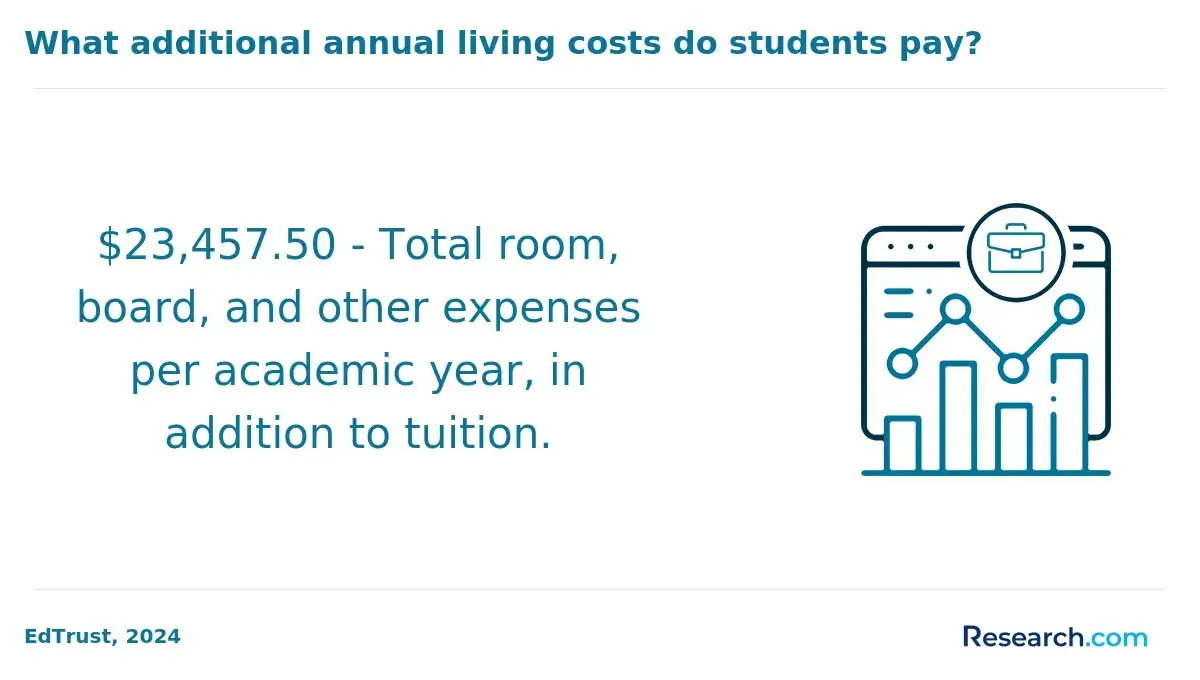
Photography also has a unique cost profile because students may need a camera body, lenses, memory cards, storage drives, color-calibrated monitor access, editing software, lighting equipment, printer access, and portfolio materials. Some students already own gear, but others may need to finance several major purchases during the first year.
When comparing schools, ask for a written cost breakdown that includes these items:
- Total credits required to graduate and whether the school uses semester credits, quarter credits, or units
- Tuition rate for online students and whether the rate changes by residency, year, or enrollment load
- All mandatory fees, including technology, online learning, course, graduation, and portfolio fees
- Estimated equipment and software costs for each year of the program
- Transfer-credit limits, minimum credits that must be completed at the school, and any portfolio-review fees
- Estimated aid package after grants and scholarships, clearly separated from loans
Which Tuition Models Make Online Photography Degree Programs More Affordable?
Online photography programs use different pricing models, and the cheapest model depends on your schedule, transfer credits, and ability to complete courses consistently. A flexible format is only affordable if it helps you finish without paying for unnecessary credits or repeated courses.
The table below compares common tuition models and the types of students who may benefit from each.
| Tuition model | How it works | When it can lower cost | Cost risk |
| Per-credit tuition | You pay for each credit attempted | Good for part-time students, transfer students, and students balancing work | Repeating courses or taking extra electives raises total cost |
| Flat-rate full-time tuition | You pay one term price within a credit range | Good for students who can handle heavier course loads and finish faster | Dropping below full-time status can make each completed credit more expensive |
| Public-college online tuition | Distance students may pay a set online rate or residency-based rate | Often strong for associate degrees and in-state students | Out-of-state or special online fees may reduce savings |
| Private online tuition | One rate often applies regardless of state residency | Useful when the private rate is competitive and transfer credits are generous | Sticker price can be much higher than public-college options |
| Competency-based or subscription tuition | You pay by term and complete as much as allowed | Can help experienced students move quickly when available | Less common in photography because critique, studio sequencing, and portfolio review take time |
Flat-rate or accelerated models can save money when students are prepared, but they can backfire if the workload causes withdrawals or lower portfolio quality. Photography courses often require critique cycles, editing time, and project revision, so the fastest path is not always the best creative path.
Students considering a faster degree structure can learn from comparisons of an accelerated online business degree: acceleration reduces cost only when the student can complete courses successfully, transfer credits efficiently, and avoid paying for repeated attempts.
What Fees and Hidden Costs Should Online Photography Degree Students Expect?
Photography is more equipment-heavy than many online majors. Even when courses are online, assignments may require original image capture, lighting setups, editing software, file storage, and final portfolio production.
Before enrolling, review these common cost categories and ask whether each one is required, optional, included, or eligible for financial aid budgeting:
- Camera body and lenses that meet course requirements
- Tripod, lighting kit, reflectors, backdrops, memory cards, and external storage
- Photo editing software, cloud storage, and color-management tools
- Online learning, technology, registration, student service, and graduation fees
- Course-specific lab, studio, print, critique, portfolio, or exhibition fees
- Computer upgrades, monitor calibration tools, printer access, and high-speed internet
- Travel costs for optional residencies, local shoots, internships, exhibitions, or portfolio events
- Replacement costs for damaged gear or outdated software subscriptions
A good financial-aid office can explain whether required equipment may be included in the school's cost of attendance. That does not mean the school gives you free gear, but it may allow grants, scholarships, loans, or payment plans to cover approved education-related expenses.
The most common mistake is buying expensive equipment before reading the program's current technical standards. Ask the department for the minimum acceptable setup first, then decide whether to buy used, rent, borrow, or upgrade gradually.
How Does FAFSA and Federal Financial Aid Work for Online Photography Degree Programs?
Online photography students may qualify for federal financial aid if the school participates in Title IV programs and the student meets eligibility rules. Accreditation alone is not enough; the institution must also be approved for federal aid, and the student must complete the FAFSA.
For the 2025-26 award year, the maximum federal Pell Grant is $7,395 for eligible students. That amount can significantly change the net price of a low-cost associate degree, but eligibility depends on the Student Aid Index, enrollment intensity, cost of attendance, and federal rules.
Use this sequence to check aid before enrolling:
- Confirm that the school and exact degree program are eligible for Title IV federal student aid.
- Complete the FAFSA using the school's federal school code.
- Review the aid offer and separate grants and scholarships from loans.
- Ask whether required photography equipment, software, and fees are included in the cost of attendance.
- Compare net price across schools after grants and scholarships, not after loans.
- Borrow only what you need if loans are part of the package, because photography income can vary by specialty and location.
Federal aid can include Pell Grants, Direct Subsidized Loans, Direct Unsubsidized Loans, parent PLUS loans for dependent undergraduates, and work-study if the school offers it. Grants reduce cost without repayment, while loans improve cash flow but increase future debt.
Because the FAFSA process now uses contributor information and consent rules, students should complete it early and respond quickly to verification requests. A delayed FAFSA can mean missing school-specific scholarship deadlines even when federal aid remains available.
Which Scholarships, Grants, and Tuition Benefits Can Help Pay for an Online Photography Degree?
The best funding strategy combines multiple sources. Photography students should look beyond art-school scholarships because general undergraduate grants, state aid, employer tuition benefits, military benefits, and local arts funding may be easier to access or more renewable.
The table below compares major funding sources by repayment requirement and practical value.
| Funding source | Repayment required? | How it helps | What to verify |
| Federal Pell Grant | No | Reduces net price for eligible undergraduate students | Annual eligibility, enrollment intensity, and school participation |
| State grants | No | Can make public colleges much cheaper for residents | Residency rules, deadlines, and online-program eligibility |
| Institutional scholarships | No, if terms are met | Can reduce higher private-school tuition | Whether the award is renewable and tied to GPA or enrollment load |
| Portfolio scholarships | No, if terms are met | Rewards strong creative work and may offset art-school costs | Submission deadlines, file requirements, and renewal standards |
| Employer tuition benefits | Usually no, but policies vary | Can cover courses related to marketing, media, design, or communications roles | Reimbursement caps, grade requirements, and repayment clauses if you leave the job |
| Veterans and military education benefits | Usually no, depending on benefit | Can cover tuition, fees, books, or housing-related allowances | Program approval, remaining eligibility, and online-rate rules |
| Private student loans | Yes | Can fill gaps after federal aid | Interest rate, cosigner rules, repayment terms, and total debt |
Students should prioritize free and earned aid before borrowing. Scholarships and grants reduce the net price; loans only defer payment and can make a low-tuition program expensive over time.
A practical scholarship plan should include these actions:
- Submit the FAFSA early, even if you are unsure whether you qualify for grants.
- Ask each school for photography, art, transfer, adult learner, military, and online student scholarships.
- Check whether portfolio scholarships require new work, a written artist statement, or faculty review.
- Confirm whether scholarships renew automatically or require a minimum GPA, full-time enrollment, or annual reapplication.
- Search locally through arts councils, community foundations, camera clubs, newspapers, nonprofits, and professional associations.
- Ask your employer whether photography courses qualify under marketing, communications, social media, or design-related tuition benefits.
Can Transfer Credits, Prior Learning, and Competency-Based Study Lower the Cost of an Online Photography Degree?
Transfer credit is one of the most powerful ways to lower the cost of an online photography bachelor's degree. If a school accepts 60 to 90 prior credits, the student may avoid paying for one to three years of tuition at the new institution.
However, transfer policies vary sharply. Some art schools accept general education credits but require most studio, critique, or portfolio courses to be completed in residence. Others may award credit for prior college coursework, military training, exams, or reviewed professional learning.
Ask these questions before assuming transfer credits will save money:
- What is the maximum number of credits I can transfer into this photography degree?
- How many credits must I complete at your school to graduate?
- Will my prior studio, digital media, art history, business, or general education credits apply to the major or only to electives?
- Do you require a portfolio review before accepting photography or visual arts transfer credits?
- Are transfer credits evaluated before I enroll and before I pay a deposit?
- Will transfer credits affect scholarship eligibility, class standing, or time to graduation?
Prior learning assessment can help experienced photographers, but it is not automatic. Schools may charge assessment fees, require documentation, or limit how much prior learning can apply to the major.
Accelerated formats can also reduce opportunity cost if they shorten time to completion. Students comparing speed-focused pathways can use lessons from accelerated psychology programs: the savings come from accepted credits, clear sequencing, and steady completion rather than from speed alone.
How Should Students Compare the Net Price, Quality, and Return on Investment of Online Photography Degree Programs?
The best-value online photography degree is the one that fits your goal at a manageable net price while helping you build a competitive portfolio. A low-cost program can be a smart choice, but only if it supports the type of photography work you want to pursue.
Use the table below to compare affordability with quality indicators that matter in a creative field.
| Comparison factor | What to look for | Why it affects value |
| Net price | Cost after grants and scholarships, excluding loans when possible | Shows the likely out-of-pocket cost better than tuition alone |
| Accreditation | Recognized institutional accreditation and clear program listing | Supports aid eligibility, transfer, and employer trust |
| Portfolio development | Structured critique, capstone work, digital editing, lighting, and professional presentation | Photography hiring often depends heavily on demonstrated work |
| Faculty and feedback | Instructor access, critique frequency, and industry experience | Good feedback can improve portfolio quality and technical growth |
| Career support | Internship guidance, freelance business training, portfolio reviews, and job-search support | Helps students connect creative skills to paid work |
| Completion flexibility | Part-time options, asynchronous courses, transfer pathways, and clear course rotations | Reduces the risk of stopping out and losing tuition investment |
| Debt risk | Total borrowing compared with realistic income expectations | Important because photography income can vary widely by specialty and market |
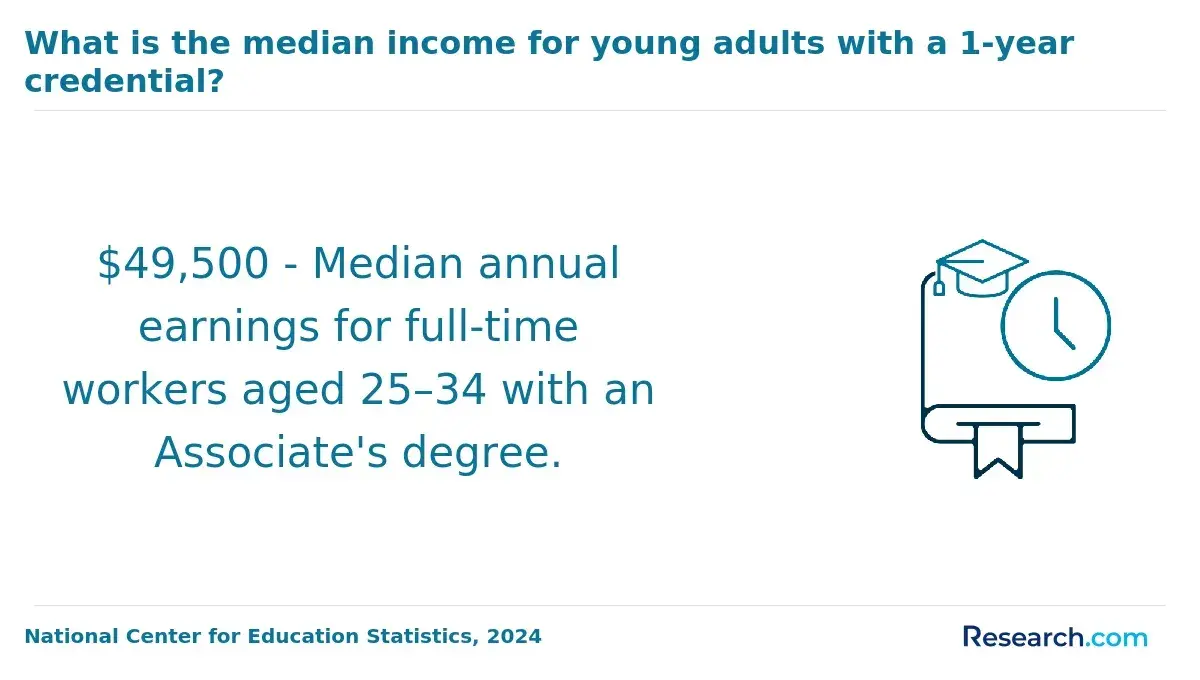
Salary data should be used cautiously. The U.S. Bureau of Labor Statistics reported a May 2024 median annual wage of $42,520 for photographers, but that figure includes a wide range of workers, from salaried staff to self-employed photographers in different markets. It should guide debt decisions, not serve as a promise of earnings.
Before choosing a program, complete this final value check:
- Compare total program cost before aid, including mandatory fees and estimated equipment.
- Compare net price after grants and scholarships, keeping loans separate.
- Review sample student work, portfolio expectations, and course projects.
- Ask about completion rates, graduate outcomes, internship support, and career services for online students.
- Estimate your likely debt at graduation and compare it with realistic entry-level, freelance, or part-time income scenarios.
- Choose the lowest-cost program that still gives you the portfolio, credential, flexibility, and support needed for your goal.
The common mistake is treating photography school as either "all about art" or "all about cost." The better approach is to match the lowest sustainable net price with the strongest portfolio-building environment you can access.
Other Things You Should Know About Photography
In 2027, the cheapest accredited online photography degree programs typically range from $6,000 to $20,000 annually. Financial aid options include federal loans, scholarships, and grants, which can significantly offset costs. It's crucial to check with each program for specific tuition fees and available financial aid options.
Admission requirements typically include a high school diploma or equivalent and submission of a portfolio demonstrating photography skills. Some programs might require additional documents like recommendations or essays, specific to 2027 admissions criteria. Always verify each institution's specific requirements.
Sometimes. If the camera or software is required for the program, the school may include it in the cost of attendance, which can allow approved aid to be used toward the expense. Ask the financial-aid office before buying equipment.
The cheapest accredited online photography degree programs can typically be completed in three to four years as full-time study. Some programs may offer accelerated options allowing students to graduate sooner, depending on the student's course load and transfer credits.
References
- The Higher Education Accreditation Guide for Small and Mid-Sized Schools https://corecampus.com/higher-education-accreditation-guide/
- The Accreditation System Isn't Working. Heightened Transparency and Data Collection Could Fix It. https://tcf.org/content/commentary/the-accreditation-system-isnt-working-heightened-transparency-and-data-collection-could-fix-it/
- Best Online Photography Degrees https://www.onlineu.com/degrees/photography
- Scholarships - Finaid https://finaid.org/scholarships/
- How To Get Student Loans and Financial Aid for Photography ... https://www.credible.com/student-loans/student-loans-for-photography-school
- Online Photography Degrees | Photography Programs & Courses https://www.onlinecolleges.net/degrees/photography/
- What Is Accreditation and Why Does It Matter? - Defending Education https://defendinged.org/resources/what-is-accreditation-and-why-does-it-matter/
- Photography Scholarships | ScholarshipOwl https://scholarshipowl.com/blog/find-scholarships/photography-scholarships/
- Why Accreditation Matters | C-RAC https://www.c-rac.org/why-accreditation-matters
- Should you Study Photography at College or are There Better Options Now? https://digital-photography-school.com/should-you-study-photography-at-college-or-are-there-better-options-now/