2027 Cheapest Accredited Online Photography Degree Programs That Accept FAFSA

Co-Founder and Chief Data Scientist
Choosing an online photography degree is really a cost-and-credential decision: you need a program that builds a strong portfolio without leaving you with unnecessary debt. Federal Student Aid lists the maximum Pell Grant at $7,395 for the 2024-25 award year, which can materially reduce costs for eligible students.
This guide is for students comparing accredited online photography degrees that accept FAFSA. You will learn which programs are usually the most affordable, how aid changes the real price, and how to judge value beyond tuition.
Key Things You Should Know
- The lowest-cost FAFSA-eligible online photography option is often an associate degree at a public college, while online bachelor's programs usually cost more because they require about 120 credits.
- FAFSA participation does not mean a degree will be free; the 2024-25 maximum Pell Grant is $7,395, and remaining costs may still require scholarships, savings, payment plans, or federal loans.
- Career ROI matters because the 2024 Occupational Outlook Handbook reported median photographer pay at $40,760, so keeping total debt low is especially important in this field.
Which Are the Cheapest Accredited Online Photography Degree Programs That Accept FAFSA?
The cheapest accredited online photography degree programs that accept FAFSA are usually offered by public colleges or large online nonprofit universities with lower per-credit tuition. Because fully online photography degrees are less common than online business, psychology, or IT degrees, students should compare photography-specific programs with closely related digital imaging, visual arts, and photographic design degrees.
The table below is a practical shortlist of FAFSA-participating, institutionally accredited online programs that can fit photography-focused goals. Published tuition and aid policies can change, so use this as a screening tool and confirm current tuition, fees, and aid eligibility directly with the school before applying.
| School | Online photography-related degree | Degree level | Institutional accreditation | Why it may be affordable | Best fit |
| Dakota College at Bottineau | Photography | Associate of Applied Science | Higher Learning Commission | Public two-year structure can reduce total credits and total tuition compared with a bachelor's degree | Students who want a lower-cost credential, portfolio development, and the option to transfer later |
| Southern New Hampshire University | Digital Photography | Bachelor of Arts | New England Commission of Higher Education | Flat online tuition model, frequent transfer-credit use, and FAFSA participation | Students who want a full bachelor's degree with broad online flexibility |
| Liberty University | Digital Design: Photographic Design | Bachelor of Science | Southern Association of Colleges and Schools Commission on Colleges | Online undergraduate pricing and transfer pathways may lower remaining credits | Students interested in photography combined with visual design and digital media |
| Arizona State University Online | Art with photography or digital media coursework, depending on current catalog options | Bachelor's | Higher Learning Commission | Large public university with federal aid participation and strong online infrastructure | Students who value a public university brand and broader arts curriculum |
| Savannah College of Art and Design | Photography | Bachelor's or graduate-level options depending on current availability | Southern Association of Colleges and Schools Commission on Colleges | FAFSA participation and art school resources, though tuition is typically higher than public options | Students seeking a specialized art-school environment and industry-oriented portfolio work |
| Academy of Art University | Photography | Associate, bachelor's, or graduate options depending on the catalog | WASC Senior College and University Commission | Multiple online photography pathways and federal aid participation, but students should compare total borrowing carefully | Students who want a dedicated photography school model and can manage a higher total cost |
The main decision is whether you need a bachelor's degree or whether a lower-cost associate degree plus portfolio, internships, freelance work, and later transfer will meet your goal. If you are comparing creative digital degrees more broadly, affordable video game programs can also show how media-focused programs vary in price, software requirements, and career alignment.
How Does FAFSA Eligibility Work for Online Photography Degree Programs?
FAFSA eligibility means the institution participates in federal student aid programs, and the student may be considered for federal grants, loans, and work-study. It does not automatically mean every photography program, every certificate, or every enrollment pattern qualifies for aid.
For an online photography degree, three things matter: the school must be Title IV eligible, the program must be an eligible degree or certificate program, and the student must meet federal aid rules. The FAFSA is the application, not the award itself.
Before you choose a program, confirm these details in writing with the financial aid office. This checklist helps you avoid the common mistake of assuming that "online" and "FAFSA accepted" always apply in the same way.
- Ask whether the specific online photography degree is Title IV eligible, not just whether the school accepts FAFSA.
- Confirm the minimum enrollment level required for Pell Grants, federal loans, and institutional scholarships.
- Ask whether online students pay different tuition, technology fees, course fees, or equipment fees than campus students.
- Check whether summer courses are aid eligible if you plan to accelerate completion.
- Request an estimated financial aid offer based on your intended start term and credit load.
A red flag is a school that discusses "financial aid available" but will not clearly identify institutional accreditation, federal school code, program eligibility, or the difference between grants and loans. A legitimate aid office should be able to explain exactly which aid types can apply to your degree plan.
How Much Does an Online Photography Degree Cost After Financial Aid?
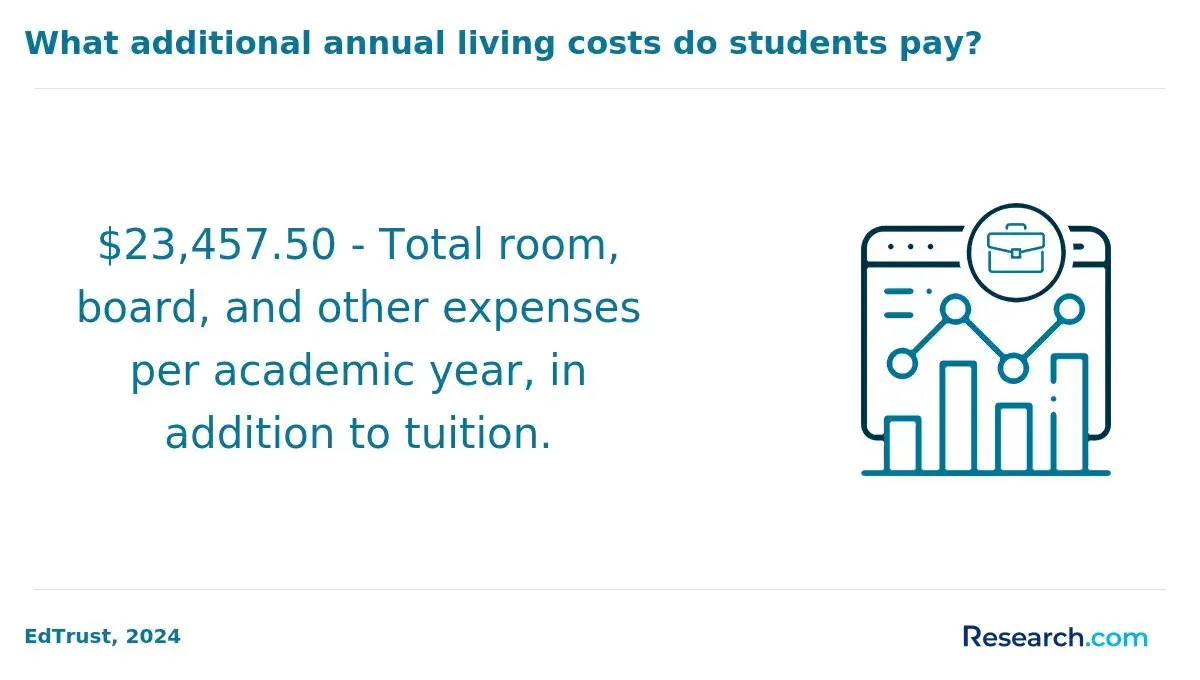
The cost after financial aid depends on tuition, credits required, transfer credits, fees, equipment, software, living expenses, and the student's aid package. For photography students, the "hidden" costs can be meaningful because cameras, lenses, lighting, storage, editing software, printing, and portfolio materials may not be included in tuition.
The table below shows the cost categories students should compare before assuming that the lowest advertised tuition is the cheapest real option. It is especially useful when comparing an associate degree, a bachelor's degree, and a private art school program.
| Cost factor | How it affects online photography students | What to ask the school |
| Tuition per credit | Usually the largest direct cost and the easiest number to compare | Is this the current online tuition rate for my program and state residency? |
| Total credits required | Associate degrees often require about 60 credits, while bachelor's degrees often require about 120 credits | How many credits must I complete after transfer evaluation? |
| Program and technology fees | Can raise the total bill even when tuition looks low | Are fees charged per course, per term, or per credit? |
| Equipment and software | Photography courses may require camera bodies, lenses, lighting kits, Adobe software, storage, and printing | What equipment is required in the first term, and what can be rented or substituted? |
| Financial aid package | Grants reduce cost, while loans postpone cost and create repayment obligations | How much of my offer is grant aid versus loans? |
| Transfer credits | Accepted credits can reduce both tuition and time in school | Can I receive an unofficial transfer estimate before enrolling? |
A simple way to estimate net cost is to subtract gift aid from direct costs, then add required out-of-pocket expenses. Gift aid includes grants and scholarships that do not need to be repaid; loans should be treated as cost you are financing, not as a discount.
Students looking for fast completion should be careful. Accelerated programs can reduce time away from work, but they can also compress equipment purchases and course loads into fewer terms. The trade-off is similar in other fields, such as an accelerated online business degree, where speed only creates value if the student can keep pace without retaking courses or increasing borrowing.
Which Affordable Online Photography Degree Programs Offer the Best Value?
The best value is not always the lowest tuition. In photography, value comes from a combination of low net cost, recognized accreditation, strong portfolio development, transfer flexibility, instructor feedback, career services, and access to relevant software and critique-based coursework.
Use the following comparison to decide which type of affordable program best matches your goal. The right choice depends on whether you want employment credentials, freelance readiness, transfer preparation, or a broader bachelor's degree.
| Program type | Typical value advantage | Potential drawback | When it makes sense |
| Public online associate degree | Lower total credits and lower total tuition can reduce debt | May not meet jobs that prefer a bachelor's degree | You want an affordable start, portfolio foundation, or transfer pathway |
| Large nonprofit online bachelor's degree | Often combines FAFSA access, transfer credits, and flexible scheduling | May offer less specialized art-school networking than a dedicated art institution | You want a bachelor's credential and need maximum flexibility |
| Public university online bachelor's degree | Public university recognition and broader academic resources | Online tuition can still be significant, especially for out-of-state students | You want a university degree with arts, digital media, or interdisciplinary options |
| Private art school online degree | Specialized critique culture, portfolio expectations, and creative-industry focus | Higher tuition can reduce ROI unless aid or career goals justify the cost | You have a clear creative direction and can limit borrowing |
A more expensive program can be worth considering if it offers stronger portfolio review, industry-standard assignments, internship support, faculty feedback, or transfer acceptance that shortens your path. It is usually not worth paying much more for a program if you cannot explain how the extra cost improves your portfolio, career access, or long-term credential value.
Are the Cheapest Online Photography Degree Programs Properly Accredited?
Accreditation is the main quality-control checkpoint for FAFSA-eligible online photography degrees. To use federal student aid, a school generally must hold recognized institutional accreditation and meet federal eligibility rules. Programmatic art accreditation, such as NASAD approval, can be useful but is not always required for photography careers.
The safest approach is to verify accreditation before applying, not after receiving an aid offer. Follow these steps before committing to any low-cost online photography program:
- Look up the school in the U.S. Department of Education's accreditation database or ask the school for its recognized institutional accreditor.
- Confirm that the accreditor covers the institution currently, not only a former campus, former name, or discontinued program.
- Ask whether the online photography degree is included within the accredited institution's approved offerings.
- Check whether credits are likely to transfer to the bachelor's or graduate programs you may want later.
- Be cautious with unaccredited schools, non-degree certificates marketed like degrees, or programs that promise unusually fast completion with minimal coursework.
Accreditation also matters because photography careers are portfolio-driven, but education choices still affect financial aid, transfer options, graduate study, and employer screening. A cheap program that blocks future transfer or aid eligibility can become expensive later.
What FAFSA Grants and Federal Aid Can Pay for an Online Photography Degree?
FAFSA can connect eligible students to federal grants, federal loans, and sometimes work-study. The most important distinction is that grants reduce the price of school, while loans must be repaid with interest.
The table below summarizes common federal aid types for undergraduate online photography students. Award amounts and eligibility depend on federal rules, enrollment level, cost of attendance, dependency status, and the school's aid policies.
| Federal aid type | Repayment requirement | How it can help photography students | Important limitation |
| Federal Pell Grant | No repayment if eligibility rules are met | Can reduce tuition and required costs for students with financial need | The 2024-25 maximum is $7,395, so it may not cover the full annual cost |
| Federal Supplemental Educational Opportunity Grant | No repayment if eligibility rules are met | Can add need-based grant aid at participating schools | Funds are limited and not every school awards it |
| Direct Subsidized Loan | Must be repaid | Can cover remaining costs for eligible undergraduates with financial need | Borrowing increases long-term cost, and annual limits apply |
| Direct Unsubsidized Loan | Must be repaid | Can help cover costs when grants are not enough | Interest accrues according to federal loan rules |
| Federal Work-Study | Earned wages, not a loan | May help with personal or educational expenses | Availability varies and online students may have fewer convenient placements |
Students should also ask about institutional scholarships, state grants, military benefits, employer tuition assistance, and local arts scholarships. If you are comparing fields with more structured licensure pathways, such as online speech pathology programs, remember that photography aid decisions are usually tied more to institutional eligibility and degree status than to licensure requirements.
How Do Transfer Credits Lower the Cost of an Online Photography Degree?
Transfer credits can be the difference between an affordable online photography degree and an expensive one. If a bachelor's degree requires about 120 credits, entering with an accepted associate degree or prior general education credits can reduce the number of credits you pay for at the new school.
The most valuable transfer credits are usually general education courses, introductory art courses, digital media courses, and electives. Studio photography courses can be harder to transfer because schools may want to review syllabi, learning outcomes, and portfolio work.
To use transfer credits strategically, take these steps before you enroll:
- Request a preliminary transfer evaluation from each school you are considering.
- Ask which credits apply directly to the photography major, which apply to general education, and which count only as electives.
- Confirm the maximum number of transfer credits allowed into the degree.
- Ask whether portfolio review can waive or place you out of introductory coursework.
- Compare the remaining credits after transfer, not just the advertised tuition per credit.
A higher-tuition school may cost less overall if it accepts substantially more credits. This is similar to decisions in accelerated psychology programs, where the real price often depends on how many previous credits apply to the final degree plan.
Which Students Benefit Most From a Low-Cost Online Photography Degree With FAFSA?
A low-cost FAFSA-eligible online photography degree is most useful for students who need a recognized credential, structured feedback, and portfolio development while controlling debt. It can also help adult learners who need flexible scheduling and students who want to test the field before committing to a more expensive art-school path.
This option tends to fit certain students especially well. The list below focuses on situations where affordability and federal aid access can make a practical difference:
- First-generation or low-income students who may qualify for need-based grants and need predictable costs.
- Working adults who need asynchronous or flexible courses while building a portfolio.
- Community college students planning to transfer into a bachelor's program after completing lower-cost credits.
- Creative professionals who already shoot photos but need formal training in lighting, editing, visual storytelling, and client-ready presentation.
- Students who want a photography-adjacent career in digital content, social media, e-commerce, design, or visual communication.
Students should avoid choosing primarily by low price if they need intensive studio access, in-person darkroom training, specialized commercial equipment, or a highly selective art-school network. For readers comparing photography with healthcare education, accredited speech language pathology programs show a very different decision model because accreditation and clinical requirements are tied closely to professional licensure.
How Does the Cost of an Online Photography Degree Affect Career ROI?
Photography ROI depends heavily on debt control because many photography careers are freelance, contract-based, entrepreneurial, or tied to broader digital media roles. The 2024 Occupational Outlook Handbook reported median photographer pay at $40,760, which means students should be cautious about borrowing large amounts for a degree unless the program clearly supports a realistic career plan.
Photography graduates may pursue roles such as portrait photographer, commercial photographer, photo editor, digital content creator, e-commerce imaging specialist, studio assistant, visual media specialist, or freelance business owner. Employers and clients often care about portfolio quality, editing skill, reliability, communication, and niche experience as much as the degree title.
Use these ROI questions before accepting loans for any program:
- How much will I owe at graduation if I accept the full loan package?
- Does the program require portfolio reviews, capstone projects, or client-style assignments?
- Will I graduate with skills in lighting, editing, asset management, visual storytelling, and business practices?
- Does the curriculum include current tools such as digital workflow, AI-aware editing ethics, image licensing, and online portfolio presentation?
- Can I build paid experience while enrolled through freelance work, campus projects, internships, or local clients?
Artificial intelligence is changing entry-level creative work, especially basic image editing, stock imagery, and content production. That does not remove the need for photographers, but it raises the value of original visual judgment, client direction, brand storytelling, lighting, and ethical image use.
How Should Students Choose the Cheapest FAFSA-Eligible Online Photography Degree?
The best choice is the accredited online photography degree with the lowest realistic net cost that still supports your career goal. Do not choose only by published tuition, and do not assume the largest aid offer is best if it relies heavily on loans.
Use this decision sequence to compare schools consistently. It will help you move from a long list of programs to the option that is both affordable and credible.
- Verify institutional accreditation and FAFSA participation for the exact school and program.
- Request total direct cost for your first year, including tuition, fees, software, equipment, and required materials.
- Submit the FAFSA and compare financial aid offers by separating grants, scholarships, loans, and work-study.
- Ask for a transfer-credit review before enrolling if you have prior college coursework.
- Compare remaining credits, not just per-credit price.
- Review portfolio requirements, faculty feedback structure, course examples, and career support.
- Estimate likely debt at graduation and compare it with your intended photography or digital media career path.
- Choose the program that gives you the strongest combination of low net price, accredited credential, portfolio growth, and manageable borrowing.
Common mistakes include ignoring equipment costs, assuming all aid is free money, failing to renew FAFSA annually, choosing a non-degree certificate when a degree is needed, and overlooking transfer limits. If you are still undecided about your major, comparing affordability across other online pathways, such as accelerated online business degree options, can help you see how cost, speed, and career flexibility differ by field.
Other Things You Should Know About Photography
Sometimes, but not always. Many programs require a digital camera with manual controls, editing software, storage, and basic lighting tools. Ask for the equipment list before enrolling and check whether rentals, used gear, or school-approved alternatives are allowed.
It can be, especially when the school is accredited and the student graduates with a strong portfolio. In photography, employers and clients often judge work samples, technical skill, editing ability, communication, and reliability alongside the degree.
An associate degree can be the cheaper path for foundational skills, freelance preparation, or transfer. A bachelor's degree may be better if you want broader visual communication training, access to more advanced coursework, or roles that prefer a four-year credential.
Only some certificates qualify for federal student aid. The school must participate in federal aid programs, and the specific certificate must be aid eligible. Always ask the financial aid office whether that exact certificate qualifies before enrolling.
References
- Online Photography Degrees | Photography Programs & Courses https://www.onlinecolleges.net/degrees/photography/
- Can You Get Financial Aid for Online College? Finding Out https://beal.edu/can-you-get-financial-aid-for-online-college/
- Best Online Photography Degrees https://www.onlineu.com/degrees/photography
- Online Photography Degrees https://www.affordablecollegesonline.org/degrees/best-online-bachelors-in-photography-programs/
- Do Online Colleges Accept FAFSA? | Ascent Funding https://www.ascentfunding.com/blog/do-online-colleges-accept-fafsa/
- Online Photography Degree and Certificate Programs | Sessions College https://www.sessions.edu/digital-photography-info/
- BA (Hons) Degree Live Online https://www.baph.co.uk/courses/photography_degree_live_online
- A Comprehensive Guide to the FAFSA and Federal Financial Aid https://www.navyfederal.org/makingcents/college-planning/how-to-apply-for-fafsa.html
- How To Become A Photographer | Become With Lantern https://www.learnhowtobecome.org/photographer/
- How to Apply for Financial Aid (FAFSA): A Step-by-Step Guide for 2026 https://www.straighterline.com/blog/apply-for-financial-aid