2027 Choosing a BS in Business Administration for Business Roles in Retail Store Networks
Audited and Verified:
Our Editorial and Data Verification Process
Research.com uses government datasets, official education statistics and primary institutional information to support its career and degree guides. Our review process checks factual accuracy, occupational definitions, source dates and the requirements associated with the credentials discussed.
How This Article Was Fact-Checked
Our editorial team verifies salary estimates, employment projections, education requirements and program information against original data providers and official organizations. Salary figures are checked against the relevant occupational definitions and reporting periods. Information about licensure, accreditation and required in-person training is reviewed separately.
Fact-checked and verified on:

Co-Founder and Chief Data Scientist
A job supporting one store is different from a job coordinating dozens of them. Retail store networks need people who can interpret sales and inventory reports, support store teams, and carry out consistent operating plans across locations. If you are choosing a BS in Business Administration for that work, the degree name alone tells you little about your preparation.
This guide shows which courses, work experiences, and program features matter for store operations and headquarters roles - and when a more specialized or experience-led route may be better.
Key Things You Should Know
- Choose for the target function: multi-store operations calls for different experience than merchandising, supply chain, or workforce planning.
- A BS can build business and analytical skills, but district and regional management normally require demonstrated store-level leadership; graduation is not an automatic promotion.
- For salary context, the U.S. Bureau of Labor Statistics reports a May 2025 median of $82,320 for logisticians and projects 18% employment growth from 2025 to 2035. Those occupation-wide figures are not starting pay or a forecast for every retail network job.
What is a BS in Business Administration for retail store network careers?
A BS in Business Administration is an undergraduate business degree covering functions such as accounting, marketing, management, finance, and operations. For a retail store network, its value lies in connecting decisions made at headquarters with their effects across individual stores: staffing plans, inventory availability, customer experience, expenses, and execution of promotions.
The degree is not ordinarily a retail-management license or a promise of a management job. A BS, BBA, or specialized management degree may cover similar subjects but differ in quantitative requirements and electives.
If your aim is specifically supervising stores, compare those requirements with your existing leadership experience. Undergraduate leadership programs with shorter timelines may be worth comparing, but a shorter program is useful only if its remaining courses develop the skills your next role requires.
What careers can a business administration degree lead to in retail?
Retail network careers differ by decision-making scope. A store supervisor may handle a shift and coach associates; a district manager is accountable for performance across locations. Headquarters positions may influence stores without directly supervising store employees. The table separates plausible entry routes from positions that usually depend on further experience.
| Target role | Typical work | Likely preparation beyond the degree |
| Store operations coordinator | Tracks rollout schedules, store reports, and follow-up with field teams | Store experience, spreadsheets, and clear communication |
| Merchandising or inventory analyst | Reviews assortment, stock availability, and sales patterns | Strong data skills and familiarity with retail inventory systems |
| Field HR or training specialist | Supports hiring processes, training, or employee programs across locations | HR knowledge and experience handling sensitive employee information |
| Store, district, or regional manager | Leads people and owns increasingly broad operating results | Documented supervisory performance; multi-store roles generally require substantial field experience |
A current retail employee can build on store knowledge by seeking responsibility for scheduling, inventory counts, training, or a supervised rollout. Someone entering from another industry may start in coordination or analysis rather than district management. For a specifically HR-focused move, compare business administration with colleges accepting credits toward human resources study; ask each school how prior credits apply to the major, not merely whether they are accepted.
What courses do BS in Business Administration programs include for retail management?
Look past course titles to assignments. Accounting and finance should help you read a store income statement and distinguish sales growth from profit. Operations and supply chain courses should address replenishment, process consistency, and trade-offs among service, labor, and inventory. Marketing and analytics can support promotion evaluation and customer-segment decisions; management and HR courses address coaching, staffing, and employment practices.
For network roles, an applied assignment is especially valuable if it requires a recommendation that could work across stores with different sales volumes and staffing levels. A comparison of locations should account for those differences rather than treating a simple ranking as proof of good management. Ask whether a retail-related elective is part of an official concentration, an optional course, or simply a topic used in class.
If store openings or technology rollouts are your goal, project management coursework can add scheduling and stakeholder skills. Compare the BS with a specialized project management pathway, including its requirements and federal aid for undergraduate project management study, before paying for a different degree solely to gain one skill set.
First, verify the institution's recognized accreditation and the exact degree it awards. Then check whether any advertised AACSB, ACBSP, or IACBE accreditation covers the business school or program you would enter; institutional and business-program accreditation are different claims. Neither establishes that graduates obtain retail jobs.
Compare programs against your intended role using evidence you can request: a current degree map, elective schedule, examples of applied assignments, internship rules, and career-service connections to retailers. Ask how often required courses run and who approves a workplace project. An employee's access to a store does not automatically provide permission to use company sales, customer, or personnel data for coursework.
Application costs are a smaller consideration than program fit, but they matter when comparing otherwise suitable options. Accredited online colleges without application fees can help narrow an application list; still verify the specific business degree and its accreditation scope directly with each institution.
Online study may suit employees whose shifts change, while campus study can make in-person recruiting and group work easier. Neither format is automatically more flexible: online courses may still have live meetings, fixed deadlines, proctored exams, and team presentations. Ask for a sample course schedule and confirm whether any internship or campus visit is required.
For someone working store hours, the decisive question is whether required classes and team meetings fit the actual rota - not the advertised delivery label. Compare part-time course availability and leave policies as well as full-time plans. Online business administration degrees for employed adults offer a starting point for that comparison, but confirm scheduling and assessment rules with each program.
Requirements depend on whether you are applying as a first-year or transfer student and whether the business major has separate entry standards. Schools commonly review prior transcripts and may specify GPA or prerequisite courses in mathematics, accounting, economics, or statistics. Admission to the university is not the same as admission to the major.
If you have retail experience and previous college work, request a written evaluation showing which credits satisfy general education, business core, electives, and residency requirements. A school can accept a course as credit without applying it to the course you hoped to replace. Use understanding business administration entry standards to prepare questions, then obtain the rules for your intended school and enrollment term.
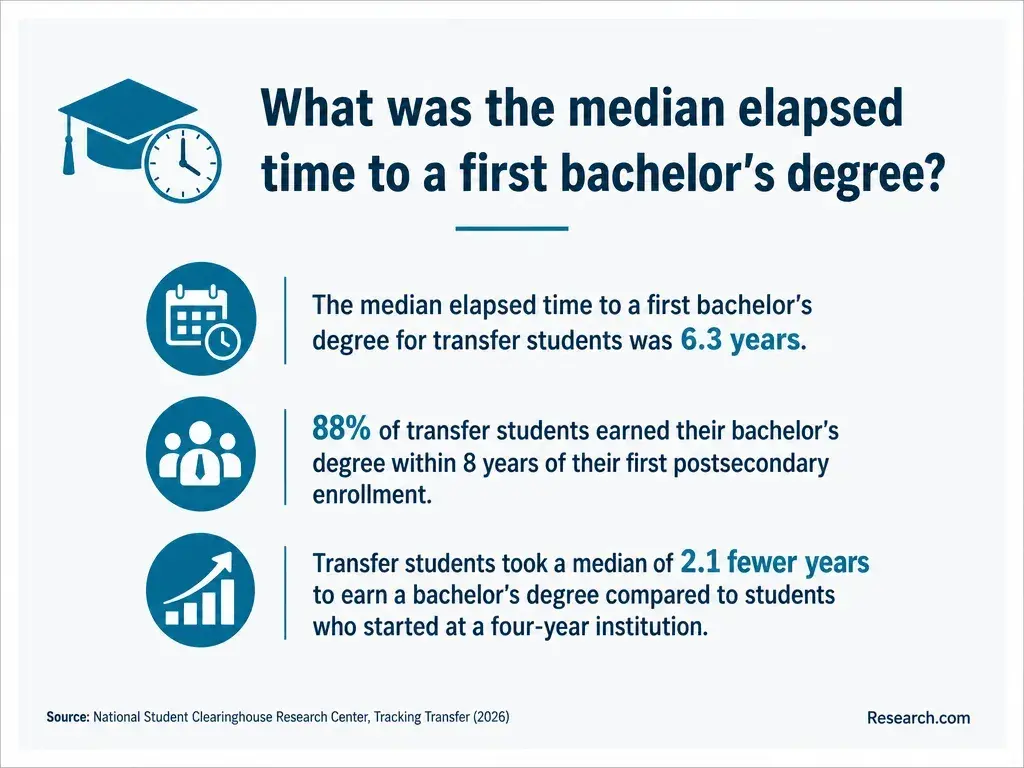
A bachelor's degree is often planned around four years of full-time study, but transfer credit, part-time enrollment, course sequencing, and school residency rules can change the time remaining. Compare programs using an approved degree audit, not the number of credits a school initially says it will accept.
Build a completion estimate from remaining required courses, tuition, mandatory fees, books, technology, travel, and any reduction in work hours.
If an employer offers education assistance, check eligible programs, payment timing, grade conditions, and repayment terms. Compare the least expensive business administration schools on the cost of your remaining requirements, not advertised tuition alone: an unavailable prerequisite or additional residency courses can change both the bill and graduation date.
Employers need evidence that you can turn information into an operational decision and communicate it to people who must carry it out. Relevant examples include interpreting store-level reports without confusing revenue with profit, planning a rollout across locations, explaining a staffing trade-off, and identifying why an inventory measure might not be comparable between stores.
Pair coursework with appropriately approved work samples: a public-data analysis, a classroom simulation, or a redacted project completed with employer permission. State what you personally did and what remains untested.
If you already have retail responsibility, seek tasks that show increasing scope rather than relying on a management-sounding title. If completing the degree sooner would let you pursue those opportunities, investigate shorter routes to an online bachelor's - but check workload, credit applicability, and required-course availability before assuming a faster finish.
There is no single salary for a BS in Business Administration graduate working in a store network. Pay depends on the occupation, location, employer, and level of responsibility.
For a related supply-chain path, the U.S. Bureau of Labor Statistics reports that logisticians had a median annual wage of $82,320 in May 2025 and projects 18% U.S. employment growth from 2025 to 2035. That median covers workers across industries and experience levels; it is not an entry-level retail offer or a projection for store managers.
Use occupation data to identify roles worth investigating, then compare local postings for the specific job title and required experience. When weighing tuition against potential earnings, account for debt and the possibility that your first position will be a coordinator or supervisor role. Affordable accredited business administration programs accepting FAFSA may help frame a cost comparison; federal aid eligibility and your actual aid offer require separate confirmation.
Do retail management careers require licenses or professional certifications?
General store and district management roles do not ordinarily require an occupational license simply because they involve management. Employers may value training in retail operations, inventory systems, HR, or project management, but a course or degree does not itself award a separate professional certification. Specialized duties can have employer- or state-specific requirements, so check the actual job posting and the relevant authority.
If your next step is a defined skill rather than a bachelor's-required role, employer training or a targeted certificate may cost less and be more direct. Compare that option with online business education on a smaller budget only after confirming whether your target employer expects a degree, demonstrable experience, or both.
Other Things You Should Know About Business Administration
Not necessarily. A franchise owner may control local hiring and operations within brand rules, while a company-owned chain may centralize more decisions. Check who employs the position and who has authority over the stores you would support.
It depends on the role. Field operations positions may involve frequent travel; an analyst may visit stores occasionally or work mainly with remote teams. Ask about travel territory, frequency, and weekend expectations during interviews.
No. Online ordering can affect store inventory, fulfillment, and returns, but responsibility for e-commerce platforms may sit with separate teams. Read the job duties to see which decisions the role actually owns.
Often, especially for staffing, customer service, and multi-site coordination. Learn the new category's inventory cycles, product rules, and customer expectations before assuming its operating measures work the same way.
- Supply Chain Management Jobs: Career Paths & Salary | Arkansas State University Online https://degree.astate.edu/online-programs/business/mba/supply-chain-management/logistics-career-paths/
- What jobs can you get with a business administration degree? | Northwest Media Center https://nwmissouri.edu/media/news/2025/06/what-jobs-can-you-get-with-a-business-administration-degree.htm
- Co-ops vs Internships | Kettering University https://www.kettering.edu/co-op-experience/kettering-co-op-vs-internships
- Areas of Business BBA Grads Can Work In | North Carolina Central University https://online.nccu.edu/blog/areas-of-business/
- BS In Business Administration (Major) - Academics | Montclair State University https://www.montclair.edu/academics/programs/bs-business-administration
- Associate vs. Bachelor's in Business Administration | University of Arkansas Grantham https://www.uagrantham.edu/blog/associate-vs-bachelors-in-business-administration-which-is-right-for-you/
- What Can You Do With a Business Administration Degree? | snhu.edu https://www.snhu.edu/about-us/newsroom/business/what-can-you-do-with-a-business-administration-degree
- Career Opportunities in Retail | UH Department of Human Development & Consumer Sciences https://www.hdcs.uh.edu/programs/undergraduate/retailing-and-consumer-science/career-opportunities
- Retail Management and Supply Chain Strategy | Coursera https://www.coursera.org/specializations/retail-management-supply-chain-strategy
- Retail Inventory Management: What It Is, Steps, Practices and Tips | NetSuite https://www.netsuite.com/portal/resource/articles/inventory-management/retail-inventory-management.shtml