2027 Choosing a BS in Business Administration When You Prefer Applied Projects to High-Stakes Exams
Audited and Verified:
Our Editorial and Data Verification Process
Research.com uses government datasets, official education statistics and primary institutional information to support its career and degree guides. Our review process checks factual accuracy, occupational definitions, source dates and the requirements associated with the credentials discussed.
How This Article Was Fact-Checked
Our editorial team verifies salary estimates, employment projections, education requirements and program information against original data providers and official organizations. Salary figures are checked against the relevant occupational definitions and reporting periods. Information about licensure, accreditation and required in-person training is reviewed separately.
Fact-checked and verified on:

Co-Founder and Chief Data Scientist
A business administration degree may suit you even if high-stakes exams do not bring out your best work. The key is to find a program that assesses business knowledge through substantial projects without assuming every course will be exam-free.
This guide is for prospective and returning students who learn best by applying ideas to realistic problems. You will learn how to inspect assignments, compare online and campus formats, and weigh the degree's cost and career value before enrolling.
Key Things You Should Know
- Choose by assessment evidence, not an "applied learning" label: request syllabi showing project weight, exam weight, feedback, and group-work rules.
- Expect some timed assessments, particularly in quantitative courses; an applied-project preference is not the same as an exam-free degree.
- Use a sample project to test career fit: a well-documented analysis can demonstrate skills, but it does not replace experience or qualify you automatically for management.
What is a BS in Business Administration, and who is it best suited for?
A Bachelor of Science in Business Administration is an undergraduate degree combining general education with broad business study, often including accounting, finance, marketing, management, operations, and quantitative analysis. "BS" describes the awarded degree, not a standardized curriculum: schools differ in mathematical depth, concentrations, and assessment methods.
It can fit students who want several business functions available to them, including early-career employees exploring a direction and experienced workers seeking a bachelor's credential. If your goal is specifically to lead teams, compare the curriculum and assessment style of shorter online bachelor's pathways in organizational leadership. Leadership-focused study may be a closer fit, but neither degree alone makes someone a manager.
How can applied projects improve learning in a business administration degree?
An applied project asks you to use business concepts to produce a decision-ready output, such as a budget, process map, marketing analysis, or operating plan. Unlike an exam that primarily measures performance at one sitting, a project can reveal how you select evidence, explain assumptions, revise work, and communicate a recommendation. That advantage depends on substantive feedback and clear grading criteria - not merely on calling an assignment a "project."
Compare programs using a recent syllabus or assignment brief. These checks distinguish meaningful applied learning from an attractive course description:
- Scope: Is there a defined business question, intended decision-maker, and achievable deliverable?
- Evidence: Can students use public or simulated data if they cannot access a workplace?
- Assessment: How much of the grade comes from projects versus timed exams, and are individual contributions assessed in group work?
- Feedback: Is there an opportunity to revise analysis before the final submission?
An internship, a classroom case, and an employer-approved capstone are different experiences. If you hope to use your job, confirm faculty approval and your employer's rules before using internal records. For a more specialized project-centered route, compare project management degrees with prior-credit pathways; verify how existing credits apply rather than assuming a faster finish.
Is an online or campus-based business administration program better for you?
Neither format determines whether you will do more projects or fewer exams. Online courses can still require live presentations, coordinated team meetings, fixed deadlines, or remotely proctored tests. Campus courses may offer easier access to classmates and faculty but require travel at set times.
The comparison below highlights scheduling differences that matter when projects are your preferred way to learn. Confirm the actual requirements for the courses you would take, not just the program's advertised format.
| Feature | Online program | Campus-based program |
| Project collaboration | Often relies on shared documents and scheduled virtual meetings | May allow in-person meetings and classroom workshops |
| Presentations | May be recorded or require live attendance | Often scheduled during class |
| Exams | May use timed online testing or proctoring | May use scheduled classroom testing |
Ask for sample weekly schedules and assessment policies, especially if work, caregiving, or travel limits your availability. Online business programs in US college rankings can help build a comparison list, but a ranking cannot establish that your required courses are asynchronous or project-heavy.
Expect a business core alongside general education, with requirements set by the institution. Accounting may require financial statements and numerical problem-solving; statistics may involve data interpretation; marketing and operations may assign research, process analysis, or presentations. Any of these courses can also include quizzes or timed exams.
Read beyond course titles. Compare syllabi for the percentage of the grade assigned to exams, the software used, and whether an upper-level capstone lets you build an individual work sample. If you are new to business study, check college coursework required for business administration entry against each school's catalog; prerequisite and course-sequencing rules vary. A concentration is official only if the school awards it - not because you took related electives.
First, verify that the institution holds recognized institutional accreditation. Then check whether any claimed business accreditation, such as AACSB, ACBSP, or IACBE, covers the relevant business school or program. Institutional and business accreditation have different scopes; neither tells you how an individual instructor grades assignments.
Accreditation matters when comparing both conventional programs and shorter undergraduate business programs across the US. Confirm status with the accreditor and school, then separately request syllabi and graduation requirements. A compressed calendar is not evidence of lighter exams or a lower workload.
Requirements depend on whether you are entering college, transferring, or returning after earlier coursework. Schools commonly ask for prior academic records, and some admit students to the institution before they can enter the business major. Mathematics, accounting, GPA, and other prerequisites may affect that second step.
Ask admissions which records are required and ask an academic adviser for a written review of where previous courses apply. Accepted transfer credits do not necessarily satisfy the business core. If you are applying to several schools, options to reduce upfront college application expenses may help, but check each program's admission and assessment fit before applying solely to avoid a fee.
A traditional full-time bachelor's pathway commonly spans four academic years; transfer credit, part-time enrollment, prerequisite sequences, and course availability can change the time remaining. A quicker calendar is not necessarily easier for someone who needs time to research, draft, and revise projects.
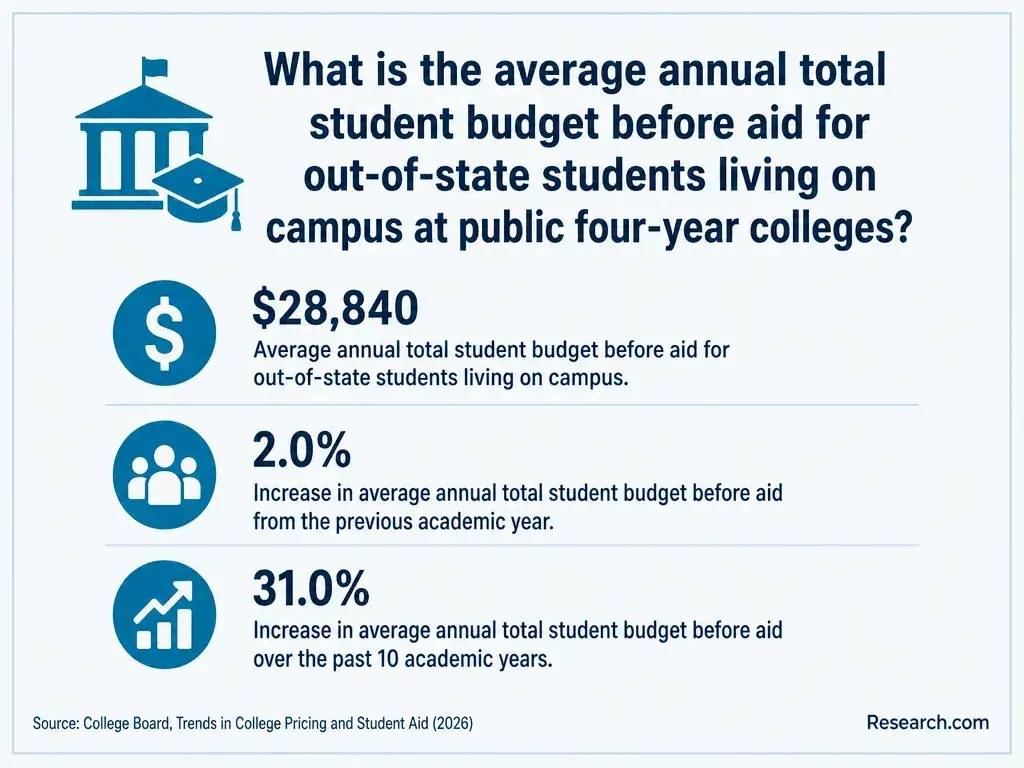
Compare the full completion cost, not just advertised tuition. Include required credits after an official evaluation, fees, books, software, possible proctoring or travel charges, and earnings you would forgo if you reduced work hours. Business administration degrees for limited tuition budgets are a starting point, but your net cost depends on the school's charges and aid offer. Request a term-by-term course plan before treating any price or graduation date as final.
The degree can support applications for roles such as operations coordinator, marketing coordinator, HR assistant, project coordinator, or administrative specialist. These jobs differ: an operations role may emphasize process tracking, while an HR role may emphasize records, employee communication, and policy procedures. Employers may also require relevant experience, software skills, or sector knowledge.
Choose projects that produce evidence for a target role: an annotated process map for operations or a research brief for marketing. If HR is your clear goal, compare broad business study with human resources education and career options. A targeted degree or internship may build more relevant evidence than a general business portfolio alone.
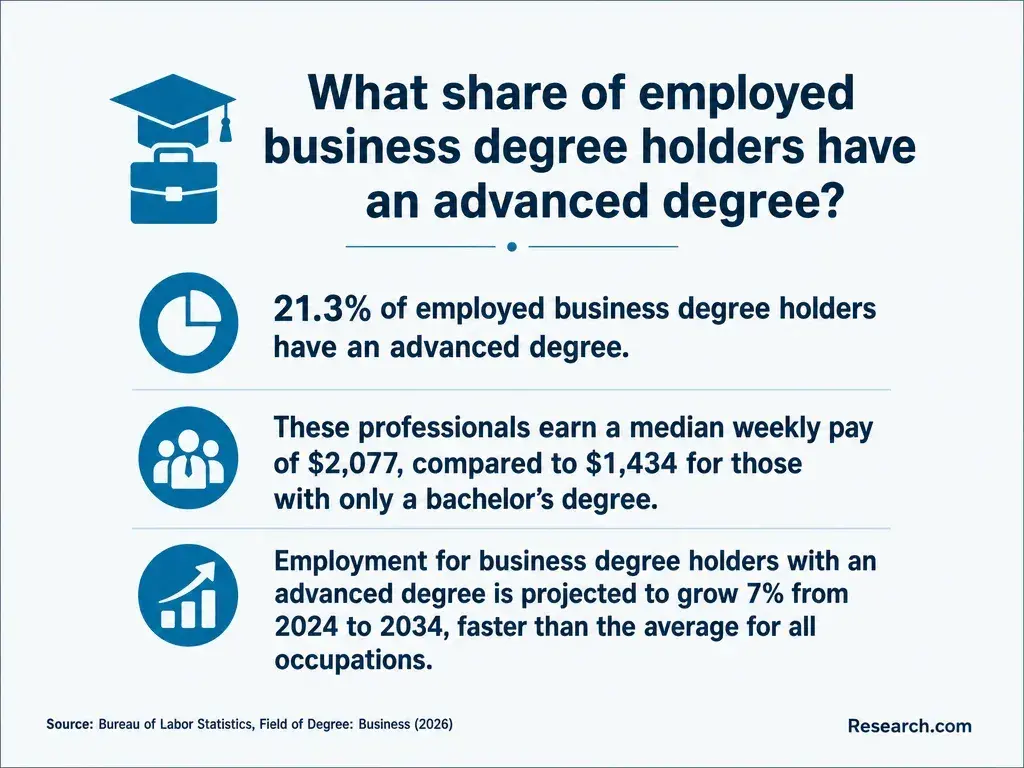
There is no single salary for this degree. Pay depends on the occupation, location, employer, and experience, not whether your coursework used projects instead of exams. For context, the U.S. Bureau of Labor Statistics reports a May 2025 median annual wage of $78,760 for market research analysts and projects 7% employment growth from 2025 to 2035. That occupation-wide median is not an expected starting salary for a new business graduate.
Judge a degree's financial value against the role you can realistically pursue next. Existing credits can materially change the education investment; for an HR-focused student, transfer admission options for human resources majors may be worth comparing with a general business pathway. Only a school's credit evaluation can establish which route is shorter or less costly for you.
What certifications or licenses may business administration graduates need?
A general business administration degree does not itself grant a professional license. Some graduates later pursue occupation-specific credentials in HR, project management, accounting, or financial services, but eligibility rules differ and may require particular coursework, experience, examinations, or state approval. Check the responsible credentialing body before choosing electives around a presumed qualification.
A certificate or certification also should not be confused with a project-heavy bachelor's degree. If project coordination is your immediate objective, compare employer training and the cost of a relevant credential with further degree study. When considering another bachelor's pathway, guidance on grants versus loans for project management bachelor's study can clarify financing trade-offs; neither funding nor a credential guarantees a particular job.
Other Things You Should Know About Business Administration
Yes, if you are eligible under the school's disability-services process. Contact that office before courses begin to learn what documentation and arrangements it requires; accommodations do not automatically replace an exam with a project.
Only with the relevant instructors' permission. Schools may restrict resubmitting prior work even when you expand it, so explain what new analysis you propose.
Usually you can share work you own, subject to course and project rules. Remove private information, respect collaborators' contributions, and obtain permission before showing employer-owned material.
Follow each course's AI-use policy. If use is permitted, verify claims and calculations yourself, disclose assistance as required, and do not enter confidential business data into an unapproved tool.
- Partnering with Students to Develop a Capstone for a... - PMC https://pmc.ncbi.nlm.nih.gov/articles/PMC11732519/
- Direct Assessment (Competency-Based) Programs | ed.gov http://www.ed.gov/laws-and-policy/higher-education-laws-and-policy/higher-education-policy/direct-assessment-competency-based-programs
- What Can I Do with a Business Administration Degree? | CTU https://www.coloradotech.edu/degrees/studies/business-and-management/articles/what-can-i-do-with-a-business-administration-degree
- The Power of Partnerships in Experiential Learning | AACSB https://www.aacsb.edu/insights/articles/2025/04/the-power-of-partnerships-in-experiential-learning
- Alternatives to Proctoring Exams in Online Classes - ASC Tech | ASC Office of Distance Education https://ascode.osu.edu/news/alternatives-proctoring-exams-online-classes
- How can I assess group work? - Eberly Center | Carnegie Mellon University https://www.cmu.edu/teaching/designteach/design/instructionalstrategies/groupprojects/assess.html
- The Benefits of Earning a Degree in Business Administration | The Pennsylvania Institute of Technology https://www.pit.edu/news/the-benefits-of-earning-a-degree-in-business-administration/
- Group Work | McGraw Center for Teaching and Learning https://mcgraw.princeton.edu/group-work
- Replacing Exams with Project-Based Assessment | mdpi.com https://www.mdpi.com/2227-7102/13/4/408
- Business Administration Degrees (Types, Courses & FAQ) | allbusinessschools.com https://www.allbusinessschools.com/business-administration/degrees/