2027 Is a Management Information Systems Focus Worth Adding to a BS in Business Administration If You Already Work as a IT support supervisor?
Audited and Verified:
Our Editorial and Data Verification Process
Research.com uses government datasets, official education statistics and primary institutional information to support its career and degree guides. Our review process checks factual accuracy, occupational definitions, source dates and the requirements associated with the credentials discussed.
How This Article Was Fact-Checked
Our editorial team verifies salary estimates, employment projections, education requirements and program information against original data providers and official organizations. Salary figures are checked against the relevant occupational definitions and reporting periods. Information about licensure, accreditation and required in-person training is reviewed separately.
Fact-checked and verified on:

Co-Founder and Chief Data Scientist
As an IT support supervisor, you already coordinate people, service requests, and technical fixes. An information systems focus could help you move from running support operations to improving how the wider organization uses technology—but it may add courses without advancing your particular goal.
This guide explains what a management information systems (MIS) focus adds to a BS in Business Administration, where your experience already gives you an advantage, and how to compare it with a technical degree or a more targeted qualification before committing time and money.
Key Things You Should Know
- An MIS focus is most valuable when your next role connects technology decisions with budgets, processes, data, and business stakeholders. It is less compelling if you want deeper hands-on engineering skills.
- Check the incremental cost, not just the concentration name. Find out whether MIS courses fit your remaining degree requirements or extend graduation.
- Occupation pay is not a graduate salary forecast. The U.S. Bureau of Labor Statistics reports a May 2025 median of $102,320 for project management specialists, with 7% projected employment growth from 2025 to 2035; reaching such a role depends on relevant responsibilities and employer requirements.
Is an MIS focus worth adding to a business administration degree as an IT support supervisor?
Usually, yes—if you want to lead work at the boundary between IT and business operations and the focus does not substantially delay your degree. MIS examines how organizations select, manage, secure, and use information systems. In a business administration program, it typically sits alongside accounting, management, operations, and other business subjects rather than replacing them with advanced technical training.
Your supervisory experience matters: you may already manage escalations, staffing, service measures, or vendor relationships. MIS is worth adding when its courses fill a demonstrable gap, such as evaluating a system purchase, translating departmental needs into requirements, or explaining technology trade-offs to budget owners. It is harder to justify if the courses repeat skills you use daily or are unavailable when you need them.
Set a target before choosing. If you primarily want broader people management preparation, compare the MIS focus with undergraduate leadership programs with shorter timelines. A shorter advertised timeline is useful only if your credits apply and the curriculum meets your advancement goal.
How does an MIS focus advance an IT support supervisor's career?
MIS can help you turn support-team knowledge into evidence for organization-wide decisions. For example, instead of only reporting ticket volume, you could analyze recurring problems, identify an affected business process, compare possible system changes, and present costs and risks to an operations leader. That progression calls for stakeholder communication, basic financial reasoning, data interpretation, and change management—not just troubleshooting skills.
The strongest advancement case pairs coursework with responsibility you can document. Seek permission to contribute to a software rollout, service-process review, or vendor evaluation; record your own role, the decision criteria, and what was actually approved. Do not claim a classroom recommendation was implemented or disclose employee, customer, or proprietary data in a portfolio.
If your intended move is specifically into coordinating technology projects, an MIS focus is one route, not the only route. Compare its project and systems courses with affordable pathways to study project management, as well as opportunities to lead a bounded project at work. The better choice is the one that closes the gap your target employer identifies.
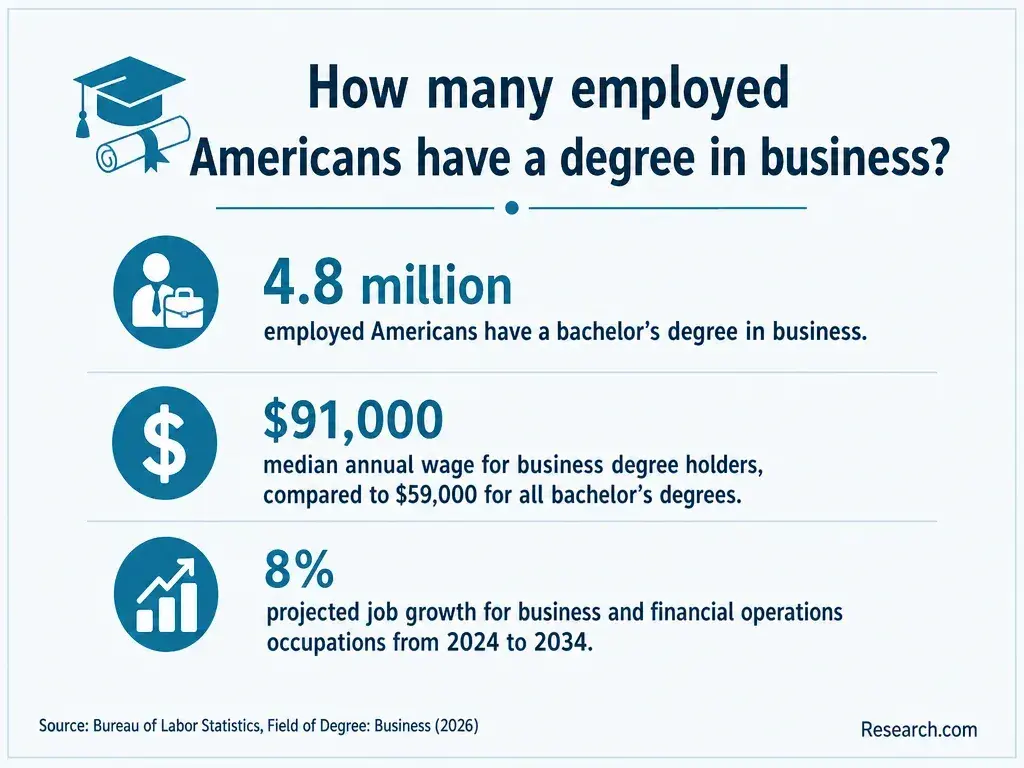
What jobs can you pursue with business administration and MIS training?
Look for roles that build on your existing support leadership rather than assuming the concentration qualifies you for any job with "manager" in its title. An IT service delivery role may emphasize service levels and vendors; a business systems analyst role may emphasize requirements and workflow changes; a technology project coordinator may track schedules, stakeholders, and risks. Scope and hiring requirements vary considerably by employer.
An HR systems role is another possible direction if you have experience supporting employee platforms, but technical familiarity alone does not replace knowledge of HR processes and sensitive personnel data. If that is your target, compare MIS coursework with colleges accepting credits toward human resources study and review actual HR systems job postings before changing programs.
For each target job, collect several postings in your region and separate required experience from preferred education. Then match each requirement to a completed work example, a planned course, or a skill you still need to develop. That produces a more useful plan than relying on the degree title alone.
Course names and depth vary. A business administration core may cover accounting, finance, statistics, management, and operations, while an MIS focus may add database concepts, systems analysis, business analytics, information security or governance, and technology project management. Check whether a course teaches you to interpret systems decisions or to build and administer the technology; similar-sounding titles can have different outcomes.
For a support supervisor, the most useful assignments often involve defining user requirements, mapping a service workflow, assessing data quality, or explaining a system recommendation to a nontechnical audience. Ask for sample syllabi and confirm whether prerequisites, required electives, and the capstone are offered in the terms you can attend. If you are considering accelerated study schedules for business majors, verify that the MIS sequence actually fits the shorter calendar; an accelerated general business schedule may not include every concentration course.
Also confirm the official designation. A formal concentration, an elective cluster, and a separately awarded certificate are different academic records, even when they include some of the same courses.
An MIS-focused business degree generally puts more emphasis on organizational decisions; an IT degree generally offers more technical depth. Neither label guarantees a particular set of courses. The comparison below identifies the difference that should guide a working supervisor's choice, subject to each school's actual curriculum:
| Path | Likely emphasis | Better fit when your goal is to... |
| BS in Business Administration with MIS focus | Business core plus systems, processes, and technology decisions | Translate IT operations into business improvements or cross-functional leadership |
| IT degree | Deeper study of technical systems and implementation | Strengthen a technical specialty or pursue more technically demanding roles |
| Targeted courses or credentials | A narrower, role-specific skill | Address a defined gap without adding a full concentration or changing degrees |
Compare remaining requirements—not just program descriptions—before switching degrees. If technology project work is the real objective, also examine project management bachelor's residency and transfer requirements; a seemingly better specialization may still require more courses at the new school. Get an official evaluation of how your existing credits would apply.
They can be, but "online" does not mean self-paced. Support supervisors may be called into outages or evening escalations, precisely when a live class, group presentation, or timed exam is scheduled. Ask whether MIS courses have fixed meetings, proctoring, group deadlines, campus visits, or software requirements, and whether they are offered often enough for part-time study.
Compare a proposed term schedule against your on-call rota and the time you can reliably protect for assignments. Ask how an absence caused by an incident is handled and whether you can reduce course load without disrupting the MIS sequence. Degree options for working business administration students can help start a shortlist, but only the current course schedule and school policies can establish whether a particular program fits your job.
The answer depends on what remains in your individual degree audit. An MIS focus that uses available electives may add little coursework; one with prerequisites or courses outside your degree plan may extend enrollment. Previously accepted credits do not necessarily satisfy business-core, concentration, or residency requirements.
Request a term-by-term plan for the general business degree and another with MIS. Compare tuition and mandatory fees for the remaining courses, books, or software, any added terms, and the cash-flow effect of employer reimbursement. For a price shortlist, compare inexpensive business administration degree options, then obtain each school's charges and credit evaluation rather than treating an advertised price as your completion cost.
Ask your employer whether MIS courses qualify for education assistance, when reimbursement is paid, and whether grades or continued employment affect eligibility. Do not count an unapproved benefit—or a hoped-for promotion—as a reduction in your cost.
First, confirm that the institution holds recognized institutional accreditation. Then check whether any advertised business accreditation—such as AACSB, ACBSP, or IACBE—covers the school or program you would actually enter. An institution's accreditation and a business accreditor's scope answer different questions; neither proves that its online MIS courses or career outcomes will suit you.
Use the school's current catalog and the accreditor's listing to check the exact degree name and scope, then ask the program whether the MIS focus is offered in your delivery format. Online business programs in US college rankings can provide comparison candidates, but verify accreditation and curriculum directly before applying.
Requirements differ by school and by whether you are a first-year, transfer, or returning student. Admission to the university may be separate from admission to the business major or permission to declare an MIS concentration. A school may also require introductory quantitative or business courses before upper-level MIS study.
Gather transcripts and any documentation of prior college work, then ask admissions and the business adviser for a written evaluation showing which credits satisfy general education, business core, MIS, and residency requirements. Confirm deadlines and whether your current supervisory work can support approved assignments; employment does not automatically award academic credit.
If application charges affect how many schools you can reasonably compare, consider schools with zero-cost college applications. An application-fee policy does not establish admission, transfer-credit applicability, or the eventual degree price.
What salaries and job outlook can MIS graduates expect?
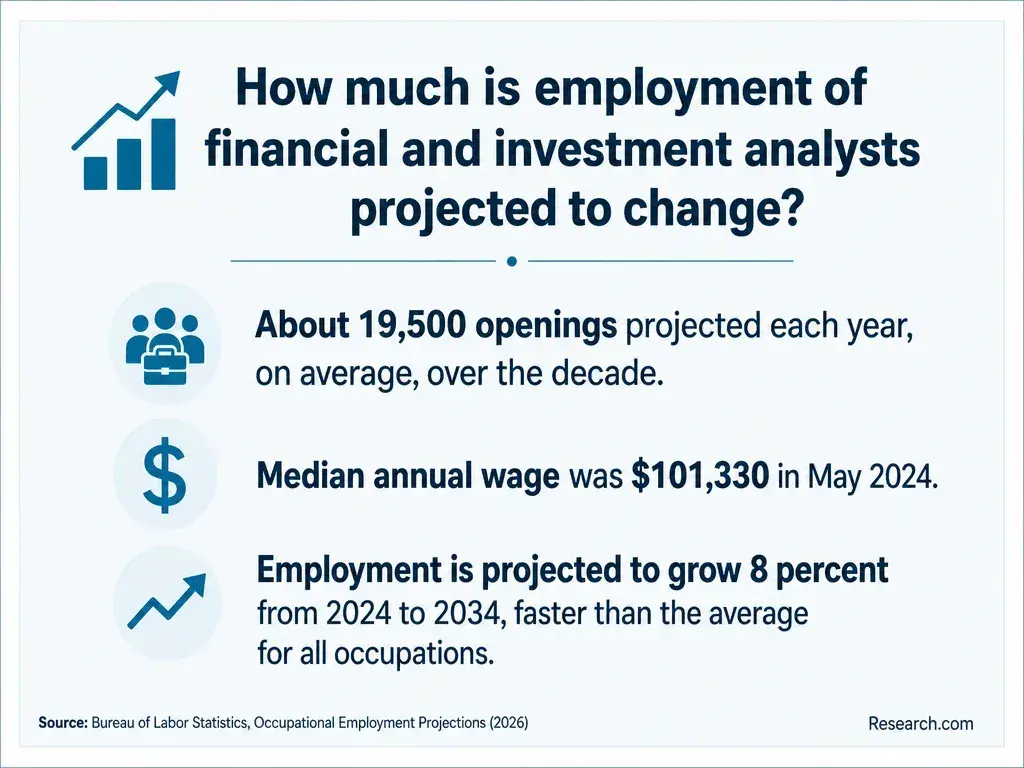
There is no single "MIS graduate salary": the credential spans occupations, and your prior work, responsibilities, location, and employer determine which jobs are realistic. For one possible direction, the U.S. Bureau of Labor Statistics reports a $102,320 median annual wage for project management specialists in May 2025 and 7% projected U.S. employment growth from 2025 to 2035. Those figures describe an occupation—not the starting pay or promotion prospects of someone who adds MIS coursework.
Use occupation data only after selecting a plausible target role. If you already coordinate budgets, vendors, schedules, and stakeholders, project-focused positions may be more relevant than they would be for someone whose experience is limited to technical escalations. Compare local postings with your documented responsibilities and the courses you would take. If a separate project management degree is under consideration, review accredited project management degree cost breakdowns rather than using an occupation-wide median to justify either program's price.
Other Things You Should Know About Business Administration
Possibly. Ask whether the school evaluates your specific certification through a formal prior-learning or transfer-credit policy, and whether any awarded credit applies to a requirement rather than only to electives.
Check admission requirements first: MBA programs generally require a completed bachelor's degree. If you already hold one, compare graduate study with targeted training against the responsibilities of your next role.
Only within your employer's permissions. Remove confidential and personal information, check intellectual-property rules, and describe your individual contribution accurately.
Usually not. MIS and vendor training address different needs. Keep technical credentials current when the systems or roles you target require them.
- Understanding College Costs | studentaid.gov https://studentaid.gov/resources/prepare-for-college/students/choosing-schools/consider-costs
- Fast Facts: Tuition costs of colleges and universities (76) | ed.gov https://nces.ed.gov/fastfacts/display.asp
- Management Information Systems - Department of Business | Mississippi University for Women https://www.muw.edu/business/bba/mis/
- Bachelor of Business Administration - Management Information Systems - Columbus State University https://archived.columbusstate.edu/catalogs/2017-2018/reqs/cobcs_bbamism.php
- 11-3021.00 - Computer and Information Systems Managers https://www.onetonline.org/link/summary/11-3021.00
- What Is a Management Information System (MIS)? Careers and Degrees | Coursera https://www.coursera.org/articles/management-information-system
- What Can You Do With a Management Information Systems Degree? | tcwglobal.com https://www.tcwglobal.com/degrees/what-can-you-do-with-a-management-information-systems-degree
- Types of IT Jobs (With Duties and Salaries) | indeed.com https://www.indeed.com/career-advice/finding-a-job/types-of-it-jobs
- What Do You Learn in a Business Administration Degree? | Rowan Blog https://rowanblog.com/2026/07/what-do-you-learn-in-business-administration-degree/