2027 A Second BS in Business Administration After a Bachelor's in Nutrition: Credits, Cost, and Alternatives
Audited and Verified:
Our Editorial and Data Verification Process
Research.com uses government datasets, official education statistics and primary institutional information to support its career and degree guides. Our review process checks factual accuracy, occupational definitions, source dates and the requirements associated with the credentials discussed.
How This Article Was Fact-Checked
Our editorial team verifies salary estimates, employment projections, education requirements and program information against original data providers and official organizations. Salary figures are checked against the relevant occupational definitions and reporting periods. Information about licensure, accreditation and required in-person training is reviewed separately.
Fact-checked and verified on:

Co-Founder and Chief Data Scientist
A nutrition bachelor's can prepare you to understand health needs, but it may not cover the accounting, operations, or marketing skills needed for the business role you want next. A second BS in Business Administration could fill those gaps - if enough of your first degree applies to the new one. This guide helps nutrition graduates estimate remaining credits and costs, evaluate career fit, and compare a second bachelor's with shorter or more specialized paths before committing to tuition.
Key Things You Should Know
- A business bachelor's commonly requires about 120 semester credits in total, but a second-degree student may need only the unmet business, residency, and graduation requirements - not another full 120 credits.
- Accepted nutrition credits do not necessarily satisfy the business major. Request an official degree audit and a remaining-course schedule before comparing prices or completion times.
- A second bachelor's does not automatically qualify its holder for federal Pell Grants, management jobs, or professional licenses. Compare its remaining cost with targeted coursework, experience, and graduate options.
What Is a Second Bachelor's Degree in Business Administration After Nutrition?
It is a separate undergraduate degree earned after completing a nutrition bachelor's. Depending on the school, the credential might be called a BS in Business Administration, a BBA, or another business degree. The new program evaluates prior college work, then requires the courses and credits still needed under its own catalog.
This path can fit a nutrition graduate seeking broad business preparation for food-company operations, wellness-program administration, healthcare services, or a small practice. Your science background and experience with health information remain valuable; the second degree adds a business curriculum rather than replacing your first qualification. Degree titles and requirements vary, so check the school's prior education requirements for business administration applicants alongside its second-degree policy.
How Many Credits Are Needed for a Second Business Administration Bachelor's Degree?
There is no universal second-degree credit requirement. Although many bachelor's programs total approximately 120 semester credits, the relevant figure is the number of credits still required after the school applies your prior work. A college may accept your completed general education while still requiring its business core, upper-division courses, a minimum number of credits earned there, and a capstone.
A degree audit should separate accepted credits from requirements satisfied. The following categories show why a large transfer award does not necessarily mean a short path to graduation.
| Audit category | What a nutrition graduate should check |
| General education | Whether the first bachelor's fulfills the category or individual courses must be reviewed. |
| Business prerequisites and core | Whether prior math, statistics, economics, or other courses match required equivalents. |
| Concentration and upper-division work | Whether required courses remain and when they are offered. |
| Residency and graduation rules | How many credits must be completed at the new school, even if other credits transfer. |
Ask the registrar or transfer office for a course-level evaluation, then ask a business adviser to map the remaining courses by term. An accelerated calendar may shorten elapsed time without reducing required coursework; use bachelor's programs for faster completion as a starting point, not as evidence that a particular school will waive credits.
How Much Does a Second Bachelor's Degree in Business Administration Cost?
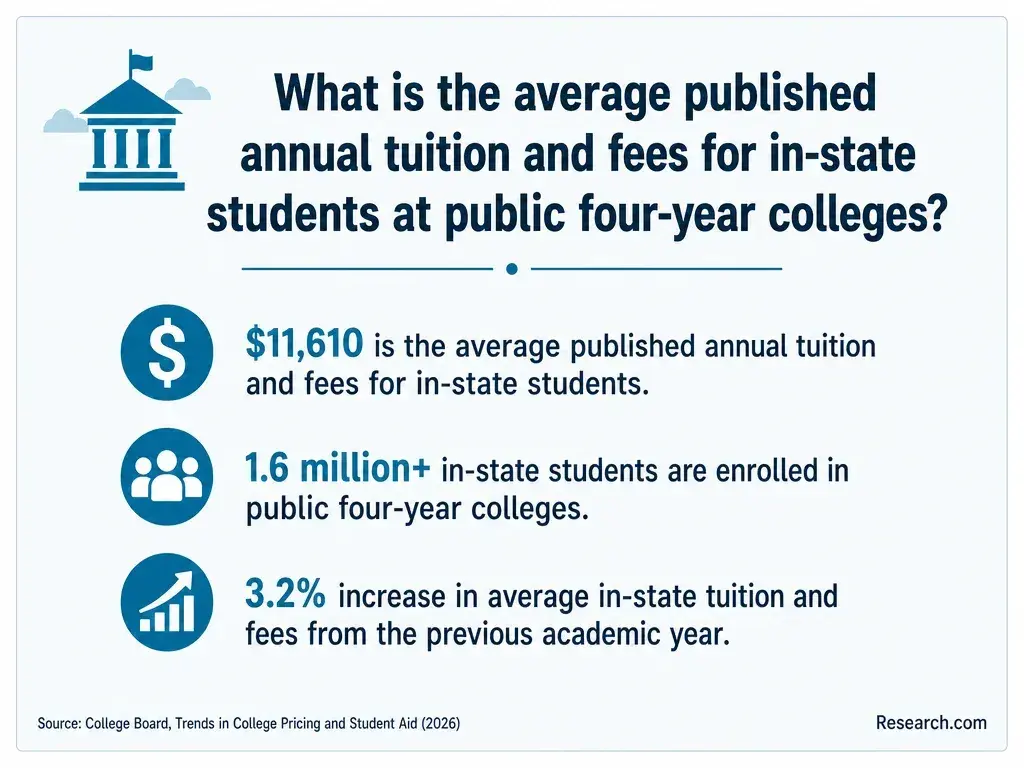
The useful estimate is remaining required credits multiplied by the applicable tuition rate, plus mandatory costs - not the advertised price of a full bachelor's. Compare schools only after each has evaluated your nutrition transcript. A lower per-credit rate can cost more overall if that school requires additional courses or another term.
Request an itemized estimate covering tuition, fees, books, software, assessment or proctoring charges, travel, and any income lost by reducing work hours. Check whether tuition is charged per credit or term and whether required courses are offered often enough to avoid a costly delay. Online business administration school cost comparisons can help identify candidates, but published rates are not your personal completion quote.
Federal aid deserves a separate check: students who already hold a bachelor's generally are not eligible for federal Pell Grants, though federal loan eligibility may remain subject to program, enrollment, and borrowing-limit rules. Ask each financial-aid office about your specific eligibility and any employer reimbursement conditions before relying on either source of funding.
Yes, some may transfer, but transfer acceptance and application to a requirement are different decisions. Nutrition coursework often has a clearer fit with general education or electives than with accounting or management requirements. Statistics, economics, communication, and quantitative courses may have a stronger claim to specific equivalencies, depending on their content, level, grade, and the receiving school's rules.
Send official transcripts and, for disputed matches, syllabi or course descriptions to the transfer office. Ask a business adviser to identify where each accepted course appears on the degree audit and whether a substitution needs separate approval. If you are considering an HR-focused program instead of general business, compare its specific credit rules rather than assuming they match the BS; these HR bachelor's programs with flexible transfer pathways illustrate another option to investigate.
Expect the school to request an application and official transcripts showing your completed bachelor's; it may also set a minimum GPA or require admission to the business major separately. Some institutions restrict second-bachelor's applicants or require particular math, statistics, economics, or accounting preparation. A nutrition major alone should not be treated as an admission barrier - or as proof that every prerequisite is complete.
Before paying an application charge, confirm that the institution accepts second-degree students in the specific business program and delivery format you want. Ask admissions about prerequisite timing and the transfer office about credit evaluation; neither an admission offer nor a preliminary credit total is a graduation plan. If application costs affect where you apply, colleges with no upfront application payment may be worth checking against those academic requirements.
A typical business core includes financial and managerial accounting, economics, finance, marketing, management, operations, statistics or analytics, and business law or ethics. Programs differ in quantitative depth, electives, and capstone requirements. For a nutrition graduate, the most useful course plan depends on the work you want to do: budgeting and operations for a food-service organization call for different depth than marketing a wellness product.
Check prerequisite chains before choosing a concentration. An HR elective, for example, does not create an official HR concentration or professional credential. If personnel work is your goal, compare the business program's HR courses with what to expect from an HR degree, including whether either route adds courses or delays graduation.
Choose based on the schedule and applied learning you can actually use, not the label. Online study may let a working nutrition professional remain employed, but courses can still impose live meetings, fixed exam windows, group-project deadlines, or campus visits. Campus study may offer more convenient access to local recruiting and in-person collaboration, but commuting can compete with work hours.
Ask for sample course schedules, assessment requirements, internship rules, and the frequency of upper-division offerings. If you hope to use a nutrition workplace for a project, confirm faculty approval and employer permission; employment alone does not award academic credit. A nationwide comparison of online business programs is most useful after you screen each candidate for those practical constraints.
For a credible second-degree search, verify the institution's accreditation status and whether it meets the requirements of any aid, employer, or future school you may rely on. Institutional accreditation concerns the college as a whole; AACSB, ACBSP, and IACBE accredit business education within their stated scopes. Do not assume that an accreditor's presence covers every degree or delivery location.
Check the institution and accreditor directly for the program's current status, then evaluate cost and outcomes separately. Accreditation does not establish that your nutrition credits will satisfy business requirements or that a graduate will get a particular job. When reviewing online business colleges with competitive costs, apply the same accreditation and degree-audit checks to every candidate.
The strongest transition usually builds on both qualifications. A nutrition graduate might pursue marketing research for a food or wellness company, HR work in a healthcare organization, or coordination and operations roles in food distribution. Match the role to your existing experience: nutrition expertise can help you understand customers or products, but employers may still expect evidence of spreadsheet work, budgets, campaigns, or process improvement.
For salary context, the U.S. Bureau of Labor Statistics reports a May 2025 median annual wage of $78,760 for market research analysts and projects 7% employment growth from 2025 to 2035. Those are occupation-wide figures, not starting pay or a return promised by a second degree. Relevant projects and entry-level experience matter; a business diploma by itself does not confer management authority.
If your aim is purchasing or moving food products rather than general administration, compare the business core with supply-chain coursework and experience. Faster-paced online supply chain college study is one possible route, but its remaining credits and career relevance need the same individual review.
What Alternatives Exist to a Second Business Administration Bachelor's Degree?
A second BS makes the most sense when your target roles value broad undergraduate business preparation and an official audit shows a manageable remaining course load. It may be excessive if you need only one function, already qualify for the jobs you want, or would repeat substantial coursework.
Compare alternatives by the qualification employers seek and the gaps you can document. Targeted accounting, analytics, marketing, or operations courses can address a narrow skill need; supervised projects or relevant work can demonstrate application. A specialized bachelor's may suit a clear functional switch, while an MBA or other graduate program may be worth exploring if you meet its admissions requirements and need graduate-level study. These paths are not interchangeable, and none guarantees a job.
For a move into project coordination, compare business coursework with project-focused study and the experience required in job postings. Investigate costs and eligibility - including FAFSA-based aid for online project management undergraduates if considering another bachelor's - before deciding which credential to pursue. The final decision should rest on a written degree audit, a total-cost estimate, and examples of the roles you intend to apply for.
Other Things You Should Know About Business Administration
No. Nutrition credentials and any applicable state license have separate eligibility and renewal rules. A business degree neither replaces nor automatically maintains them.
Yes, when both support the role. Put the more relevant degree or qualification first, and describe experience that connects nutrition knowledge with business responsibilities.
Often, if the topic meets course requirements and faculty approve it. Obtain permission before using employer information, and protect confidential or personal data.
Possibly. Ask your benefits office whether second degrees and your chosen program qualify, when reimbursement occurs, and whether grade or continued-employment conditions apply.
- Annual and Aggregate Loan Limits | 2025-2026 Federal Student Aid Handbook https://fsapartners.ed.gov/knowledge-center/fsa-handbook/2025-2026/vol8/ch4-annual-and-aggregate-loan-limits
- .14 Evaluation and Review Process for Transfer of Courses and Credits. | Library of Maryland Regulations https://regs.maryland.gov/us/md/exec/comar/13B.06.02.14
- Fast Facts: Tuition costs of colleges and universities (76) | ed.gov https://nces.ed.gov/fastfacts/display.asp
- Areas of Study | Rutgers Business School https://www.business.rutgers.edu/undergraduate-new-brunswick/academics
- How Do Transfer Credits Work When You Go Back to School? | Whitworth Online https://online.whitworth.edu/news-articles/how-do-transfer-credits-work-when-you-go-back-to-school/
- View Transfer Guide - AA - FSU - Business Administration (BS) - General Business - Fully Online, On-Campus https://coursetransfer.northcarolina.edu/guide/2024-2025/474
- BS in Business Degree Requirements - NYU Stern https://www.stern.nyu.edu/current-students/undergraduate/academics/degree-programs/bs-business
- What kind of aid am I eligible for as a second-degree student? | unc.edu https://studentaid.unc.edu/faq/what-kind-of-aid-am-i-eligible-for-as-a-second-degree-student/
- Senior Residence Requirement (30-Credit Rule) | L&S Undergraduate Academic Deans' Services https://deans.ls.wisc.edu/policies-forms/residence-requirement-30-credit-rule/
- What Is an MBA Degree? Definition, Careers, and More | UC News https://www.online.uc.edu/blog/what-is-an-mba-degree-definition-careers-and-more.html