2027 BS in Business Administration for Mortgage Companies: Which Business Courses Should You Prioritize?
Audited and Verified:
Our Editorial and Data Verification Process
Research.com uses government datasets, official education statistics and primary institutional information to support its career and degree guides. Our review process checks factual accuracy, occupational definitions, source dates and the requirements associated with the credentials discussed.
How This Article Was Fact-Checked
Our editorial team verifies salary estimates, employment projections, education requirements and program information against original data providers and official organizations. Salary figures are checked against the relevant occupational definitions and reporting periods. Information about licensure, accreditation and required in-person training is reviewed separately.
Fact-checked and verified on:

Co-Founder and Chief Data Scientist
A business administration degree can prepare you for work at a mortgage company, but the best courses depend on whether you want to originate loans, assess risk, support compliance, or improve operations. That distinction matters because classroom preparation, employer training, and mortgage-originator licensing serve different purposes. This guide helps prospective students and early-career employees prioritize courses, choose useful applied work, and judge whether a general business degree or a more focused path fits their target role.
Key Things You Should Know
- Prioritize financial accounting, finance, statistics, business law, and operations; add targeted electives based on the mortgage role you want.
- A BS in Business Administration does not grant a mortgage loan originator license. State-licensed and federally registered originators follow different requirements.
- The BLS reports a May 2025 median wage of $102,740 for financial and investment analysts, but that occupation-wide figure is not a starting salary for mortgage company employees.
What is a business administration degree for mortgage companies?
A BS in Business Administration is a broad undergraduate degree, not a mortgage-specific credential. Its accounting, finance, management, analytics, and business-law courses can support work across a lender or mortgage servicer.
The most useful combination depends on the function: a loan-originator candidate needs customer communication and lending-rule knowledge, while an operations analyst needs process and data skills.
Do not assume a program's electives constitute an official mortgage concentration. Check the catalog for the degree name, required courses, concentration rules, and any extra credits.
If your goal is mortgage-company recruiting, underwriting support, or servicing, broad business preparation plus relevant work experience may be more useful than an unrelated specialty. Company functions also include people operations; students drawn to that work can compare education options for future HR professionals rather than treating lending courses as essential.
Which business courses best prepare you for mortgage company careers?
Start with courses that explain money, decisions, and controls. Financial accounting develops fluency with financial statements; finance covers borrowing, interest, cash flows, and risk; statistics helps students assess patterns without mistaking correlation for proof. Business law and ethics build a foundation for regulated customer interactions, while operations management addresses handoffs, errors, and turnaround times.
The table connects those subjects to plausible entry routes. It describes preparation, not a promise that completing a course qualifies you for the job.
| Target work | Courses to prioritize | Evidence to develop |
| Loan-origination support or sales | Finance, professional communication, marketing, business law | Clear explanations of loan-cost concepts and careful customer documentation |
| Underwriting or credit-risk support | Accounting, finance, statistics, information systems | Spreadsheet analysis using permitted or hypothetical data, with stated assumptions |
| Servicing, compliance, or operations | Operations management, business law, analytics, project management | A process map or control review that accounts for errors, privacy, and escalation |
Choose electives after the core, not instead of it. For example, project management can help an operations employee coordinate a workflow change, but it does not replace lending-rule training. Students considering a specialized operations degree can use a project management bachelor's transfer planning guide to compare that route with finishing a general business major.
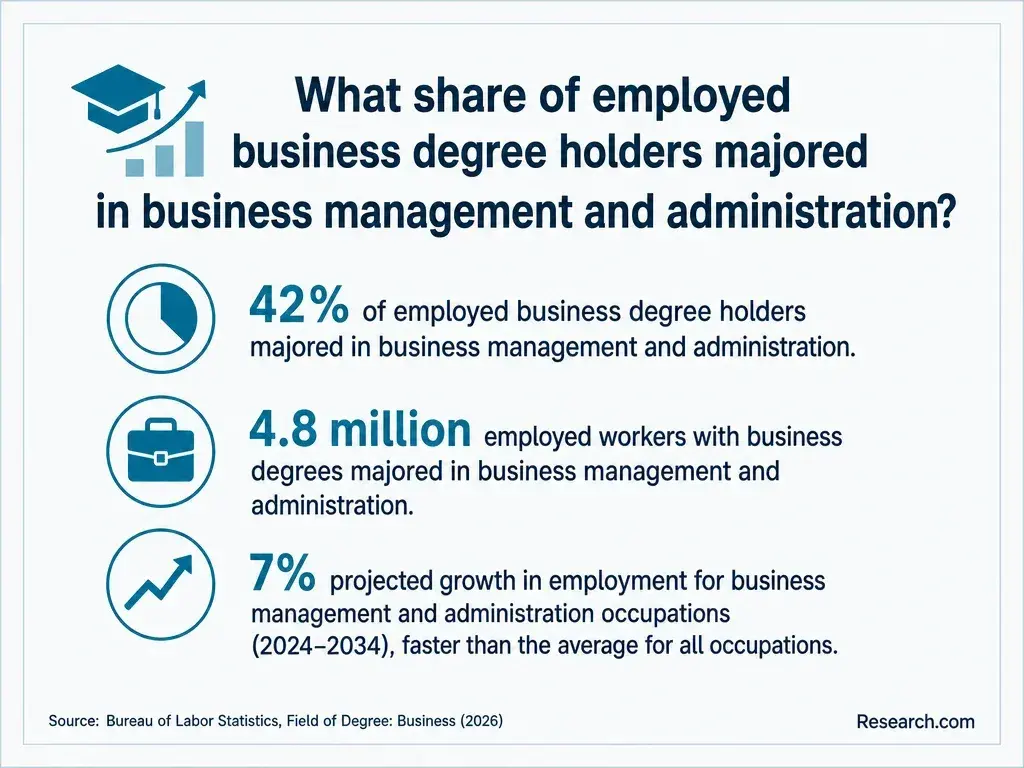
What degree and licensing requirements apply to mortgage professionals?
A business degree and authority to originate mortgages are separate. Under the federal SAFE Act framework, a person who takes a residential mortgage application and offers or negotiates loan terms for compensation may be a mortgage loan originator (MLO).
MLOs working for state-regulated nonbank mortgage companies generally need a state license through the Nationwide Multistate Licensing System (NMLS). Qualifying MLOs working for covered banks or credit unions generally register federally instead. Rules for particular duties and employers require confirmation with the relevant regulator.
State-licensed MLOs face prelicensing education, testing, background-check, and other requirements; states may add requirements, and continuing education applies after licensing. A BS does not substitute for these steps.
Conversely, support, analysis, and many operations jobs do not require an MLO license merely because the employer makes mortgages. Confirm the actual duties before paying for licensing preparation.
If an employer prefers a bachelor's for advancement, compare completion time separately from the licensing timeline. National rankings of fast-paced business bachelor's programs can help identify programs to investigate, but speed does not establish license eligibility or guarantee that the courses you need will be available.
Check institutional accreditation first, including its current status and whether it covers the institution awarding the degree. Then check any claimed business accreditation - such as AACSB, ACBSP, or IACBE - against the accreditor's listing to see its precise scope. A business-school accreditation claim should not be assumed to cover every degree or campus offering.
Accreditation is a screening tool, not evidence that graduates obtain mortgage jobs or licenses. Compare the curriculum, course availability, advising, and opportunities to complete an approved lending-related project.
Students considering remote study can evaluate American online business school options, then verify each program's current accreditation and requirements directly with the school and accreditor.
Few general business degrees require a course labeled "mortgage lending." Look instead for electives or approved assignments in consumer finance, real estate finance, credit analysis, risk management, financial regulation, and information systems.
A useful mortgage-focused course should connect concepts to tasks - such as interpreting borrower financial information, identifying documentation gaps, or explaining how a lending decision moves between teams - without implying that students may make regulated decisions independently.
Course content should distinguish legal duties from employer policies. Familiarity with fair lending, consumer disclosures, credit reporting, privacy, and mortgage data handling is valuable, but a business-law survey alone is not compliance training.
Ask for recent syllabi and confirm prerequisites, elective frequency, and whether an internship or capstone can address a mortgage process. If a course is unavailable before graduation, an approved general finance or analytics project may be more useful than delaying the degree solely for its title.
Students weighing a shorter calendar against room for specialized electives can examine flexible accelerated bachelor's degrees. Confirm the actual course sequence: faster pacing does not ensure access to mortgage-relevant classes.
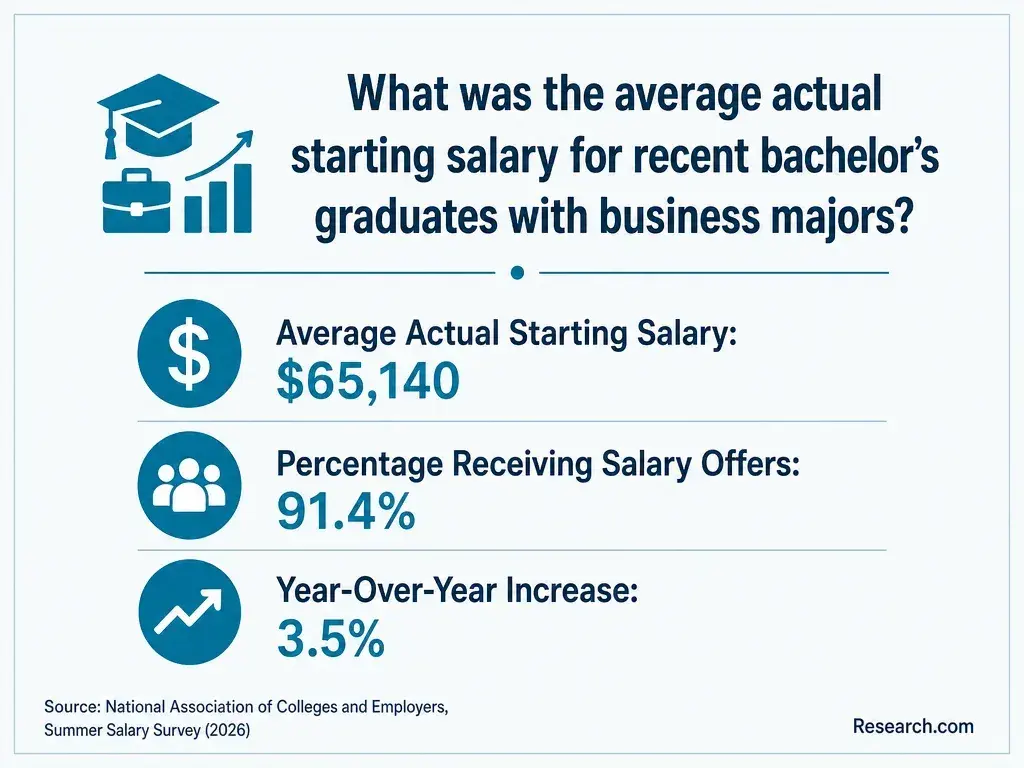
Choose the format that lets you complete the right courses and applied work consistently. Online study may suit someone already employed by a lender, particularly if a faculty-approved project can draw on a workplace problem. Campus study may make it easier to attend recruiting events, work with peers, or seek nearby internships. Neither format guarantees those opportunities.
Before enrolling, ask whether finance and analytics classes have live meetings, proctored exams, group presentations, or fixed deadlines. Check whether an internship requires local placement and whether a workplace project needs employer permission.
For employees coordinating classes with a full-time schedule, business administration programs for studying around work commitments offer a comparison starting point; the school's actual calendar should decide the fit.
Requirements vary by institution and by whether you are entering as a first-year student, transferring, or returning to finish a degree. Schools typically review prior academic records, while a business major may have separate eligibility rules or prerequisites. Do not confuse admission to the university with approval to take upper-level finance or analytics courses.
Request a written degree audit if you have prior college credit. Ask which accepted courses satisfy accounting, economics, mathematics, statistics, and business-core requirements, and which count only as electives. A business administration applicant eligibility checklist can help you prepare those questions, but the receiving institution makes the final credit and admission decisions.
A full-time bachelor's is commonly planned as a four-year course of study, but transfer credit, part-time enrollment, prerequisites, and required-course scheduling can change the completion date. For a returning student, the useful measure is remaining applicable requirements, not credits accepted in isolation. A transferred finance course that counts only as an elective may leave the required finance course unfinished.
Compare total remaining tuition and mandatory fees alongside books, software, travel or proctoring, and any income lost by reducing work hours. Ask whether employer education benefits pay upfront or reimburse you later; that difference affects cash flow even when the eventual benefit is the same.
To compare advertised short or inexpensive programs, evaluate price duration and outcomes of business administration degrees using your own degree audit and written cost estimate, rather than an advertised minimum.
Early-career routes at mortgage companies can include loan-processing support, servicing operations, customer support, sales support, and junior business analysis. These roles differ from licensed origination and from underwriting authority.
With relevant experience and stronger quantitative skills, a graduate might pursue credit-risk, financial-analysis, process-improvement, or supervisory work; the degree alone does not establish readiness for those responsibilities.
The BLS reports a May 2025 median annual wage of $102,740 for financial and investment analysts. That occupation-wide median may inform someone aiming for financial analysis, including certain roles tied to mortgage markets, but it is not a mortgage-industry wage or a new graduate's expected pay.
Compare local postings for your actual target title, required experience, and compensation structure - especially where sales incentives affect earnings.
If your preferred work is coordinating operations projects across industries rather than lending, compare the cost of a specialized path before changing majors. A guide to budgeting for online project management college study can help frame that comparison; existing business credits and employer requirements will determine whether switching makes sense.
What is the job outlook for mortgage and financial services careers?
Mortgage hiring depends in part on lending activity, interest rates, employer strategy, and location, so growth in a broad finance occupation is not a forecast for every mortgage-company job.
For one adjacent path, the BLS projects 7% employment growth for financial and investment analysts from 2025 to 2035. Use that figure to assess a possible analytical career direction, not to infer the outlook for loan processors, originators, or a particular lender.
A practical next step is to compare recent local postings for two target roles. Note which ask for licensing, spreadsheet or accounting skills, customer experience, or prior mortgage work, then select courses and supervised experience to address the gaps.
If you would rather manage the movement of goods than lending workflows, compare economical supply chain study timelines before treating a mortgage-focused elective plan as interchangeable with supply chain preparation.
Other Things You Should Know About Business Administration
Not without appropriate employer and school approval. Borrower files contain sensitive information; use a permitted, de-identified dataset or clearly labeled hypothetical records if approval and data rights are uncertain.
It can. Explain how you handled documentation, sensitive conversations, accuracy, and follow-up, then identify any lending knowledge or software skills the posting still requires.
No. The school must approve the placement, learning objectives, supervision, and assessment under its own rules. Confirm requirements before accepting an internship for academic credit.
Ask which tasks entry-level employees actually perform, what training the employer provides, and which skills applicants are expected to bring. Use the answers to choose coursework for a specific role rather than for the industry in general.
- Key financial terms | business.gov.au https://business.gov.au/finance/financial-tools-and-templates/key-financial-terms
- Beginners' Guide to Financial Statement | sec.gov https://www.sec.gov/investor/pubs/begfinstmtguide.htm
- Gramm-Leach-Bliley Act | Federal Trade Commission https://www.ftc.gov/business-guidance/privacy-security/gramm-leach-bliley-act
- Secure and Fair Enforcement for Mortgage Licensing Act (SAFE Act) (Regulation G) | NCUA https://ncua.gov/regulation-supervision/manuals-guides/federal-consumer-financial-protection-guide/compliance-management/lending-regulations/secure-and-fair-enforcement-mortgage-licensing-act-safe-act-regulation-g
- VII-4 Third Party Risk | FDIC.gov https://www.fdic.gov/consumer-compliance-examination-manual/vii-4-third-party-risk
- 10 Key Subjects Taught in a Bachelor of Business Administration Program | Carson-Newman University https://www.cn.edu/cps-blog/10-key-subjects-taught-in-a-bachelor-of-business-administration-program/
- How to Read & Understand a Balance Sheet | Harvard Business School https://online.hbs.edu/blog/post/how-to-read-a-balance-sheet
- What Can You Do With a Business Administration Degree? | snhu.edu https://www.snhu.edu/about-us/newsroom/business/what-can-you-do-with-a-business-administration-degree
- 10 Best Business Degrees for High Pay and Career Growth | Pace University New York https://www.pace.edu/news/best-business-degrees-undergrad-grad
- Majoring in Business Administration: What to Expect | CTU Online https://www.coloradotech.edu/degrees/studies/business-and-management/articles/majoring-in-business-administration